Non-Disclosure Agreement for Potential Investors
About this form
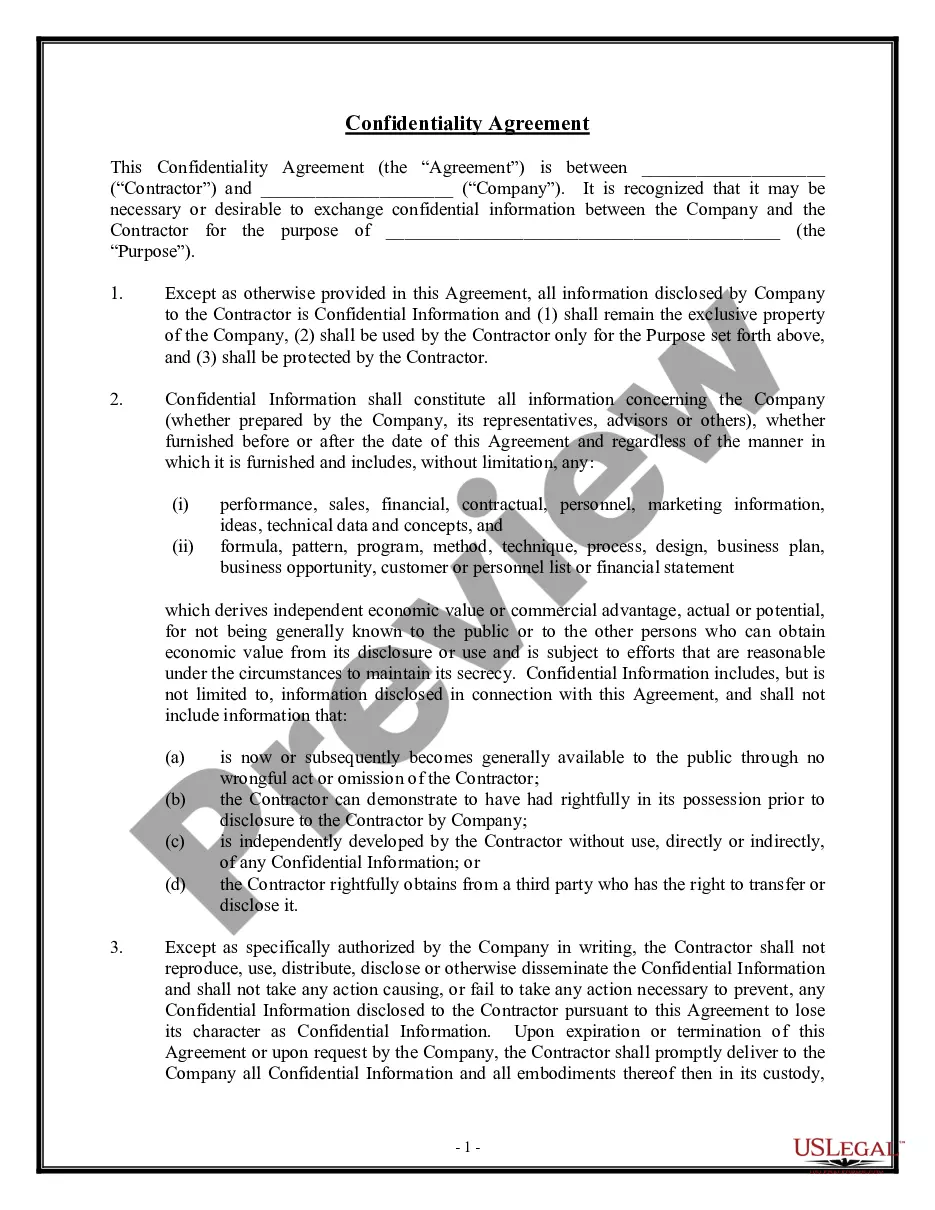
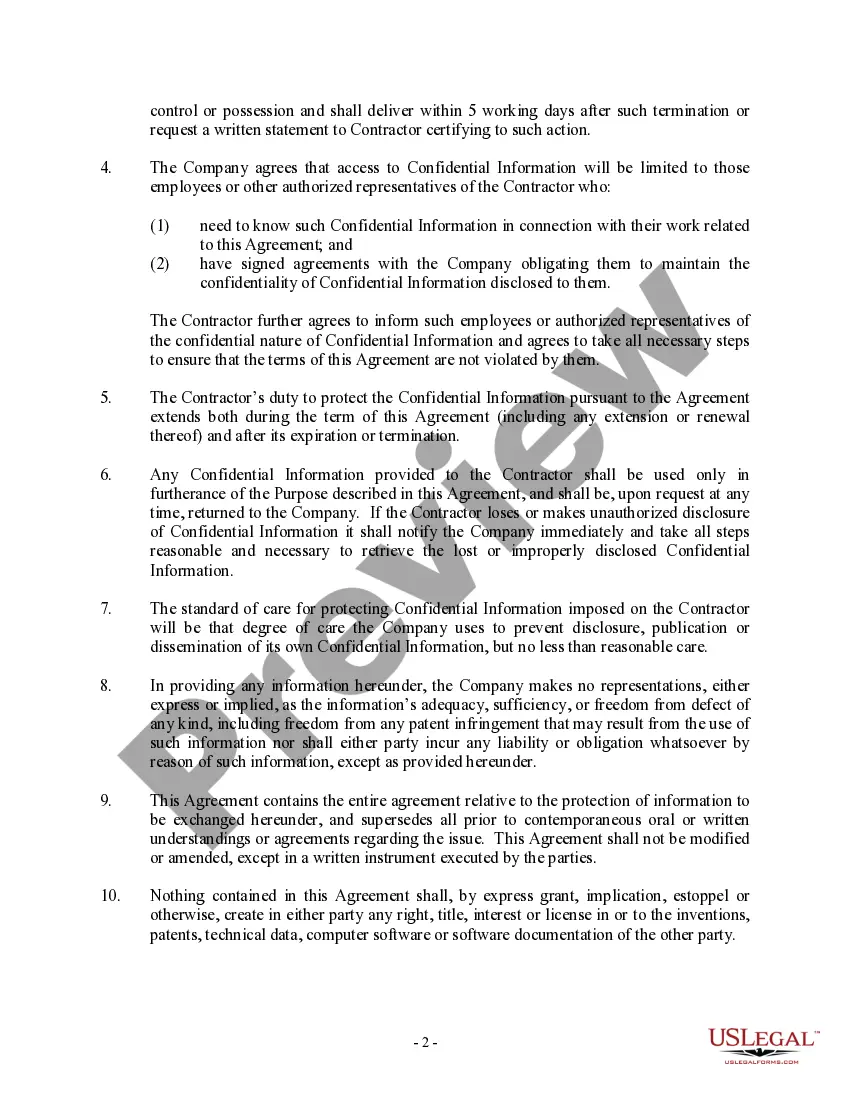
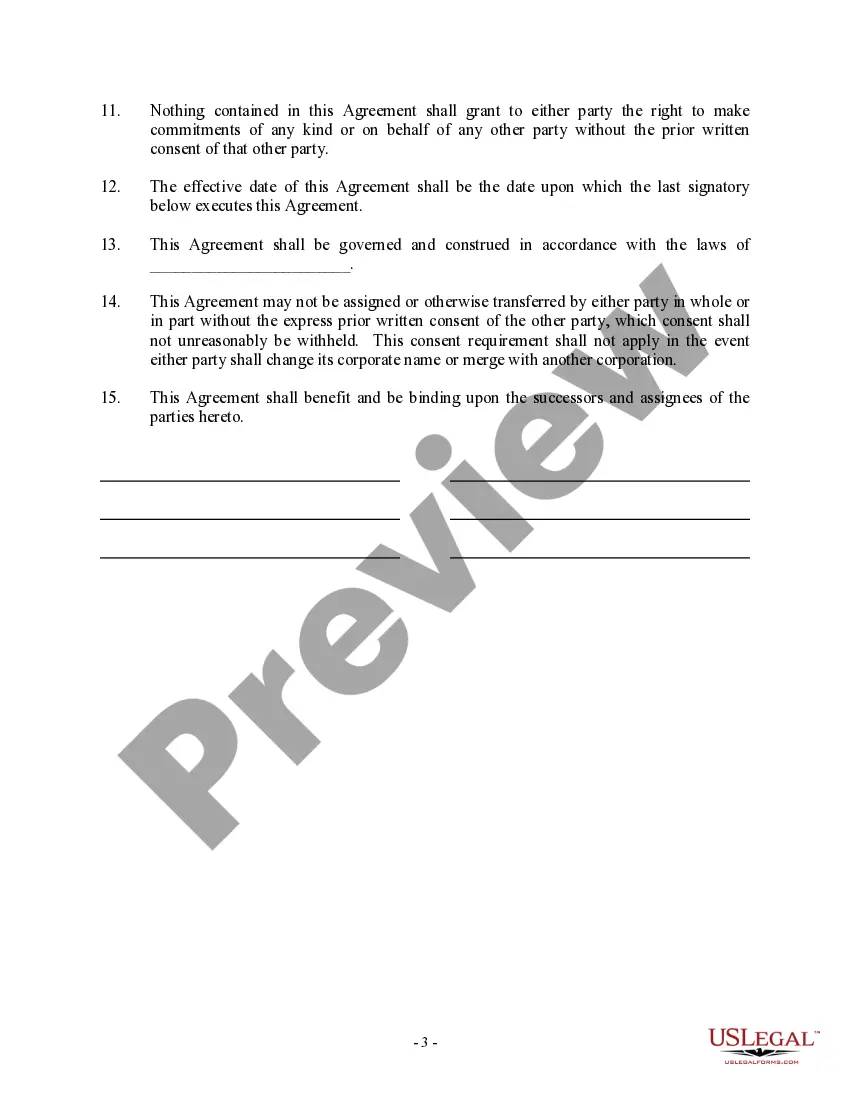
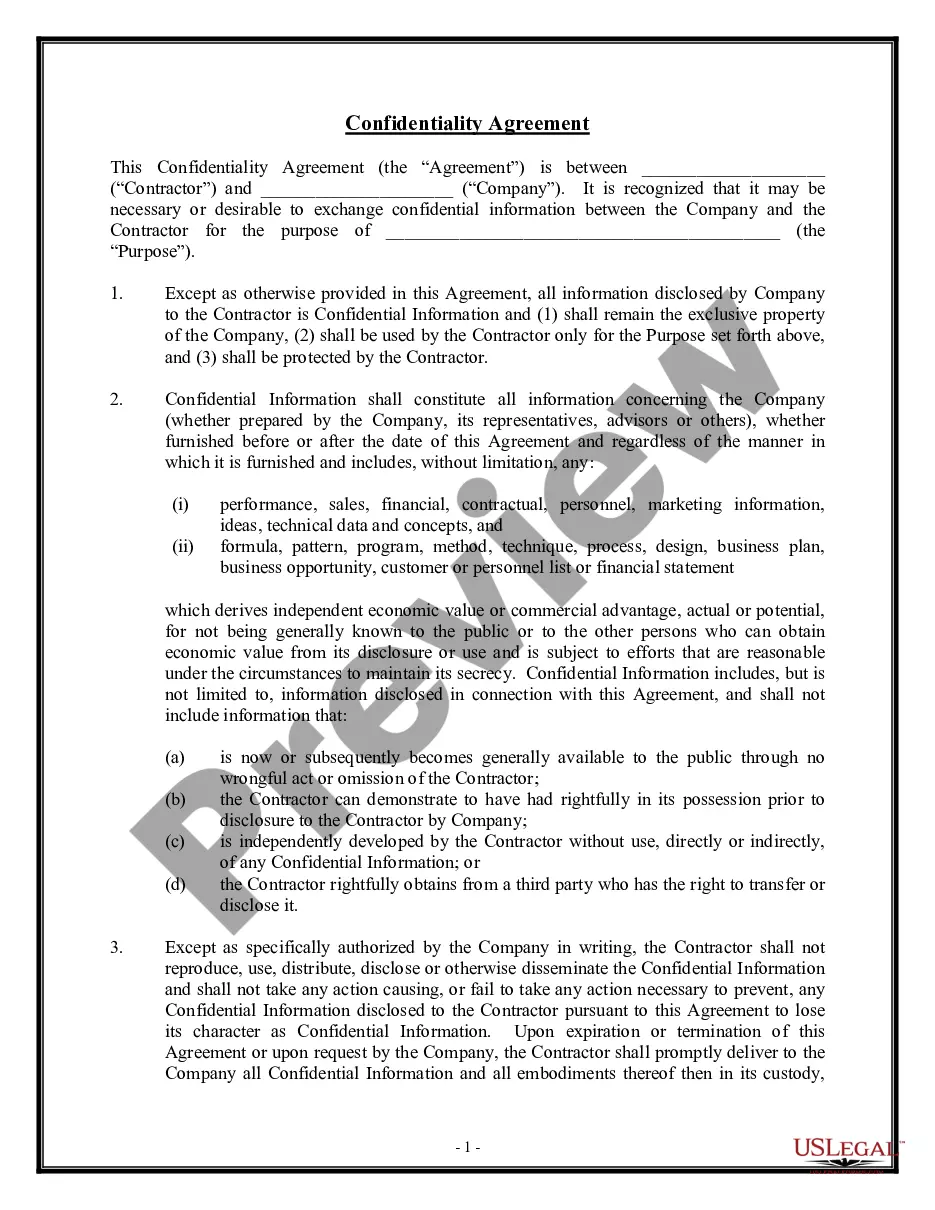
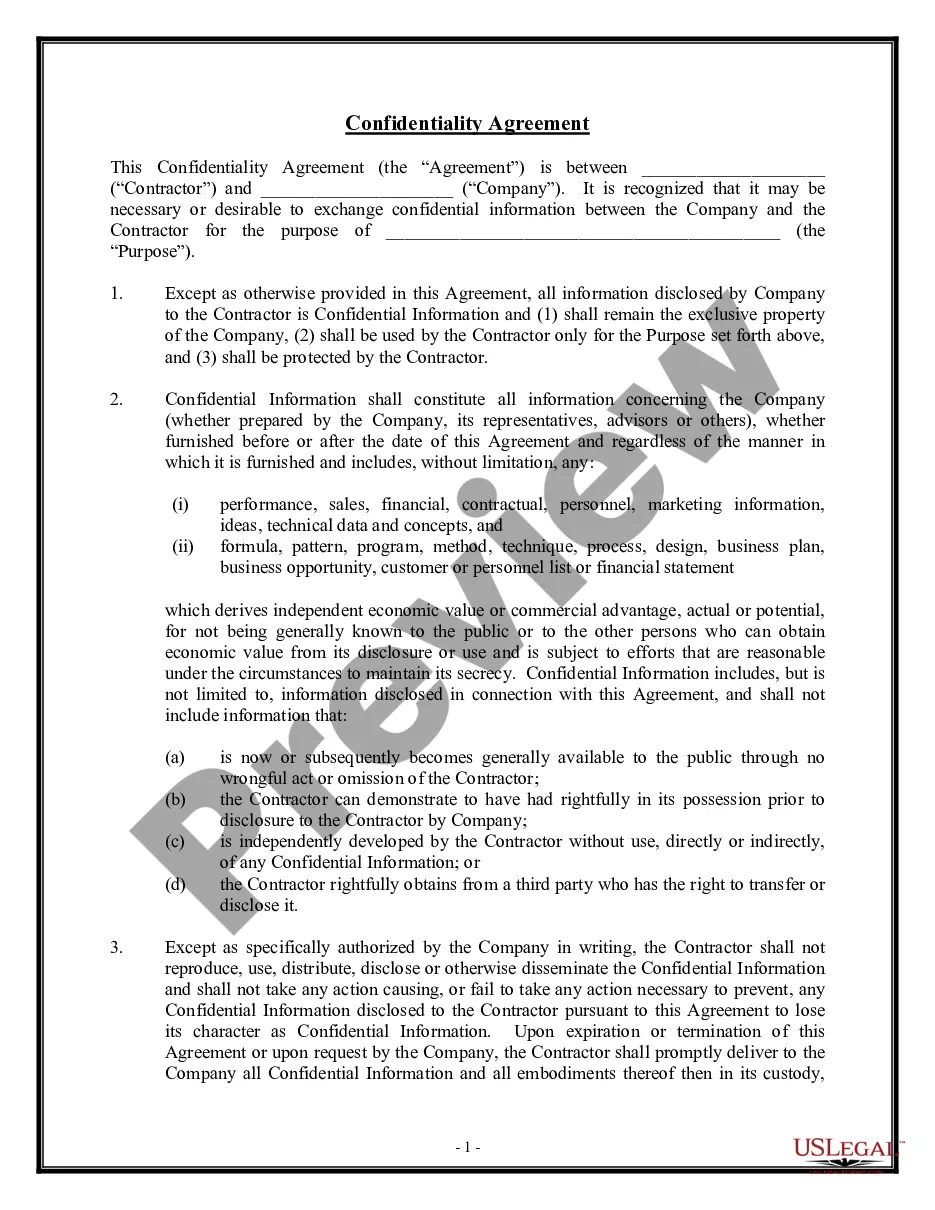
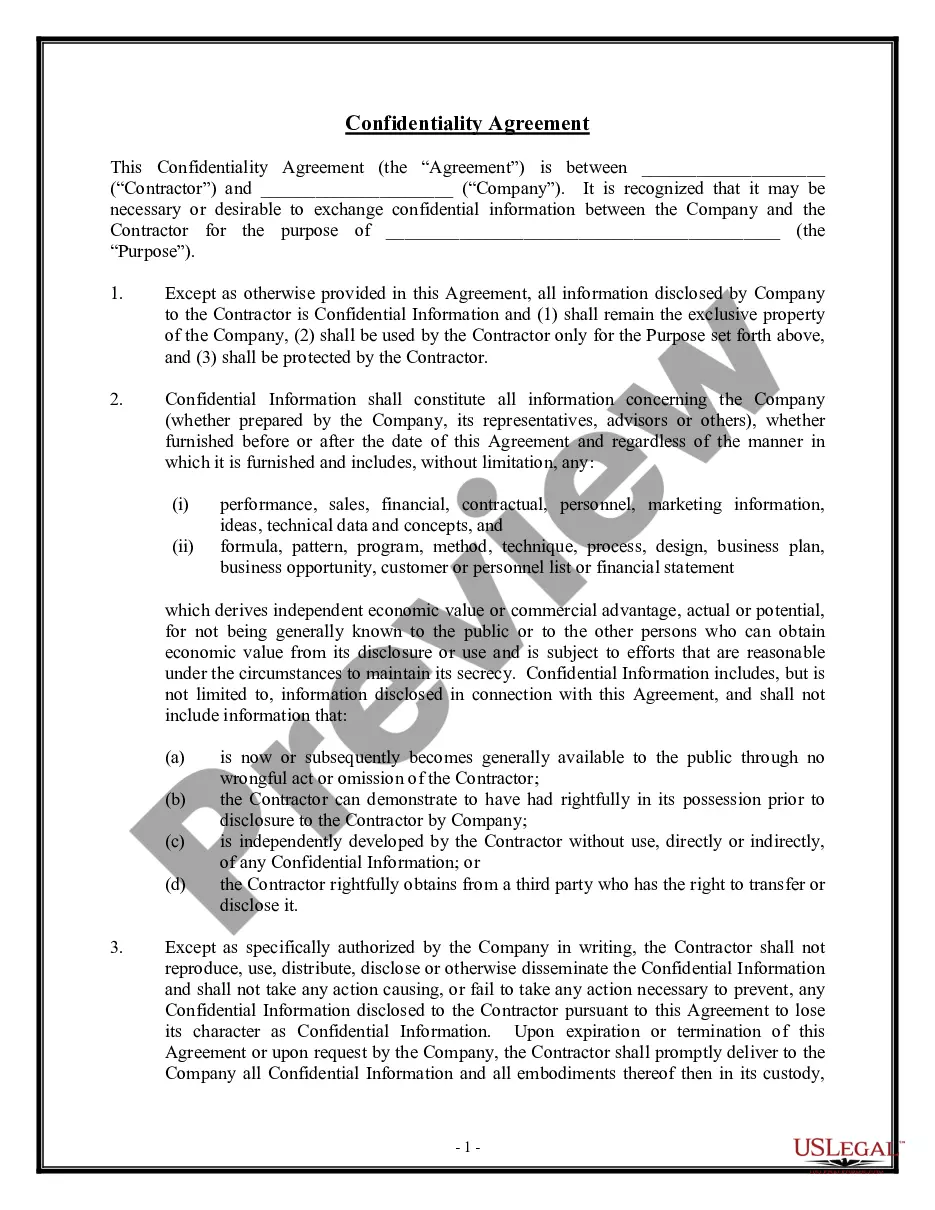
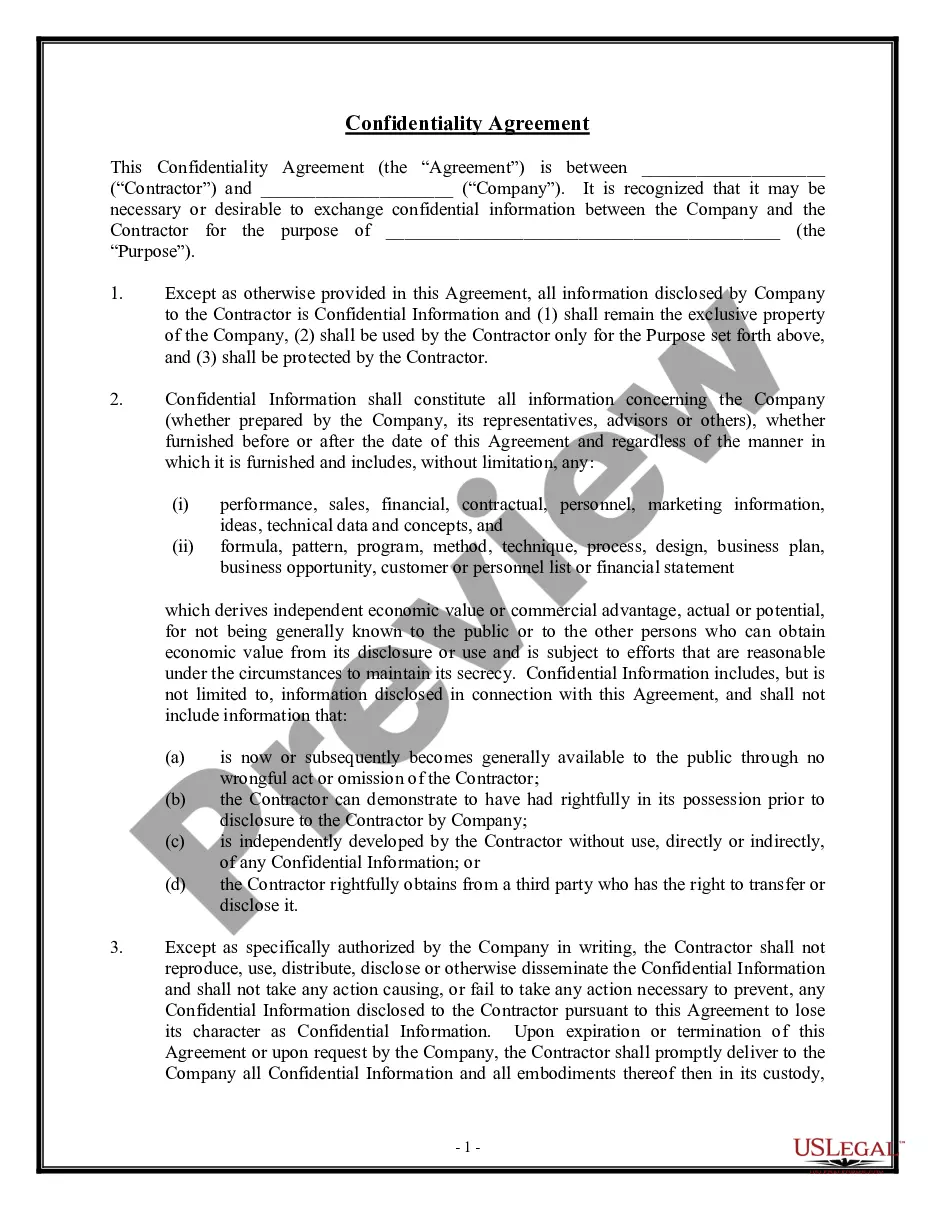
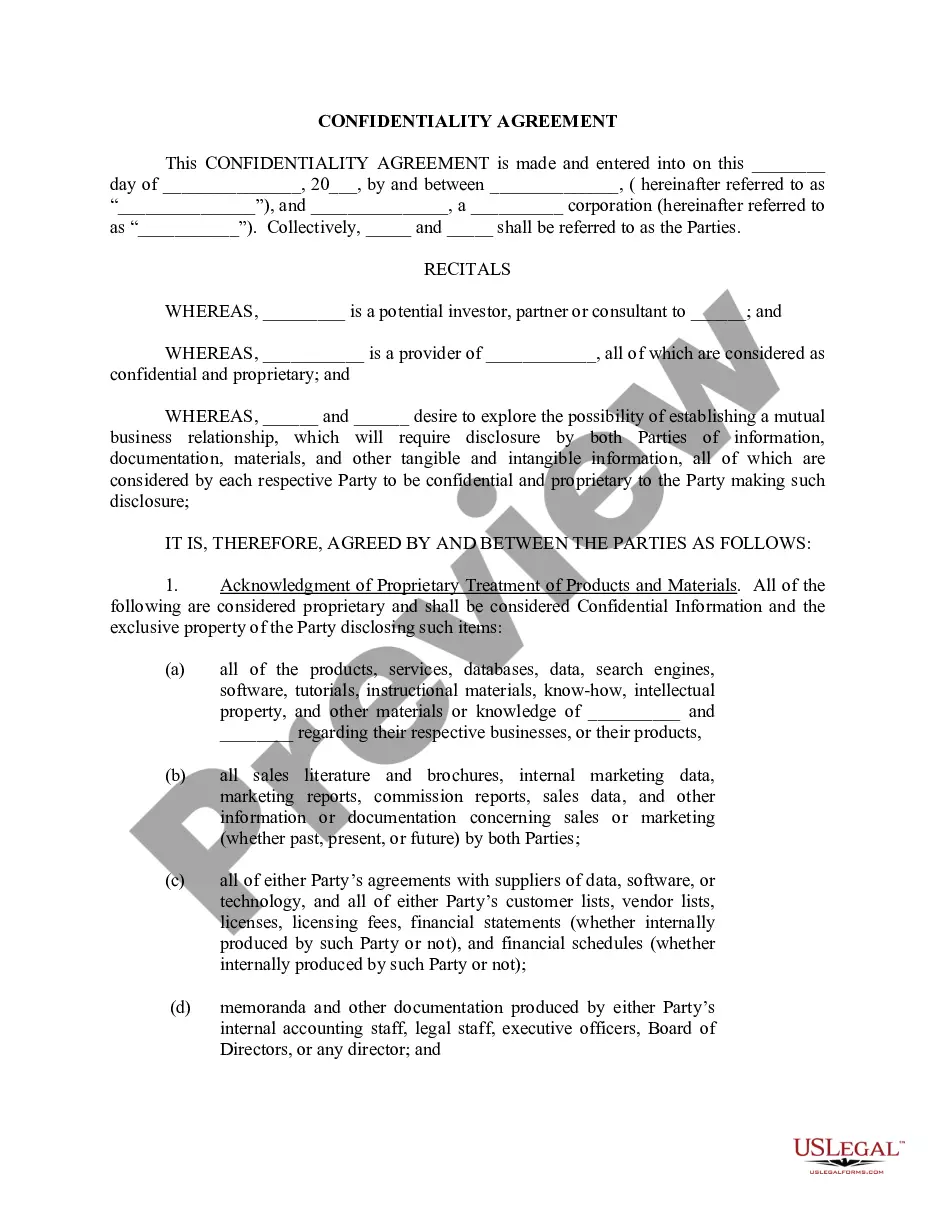
The Non-Disclosure Agreement for Potential Investors is a legally binding contract designed to protect confidential information shared between a contractor and a company during discussions about investment opportunities. This agreement ensures that any sensitive business information exchanged remains confidential and is not disclosed to unauthorized parties. Unlike general confidentiality agreements, this form is specifically tailored for potential investors, outlining the protections necessary in investment discussions.
What’s included in this form
- Parties Involved: Names and information of the contractor and the company.
- Purpose: A description of the purpose for sharing information.
- Definition of Confidential Information: Specifies what constitutes confidential information.
- Use of Information: Details how the contractor can use the confidential information.
- Return of Information: Stipulates obligations to return or destroy confidential information after the agreement ends.
- Governing Law: Indicates the jurisdiction that governs the agreement.
Common use cases
This form should be used when a company wants to explore potential investments and needs to share proprietary or confidential information with a contractor or investor. Situations that may require this agreement include discussions on investment proposals, evaluating business plans, and negotiating potential funding arrangements, ensuring that sensitive business details are safeguarded during the evaluation process.
Who should use this form
- Businesses seeking investment from potential investors.
- Contractors or individuals representing investors interested in confidential discussions.
- Startups and established companies wanting to protect their intellectual property during negotiations.
- Any party involved in preliminary discussions where sensitive information is shared.
How to prepare this document
- Identify the parties by filling in the names of the contractor and the company.
- Specify the purpose of the agreement, detailing why confidential information is being shared.
- Clearly define what constitutes confidential information for both parties.
- Outline the terms under which the contractor may use the confidential information.
- Enter the governing law as applicable to the agreement.
- Sign and date the agreement to make it legally binding.
Does this document require notarization?
This form does not typically require notarization unless specified by local law. It is recommended to check local regulations to ensure compliance, but generally, the execution of this agreement is valid without a notarization requirement.
Get your form ready online
Our built-in tools help you complete, sign, share, and store your documents in one place.
Make edits, fill in missing information, and update formatting in US Legal Forms—just like you would in MS Word.
Download a copy, print it, send it by email, or mail it via USPS—whatever works best for your next step.
Sign and collect signatures with our SignNow integration. Send to multiple recipients, set reminders, and more. Go Premium to unlock E-Sign.
If this form requires notarization, complete it online through a secure video call—no need to meet a notary in person or wait for an appointment.
We protect your documents and personal data by following strict security and privacy standards.

Make edits, fill in missing information, and update formatting in US Legal Forms—just like you would in MS Word.

Download a copy, print it, send it by email, or mail it via USPS—whatever works best for your next step.

Sign and collect signatures with our SignNow integration. Send to multiple recipients, set reminders, and more. Go Premium to unlock E-Sign.

If this form requires notarization, complete it online through a secure video call—no need to meet a notary in person or wait for an appointment.

We protect your documents and personal data by following strict security and privacy standards.
Mistakes to watch out for
- Not clearly defining what information is considered confidential.
- Failing to specify the purpose of sharing the information.
- Neglecting to include terms regarding the return or destruction of confidential information.
- Allowing unauthorized individuals to access confidential information.
- Not signing the agreement, rendering it unenforceable.
Benefits of completing this form online
- Convenient access to downloadable forms that can be filled out from anywhere.
- Editable templates allow for customization to suit specific needs.
- Reliable format ensures all necessary legal language is included.
- Easy storage and retrieval of electronic documents for future reference.
Looking for another form?
Form popularity
FAQ
NDAs are legally enforceable contracts, but they're now coming under increased scrutiny from lawmakers, attorneys and legal experts.Companies often use them as part of an employment contract or settlement agreement to protect sensitive information like trade secrets.
In short -- investors don't sign NDAs. They won't sign your NDA.
The VC business has an unwritten rule on NDAs. And people who violate this rule risk losing credibility with investors even before meeting with them. The rule is simple: never ask a VC to sign an NDA unless your company absolutely needs one.
An NDA is typically a written agreement, extortion is not. The person paying for the NDA has legal recourse against the other party if information is revealed.The overlap is that a person or company may refuse to allow you to work for them if you refuse to agree to keep their confidential information secret.
NDAs keep people from sharing trade secrets, proprietary knowledge, client information, product information, and strategic plans. NDAs keep people from making a profit on any secret company information. NDAs usually say that a company owns things that get developed or produced during someone's employment.
If the NDA is fully executed by all parties, from the contract law perspective it should be binding. Go ahead and send copies of the fully executed NDA out, and make it a practice to do that right after you collect all of the signatures, with a cover...
The cold hard truth is that most NDAs do not hold up in court. Non-Disclosure Agreements are most effective in establishing a paper trail of confidential information as it relates to partnerships, and discouraging partners from misappropriating proprietary information.
Identification of the parties. Definition of what is deemed to be confidential. The scope of the confidentiality obligation by the receiving party. The exclusions from confidential treatment. The term of the agreement.
An NDA is only really useful as a legal document in the case that the parties end up in court. And if you end up in court, it's going to be expensive VERY, expensive.By requiring an NDA, these companies put up an unnecessary roadblock that slowed innovation. They are mired in paperwork for a false sense of security.