501(c)(1) Non-Profit Charter School Release and Indemnification Agreement
About this form
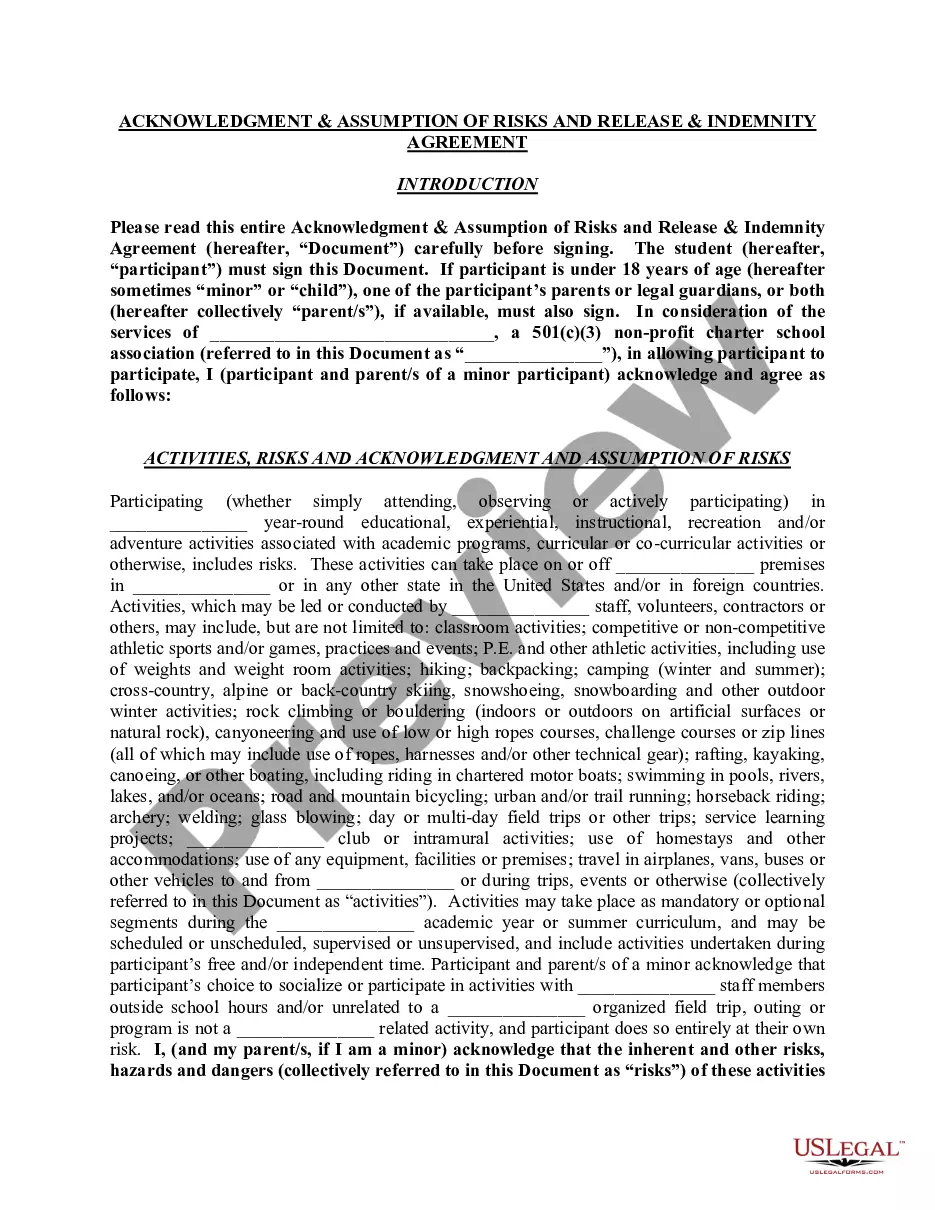
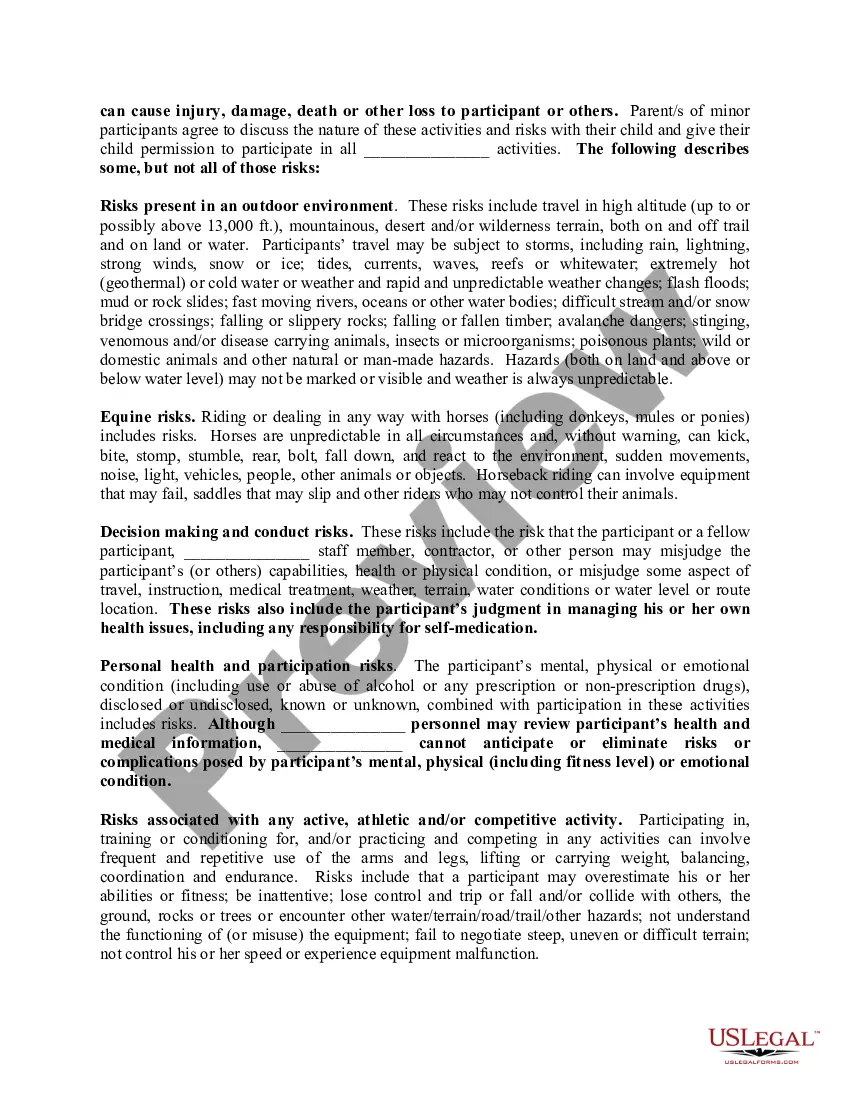
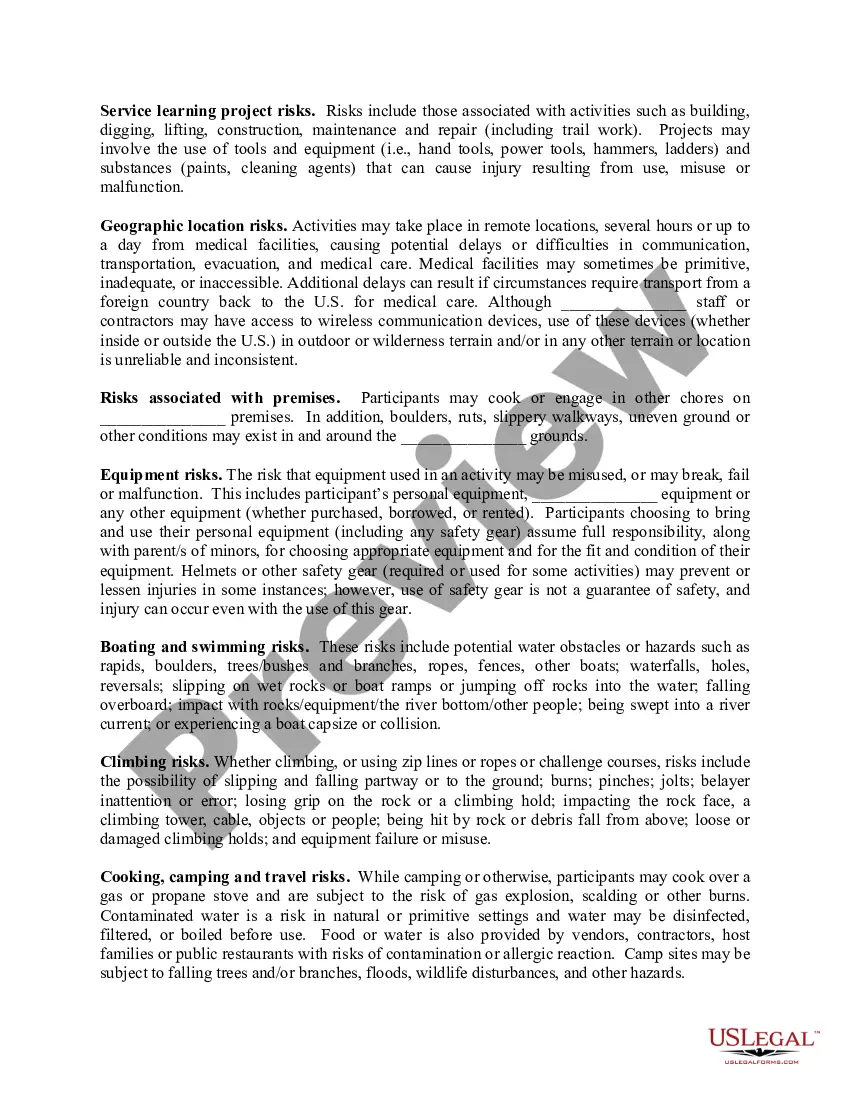
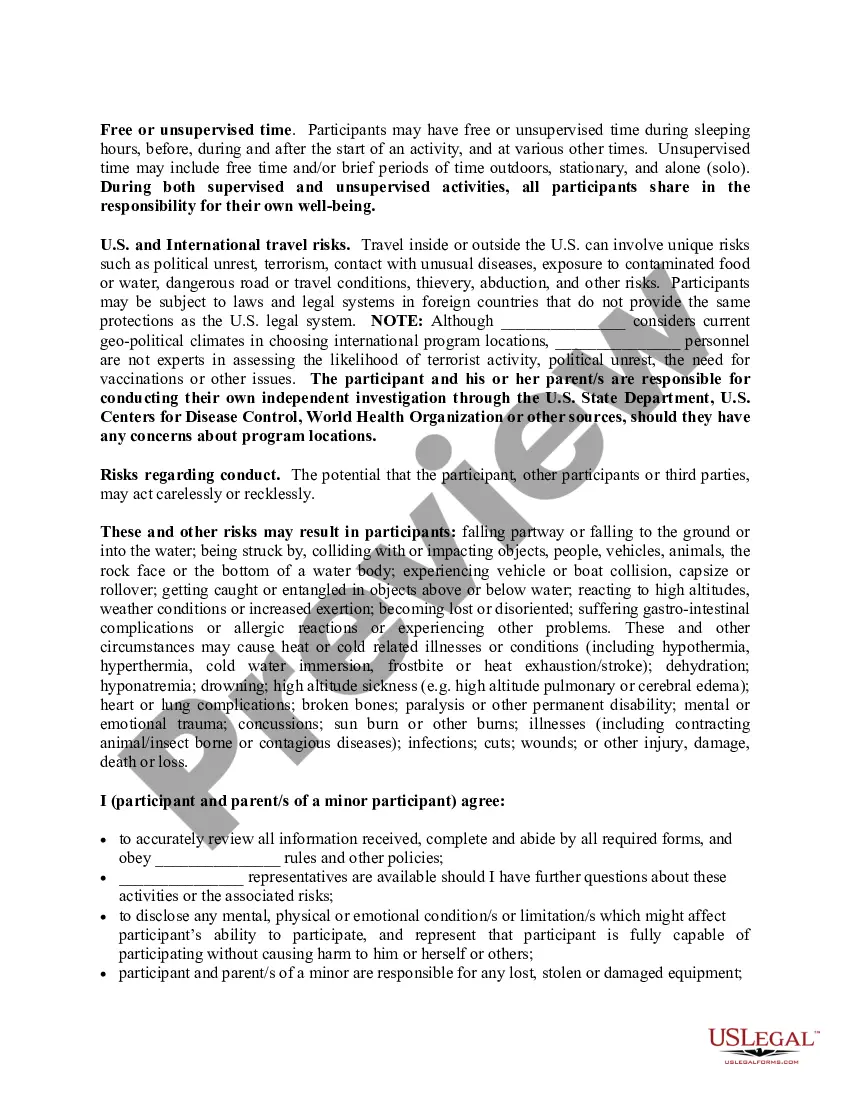
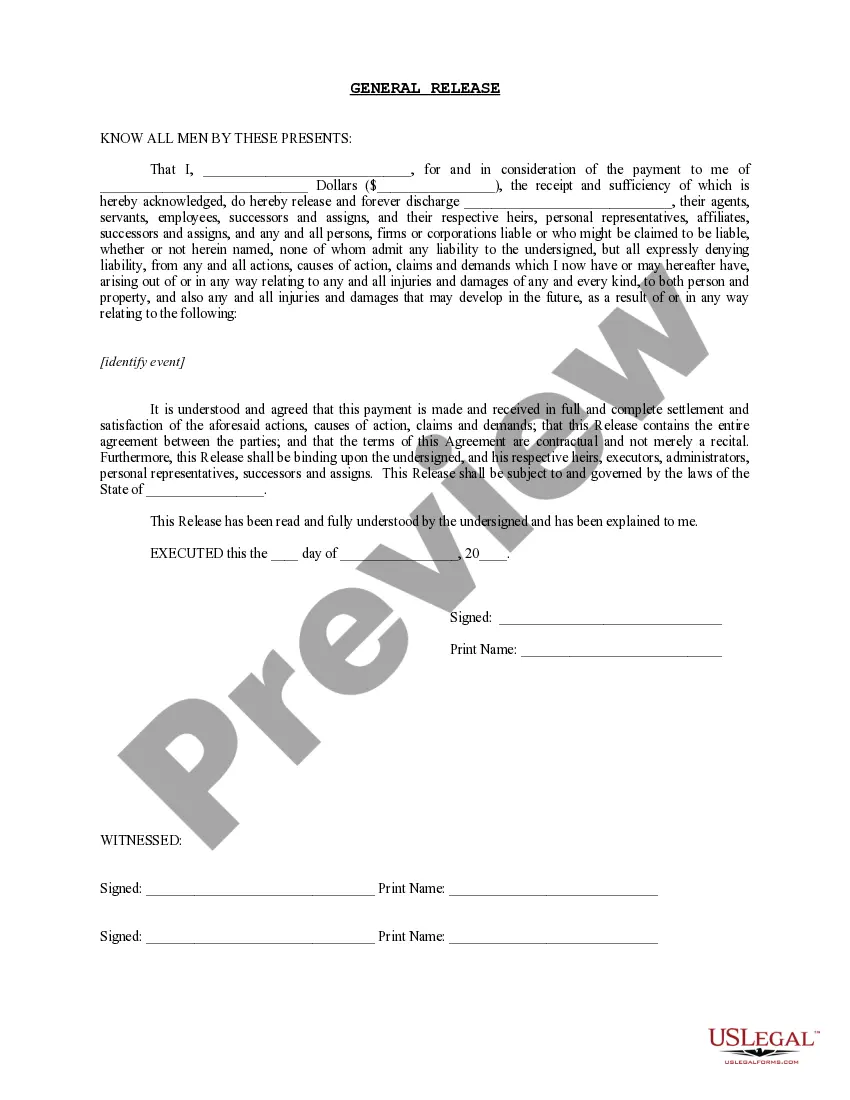
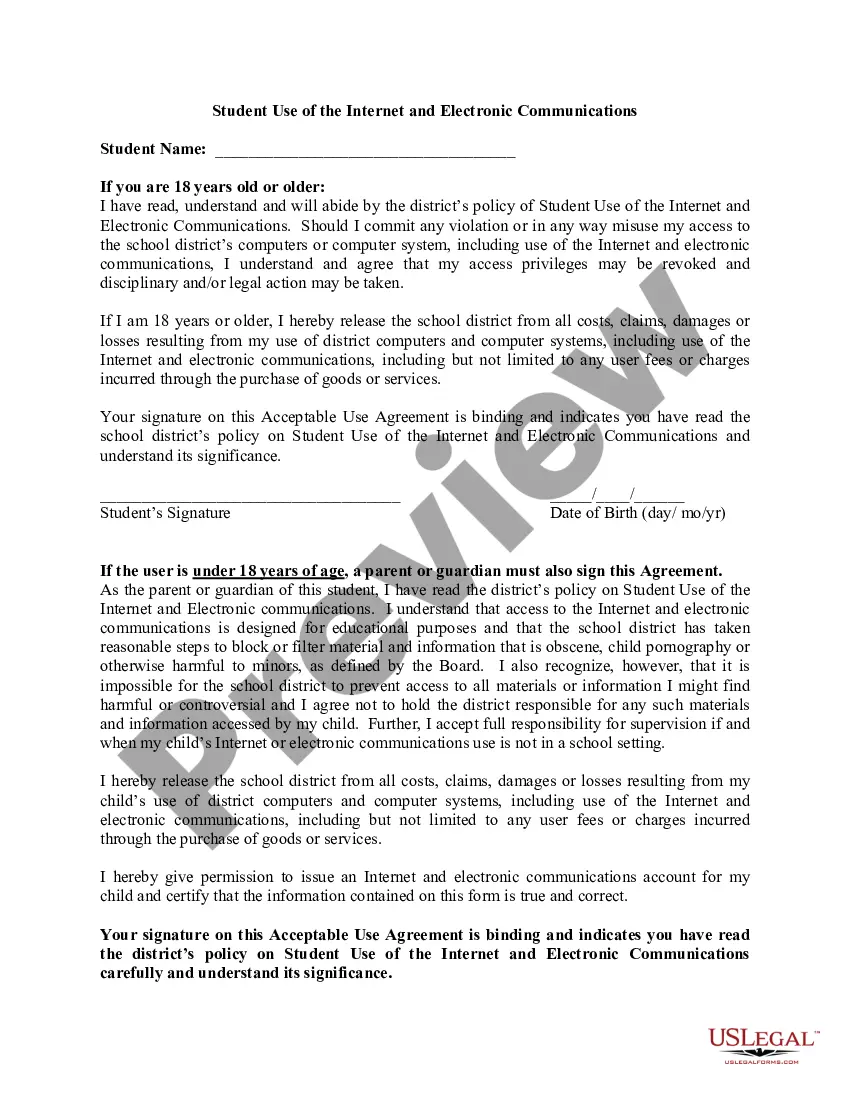
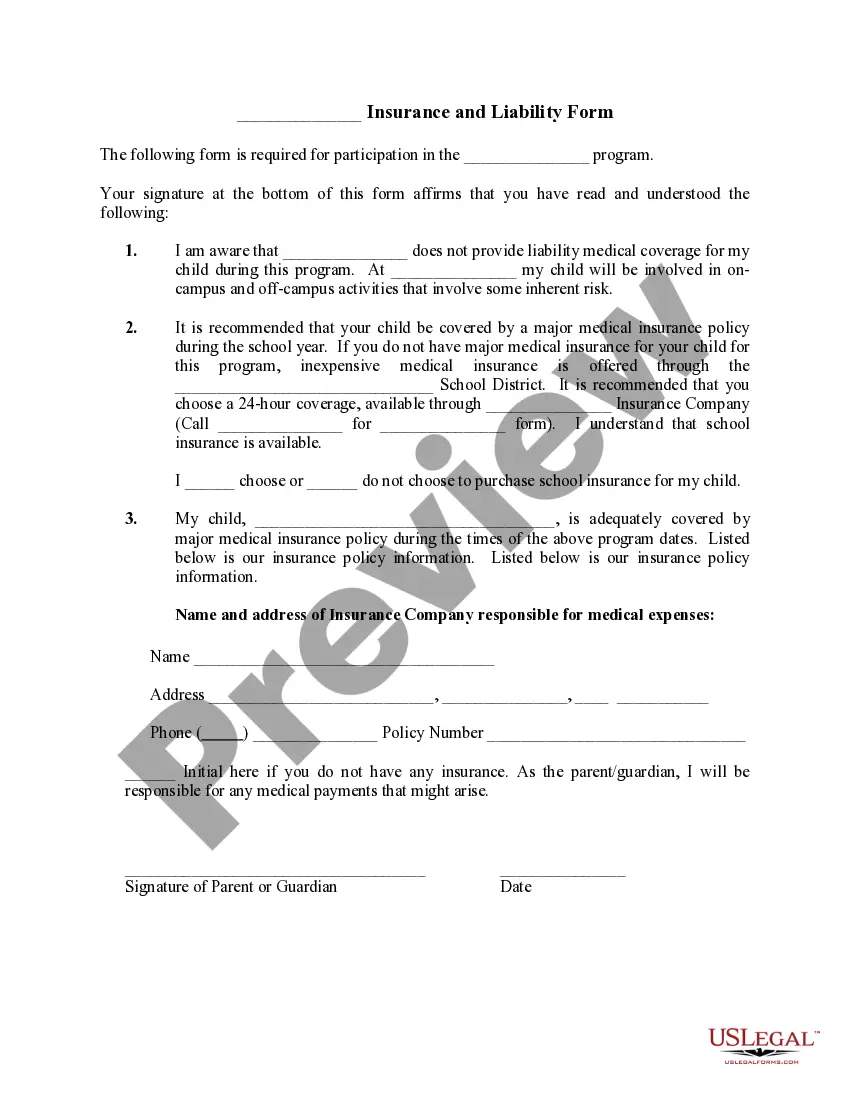
The 501(c)(1) Non-Profit Charter School Release and Indemnification Agreement is a legal document that allows a non-profit charter school to minimize its liability for potential risks associated with educational activities. This form differs from general release forms by specifically addressing the context of a charter school's programs, ensuring that participants acknowledge the risks associated with a variety of educational and recreational activities.
What’s included in this form
- Acknowledgment of risks associated with participation in activities organized by the charter school.
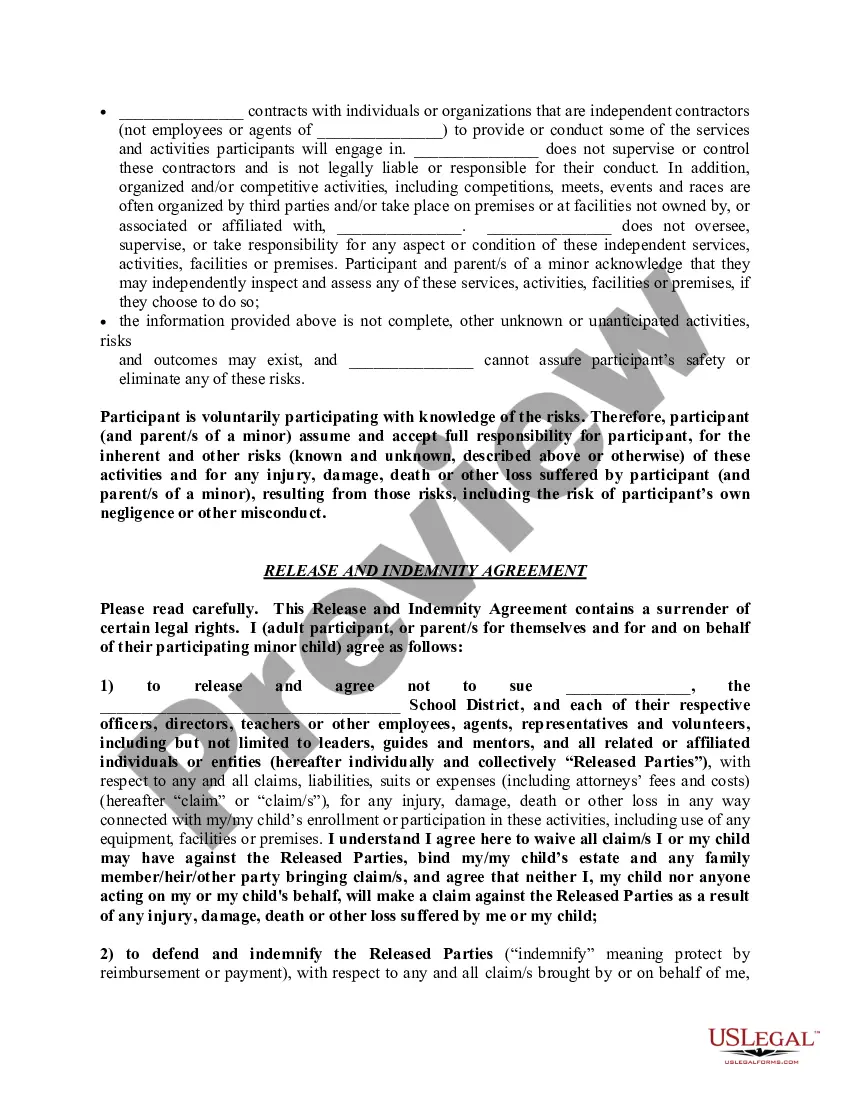
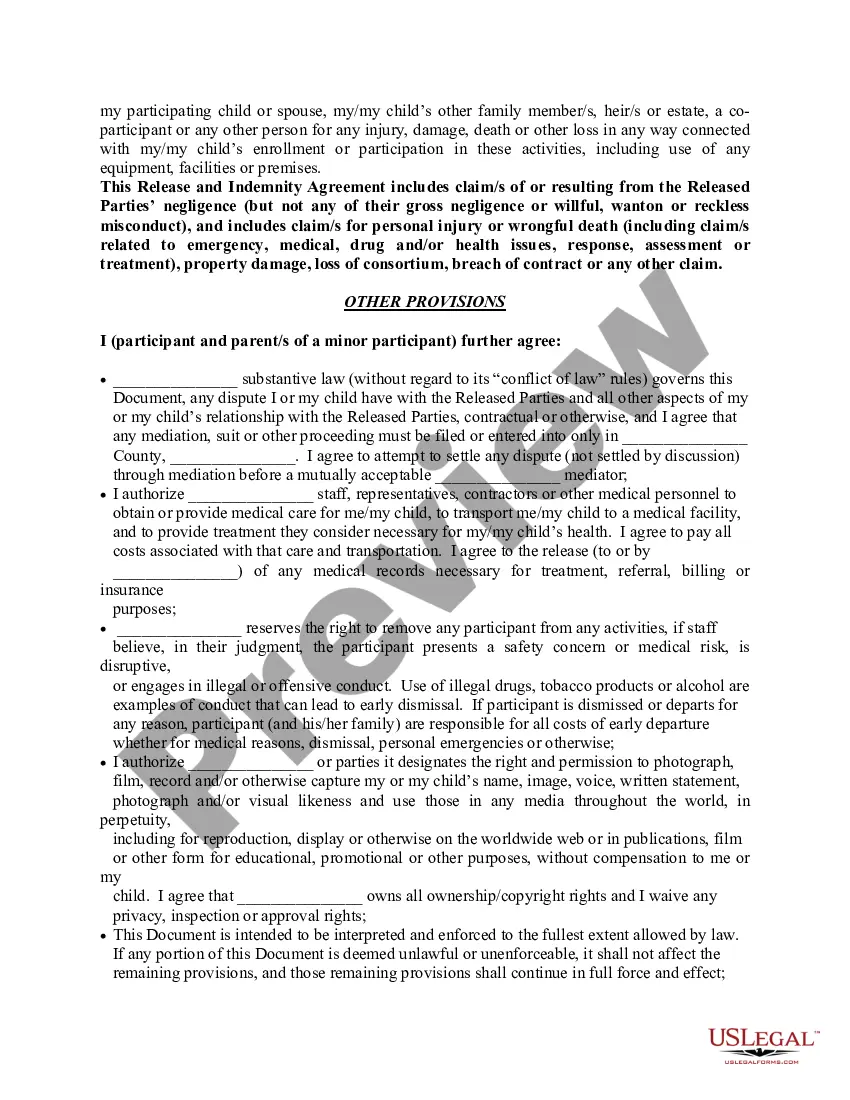
- Details about the release of liability, specifying that signers cannot sue the school for injuries sustained during activities.
- Indemnification clause, obligating participants to cover any claims made against the school resulting from their participation.
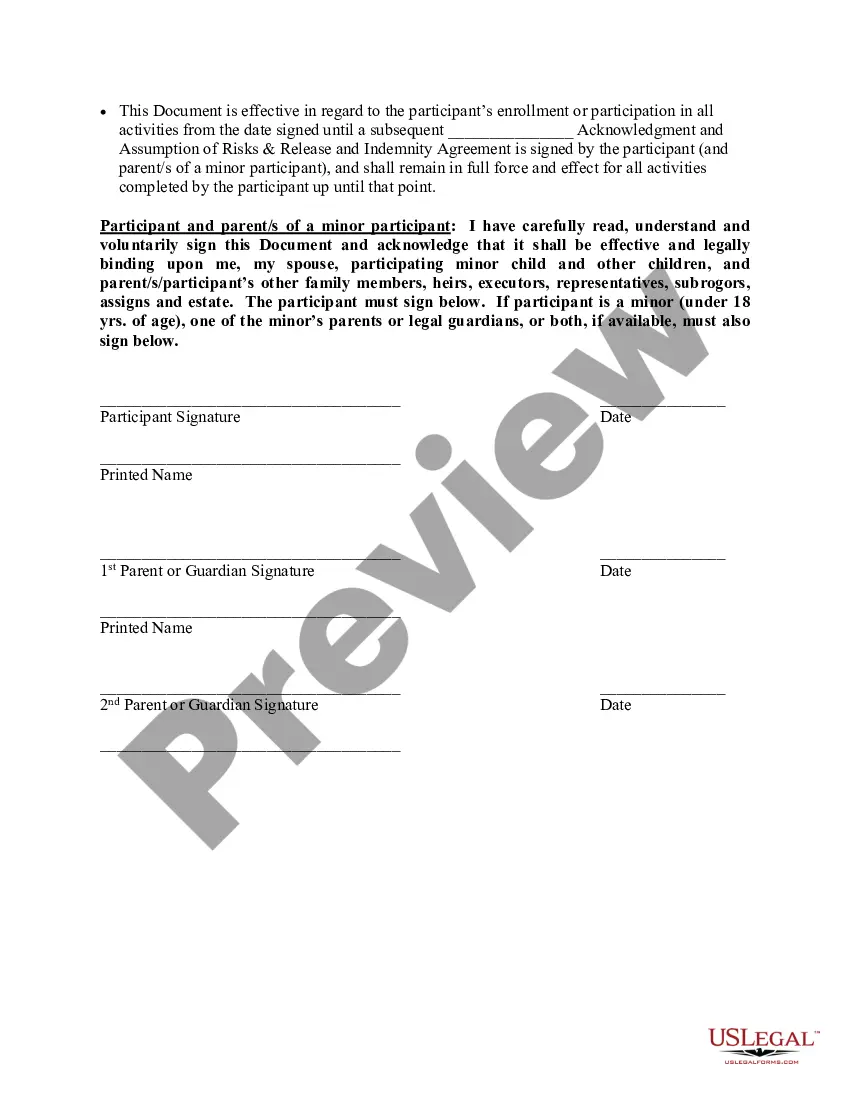
- Signatures required from both the participant and a parent or guardian if the participant is a minor.
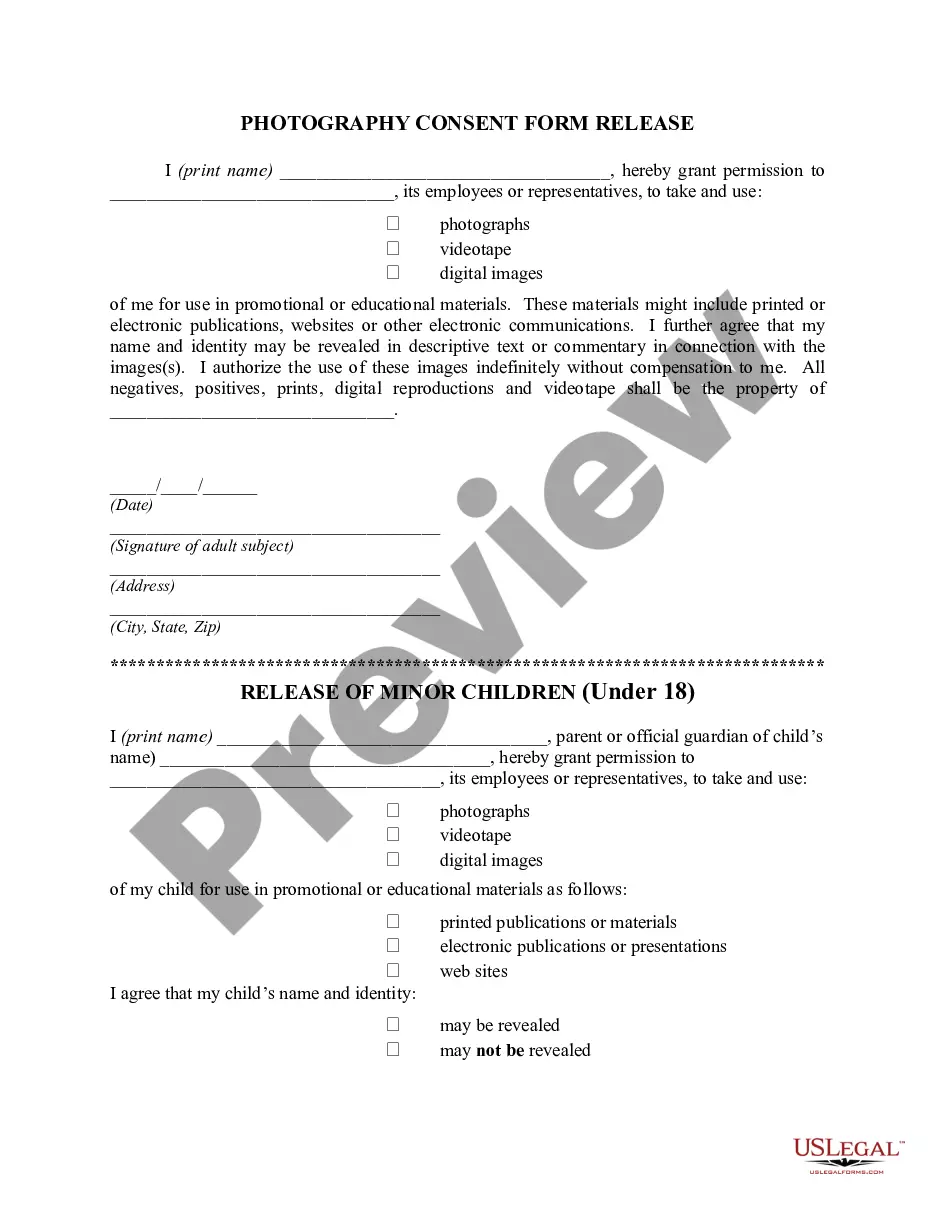
- Provisions related to medical treatment and consent during emergencies.
When to use this document
This form should be used when a participant enrolls in activities organized by a 501(c)(1) non-profit charter school, particularly when those activities involve inherent risks such as sports, outdoor adventures, or educational trips. It is essential for protecting the school from liability claims in the event of an accident or injury during participation.
Who needs this form
- Parents or guardians of minors participating in charter school activities.
- Adult participants enrolling in school programs that involve physical or adventurous activities.
- Administrators or staff of the charter school who need to ensure compliance with liability protections.
Instructions for completing this form
- Read the entire document carefully to understand the risks and responsibilities.
- Fill in the name of the charter school and other relevant details where indicated.
- Have the participant, and if applicable, the parent or guardian, sign and date the form.
- Ensure that any medical conditions or limitations are disclosed as required by the form.
- Keep a copy of the signed document for your records and submit it to the school as instructed.
Does this form need to be notarized?
Notarization is not commonly needed for this form. However, certain documents or local rules may make it necessary. Our notarization service, powered by Notarize, allows you to finalize it securely online anytime, day or night.
Get your form ready online
Our built-in tools help you complete, sign, share, and store your documents in one place.
Make edits, fill in missing information, and update formatting in US Legal Forms—just like you would in MS Word.
Download a copy, print it, send it by email, or mail it via USPS—whatever works best for your next step.
Sign and collect signatures with our SignNow integration. Send to multiple recipients, set reminders, and more. Go Premium to unlock E-Sign.
If this form requires notarization, complete it online through a secure video call—no need to meet a notary in person or wait for an appointment.
We protect your documents and personal data by following strict security and privacy standards.

Make edits, fill in missing information, and update formatting in US Legal Forms—just like you would in MS Word.

Download a copy, print it, send it by email, or mail it via USPS—whatever works best for your next step.

Sign and collect signatures with our SignNow integration. Send to multiple recipients, set reminders, and more. Go Premium to unlock E-Sign.

If this form requires notarization, complete it online through a secure video call—no need to meet a notary in person or wait for an appointment.

We protect your documents and personal data by following strict security and privacy standards.
Mistakes to watch out for
- Failing to read the entire agreement before signing.
- Not providing complete information regarding medical conditions.
- Overlooking the signature requirement for a parent or guardian if the participant is under 18.
- Not keeping a copy of the document after submitting.
Why complete this form online
- Convenience of accessing and completing the form at any time.
- Guaranteed reliability, with forms prepared by licensed attorneys to ensure legal compliance.
- Editability allows for customization to reflect specific school activities or requirements before printing.
Key takeaways
- The agreement is essential for reducing liability risks for non-profit charter schools.
- Both participants and parents must understand the inherent risks associated with activities.
- Proper completion of the form ensures legal protection for the school and clarity about responsibilities.
Looking for another form?
Form popularity
FAQ
Operation in ance with the stated exempt purpose(s). Private Benefit / Private Inurement.Lobbying.Political Activity.Unrelated Business Income (UBI)Not Operating Within Your Exempt PURPOSE Endangers Your 501(c)(3) IRS Tax-Exempt Status.
A section 501(c)(3) organization must not be organized or operated for the benefit of private interests, such as the creator or the creator's family, shareholders of the organization, other designated individuals, or persons controlled directly or indirectly by such private interests.
Charter schools must file Form 990, Return of Organization Exempt From Income Tax, or Form 990EX, Short Form Return of Organization Exempt From Income Tax. Their annual gross receipts are generally more than $25,000, and they rarely meet the filing exception contained in Rev.
A major distinction between private benefit and inurement is that the former is construed broadly. Inurement pertains to a narrow category of disqualifying actions, while private benefit is permitted in limited instances. As the IRS points out: inurement and private benefit are often incorrectly used interchangeably.
The private inurement doctrine The important relationship between the organization and the ?disqualified person? is that by way of their position within the organization, they can exercise control and influence over the organization. The most common example of private inurement is excessive compensation.
No part of the net earnings of a section 501(c)(3) organization may inure to the benefit of any private shareholder or individual. A private shareholder or individual is a person having a personal and private interest in the activities of the organization.
The most common punishment for nonprofits guilty of private inurement is monetary sanctions--also called "intermediate sanctions." Revocation of a nonprofit's tax-exempt status is rare--as a practical matter, it is a death sentence for any nonprofit.
Private inurement occurs when an individual working on the inside (commonly known as an insider) receives any of the organization's net income or inappropriately uses any of its assets for personal gain.