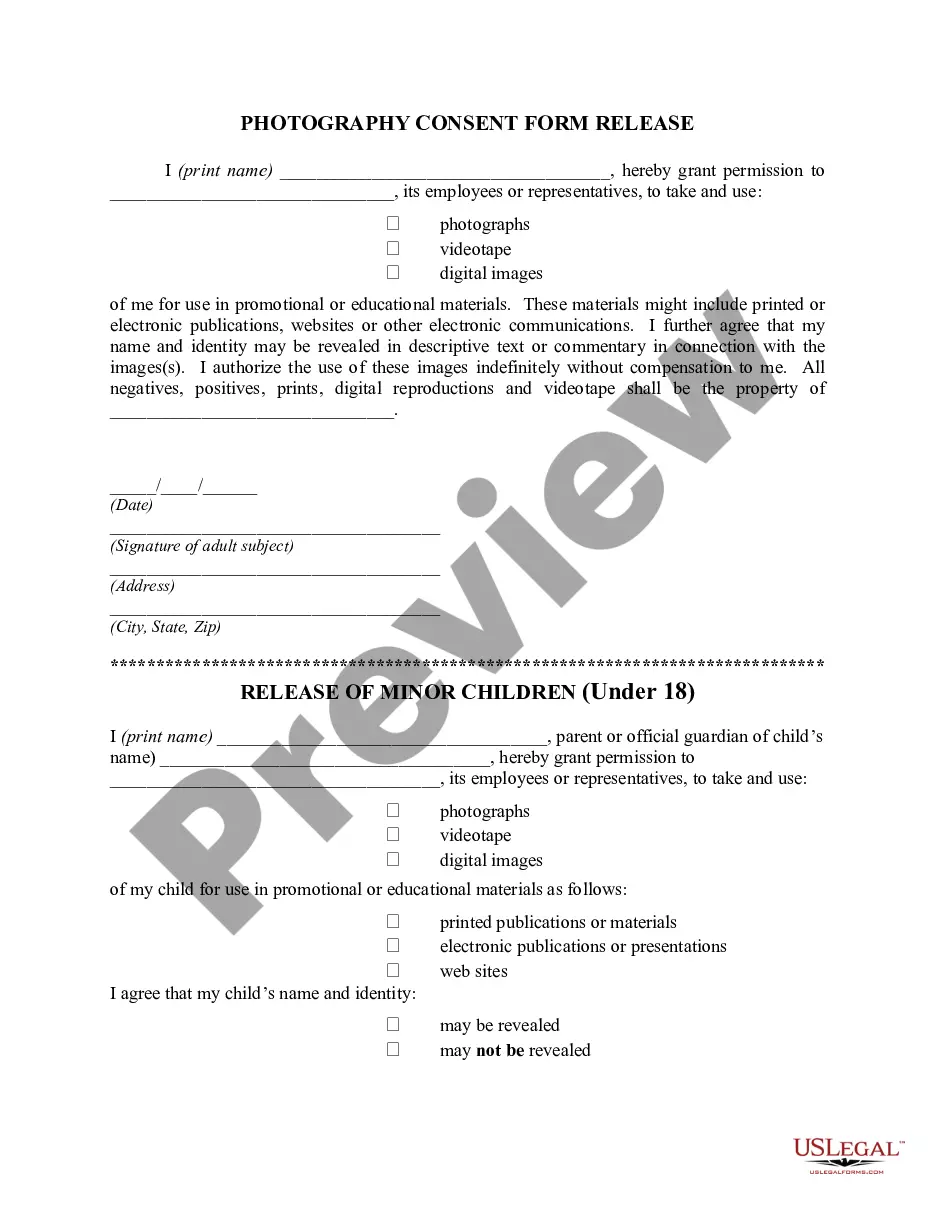
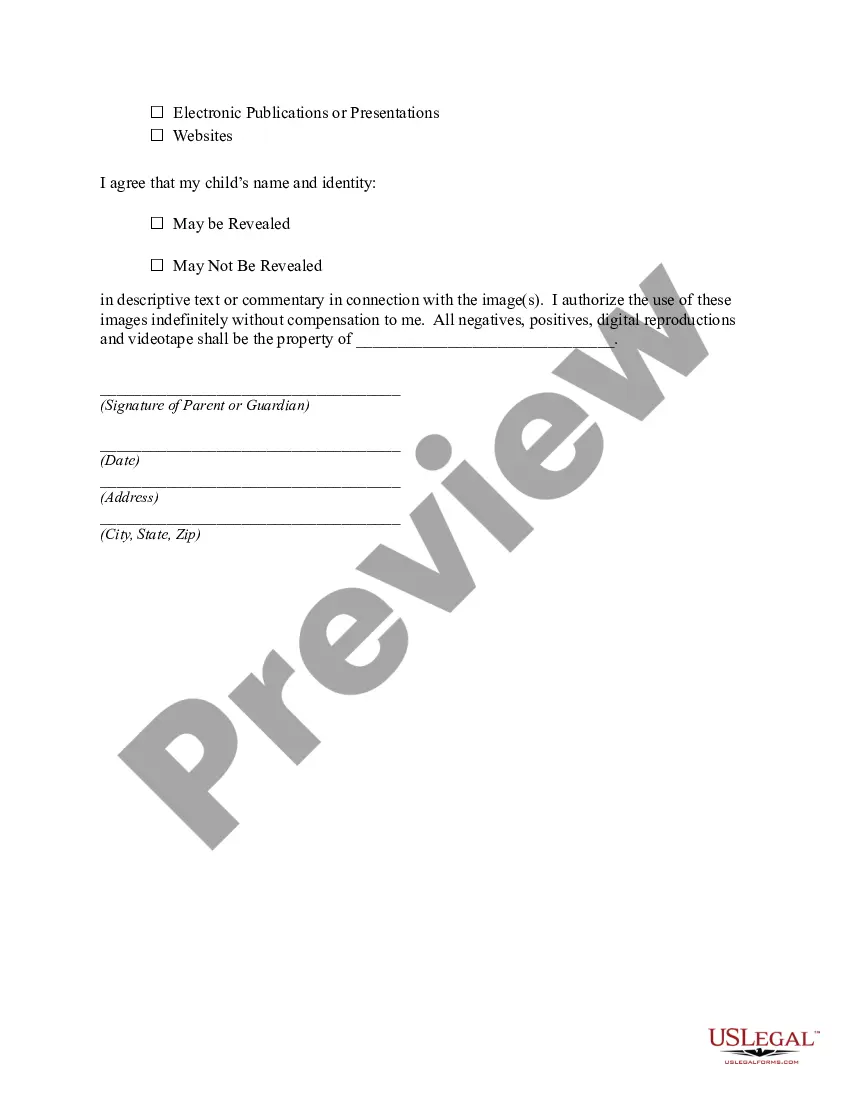
501(c)(1) Non-Profit Charter School Photography Consent is a document that is used to obtain permission from the parents or guardians of students to take photographs or videos of them for use in school events or activities. This consent form is typically required for any event or activity that involves photography or video recording of students. It specifies the purpose of the photography or video recording, how the photos will be used, and the parental or guardian’s permission for the school to use the photos. There are two types of 501(c)(1) Non-Profit Charter School Photography Consent: one for parents/guardians and one for students over the age of 18. Both forms must be signed and dated in order for the consent to be valid.
501(c)(1) Non-Profit Charter School Photography Consent
Category:
State:
Multi-State
Control #:
US-70360NMS
Format:
Word;
Rich Text
Instant download
Description
A release allowing a 501(c)(1) non-profit charter school to use and/or take photographs, videos or other digital images to be used in promotional and/or educational materials. This release also allows the 501(c)(1) non-profit charter school to identify the student to be revealed in the promotional and/or educational materials. This form can be used for a non-minor or minor attending the 501(c)(1) non-profit charter school, of course, if a minor, the parents/guardian will need to execute the form.
501(c)(1) Non-Profit Charter School Photography Consent is a document that is used to obtain permission from the parents or guardians of students to take photographs or videos of them for use in school events or activities. This consent form is typically required for any event or activity that involves photography or video recording of students. It specifies the purpose of the photography or video recording, how the photos will be used, and the parental or guardian’s permission for the school to use the photos. There are two types of 501(c)(1) Non-Profit Charter School Photography Consent: one for parents/guardians and one for students over the age of 18. Both forms must be signed and dated in order for the consent to be valid.
Free preview
How to fill out 501(c)(1) Non-Profit Charter School Photography Consent?
Handling official paperwork requires attention, precision, and using properly-drafted blanks. US Legal Forms has been helping people nationwide do just that for 25 years, so when you pick your 501(c)(1) Non-Profit Charter School Photography Consent template from our service, you can be certain it meets federal and state laws.
Dealing with our service is simple and fast. To obtain the required document, all you’ll need is an account with a valid subscription. Here’s a quick guide for you to obtain your 501(c)(1) Non-Profit Charter School Photography Consent within minutes:
- Make sure to attentively check the form content and its correspondence with general and legal requirements by previewing it or reading its description.
- Search for an alternative formal template if the previously opened one doesn’t suit your situation or state regulations (the tab for that is on the top page corner).
- Log in to your account and download the 501(c)(1) Non-Profit Charter School Photography Consent in the format you prefer. If it’s your first experience with our service, click Buy now to continue.
- Register for an account, decide on your subscription plan, and pay with your credit card or PayPal account.
- Decide in what format you want to save your form and click Download. Print the blank or add it to a professional PDF editor to prepare it paper-free.
All documents are drafted for multi-usage, like the 501(c)(1) Non-Profit Charter School Photography Consent you see on this page. If you need them one more time, you can fill them out without re-payment - just open the My Forms tab in your profile and complete your document whenever you need it. Try US Legal Forms and prepare your business and personal paperwork quickly and in total legal compliance!