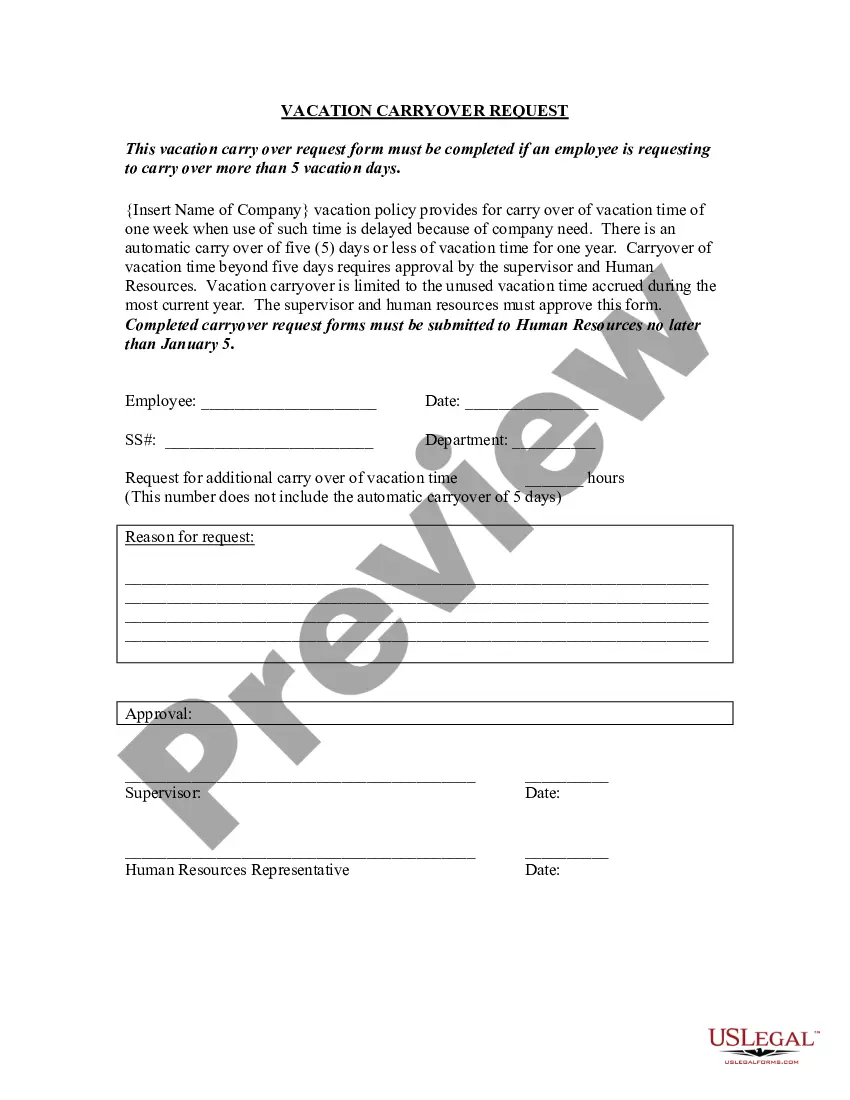
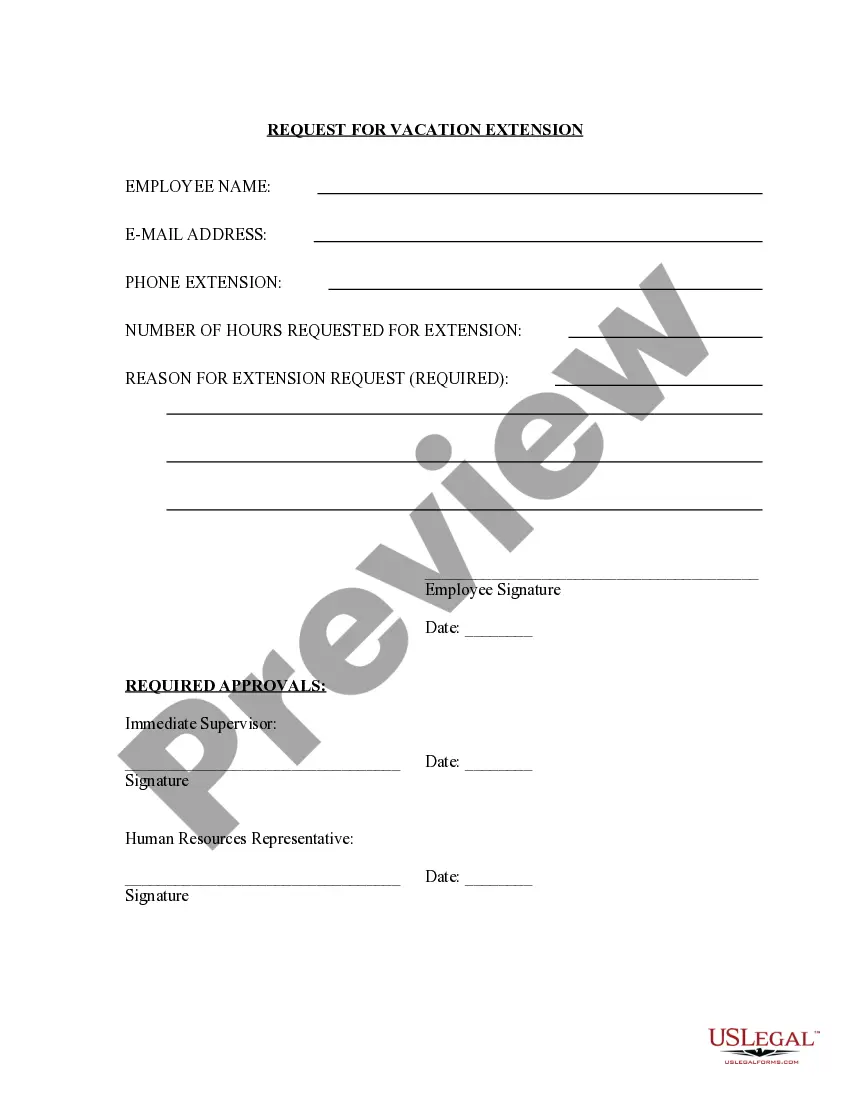
Nevada Vacation Carryover Request
Description


How to fill out Vacation Carryover Request?
It is feasible to spend hours online trying to locate the legal document template that fulfills the federal and state requirements you require.
US Legal Forms offers a vast collection of legal documents that are reviewed by experts.
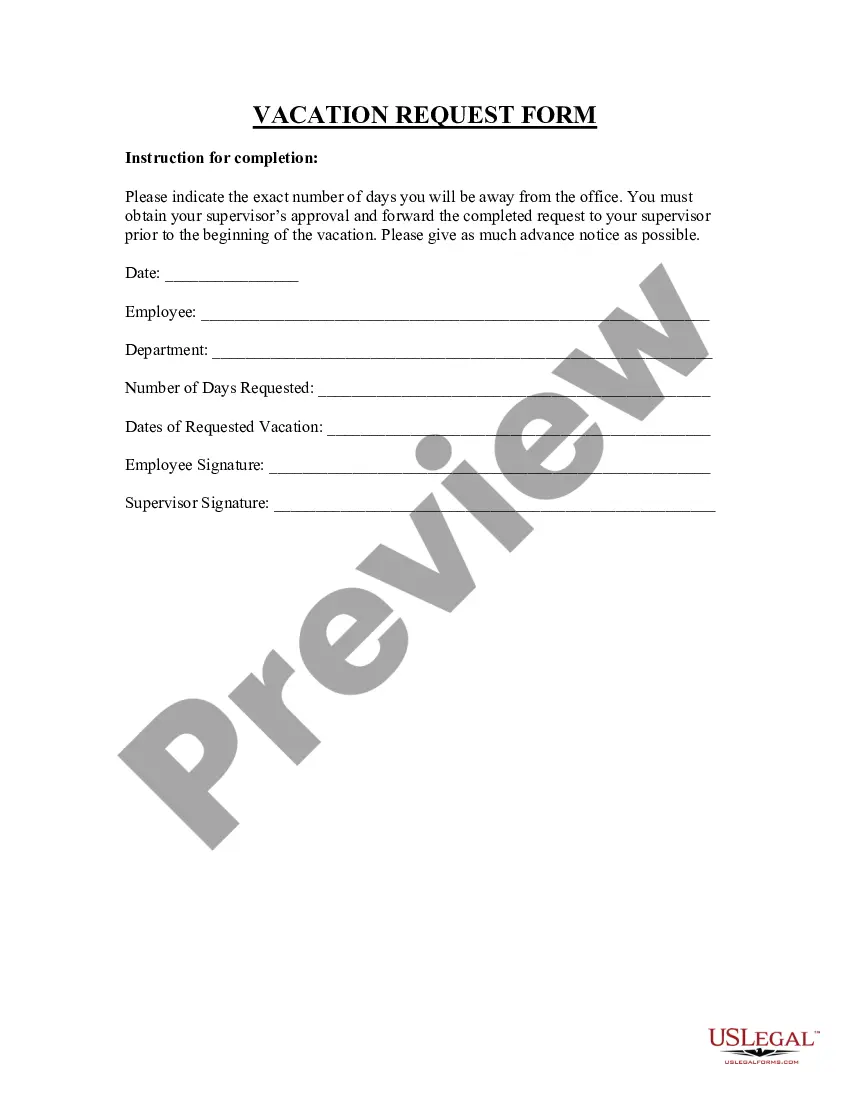
You can download or print the Nevada Vacation Carryover Request from my service.
If available, use the Review option to take a look at the document template as well.
- If you already possess a US Legal Forms account, you can Log In and click on the Download button.
- After that, you may complete, edit, print, or sign the Nevada Vacation Carryover Request.
- Every legal document template you obtain is your personal property indefinitely.
- To obtain an additional copy of any purchased form, visit the My documents tab and click on the corresponding option.
- If you are using the US Legal Forms website for the first time, follow the simple instructions below.
- First, ensure that you have selected the correct document template for the state/area of your choice.
- Review the form description to verify that you have chosen the proper form.
Form popularity
FAQ
On June 13, 2019, Nevada Governor Steve Sisolak signed SB 312 into law to require Nevada employers to provide paid leave to workers. Specifically, the bill requires that employees receive 0.01923 hours of paid leave for each hour worked.
California's paid sick time law gives workers sick time that can be used to recover from physical/mental illness or injury; to seek medical diagnosis, treatment, or preventative care; to care for a family member who is ill or needs medical diagnosis, treatment, or preventative care; or to address needs that may arise
The law provides for the carryover of accrued paid leave from one benefit year to the next, but you can limit the amount of carryover to 40 hours per benefit year.
No use-it-or-lose-it policies permitted. Under California law, vacation is treated the same as earned wages and vest as the employee performs work. Because vacation is earned proportionally as the employee works, policies requiring employees to lose vacation already earned is illegal under California law.
For employees with less than 50 employees, Nevada state law does not require employers to grant their workers paid or unpaid vacation time. It makes no difference if the worker is a salaried employee or an independent contractor, full-time or part-time. In short, vacation leave is not a right in Nevada.
Nevada law does not require private employers to provide employees with either paid or unpaid holiday leave. In Nevada, a private employer can require an employee to work holidays.
Beginning October 1, 2021, if a Nevada employer provides paid or unpaid sick leave to its employees, it must allow the employee to use a portion of their accrued sick leave to assist a member of their immediate family who has an illness, injury, or medical need.