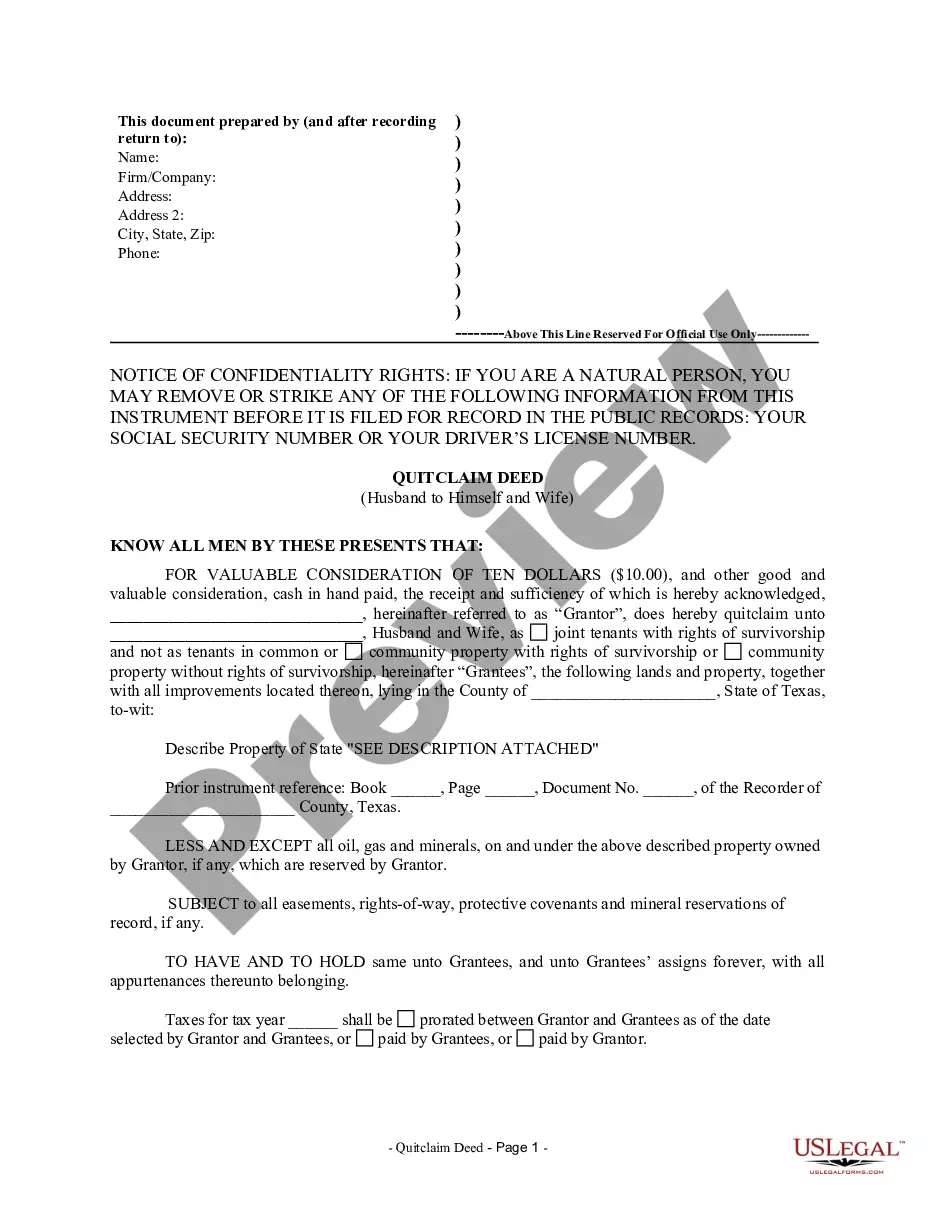
Nevada Quitclaim Deed - Individual to a Trust
What this document covers
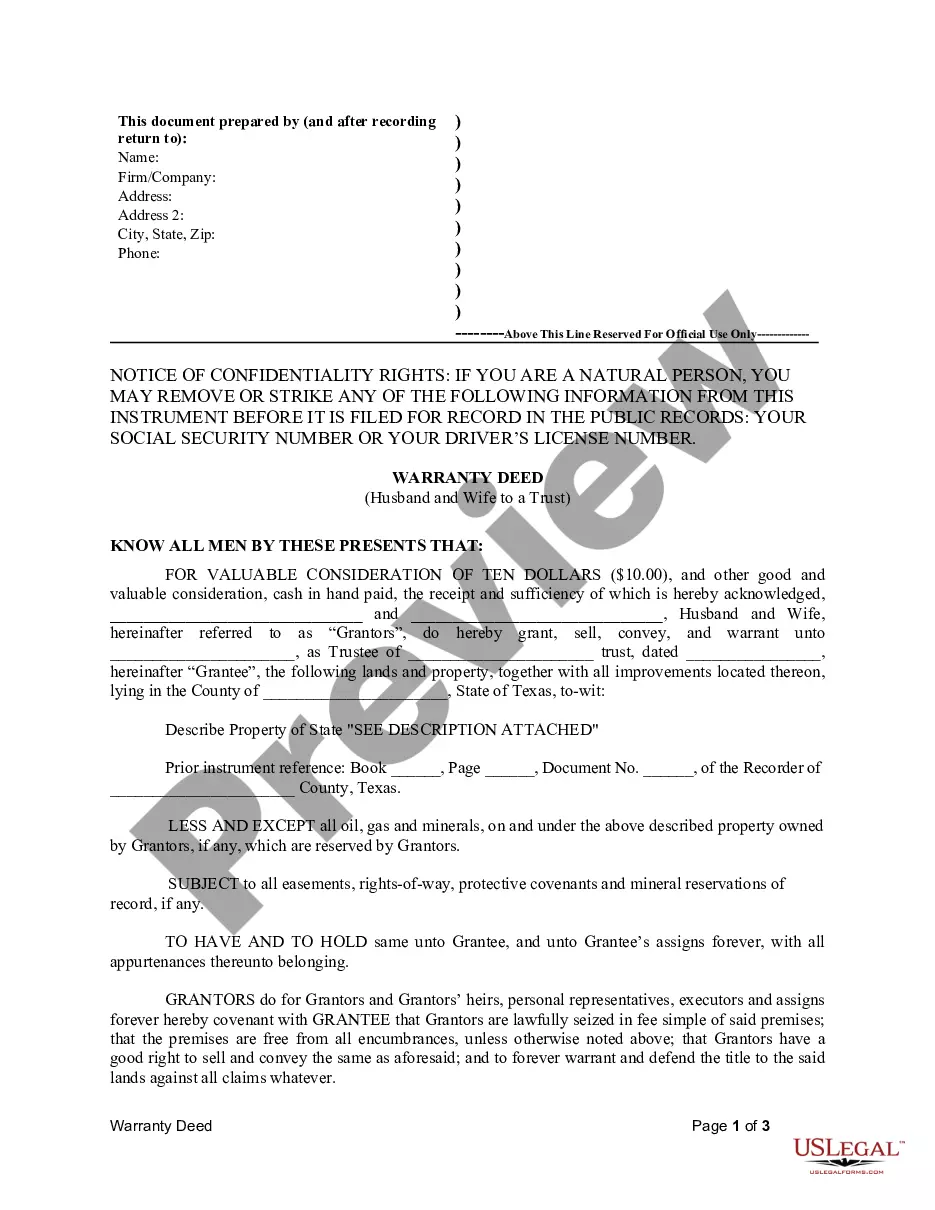
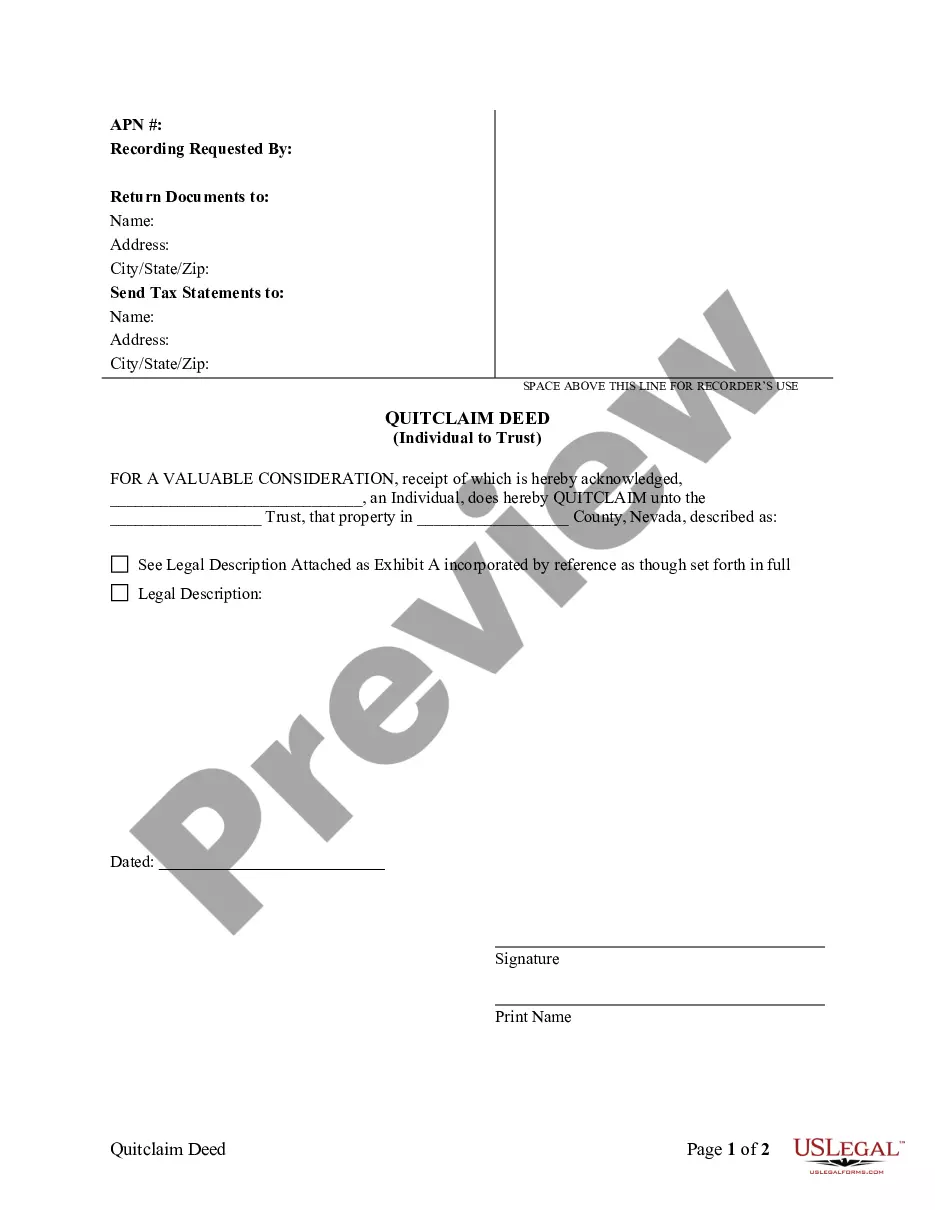
A Quitclaim Deed - Individual to a Trust is a legal document used to transfer ownership of property from an individual (the Grantor) to a trust (the Grantee). Unlike other types of deeds, the Quitclaim Deed does not guarantee that the Grantor holds any legal claim to the property; it simply conveys whatever interest the Grantor has. This form is particularly useful for individuals wishing to place their property into a trust for estate planning or asset protection purposes.
Main sections of this form
- Identifies the Grantor and Grantee, specifying the individual and the trust.
- Describes the property being transferred, usually referenced as an attachment.
- Includes a declaration that the Grantor conveys their interest in the property to the Grantee.
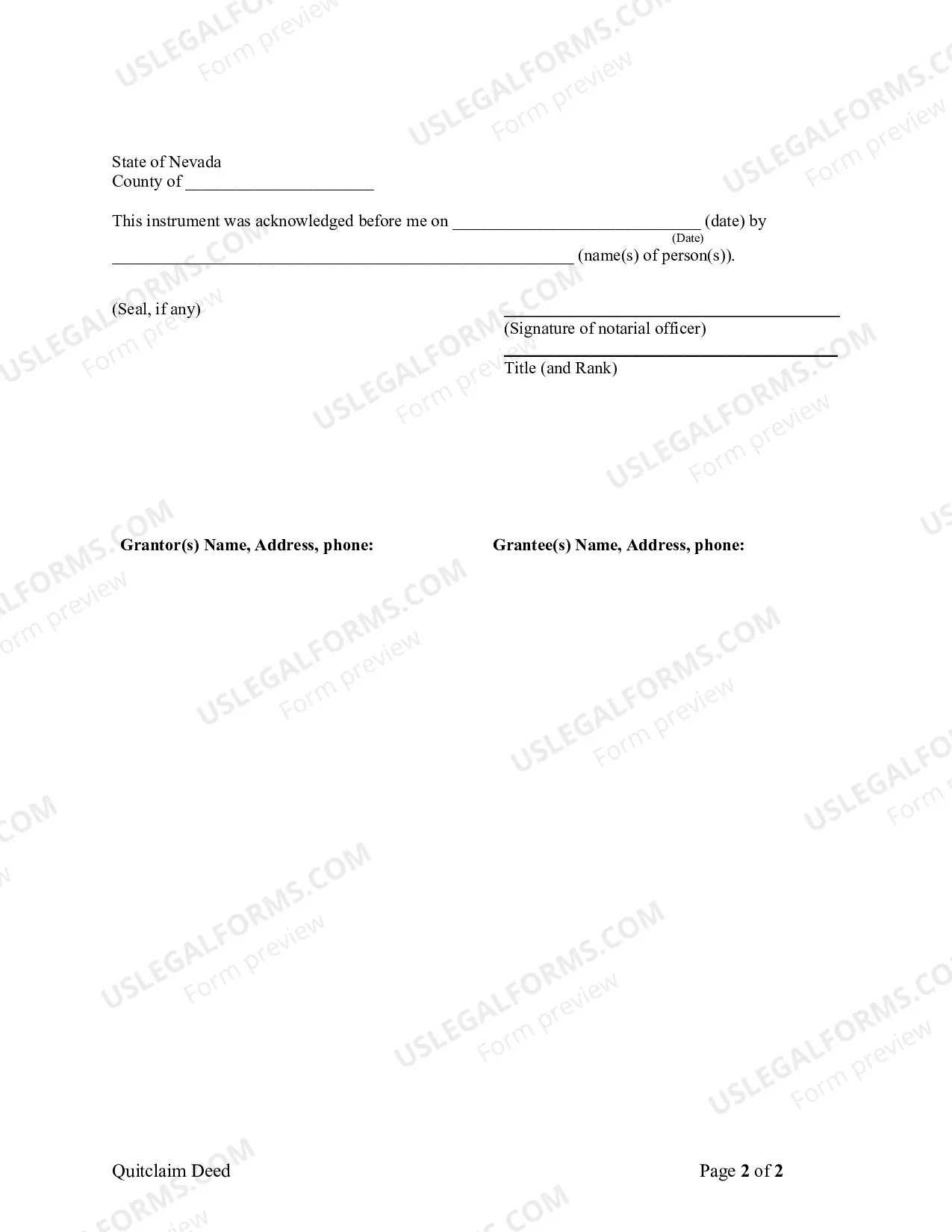
- Includes signatures of both parties to validate the transaction.
- Can include notarization details if required by state law.




When this form is needed
This form is used when an individual wishes to transfer property ownership to a trust. It is often used in estate planning to manage assets, protect them from probate, or to establish a trust for the benefit of beneficiaries. Common situations include transferring a family home into a revocable living trust or creating an irrevocable trust for tax purposes.
Who should use this form
This form is suitable for:
- Individuals looking to create a trust for estate planning.
- Trustees who need to acquire property for a trust.
- Real estate owners who wish to transfer their property to a trust for asset protection.
How to complete this form
- Identify the Grantor as the individual transferring the property.
- Outline the Grantee as the trust receiving the property.
- Provide a detailed legal description of the property, often included as an exhibit.
- Have the Grantor sign the form to execute the transfer.
- Ensure the form is notarized if required by state law.
Notarization requirements for this form
Notarization is required for this form to take effect. Our online notarization service, powered by Notarize, lets you verify and sign documents remotely through an encrypted video session, available 24/7.
Get your form ready online
Our built-in tools help you complete, sign, share, and store your documents in one place.
Make edits, fill in missing information, and update formatting in US Legal Forms—just like you would in MS Word.
Download a copy, print it, send it by email, or mail it via USPS—whatever works best for your next step.
Sign and collect signatures with our SignNow integration. Send to multiple recipients, set reminders, and more. Go Premium to unlock E-Sign.
If this form requires notarization, complete it online through a secure video call—no need to meet a notary in person or wait for an appointment.
We protect your documents and personal data by following strict security and privacy standards.

Make edits, fill in missing information, and update formatting in US Legal Forms—just like you would in MS Word.

Download a copy, print it, send it by email, or mail it via USPS—whatever works best for your next step.

Sign and collect signatures with our SignNow integration. Send to multiple recipients, set reminders, and more. Go Premium to unlock E-Sign.

If this form requires notarization, complete it online through a secure video call—no need to meet a notary in person or wait for an appointment.

We protect your documents and personal data by following strict security and privacy standards.
Common mistakes
- Forgetting to include a detailed property description, which can lead to invalid transfers.
- Not having the document notarized when required, making it unenforceable.
- Failing to check whether the trust is properly set up before transferring property.
Benefits of completing this form online
- Convenience of downloading and completing the form at your own pace.
- Editability allows for easy adjustments to fit your specific needs.
- Reliable, attorney-drafted templates ensure compliance with current laws.
Legal use & context
- Provides a legal basis for transferring property without guarantees.
- Serves as a simple and cost-effective means to convey property to a trust.
- Generally enforceable but may not address potential liens on the property.
Key takeaways
- The Quitclaim Deed - Individual to a Trust is a straightforward way to transfer property ownership to a trust.
- Completing the form accurately is essential for valid property transfer.
- Being aware of state-specific requirements helps ensure the effectiveness of the deed.
Looking for another form?



Form popularity
FAQ
The act of transferring a property that is owned by an individual into a trust, will see the trust liable to pay stamp duty on acquisition of the asset. Additionally, the individual who is transferring ownership to the trust, will be liable to pay capital gains tax on the disposal of the asset.
Locate your current deed. Use the proper deed. Check with your title insurance company and lender. Prepare a new deed. Sign in the presence of a notary. Record the deed in the county clerk's office. Locate the deed that's in trust. Use the proper deed.
A quitclaim deed can be used to transfer property from a trust, but a Special Warranty Deed seems to be a more common way to do this.
Take the signed and notarized quitclaim deed to your county recorder's office to complete the transfer of title into your revocable trust. Check in two to four weeks to ensure it has been recorded. Include the address of the property on the asset list addendum attached to your trust.
Transferring Real Property to a Trust You can transfer your home (or any real property) to the trust with a deed, a document that transfers ownership to the trust. A quitclaim deed is the most common and simplest method (and one you can do yourself).