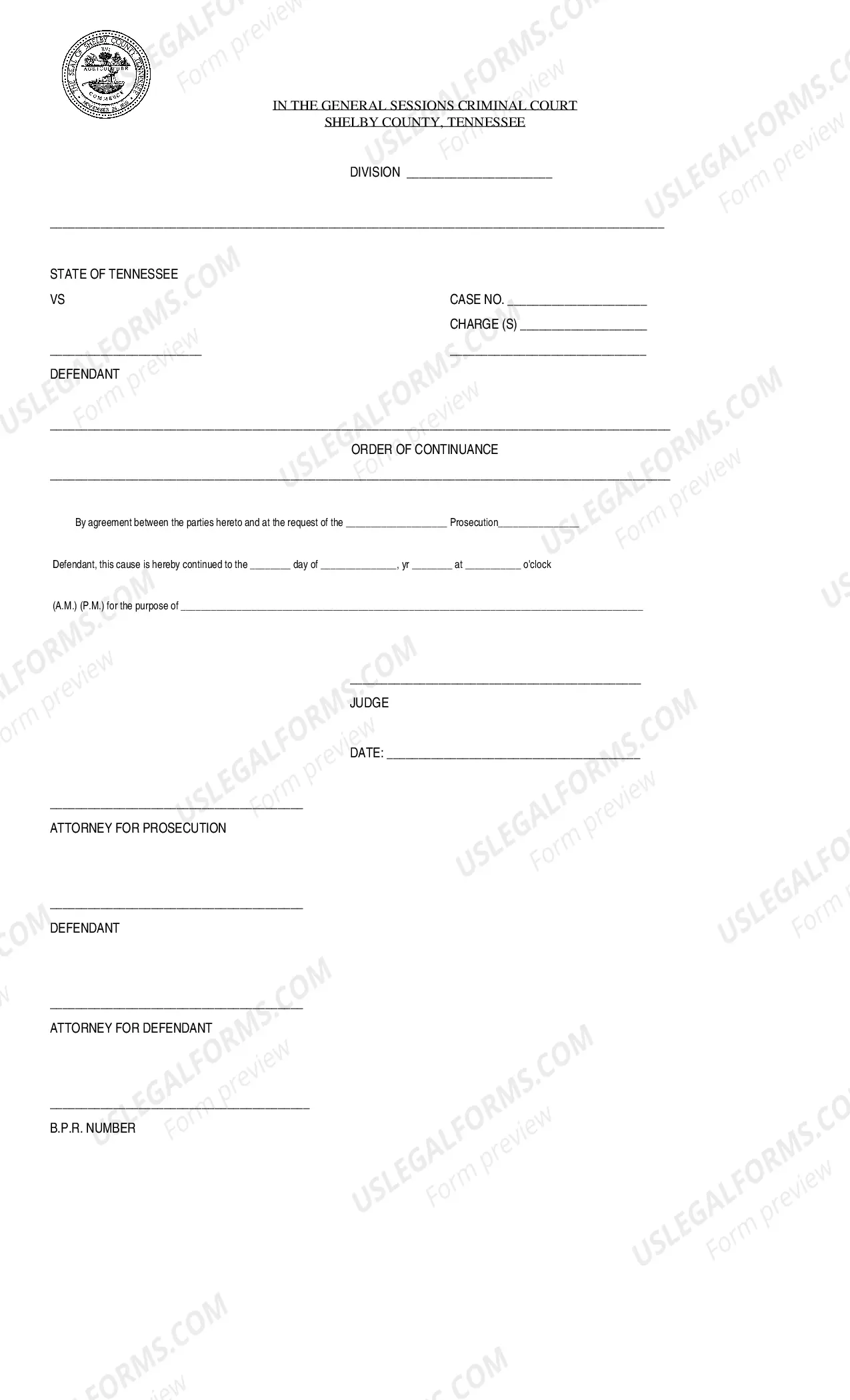
Tennessee Order of Continuance Form
Description
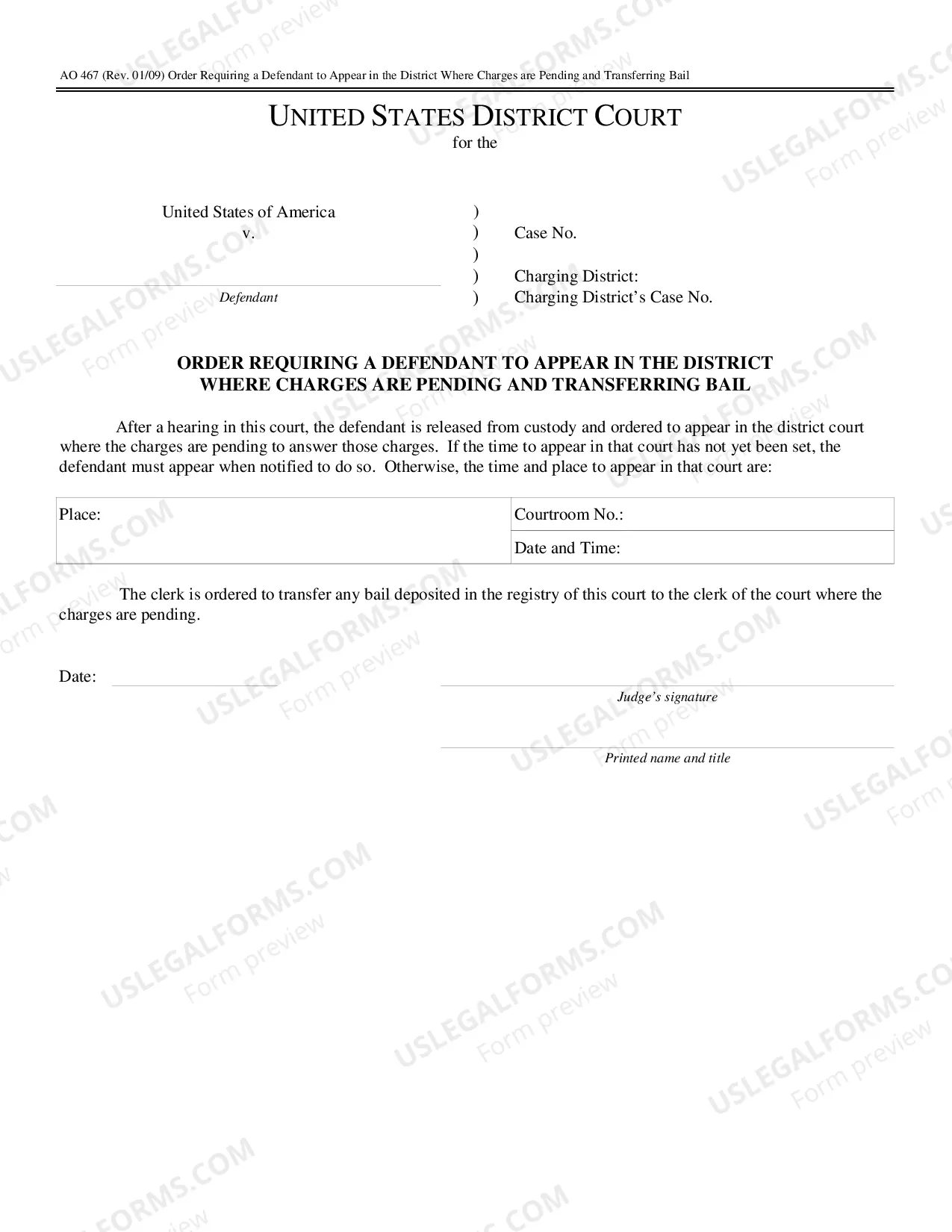
Get your form ready online
Our built-in tools help you complete, sign, share, and store your documents in one place.
Make edits, fill in missing information, and update formatting in US Legal Forms—just like you would in MS Word.
Download a copy, print it, send it by email, or mail it via USPS—whatever works best for your next step.
Sign and collect signatures with our SignNow integration. Send to multiple recipients, set reminders, and more. Go Premium to unlock E-Sign.
If this form requires notarization, complete it online through a secure video call—no need to meet a notary in person or wait for an appointment.
We protect your documents and personal data by following strict security and privacy standards.

Make edits, fill in missing information, and update formatting in US Legal Forms—just like you would in MS Word.

Download a copy, print it, send it by email, or mail it via USPS—whatever works best for your next step.

Sign and collect signatures with our SignNow integration. Send to multiple recipients, set reminders, and more. Go Premium to unlock E-Sign.

If this form requires notarization, complete it online through a secure video call—no need to meet a notary in person or wait for an appointment.

We protect your documents and personal data by following strict security and privacy standards.
Looking for another form?



How to fill out Tennessee Order Of Continuance Form?
Preparing legal paperwork can be a real burden if you don’t have ready-to-use fillable templates. With the US Legal Forms online library of formal documentation, you can be certain in the blanks you obtain, as all of them comply with federal and state regulations and are checked by our specialists. So if you need to fill out Tennessee Order of Continuance Form, our service is the best place to download it.
Getting your Tennessee Order of Continuance Form from our catalog is as easy as ABC. Previously registered users with a valid subscription need only sign in and click the Download button once they locate the correct template. Later, if they need to, users can pick the same blank from the My Forms tab of their profile. However, even if you are new to our service, registering with a valid subscription will take only a few minutes. Here’s a brief guide for you:
- Document compliance check. You should attentively review the content of the form you want and ensure whether it suits your needs and complies with your state law requirements. Previewing your document and looking through its general description will help you do just that.
- Alternative search (optional). Should there be any inconsistencies, browse the library using the Search tab above until you find an appropriate template, and click Buy Now once you see the one you need.
- Account registration and form purchase. Sign up for an account with US Legal Forms. After account verification, log in and select your most suitable subscription plan. Make a payment to proceed (PayPal and credit card options are available).
- Template download and further usage. Choose the file format for your Tennessee Order of Continuance Form and click Download to save it on your device. Print it to complete your paperwork manually, or use a multi-featured online editor to prepare an electronic copy faster and more effectively.
Haven’t you tried US Legal Forms yet? Sign up for our service now to get any formal document quickly and easily whenever you need to, and keep your paperwork in order!
Form popularity
FAQ
A: Generally in civil cases, a default judgment will go down against you. In a criminal case, the judge will issue capias for your arrest or a failure to appear arrest warrant.
Bench Warrant ? Not showing up on your scheduled court date can cause the judge to issue a bench warrant (which is an order being issued for your arrest). It's a guaranteed way to make sure you show up in court next time. Once the judge has issued a bench warrant, you can be picked up anywhere.
What Happens When You Miss A Court Date? The court will issue what is called a ?capias.? In other words, they will put out a warrant for your arrest. This essentially means all officers in that county will be tasked with arresting you & bringing you into court.
What are the Possible Consequences for Failing to Appear? In Chattanooga, a suspect who fails to appear for court may have committed a Class A misdemeanor. The court may impose fines up to $2,500 and prison terms of up to 11 months and 29 days.
If the ticket is not paid within 10 days of the court date, the violator must appear in court on the scheduled court date on the bottom of the ticket and additional costs may be assessed. Failure to appear in court will result in a default judgment being taken against the violator.
On its own initiative or on motion of a defendant, the court may grant a new trial as required by law. If trial was by the court without a jury, the court on motion of a defendant for new trial may vacate the judgment if entered, take additional testimony, and direct the entry of a new judgment.
Yes, you may reschedule your court date one time only. However, you must make your request to the court before your initial court date.
Specifically, Rule 69.04 of the Tennessee Rules of Civil Procedure provides that: Within ten years from the entry of a judgment, the creditor whose judgment remains unsatisfied may file a motion to extend the judgment for another ten years.