Mississippi Affidavit regarding Admission of Paternity
Understanding this form
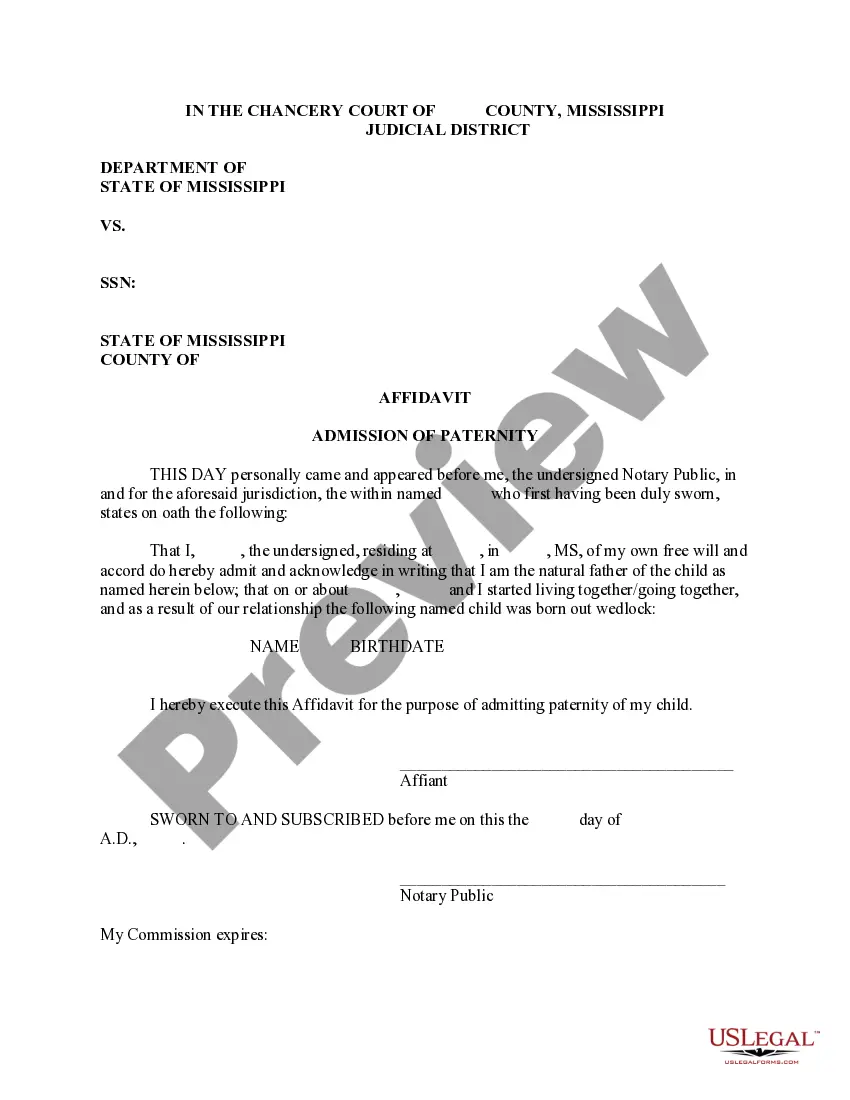
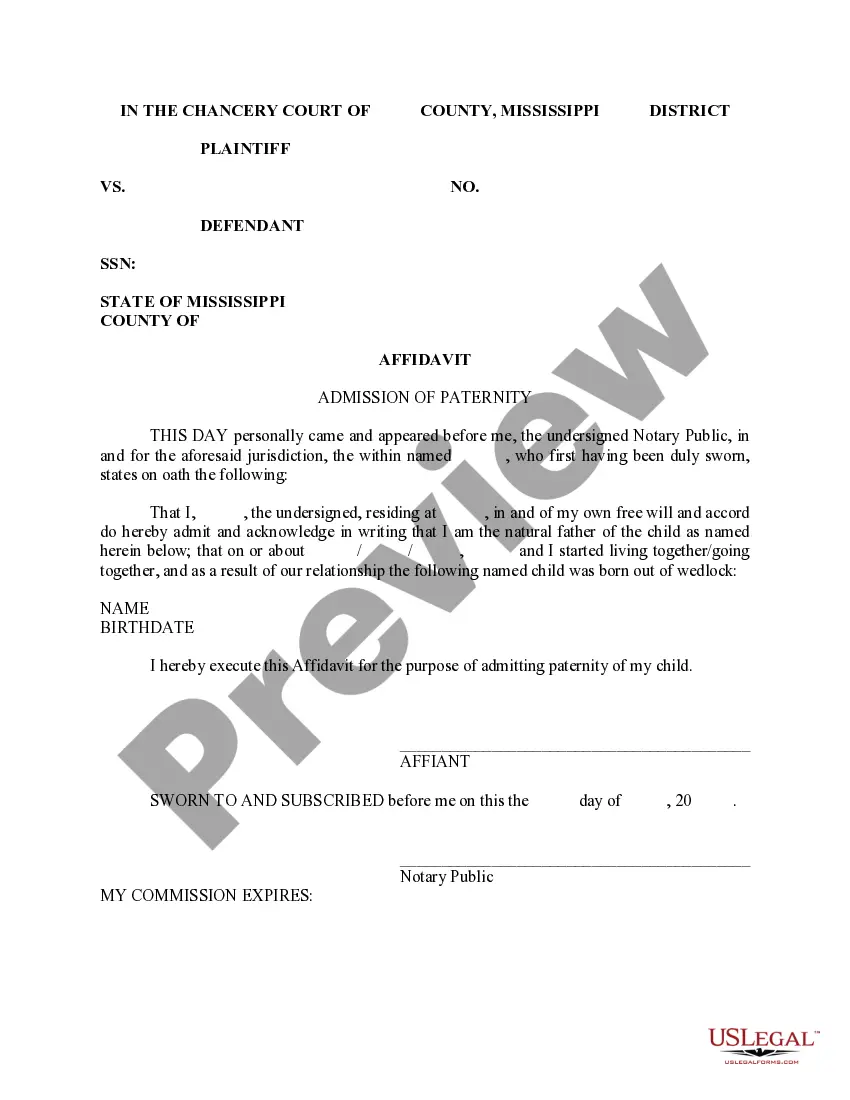
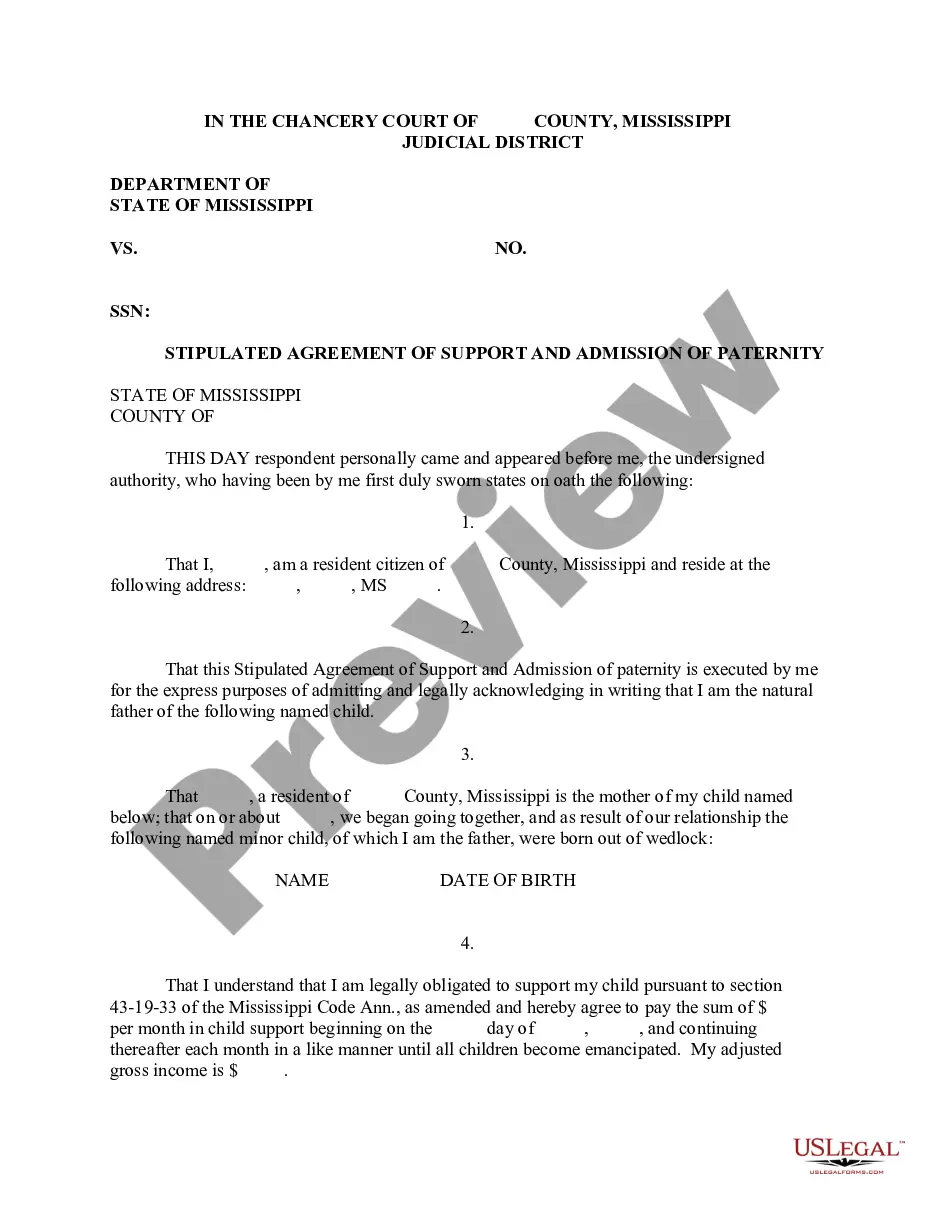
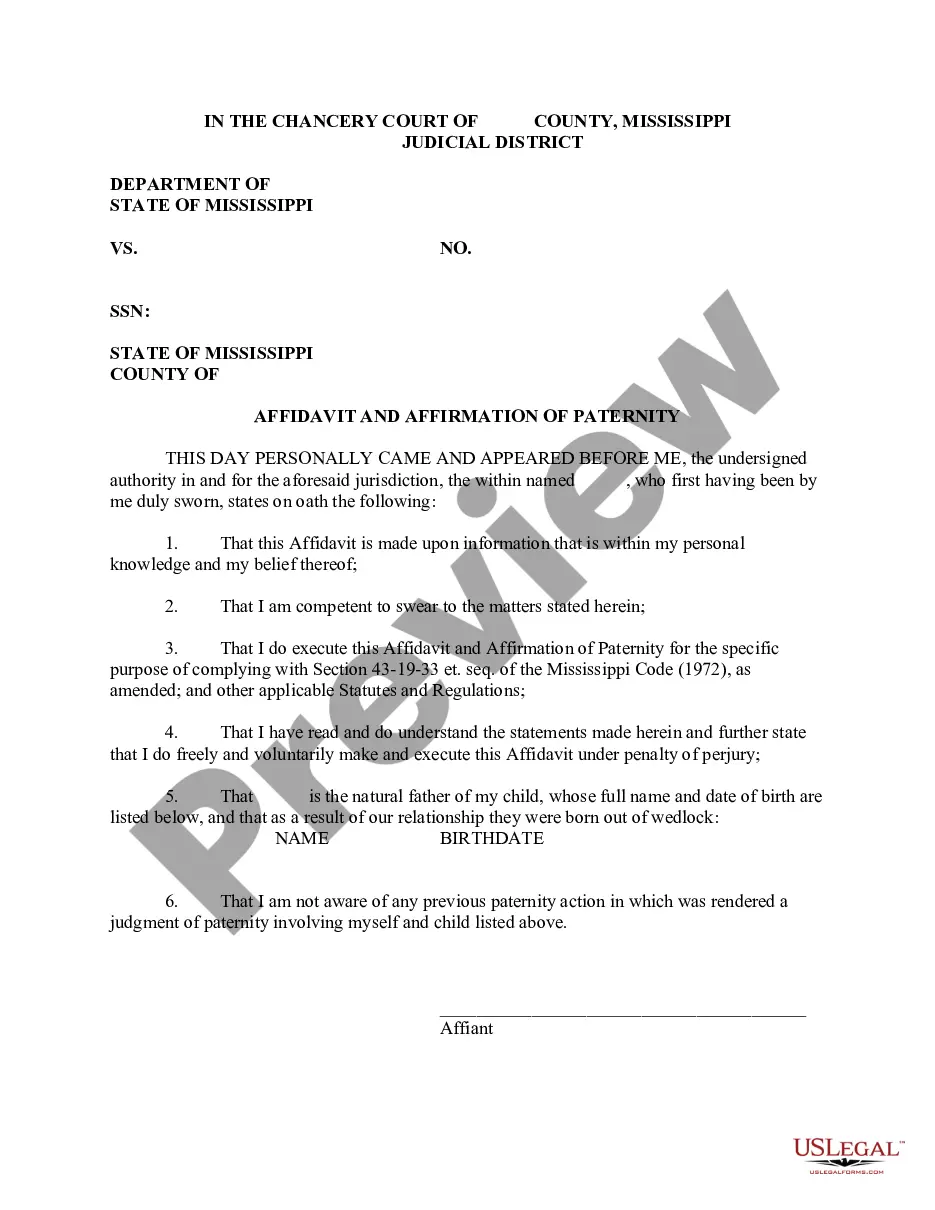
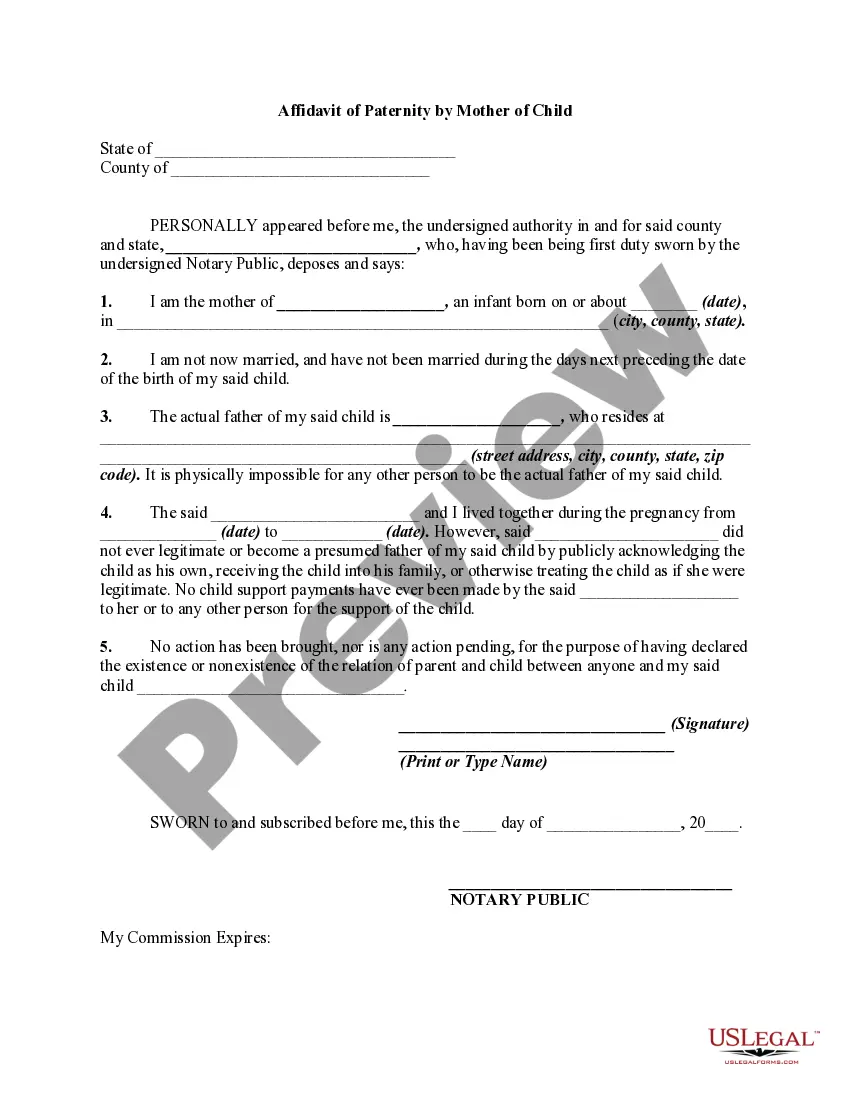
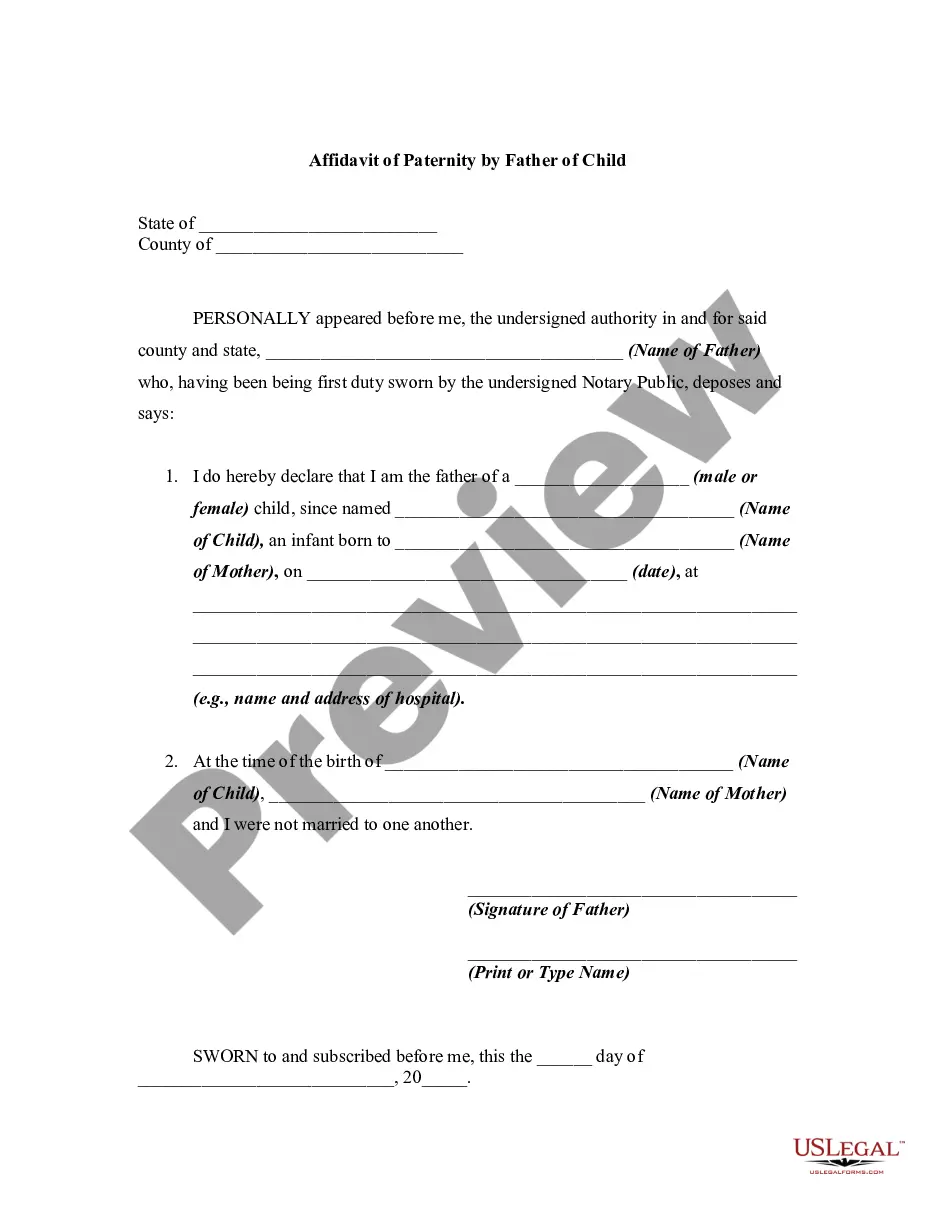
The Affidavit regarding Admission of Paternity is a legal document used to establish or confirm a man's acknowledgment of fatherhood regarding a child. This form serves as a formal declaration that can assist in various legal matters, such as child support, custody, and inheritance rights. Unlike other forms that may require genetic testing, this affidavit specifically addresses the voluntary admission of paternity by the father.
What’s included in this form
- Identifying information of the child, including full name and date of birth.
- Details regarding the father, including full name and address.
- A declaration of paternity admitting the relationship between the father and the child.
- Signature and date of the father, confirming the admission of paternity.
- Space for a notary public if required by state law.
When this form is needed
This affidavit can be used in situations where a man acknowledges his paternity of a child, especially when the parents are not married. It is essential in establishing legal fatherhood for purposes of child support, custody arrangements, and inheritance claims. This form can also be beneficial in disputes regarding custody or parental rights.
Who can use this document
- Biological fathers who wish to acknowledge their parental rights and responsibilities.
- Parents looking to establish or confirm paternity for legal or personal reasons.
- Individuals involved in custody or child support cases seeking to clarify legal status.
Instructions for completing this form
- Provide the full name and date of birth of the child.
- Enter your full name and current address as the father.
- Clearly state your admission of paternity in the designated section.
- Sign and date the affidavit to confirm your acknowledgment.
- If required, have the form notarized to ensure its legal validity.
Does this document require notarization?
This form does not typically require notarization unless specified by local law. However, having the affidavit notarized can add a layer of legal protection and authenticity.
Get your form ready online
Our built-in tools help you complete, sign, share, and store your documents in one place.
Make edits, fill in missing information, and update formatting in US Legal Forms—just like you would in MS Word.
Download a copy, print it, send it by email, or mail it via USPS—whatever works best for your next step.
Sign and collect signatures with our SignNow integration. Send to multiple recipients, set reminders, and more. Go Premium to unlock E-Sign.
If this form requires notarization, complete it online through a secure video call—no need to meet a notary in person or wait for an appointment.
We protect your documents and personal data by following strict security and privacy standards.

Make edits, fill in missing information, and update formatting in US Legal Forms—just like you would in MS Word.

Download a copy, print it, send it by email, or mail it via USPS—whatever works best for your next step.

Sign and collect signatures with our SignNow integration. Send to multiple recipients, set reminders, and more. Go Premium to unlock E-Sign.

If this form requires notarization, complete it online through a secure video call—no need to meet a notary in person or wait for an appointment.

We protect your documents and personal data by following strict security and privacy standards.
Typical mistakes to avoid
- Failing to provide accurate information about the child or father.
- Not signing or dating the affidavit, making it unenforceable.
- Neglecting to check for specific state requirements regarding notarization.
Why complete this form online
- Convenient access to the form allows for immediate use without delays.
- The form can be easily customized to suit individual circumstances.
- Reliable legal wording drafted by licensed attorneys to ensure validity.
Key takeaways
- The Affidavit regarding Admission of Paternity is crucial for legally acknowledging paternity.
- This form is essential in matters concerning child support, custody, and inheritance.
- Ensure compliance with your state's requirements regarding paternity admission and notarization.
Looking for another form?

Form popularity
FAQ
Changes or Corrections: Call our Vital Records office at 601-206-8200 or send e-mail to VRInfo@HealthyMS.com.
If you get married after the child is born, it can establish paternity retroactively. This is not an automatic process, and it is in you and your child's best interest to work with a family lawyer to establish paternity in this way. Both parents can sign an Affidavit of Paternity, which establishes paternity.
If the mother was not married at any time between conception and birth and there is no father listed on the birth certificate, the addition can be made with an Acknowledge of Paternity. The form can be downloaded at this website, or you can obtain one by calling our Amendments Department at 601-206-8200.
You will receive a birth certificate including both parents.
Birth certificate. If a birth certificate declares the father and he signs it, this is a legally binding qualification of paternity. DNA test. Court order.
Get on the birth certificate. Once your child is born, the easiest way to establish paternity is by getting your name on the birth certificate. Get an order through an administrative agency. Get a court order.
However, you can go file paperwork with a Mississippi court to request that they establish paternity for your child. In this process, a trusted family law attorney can help you file the necessary paperwork, and explain to a judge why he or she should force your child's potential father to submit to a paternity test.
An acknowledgement of paternity form can be signed by the parents at the hospital or after the child is born through the Department of Human Services. The other way paternity can be established is through the involuntary process of going to court.