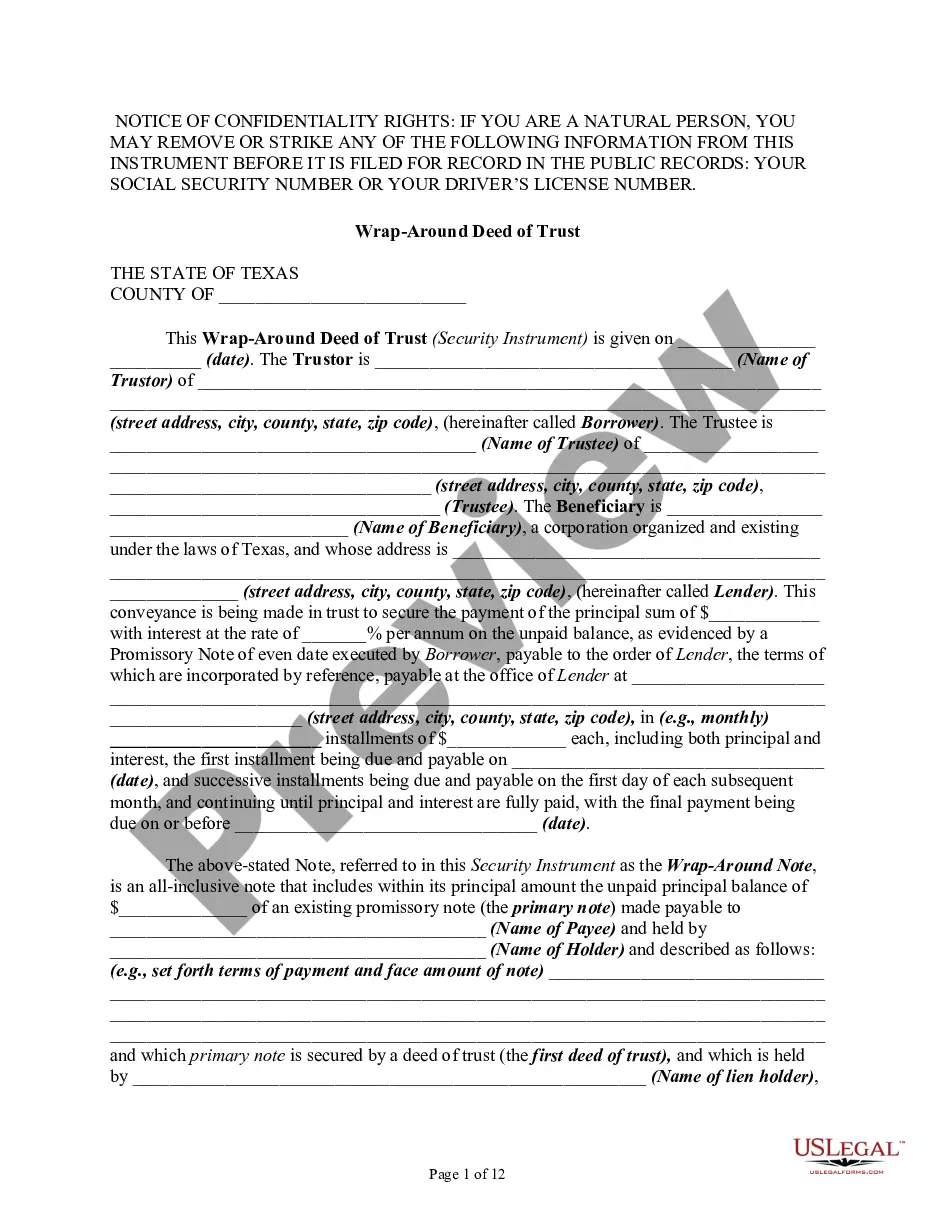
Nevada Quitclaim Deed - Individual to a Trust
About this form
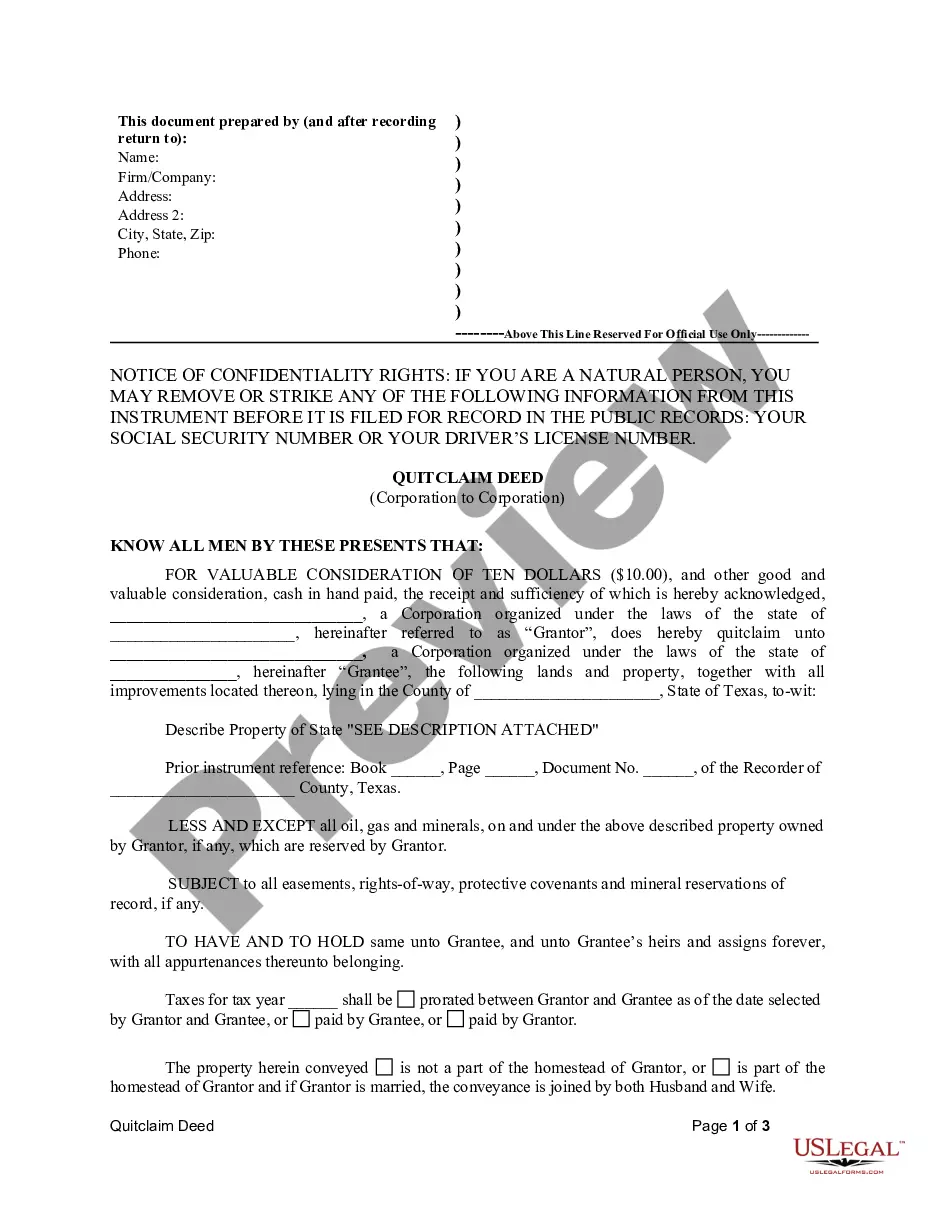
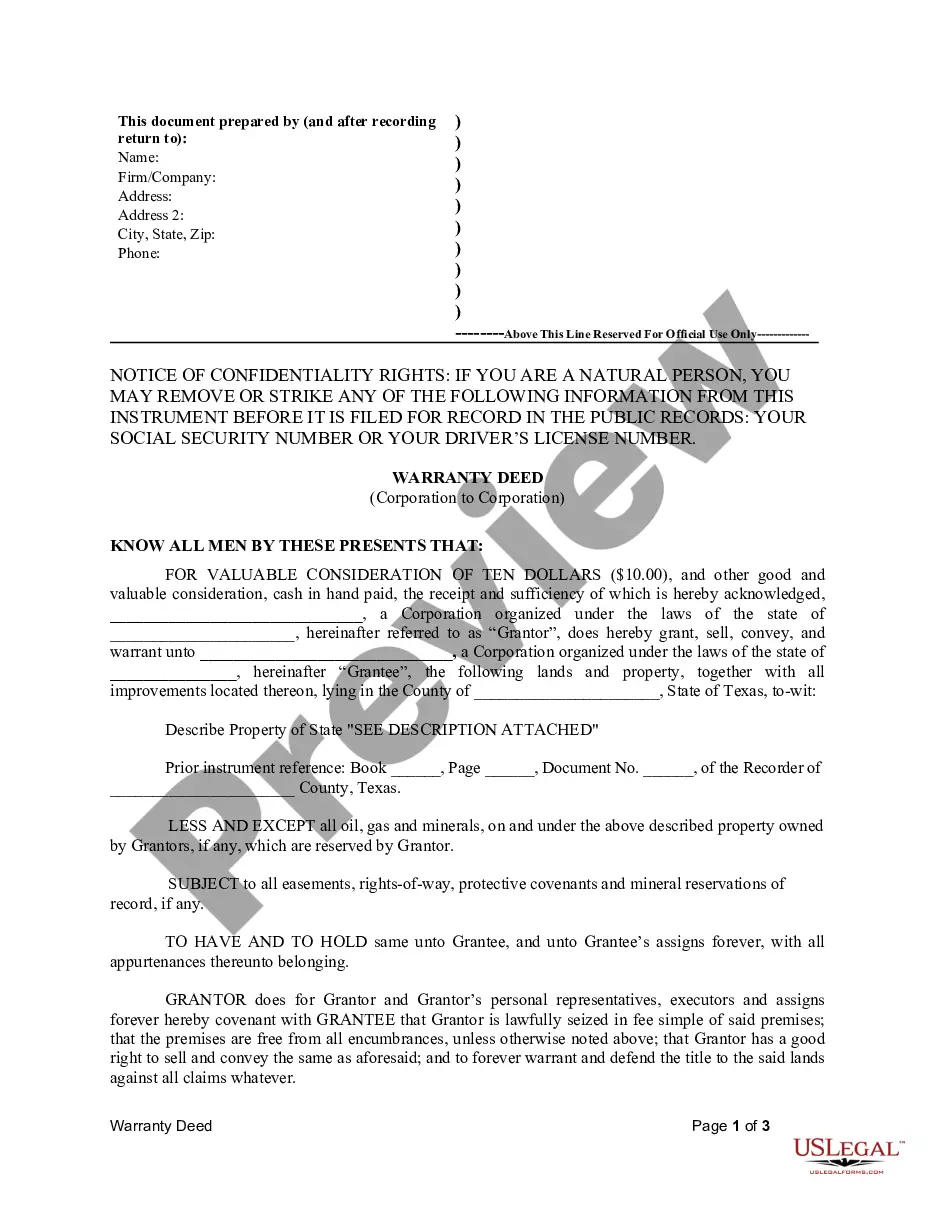
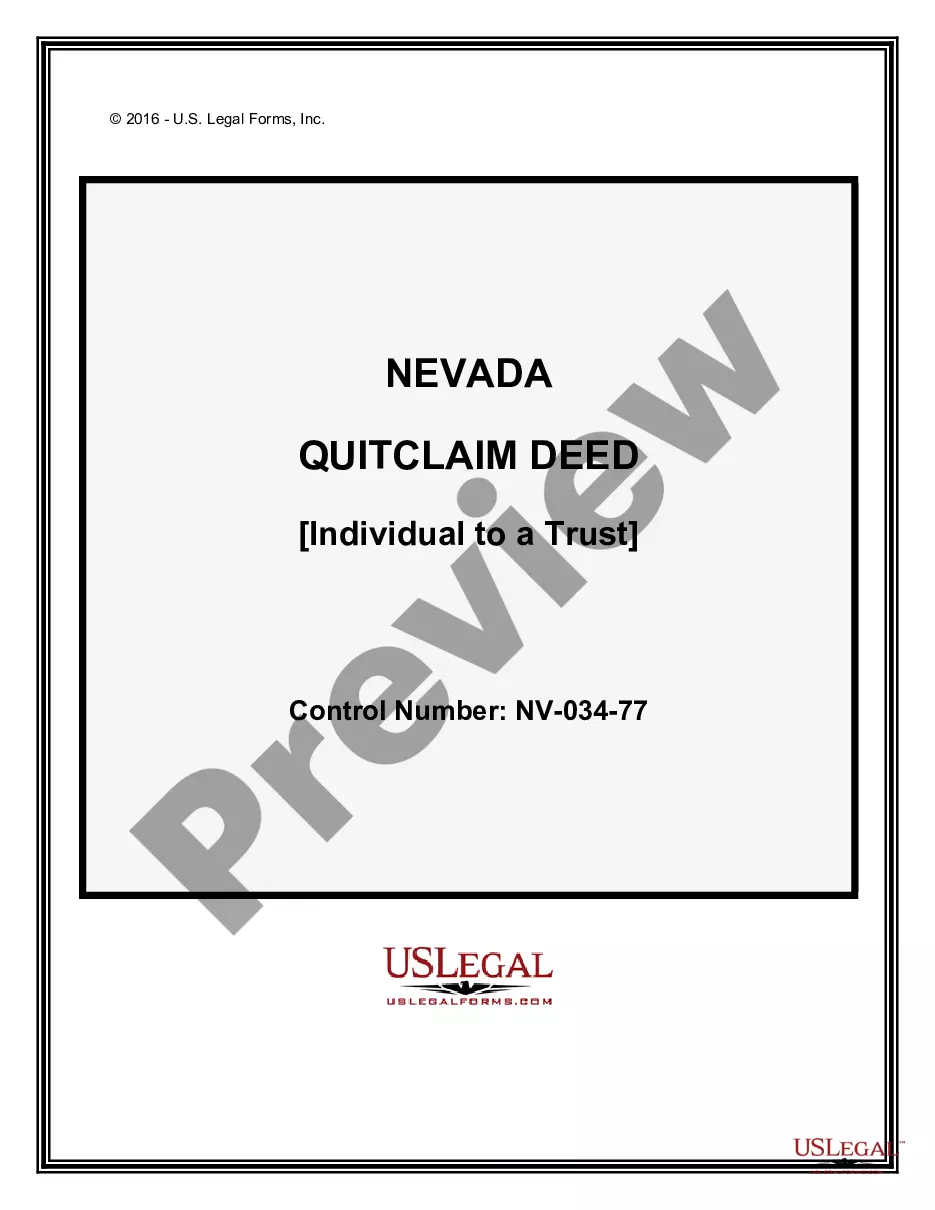
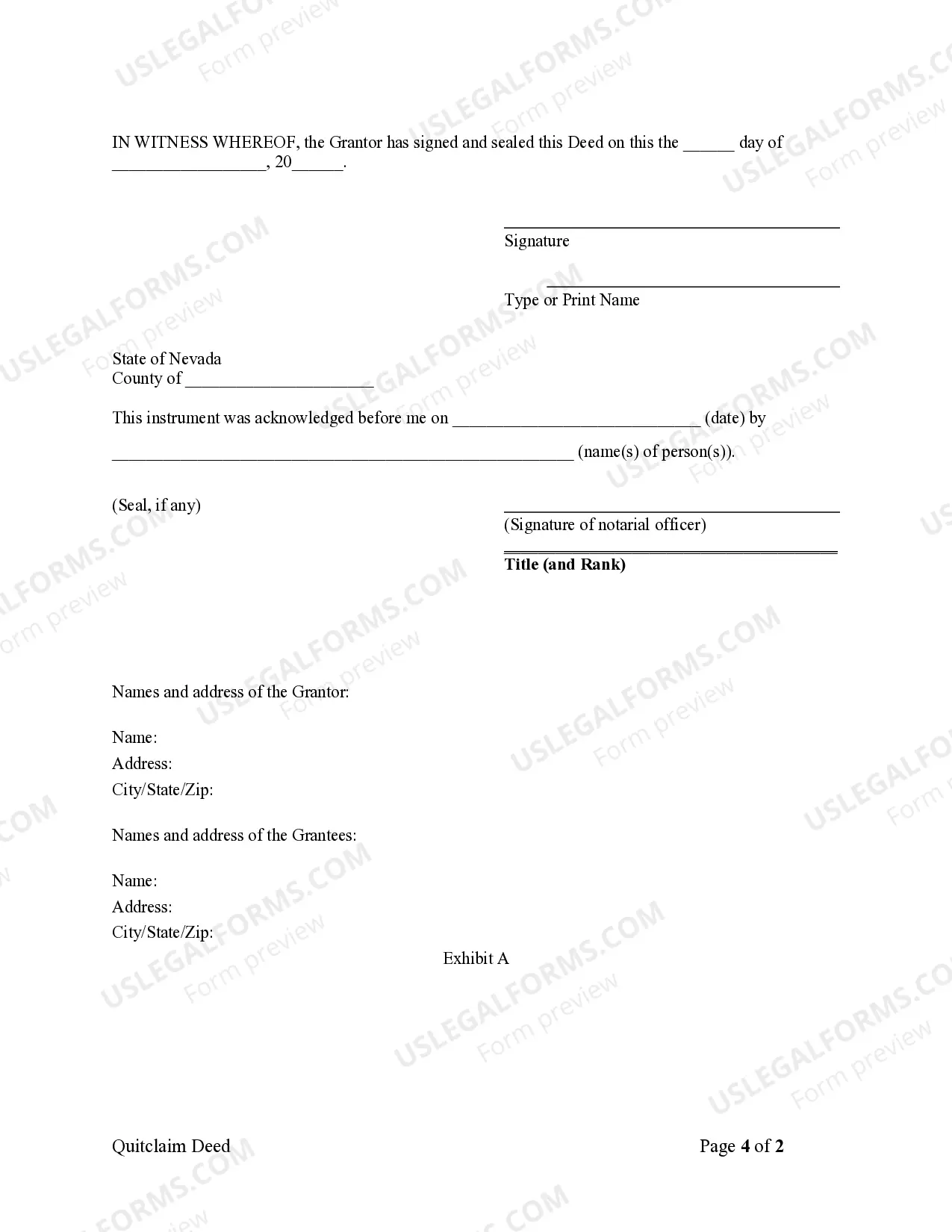
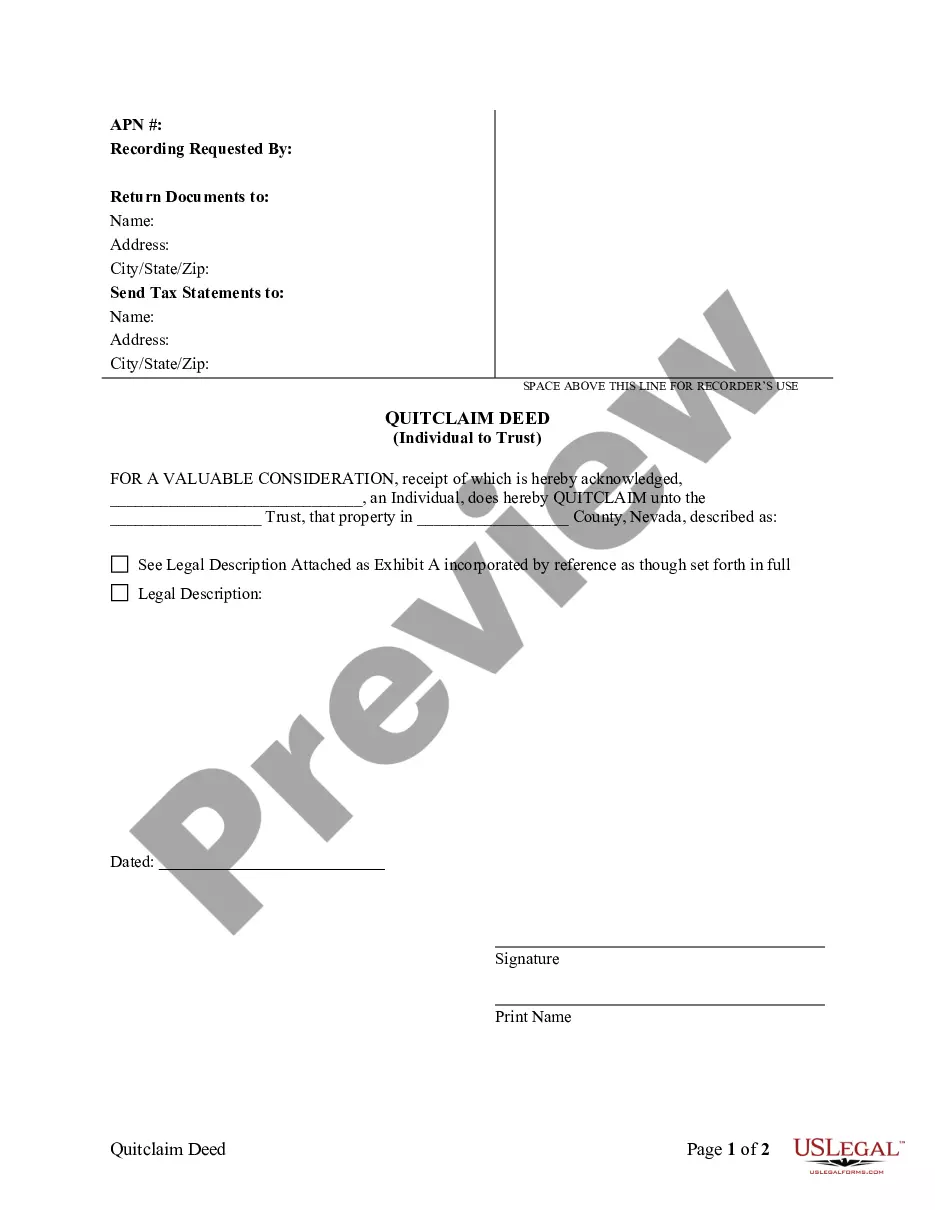
This Quitclaim Deed allows an individual (the Grantor) to transfer ownership of property to a trust (the Grantee). It is commonly used in estate planning to convey real estate assets into a trust, which can help manage and distribute the property according to the wishes of the Grantor. Unlike a warranty deed, which provides a guarantee of clear title, a quitclaim deed only transfers the Grantor's interest in the property, if any. This makes it particularly useful when transferring property to a trust for estate planning purposes.
Key parts of this document
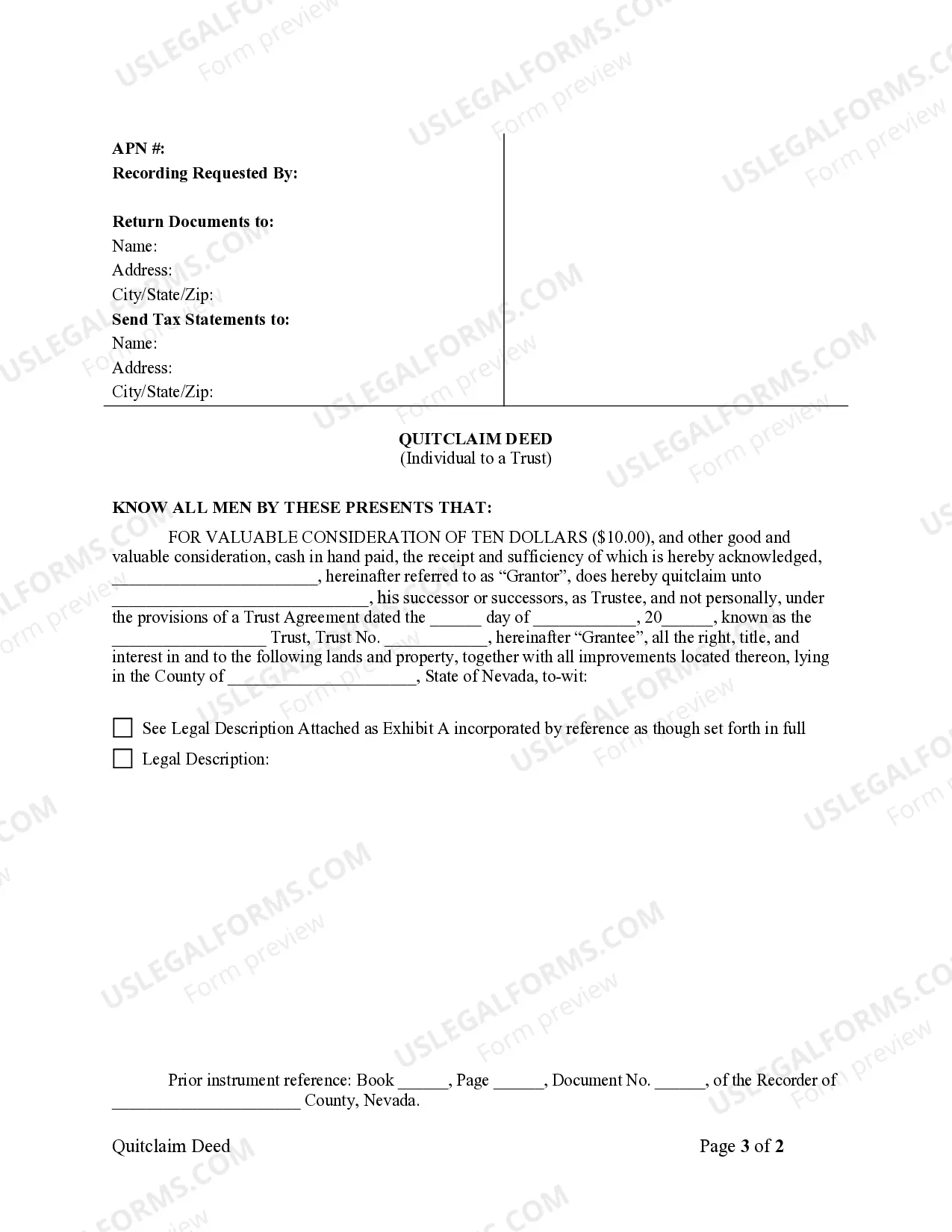
- Grantor's details: Information about the individual transferring the property.
- Grantee's details: Information regarding the trust receiving the property.
- Description of property: A legal description of the property being transferred.
- Date of transfer: The date on which the property is being conveyed.
- Signature: The Grantor must sign the deed to validate the transfer.





Situations where this form applies
This Quitclaim Deed should be used when an individual wants to transfer real estate into a trust for various reasons, such as estate planning, asset protection, or simplifying the transfer of property after death. It may also be useful in cases where the Grantor wants to avoid the probate process by placing assets in a trust ahead of time.
Who should use this form
Individuals considering transferring property to a trust should use this Quitclaim Deed. It is particularly relevant for:
- Property owners planning their estate.
- Individuals creating a lifestyle trust for asset management.
- Anyone seeking to simplify the transfer of property to beneficiaries.
How to prepare this document
- Identify the Grantor: Enter the full name of the individual transferring the property.
- Identify the Grantee: Enter the name of the trust that will receive the property.
- Specify the property: Include the legal description of the property being transferred.
- Enter the date: Fill in the date on which the transfer is occurring.
- Sign the deed: The Grantor must sign the document in the designated area.
Does this document require notarization?
This form needs to be notarized to ensure legal validity. US Legal Forms provides secure online notarization powered by Notarize, allowing you to complete the process through a verified video call, available anytime.
Get your form ready online
Our built-in tools help you complete, sign, share, and store your documents in one place.
Make edits, fill in missing information, and update formatting in US Legal Forms—just like you would in MS Word.
Download a copy, print it, send it by email, or mail it via USPS—whatever works best for your next step.
Sign and collect signatures with our SignNow integration. Send to multiple recipients, set reminders, and more. Go Premium to unlock E-Sign.
If this form requires notarization, complete it online through a secure video call—no need to meet a notary in person or wait for an appointment.
We protect your documents and personal data by following strict security and privacy standards.

Make edits, fill in missing information, and update formatting in US Legal Forms—just like you would in MS Word.

Download a copy, print it, send it by email, or mail it via USPS—whatever works best for your next step.

Sign and collect signatures with our SignNow integration. Send to multiple recipients, set reminders, and more. Go Premium to unlock E-Sign.

If this form requires notarization, complete it online through a secure video call—no need to meet a notary in person or wait for an appointment.

We protect your documents and personal data by following strict security and privacy standards.
Avoid these common issues
- Failing to include a complete legal description of the property.
- Not signing the deed before witnesses or a notary, if required.
- Leaving out important details about the trust or Grantor's identity.
Why complete this form online
- Convenient access from anywhere, allowing you to complete the form at your own pace.
- Editability to ensure all your information is accurate before finalization.
- Reliability of using templates drafted by licensed attorneys, ensuring legal compliance.
Legal use & context
- The Quitclaim Deed transfers ownership without warranties regarding the title.
- This form is enforceable under Nevada law when properly completed.
- It is advisable to seek legal help for complex situations or if there are concerns about property rights.
Summary of main points
- This form allows an individual to quitclaim property to a trust.
- Essential for estate planning, particularly in transferring property for asset management.
- Proper completion and potential notarization are key to ensuring legal effectiveness.
Looking for another form?



Form popularity
FAQ
The act of transferring a property that is owned by an individual into a trust, will see the trust liable to pay stamp duty on acquisition of the asset. Additionally, the individual who is transferring ownership to the trust, will be liable to pay capital gains tax on the disposal of the asset.
Locate your current deed. Use the proper deed. Check with your title insurance company and lender. Prepare a new deed. Sign in the presence of a notary. Record the deed in the county clerk's office. Locate the deed that's in trust. Use the proper deed.
A quitclaim deed can be used to transfer property from a trust, but a Special Warranty Deed seems to be a more common way to do this.
Take the signed and notarized quitclaim deed to your county recorder's office to complete the transfer of title into your revocable trust. Check in two to four weeks to ensure it has been recorded. Include the address of the property on the asset list addendum attached to your trust.
Transferring Real Property to a Trust You can transfer your home (or any real property) to the trust with a deed, a document that transfers ownership to the trust. A quitclaim deed is the most common and simplest method (and one you can do yourself).