New Mexico Heirship Affidavit - Descent

What is this form?
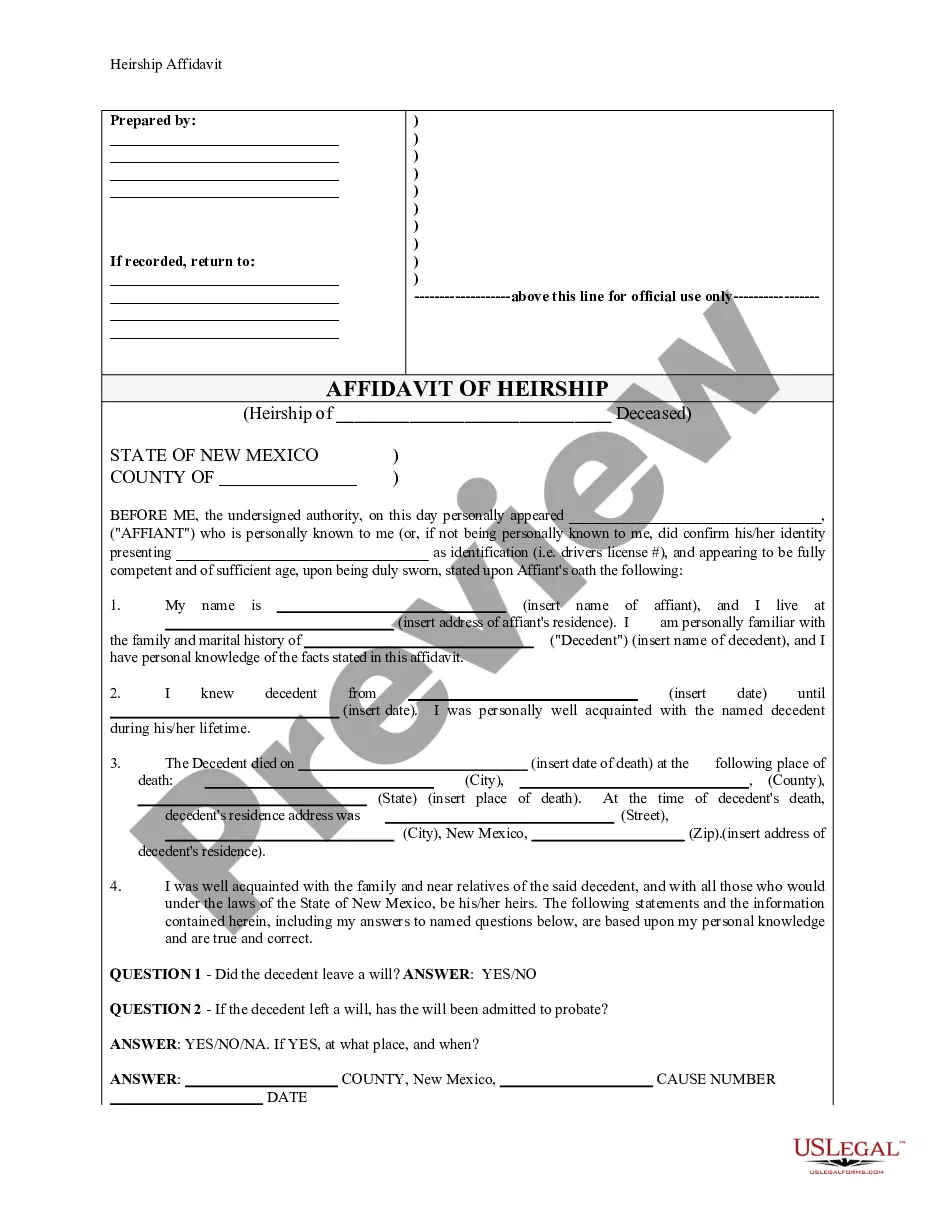
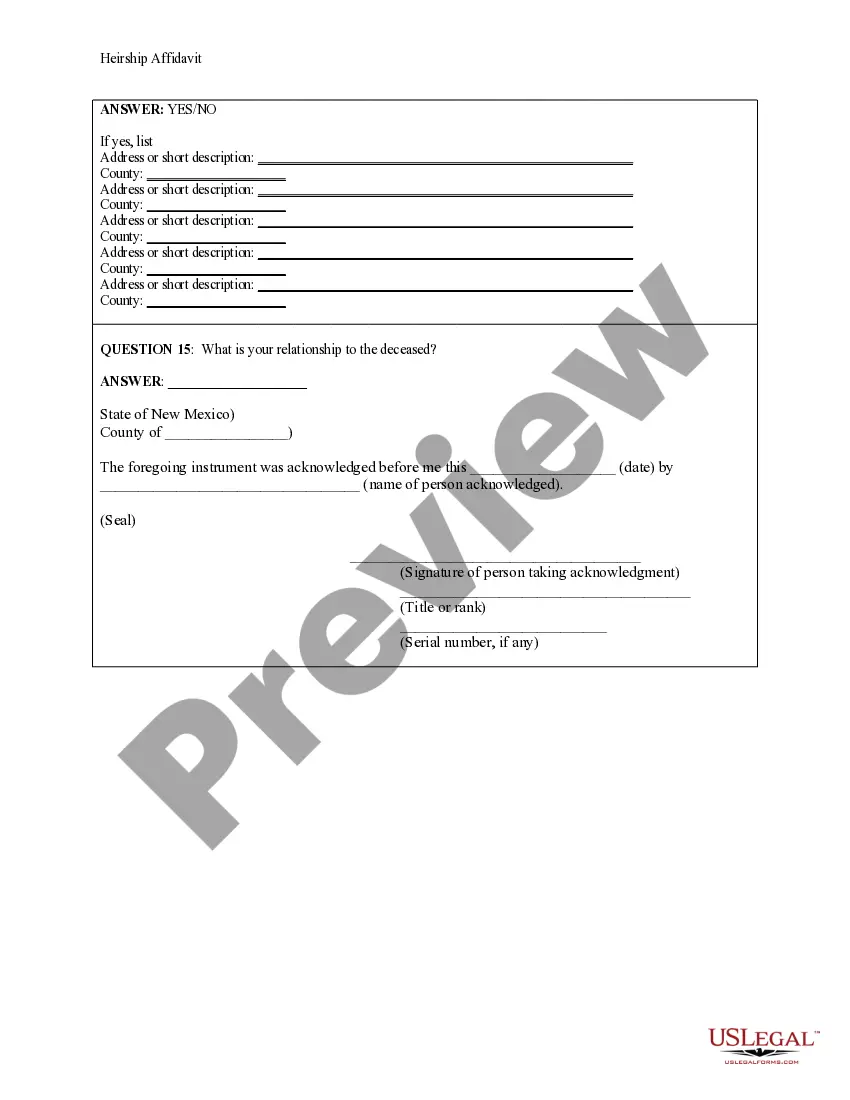
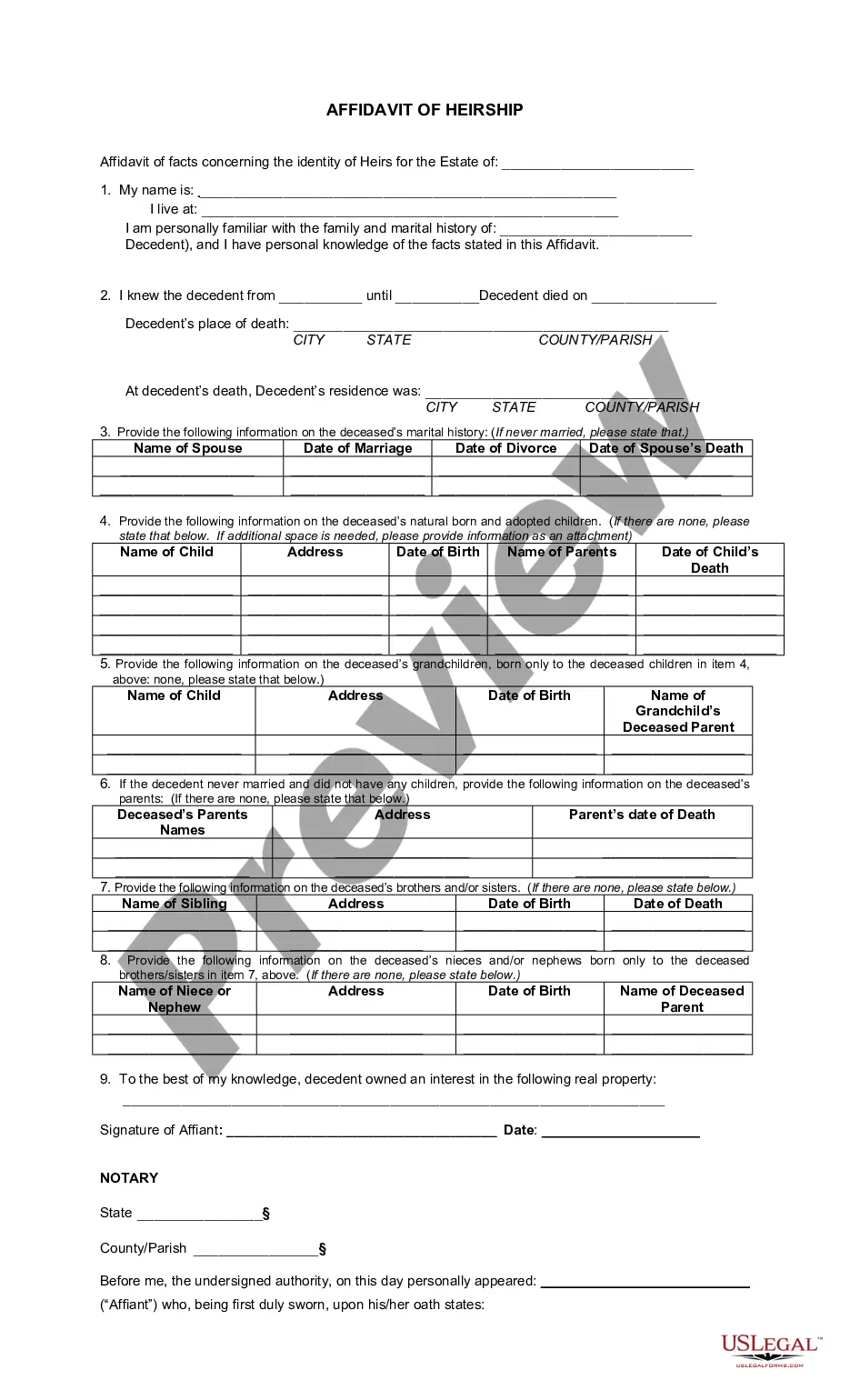
The Heirship Affidavit - Descent is a legal document used to declare the heirs of a deceased person. This affidavit is crucial for establishing the rightful ownership of personal and real property, especially in situations where the deceased did not leave a will. Unlike other estate planning documents, the Heirship Affidavit is generally completed by someone who is not an heir, ensuring an impartial declaration of the heirs.
Form components explained
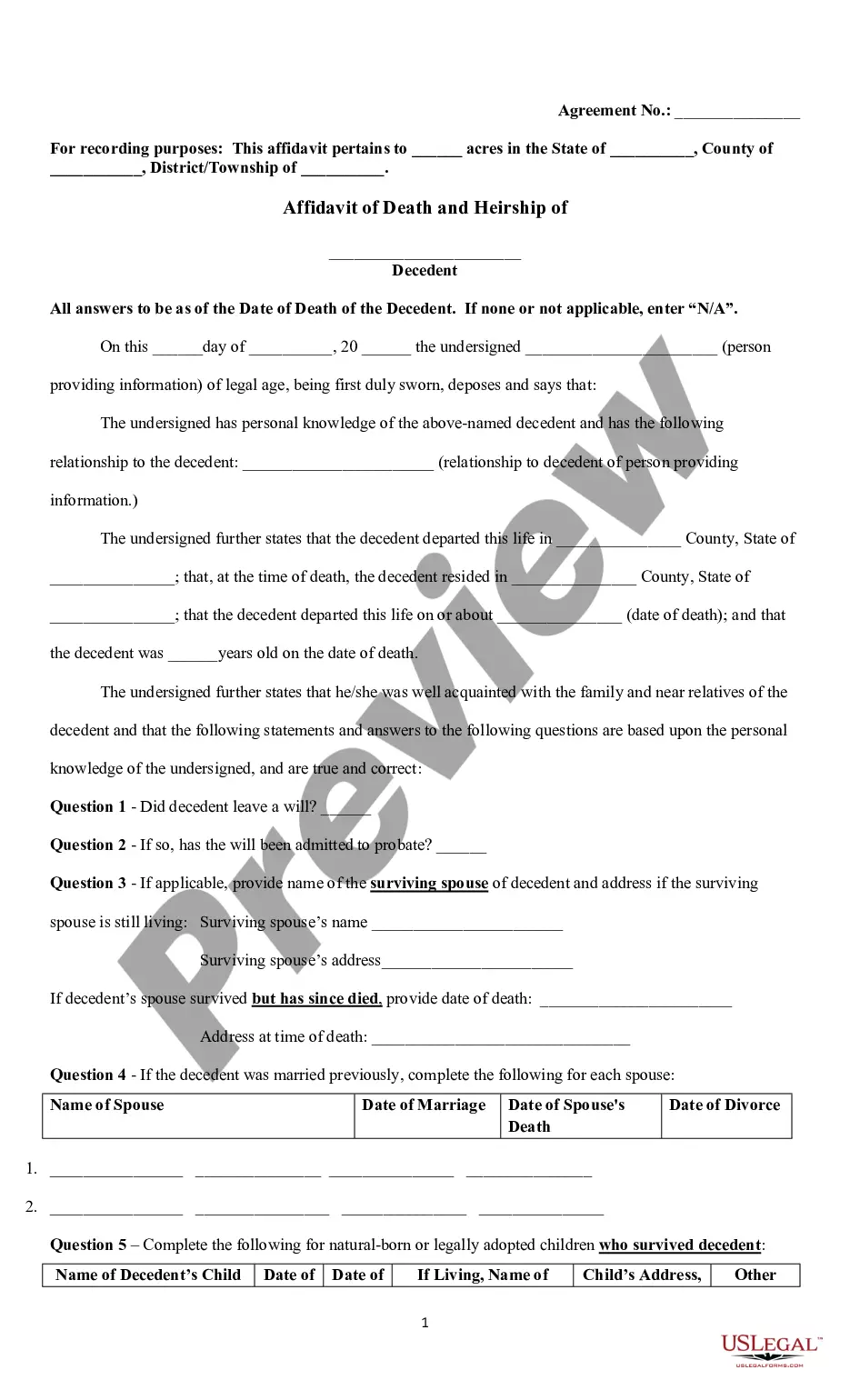
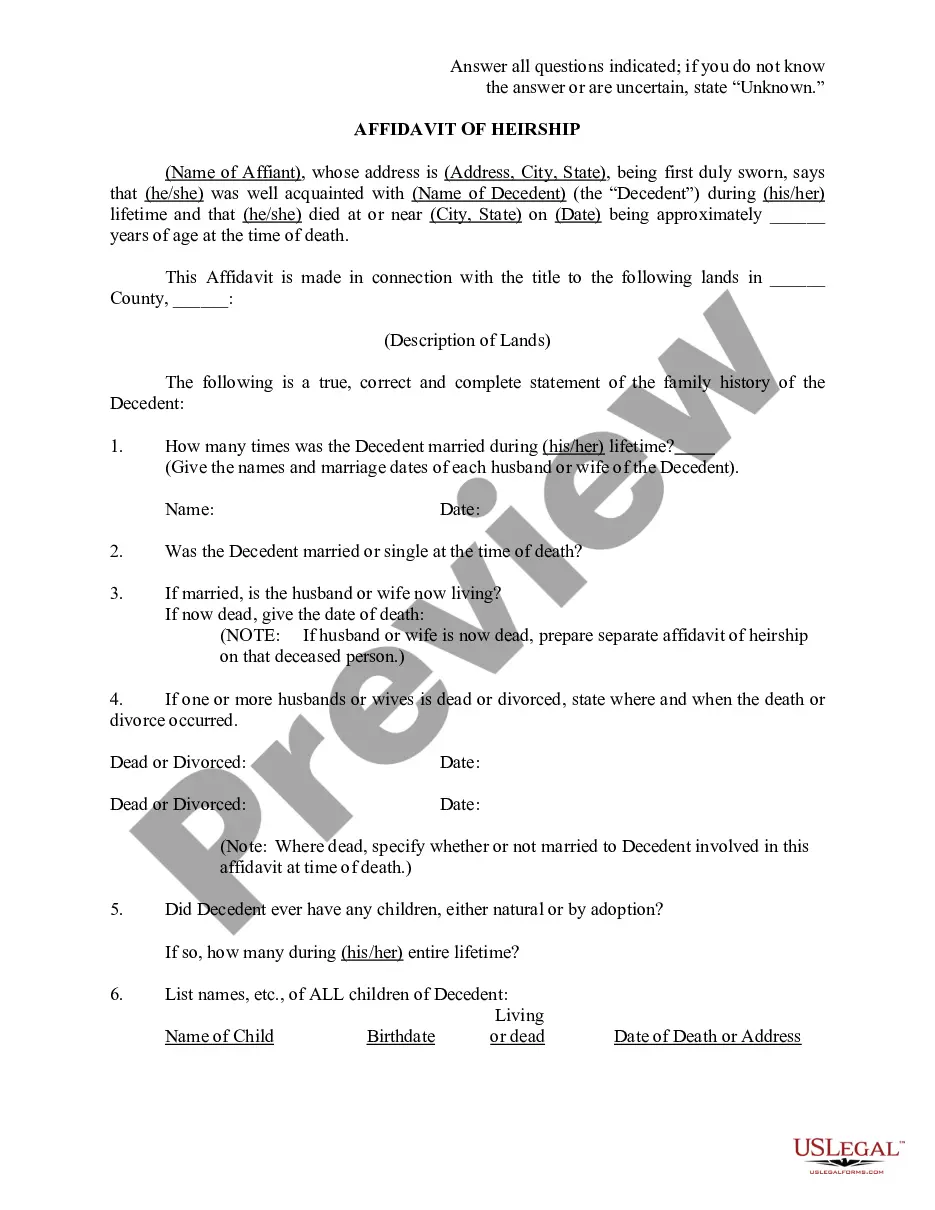
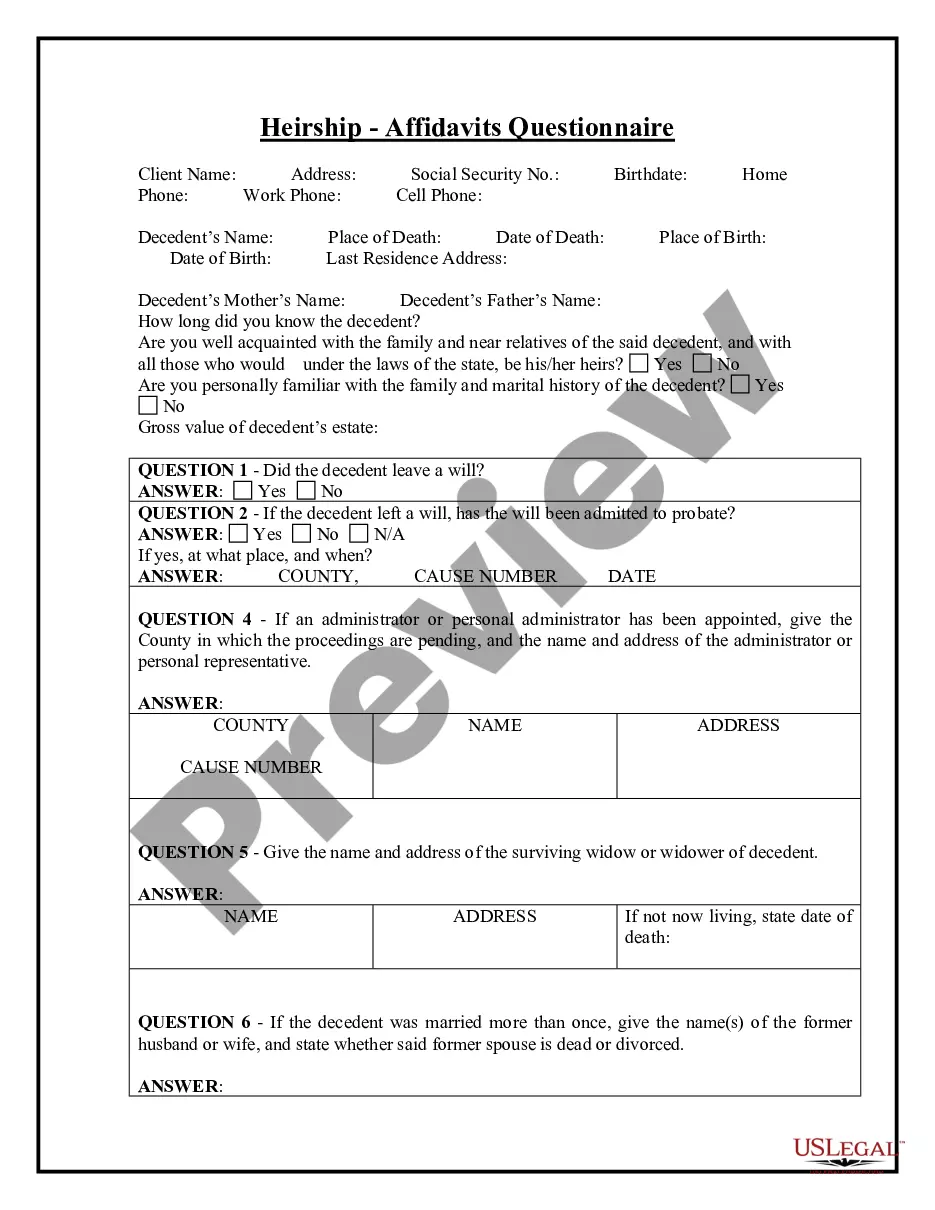
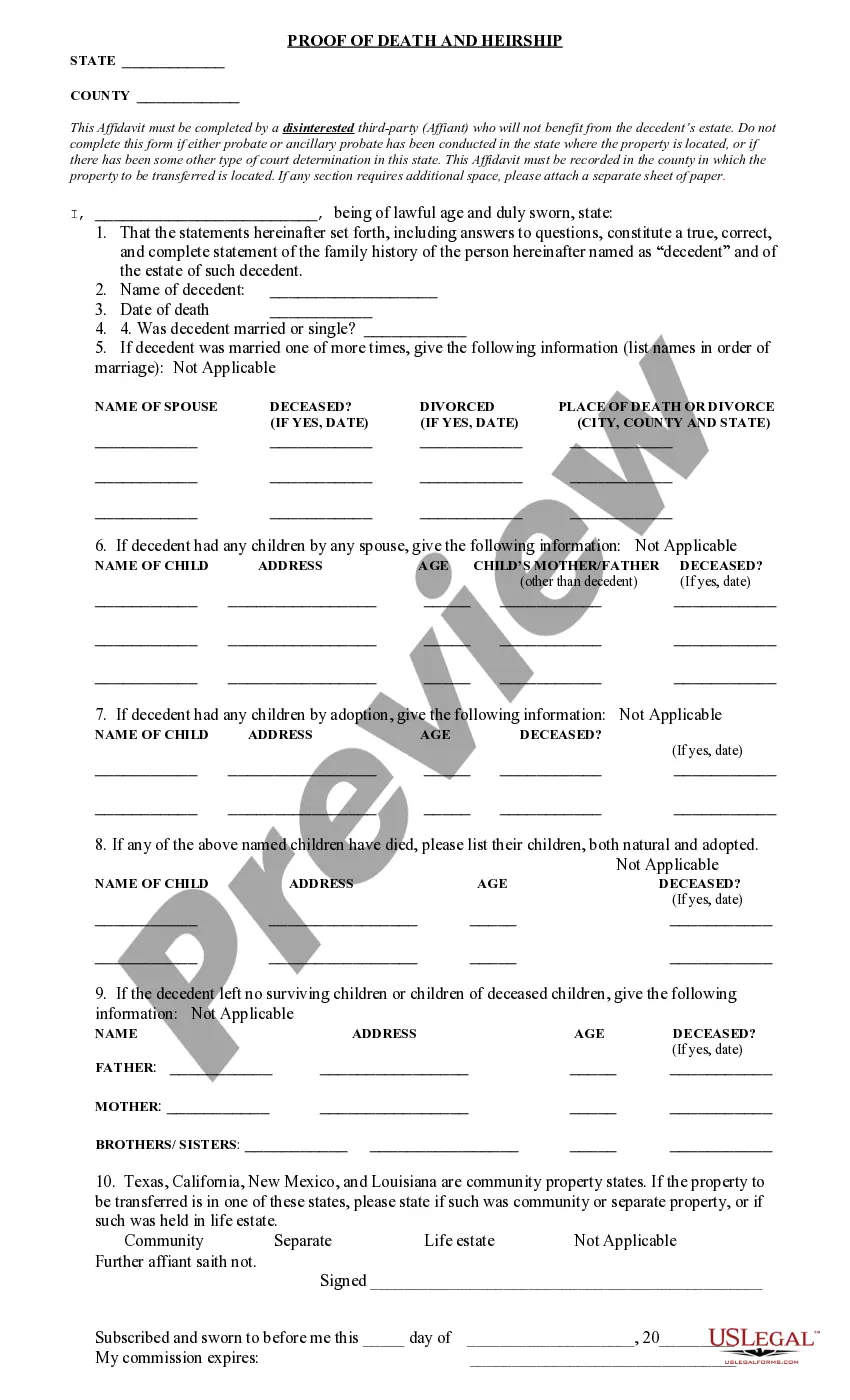
- Affiant's name and address, establishing personal knowledge of the decedent.
- Details about the decedent, including name, date of death, and last residence.
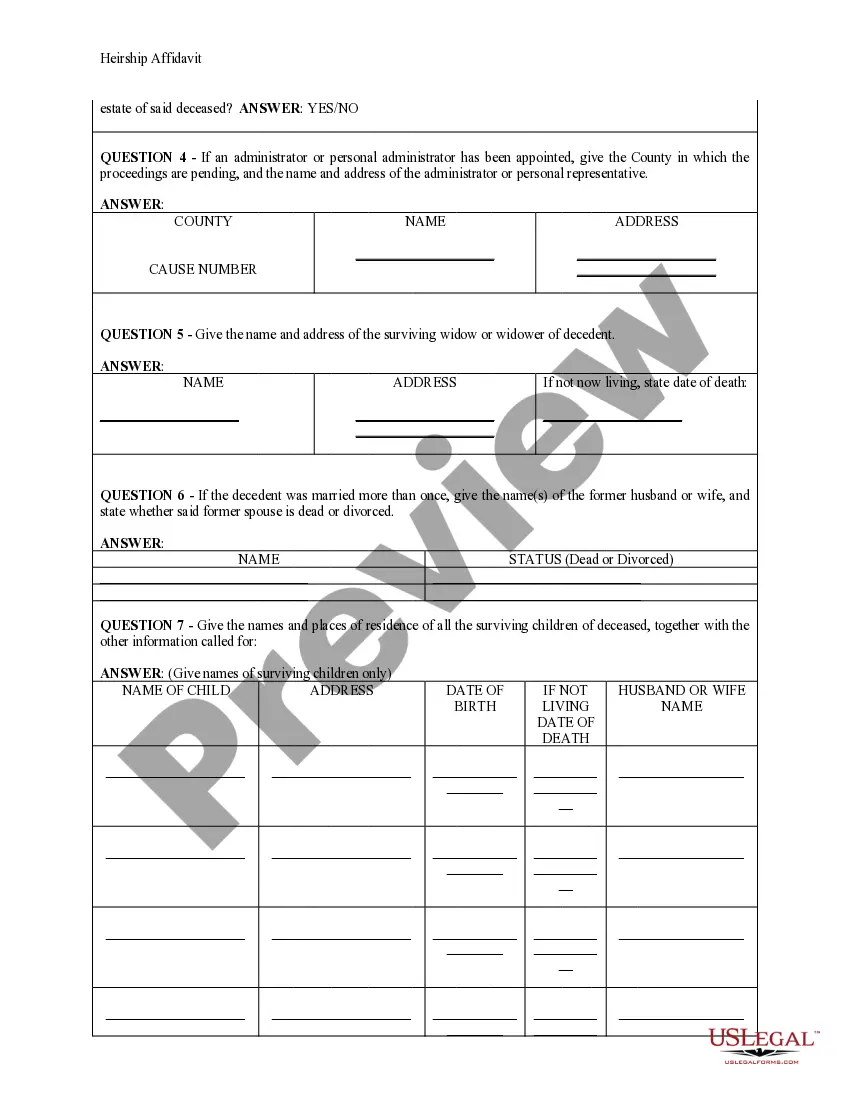
- Questions regarding the existence of a will and probate status.
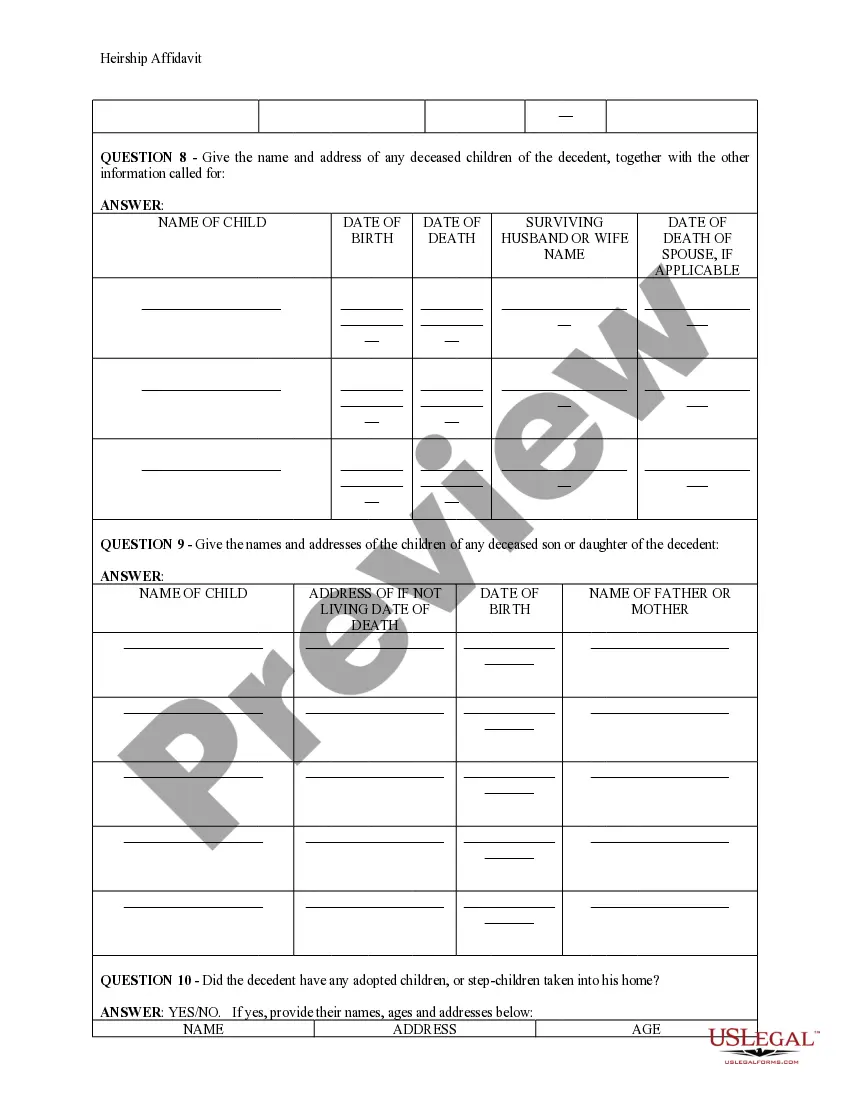
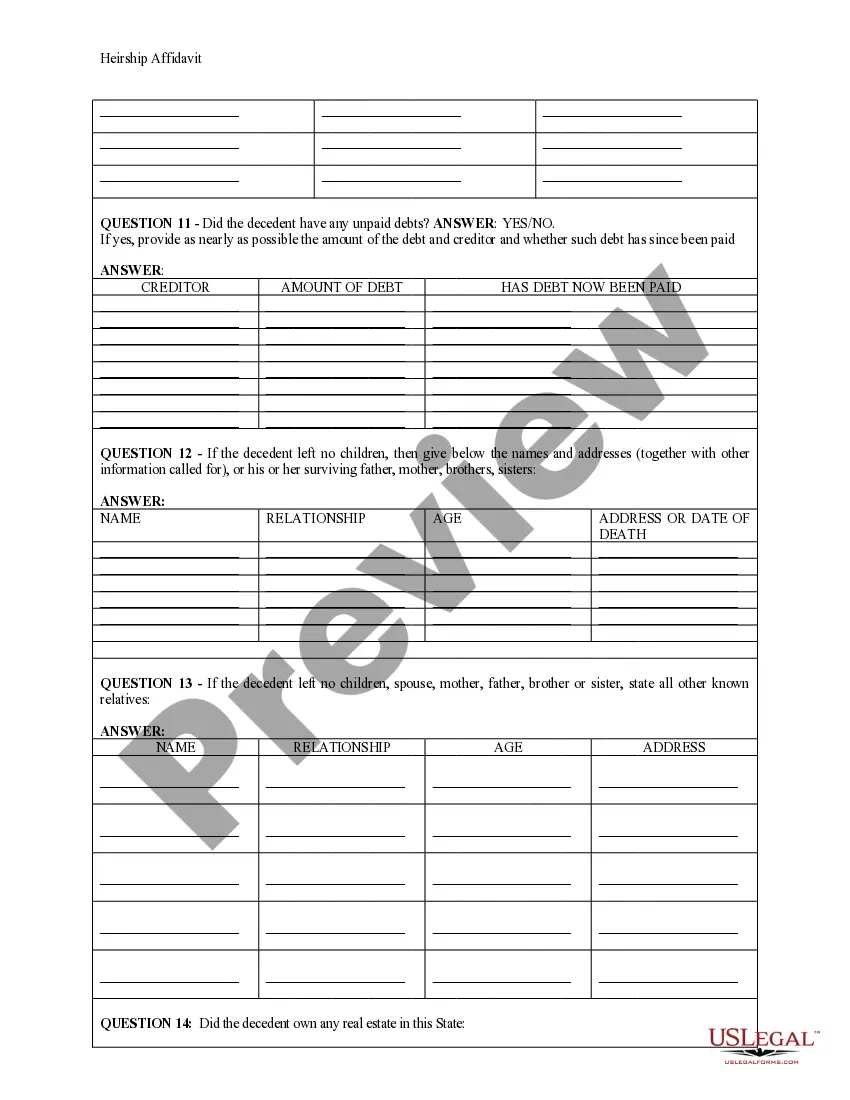
- Information about the surviving family members, including spouses and children.
- Properties owned by the decedent, documented for legal verification.
- Affiant's signature and notary certification, if applicable.
Situations where this form applies
This form is used when a person dies intestate (without a will), and their heirs need to establish their legal right to the deceased's property. It is particularly useful for selling or transferring property without going through probate. For example, if a son is unable to access his deceased father's real estate due to the lack of a will, obtaining an heirship affidavit can facilitate the sale of that property.
Intended users of this form
- Individuals who are aware of the deceased's family and marital history.
- People representing themselves or others in establishing heirship for property transfer.
- Individuals needing to clarify heirship in the absence of a formal will.
- Non-heirs who are familiar with the decedent and can provide necessary information.
How to prepare this document
- Identify the affiant and provide their name and address.
- Document details about the deceased, including their name, date of death, and last known address.
- Answer questions regarding the existence of a will and the status of probate proceedings, if applicable.
- List surviving family members and their relationship to the deceased.
- Sign the affidavit in the presence of a notary public to validate it legally.
Does this form need to be notarized?
Yes, this form must be notarized to be legally valid. Using US Legal Forms, you can benefit from integrated online notarization, available 24/7 through secure video calls, ensuring you can have your document notarized from the comfort of your home without the need for travel.
Get your form ready online
Our built-in tools help you complete, sign, share, and store your documents in one place.
Make edits, fill in missing information, and update formatting in US Legal Forms—just like you would in MS Word.
Download a copy, print it, send it by email, or mail it via USPS—whatever works best for your next step.
Sign and collect signatures with our SignNow integration. Send to multiple recipients, set reminders, and more. Go Premium to unlock E-Sign.
If this form requires notarization, complete it online through a secure video call—no need to meet a notary in person or wait for an appointment.
We protect your documents and personal data by following strict security and privacy standards.

Make edits, fill in missing information, and update formatting in US Legal Forms—just like you would in MS Word.

Download a copy, print it, send it by email, or mail it via USPS—whatever works best for your next step.

Sign and collect signatures with our SignNow integration. Send to multiple recipients, set reminders, and more. Go Premium to unlock E-Sign.

If this form requires notarization, complete it online through a secure video call—no need to meet a notary in person or wait for an appointment.

We protect your documents and personal data by following strict security and privacy standards.
Typical mistakes to avoid
- Failing to provide complete information about the decedent's family and property.
- Not having the affidavit notarized when required by state law.
- Providing false information or omitting relevant relatives during the declaration.
Why use this form online
- Immediate access to the form for quick and convenient completion.
- Editable fields allow for easier input of specific information.
- Increased reliability with templates drafted by licensed attorneys.
Quick recap
- The Heirship Affidavit is crucial for declaring the heirs of a deceased person who died without a will.
- Accurate and complete information is essential to validate the affidavit.
- Notarization is required to ensure the affidavit's acceptance in legal and real estate matters.
- Using this form can simplify the process of settling an estate, especially when navigating property issues.
Looking for another form?
Form popularity
FAQ
In New Mexico, you can make a living trust to avoid probate for virtually any asset you ownreal estate, bank accounts, vehicles, and so on. You need to create a trust document (it's similar to a will), naming someone to take over as trustee after your death (called a successor trustee).
Dying without a Will in New MexicoIf you die without a valid will, you'll lose control over what happens to your assets after your death.If there isn't a will, the court will appoint someone, usually an adult child or surviving spouse, to be the executor or personal representative.
When someone dies without a will (or intestate), New Mexico probate law designates the surviving family members to whom the estate will pass.If the deceased left no surviving spouse, then the deceased's surviving children (both biological and adopted) receive the deceased's property in equal shares.
Q: How Long Does an Executor Have to Distribute Assets From a Will? A: Dear Waiting: In most states, a will must be executed within three years of a person's death.
A simple estate with just a few, easy-to-find assets may be all wrapped up in six to eight months. A more complicated affair may take three years or more to fully settle.
Normally, a probate must be filed within three years following the decedent's death. Under New Mexico law no appointment of a personal representative may be made during the first 120 hours (five days) following the death.
In most cases, it takes around 9-12 months for an Executor to settle an Estate.There is no set time limit for completing the Estate administration process in full, but there is a deadline for submitting the Inheritance Tax form which must be met by the Executor.
When someone dies without a will, it's called dying intestate. When that happens, none of the potential heirs has any say over who gets the estate (the assets and property). When there's no will, the estate goes into probate.Legal fees are paid out of the estate and it often gets expensive.
From start to finish, most New Mexico probates take about two years to complete. However, 90% of the work is usually done in the first five or six months of a probate, and most estates distribute assets within a year. Creditors have up to one year to make a claim.