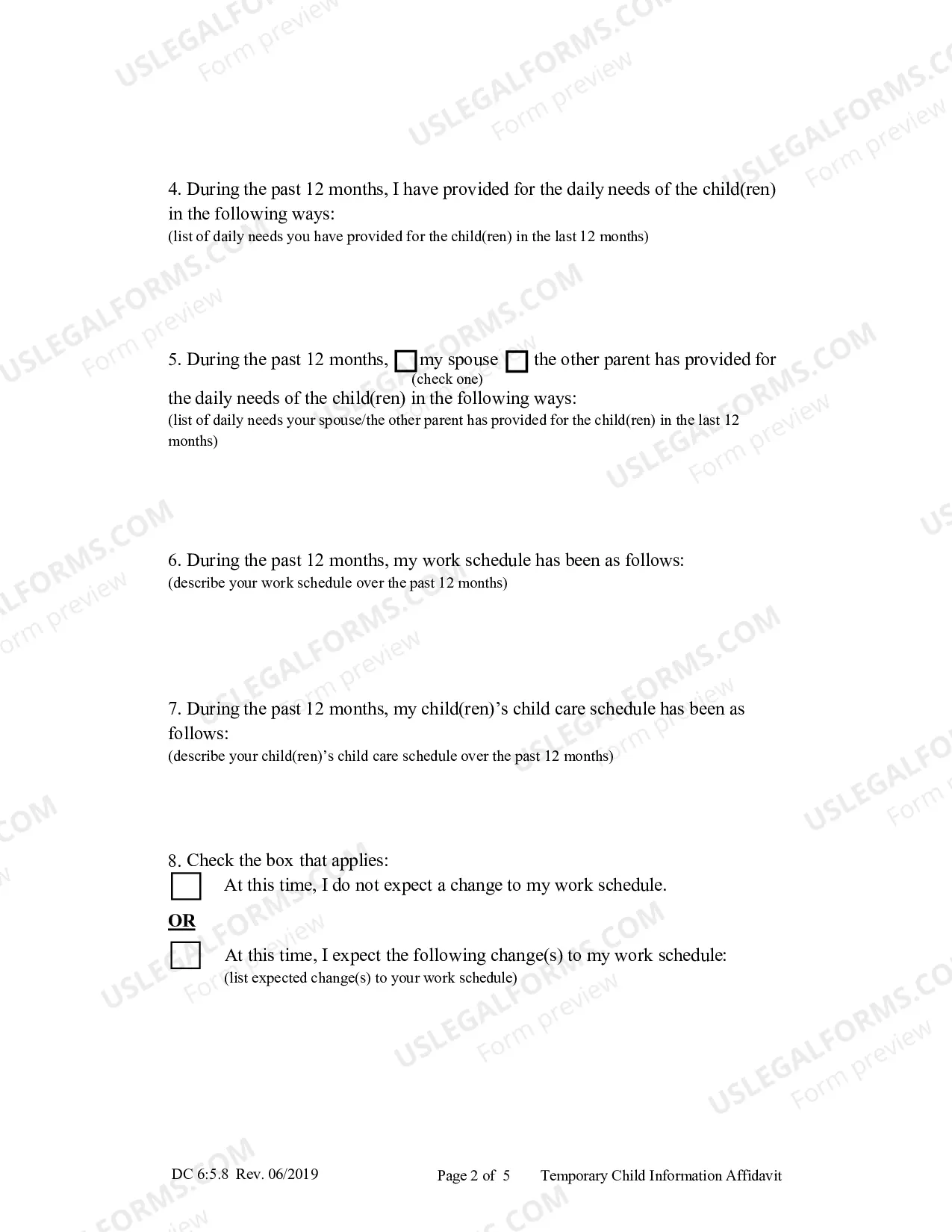
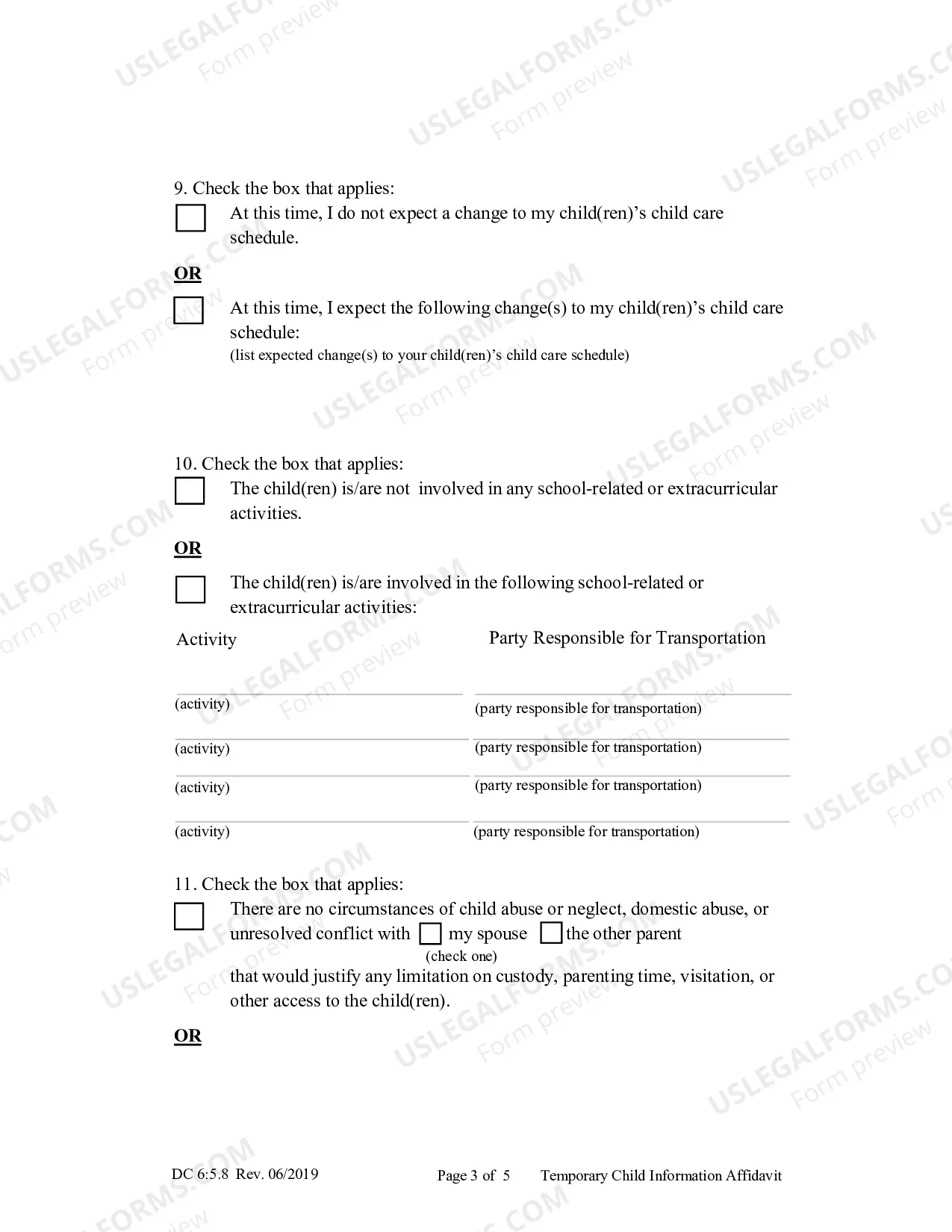
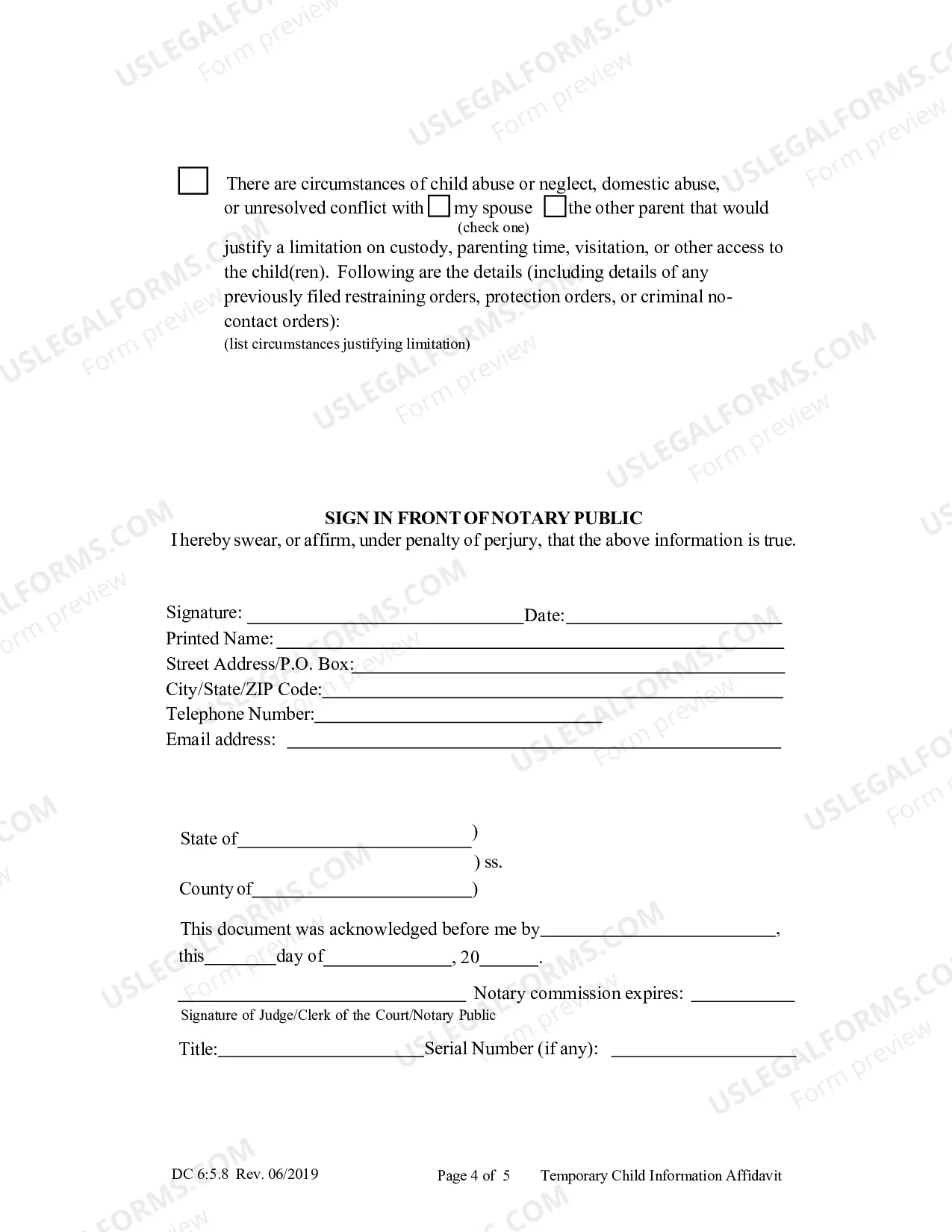
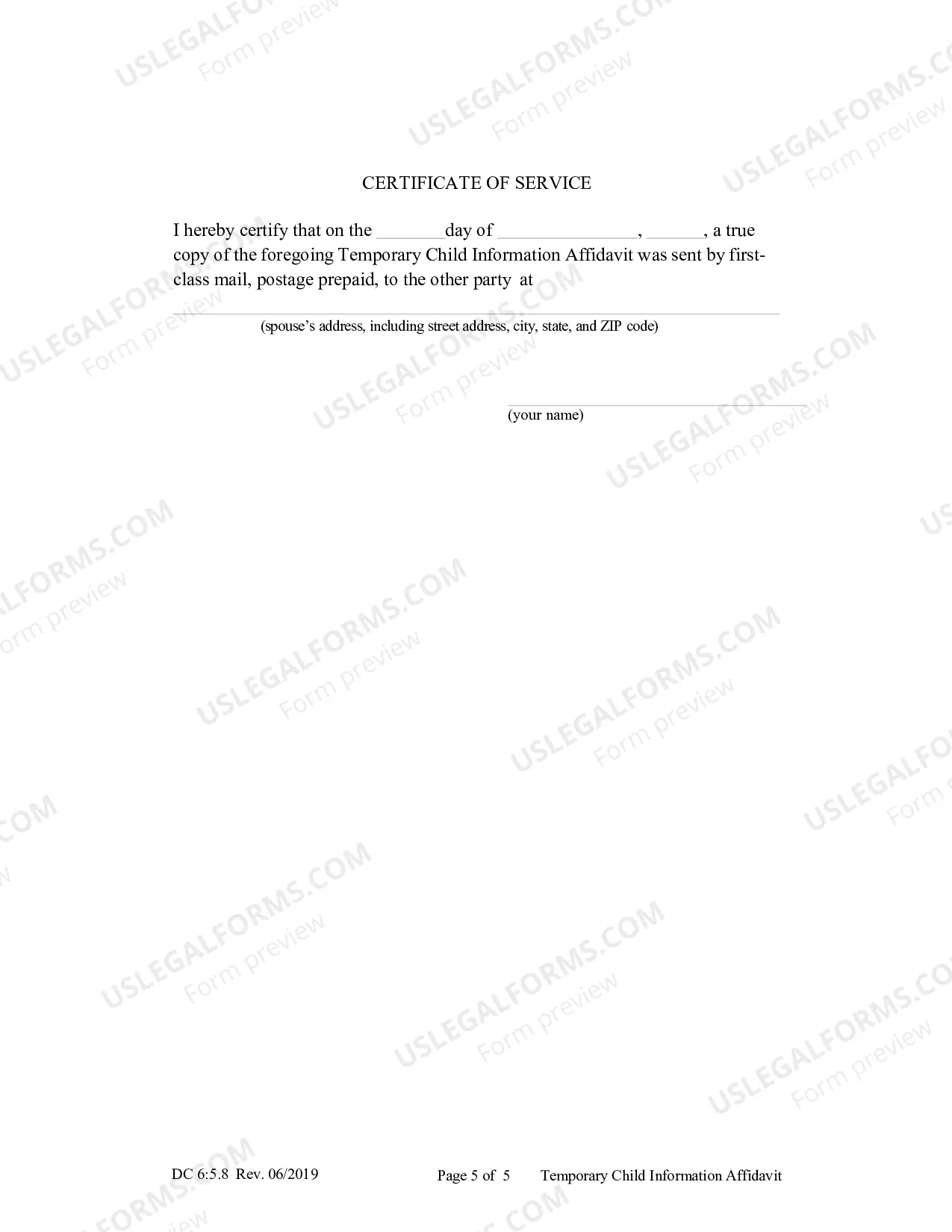
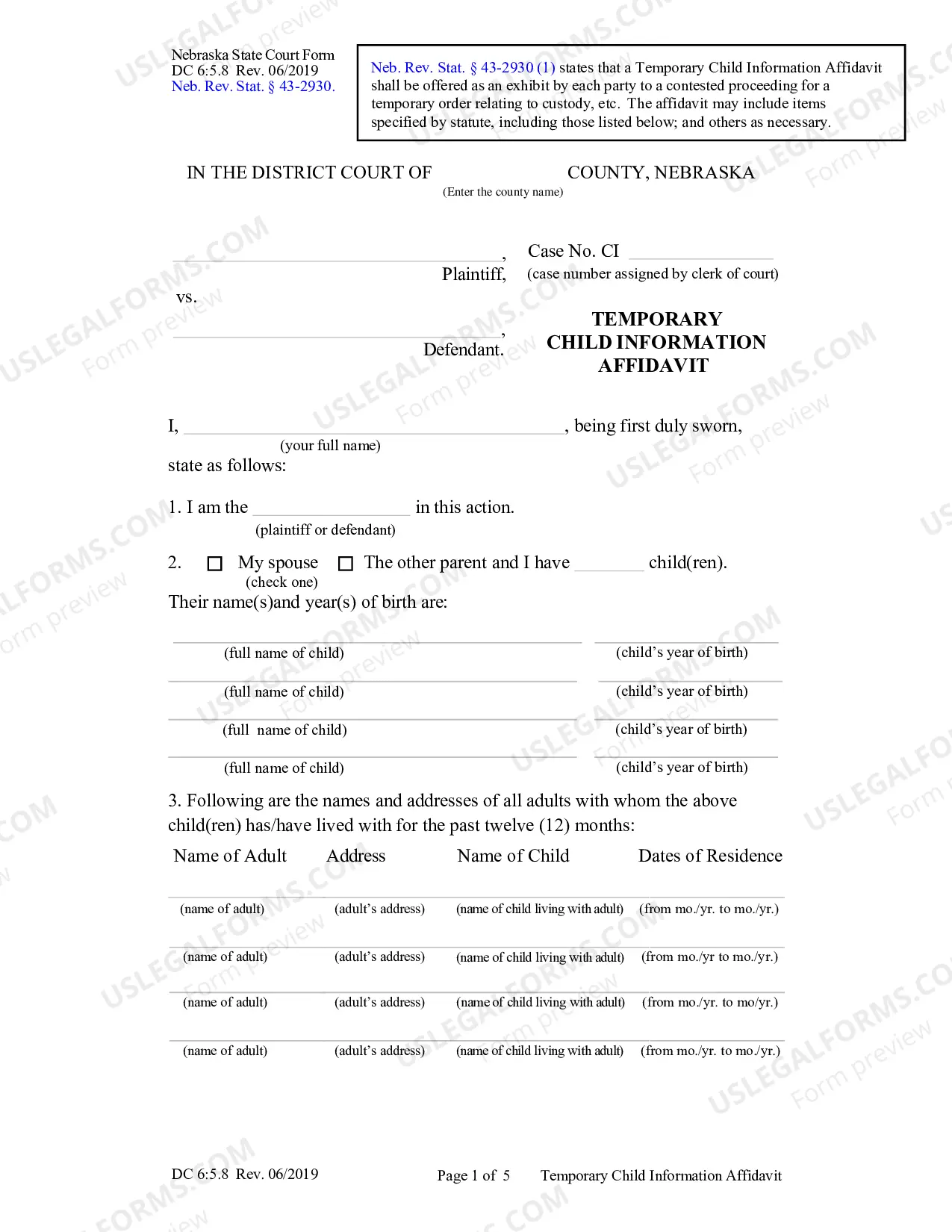
Nebraska Temporary Child Information Affidavit
Description
Get your form ready online
Our built-in tools help you complete, sign, share, and store your documents in one place.
Make edits, fill in missing information, and update formatting in US Legal Forms—just like you would in MS Word.
Download a copy, print it, send it by email, or mail it via USPS—whatever works best for your next step.
Sign and collect signatures with our SignNow integration. Send to multiple recipients, set reminders, and more. Go Premium to unlock E-Sign.
If this form requires notarization, complete it online through a secure video call—no need to meet a notary in person or wait for an appointment.
We protect your documents and personal data by following strict security and privacy standards.

Make edits, fill in missing information, and update formatting in US Legal Forms—just like you would in MS Word.

Download a copy, print it, send it by email, or mail it via USPS—whatever works best for your next step.

Sign and collect signatures with our SignNow integration. Send to multiple recipients, set reminders, and more. Go Premium to unlock E-Sign.

If this form requires notarization, complete it online through a secure video call—no need to meet a notary in person or wait for an appointment.

We protect your documents and personal data by following strict security and privacy standards.
Looking for another form?
How to fill out Nebraska Temporary Child Information Affidavit?
US Legal Forms is the most easy and profitable way to find suitable legal templates. It’s the most extensive online library of business and personal legal paperwork drafted and verified by legal professionals. Here, you can find printable and fillable templates that comply with federal and local laws - just like your Nebraska Temporary Child Information Affidavit.
Getting your template requires just a few simple steps. Users that already have an account with a valid subscription only need to log in to the website and download the form on their device. Afterwards, they can find it in their profile in the My Forms tab.
And here’s how you can obtain a properly drafted Nebraska Temporary Child Information Affidavit if you are using US Legal Forms for the first time:
- Look at the form description or preview the document to ensure you’ve found the one corresponding to your needs, or find another one utilizing the search tab above.
- Click Buy now when you’re certain about its compatibility with all the requirements, and judge the subscription plan you like most.
- Create an account with our service, sign in, and purchase your subscription using PayPal or you credit card.
- Select the preferred file format for your Nebraska Temporary Child Information Affidavit and save it on your device with the appropriate button.
Once you save a template, you can reaccess it whenever you want - just find it in your profile, re-download it for printing and manual completion or upload it to an online editor to fill it out and sign more efficiently.
Take advantage of US Legal Forms, your trustworthy assistant in obtaining the required formal paperwork. Try it out!
Form popularity
FAQ
Who has custody of a child when the parents are not married in Nebraska? Nebraska's child custody laws treat parents the same regardless of their marital status. This means that both parents have rights to seek custody, parenting time or child support.
(a) A court of this state has temporary emergency jurisdiction if the child is present in this state and the child has been abandoned or it is necessary in an emergency to protect the child because the child, or a sibling or parent of the child, is subjected to or threatened with mistreatment or abuse.
(a) A court of this state has temporary emergency jurisdiction if the child is present in this state and the child has been abandoned or it is necessary in an emergency to protect the child because the child, or a sibling or parent of the child, is subjected to or threatened with mistreatment or abuse.
In Nebraska, one party may have sole custody of the minor children or the parties may have joint custody of the children. Joint custody allows both parents to share legal responsibility for major child rearing decisions regarding upbringing, health, welfare, and education.
There is no magic age that the child gets to decide which parent to live with. Nebraska statutes instruct the trial court to consider a child's preference as long as the child is of an age of comprehension and the child's wishes and desires are based on sound reasoning.
Pursuant to subsection (1) of this section, a court may terminate parental rights if the parent has abandoned the juvenile for 6 months or more immediately prior to the filing of the petition.
This power of attorney is called a Temporary Delegation of Parental Powers and is limited to a six-month period. After the six-month period, the parent or legal guardian may execute another Temporary Delegation of Parental Powers.