Texas Final Decree of Divorce
What is this form?
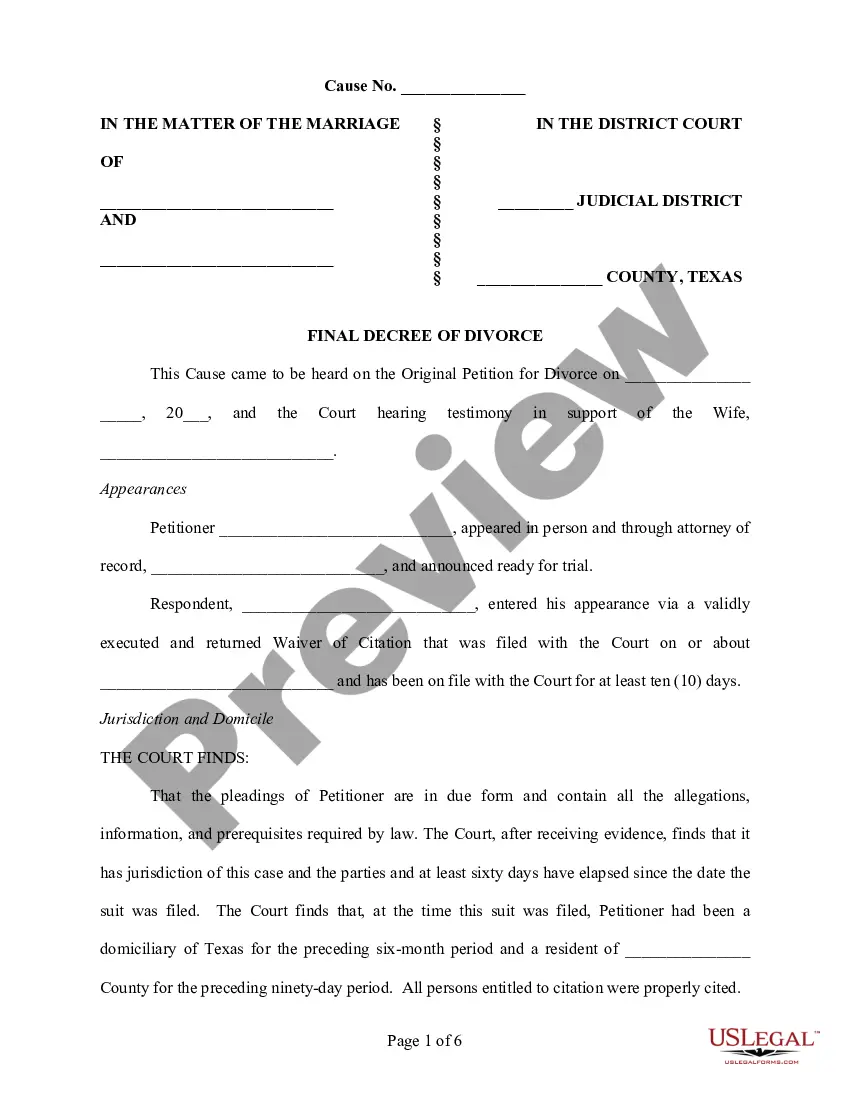
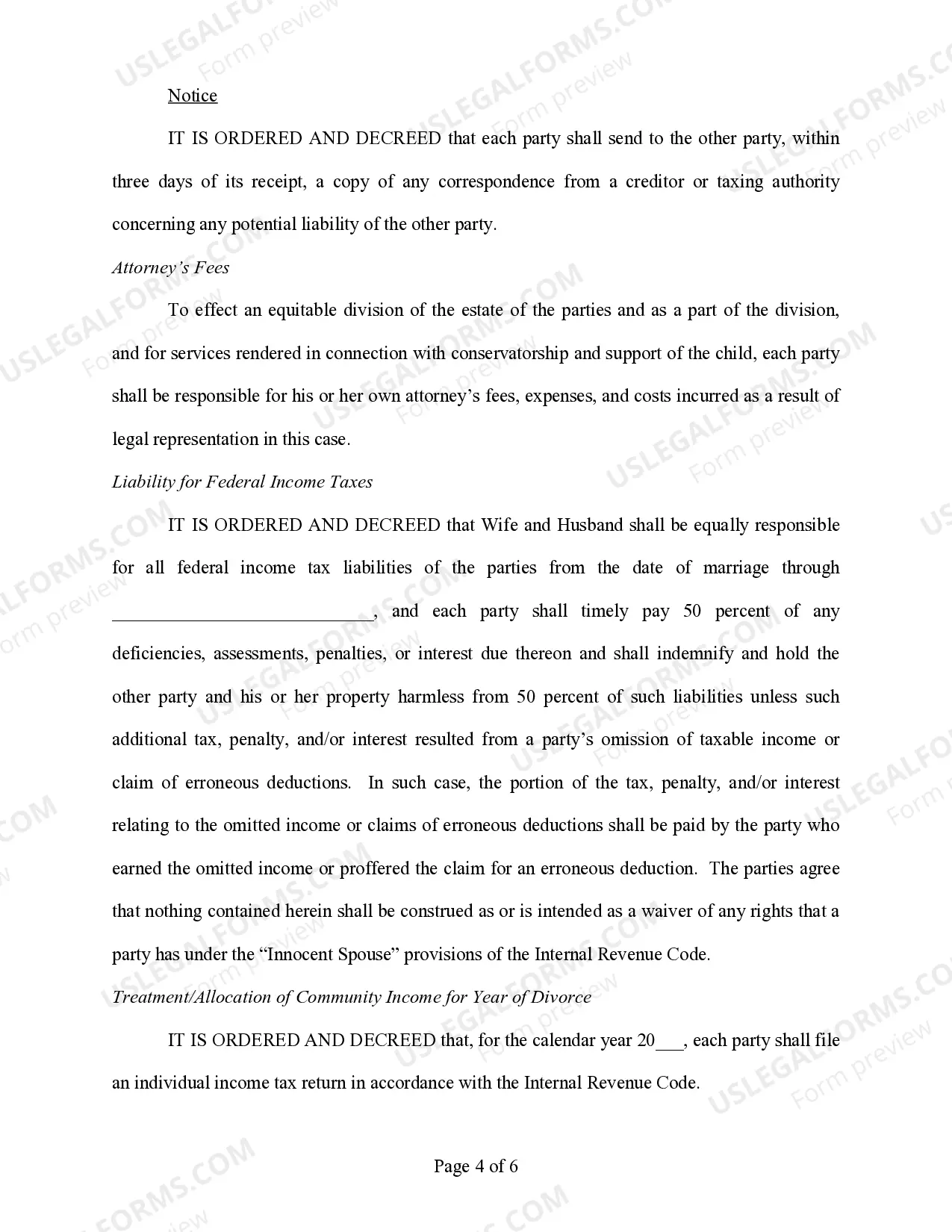
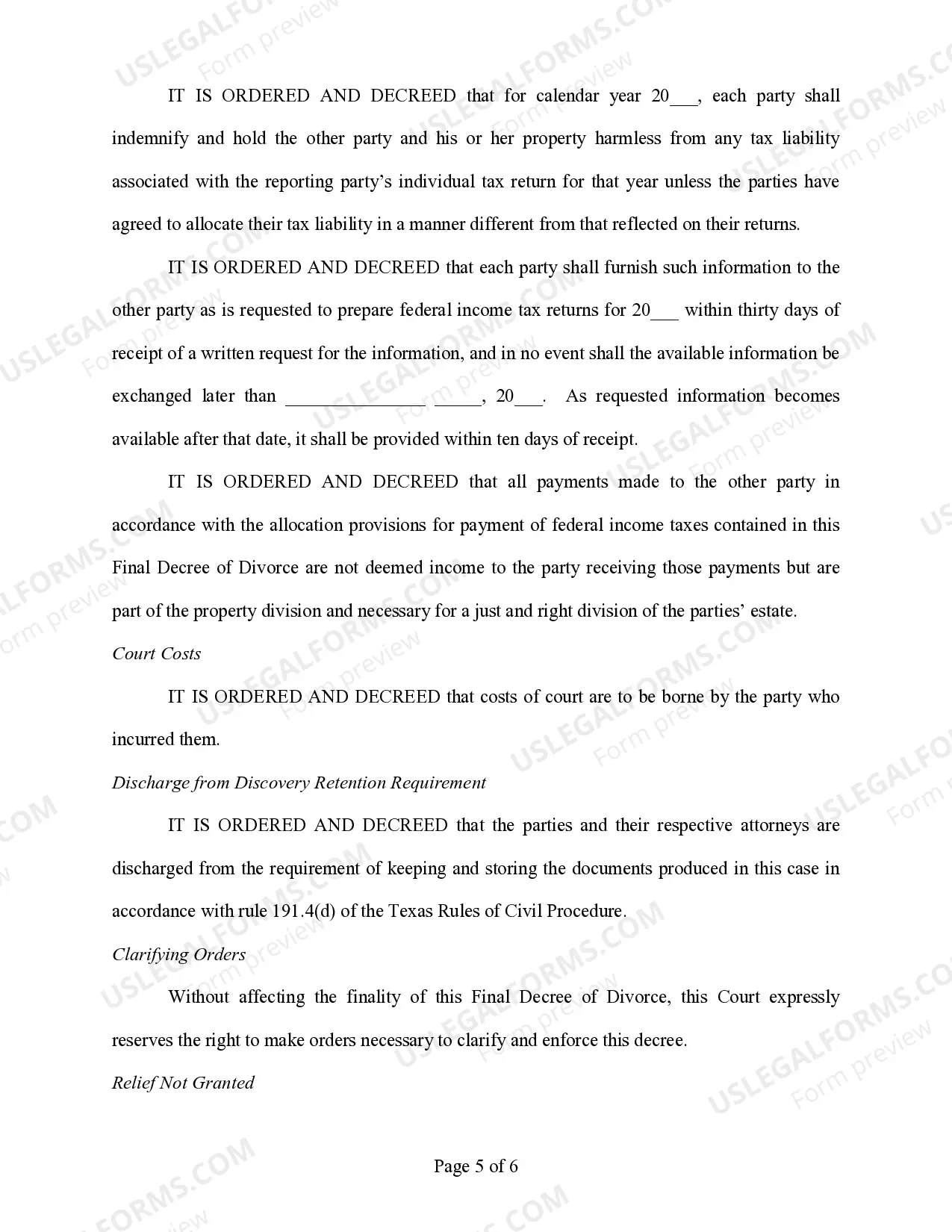
The Final Decree of Divorce is a legal document issued by a court that officially ends a marriage on the grounds of insupportability. This form is specifically applicable when there are no minor children involved and the parties have agreed on the division of their property. Unlike other divorce forms that may address child custody or support, this decree focuses solely on the dissolution of the marriage and property allocation.
Form components explained
- Case number for tracking and reference.
- Parties' names, including the petitioner and respondent.
- Confirmation of court jurisdiction and procedural compliance.
- Divorce grounds cited as insupportability.
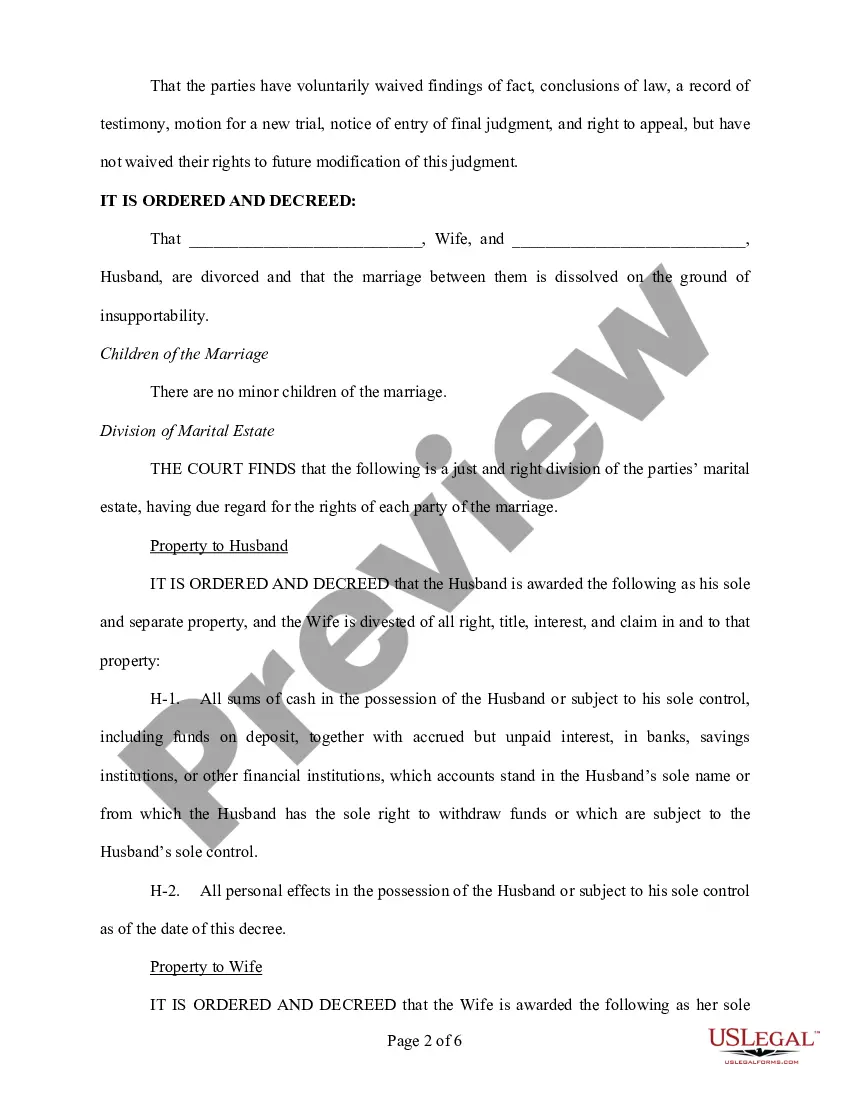
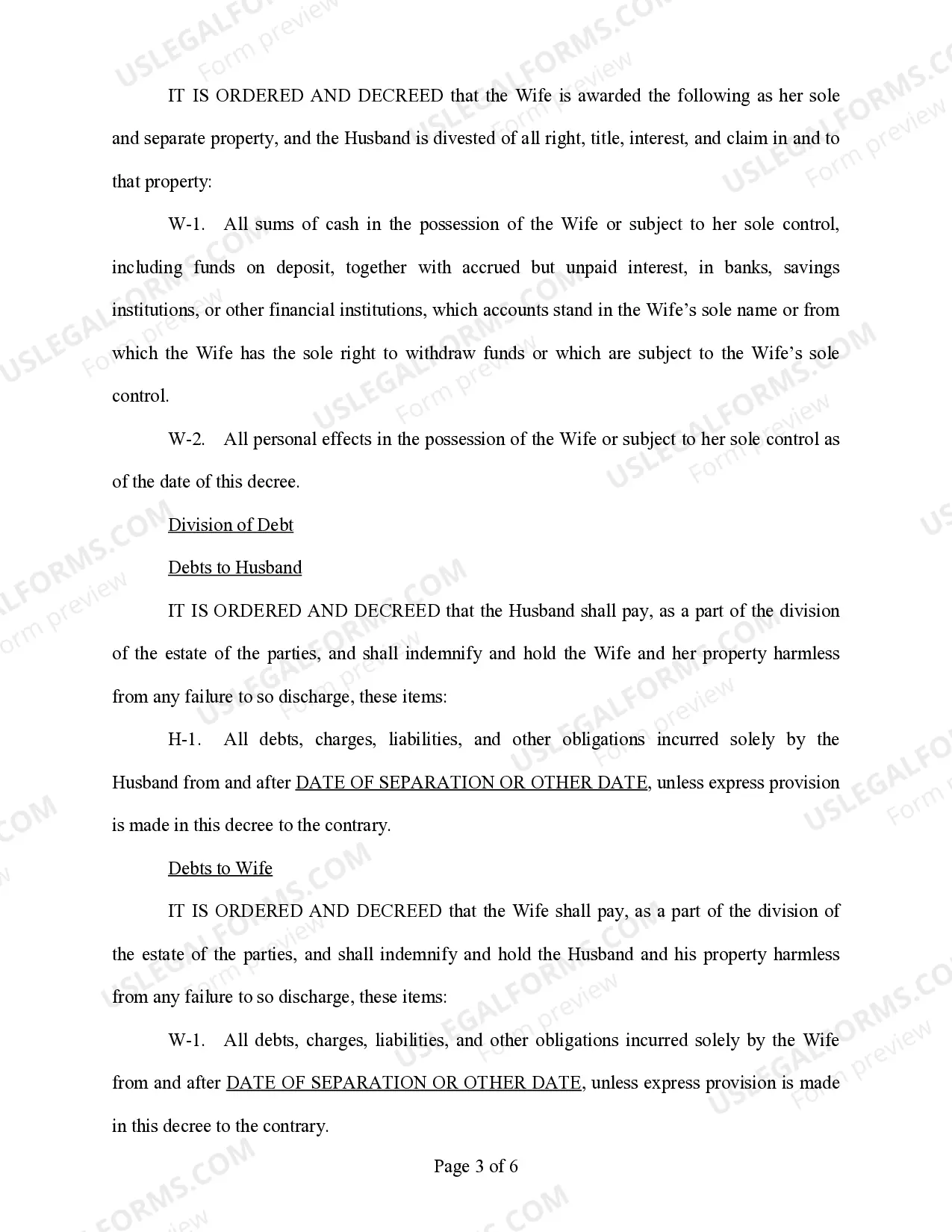
- Division of marital property and debts between parties.
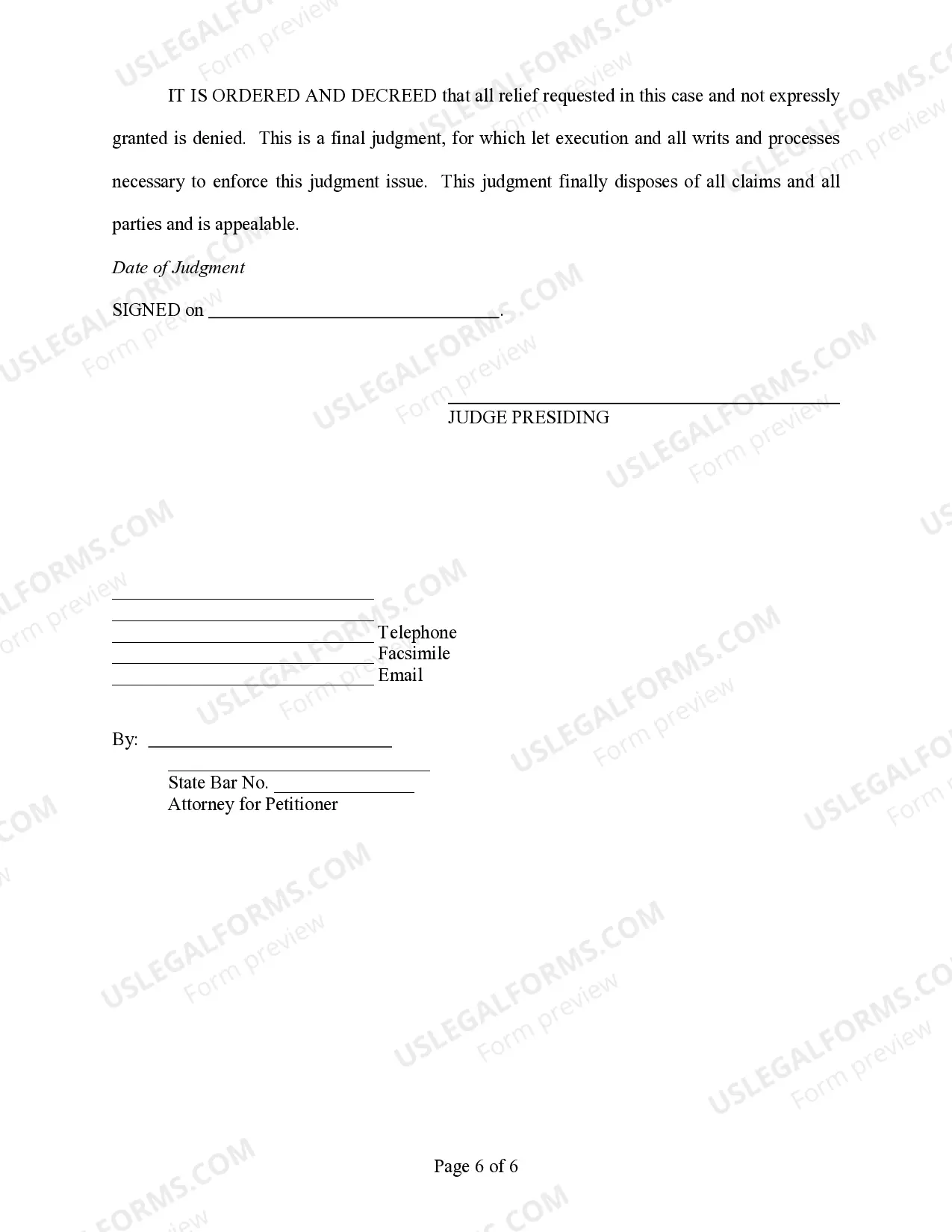
- Final judgment issued by the presiding judge.
When to use this document
You should use the Final Decree of Divorce when you and your spouse have agreed to dissolve your marriage without any minor children. It is appropriate when both parties have reached a consensus on how to divide property and debts, ensuring a smooth and amicable separation. This form is essential for finalizing the divorce process in the district court.
Who should use this form
- Individuals seeking to finalize a divorce without minor children.
- Couples who have mutually agreed on property division.
- Persons who have fulfilled residency requirements in Texas, where this decree is applicable.
- Divorcing spouses who want to avoid the complexities of a contested divorce.
How to prepare this document
- Fill in the cause number and names of both parties at the top of the form.
- Provide the date of the original petition for divorce and any significant court appearance dates.
- Detail the division of marital property and identify specific assets allocated to each spouse.
- Include any debts assigned to each party to ensure equitable distribution.
- Sign and date the form in the presence of a judge or authorized person.
Notarization guidance
This form does not typically require notarization unless specified by local law. However, it is advisable to check with the local court to confirm if notarization is necessary for your situation.
Get your form ready online
Our built-in tools help you complete, sign, share, and store your documents in one place.
Make edits, fill in missing information, and update formatting in US Legal Forms—just like you would in MS Word.
Download a copy, print it, send it by email, or mail it via USPS—whatever works best for your next step.
Sign and collect signatures with our SignNow integration. Send to multiple recipients, set reminders, and more. Go Premium to unlock E-Sign.
If this form requires notarization, complete it online through a secure video call—no need to meet a notary in person or wait for an appointment.
We protect your documents and personal data by following strict security and privacy standards.

Make edits, fill in missing information, and update formatting in US Legal Forms—just like you would in MS Word.

Download a copy, print it, send it by email, or mail it via USPS—whatever works best for your next step.

Sign and collect signatures with our SignNow integration. Send to multiple recipients, set reminders, and more. Go Premium to unlock E-Sign.

If this form requires notarization, complete it online through a secure video call—no need to meet a notary in person or wait for an appointment.

We protect your documents and personal data by following strict security and privacy standards.
Common mistakes
- Failing to include all required signatures and dates.
- Omitting necessary details regarding property and debt division.
- Not adhering to the jurisdictional residency requirements of Texas.
- Overlooking the need for a judgeâs signature to finalize the decree.
Benefits of using this form online
- Convenience of downloading and completing the form from home.
- Editability allows for the customization of specific assets and debts.
- Access to forms created by licensed attorneys ensures legal compliance.
- Time-saving process that can expedite your divorce proceedings.
Looking for another form?

Form popularity
FAQ
Certified copies of divorce decrees are only available from the district clerk. Certified copies of marriage/divorce records must be obtained in the county or district in which they were originally filed.
There is a two-year statute of limitation to file a suit to enforce against a former spouse. This two-year time period starts on the date the original divorce decree was signed by the judge or becomes final after an appeal, whichever date is later.
Divorce records can also be found online through the Texas Vital Statistics verification website or through the Report of Divorce or Annulment Indexes at the TDHHS website.
The easiest way to obtain copies or certified copies of Family Court records is to request them by email using the Civil & Family Records Request Form below to: DCRecords@dallascounty.org. You will be contacted by Records department staff with a cost estimate for your order.
Yes, you can modify a divorce decree in Texas if there has been a substantial change in circumstances since the decree was finalized. Changes related to child custody, child support, spousal maintenance, and other aspects may warrant modifications.
Marriage/Divorce Order TypeTexas.gov Order Processing TimeMail-In Order Processing TimeDivorce Verifications20-25 days25-30 daysMarriage Verifications20-25 days25-30 days
Online at .hcdistrictclerk.com. In person at 201 Caroline, Houston, TX 77002, Room 110 for Civil matters or Room 210 for Family matters. In Person at the Records Center at 5900 Canal Street, Houston, TX 77011.
The answer to your question is that, technically, yes, a divorce or other family law matter petition can expire in Texas.