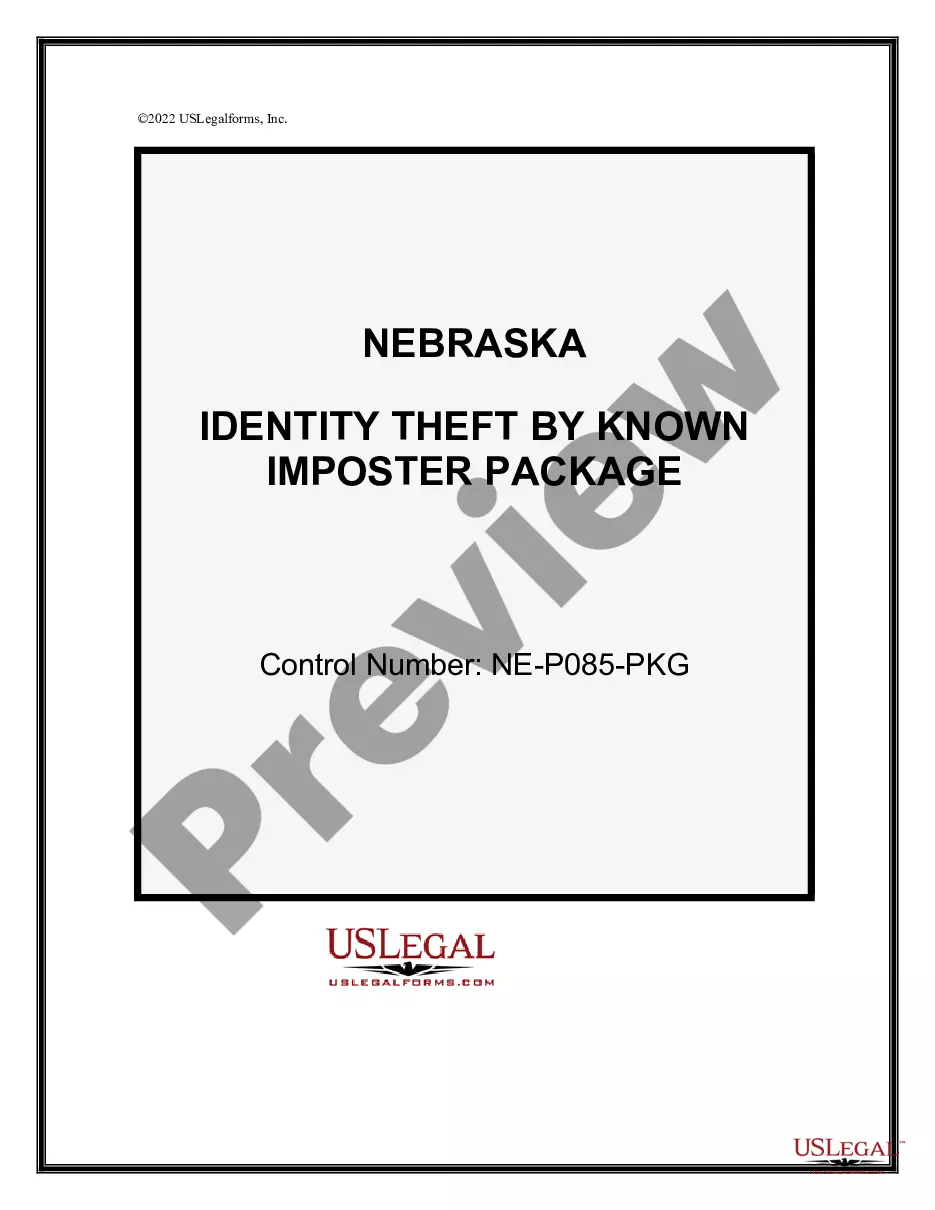
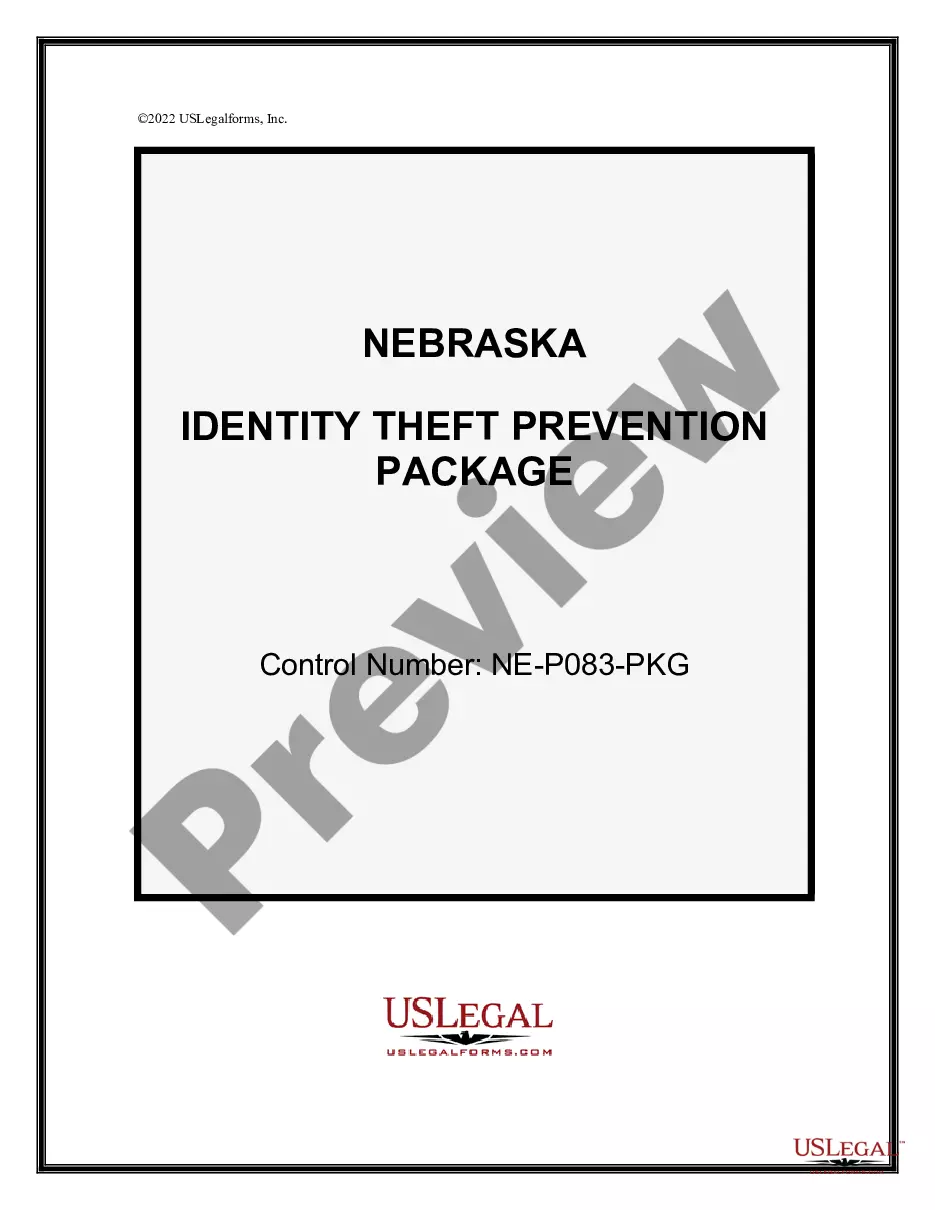
Nebraska Identity Theft by Known Imposter Package
What this form package covers
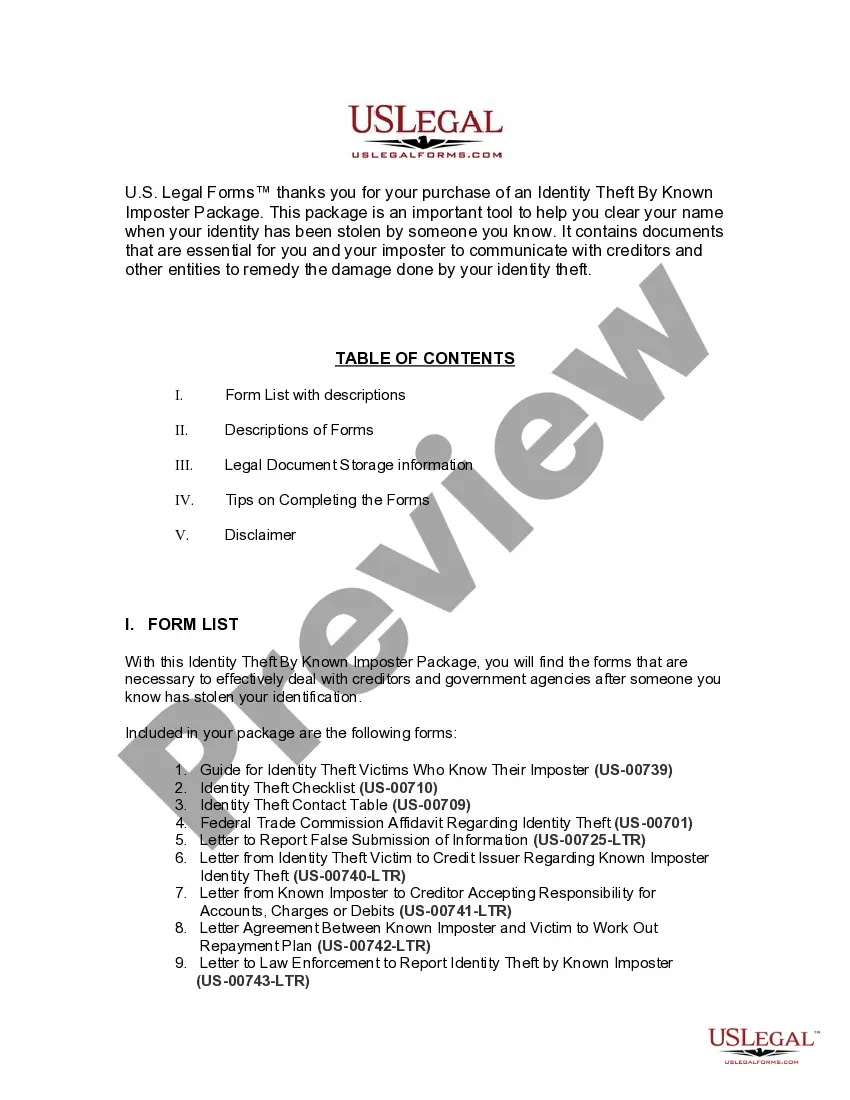
The Nebraska Identity Theft by Known Imposter Package is a comprehensive set of legal forms designed to assist individuals in restoring their identity after it has been stolen by someone they know. This package contains essential documents that facilitate communication with creditors and other entities involved in rectifying the consequences of identity theft. Unlike generic identity theft solutions, this package specifically addresses situations where the victim is familiar with the imposter, providing tailored guidance and forms for such cases.
Documents contained in this package
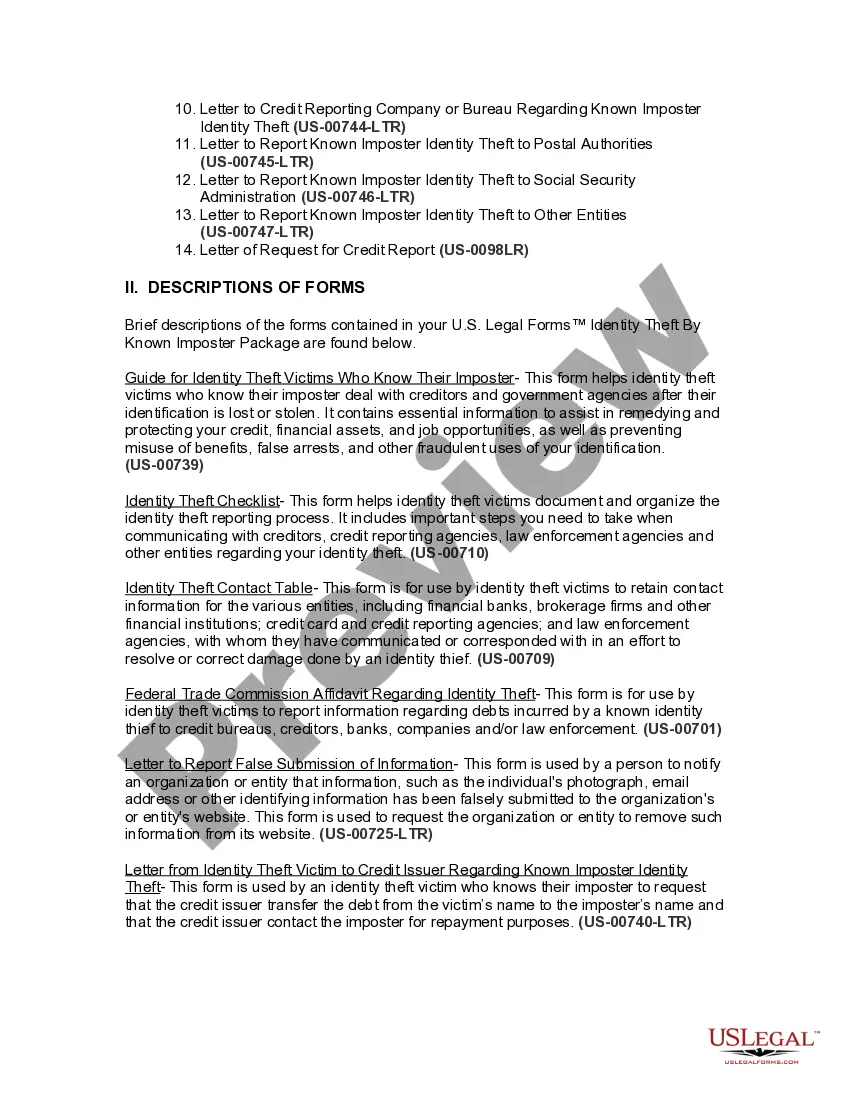
- Federal Trade Commission Affidavit regarding Identity Theft
- Identity Theft Contact Table
- Identity Theft Checklist
- Sample Letter to Report False Submission of Information
- Guide for Identity Theft Victims Who Know Their Imposter
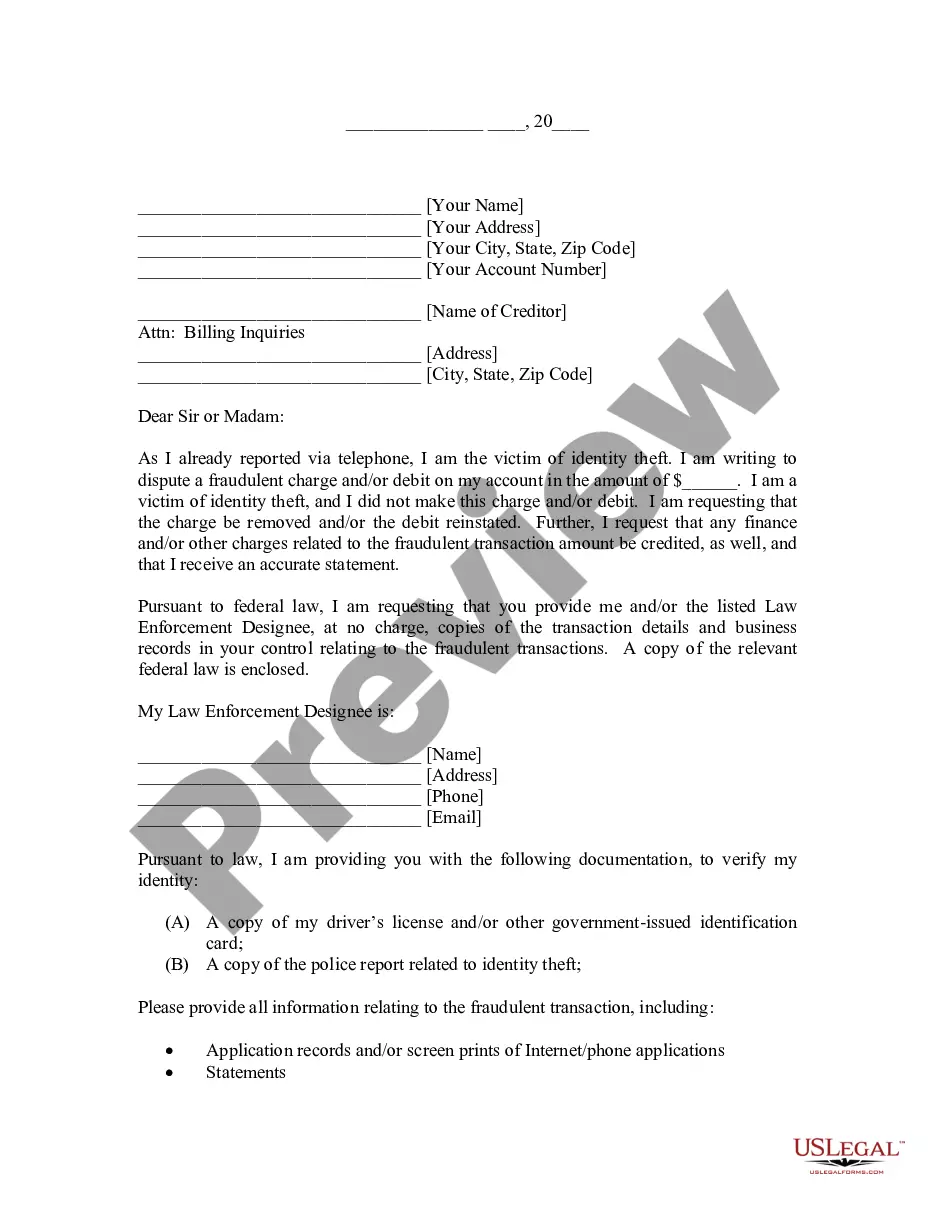
- Letter from Identity Theft Victim to Credit Issuer Regarding Known Imposter Identity Theft
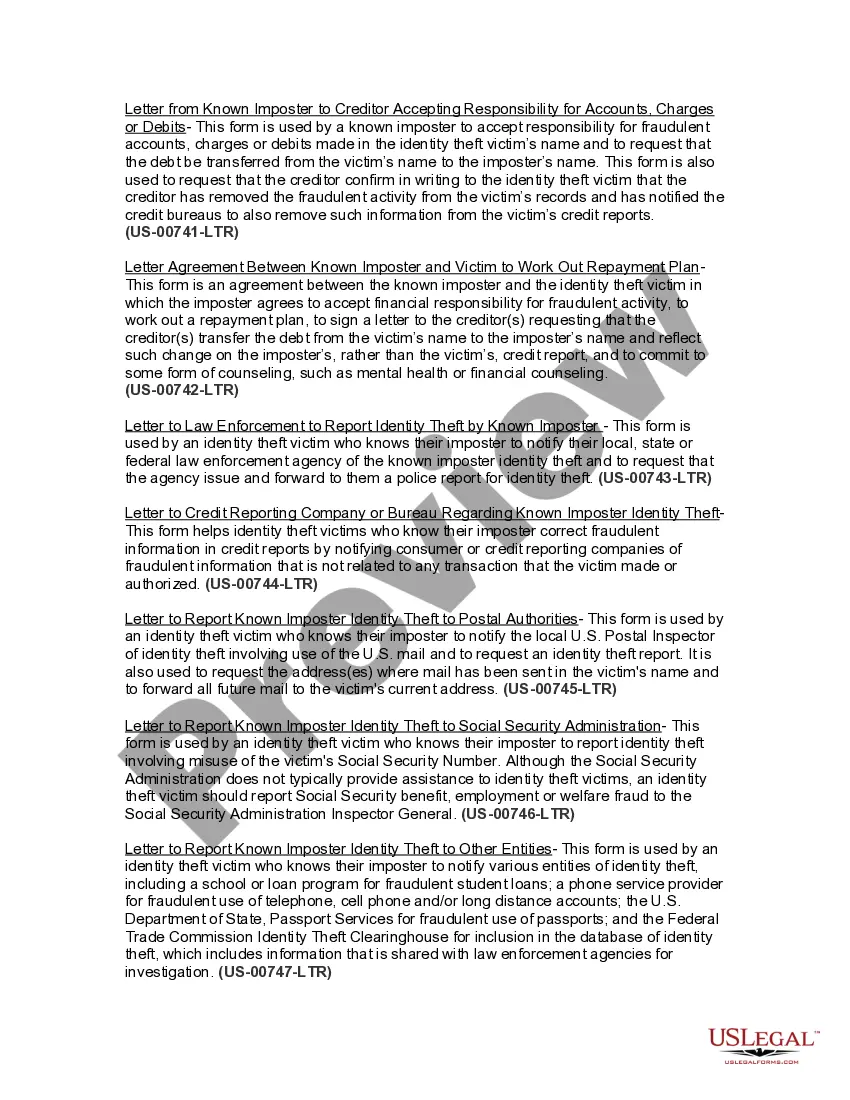
- Letter from Known Imposter to Creditor Accepting Responsibility for Accounts, Charges or Debits
- Letter Agreement Between Known Imposter and Victim to Work Out Repayment Plan
- Letter to Law Enforcement to Report Identity Theft by Known Imposter
- Letter to Credit Reporting Company or Bureau Regarding Known Imposter Identity Theft
- Letter to Report Known Imposter Identity Theft to Postal Authorities
- Letter to Report Known Imposter Identity Theft to Social Security Administration
- Letter to Report Known Imposter Identity Theft to Other Entities
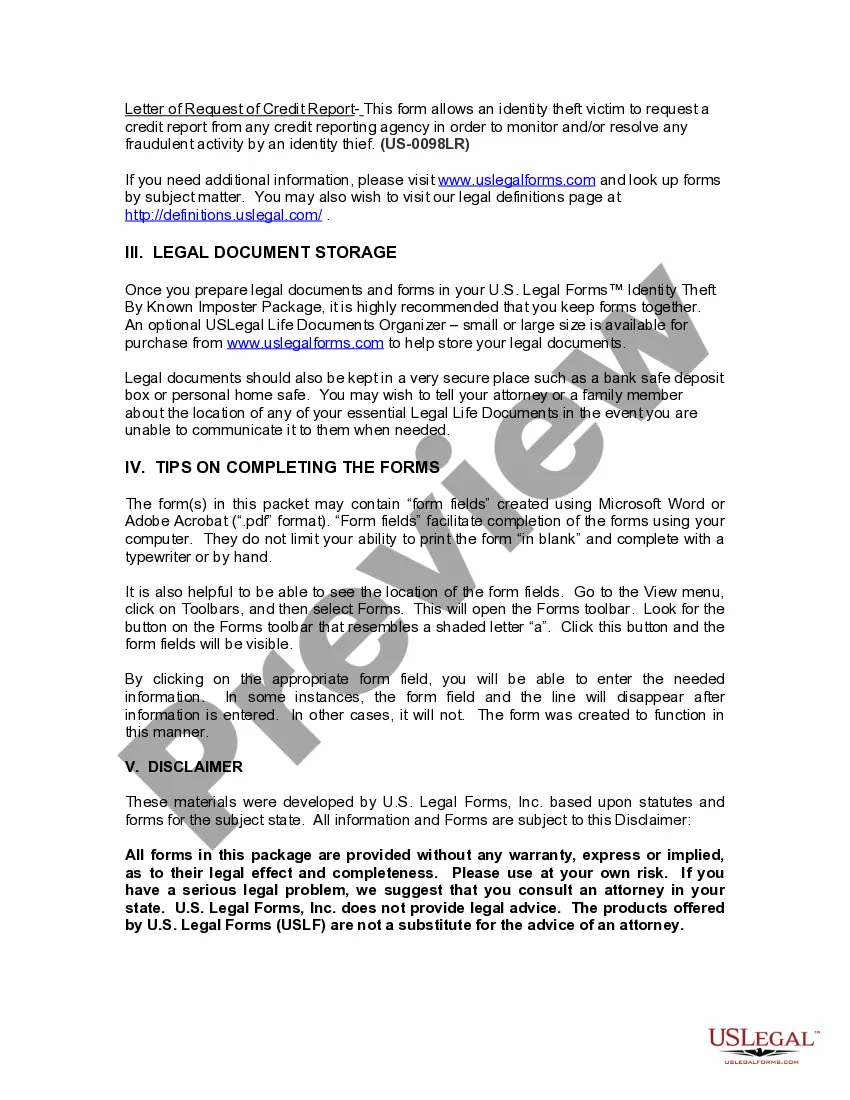
- Sample Letter for Request for Free Credit Report Allowed by Federal Law
Common use cases
This package is useful in various scenarios, including:
- When your identity has been misused by a known person and you need to reclaim your name.
- After discovering unauthorized accounts or debts linked to your name due to someone's actions.
- When you need formal communication to correct information with creditors, law enforcement, or credit reporting agencies.
- If you plan to negotiate repayment arrangements with the imposter on debts incurred in your name.
Who needs this form package
- Identity theft victims who know the person responsible for the theft.
- Individuals seeking to clear their name from fraudulent accounts and debts.
- People looking for guidance on communicating with creditors and authorities regarding identity theft.
- Anyone needing help in organizing their response to identity theft incidents.
Completing these forms step by step
- Review all included forms to understand their purpose and requirements.
- Gather necessary personal information and details about the identity theft incident.
- Fill out the forms, ensuring all information is accurate and complete.
- Communicate with the known imposter and other involved parties using the relevant letters provided.
- Submit completed forms to creditors, law enforcement, and credit reporting agencies as required.
Notarization requirements for forms in this package
Forms in this package typically do not require notarization. However, certain states or document types may still need it. US Legal Forms provides online notarization powered by Notarize, available 24/7 for your convenience.
Get your form ready online
Our built-in tools help you complete, sign, share, and store your documents in one place.
Make edits, fill in missing information, and update formatting in US Legal Forms—just like you would in MS Word.
Download a copy, print it, send it by email, or mail it via USPS—whatever works best for your next step.
Sign and collect signatures with our SignNow integration. Send to multiple recipients, set reminders, and more. Go Premium to unlock E-Sign.
If this form requires notarization, complete it online through a secure video call—no need to meet a notary in person or wait for an appointment.
We protect your documents and personal data by following strict security and privacy standards.

Make edits, fill in missing information, and update formatting in US Legal Forms—just like you would in MS Word.

Download a copy, print it, send it by email, or mail it via USPS—whatever works best for your next step.

Sign and collect signatures with our SignNow integration. Send to multiple recipients, set reminders, and more. Go Premium to unlock E-Sign.

If this form requires notarization, complete it online through a secure video call—no need to meet a notary in person or wait for an appointment.

We protect your documents and personal data by following strict security and privacy standards.
Typical mistakes to avoid
- Failing to include all necessary personal information on the forms.
- Not keeping copies of all submitted documents for personal records.
- Neglecting to follow up with creditors or authorities after submitting forms.
- Using vague language when documenting the identity theft incident.
Why complete this package online
- Convenience of accessing essential legal forms from home at any time.
- Editability allows you to customize forms with specific details relevant to your case.
- Reliability of forms developed by licensed attorneys specifically for Nebraska's laws.
- Time-saving as all necessary forms are bundled together in one comprehensive package.
Looking for another form?


Form popularity
FAQ
Track what bills you owe and when they're due. If you stop getting a bill, that could be a sign that someone changed your billing address. Review your bills. Check your bank account statement. Get and review your credit reports.
A conviction for an identity theft crime can result in time spent in jail or prison. In general, a conviction for a misdemeanor offense can lead to up to a year in jail, while felony sentences can result in several years or more in prison.
Identity (ID) theft happens when someone steals your personal information to commit fraud. The identity thief may use your information to apply for credit, file taxes, or get medical services. These acts can damage your credit status, and cost you time and money to restore your good name.
Freeze your credit. Safeguard your Social Security number. Be alert to phishing and spoofing. Use strong passwords and add an authentication step. Use alerts. Watch your mailbox. Shred, shred, shred. Use a digital wallet.
To see if your Social Security number is being used by someone else for employment purposes, review your Social Security Statement at www.socialsecurity.gov/myaccount to look for suspicious activity. Finally, you'll want to use additional scrutiny by regularly checking your bank and credit card accounts online.
Identity theft and identity fraud are terms used to refer to all types of crime in which someone wrongfully obtains and uses another person's personal data in some way that involves fraud or deception, typically for economic gain.
File a claim with your identity theft insurance, if applicable. Notify companies of your stolen identity. File a report with the FTC. Contact your local police department. Place a fraud alert on your credit reports. Freeze your credit. Sign up for a credit monitoring service, if offered.
You have limited liability for fraudulent debts caused by identity theft. Under most state laws, you're not responsible for any debt incurred on fraudulent new accounts opened in your name without your permission. Under federal law, the amount you have to pay for unauthorized use of your credit card is limited to $50.
The Identity Theft Affidavit you filed with the FTC; Government-issued photographic ID (such as a state ID card or driver's license); Proof of your home address (like a utility bill or rent agreement); Proof of the theft (bills from creditors or notices from the IRS); and.