North Dakota Last Will and Testament for a Widow or Widower with Adult Children

What is this form?
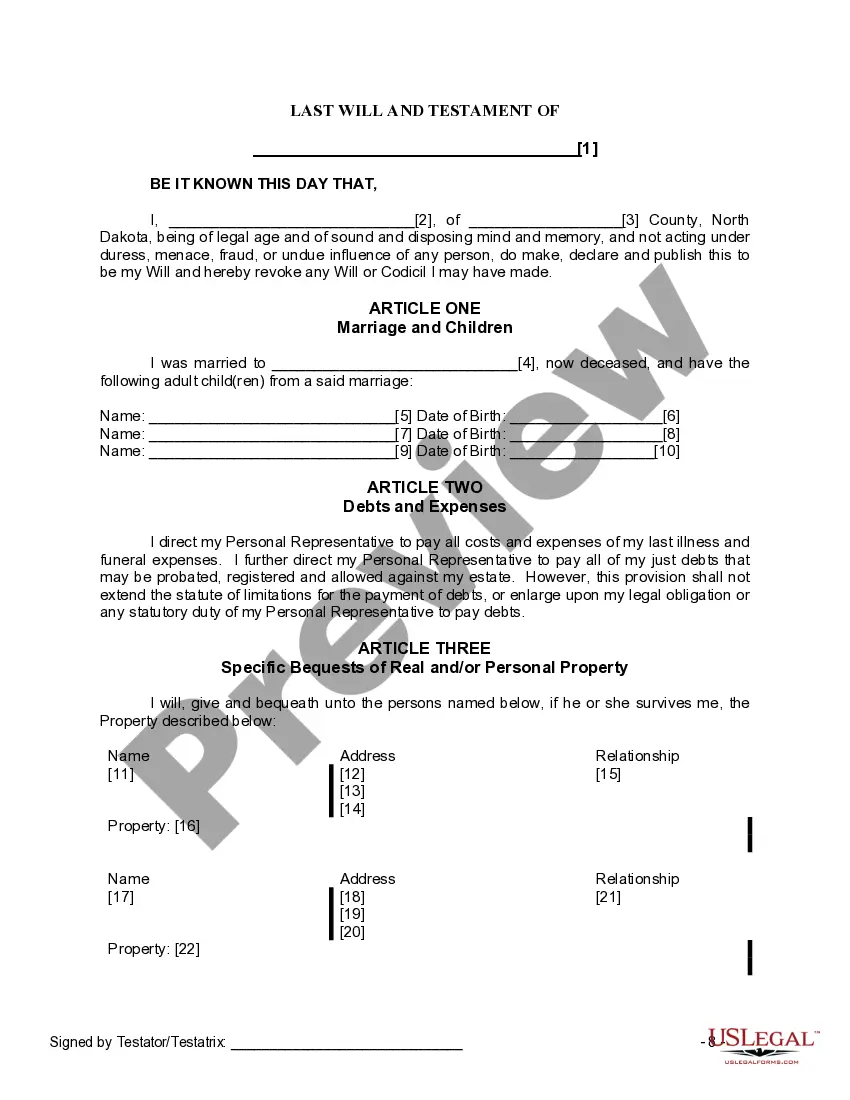
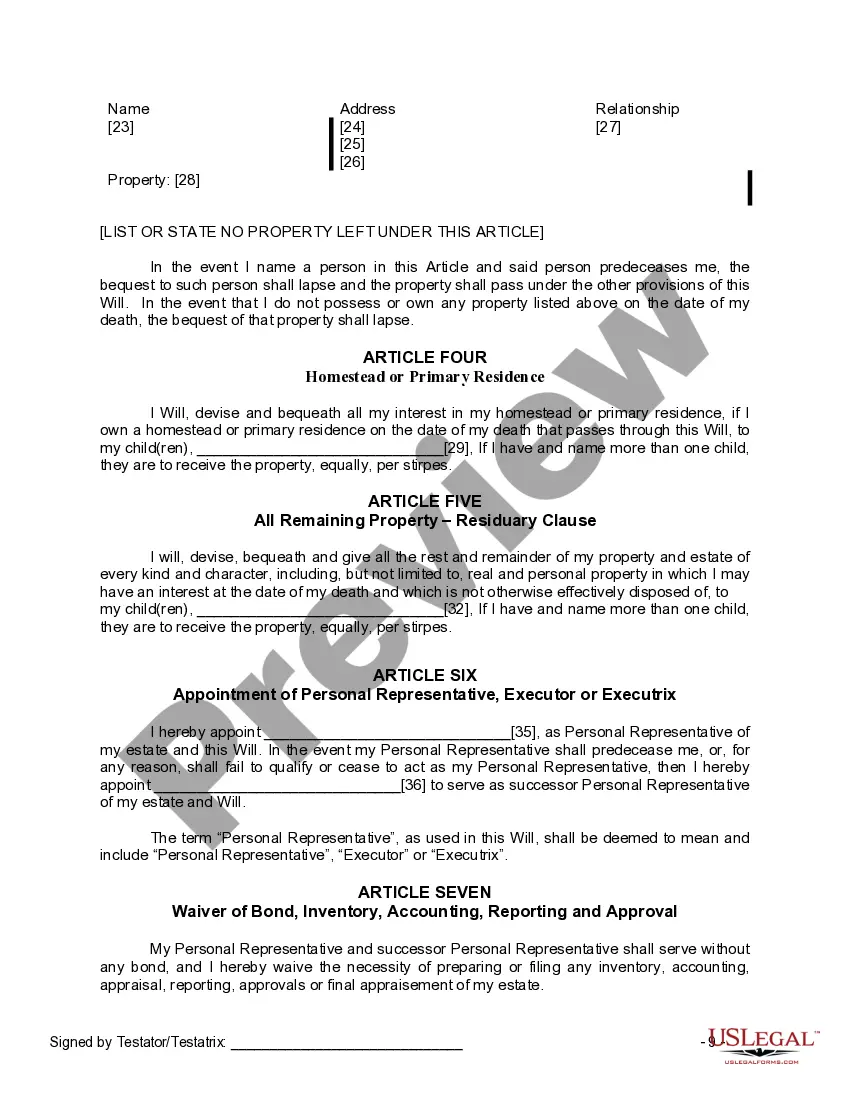
This Last Will and Testament for a Widow or Widower with Adult Children is a legal document that outlines how a person's assets will be distributed after their death. It is specifically designed for individuals who have lost a spouse and have adult children. This form provides essential provisions, such as appointing a personal representative or executor, designating beneficiaries, and making specific bequests, which differ from general wills tailored for other family situations.
Main sections of this form
- Personal information: Includes the testator's name and county of residence.
- Identification of deceased spouse and adult children: Entries for names and birthdates.
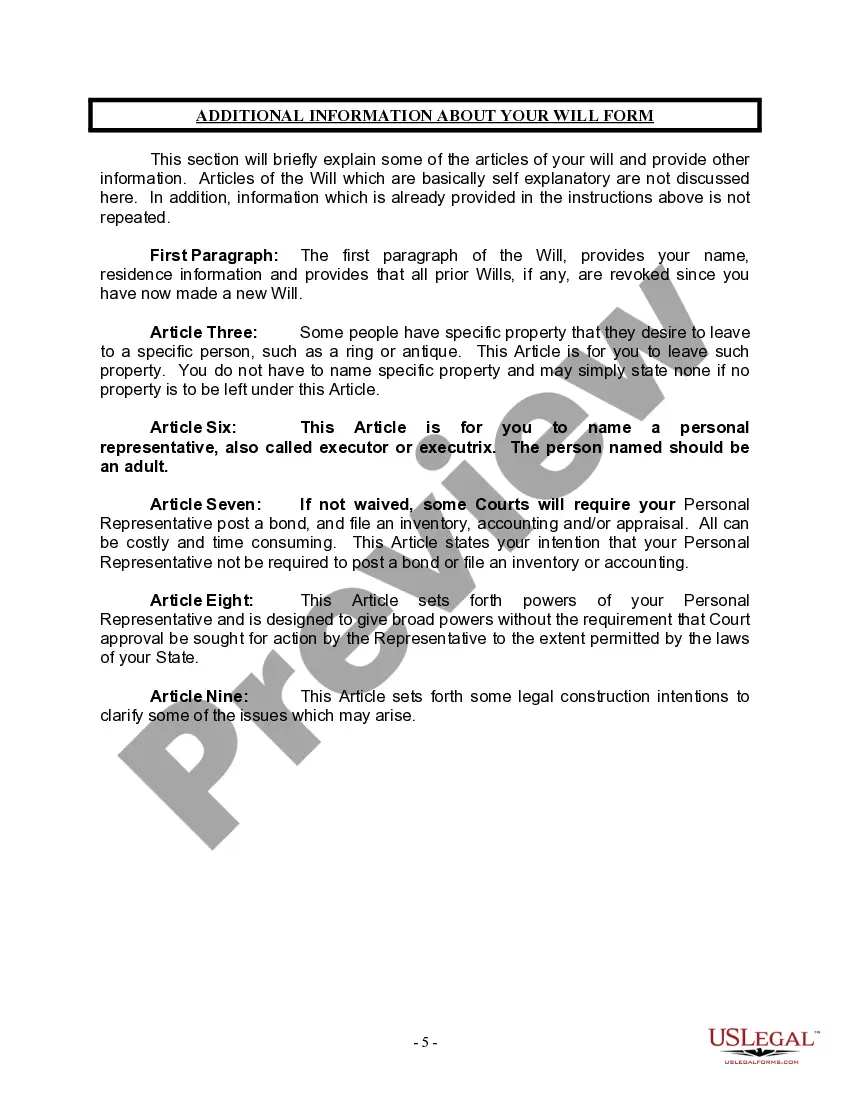
- Specific bequests: Sections to allocate specific properties to chosen individuals.
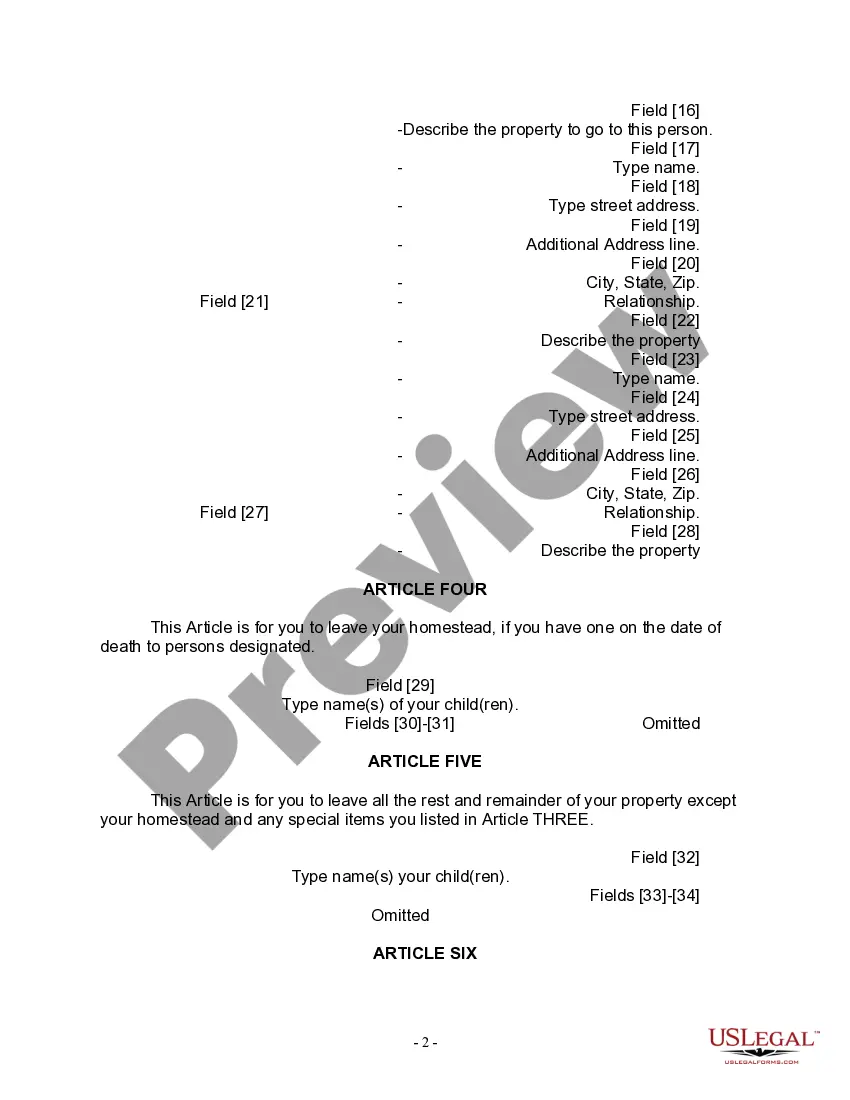
- Homestead clause: Determines the disposition of the primary residence.
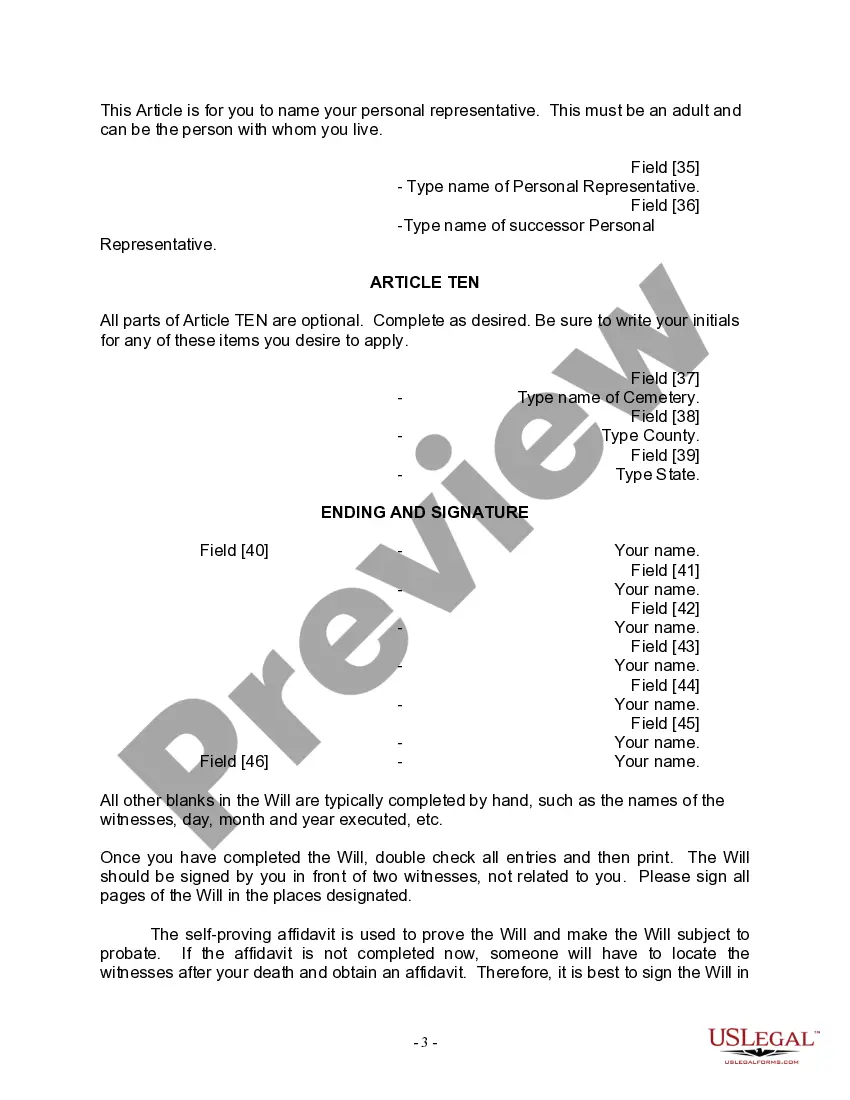
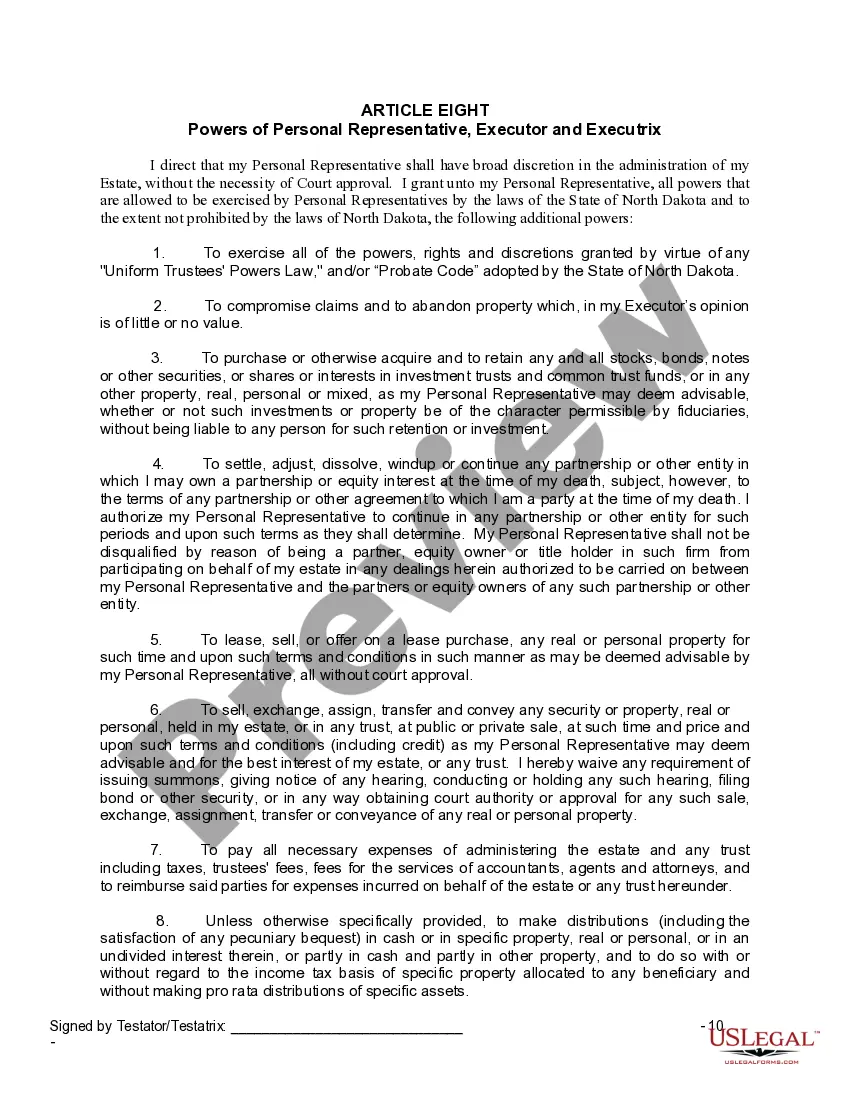
- Appointment of a personal representative: Designates the executor of the estate.
- State-specific self-proving affidavit options, if applicable: Includes provisions for a notary public.




Common use cases
This form should be used when a widow or widower wishes to create a legally binding document to specify how their assets should be managed and distributed after their passing. It is particularly important if the individual has adult children and wants to ensure clear directives for property distribution, address debts and final expenses, and name a trusted executor for their estate.
Who should use this form
- Widows and widowers who have lost a spouse.
- Individuals with adult children seeking to outline their wishes regarding property distribution.
- Individuals who want to ensure their estate is administered according to their preferences.
Steps to complete this form
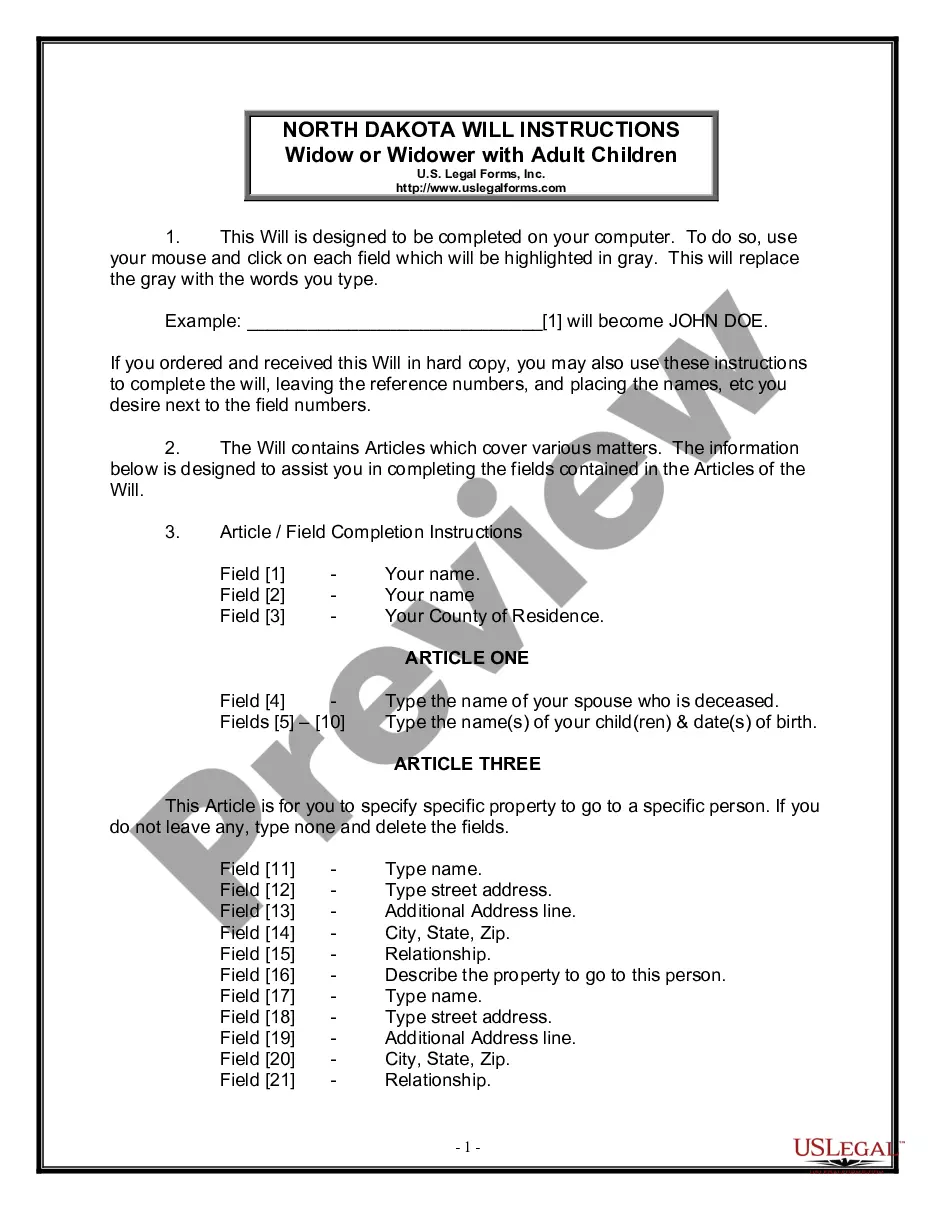
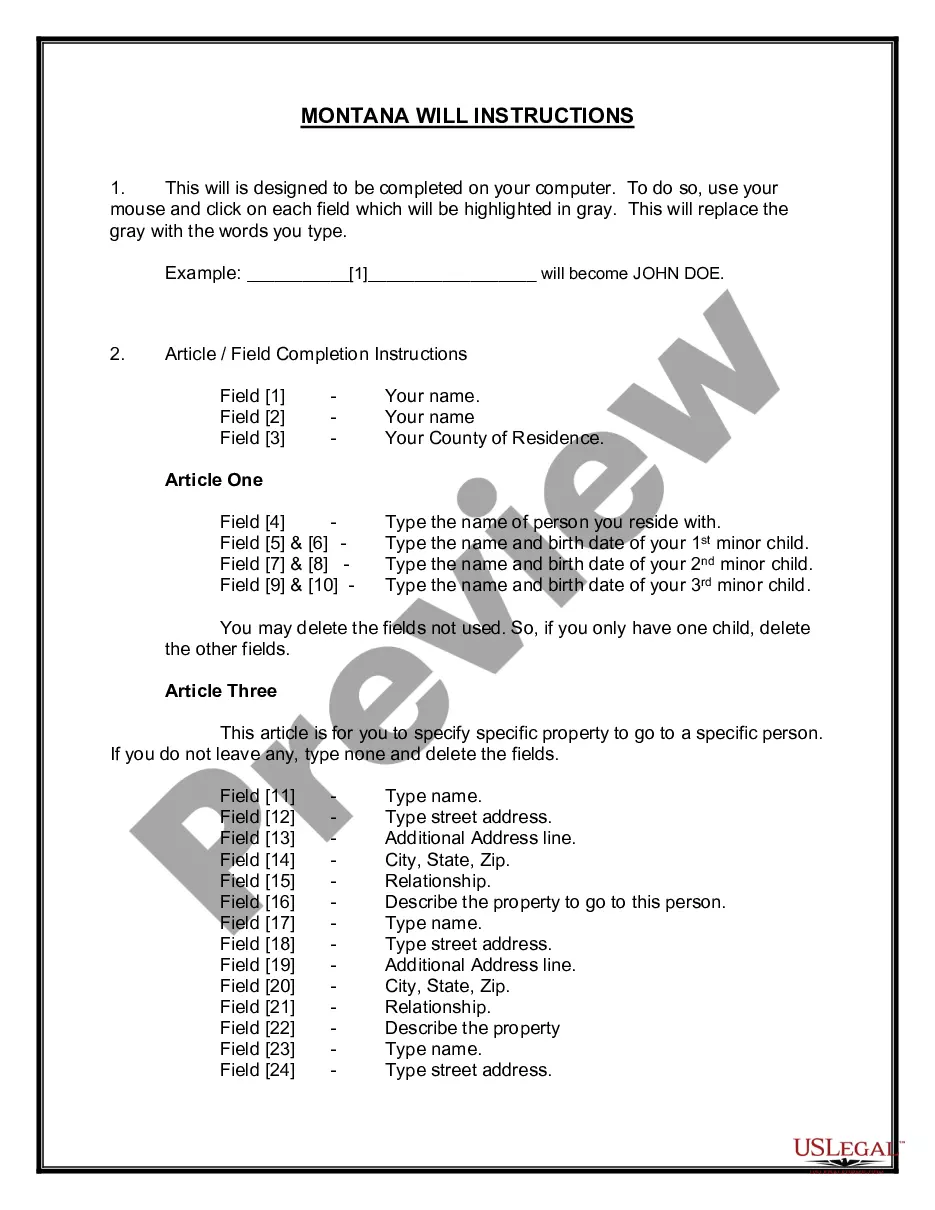
- Fill in your personal information, including your name and county of residence.
- Provide the names and birthdates of your deceased spouse and adult children.
- Specify any particular properties or assets you wish to bequeath to specific individuals.
- Designate your personal representative who will manage your estate.
- Sign the will in front of two witnesses who are not related to you.
Notarization guidance
To make this form legally binding, it must be notarized. Our online notarization service, powered by Notarize, lets you verify and sign documents remotely through an encrypted video session.
Get your form ready online
Our built-in tools help you complete, sign, share, and store your documents in one place.
Make edits, fill in missing information, and update formatting in US Legal Forms—just like you would in MS Word.
Download a copy, print it, send it by email, or mail it via USPS—whatever works best for your next step.
Sign and collect signatures with our SignNow integration. Send to multiple recipients, set reminders, and more. Go Premium to unlock E-Sign.
If this form requires notarization, complete it online through a secure video call—no need to meet a notary in person or wait for an appointment.
We protect your documents and personal data by following strict security and privacy standards.

Make edits, fill in missing information, and update formatting in US Legal Forms—just like you would in MS Word.

Download a copy, print it, send it by email, or mail it via USPS—whatever works best for your next step.

Sign and collect signatures with our SignNow integration. Send to multiple recipients, set reminders, and more. Go Premium to unlock E-Sign.

If this form requires notarization, complete it online through a secure video call—no need to meet a notary in person or wait for an appointment.

We protect your documents and personal data by following strict security and privacy standards.
Avoid these common issues
- Not signing the will in the presence of two qualified witnesses.
- Failing to update the will if family circumstances change, such as remarriage or additional children.
- Leaving property specifics blank or unclear, leading to potential disputes among heirs.
Why use this form online
- Convenient access to legal forms from anywhere with an internet connection.
- Ability to complete and edit the document directly on your computer.
- Reliable and professionally drafted templates created by licensed attorneys.
Legal use & context
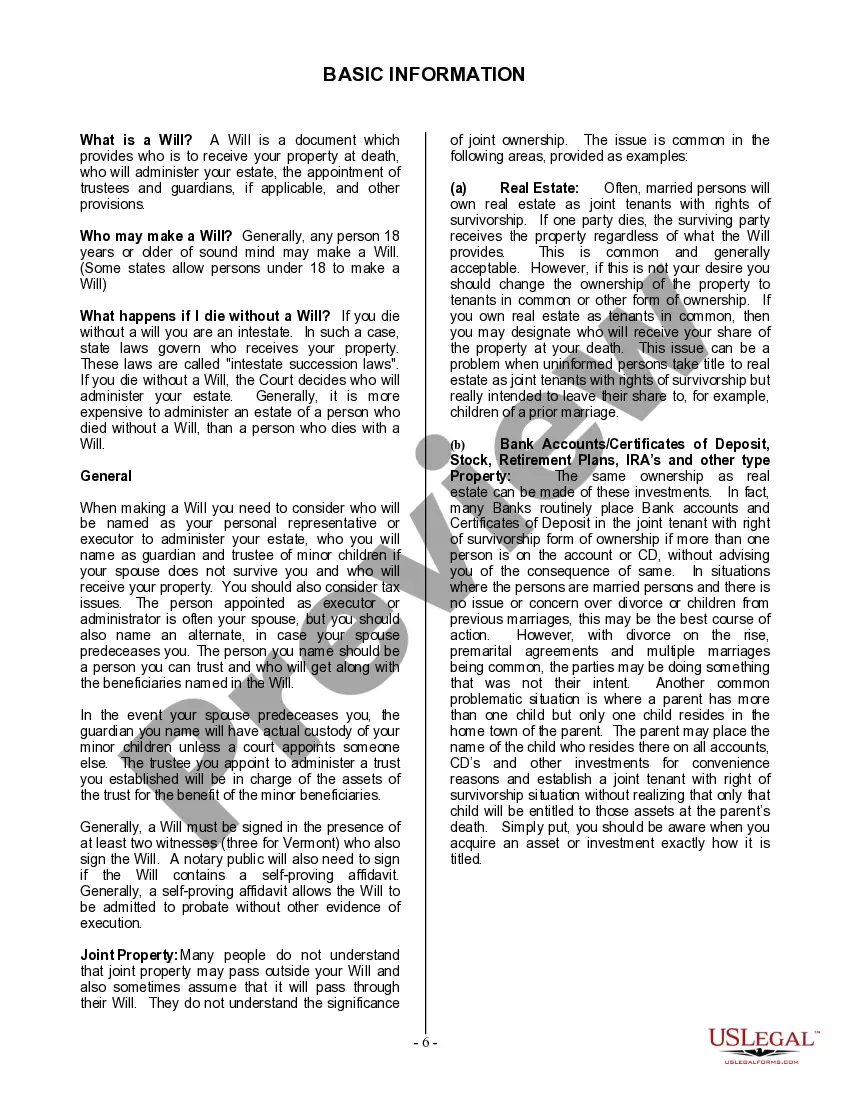
- A Will is a legally binding document only when executed properly, adhering to local laws.
- It allows you to dictate how your assets are managed and distributed, which helps prevent disputes among heirs.
- Having a well-drafted Will can simplify the probate process, making it less costly and time-consuming.
Summary of main points
- This will is specifically designed for widows or widowers with adult children.
- It provides clear instructions for assets distribution and personal representative appointment.
- Proper execution, including witnessing and notarization, is crucial to the form's legality.
Looking for another form?
Form popularity
FAQ
Yes, under some circumstances. If no consideration is provided for the mutual wills, except the mutual agreement of the spouses, either spouse can change the will prior to the death of the first spouse.After the first spouse dies, however, the surviving spouse cannot change the will.
Find an online template or service. Make a list of your assets. Be specific about who gets what. If you have minor children, choose a guardian. Give instructions for your pet. Choose an executor. Name a 'residuary beneficiary' List your funeral preferences.
A widow's will must meet her state's standards in order to be considered legally valid. Typically, this means the will must be in writing and signed. States generally require the signatures of two neutral witnesses who watch the widow sign the document, and a notary may also be required.
Yes! Your Free Will Kit will be delivered to you at no-cost, no purchase necessary.
The form may be downloaded in fillable Adobe PDF, Rich Text Format, and Microsoft Word templates and should be signed by the testator and at least two (2) witnesses or a notary public (See your State's Probate Code).
In most situations, a will template is an easy and inexpensive way to make sure your wishes are known and carried out. Most people can get everything they need by using a will template, with little cost or hassle.
Include personal identifying information. Include a statement about your age and mental status. Designate an executor. Decide who will take care of your children. Choose your beneficiaries. List your funeral details. Sign and date your Last Will and Testament.
Contrary to popular belief, you do not need to have an attorney draft a will for you. Anyone can write this document on their own, and as long as it meets all of the legal requirements of the state, courts will recognize one you wrote yourself.
Choose an online legal services provider or locate a will template. Carefully consider your distribution wishes. Identify a personal representative/executor. Understand the requirements to make your will legal. Make sure someone else knows about your will. Consult a lawyer if you have a more complicated estate.