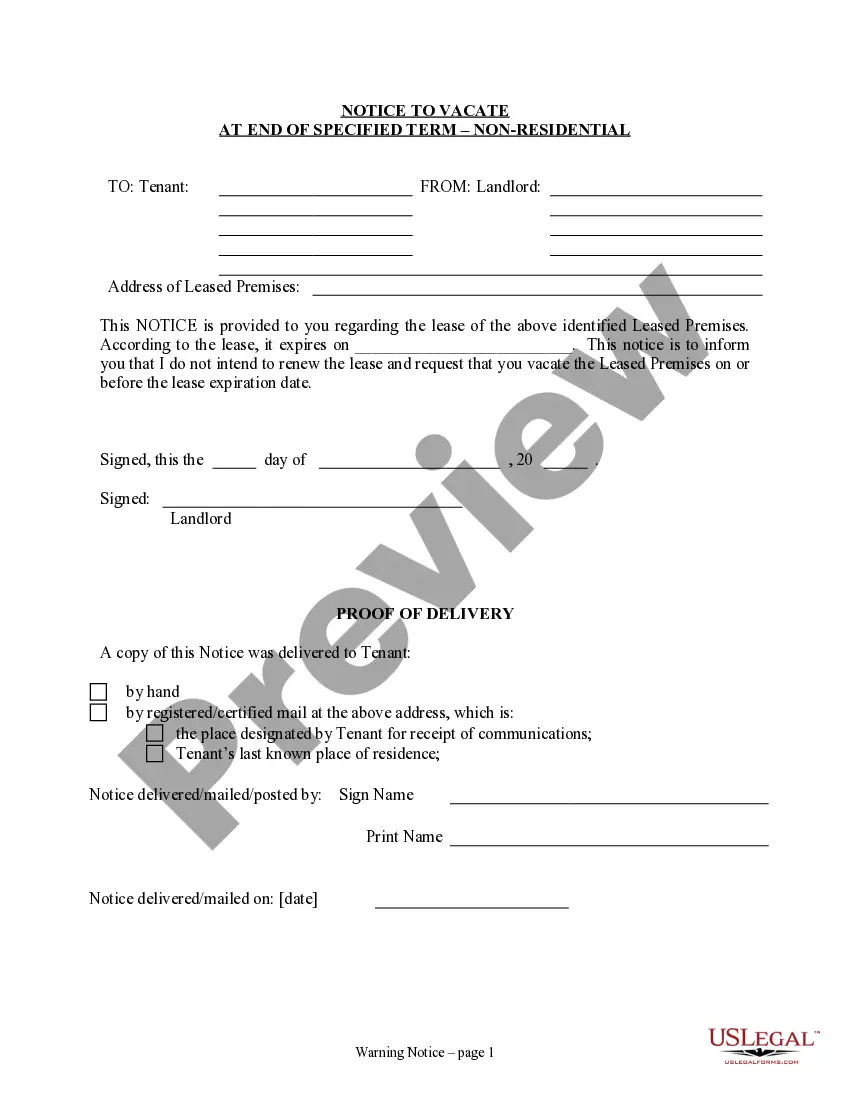
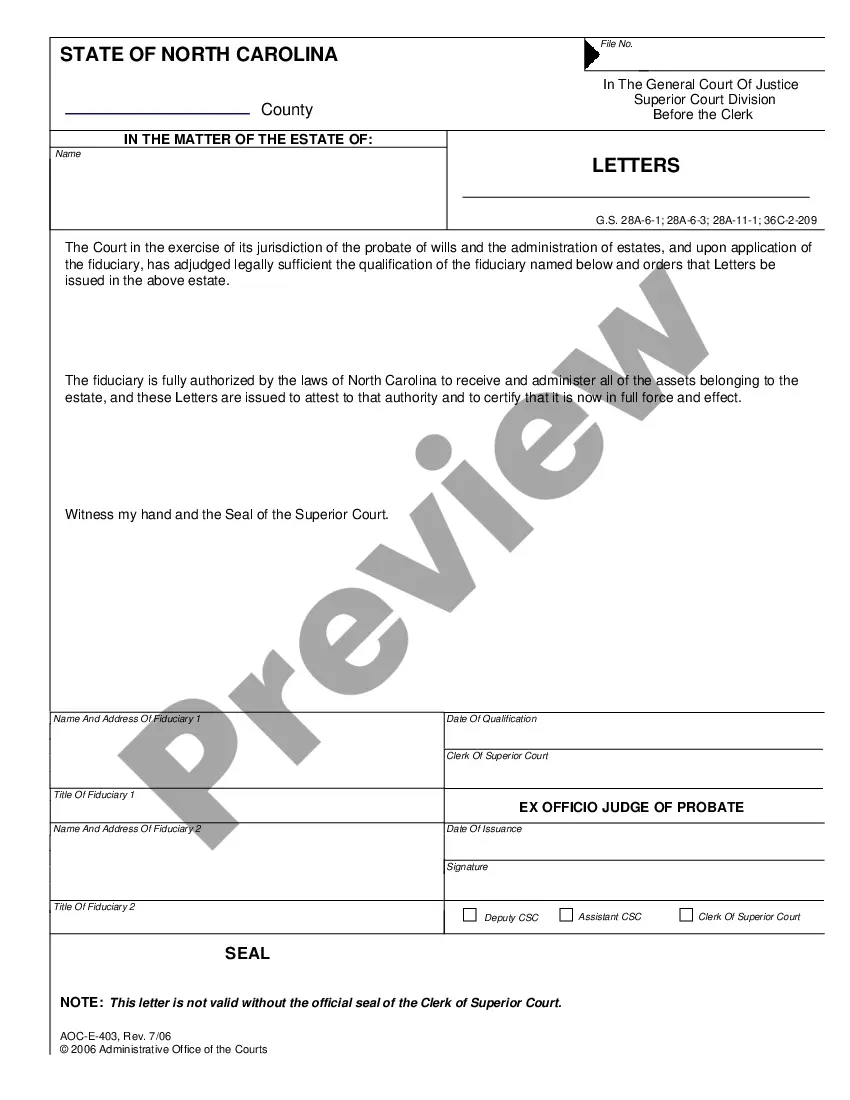
Letter: This is an official form from the North Carolina Administration of the Courts (AOC), which complies with all applicable laws and statutes. USLF amends and updates the forms as is required by North Carolina statutes and law.
North Carolina Letters
Instant download
This website is not affiliated with any governmental entity
Public form
Description
Get your form ready online
Our built-in tools help you complete, sign, share, and store your documents in one place.
Built-in online Word editor
Make edits, fill in missing information, and update formatting in US Legal Forms—just like you would in MS Word.
Export easily
Download a copy, print it, send it by email, or mail it via USPS—whatever works best for your next step.
E-sign your document
Sign and collect signatures with our SignNow integration. Send to multiple recipients, set reminders, and more. Go Premium to unlock E-Sign.
Notarize online 24/7
If this form requires notarization, complete it online through a secure video call—no need to meet a notary in person or wait for an appointment.
Store your document securely
We protect your documents and personal data by following strict security and privacy standards.

Make edits, fill in missing information, and update formatting in US Legal Forms—just like you would in MS Word.

Download a copy, print it, send it by email, or mail it via USPS—whatever works best for your next step.

Sign and collect signatures with our SignNow integration. Send to multiple recipients, set reminders, and more. Go Premium to unlock E-Sign.

If this form requires notarization, complete it online through a secure video call—no need to meet a notary in person or wait for an appointment.

We protect your documents and personal data by following strict security and privacy standards.
Looking for another form?
How to fill out North Carolina Letters?
Steer clear of expensive lawyers and locate the North Carolina Letters you desire at an affordable rate on the US Legal Forms website.
Utilize our straightforward categories feature to search for and retrieve legal and tax documents. Review their details and preview them prior to downloading.
Choose to receive the document in PDF or DOCX format. Click on Download and locate your template in the My documents section. You can easily save the form to your device or print it out. After downloading, you can fill out the North Carolina Letters manually or with editing software. Print it and reuse the template multiple times. Achieve more for less with US Legal Forms!
- Moreover, US Legal Forms offers users detailed guidance on how to download and fill out each and every form.
- US Legal Forms users simply need to Log In and access the particular document they require in their My documents section.
- Those who have not yet acquired a subscription should follow the steps outlined below.
- Verify that the North Carolina Letters is permitted for use in your area.
- If applicable, browse the description and utilize the Preview function before downloading the templates.
- If you’re confident the template meets your requirements, click on Buy Now.
- If the document is incorrect, utilize the search bar to find the appropriate one.
- Next, create your account and select a subscription package.
- Pay using a credit card or PayPal.
Form popularity
FAQ
Do you need a solicitor Many executors and administrators act without a solicitor. However, if the estate is complicated, it is best to get legal advice.
In this situation, you must fill out an Application For Letters Of Administration and apply to the Clerk of Superior Court for a document known as Letters of Administration. The statutes stipulate the priority of people who are qualified to apply.
Determine Whether Urgent Legal Action is Needed. Locate Estate Planning Documents. Make Funeral Arrangements. Secure the House and Estate Property. Begin Collecting Important Documents. Begin Making Key Contacts. Preserve Assets and Keep Accounts Open.
At PKWA Law, our legal fees for applying a Grant of Letters of Administration are $1,500 (without GST and disbursements). How much are the court fees and disbursements? The court fees range from about $300 to about $600.
The Will must be filed in the Superior Court in the county where the decedent lived. A Petition for Probate must be filed as well. This requests the appointment of an executor.
Probate is generally required in North Carolina only when a decedent owned property in their name alone. Assets that were owned with a spouse, for which beneficiaries were named outside of a will, or held in revocable living trusts, generally do not need to go through probate.
Children (or grandchildren if children have died) Parents. Siblings (or nieces and nephews over 18 if siblings have died) Half-siblings (or nieces and nephews over 18 if half-siblings have died) Grandparents. Aunts or uncles.
Letters of Administration are granted by a Surrogate Court or probate registry to appoint appropriate people to deal with a deceased person's estate where property will pass under Intestacy Rules or where there are no executors living (and willing and able to act) having been validly appointed under the deceased's will
In North Carolina, you can make a living trust to avoid probate for virtually any asset you ownreal estate, bank accounts, vehicles, and so on. You need to create a trust document (it's similar to a will), naming someone to take over as trustee after your death (called a successor trustee).