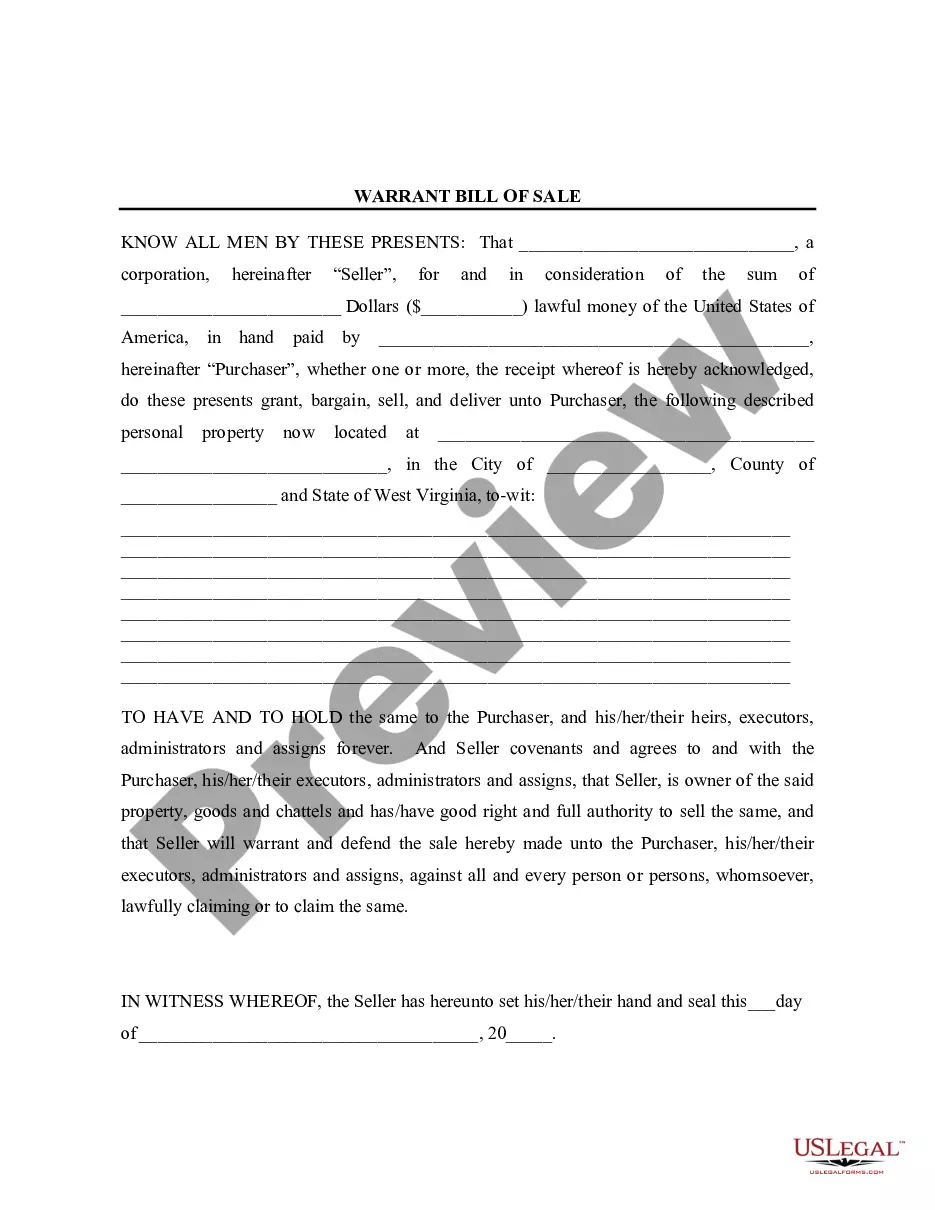
North Dakota Electrical Contractor Package
Overview of this form package
The North Dakota Electrical Contractor Package is a comprehensive collection of legal forms designed to assist electricians and electrical contractors in navigating the legal aspects of their projects. This package is specifically tailored to address the common legal issues that can arise during electrical projects, including contracts with property owners, suppliers, and subcontractors. The centerpiece of this package is the electrical contract that meets North Dakota state regulations, ensuring compliance and protecting your legal rights.
Forms provided in this package
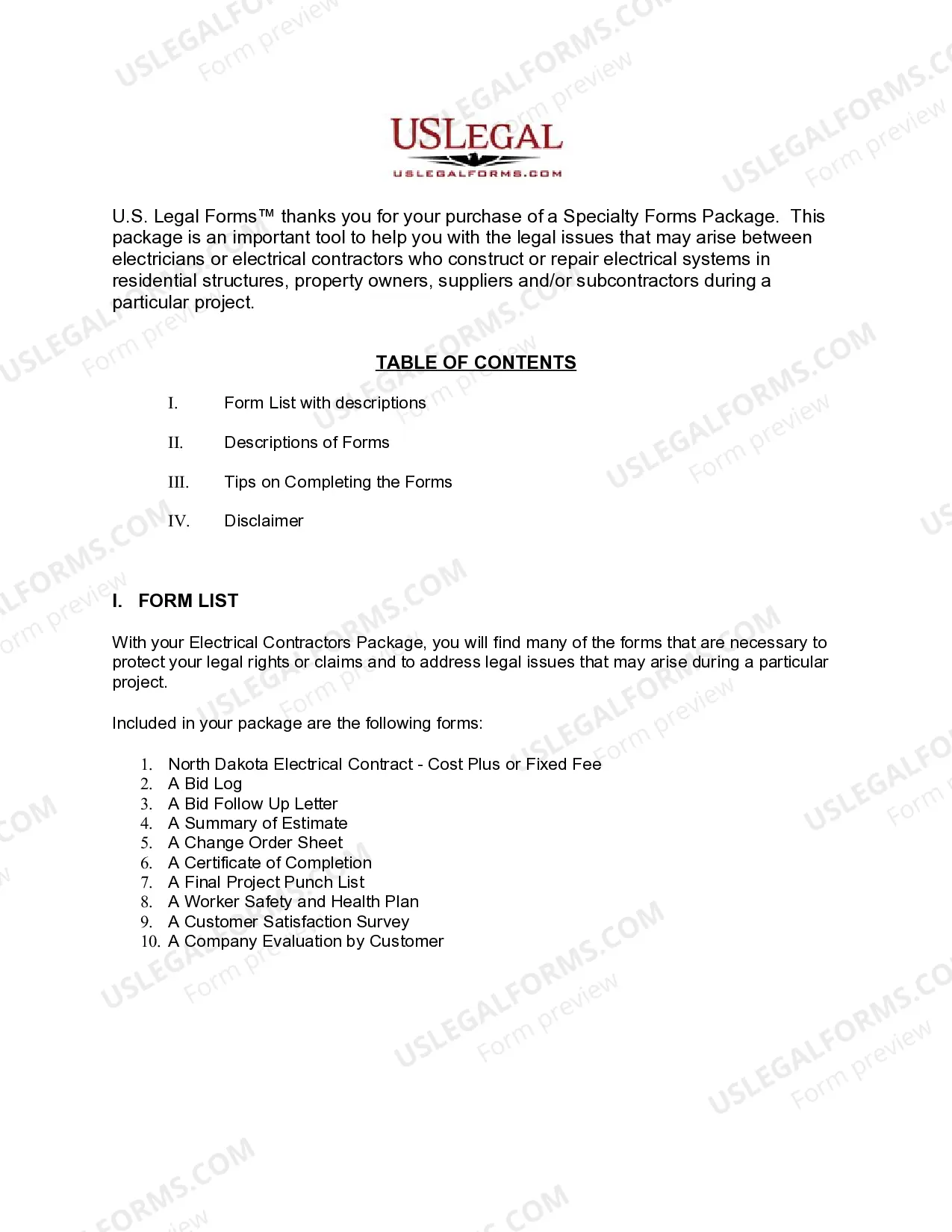
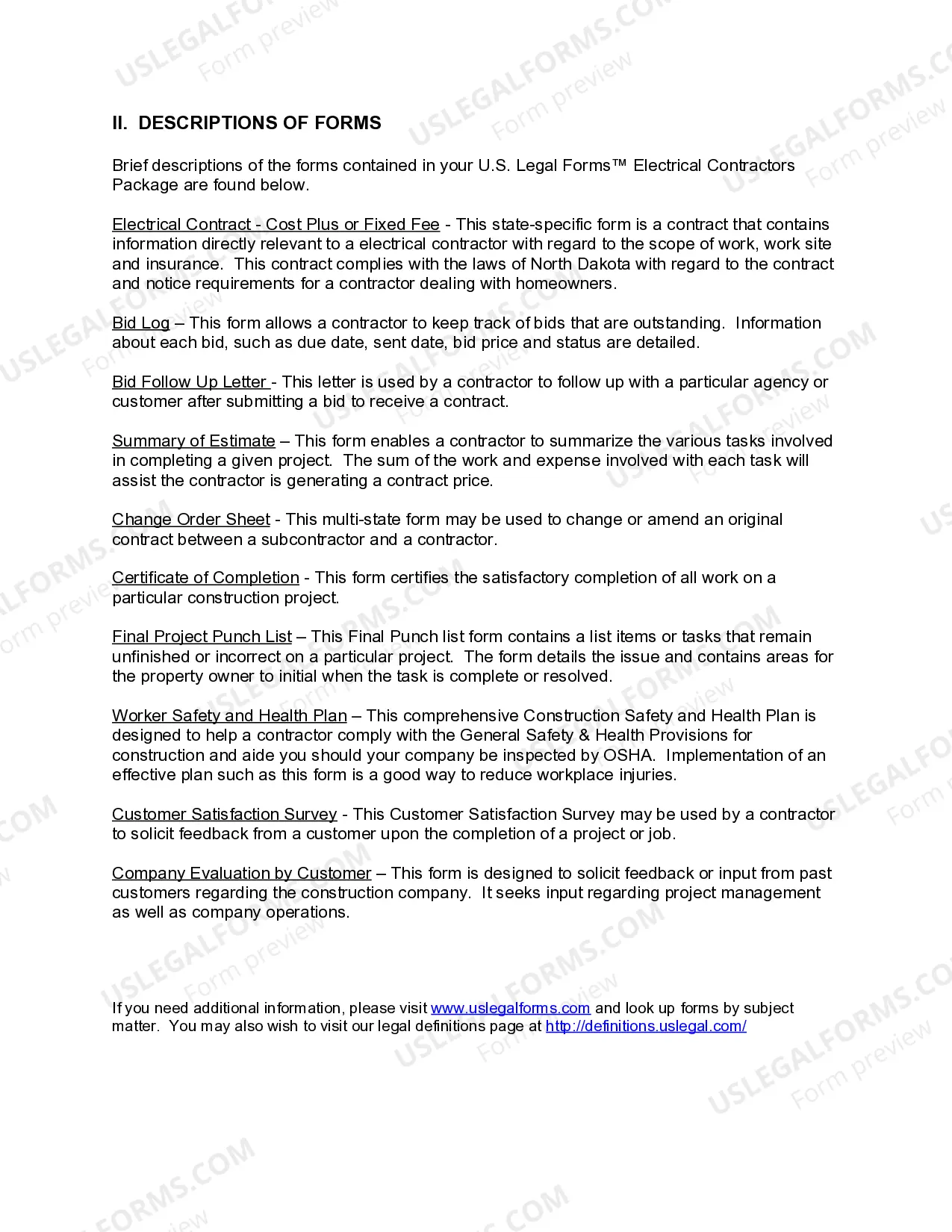
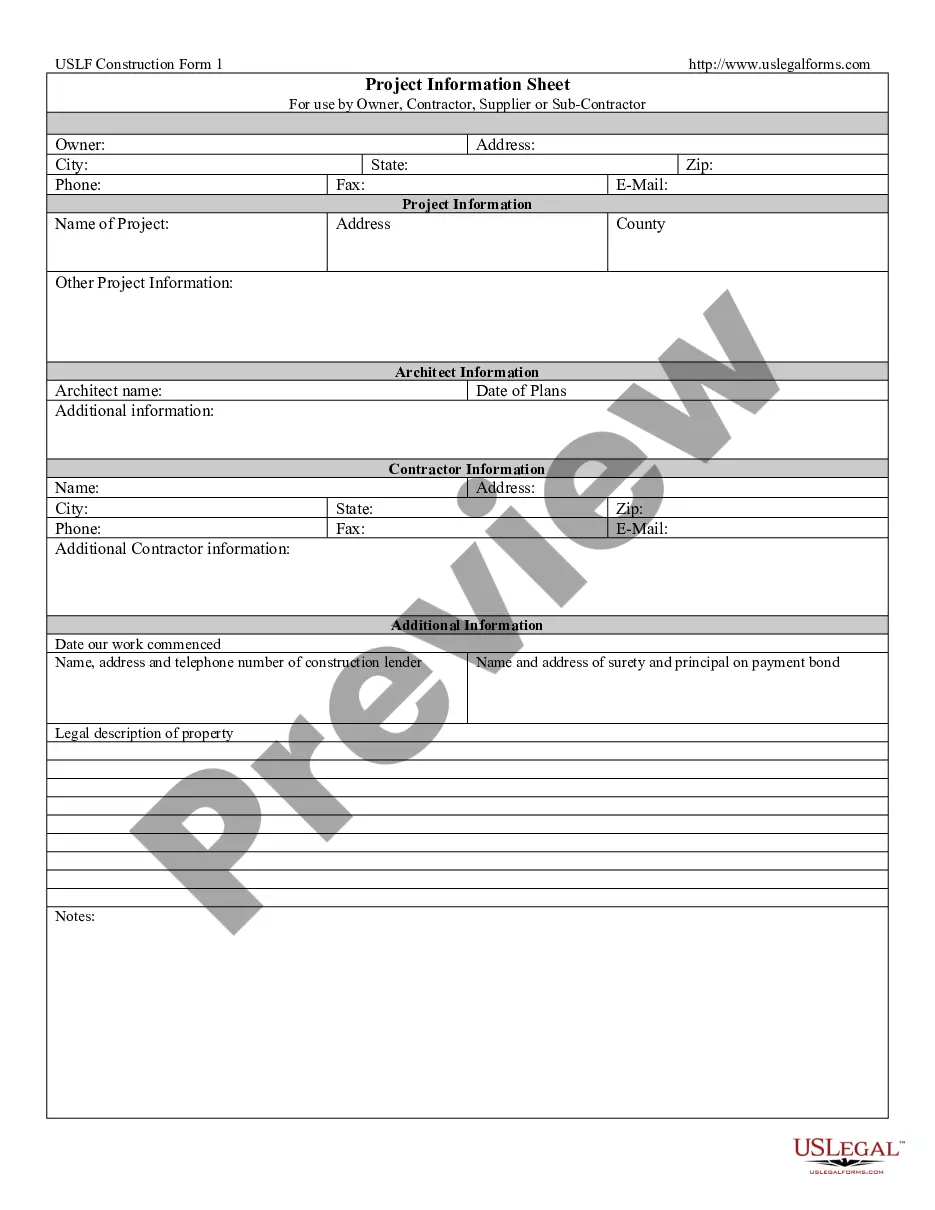
- Electrical Contract for Contractor
- Contractor's Bid Log
- Contractor's Bid Follow Up Letter
- Contractor's Summary of an Estimate
- Contractor's Final Punch List
- Customer Satisfaction Survey
- Construction Company Evaluation by a Customer
- Construction Safety and Health Plan
- Change Order for Construction or Repairs by Contractor
- Certification of Completion by Contractor
When to use this form package
This form package is useful in a variety of scenarios, including:
- Starting a new electrical construction project
- Making modifications to existing electrical contracts
- Tracking bids and managing project budgets
- Ensuring compliance with safety regulations
- Collecting feedback upon project completion
Intended users of this form package
- Licensed electrical contractors operating in North Dakota
- Property owners hiring electrical contractors
- Subcontractors involved in electrical projects
- Suppliers providing materials for electrical work
- Individuals without extensive legal experience needing straightforward legal documents
Steps to complete these forms
- Review all included forms within the package for necessary information.
- Identify and enter the parties involved, including contractor and client details.
- Specify project details such as budget, timeline, and scope of work in the appropriate sections.
- Fill out forms that require signatures, ensuring that all parties are present to sign.
- Retain copies of completed forms for your records and distribute as necessary.
Do documents in this package require notarization?
Notarization is generally not required for forms in this package. However, specific circumstances or local laws may require it. You can complete notarization remotely through US Legal Forms, powered by Notarize, with 24/7 availability.
Get your form ready online
Our built-in tools help you complete, sign, share, and store your documents in one place.
Make edits, fill in missing information, and update formatting in US Legal Forms—just like you would in MS Word.
Download a copy, print it, send it by email, or mail it via USPS—whatever works best for your next step.
Sign and collect signatures with our SignNow integration. Send to multiple recipients, set reminders, and more. Go Premium to unlock E-Sign.
If this form requires notarization, complete it online through a secure video call—no need to meet a notary in person or wait for an appointment.
We protect your documents and personal data by following strict security and privacy standards.

Make edits, fill in missing information, and update formatting in US Legal Forms—just like you would in MS Word.

Download a copy, print it, send it by email, or mail it via USPS—whatever works best for your next step.

Sign and collect signatures with our SignNow integration. Send to multiple recipients, set reminders, and more. Go Premium to unlock E-Sign.

If this form requires notarization, complete it online through a secure video call—no need to meet a notary in person or wait for an appointment.

We protect your documents and personal data by following strict security and privacy standards.
Common mistakes
- Failing to clearly define the scope of work in the contract.
- Not keeping thorough records of all bids and communications.
- Neglecting to obtain required signatures from all parties.
- Overlooking local laws that may affect contract enforceability.
Why use this package online
- Convenience of downloading forms instantly from anywhere.
- Editability allows tailoring of contracts and other documents to fit specific project needs.
- Reliability of forms drafted by licensed attorneys to ensure compliance with laws.
Legal use & context
- Ensure that all forms are filled out completely and accurately to avoid disputes.
- Understand the limitations of each document, as they are intended for specific situations.
- Consult with a legal professional if you have questions about the enforceability of any forms.
Quick recap
- The North Dakota Electrical Contractor Package provides essential forms to manage legal aspects of electrical projects.
- It is designed to help contractors protect their rights while ensuring compliance with state regulations.
- Using this package can streamline the documentation process and avoid common legal pitfalls.
Looking for another form?
Form popularity
FAQ
A license is a grant of permission from a statutory body for an individual to perform work in an approved category of work (electrician, plumber, builder, etc.), while a certification is the credentialing of an individual for a particular discipline that is portable, i.e., across municipal, county or state lines.
Apprentice Electrician. Journeyman Electrician. Master Electrician.
Across the electrical and mechanical construction industry, gross margins were up almost 2 percent in 2017, but overall profitability decreased by 1 percent to 4.1 percent of revenue.
Classifications, a C10 Electrical Licensed Contractor places, installs, erects or connects any electrical wires, fixtures, appliances, apparatus, raceways, conduits, solar photovoltaic cells or any part thereof, which generate, transmit, transform or utilize electrical energy in any form or for any purpose.
Recent developments help to clarify the employee/independent contractor distinction, and sound a warning to employers who rely on workers they have classified as contractors.
An electrical contractor is different from an electrician; an electrician is an individual tradesman and an electrical contractor is a business person or company that employs electricians.Electricians may work for an electrical contractor, or directly for individuals or companies.
You Could Make Six Figures According to PayScale, the average annual salary for electricians is $55,477. Per the BLS, the highest 10% of electricians earn more than $90,420.Electricians who join unions can make more than those who do not.
8,000 hours of experience. Registered as an apprentice electrician in North Dakota. Complete your apprenticeship classroom training program.
An electrical engineer makes around $93,000 every year. On the other hand, electricians make about $53,000.For example, a project electrical engineer can go up to more than $100,000, while electrical electronic engineers earn around $75,000.