North Carolina New Resident Guide
What this document covers
The New Resident Guide is an informational resource designed to help individuals who have recently moved to a new state understand the requirements for residency, voter registration, identification cards, driver's licenses, and vehicle registration. Unlike other legal forms, this guide serves as a comprehensive overview of the essential steps and documentation needed for new residents to navigate their legal obligations effectively.
What’s included in this form
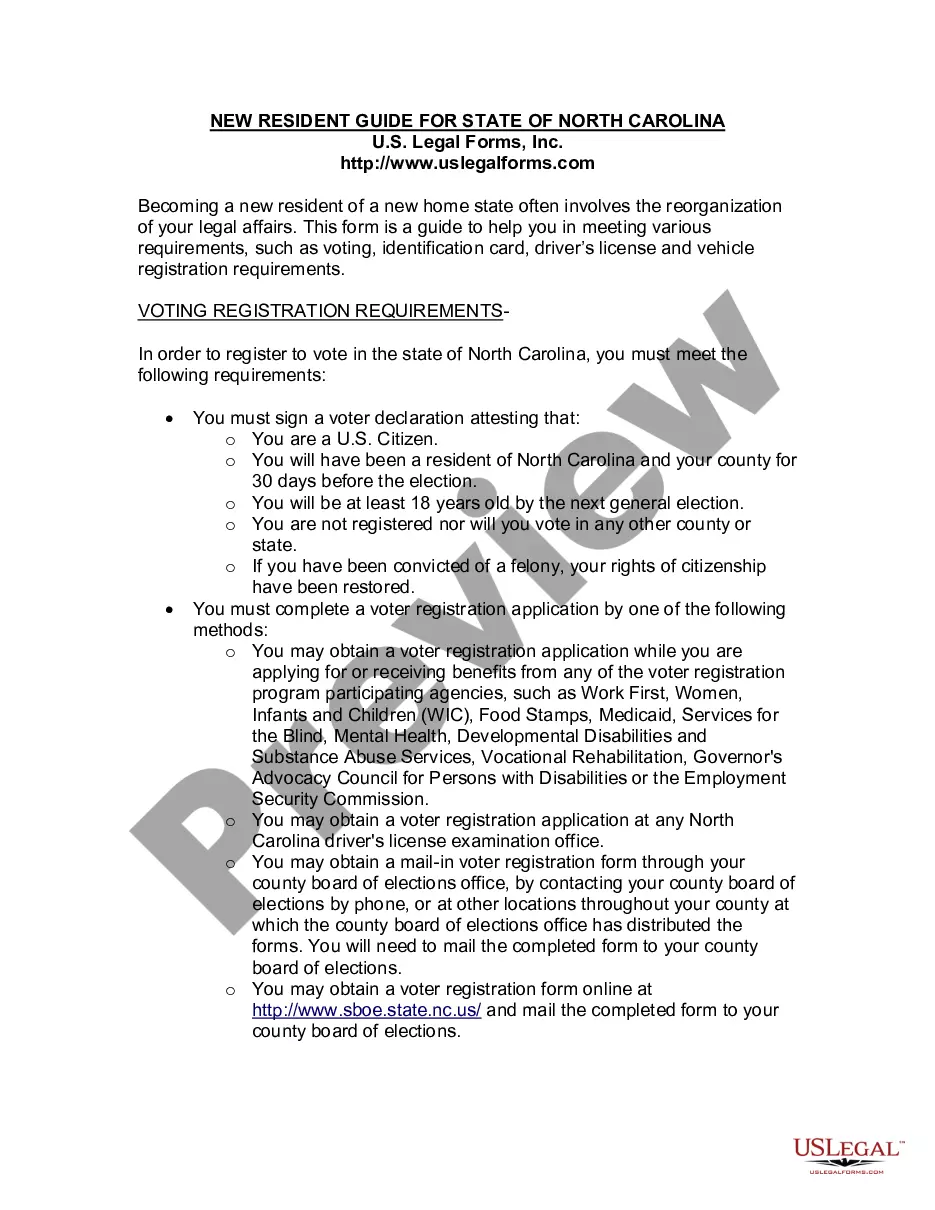
- Voter registration requirements and procedures
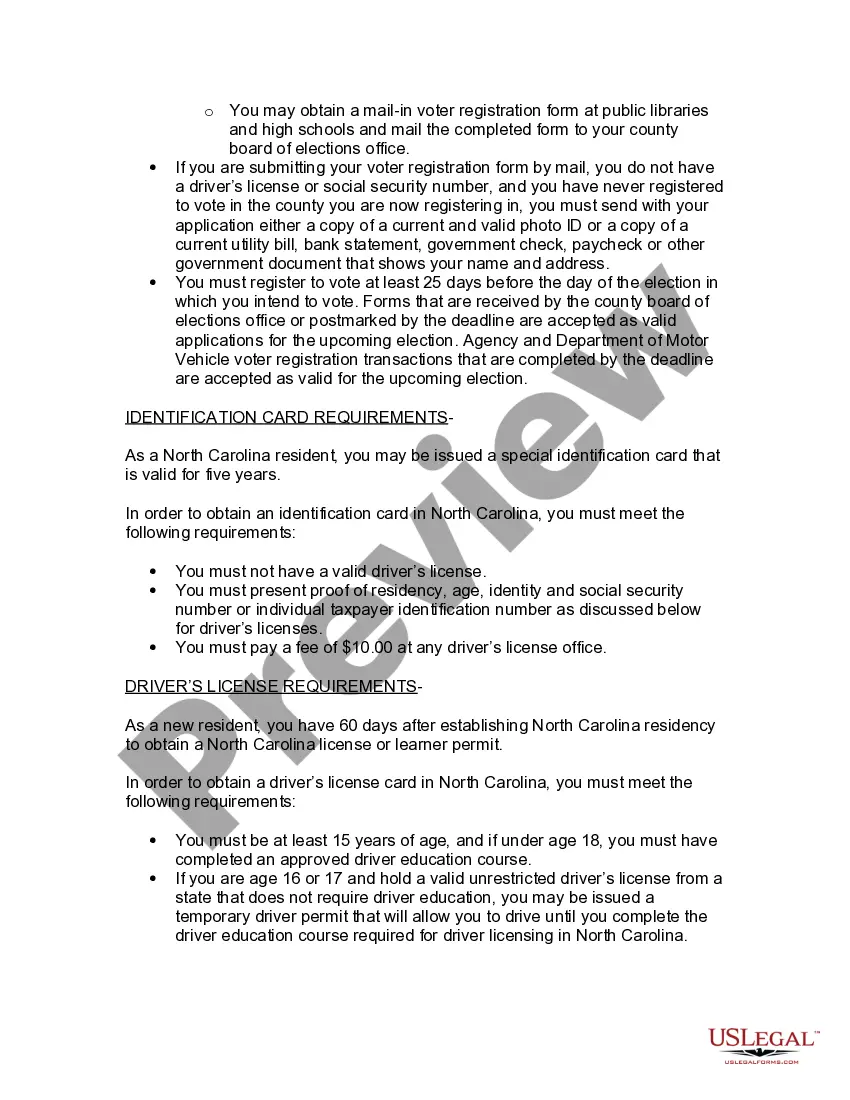
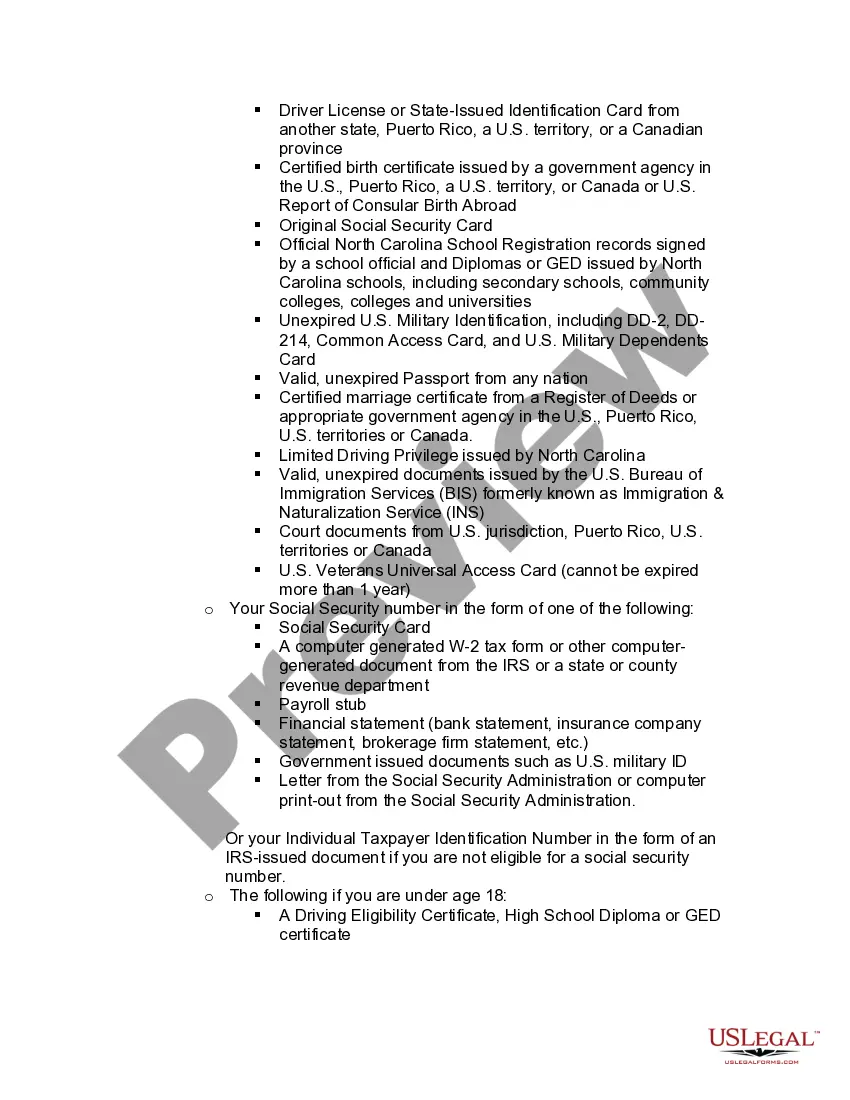
- Identification card requirements
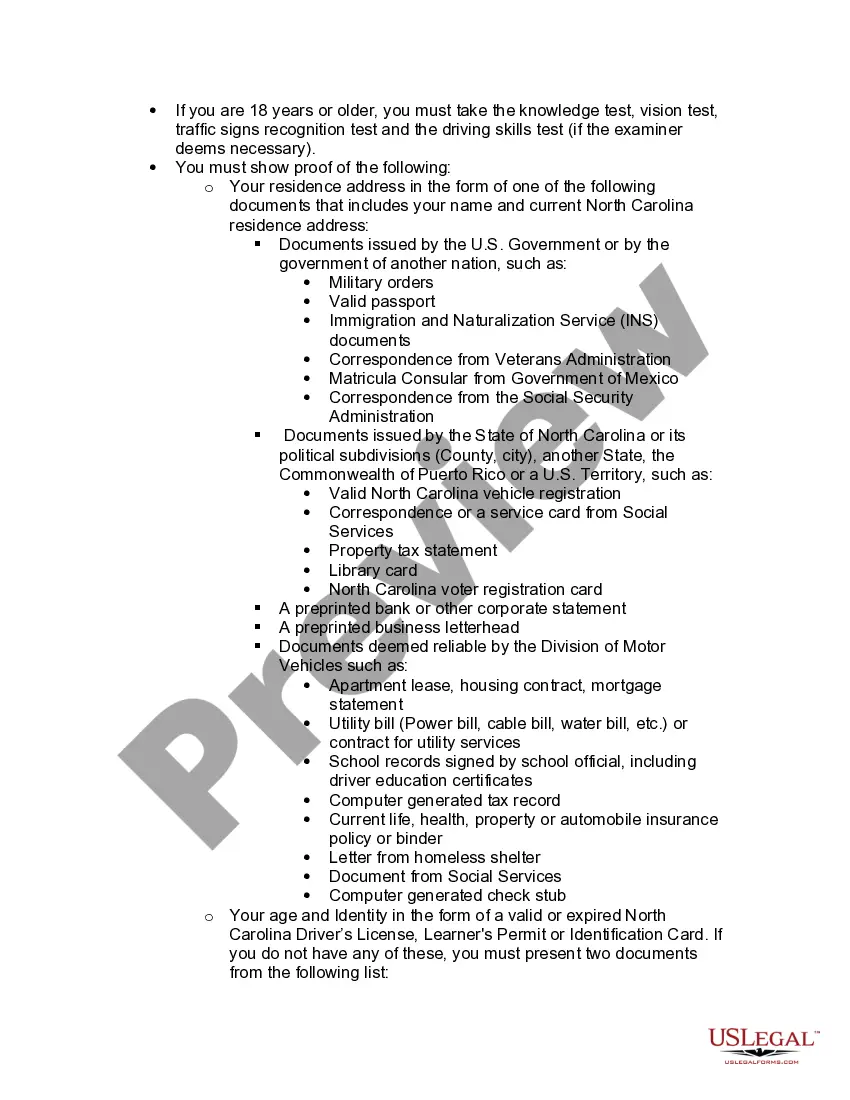
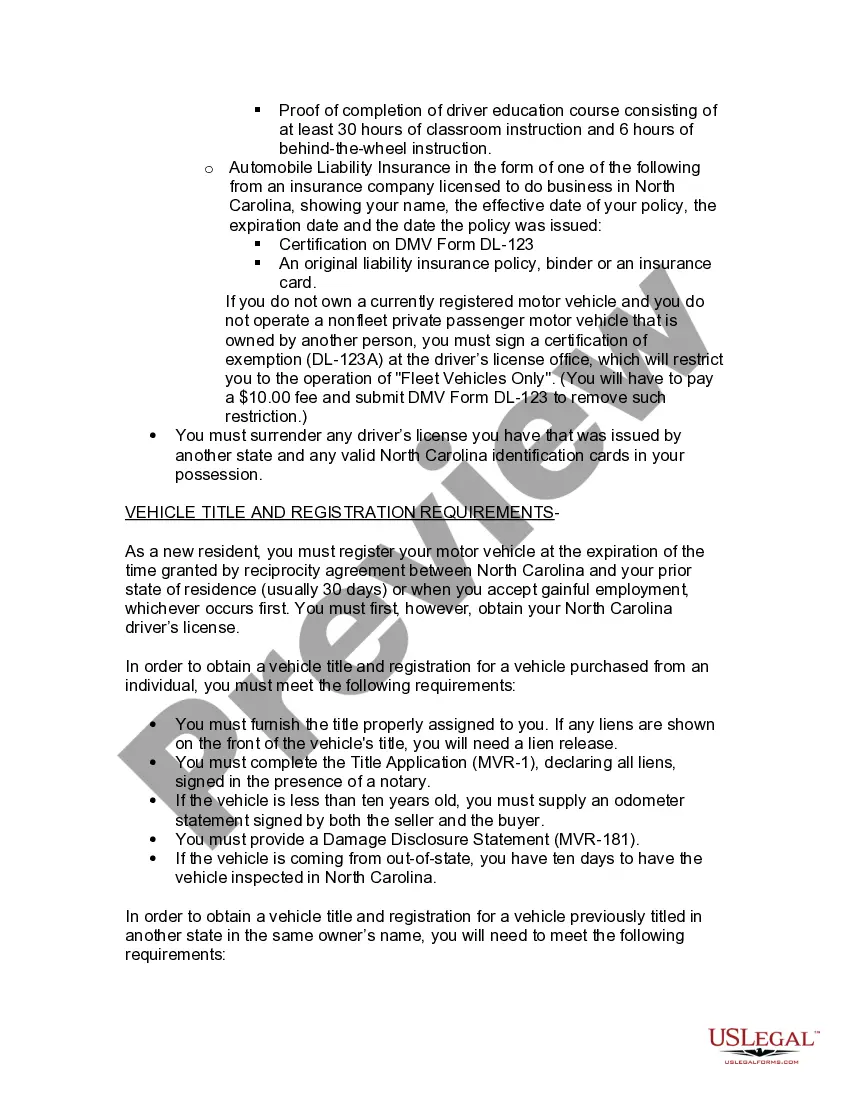
- Driver's license application process
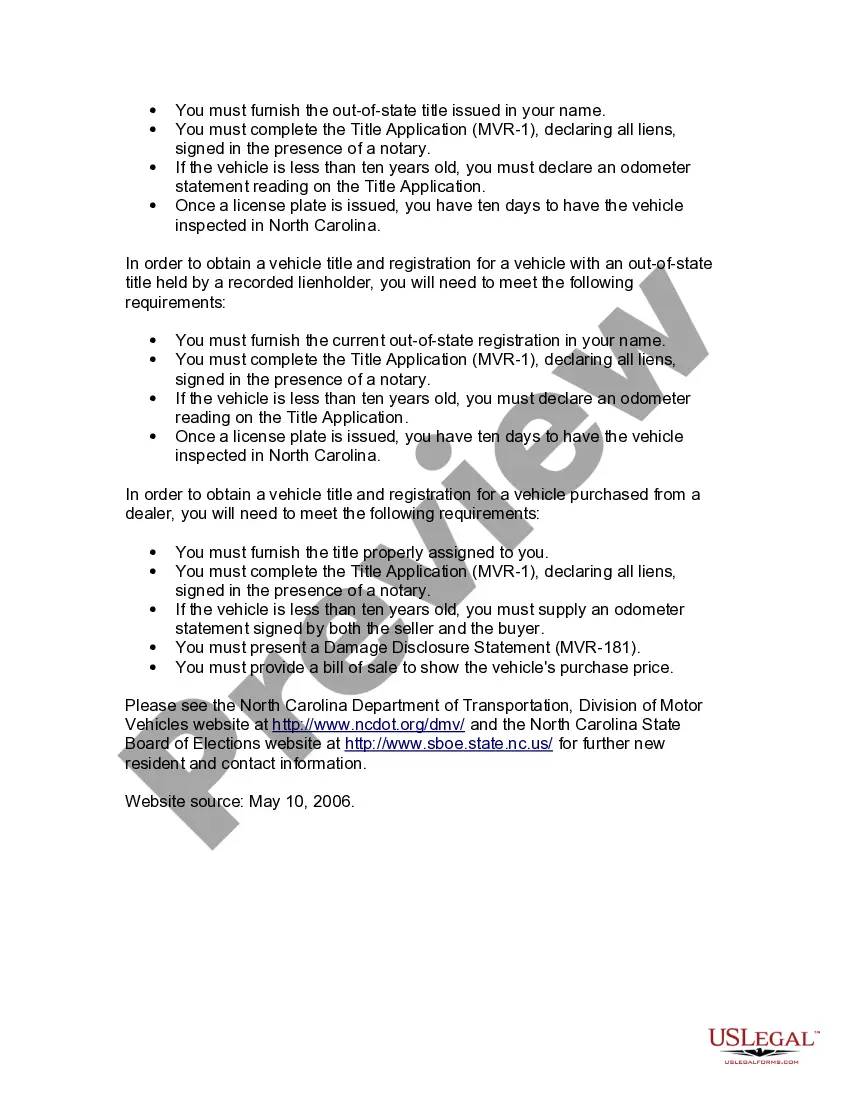
- Vehicle title and registration information
- Specific documentation needed for each requirement
Common use cases
Use the New Resident Guide when you have recently moved to a new state and need to comply with various state-specific requirements. It is particularly useful if you are unsure about how to register to vote, obtain identification, acquire a driver's license, or register your vehicle in your new state.
Who needs this form
- New residents who have relocated to a different state
- Individuals seeking to understand their rights and responsibilities in a new state
- Persons helping family members or friends navigate state residency requirements
How to prepare this document
- Review the voter registration requirements and gather necessary documents.
- Complete the voter registration application using one of the specified methods.
- Gather and submit proof of residency and identity for obtaining an identification card.
- Follow the steps outlined for applying for a driver's license, including necessary tests.
- Prepare the documentation required for vehicle title and registration and submit it promptly.
Notarization guidance
Notarization is required for this form to take effect. Our online notarization service, powered by Notarize, lets you verify and sign documents remotely through an encrypted video session, available 24/7.
Get your form ready online
Our built-in tools help you complete, sign, share, and store your documents in one place.
Make edits, fill in missing information, and update formatting in US Legal Forms—just like you would in MS Word.
Download a copy, print it, send it by email, or mail it via USPS—whatever works best for your next step.
Sign and collect signatures with our SignNow integration. Send to multiple recipients, set reminders, and more. Go Premium to unlock E-Sign.
If this form requires notarization, complete it online through a secure video call—no need to meet a notary in person or wait for an appointment.
We protect your documents and personal data by following strict security and privacy standards.
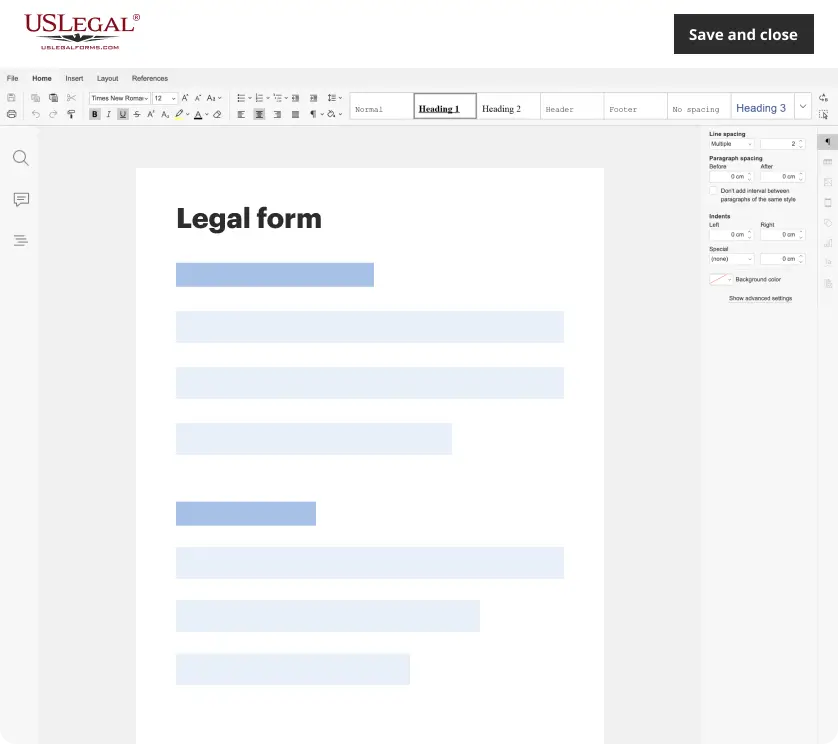
Make edits, fill in missing information, and update formatting in US Legal Forms—just like you would in MS Word.
Download a copy, print it, send it by email, or mail it via USPS—whatever works best for your next step.
Sign and collect signatures with our SignNow integration. Send to multiple recipients, set reminders, and more. Go Premium to unlock E-Sign.

If this form requires notarization, complete it online through a secure video call—no need to meet a notary in person or wait for an appointment.
We protect your documents and personal data by following strict security and privacy standards.
Avoid these common issues
- Failing to verify residency requirements before submitting applications.
- Not providing the correct documentation during the voter registration process.
- Missing deadlines for voter registration or driver's license applications.
- Neglecting to have documents notarized when required.
Advantages of online completion
- Convenient access to essential information anytime, anywhere.
- Editable templates to tailor your submissions to specific state requirements.
- Reliable legal guidance drafted by licensed attorneys to ensure compliance.
Looking for another form?


Form popularity
FAQ
Social Security card or other document proving Social Security number. One document verifying physical address in North Carolina (two are required if getting an NC REAL ID) For individuals not born in the U.S., one document (with full name) proving legal presence/lawful status.
Have established your legal residence (domicile) in North Carolina, and. Have maintained that domicile for at least twelve (12) consecutive months before the beginning of the term, and. Have a residentiary presence in the state, and.
Vehicle Information. The Owner's Information. Title Holder's Information. Fill in the Cost and Operation Information. The Owner's Signature. The Owner's Second Signature. Recheck the Vehicle Information. Verify Proper Assignation of the title.
@tonyrgreen Yes, Owner ID# is your Driver License #.
A valid North Carolina drivers' license or other identification card issued by the North Carolina Division of Motor Vehicles. A current lease, rent, mortgage payment receipt, or current utility bill in the name of the applicant, showing a North Carolina address.
The CDL Handbook is available from the Federal Motor Carrier Safety Administration. You may also obtain the CDL, Regular and Motorcycle handbooks on the DMV website and at the local driver license offices. Visit the DMV website at MyNCDMV.gov.
Sign the title with the seller and make sure to have it notarized. Get a lien release from the seller. Make sure that the seller provides you with an Eligible Risk Statement for Registration and Certificate of Title, a Damage Disclosure Statement and an Odometer Disclosure Statement. Complete the Title Application.
You not need both parties to be physically present at the time of notarization, but you can only notarize for the person who is appearing before you. The other person can have their signature notarized at another time.
Meet the requirements and provide the proper documentation, including proof of liability insurance. Complete the appropriate forms. Pay the relevant fees.