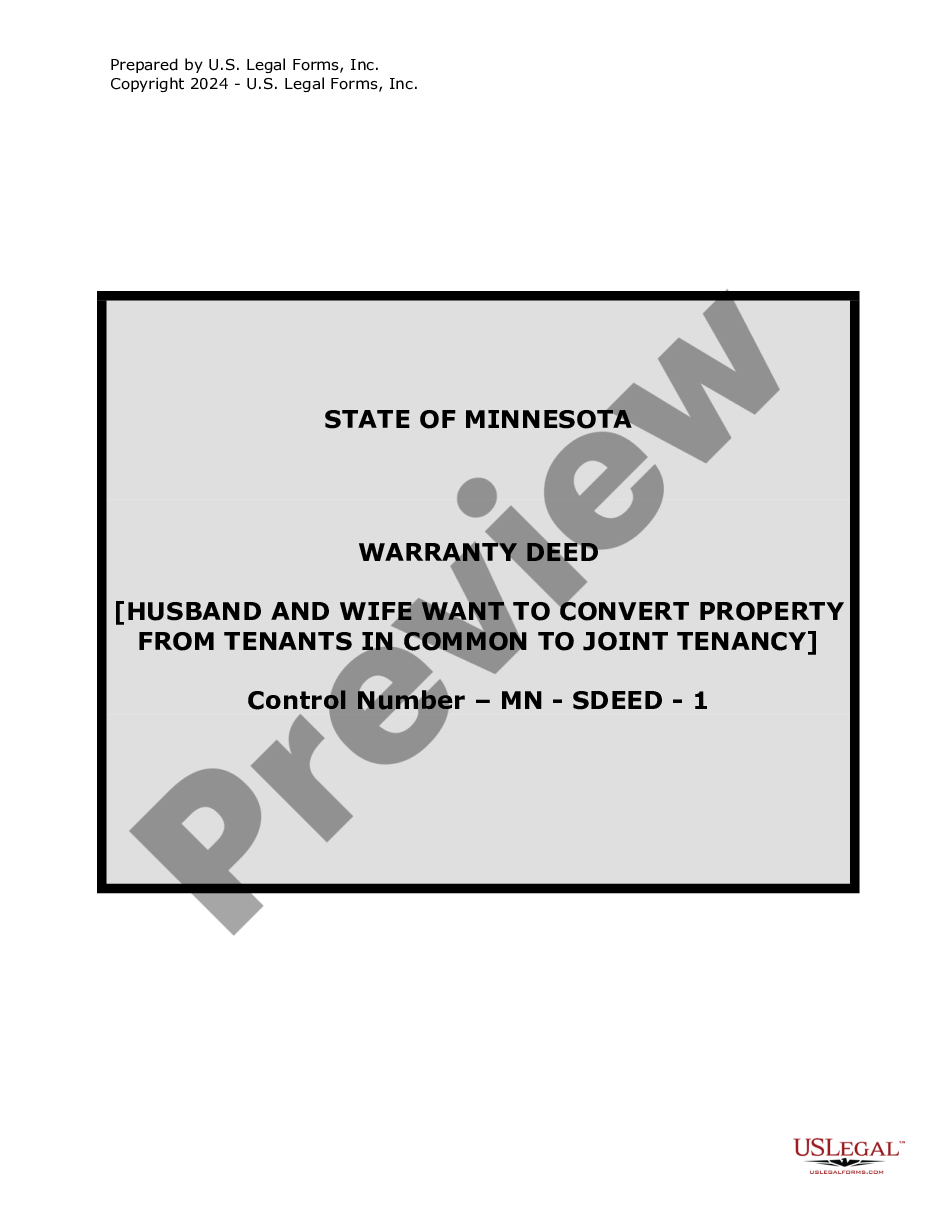
Minnesota Warranty Deed for Husband and Wife Converting Property from Tenants in Common to Joint Tenancy
Overview of this form
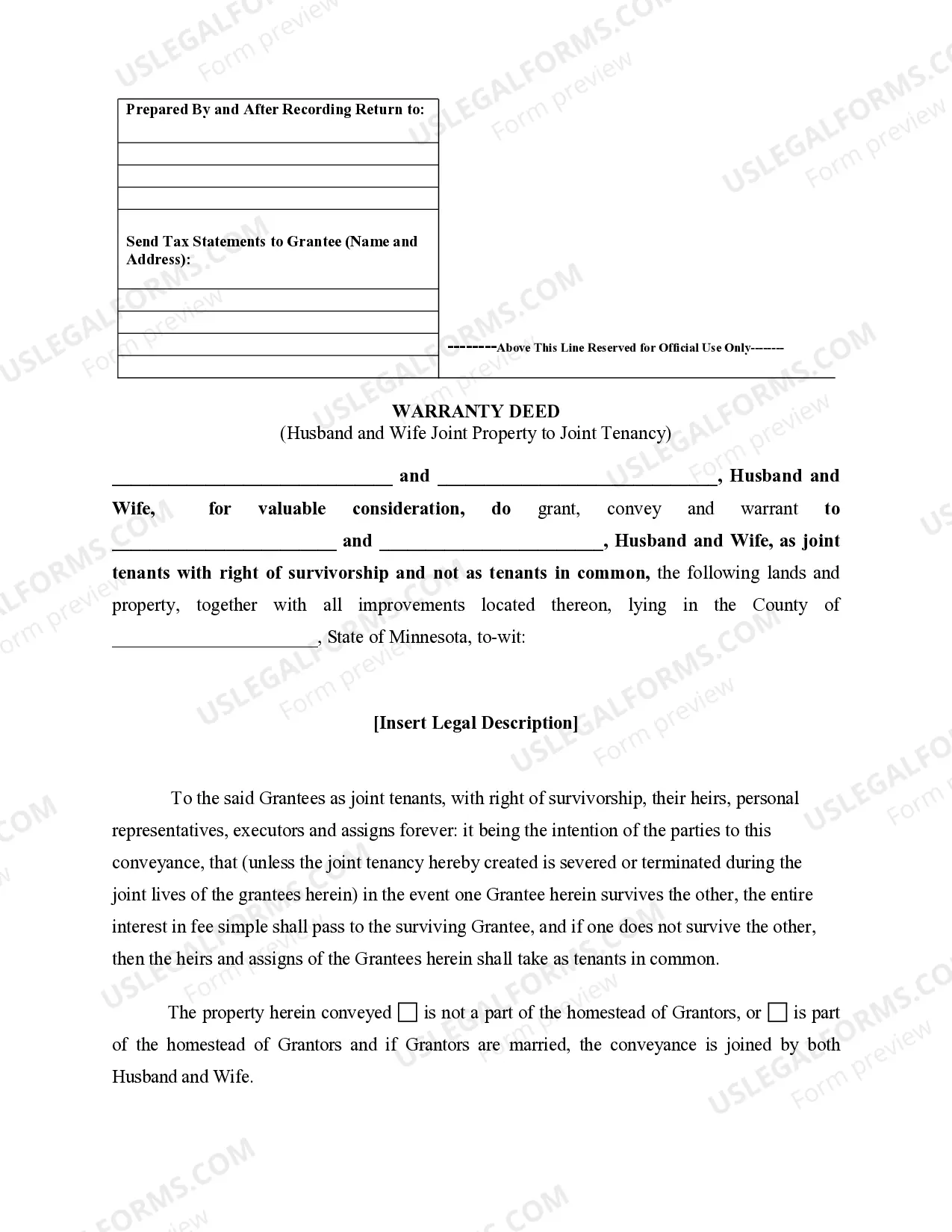
This Warranty Deed is a legal document used by married couples to convert property ownership from tenants in common to joint tenancy. Unlike tenants in common, joint tenants share equal ownership of the property with rights of survivorship, meaning that if one owner passes away, the other automatically inherits the deceased owner's share. This form helps ensure a smooth transition of property rights between spouses.
Form components explained
- Identification of the grantors (husband and wife) and their current ownership status.
- Legal description of the property being conveyed.
- Statement of intention to convert from tenants in common to joint tenancy.
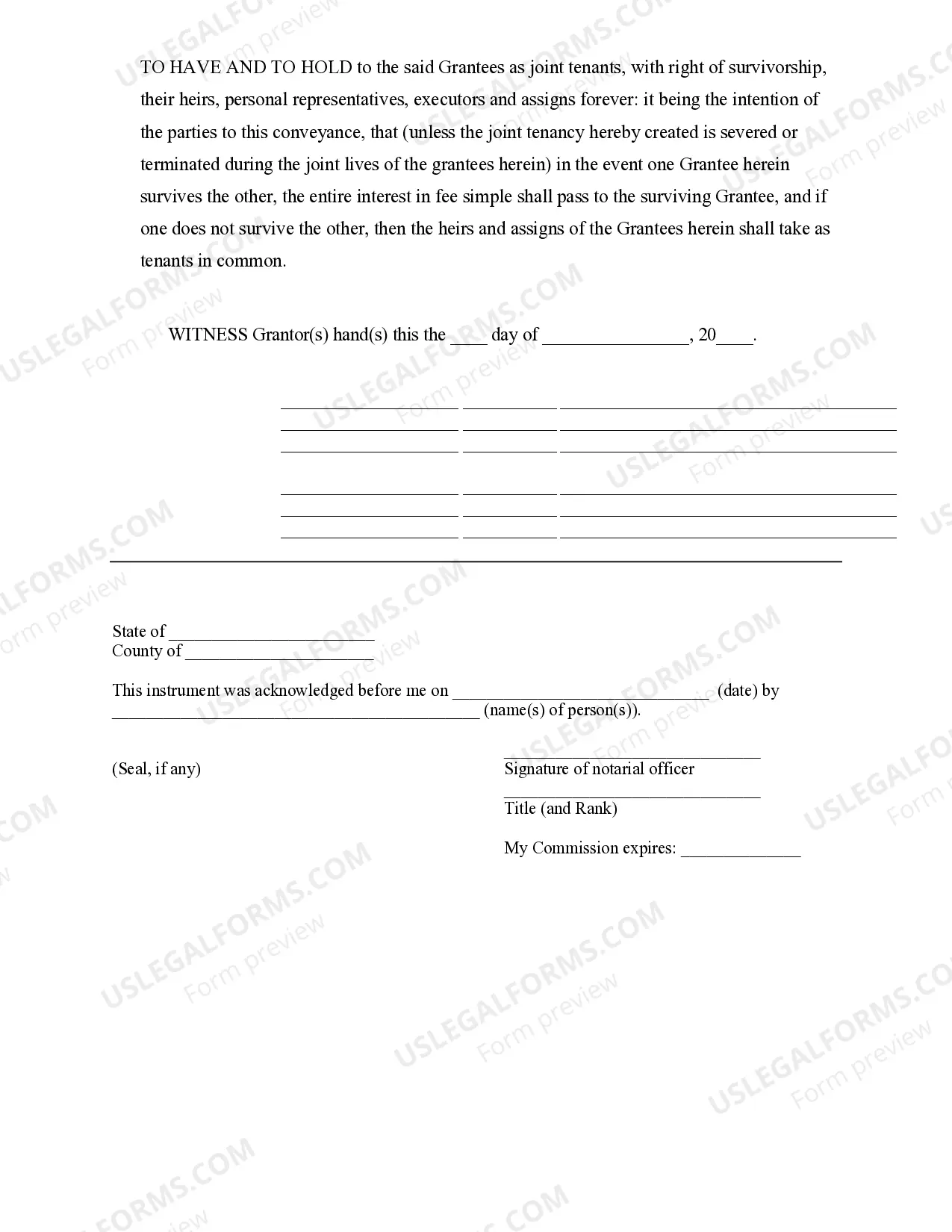
- Clauses detailing rights of survivorship.
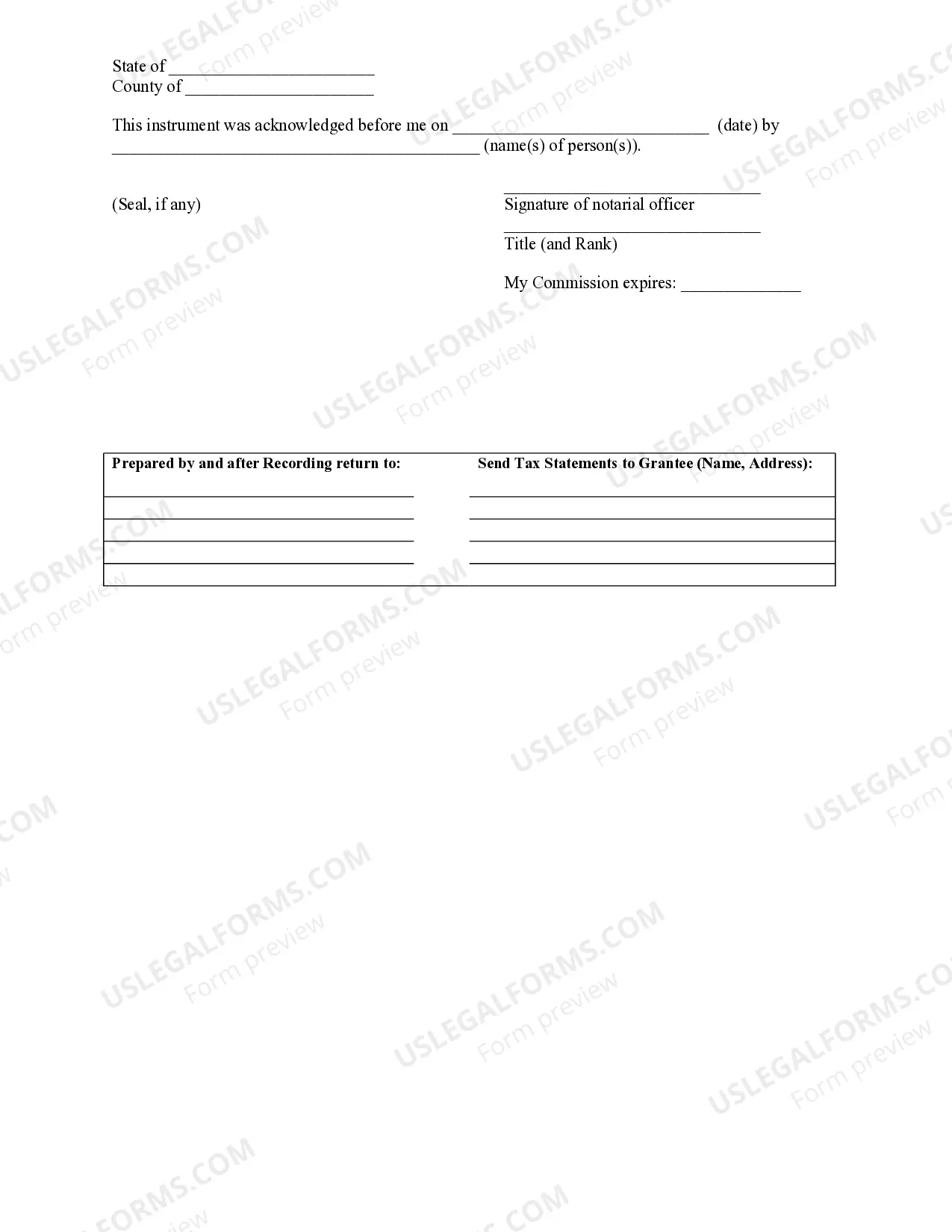
- Signature lines for both grantors and acknowledgment by a notary public.


Common use cases
This form should be used when a married couple currently owns a property as tenants in common and wishes to change their ownership status to joint tenancy. This might occur during estate planning or when one spouse wants to ensure that the surviving spouse retains full ownership of the property in the event of one spouse's death.
Who can use this document
- Married couples owning property as tenants in common.
- Couples seeking to simplify estate planning and pass property seamlessly to the surviving spouse.
- Individuals looking to prevent probate for their half of the property upon death.
Steps to complete this form
- Identify the grantors by entering their names as they appear on the current title.
- Provide a complete legal description of the property being converted.
- Specify the date of the deed execution.
- Have both spouses sign the deed in front of a notary public.
- Ensure that the notary completes the acknowledgment portion of the deed.
Notarization requirements for this form
This form needs to be notarized to ensure legal validity. US Legal Forms provides secure online notarization powered by Notarize, allowing you to complete the process through a verified video call, available anytime.
Get your form ready online
Our built-in tools help you complete, sign, share, and store your documents in one place.
Make edits, fill in missing information, and update formatting in US Legal Forms—just like you would in MS Word.
Download a copy, print it, send it by email, or mail it via USPS—whatever works best for your next step.
Sign and collect signatures with our SignNow integration. Send to multiple recipients, set reminders, and more. Go Premium to unlock E-Sign.
If this form requires notarization, complete it online through a secure video call—no need to meet a notary in person or wait for an appointment.
We protect your documents and personal data by following strict security and privacy standards.

Make edits, fill in missing information, and update formatting in US Legal Forms—just like you would in MS Word.

Download a copy, print it, send it by email, or mail it via USPS—whatever works best for your next step.

Sign and collect signatures with our SignNow integration. Send to multiple recipients, set reminders, and more. Go Premium to unlock E-Sign.

If this form requires notarization, complete it online through a secure video call—no need to meet a notary in person or wait for an appointment.

We protect your documents and personal data by following strict security and privacy standards.
Avoid these common issues
- Failing to complete the legal description of the property, which may lead to a disputed deed.
- Not obtaining signatures from both spouses before notarization.
- Incorrectly filling out the acknowledgment section, which can invalidate the deed.
Summary of main points
- This Warranty Deed converts property ownership from tenants in common to joint tenancy.
- It ensures rights of survivorship, protecting the surviving spouse.
- Completing this form correctly is crucial to conveying property interests smoothly.
Looking for another form?
Form popularity
FAQ
A married couple may take title to a property as tenants in common when they want to own separate shares of the property. This arrangement allows each spouse to designate their share in their will, providing more control over how their portion is distributed after death. It differs from joint tenancy in that there is no right of survivorship. If you are contemplating a Minnesota Warranty Deed for Husband and Wife Converting Property from Tenants in Common to Joint Tenancy, it's wise to evaluate your long-term goals regarding property ownership.
Yes, joint tenants in Minnesota do possess a right of survivorship. This means that when one joint tenant passes away, their share automatically transfers to the surviving tenant. This feature simplifies estate planning and can help avoid probate. If you are considering a Minnesota Warranty Deed for Husband and Wife Converting Property from Tenants in Common to Joint Tenancy, understanding this right is crucial.
One disadvantage of joint tenancy ownership is that it can limit your control over the property. If one spouse wishes to sell their share, they may face challenges due to the rights of the other joint tenant. Additionally, joint tenancy may not provide the same level of estate planning flexibility as other arrangements. It's essential to consider these factors when deciding on a Minnesota Warranty Deed for Husband and Wife Converting Property from Tenants in Common to Joint Tenancy.
Jointly-owned property.There is no need for probate or letters of administration unless there are other assets that are not jointly owned. The property might have a mortgage. However, if the partners are tenants in common, the surviving partner does not automatically inherit the other person's share.
The name and address of the seller (called the grantor) The name and address of the buyer (called the grantee) A legal description of the property (found on the previous deed) A statement that the grantor is transferring the property to the grantee.
Jointly owned propertyProperty owned as joint tenants does not form part of a deceased person's estate on death. But the value of the deceased person's share of jointly owned property is included when calculating the value of the estate for Inheritance Tax purposes.
Serve a written notice of the change (a 'notice of severance') on the other owners - a conveyancer can help you do this. Download and fill in form SEV to register a restriction without the other owners' agreement. Prepare any supporting documents you need to include.
Most jointly owned property is held as joint tenants but you should not assume this.As property held under a joint tenancy will automatically pass to the surviving joint owners it will not form part of the deceased's estate except for the purposes of calculating inheritance tax.
You can apply to court to change your ex-partner's tenancy to your name, or remove their name from a joint tenancy. You can apply for a 'transfer of tenancy' if: your landlord refuses to change your tenancy. your tenancy doesn't allow a transfer.
Joint Tenancy Two or more people, including spouses, may hold title to their jointly owned real estate as joint tenants. There is a so-called right of survivorship, which means that when one dies, the property automatically transfers to the survivor without the necessity of probating the estate.