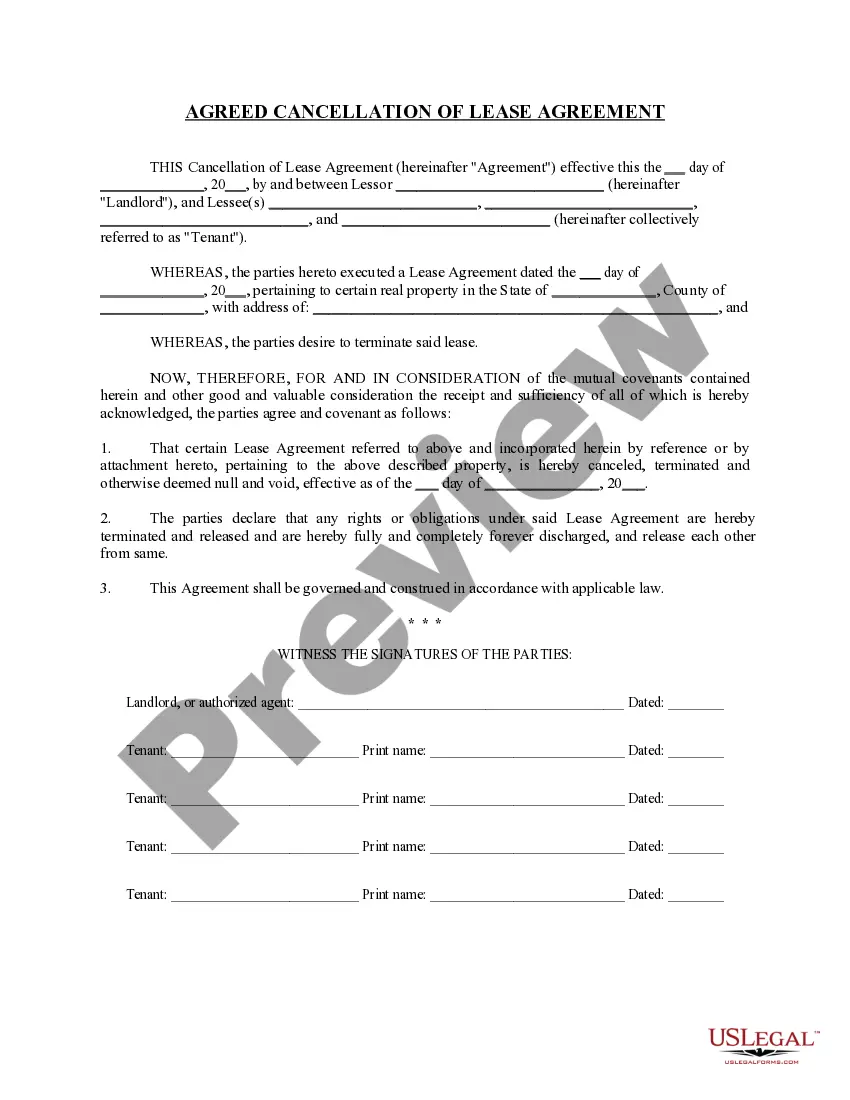
North Carolina Commercial Sublease
What is this form?
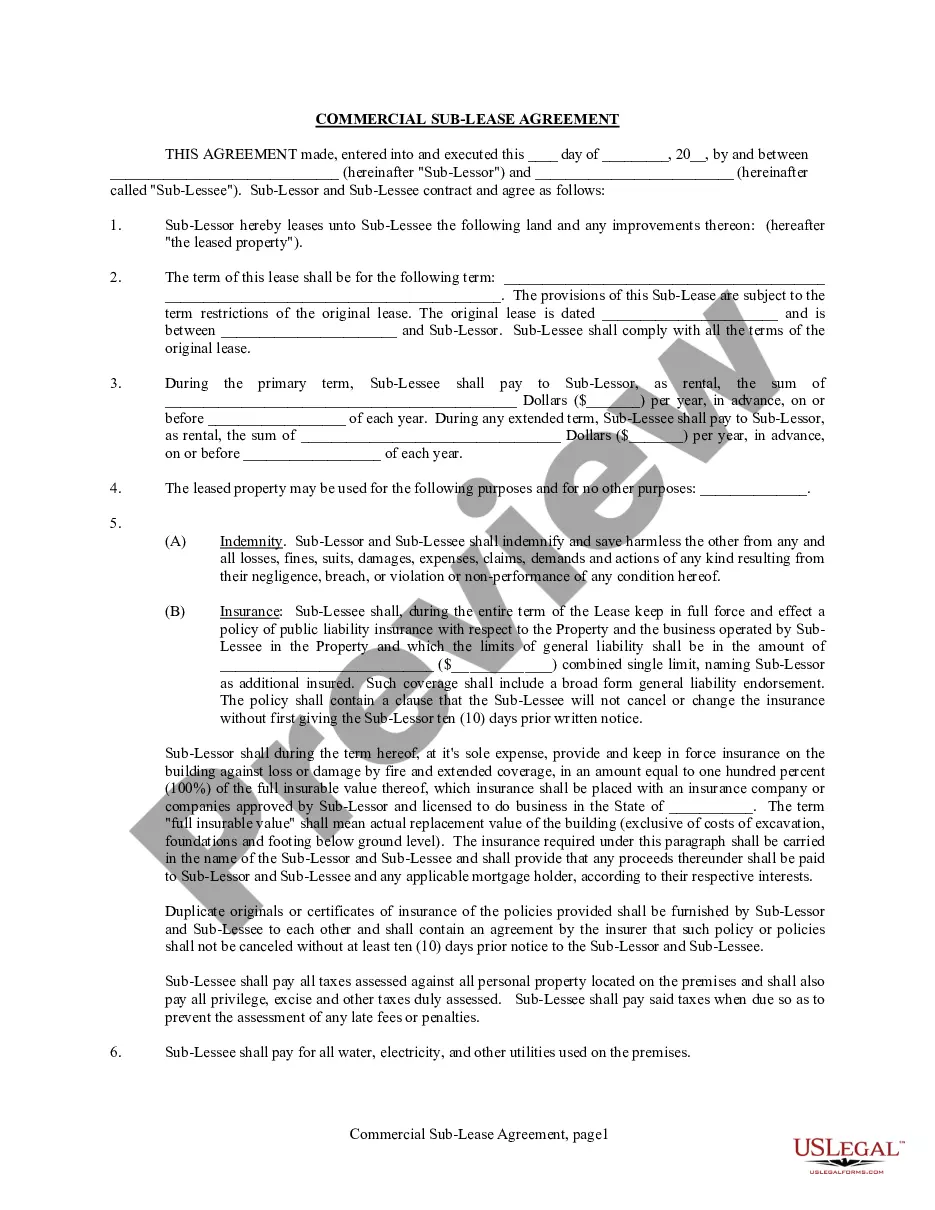
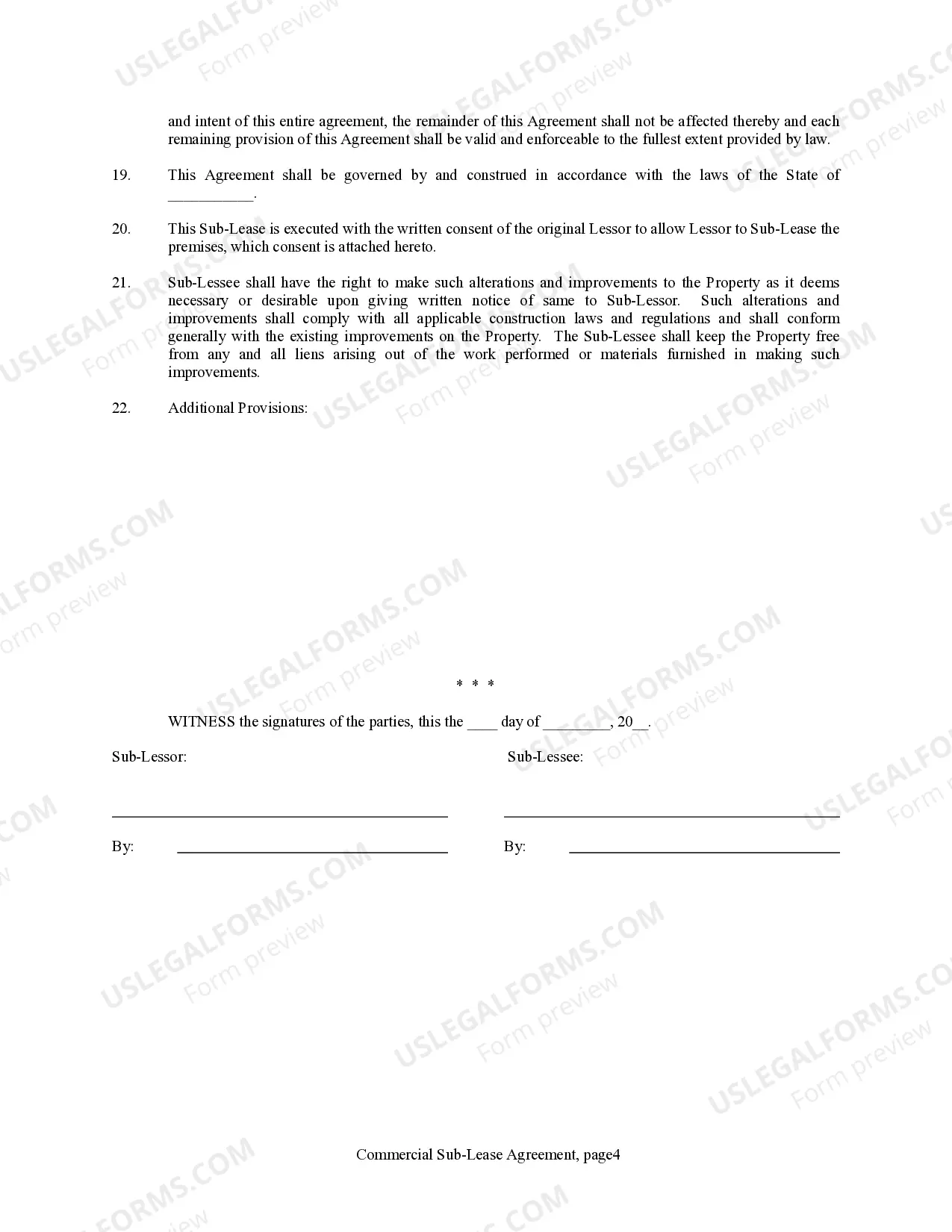
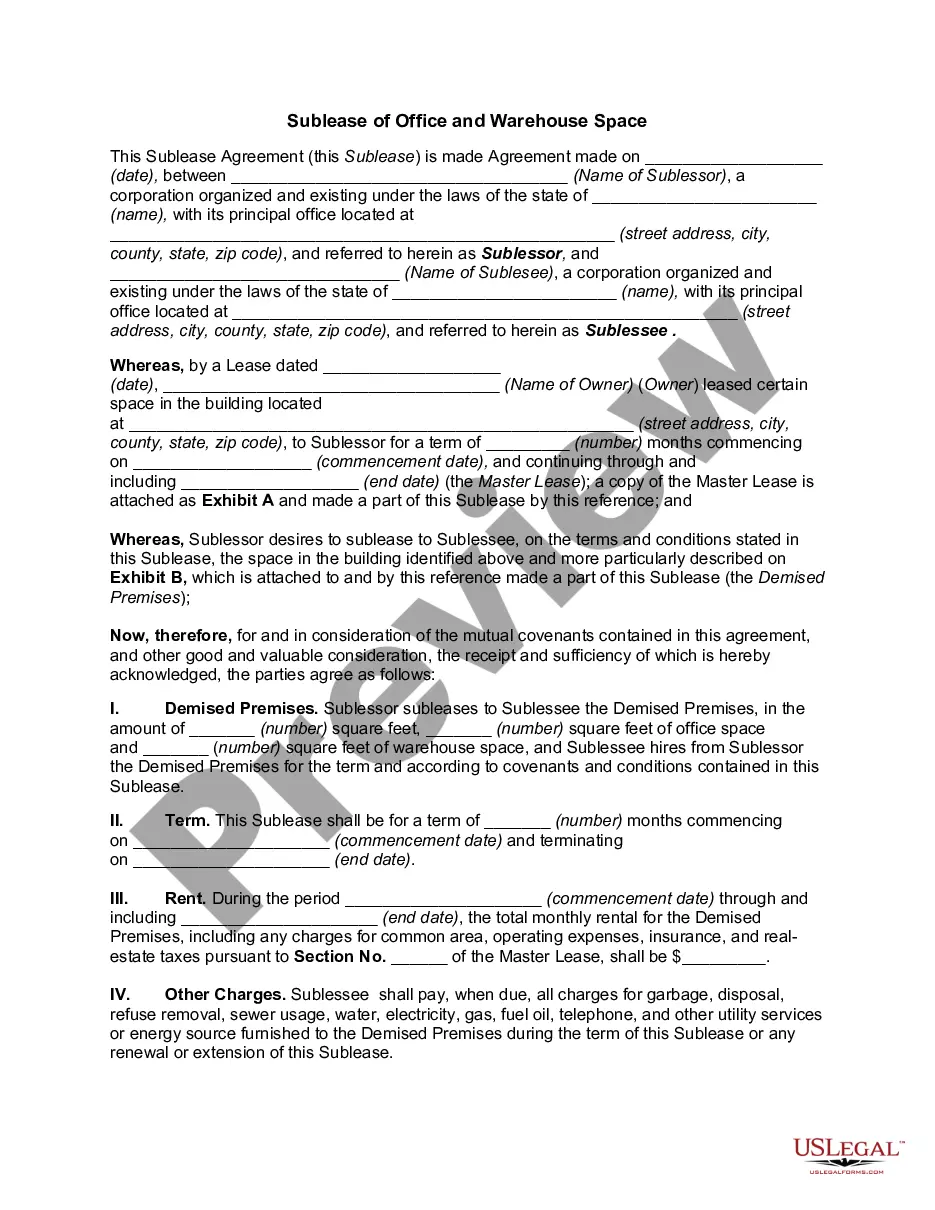
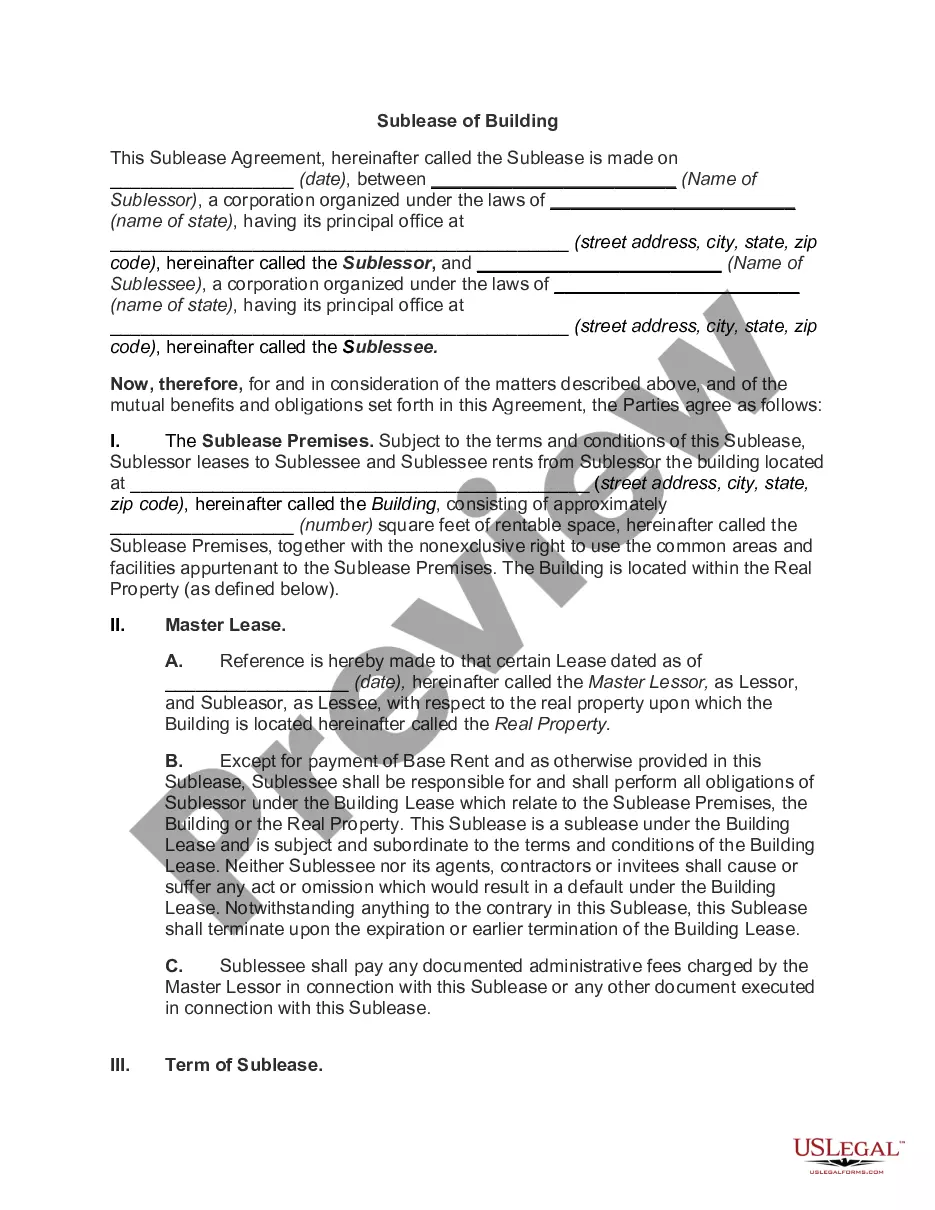
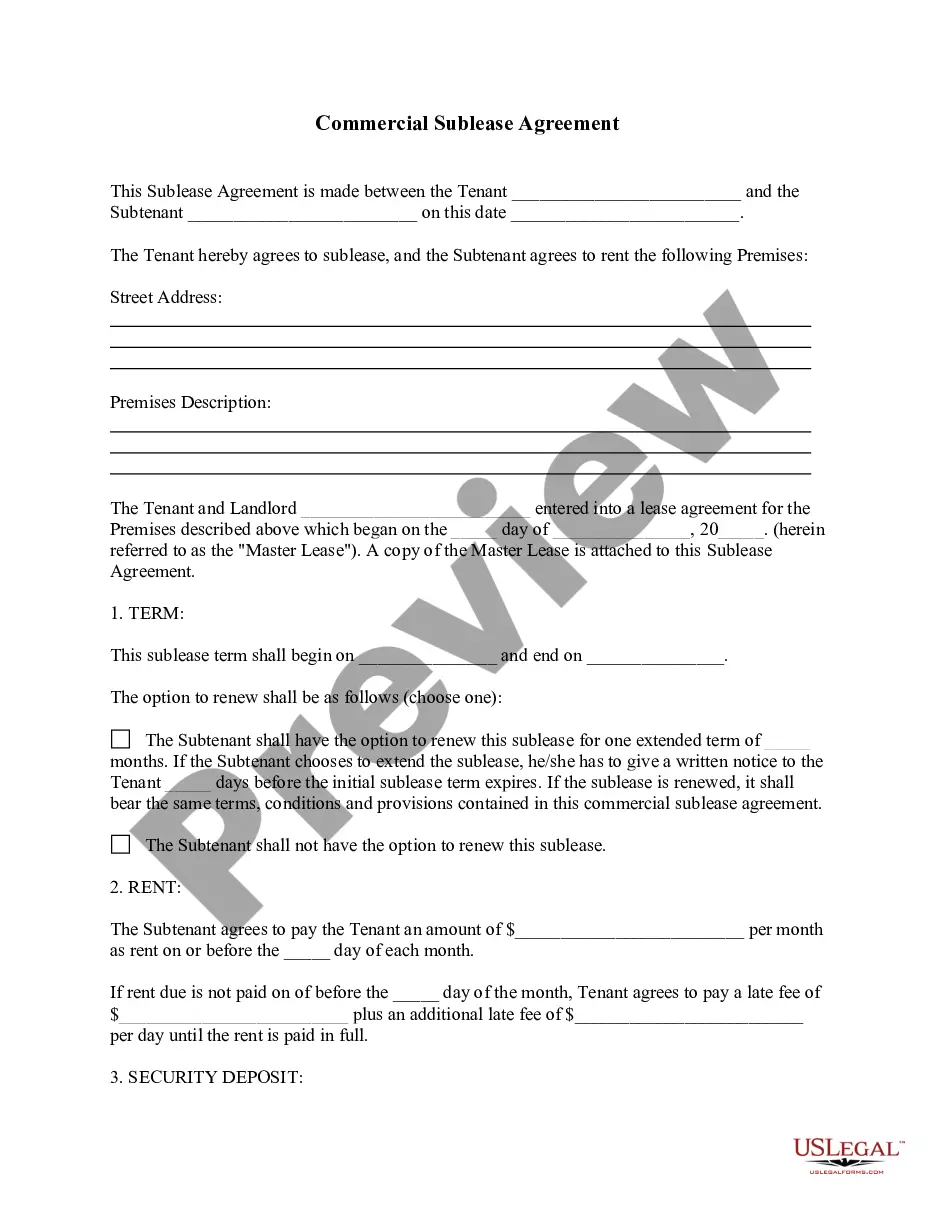
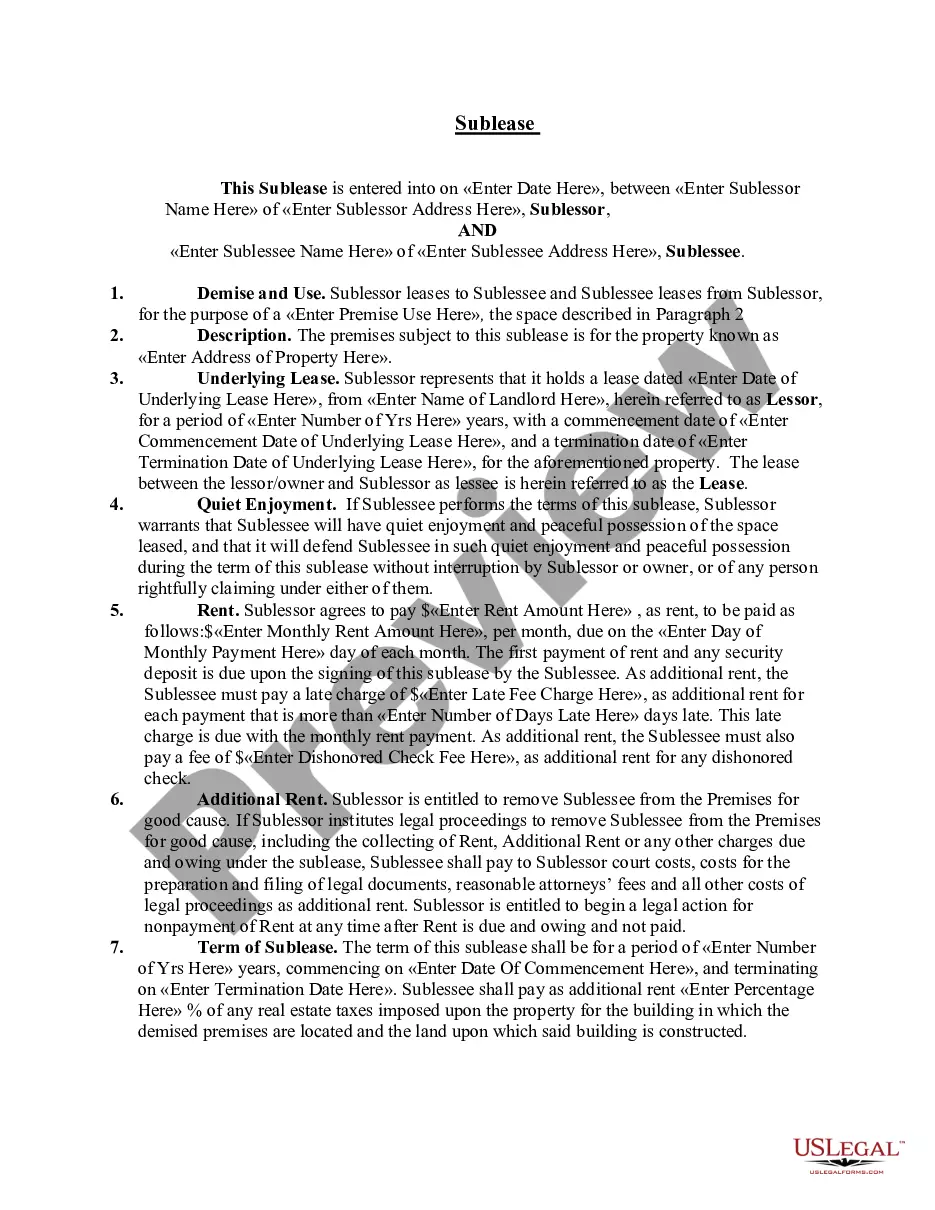
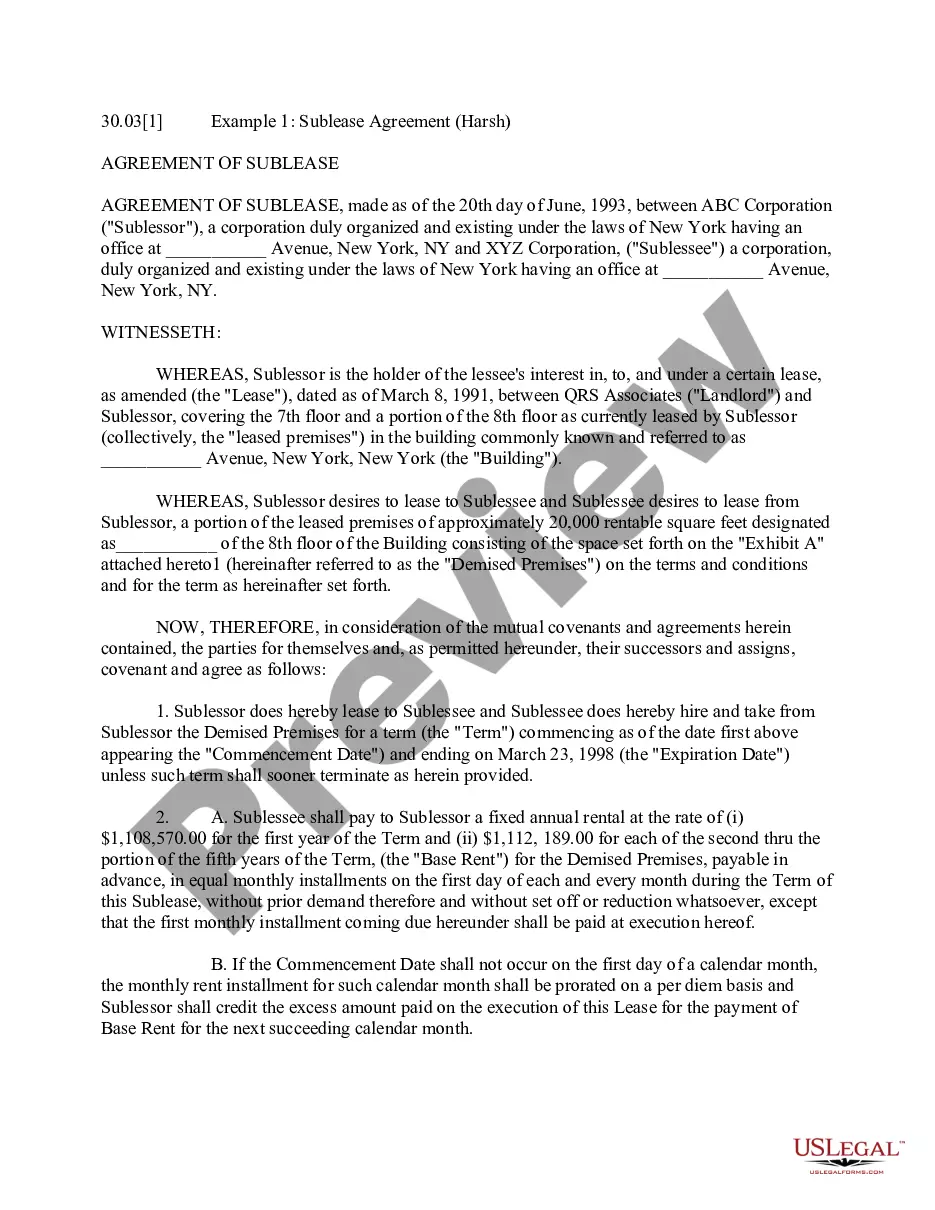
The Commercial Sublease form is a legal document used when a tenant (the Sub-Lessor) wants to lease a rented commercial property to another party (the Sub-Lessee). This form outlines the terms of the sub-lease, including the length of the lease, rent amounts, and compliance with the original lease. It is distinct from a primary lease because it involves renting out an existing leased property rather than creating a new lease agreement.
Key parts of this document
- Identification of the Sub-Lessor and Sub-Lessee
- Description of the leased property and its purpose
- Lease term and rental payment details
- Insurance requirements and indemnity clauses
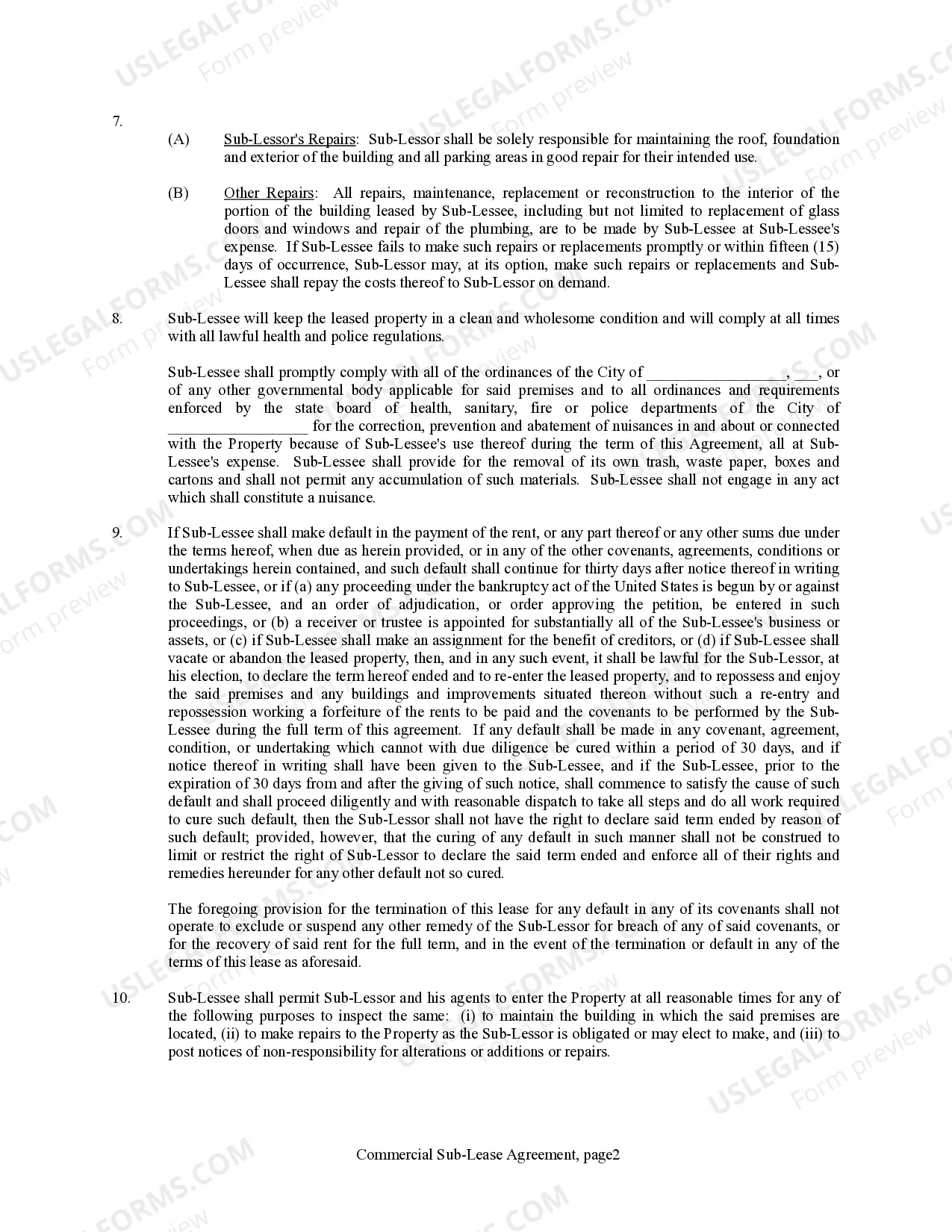
- Maintenance and repair responsibilities
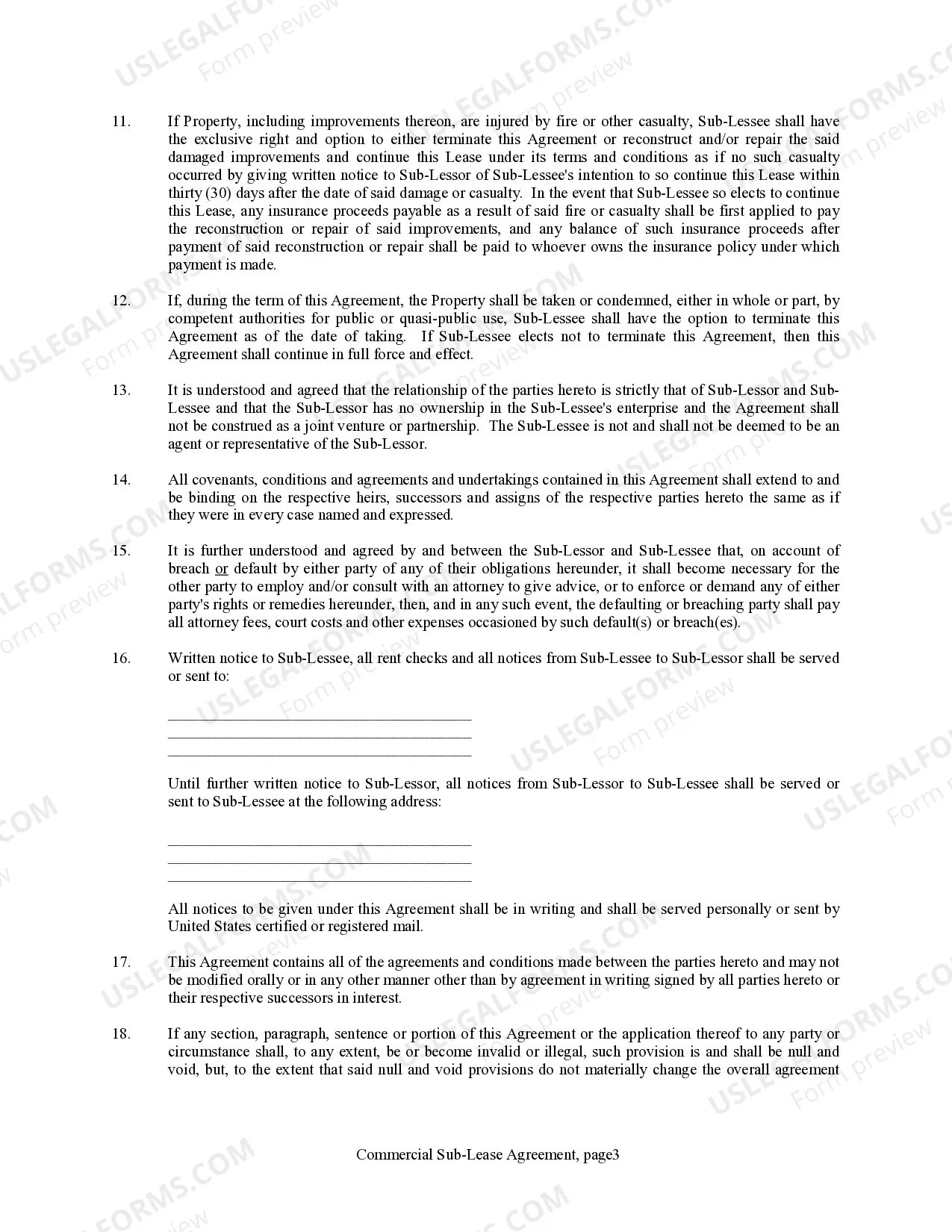
- Conditions for lease termination and default management
When to use this form
This form is useful when a business tenant wishes to sublease part or all of their leased commercial space to another party. It is commonly used in situations where the original tenant does not need the entire space due to downsizing, relocation, or other operational changes. This document helps protect both the original tenant and the new tenant by outlining clear responsibilities and expectations.
Intended users of this form
- Business owners who are leasing commercial property and wish to sublease it
- Sub-Lessees looking for temporary space or specific commercial locations
- Property managers facilitating the sub-leasing process
Completing this form step by step
- Identify the parties involved by entering the names of the Sub-Lessor and Sub-Lessee.
- Specify the commercial property being leased, including any improvements.
- State the duration of the lease term and the amount of rent to be paid.
- Outline the permitted uses of the leased property clearly.
- Include any additional clauses regarding maintenance, insurance, or other obligations as needed.
Is notarization required?
This form usually doesn’t need to be notarized. However, local laws or specific transactions may require it. Our online notarization service, powered by Notarize, lets you complete it remotely through a secure video session, available 24/7.
Get your form ready online
Our built-in tools help you complete, sign, share, and store your documents in one place.
Make edits, fill in missing information, and update formatting in US Legal Forms—just like you would in MS Word.
Download a copy, print it, send it by email, or mail it via USPS—whatever works best for your next step.
Sign and collect signatures with our SignNow integration. Send to multiple recipients, set reminders, and more. Go Premium to unlock E-Sign.
If this form requires notarization, complete it online through a secure video call—no need to meet a notary in person or wait for an appointment.
We protect your documents and personal data by following strict security and privacy standards.

Make edits, fill in missing information, and update formatting in US Legal Forms—just like you would in MS Word.

Download a copy, print it, send it by email, or mail it via USPS—whatever works best for your next step.

Sign and collect signatures with our SignNow integration. Send to multiple recipients, set reminders, and more. Go Premium to unlock E-Sign.

If this form requires notarization, complete it online through a secure video call—no need to meet a notary in person or wait for an appointment.

We protect your documents and personal data by following strict security and privacy standards.
Avoid these common issues
- Failing to specify the rental payment schedule clearly.
- Not ensuring compliance with the original lease terms.
- Leaving out important clauses regarding maintenance responsibilities.
- Neglecting to include insurance requirements for both parties.
- Using vague language in the description of the leased property.
Why complete this form online
- Convenience of accessing and downloading the form from anywhere.
- Editability allows customization to fit specific leasing situations.
- Reliability of professionally drafted legal language that protects both parties.
Legal use & context
- Subleasing without a written agreement can lead to disputes between original tenants and landlords.
- The form serves to formalize the sublease arrangement, ensuring compliance with the original lease.
- Legal enforceability of the agreement may depend on adherence to local landlord-tenant laws.
Main things to remember
- The Commercial Sublease form is essential for legally subletting commercial property.
- Preparation and clarity in the agreement can prevent future legal issues.
- Both parties should understand their responsibilities and obligations under the form.
Glossary of terms
- Sub-Lessor: The original tenant who rents out the property to another party.
- Sub-Lessee: The individual or entity renting the property from the Sub-Lessor.
- Lease term: The specific period during which the sublease is valid.
- Indemnity: The obligation to compensate for harm or loss.
Looking for another form?


Form popularity
FAQ
Writing Your Sublease. State the name of the parties and the date of the contract. Identify the full names of each party and what their role is in the contract. The original leaseholder of the property is the Tenant and the person subletting the property is the Subtenant.
A commercial sublease is an agreement between a tenant currently leasing a property, a new tenant looking for space, and the property owner. When you sublease your space you are the sublessor (or sublandlord) and your new tenant is the sublessee (or subtenant).
Name the parties. A simple rental agreement form needs to name the parties signing the lease and where they live. Describe the premises. Define the term of the lease. Set how much rent is owed. Assign a security deposit amount. Finalize the lease.
Writing Your Sublease. State the name of the parties and the date of the contract. Identify the full names of each party and what their role is in the contract. The original leaseholder of the property is the Tenant and the person subletting the property is the Subtenant.
Check the over-lease. This refers to the lease that was signed by the tenant from whom you're sub-leasing. Note the condition of your room. Get in touch with the management company. Make all payments in person. Ask for a deposit receipt. Comments.
Under California law, a lease does have to be in writing to be enforceable, but only when the lease is for a period of more than a year.There is, however, an additional legal doctrine called partial performance which does make oral contracts enforceable even if they are covered by the Statute of Frauds.
As long as the contract spells out specific details and both parties have signed that they agree to the contract's terms, a handwritten contract is legally binding and enforceable in court.
The Introduction. The beginning of the lease agreement should contain the name of the landlord and tenant, as well as a statement of the agreement into which they are entering. Rent. Deposit. Taxes. Property Insurance. Utilities and Amenities. Remodeling and Improvements. Repairs and Maintenance.
Unless the lease prohibits subleasing, a landlord may not unreasonably withhold permission to sublet. In North Carolina, subleasing is only allowed if the landlord consents.