Louisiana Motion for Appeal
Understanding this form
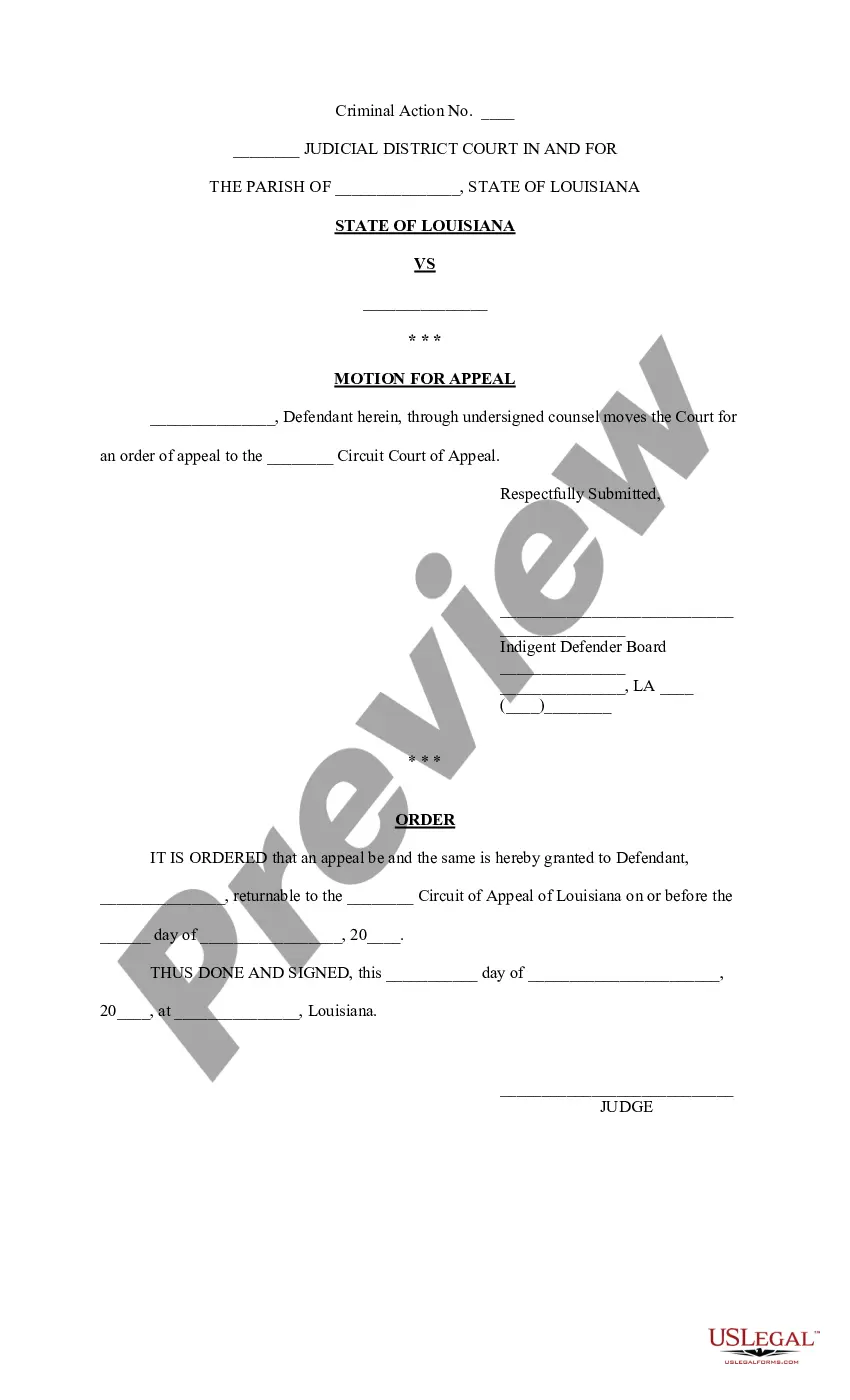
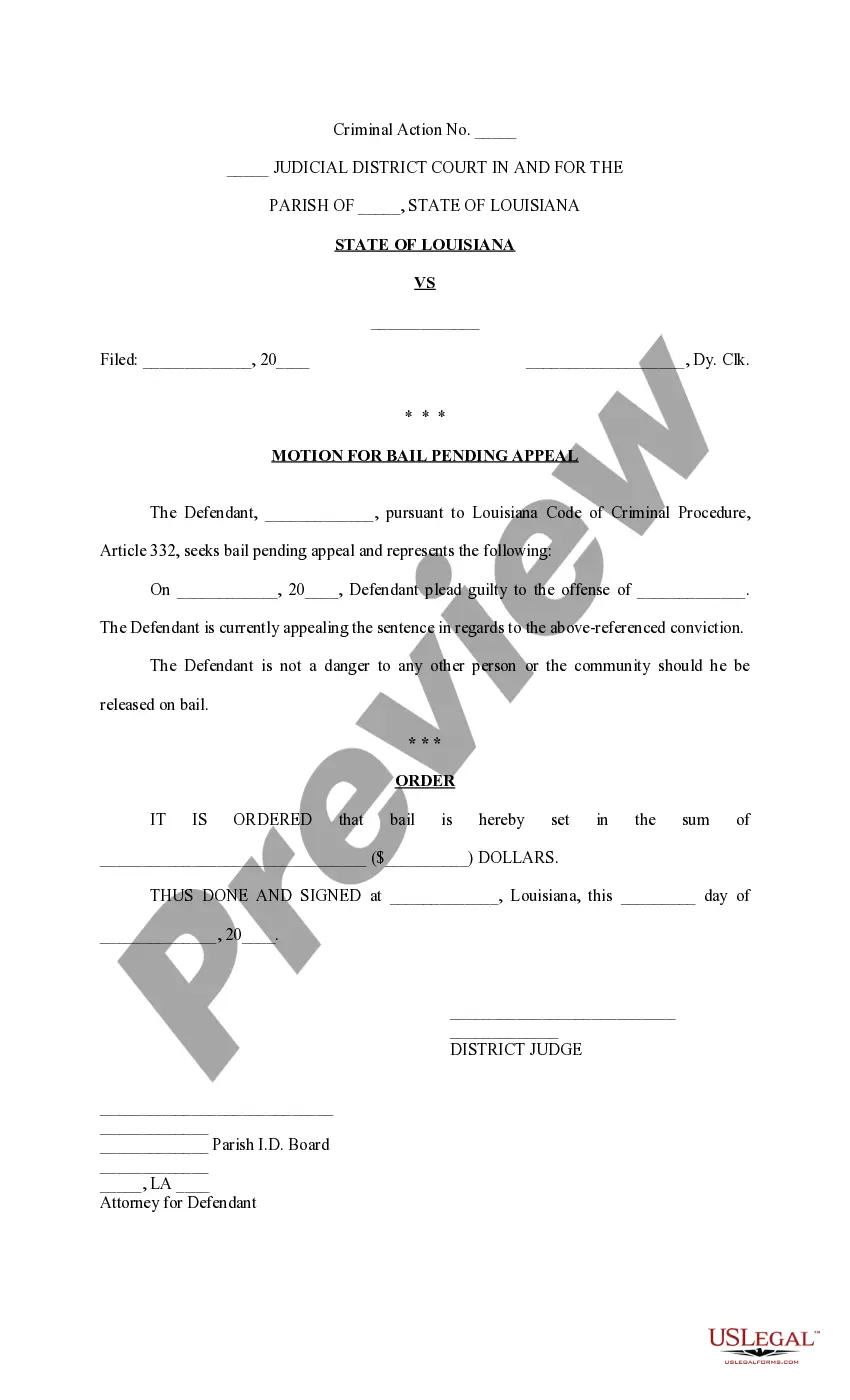
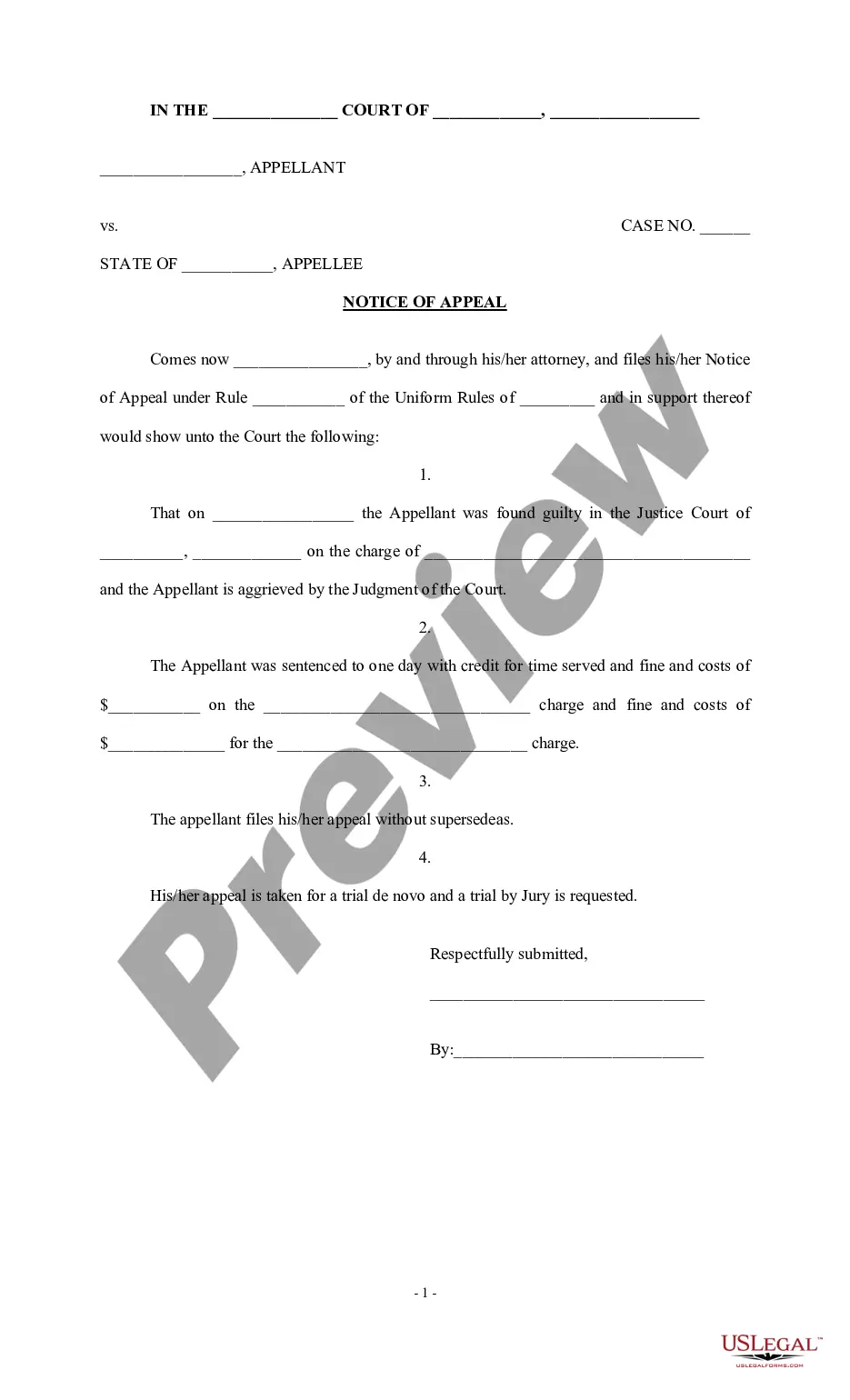
A Motion for Appeal is a legal document filed by the defendant's attorney in a criminal case, formally requesting an order to appeal a court decision. This document not only serves to initiate the appeal process but also includes an order granting the appeal, allowing the defendant to seek a review of the case by a higher court. Unlike other legal motions, this specific form is essential for defendants who wish to challenge the outcome of their trial or any pretrial ruling that adversely affects their case.
Main sections of this form
- Identification of the Judicial District Court and Parish.
- Title of the case, including the names of the parties involved.
- Defendant's name and designation as the moving party.
- Specification of the Circuit Court of Appeal to which the appeal is being made.
- Signature of the defendant's attorney and indication of representation by the Indigent Defender Board.
- Order section granting the appeal and setting a return date.
Situations where this form applies
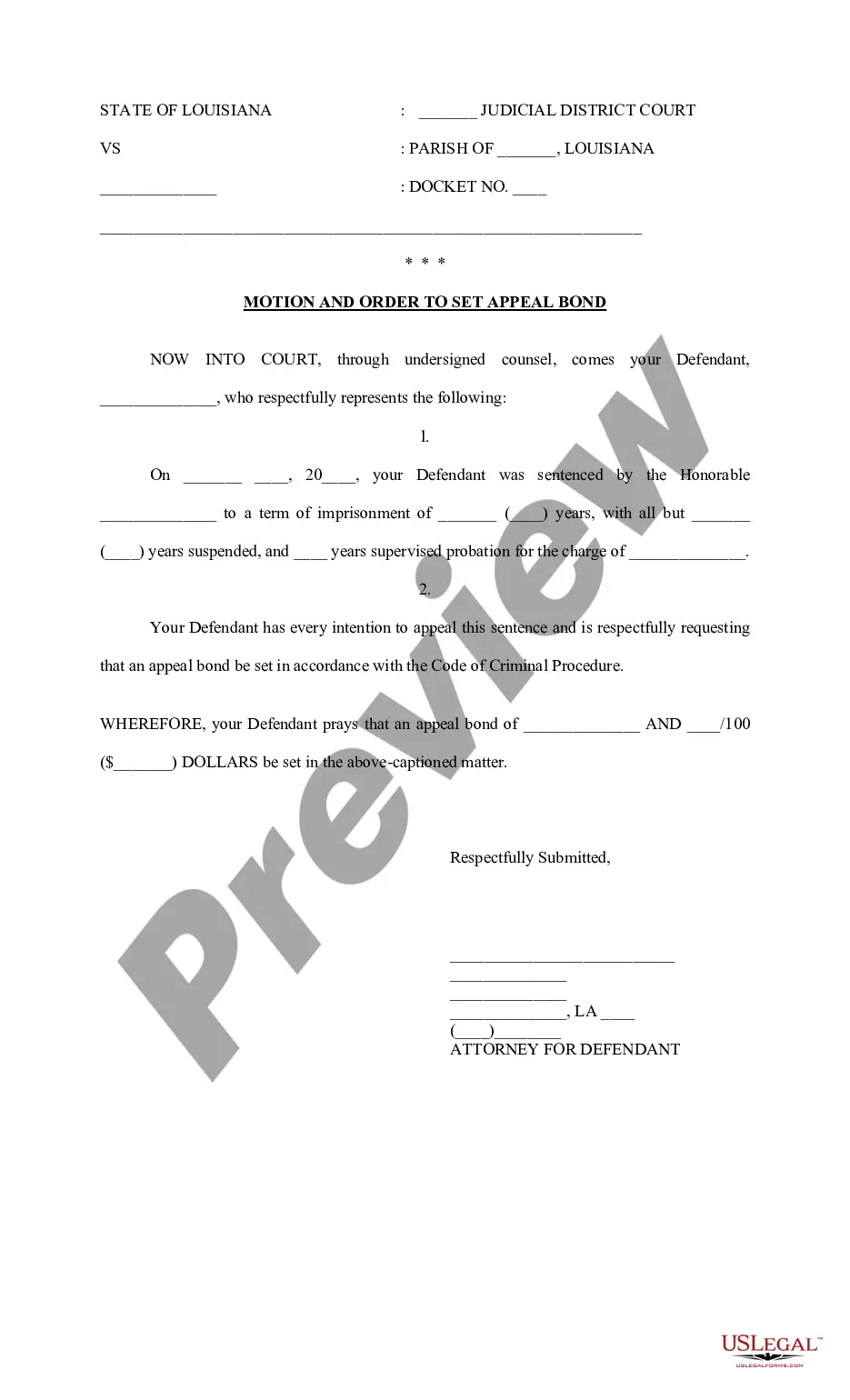
This form should be used when a defendant in a criminal case intends to appeal a verdict or ruling that negatively impacts their rights or defense. This may occur after a conviction, a sentence, or any significant pretrial decision affecting the case. By filing this motion, the defendant seeks to have the case reviewed by a higher court for potential errors in the judicial process.
Who this form is for
This form is intended for:
- Defendants in criminal cases wishing to challenge a court decision.
- Attorneys representing defendants seeking an appeal.
- Individuals involved in criminal proceedings who meet the criteria for filing an appeal.
Completing this form step by step
- Identify the correct Judicial District Court and Parish from which the appeal is being filed.
- Fill in the case title, including both plaintiffs and defendants.
- Provide the defendant's name and indicate their status as the moving party.
- Specify the Circuit Court of Appeal that is designated to hear the appeal.
- Ensure that the form is signed by the attorney representing the defendant.
- Complete the order section by setting a return date for the appeal.
Notarization requirements for this form
This form usually doesn’t need to be notarized. However, local laws or specific transactions may require it. Our online notarization service, powered by Notarize, lets you complete it remotely through a secure video session, available 24/7.
Get your form ready online
Our built-in tools help you complete, sign, share, and store your documents in one place.
Make edits, fill in missing information, and update formatting in US Legal Forms—just like you would in MS Word.
Download a copy, print it, send it by email, or mail it via USPS—whatever works best for your next step.
Sign and collect signatures with our SignNow integration. Send to multiple recipients, set reminders, and more. Go Premium to unlock E-Sign.
If this form requires notarization, complete it online through a secure video call—no need to meet a notary in person or wait for an appointment.
We protect your documents and personal data by following strict security and privacy standards.

Make edits, fill in missing information, and update formatting in US Legal Forms—just like you would in MS Word.

Download a copy, print it, send it by email, or mail it via USPS—whatever works best for your next step.

Sign and collect signatures with our SignNow integration. Send to multiple recipients, set reminders, and more. Go Premium to unlock E-Sign.

If this form requires notarization, complete it online through a secure video call—no need to meet a notary in person or wait for an appointment.

We protect your documents and personal data by following strict security and privacy standards.
Common mistakes to avoid
- Failing to specify the correct Circuit Court of Appeal.
- Omitting necessary signatures from the attorney.
- Not including all required parties in the case title.
- Missing the deadline for filing the motion, which could jeopardize the appeal.
Advantages of online completion
- Convenient and easy to complete from home at any time.
- Editability allows you to customize the form to meet specific case needs.
- Access to forms created by licensed attorneys, ensuring legal accuracy.
- Immediate downloads, providing quick access to necessary legal documents.
Legal use & context
- The Motion for Appeal must be filed within a specific timeframe after the original ruling.
- It is crucial that all information provided is accurate to avoid unnecessary delays.
- Understanding local rules regarding the appeals process is essential for success.
Key takeaways
- The Motion for Appeal is a vital step in challenging a criminal conviction.
- Proper completion and timely submission are crucial for the motion to be valid.
- Consulting with an experienced attorney can improve the chances of a successful appeal.
- This form is available online for easy access and customization.
Looking for another form?
Form popularity
FAQ
All pleadings/motions/requests may be filed with the Appeals Division by mail, fax or email. The Appeals Division fax number is (225) 342-8058, and its email address is dscs.appeals@la.gov.
Log in to your UI Online account. Click View and maintain in the left pane. Click Monetary and issue summary. Select the issue ID and then click Appeal.
Appeals can be either discretionary or of right. An appeal of right is one that the higher court must hear, if the losing party demands it, while a discretionary appeal is one that the higher court may, but does not have to, consider.
An appeal occurs when one party to a case asks a higher court to review the decision on a lower court, such as family court.When you appeal, the higher court reviews your entire case, meaning all of the documents and evidence presented to the family court. An appeal is not a re-do of your trial.
Step 1: Hiring an Appellate Attorney (Before Your Appeal) One of the biggest mistakes litigants make is filing their appeal before hiring an appellate attorney. Step 2: Filing the Notice of Appeal. Step 3: Preparing the Record on Appeal. Step 4: Researching and Writing Your Appeal. Step 5: Oral Argument.
Filing the Notice of Appeal. Abandonment or Settlement. Waiver of Fees. Designating the Record. Civil Case Information Sheet. Briefs. Oral Argument. The Court's Decision.
Your appeal begins when you file a notice of appeal or a petition for review from a final decision of a district court or agency. It will be assigned a court of appeals docket number by the Court of Appeals Clerk's Office. Any correspondence from you should indicate this number.
Generally, the losing party in a lawsuit may appeal their case to a higher court.If an appeal is granted, the lower court's decision may be reversed in whole or in part. If an appeal is denied, the lower court's decision stands.