Questionnaire to Secure Initial Data for Title Search
About this form
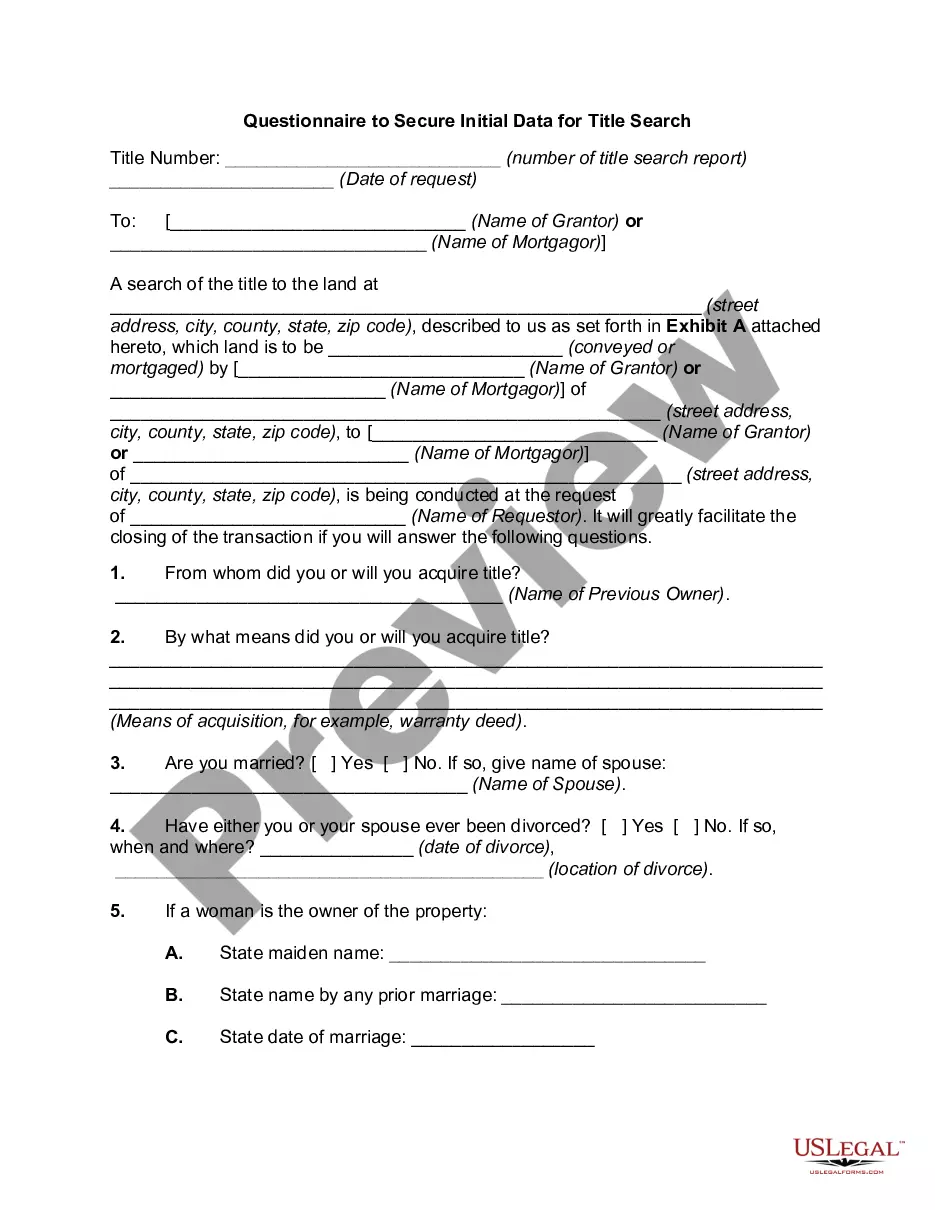
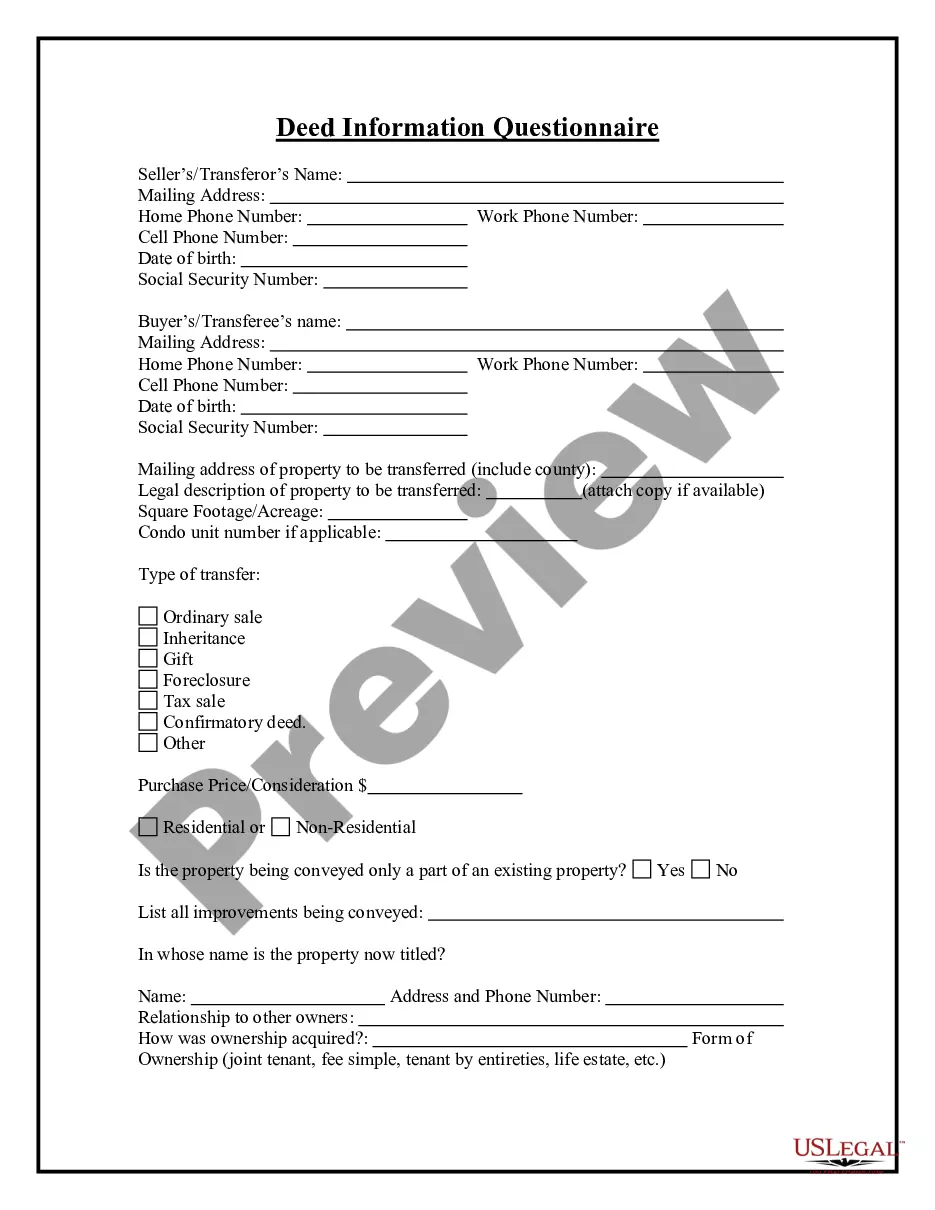
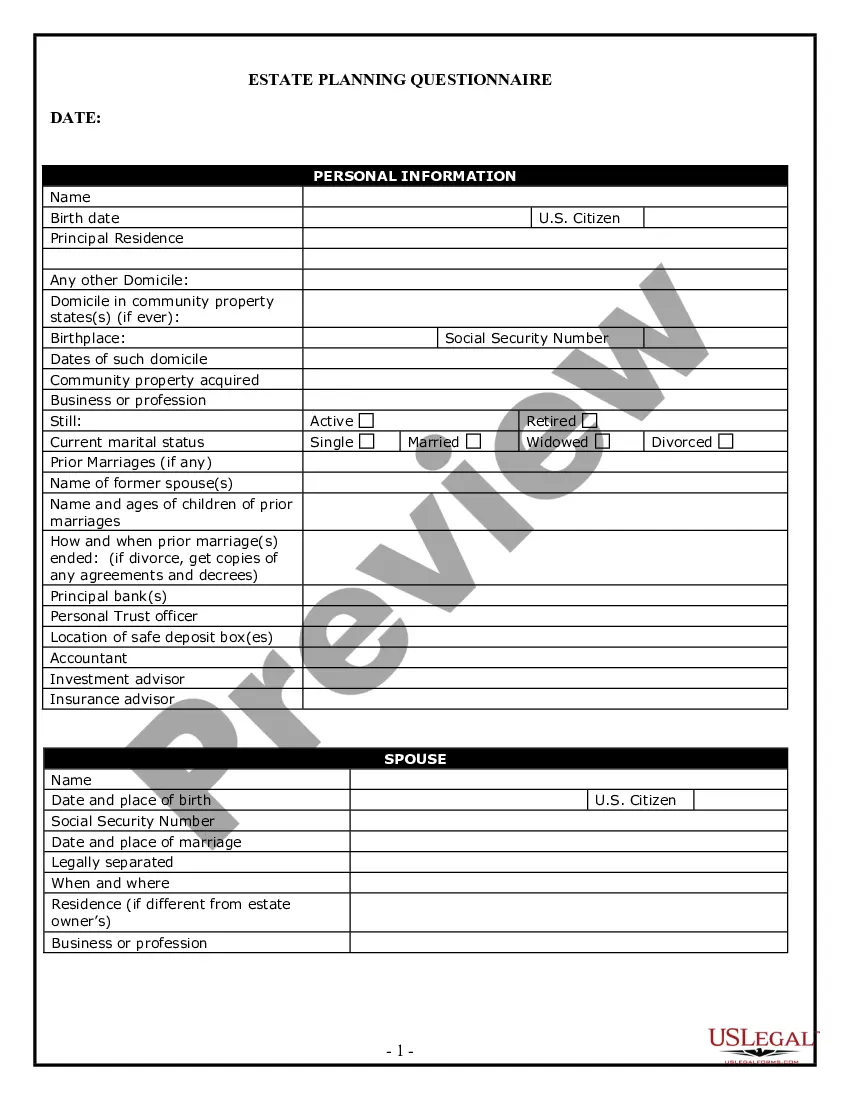
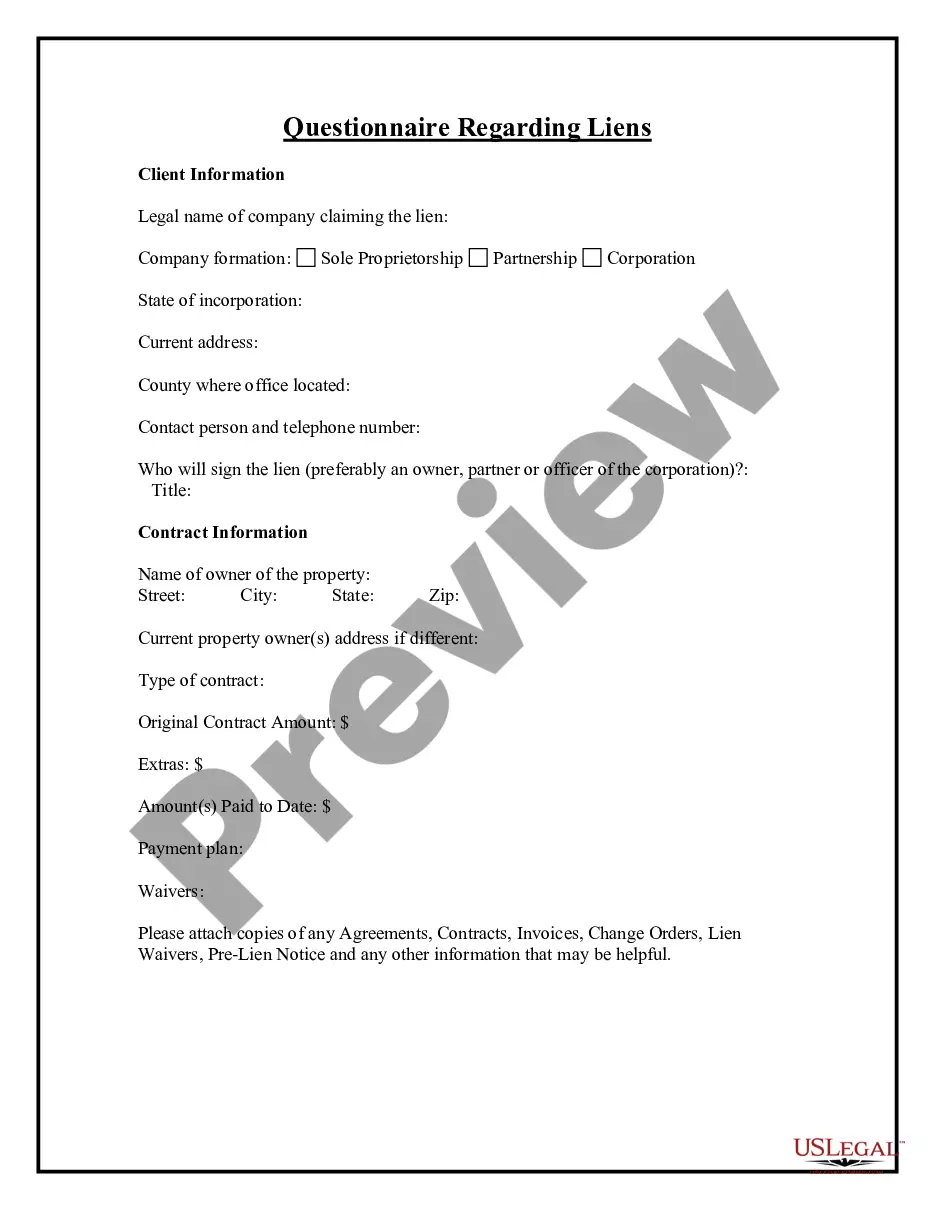
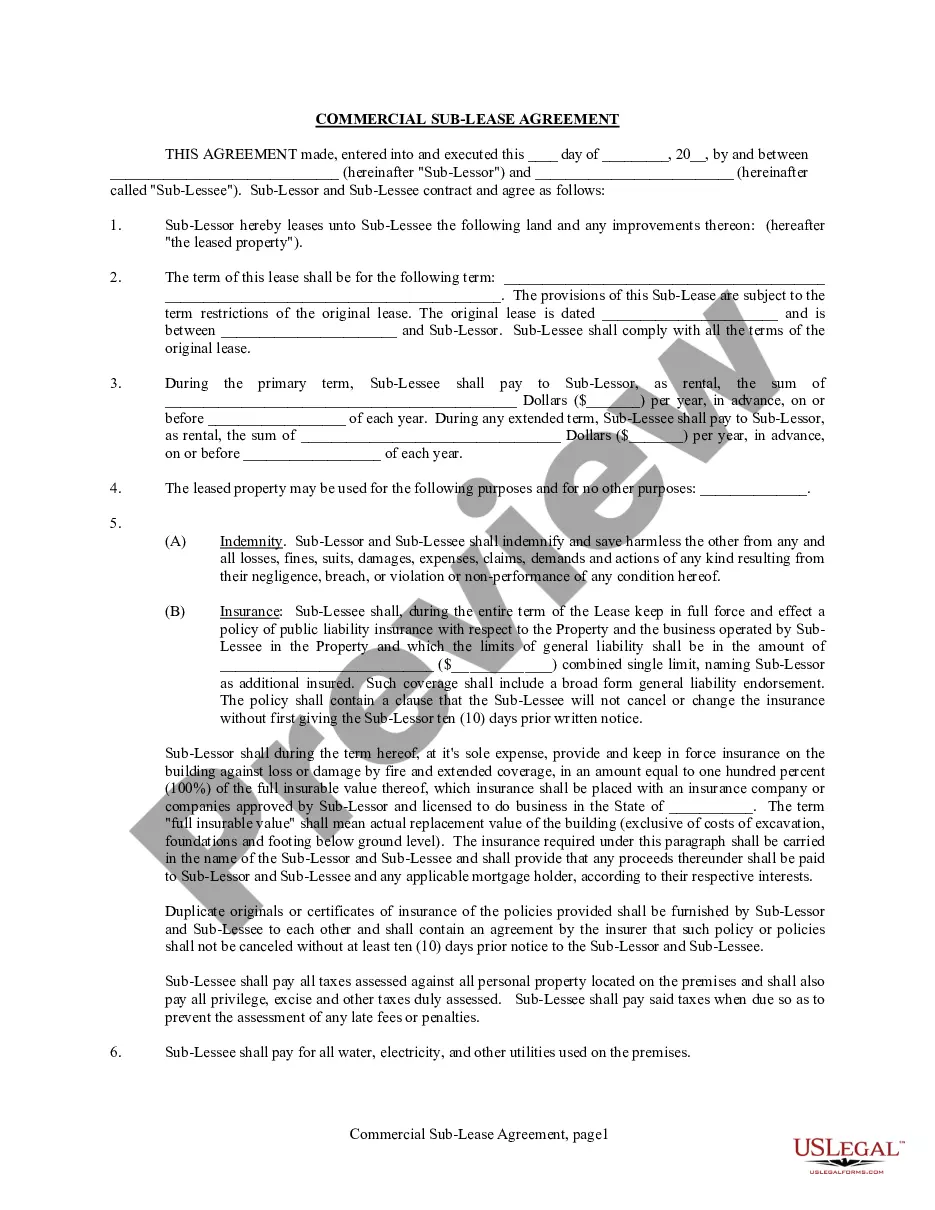
The Questionnaire to Secure Initial Data for Title Search is a specialized form used to gather essential information regarding a propertyâs title. This form is crucial for initiating a title search, which helps uncover potential claims, liens, or other interests in a property before a transfer of ownership or mortgage. Unlike other real estate forms, this questionnaire specifically focuses on obtaining detailed personal and property information to facilitate a thorough title examination.
Key parts of this document
- Title number for tracking the title search report.
- Date of request for reference.
- Details of the property, including address and description.
- Questions about the current owner's marital status and past ownership.
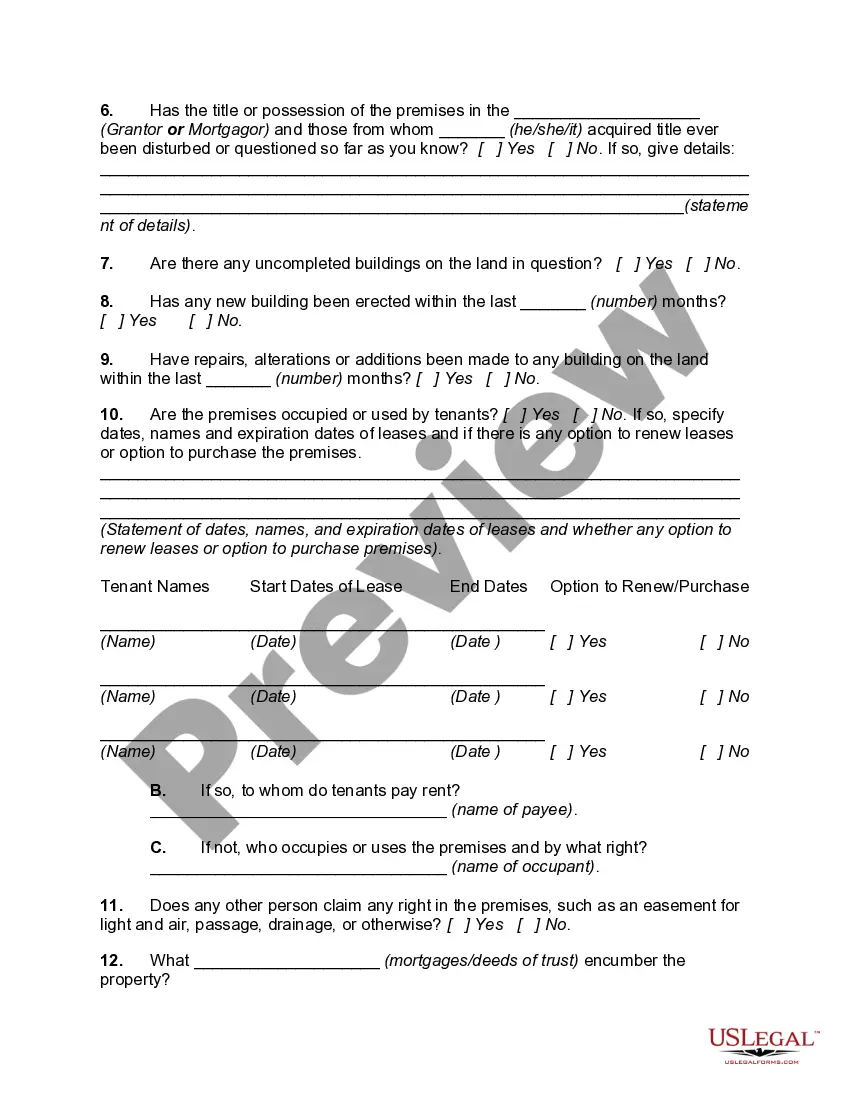
- Information on any claims or disturbances regarding the title.
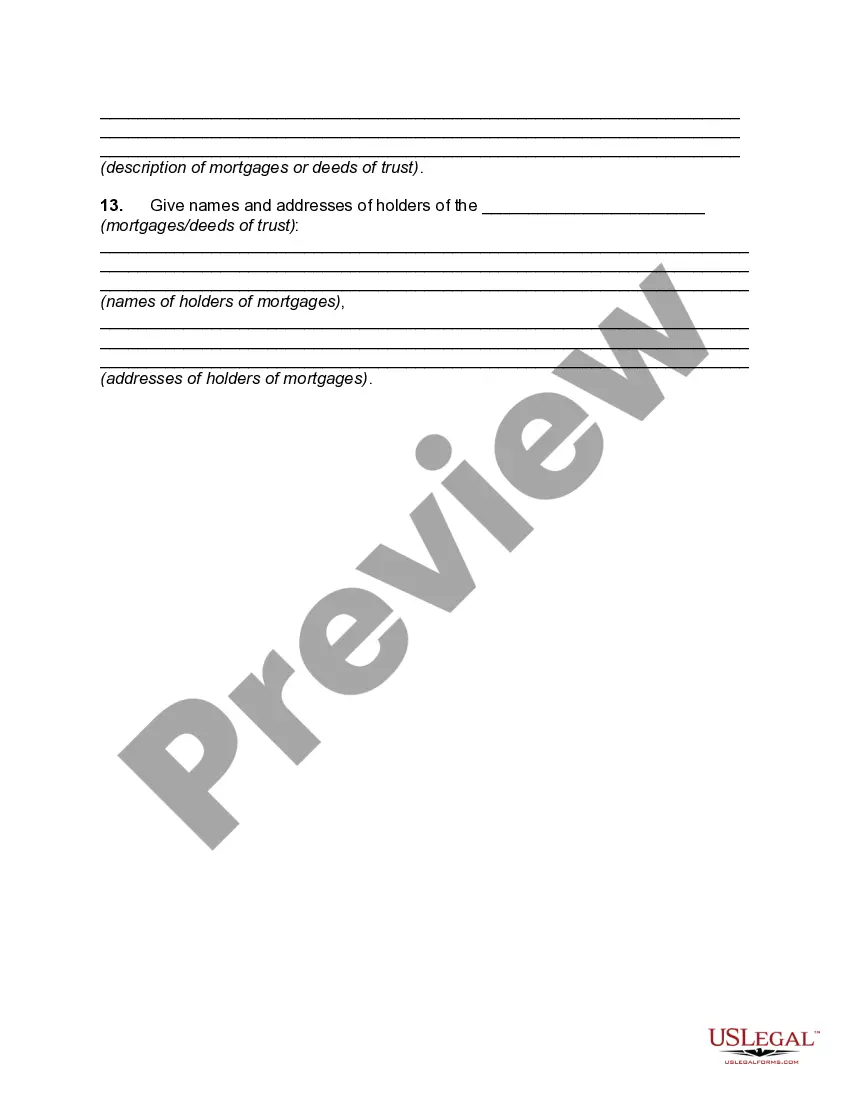
- Details concerning tenants, uncompleted buildings, and any encumbrances on the property.

When this form is needed
This form is used when you are initiating a title search for real property, whether for a purchase, sale, or refinancing. It is important to use this form before closing a real estate transaction to ensure that the property's title is clear and free of issues that could affect ownership.
Who can use this document
- Homebuyers or sellers who want to ensure a clear title before completing a transaction.
- Lenders requiring a title search as part of the mortgage process.
- Real estate agents facilitating property transactions.
- Attorneys handling real estate matters on behalf of clients.
Steps to complete this form
- Identify the parties involved, including the grantor or mortgagor and the requestor.
- Provide the street address and legal description of the property.
- Answer the questions regarding previous ownership, marital status, and any divorce history.
- State any known issues or disturbances related to the property's title.
- List all tenants, lease details, and any uncompleted buildings on the property.
Notarization guidance
This form does not typically require notarization unless specified by local law. However, double-check any state-specific requirements to ensure compliance.
Get your form ready online
Our built-in tools help you complete, sign, share, and store your documents in one place.
Make edits, fill in missing information, and update formatting in US Legal Forms—just like you would in MS Word.
Download a copy, print it, send it by email, or mail it via USPS—whatever works best for your next step.
Sign and collect signatures with our SignNow integration. Send to multiple recipients, set reminders, and more. Go Premium to unlock E-Sign.
If this form requires notarization, complete it online through a secure video call—no need to meet a notary in person or wait for an appointment.
We protect your documents and personal data by following strict security and privacy standards.

Make edits, fill in missing information, and update formatting in US Legal Forms—just like you would in MS Word.

Download a copy, print it, send it by email, or mail it via USPS—whatever works best for your next step.

Sign and collect signatures with our SignNow integration. Send to multiple recipients, set reminders, and more. Go Premium to unlock E-Sign.

If this form requires notarization, complete it online through a secure video call—no need to meet a notary in person or wait for an appointment.

We protect your documents and personal data by following strict security and privacy standards.
Typical mistakes to avoid
- Neglecting to provide complete addresses and legal property descriptions.
- Failing to answer all questions accurately, especially regarding marital status and past ownership.
- Omitting details about tenants or any other claims on the property.
- Using outdated information about the property's title or ownership.
Benefits of completing this form online
- Convenient download and access from anywhere, at any time.
- Edit and customize the form to fit your specific needs.
- Reliability, as forms are drafted by licensed attorneys to meet legal standards.
Looking for another form?

Form popularity
FAQ
A property title search examines public records on the property to confirm the property's rightful legal owner. The title search should also reveal if there are any claims or liens on the property that could affect your purchase.
Defective title is a generic term. A title is considered to be defective where there is potential for a third party to establish or attempt to establish an estate right title or interest which is adverse to, or in derogation of, the property owner's title to the property.
But a title search does not include a survey. With a title search, the title company reviews the chain of title, up to the present ownership. It does not reveal specific physical details of the property.Nevertheless, either the seller or the buyer may want to hire a service to produce an up-to-date survey.
The term defective title refers to an impaired title on an asset or a piece of property. The defect or impairment on a title can be in the form of a lien, mortgage, or judgment. Because other parties can lay claim to the property or asset, the title cannot be legally transferred to someone else.
Errors in public records. To err is human, but when it affects your homeownership rights, those mistakes can be devastating. Unknown liens. Illegal deeds. Missing heirs. Forgeries. Undiscovered encumbrances. Unknown easements. Boundary/survey disputes.
When performing a title search, the attorney or title company will conduct research using public records and legal documents to identify the vested owner, the liens or other judgments on the property, the loans on the property, and the property taxes due.
If however, this is not your debt and the lien has wrongfully been placed on your property, then you should first seek to get the creditor/lender to voluntarily release the lien. If they refuse, you could then file a lawsuit to get the lien removed and possibly obtain damages for slander of title.
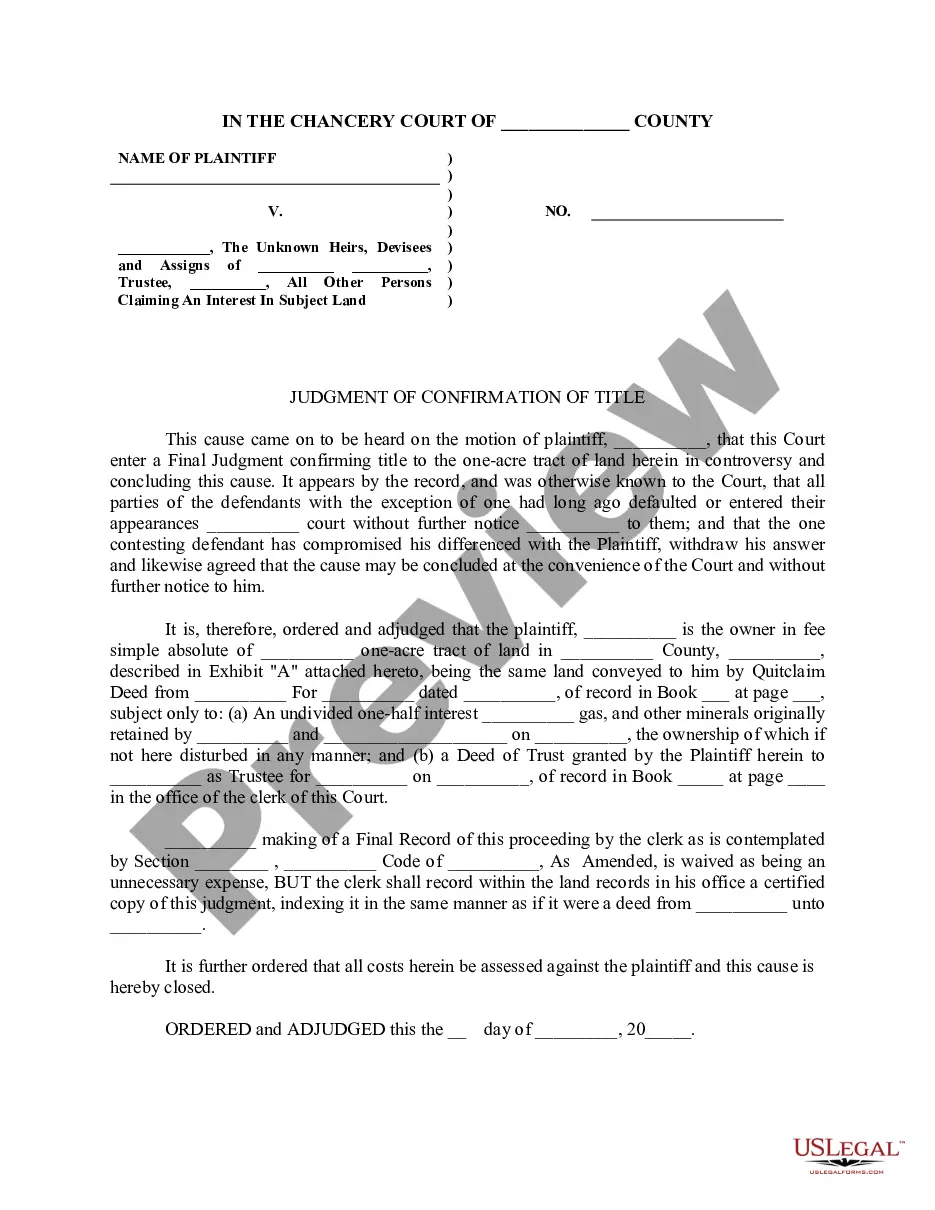
Many title issues can be resolved by filing one of three common documents: A quit claim deed removes an heir and clears up title among co-owners or spouses. A release of lien/judgment removes a paid mortgage or spousal or child support lien. A deed of reconveyance records payment of a mortgage under a deed of trust.
A title search examines city records to find out the property's title history. These records include deeds, court records, property and name indexes, and many other documents.Some hindrances that can be found in the title search include mortgage claims, liens, title claims, judgements, and other outstanding claims.