North Carolina Roofing Contract for Contractor
What is this form?
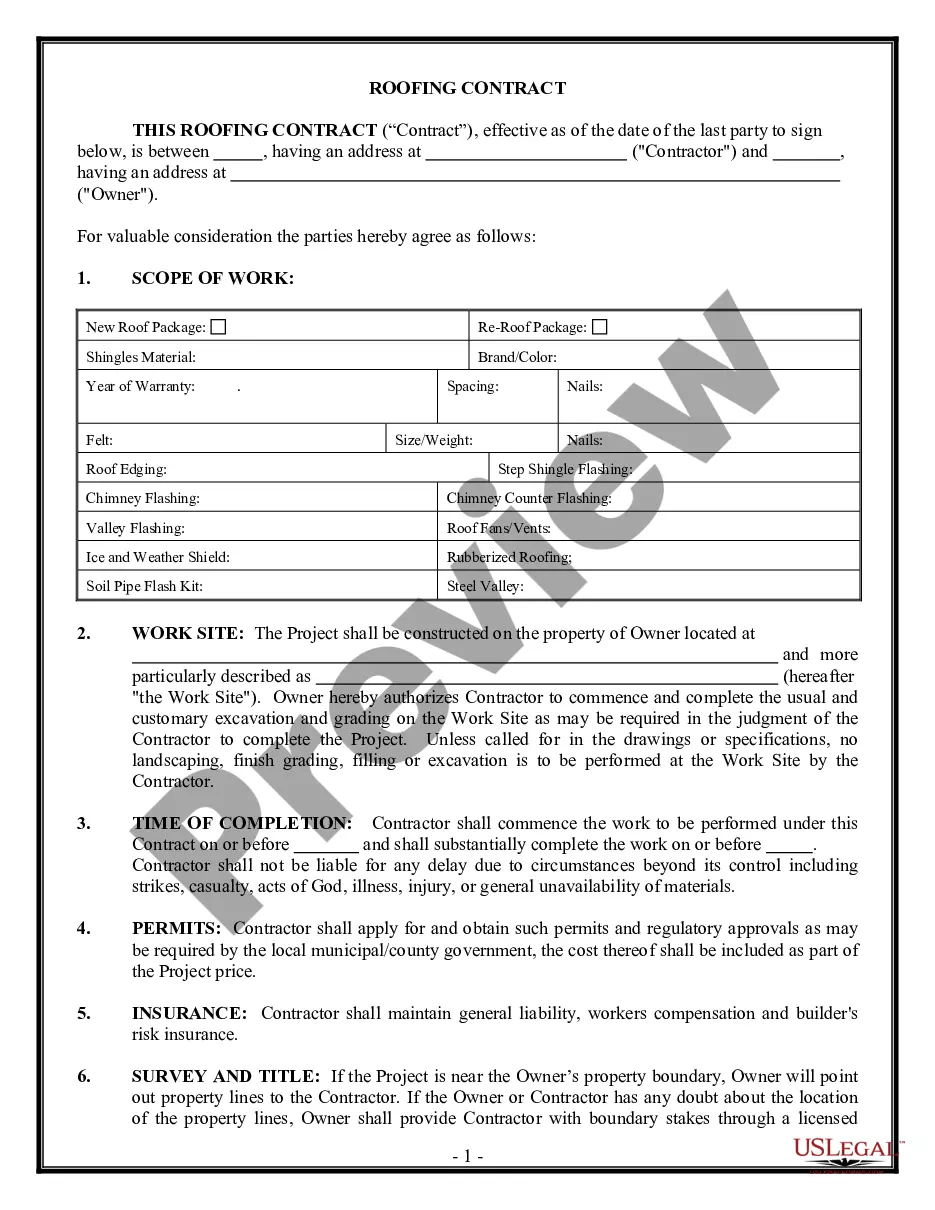
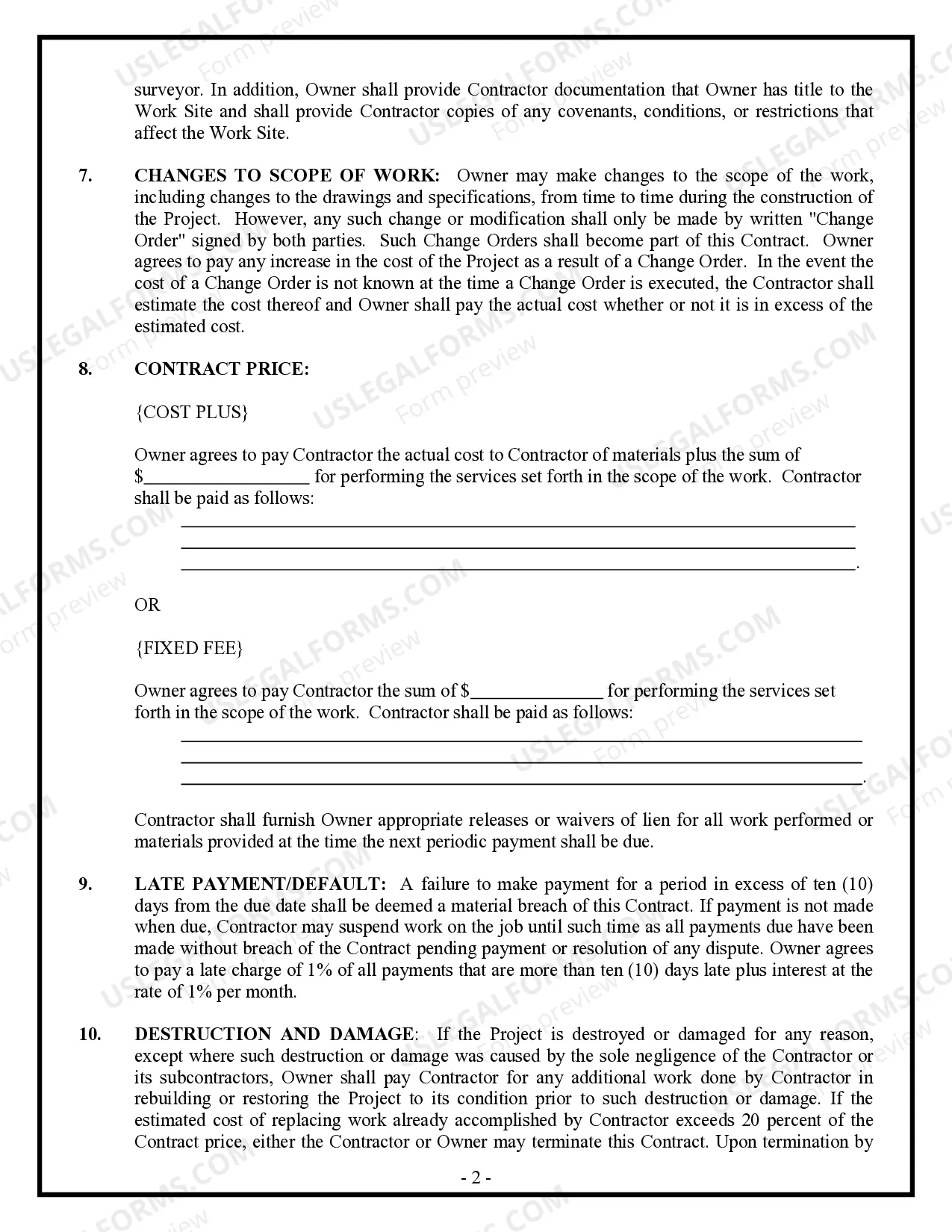
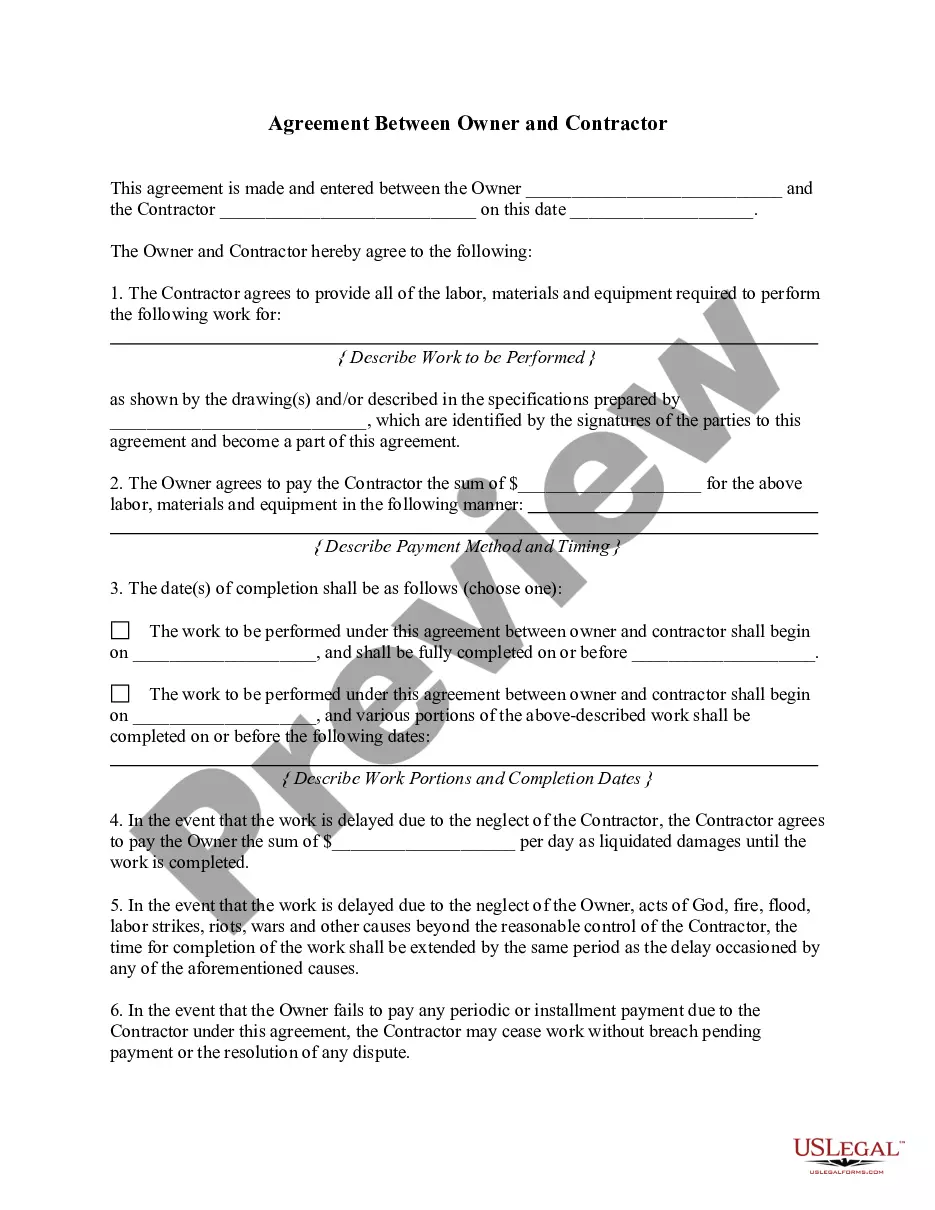
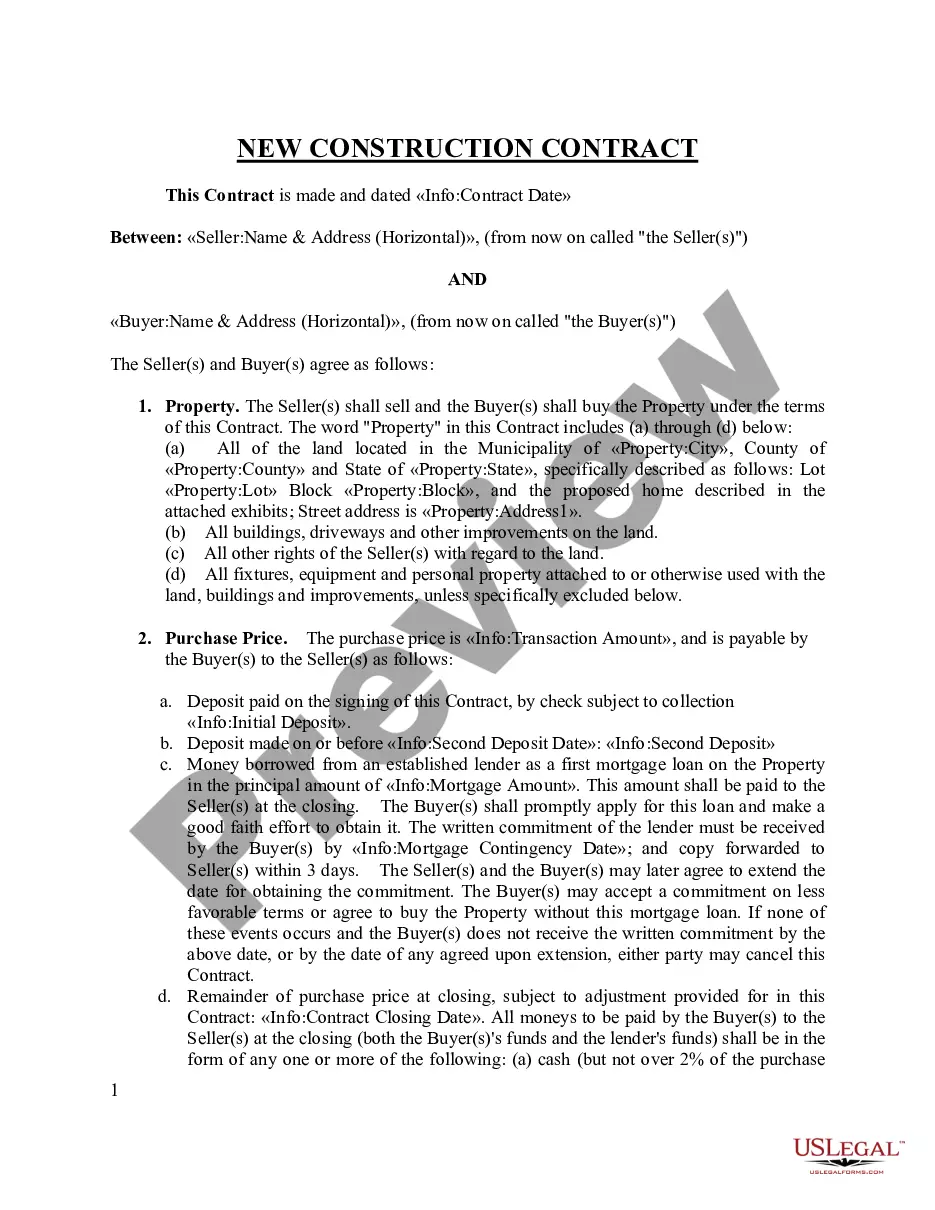
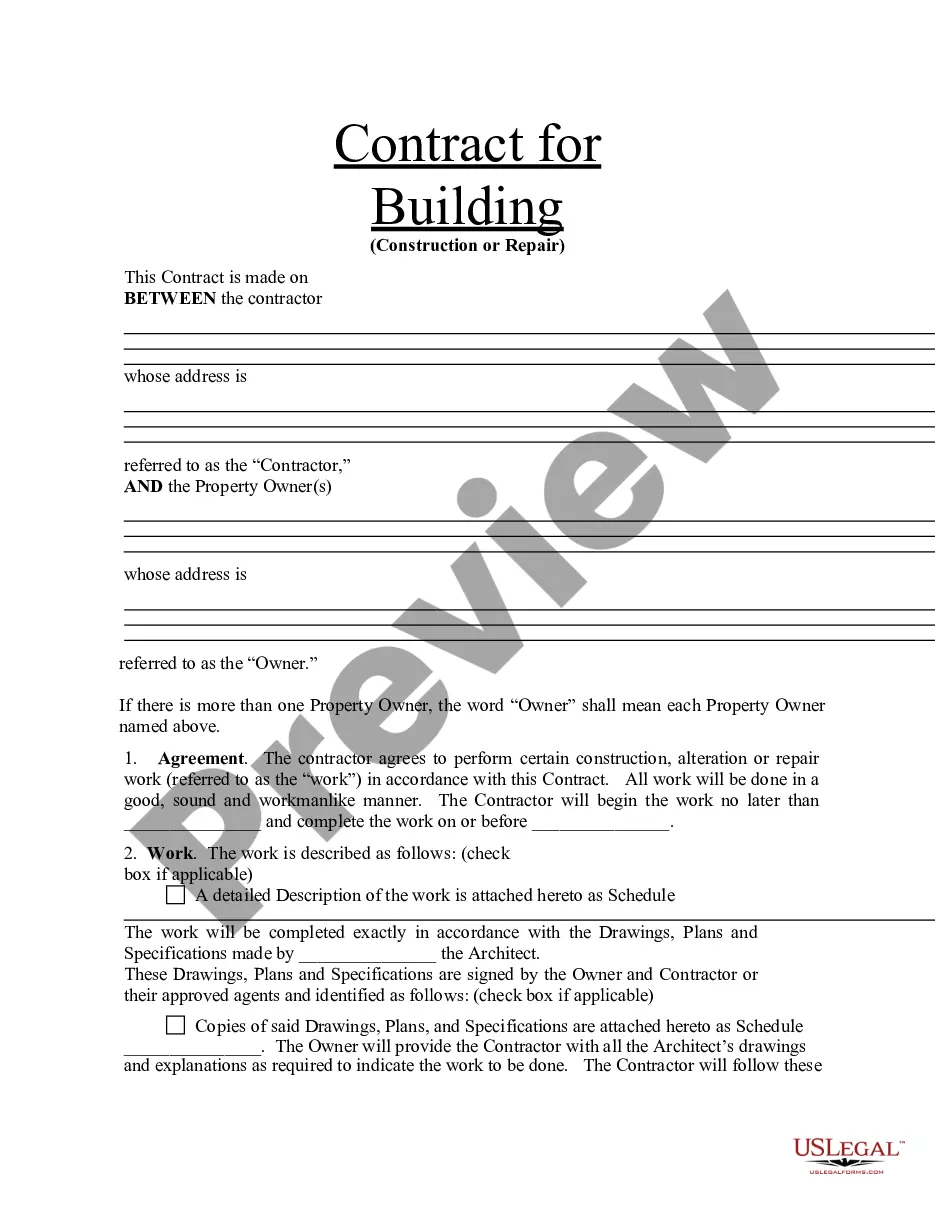
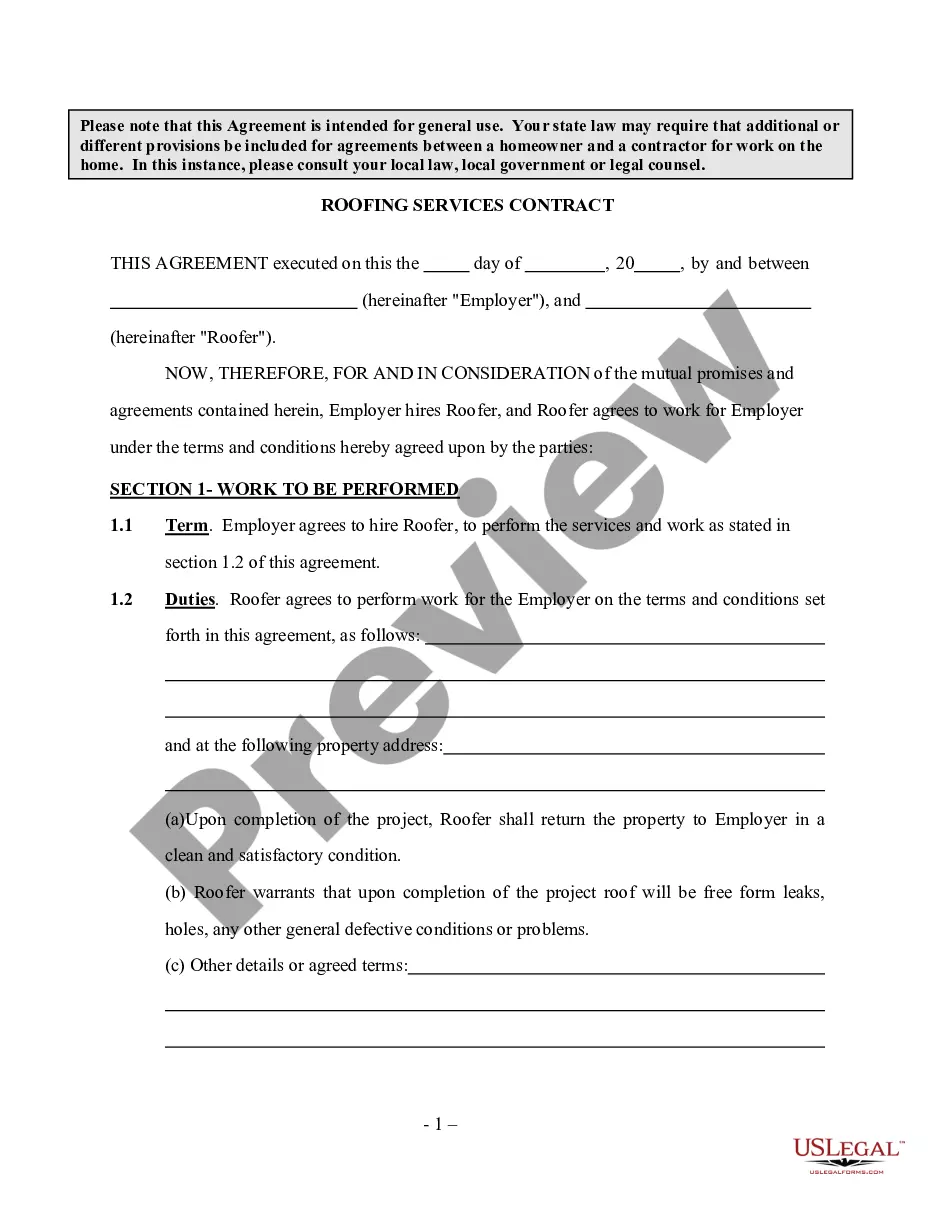
The Roofing Contract for Contractor is a legal document designed to formalize an agreement between roofing contractors and property owners. It serves as a comprehensive framework that governs the scope of work, payment arrangements (either cost plus or fixed fee), and other critical aspects of a roofing project. This contract is specifically tailored to meet the requirements of the State of North Carolina, ensuring compliance with local laws and standards.
Key parts of this document
- Permits: The contractor is responsible for obtaining necessary permits and approvals from local authorities.
- Insurance: Specifies the required types of insurance the contractor must maintain, including general liability, workers' compensation, and builders risk insurance.
- Survey and Title: Outlines the owner's responsibility to provide property boundaries and documentation of ownership.
- Changes to Scope of Work: Details how changes to the project may be made and require a written change order.
- Destruction and Damage: Addresses responsibilities in the event of project damage and conditions for contract termination.
- Assignment: Stipulates that neither party may assign the contract without written consent from the other party.


Situations where this form applies
This form should be used when a roofing contractor is hired to complete a project for a property owner. It is ideal for situations where agreements must be formally documented, especially in scenarios involving specific payment arrangements, project specifications, or where changes to the scope of work are anticipated. Property owners should utilize this contract to protect their interests and define expectations with the contractor.
Who this form is for
- Roofing contractors looking for a standard contract to outline obligations with property owners.
- Property owners who need to establish clear terms for roofing services.
- Real estate professionals involved in property renovation or new construction projects involving roofing work.
Steps to complete this form
- Identify the parties: Clearly state the names and addresses of both the contractor and the property owner.
- Specify project details: Outline the scope of work, including specific tasks and materials to be used.
- Enter payment terms: Specify whether the payment arrangement will be cost plus or fixed fee.
- Include permits and insurance information: Indicate the contractor's obligation to obtain necessary permits and maintain adequate insurance coverage.
- Sign and date the contract: Ensure both parties sign and date the document to make it legally binding.
Does this document require notarization?
In most cases, this form does not require notarization. However, some jurisdictions or signing circumstances might. US Legal Forms offers online notarization powered by Notarize, accessible 24/7 for a quick, remote process.
Get your form ready online
Our built-in tools help you complete, sign, share, and store your documents in one place.
Make edits, fill in missing information, and update formatting in US Legal Forms—just like you would in MS Word.
Download a copy, print it, send it by email, or mail it via USPS—whatever works best for your next step.
Sign and collect signatures with our SignNow integration. Send to multiple recipients, set reminders, and more. Go Premium to unlock E-Sign.
If this form requires notarization, complete it online through a secure video call—no need to meet a notary in person or wait for an appointment.
We protect your documents and personal data by following strict security and privacy standards.

Make edits, fill in missing information, and update formatting in US Legal Forms—just like you would in MS Word.

Download a copy, print it, send it by email, or mail it via USPS—whatever works best for your next step.

Sign and collect signatures with our SignNow integration. Send to multiple recipients, set reminders, and more. Go Premium to unlock E-Sign.

If this form requires notarization, complete it online through a secure video call—no need to meet a notary in person or wait for an appointment.

We protect your documents and personal data by following strict security and privacy standards.
Mistakes to watch out for
- Failing to clearly define the scope of work, leading to misunderstandings.
- Not obtaining necessary permits before starting the project.
- Neglecting to include provisions for changes or modifications to the project.
- Omitting important insurance details, which can lead to liability issues.
Benefits of using this form online
- Convenience: Easily download and customize the contract to fit specific project needs without hassle.
- Editability: Change terms and details as necessary to suit your agreement before printing.
- Reliability: Use a professionally drafted contract that complies with local laws and standards.
- Time-saving: Complete the form quickly and efficiently, avoiding unnecessary delays in starting the project.
Legal use & context
- This contract is legally binding when signed by both parties.
- It outlines the rights and responsibilities of both parties during the roofing project.
- Failure to adhere to the contract terms may result in legal disputes.
Summary of main points
- This Roofing Contract for Contractor ensures clear communication and legal protection for both roofing contractors and property owners.
- It details critical aspects like payment terms, scope of work, and insurance requirements.
- Always ensure both parties sign the contract and keep a copy for their records.
Looking for another form?
Form popularity
FAQ
You can always negotiate with your contractor on the price of a successful project before signing a contract. Discuss your budget with your roofing contractor. Agree that any unexpected project expenses will be presented in writing to help you remain within your budget.
For sales made in homes, such as when a roofing contractor knocks on your door, inspects your roof, and you sign the contract, the homeowner has three days in which to cancel the contract with no reason. The representative must tell you about your right to cancel at the time of the sale with a full refund.
You have an absolute right to cancel within the three day period. After that, you can still cancel, but the contractor may be able to claim breach of contract and try to enforce the contract.
The consumer should call the roofing company and ask to speak to the owner or manager and nicely tell them they have changed their minds and would like to cancel the deal without paying a cancellation fee. If the company agrees, put it in writing and the homeowner is out of the deal.
The maximum allowed is $10,000. Also, contractors that have provided materials and labor to property may have lien rights against the real property.
To work as a roofing contractor in North Carolina, you'll require a state license for any jobs worth $30,000 or more. The license is issued by the North Carolina Licensing Board for General Contractors and you'll need pre-approval before you can take the exam.
In short, it is a legally binding contract in which you agree to work with a roofing company to do all of your insurance-approved work. Per the name, it's contingent on the insurance claim being approved for the contract to hold together.
Get local referrals. Look for manufacturer designations. Research Better Business Bureau (BBB) ratings. Get an extensive warranty. Be concerned about safety. Check for proper licensing and insurance. Pay your deductible. Handle your own claim.