Montana Estate Planning Questionnaire and Worksheets
What this document covers
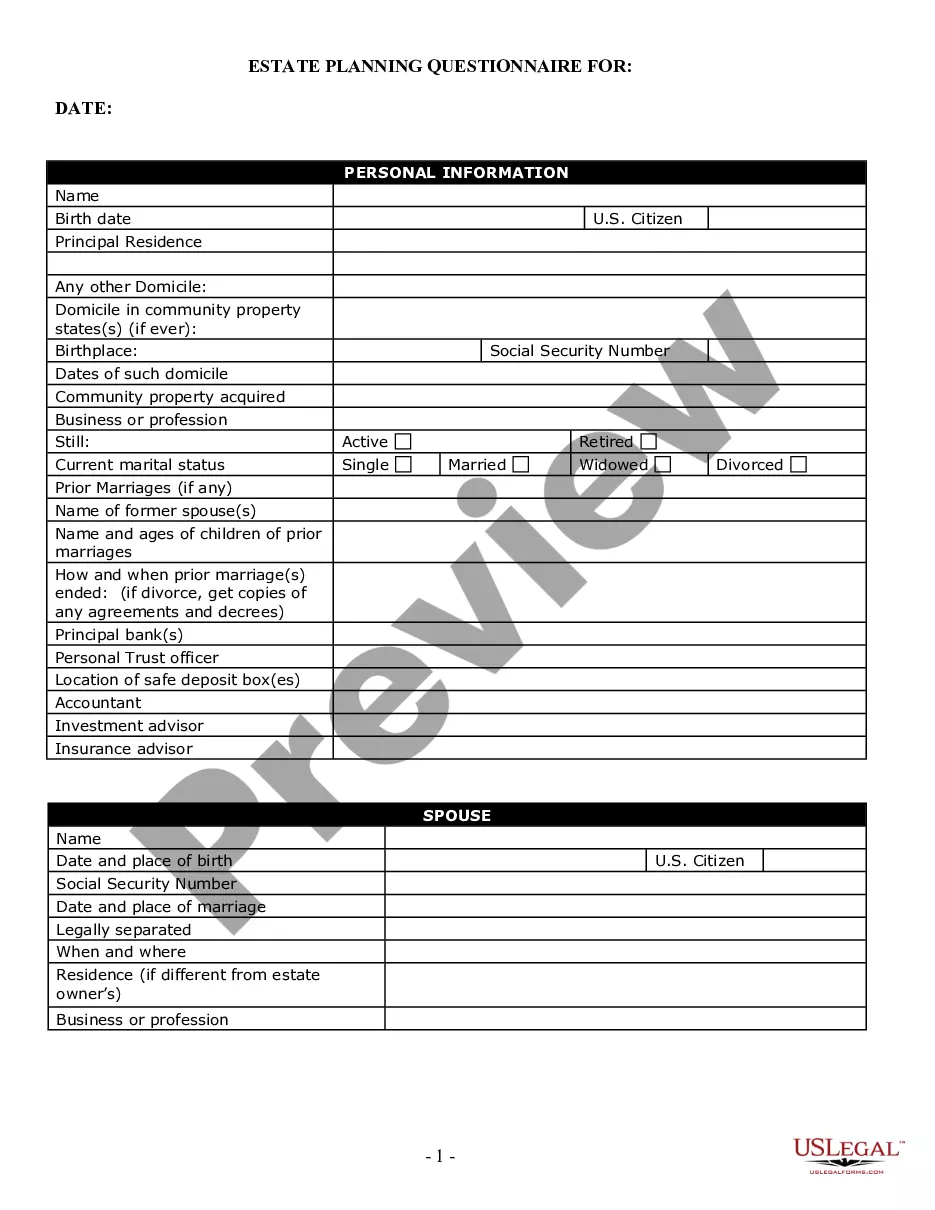
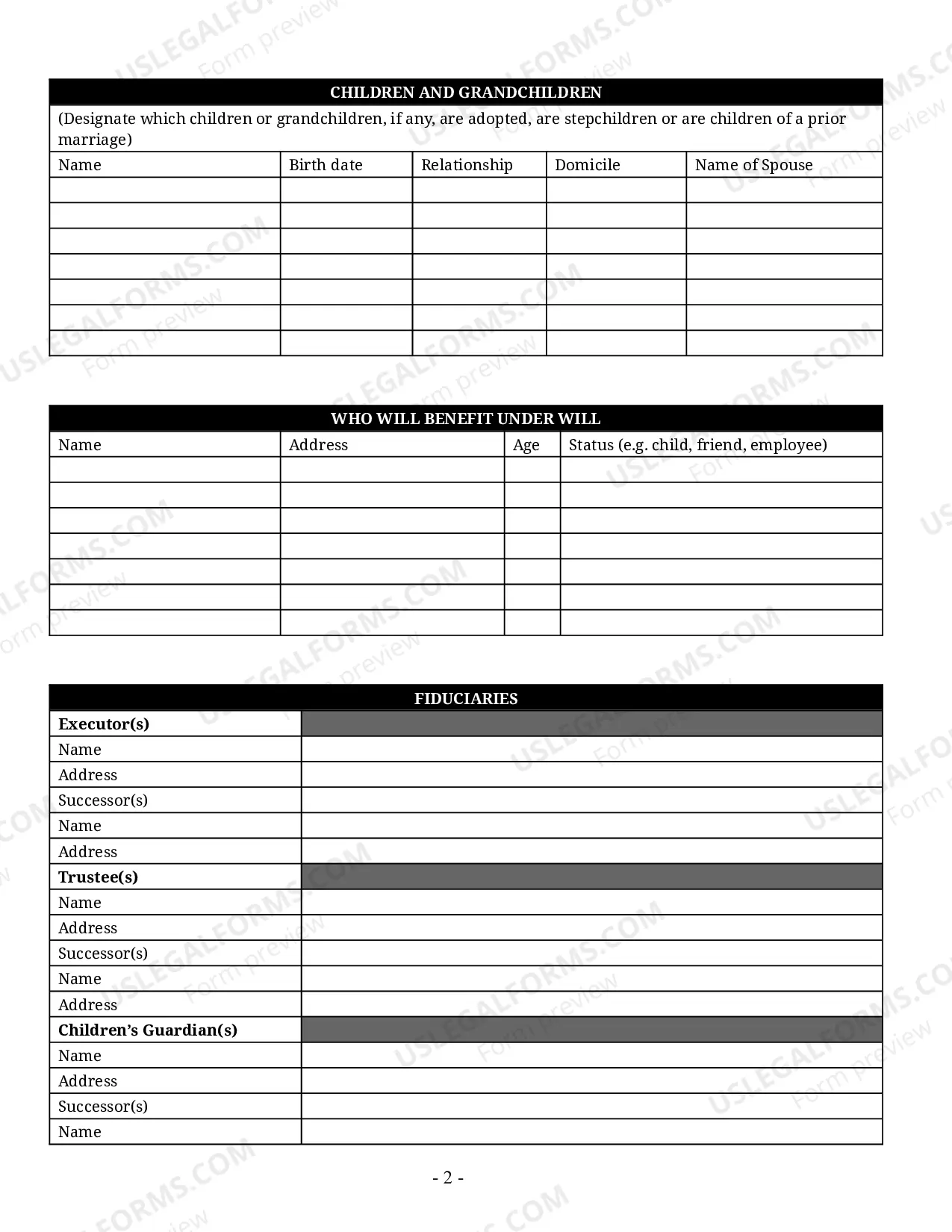
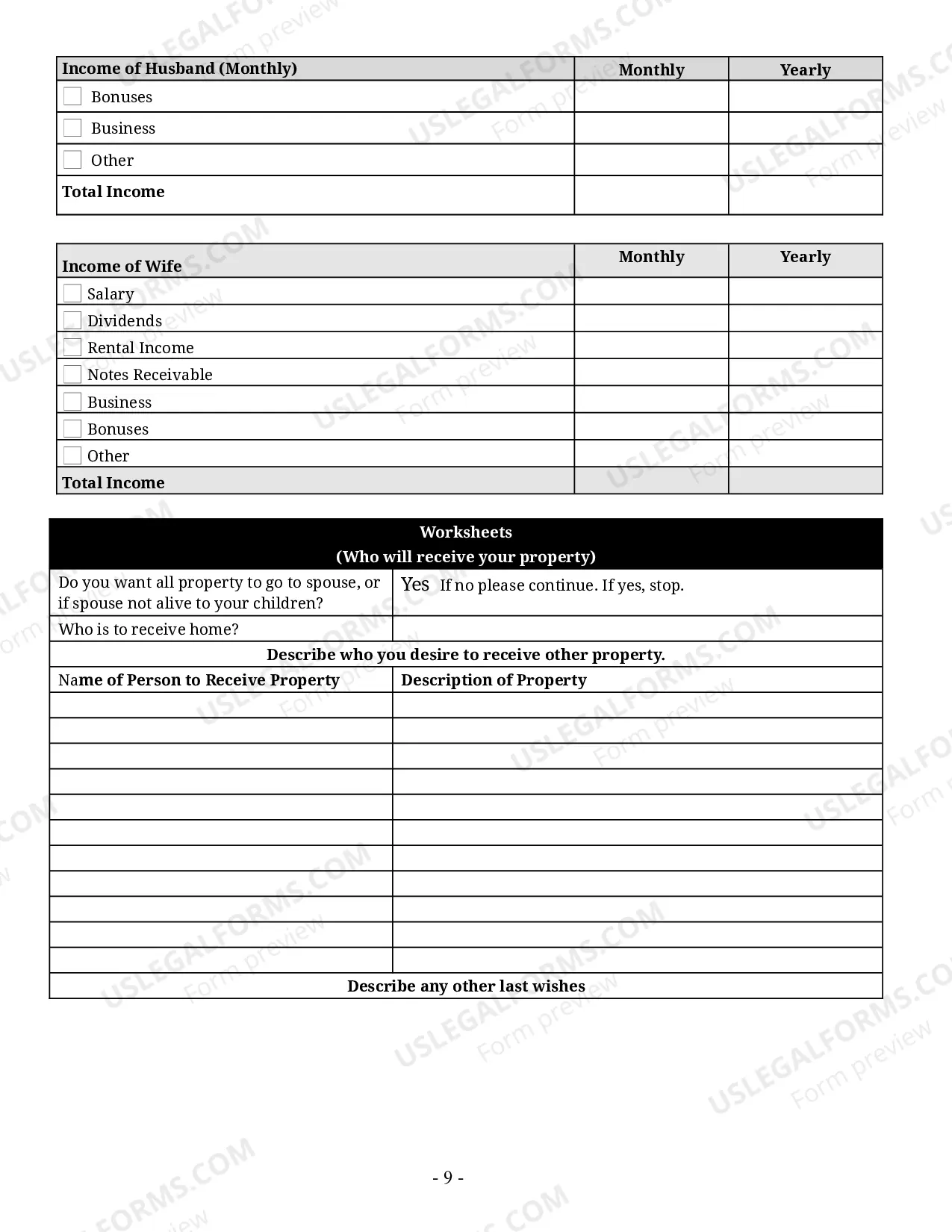
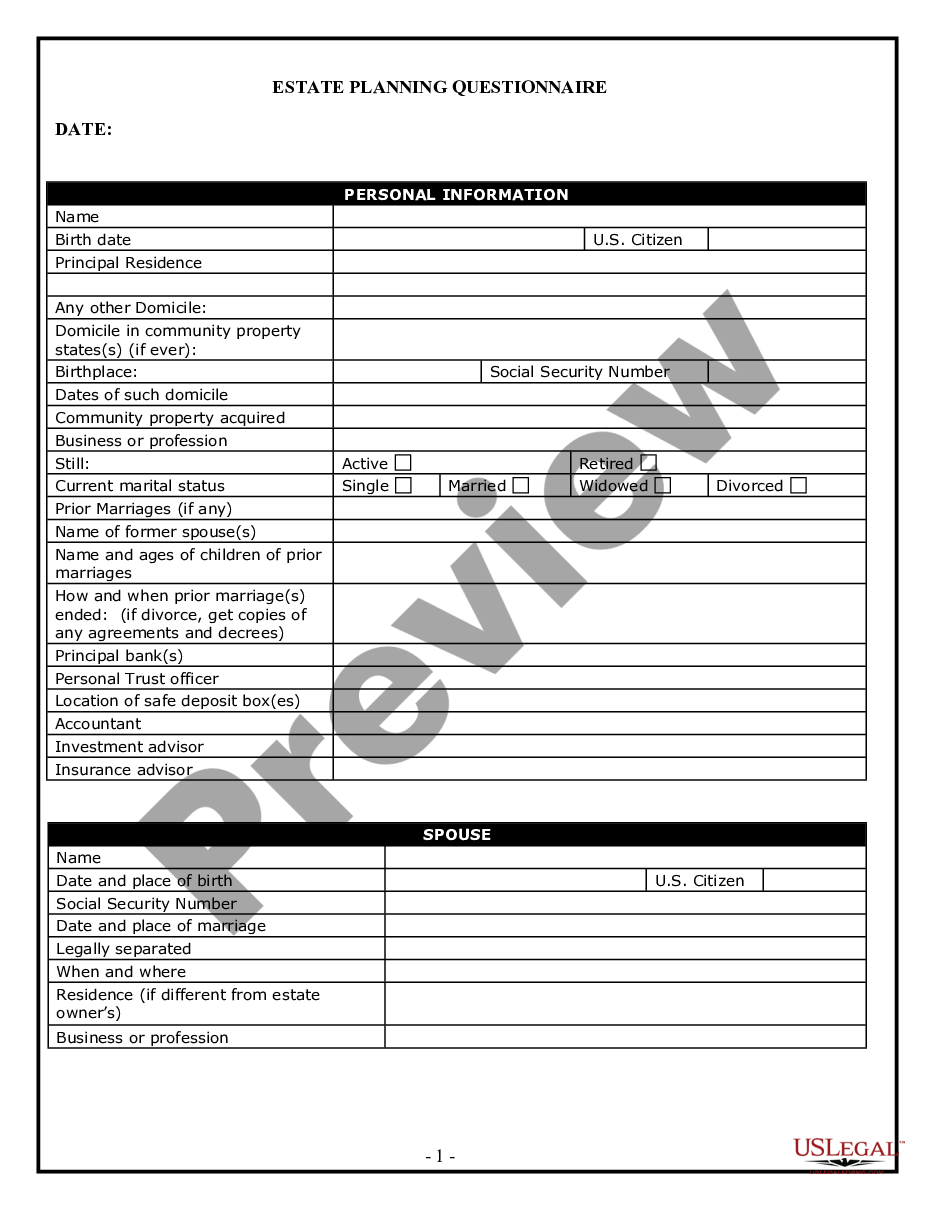
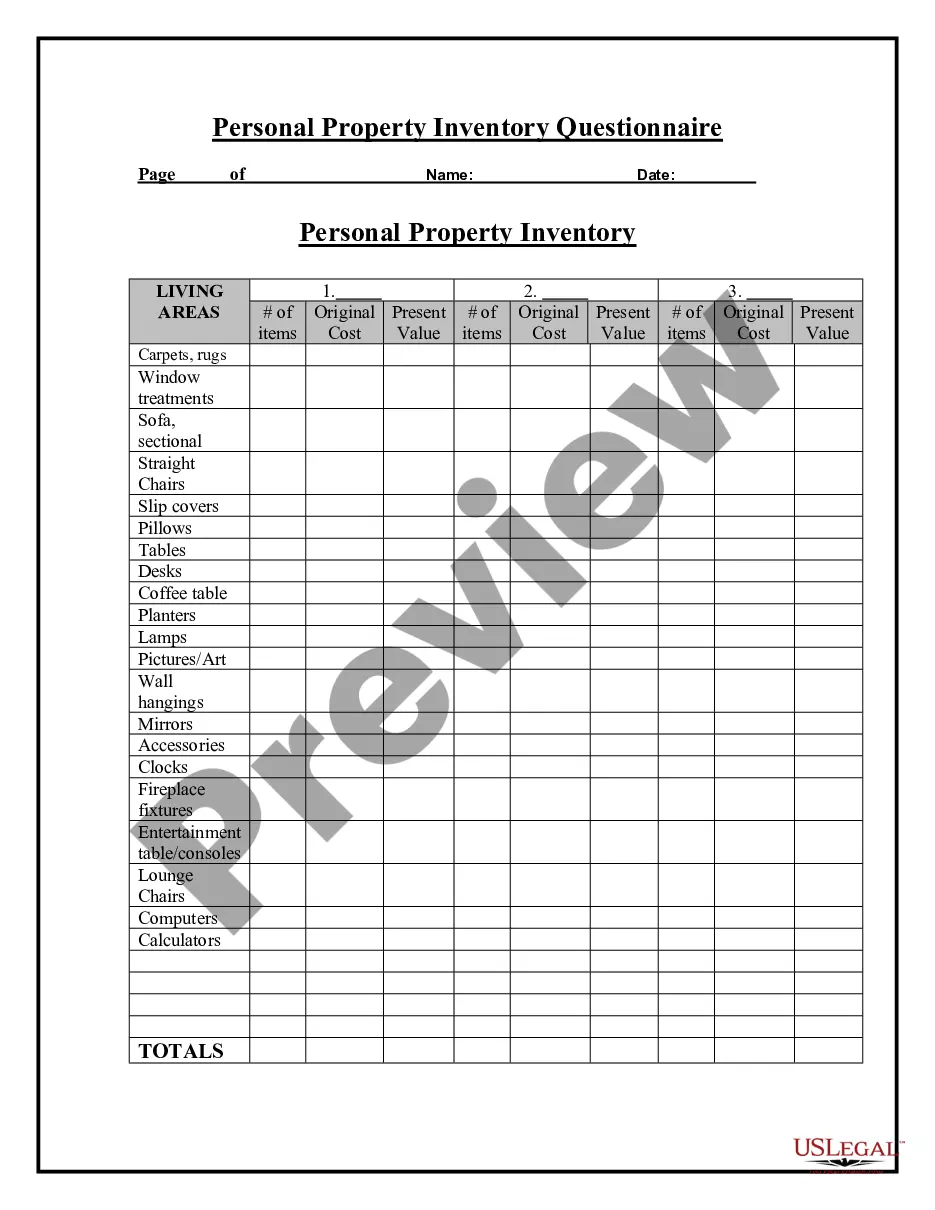
The Estate Planning Questionnaire and Worksheets help individuals gather important personal and financial information needed for effective estate planning. This form is distinct from other estate planning documents as it serves primarily to collect information rather than to establish legal directives. It is helpful for client interviews and allows individuals to assess their overall financial situation concerning their estate plan.
Main sections of this form
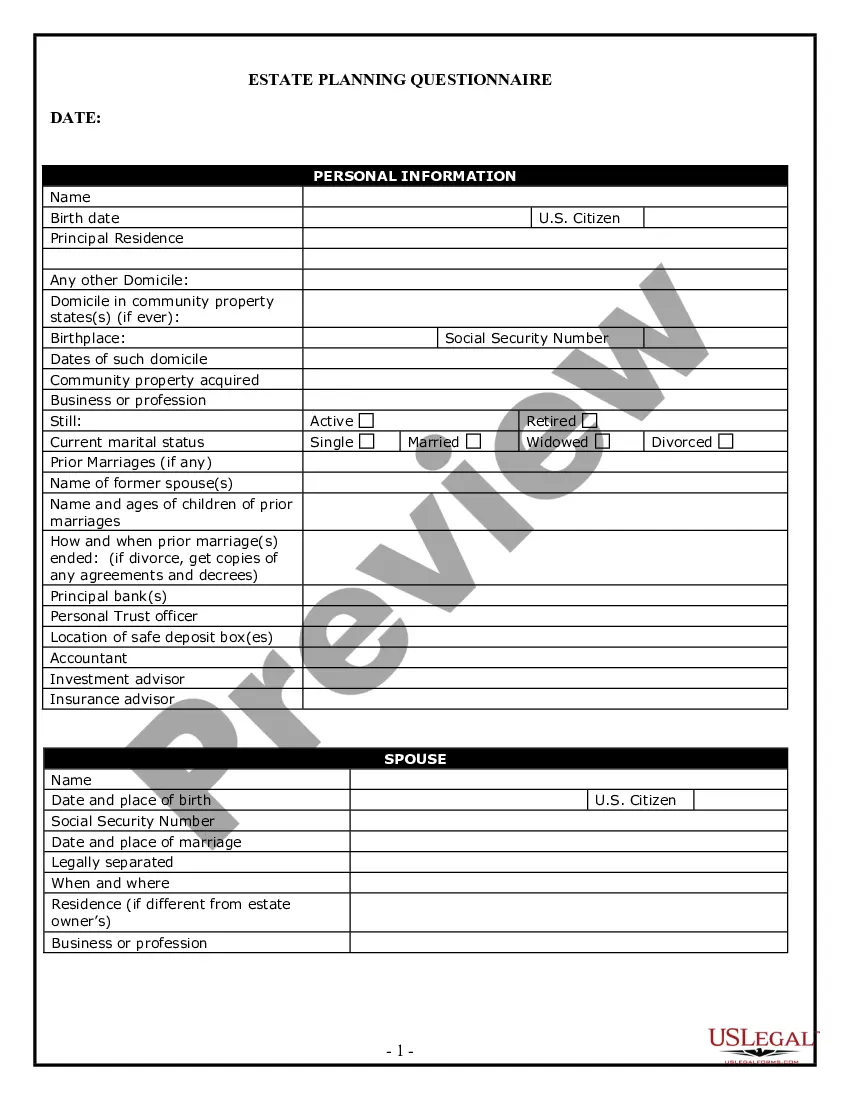
- Personal information section to capture essential details about the individual.
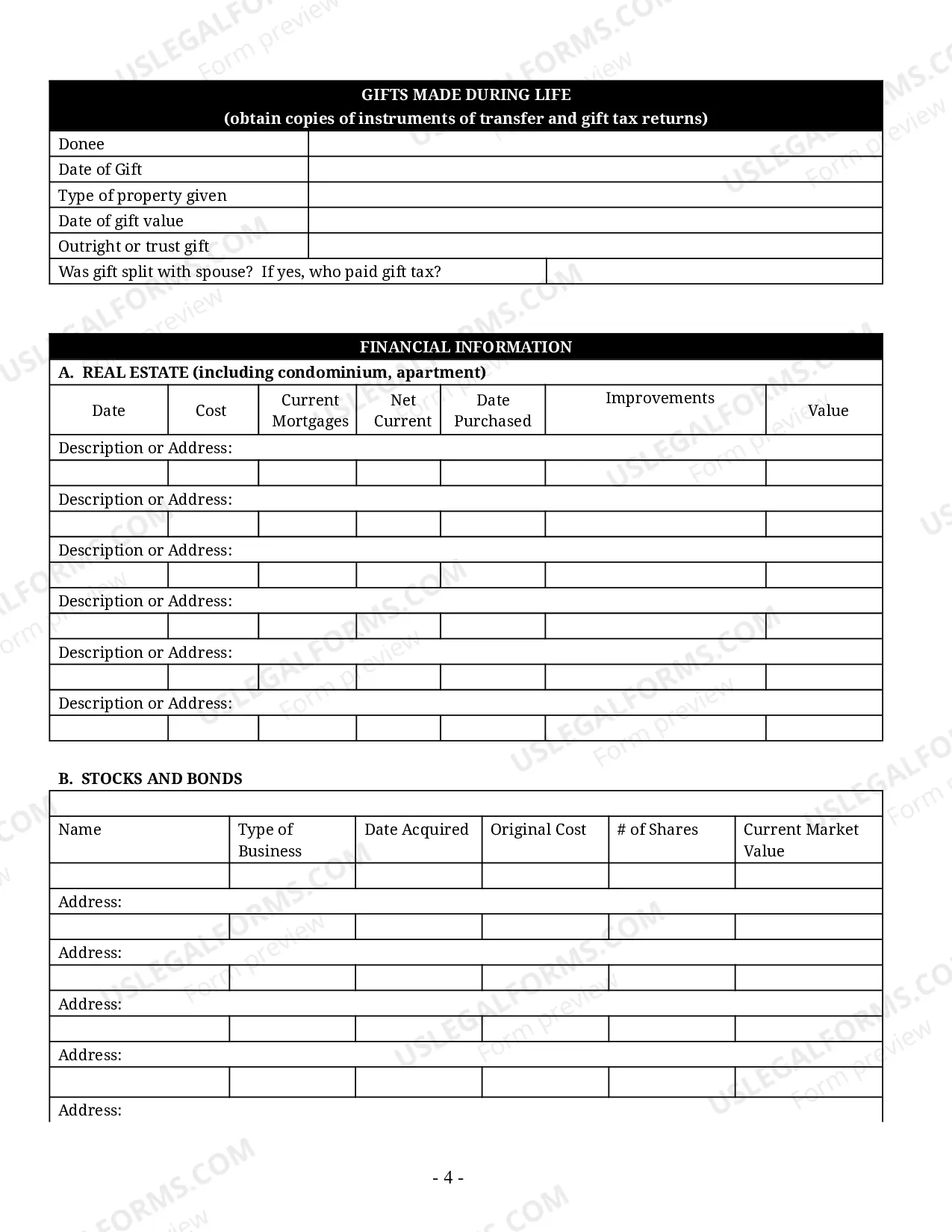
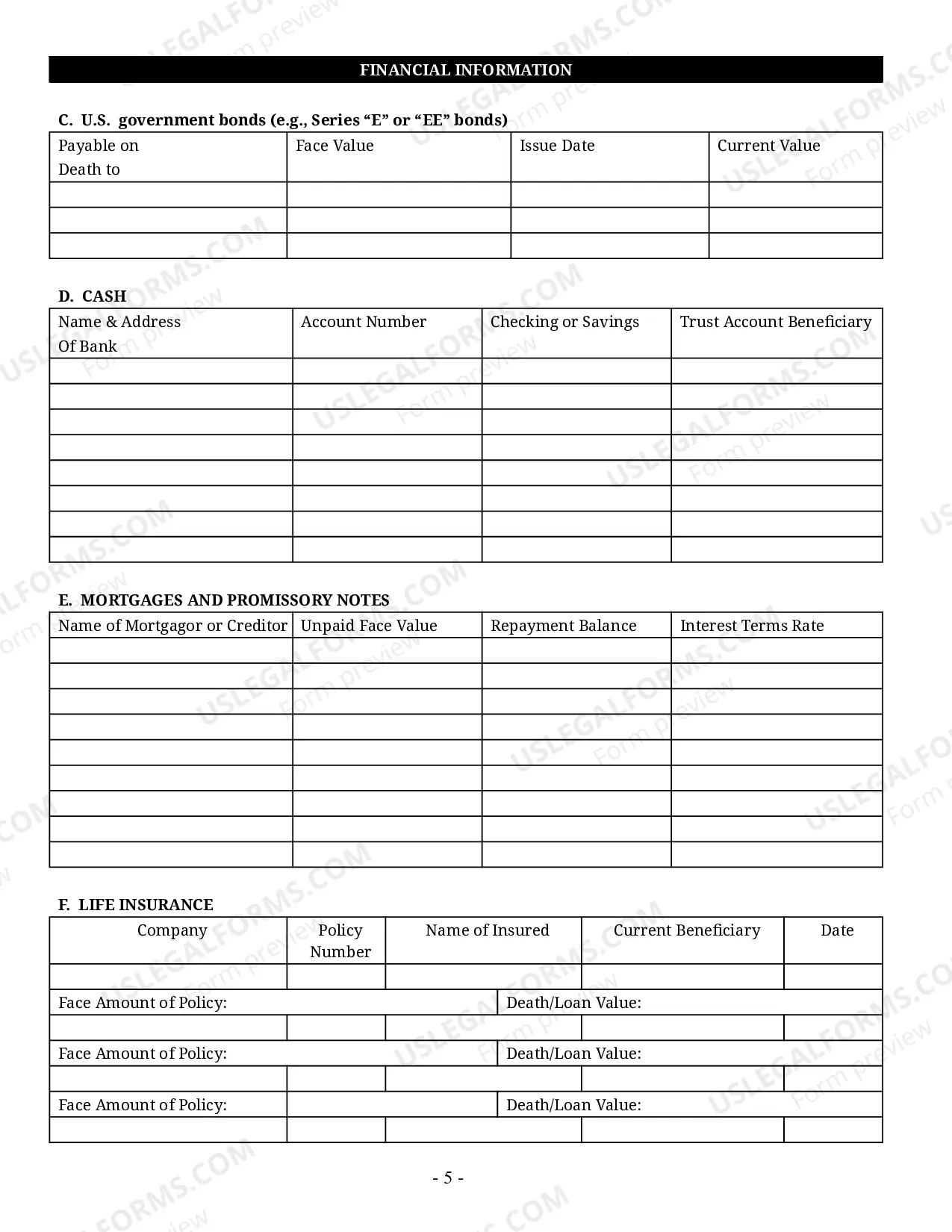
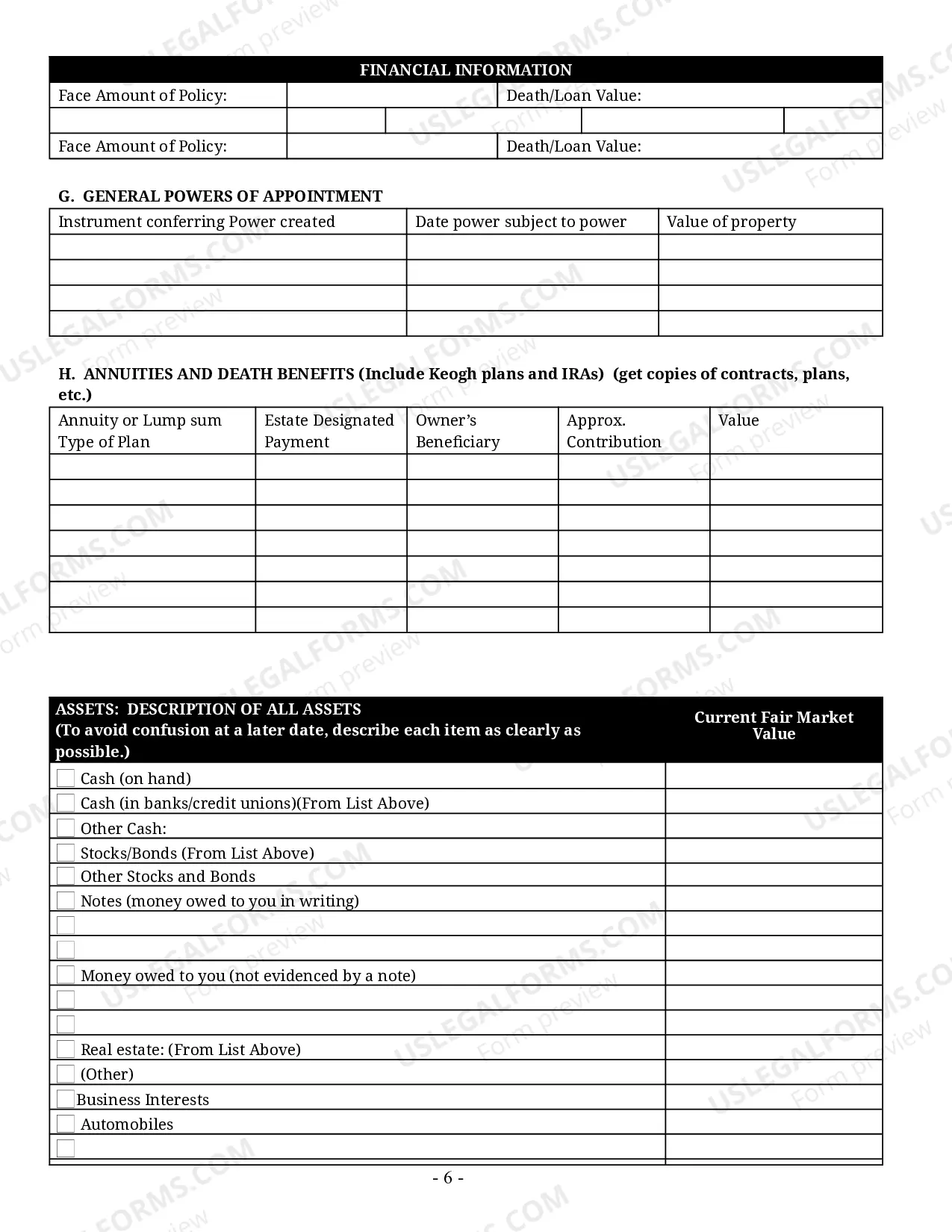
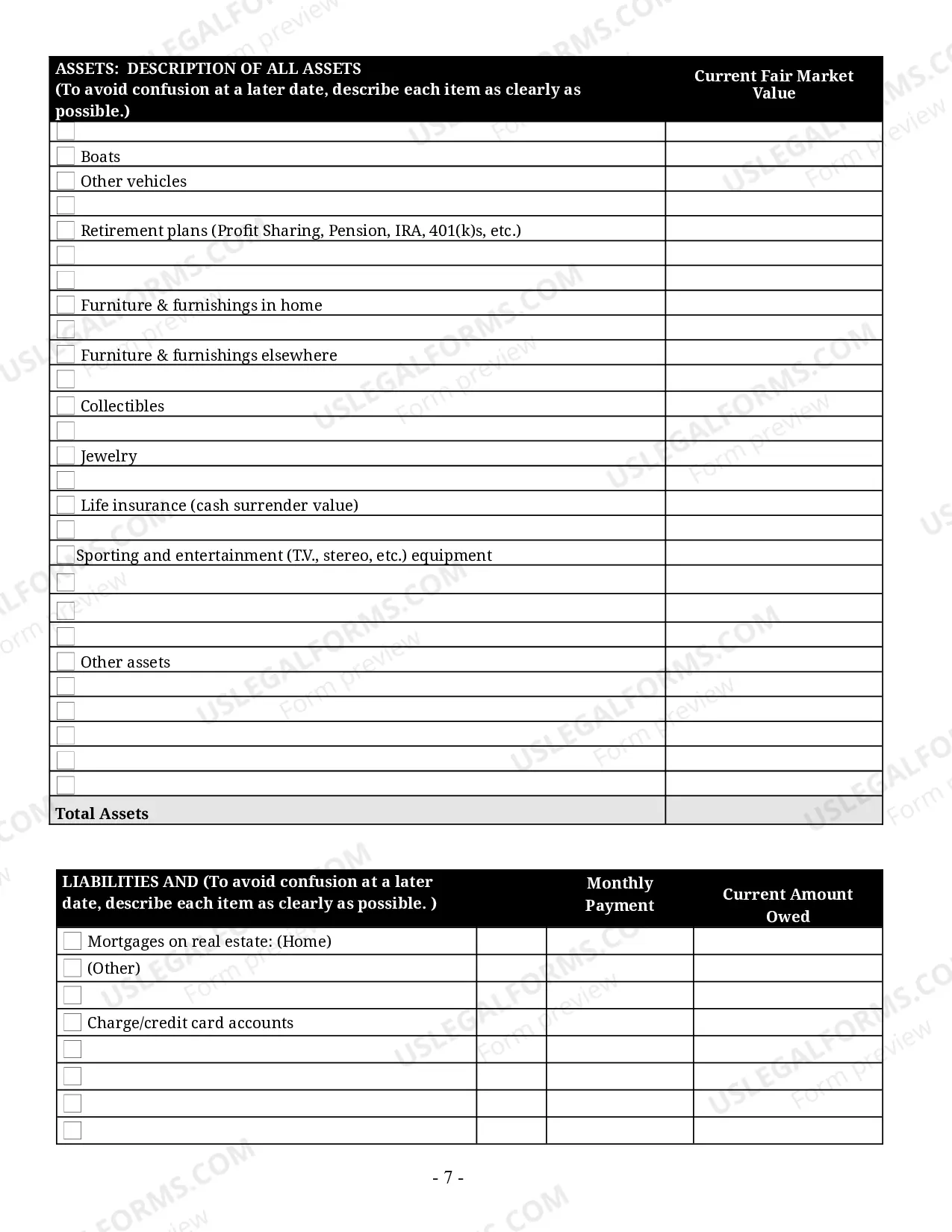
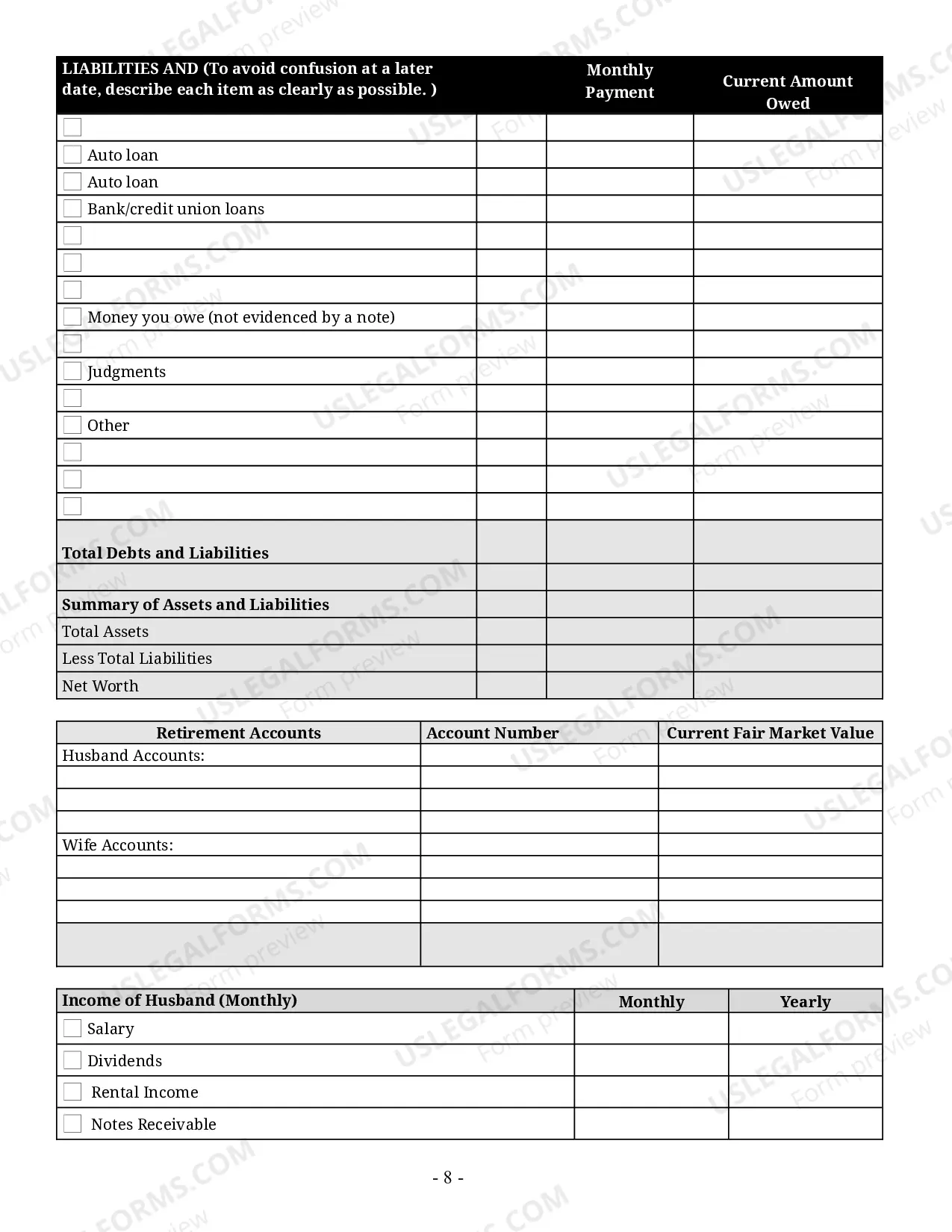
- Financial information section for documenting assets, liabilities, and income.
- Questions formatted to facilitate discussions during client interviews.
- Worksheets designed to summarize financial situations for comprehensive planning.




Common use cases
This form should be used when an individual or a legal professional needs to organize key information related to estate planning. It is particularly useful during initial estate planning sessions, for estate planning workshops, or as a preliminary tool for individuals looking to clarify their financial status before seeking legal assistance.
Who needs this form
- Individuals planning their estate.
- Legal professionals conducting client interviews.
- Financial advisors helping clients with estate planning.
- Anyone wanting to assess their financial situation related to future planning.
Steps to complete this form
- Begin by providing personal identification details such as name, address, and contact information.
- Answer questions related to financial assets, including real estate, bank accounts, and investments.
- Document any existing liabilities, such as debts or loans.
- Review each section carefully to ensure thoroughness and accuracy.
- Use the worksheets to summarize and clarify overall financial status for estate planning discussions.
Does this document require notarization?
This form does not typically require notarization unless specified by local law. It serves as an informational gathering tool rather than a legally binding document.
Get your form ready online
Our built-in tools help you complete, sign, share, and store your documents in one place.
Make edits, fill in missing information, and update formatting in US Legal Forms—just like you would in MS Word.
Download a copy, print it, send it by email, or mail it via USPS—whatever works best for your next step.
Sign and collect signatures with our SignNow integration. Send to multiple recipients, set reminders, and more. Go Premium to unlock E-Sign.
If this form requires notarization, complete it online through a secure video call—no need to meet a notary in person or wait for an appointment.
We protect your documents and personal data by following strict security and privacy standards.

Make edits, fill in missing information, and update formatting in US Legal Forms—just like you would in MS Word.

Download a copy, print it, send it by email, or mail it via USPS—whatever works best for your next step.

Sign and collect signatures with our SignNow integration. Send to multiple recipients, set reminders, and more. Go Premium to unlock E-Sign.

If this form requires notarization, complete it online through a secure video call—no need to meet a notary in person or wait for an appointment.

We protect your documents and personal data by following strict security and privacy standards.
Avoid these common issues
- Omitting crucial financial information or assets.
- Rushing through personal information sections.
- Failing to update the questionnaire after significant life changes.
- Neglecting to review the completed form before discussions with legal or financial advisors.
Why complete this form online
- Convenient access anytime to complete at your own pace.
- Edit and update responses as financial situations evolve.
- Reliability of using a professionally drafted questionnaire.
- Securely store your information for future planning sessions.
Key takeaways
- The Estate Planning Questionnaire helps organize vital personal and financial information.
- It is ideal for personal use or as part of a client consultation process.
- Completing the form can streamline conversations with legal professionals about estate planning needs.
Looking for another form?
Form popularity
FAQ
Fill out your attorney's intake questionnaire. Gather your financial documents. Bring copies of your current estate plan documents. Divorce agreements, premarital agreements, and other relevant contracts. Choose your executors and health care agents.
Creating an estate plan is a lot like getting into better shape. Step 1: Sign a will. Step 2: Name beneficiaries. Step 3: Dodge estate taxes. Step 4: Leave a letter. Step 5: Draw up a durable power of attorney. Step 6: Create an advance health care directive.
A Last Will and Testament. When it comes to estate planning, having a last will and testament is likely the first thing that will come to mind. A Document Granting Power of Attorney. An Advance Medical Directive. Revocable Living Trust.
Step 1: Create a checklist of important documents (and their locations) Step 2: List the names and contact information of key associates. Step 3: Catalog your digital asset inventory. Step 4: Ensure all documents are organized and accessible.
More Than a Last Will. Itemize Your Inventory. Follow with Non-Physical Assets. Assemble a List of Debts. Make a Memberships List. Make Copies of Your Lists. Review Your Retirement Account. Update Your Insurance.
This questionnaire provides for the preparation of your Will. Each individual should complete a questionnaire even if a husband and wife are both making Wills. GLOSSARY OF TERMS. BENEFICIARY: Any individual(s), church or organization chosen to receive your assets after death.
In Montana, you can make a living trust to avoid probate for virtually any asset you ownreal estate, bank accounts, vehicles, and so on. You need to create a trust document (it's similar to a will), naming someone to take over as trustee after your death (called a successor trustee).
Bank accounts. Brokerage or investment accounts. Retirement accounts and pension plans. A life insurance policy.