South Carolina RECEIVING A FIREARM WITH INTENT TO COMMIT AN OFFENSE
Understanding this form
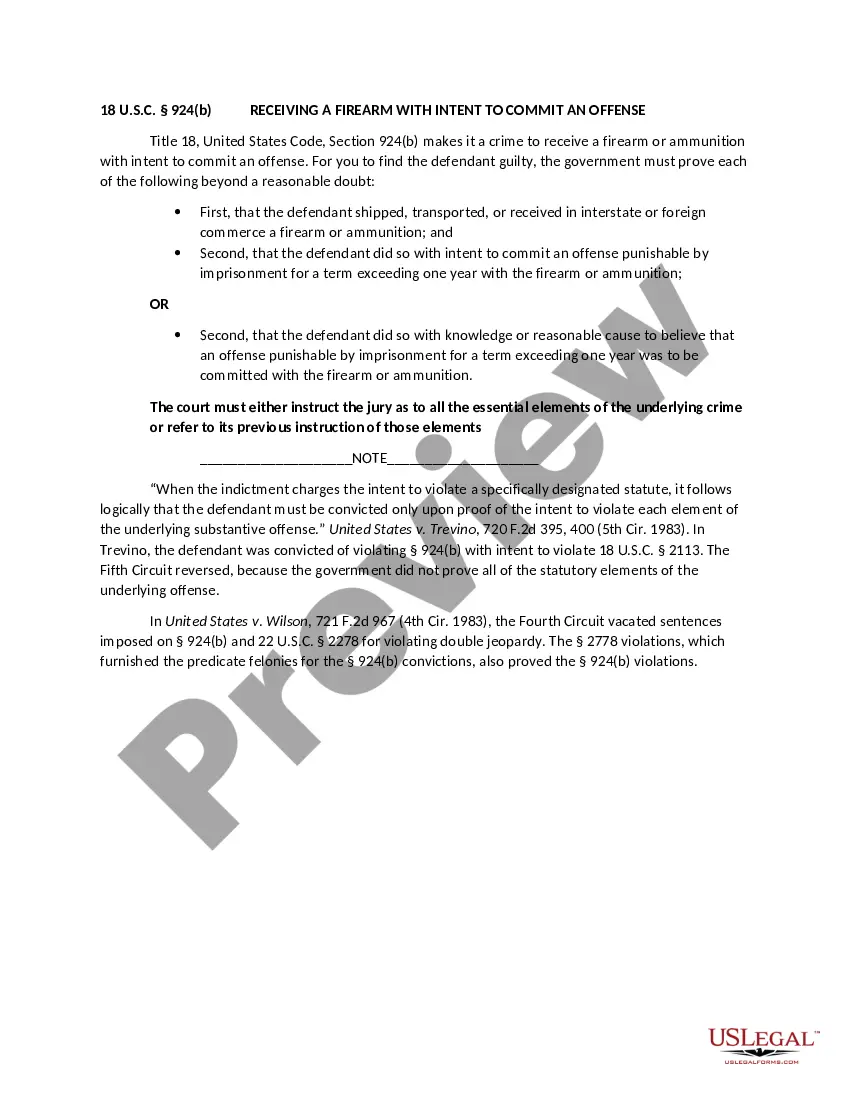
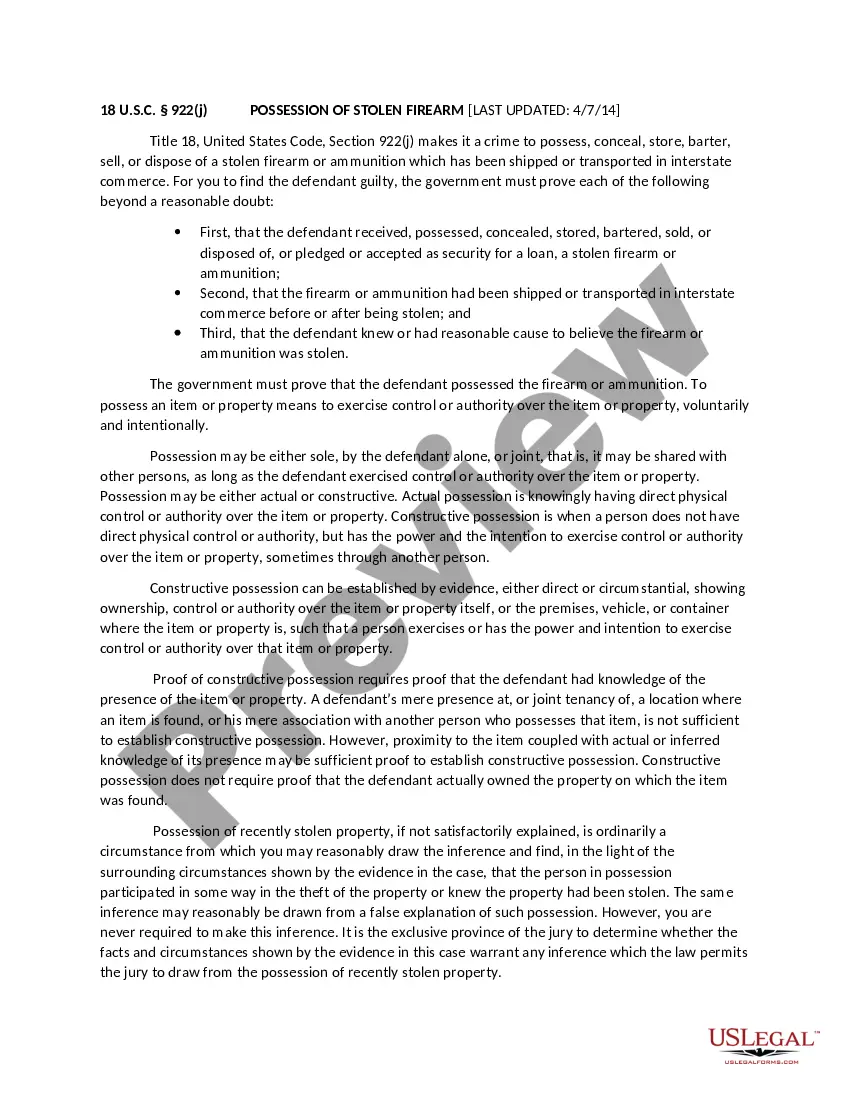
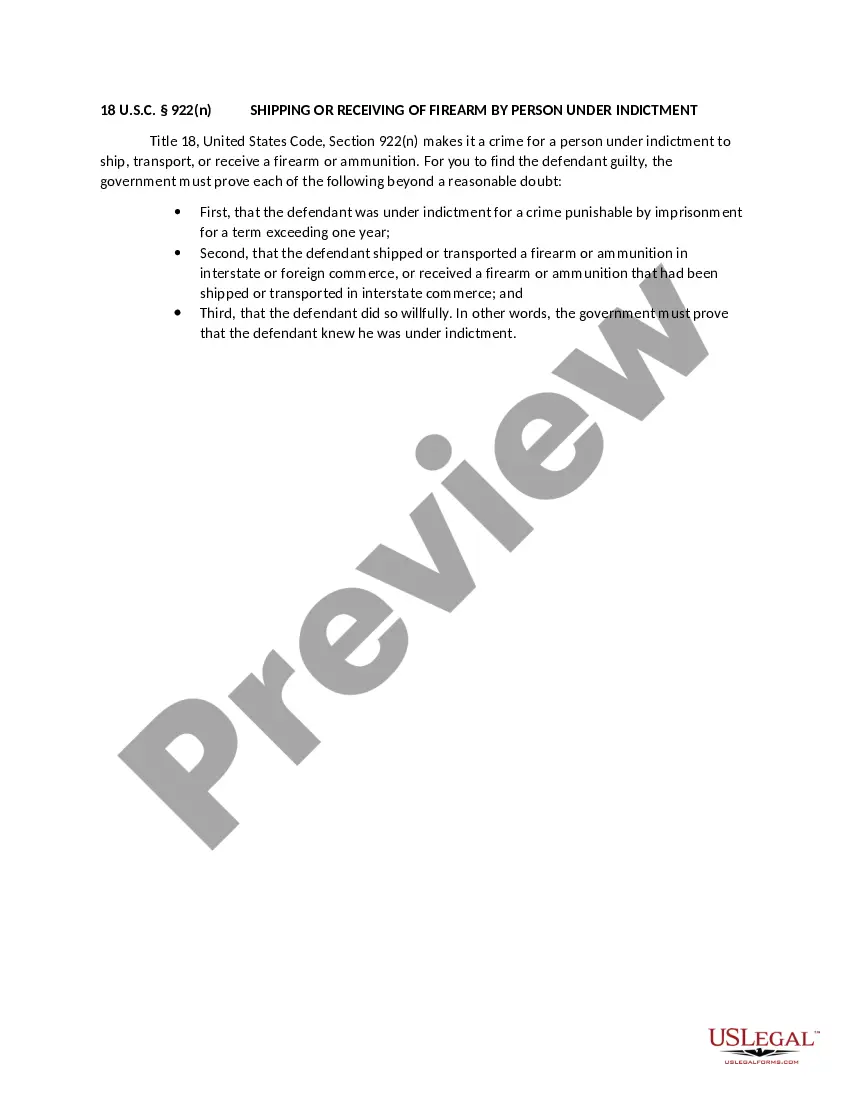
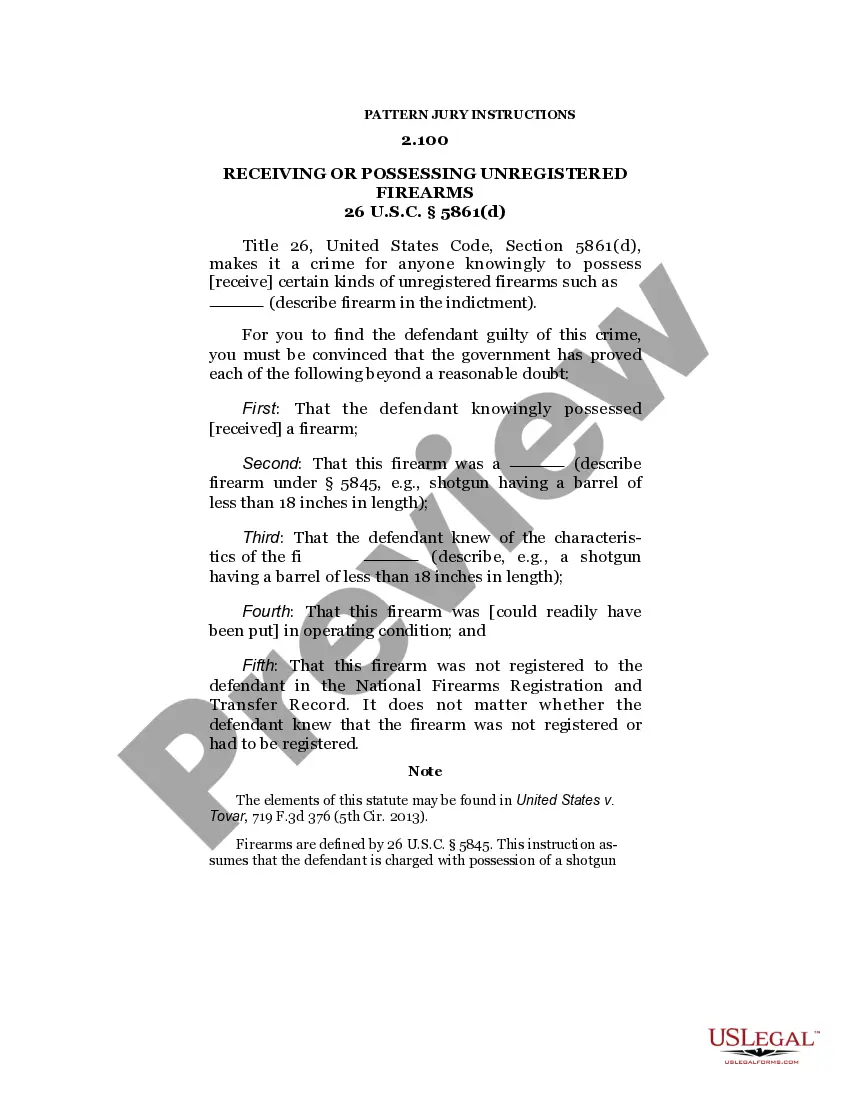
This form, titled "Receiving a Firearm with Intent to Commit an Offense," is a pattern jury instruction used in federal criminal cases in South Carolina. It provides guidance on the legal standards necessary for conviction under Title 18, United States Code, Section 924(b). This form is specifically designed for jury instructions, marking it distinct from standard legal forms related to firearm possession. It ensures that jurors understand the criteria for determining a defendant's guilt in cases involving firearms intended for illegal activities.
Form components explained
- Definition of the offense under Title 18, U.S.C. §924(b).
- Essential elements that the government must prove to secure a conviction.
- Details on intent and knowledge regarding the underlying crime.
- Reference to related legal cases that support the instructions provided.
- Instructions for jurors on evaluating the evidence presented.
Common use cases
This form is utilized during jury trials in federal court when a defendant is accused of receiving a firearm or ammunition with intent to commit a serious crime. It is critical in guiding jurors on the necessary legal standards and definitions they must consider when deliberating on their verdict regarding such offenses.
Who can use this document
- Federal judges presiding over criminal trials involving firearm offenses.
- Prosecutors seeking to provide the jury with clear legal instructions.
- Defense attorneys aiming to understand the juryâs instructions regarding elements of the charge.
- Jurors needing a comprehensive understanding of the laws governing firearm-related offenses.
Instructions for completing this form
- Identify the key elements of the offense as outlined in Title 18, U.S.C. §924(b).
- Ensure that the jurors are instructed on both intent and knowledge regarding the commission of underlying crimes.
- Reference pertinent cases to substantiate legal standards and interpretations.
- Review the complete instructions to guarantee clarity and completeness.
- Present this form in the jury trial proceedings at the appropriate stage.
Is notarization required?
This form usually doesn’t need to be notarized. However, local laws or specific transactions may require it. Our online notarization service, powered by Notarize, lets you complete it remotely through a secure video session, available 24/7.
Get your form ready online
Our built-in tools help you complete, sign, share, and store your documents in one place.
Make edits, fill in missing information, and update formatting in US Legal Forms—just like you would in MS Word.
Download a copy, print it, send it by email, or mail it via USPS—whatever works best for your next step.
Sign and collect signatures with our SignNow integration. Send to multiple recipients, set reminders, and more. Go Premium to unlock E-Sign.
If this form requires notarization, complete it online through a secure video call—no need to meet a notary in person or wait for an appointment.
We protect your documents and personal data by following strict security and privacy standards.

Make edits, fill in missing information, and update formatting in US Legal Forms—just like you would in MS Word.

Download a copy, print it, send it by email, or mail it via USPS—whatever works best for your next step.

Sign and collect signatures with our SignNow integration. Send to multiple recipients, set reminders, and more. Go Premium to unlock E-Sign.

If this form requires notarization, complete it online through a secure video call—no need to meet a notary in person or wait for an appointment.

We protect your documents and personal data by following strict security and privacy standards.
Mistakes to watch out for
- Failing to define key legal terms such as "intent" and "knowledge."
- Neglecting to reference relevant case law that supports the instructions.
- Providing incomplete instructions that may confuse jurors regarding their duty.
Why use this form online
- Convenient access to an accurate legal framework.
- Editability allows customization for specific cases.
- Reliability in following established legal guidelines.
- Immediate downloading for timely legal proceedings.
Legal use & context
- This form serves as a legal guideline for jury instructions in federal criminal cases related to firearm offenses.
- It helps ensure that jurors have a clear understanding of the legal thresholds for conviction.
- The form is based on federal law and should be utilized in accordance with the prevailing legal standards in South Carolina.
Summary of main points
- The form is crucial for addressing the intent behind receiving firearms with the potential for misuse.
- All aspects of proof and legal standards must be understood for effective use.
- Legal precedents provide essential context for jury instructions and case outcomes.
Looking for another form?





Form popularity
FAQ
South Carolina considers some weapons offenses to be misdemeanors, but most cases of illegal firearm possession are considered to be felonies. For example, the ?usual? case of illegal handgun possession is treated as a felony that is punishable by up to five years in prison.
SECTION 16-23-440. Discharging firearms at or into dwellings, structures, enclosures, vehicles or equipment; penalties. (A) It is unlawful for a person to discharge or cause to be discharged unlawfully firearms at or into a dwelling house, other building, structure, or enclosure regularly occupied by persons.
SECTION 16-3-10. "Murder" defined. "Murder" is the killing of any person with malice aforethought, either express or implied.
Section 16-17-735 - Persons impersonating officials or law enforcement officers; persons falsely asserting authority of law; offenses; punishment. (2) denies or impedes another in the exercise or enjoyment of any right, privilege, power, or immunity.
A person generally may not transport a handgun in a vehicle, except if he or she is: A holder of a concealable weapons permit (the handgun may be carried openly or concealed on or about the person);
In South Carolina, unlawful carrying of a pistol charge is a misdemeanor that carries up to a year in prison. Possession of a stolen pistol is a felony that can carry up to five years in prison.
Unlawfully carrying of a handgun is a Misdemeanor offense defined by SC Code § 16-23-50(A)(2). If convicted, a defendant may face up to 1 year in prison, a fine up to $2,000.00, or both. Additionally, the handgun must be confiscated by Law Enforcement.