Receiving or Possessing Unregistered Firearms
About this form
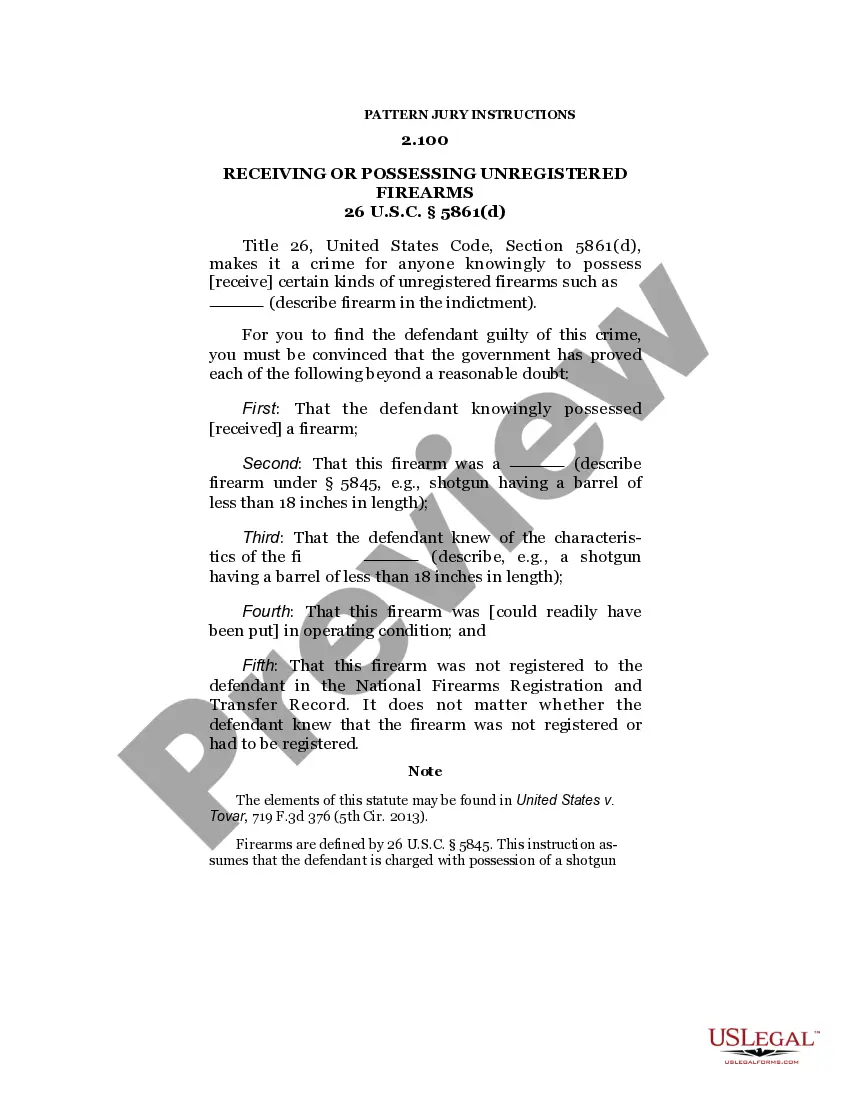
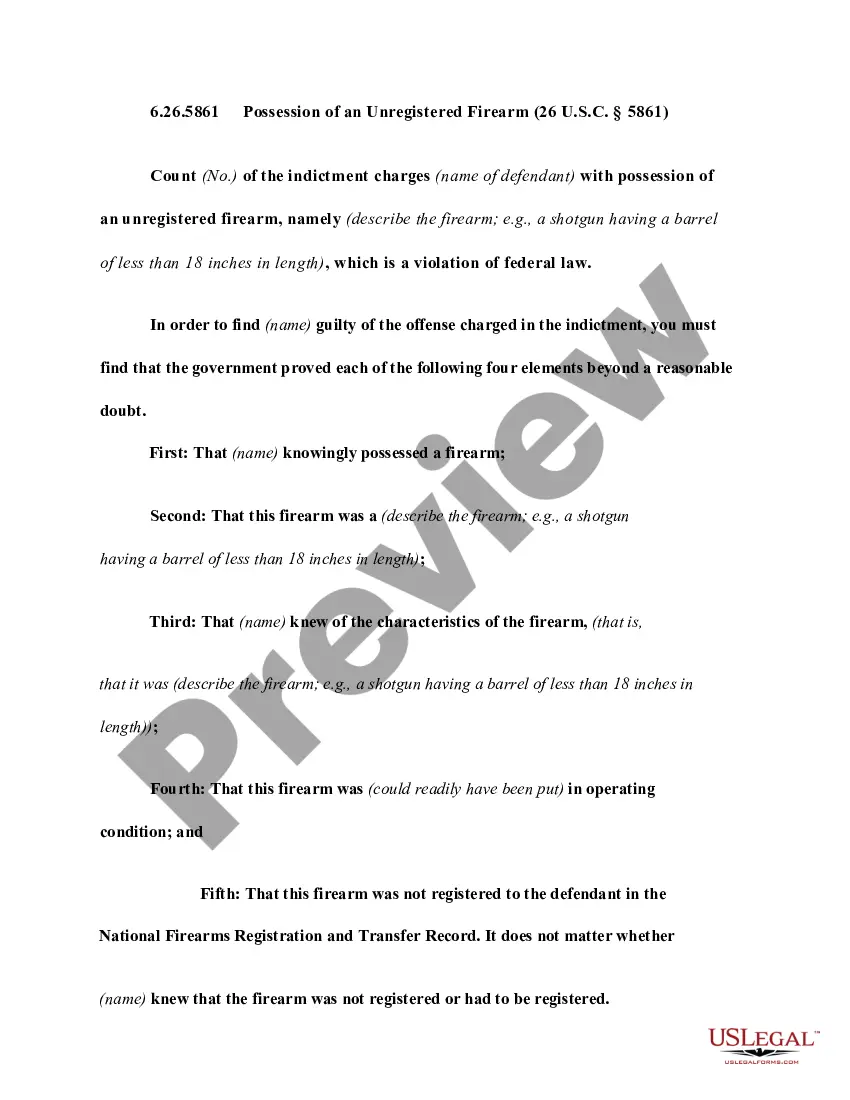
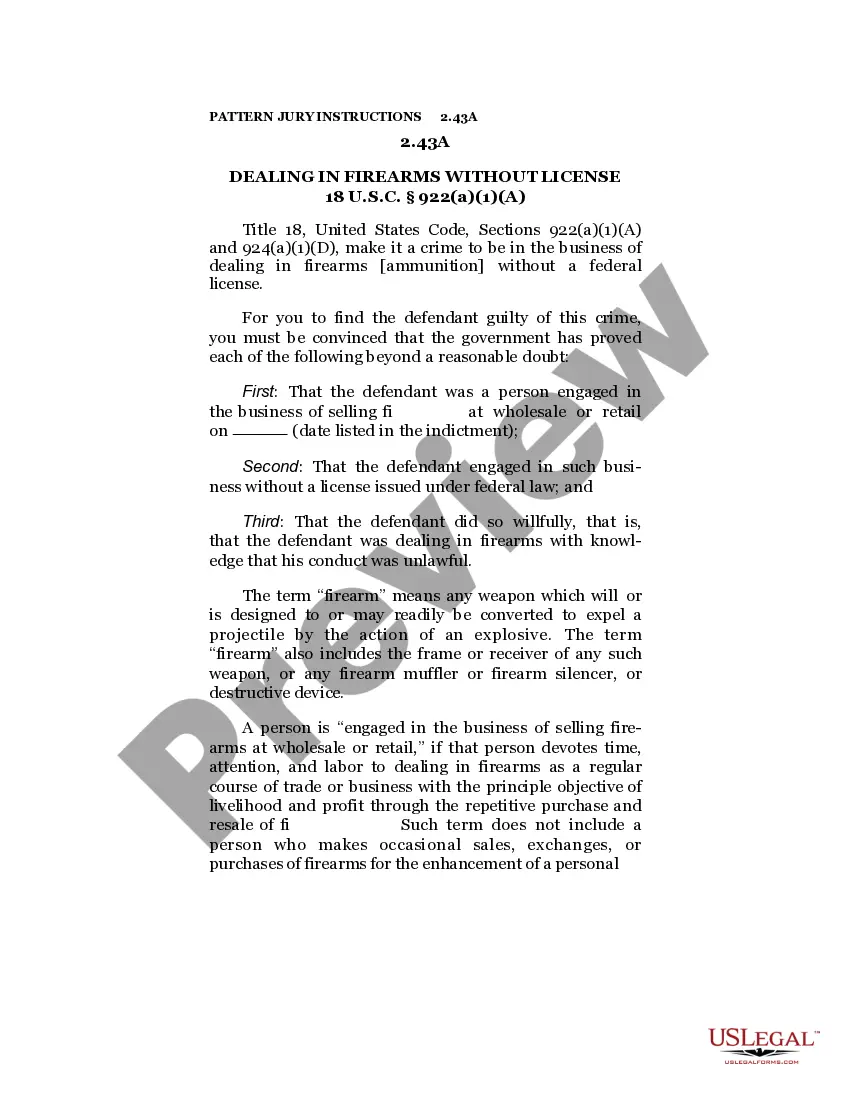
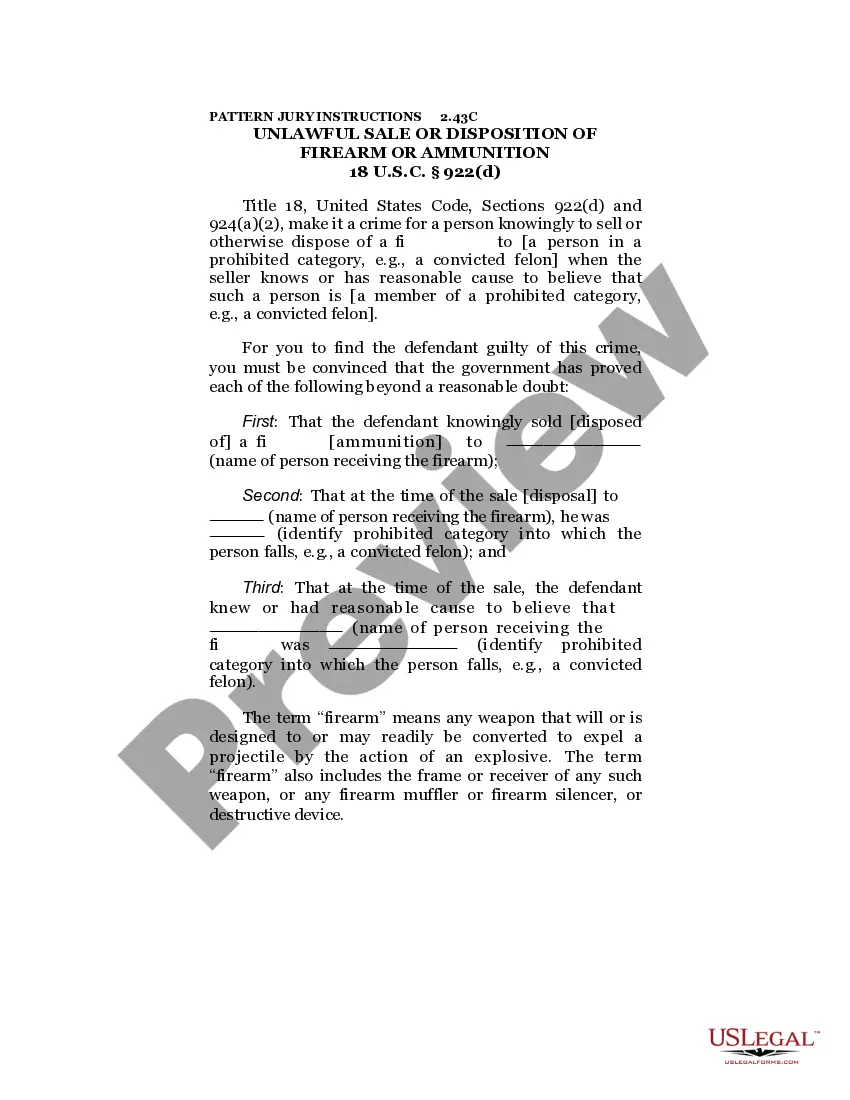
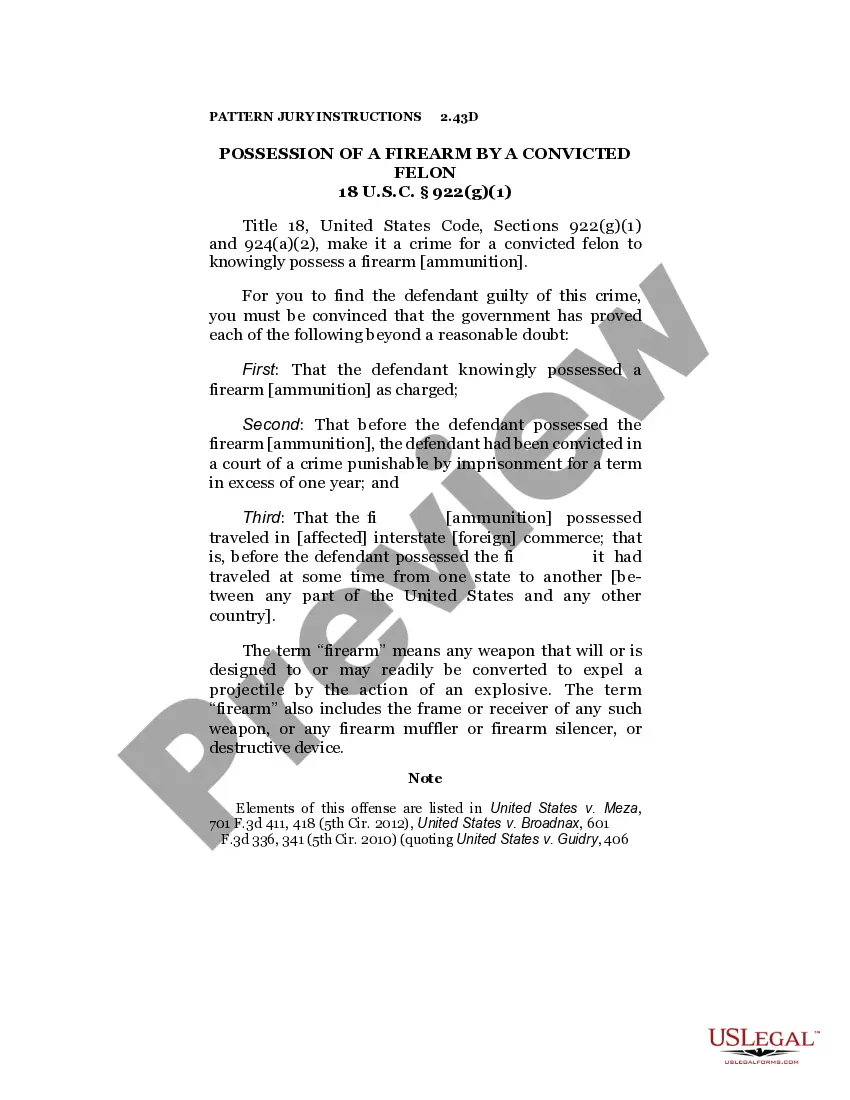
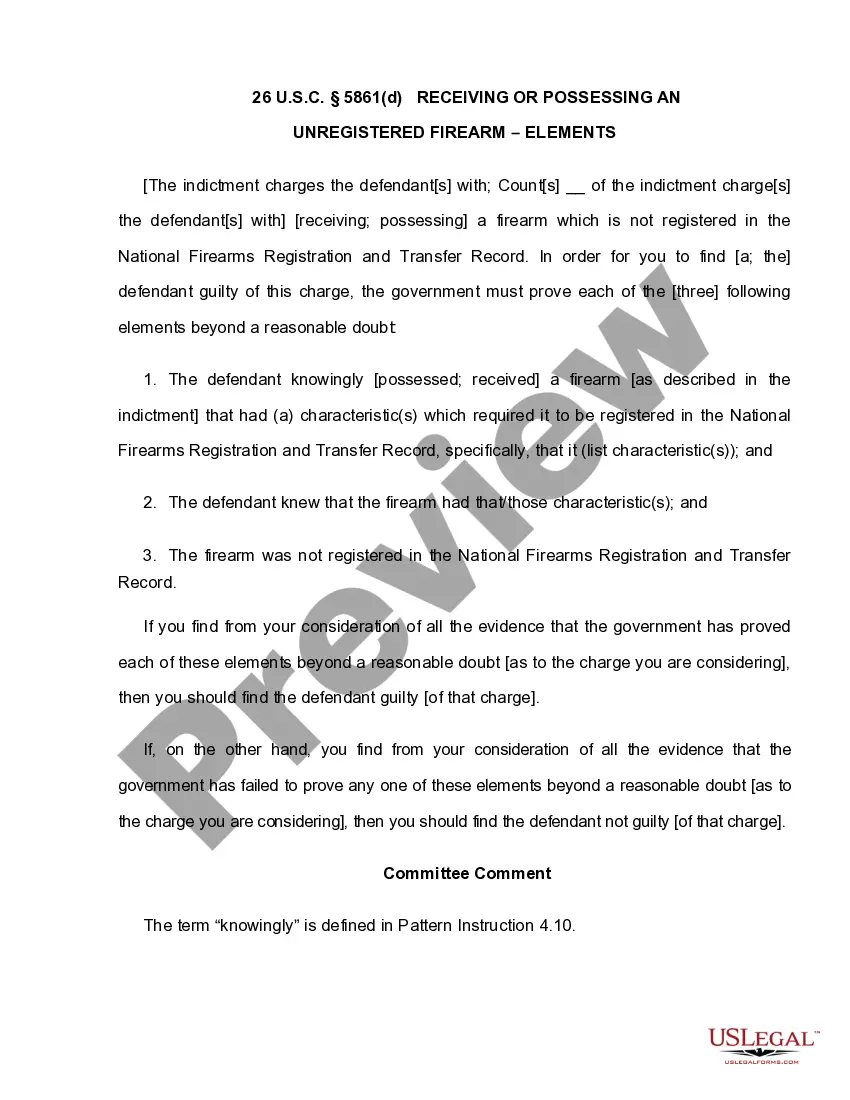
The Receiving or Possessing Unregistered Firearms form is a legal document that addresses the crime of possessing or receiving firearms that are not registered as required by federal law. This form outlines the specific elements needed to prove the offense under Title 26, U.S.C. Section 5861(d). It is designed for use in legal proceedings involving unregistered firearms, ensuring that all necessary legal criteria are met. This form differs from others related to firearms by focusing specifically on the legal implications of unregistered possession rather than general firearm transactions or ownership issues.
Key parts of this document
- Definition of unregistered firearms under federal law.
- Specific elements the government must prove for a conviction.
- Description of the firearm characteristics that constitute an offense.
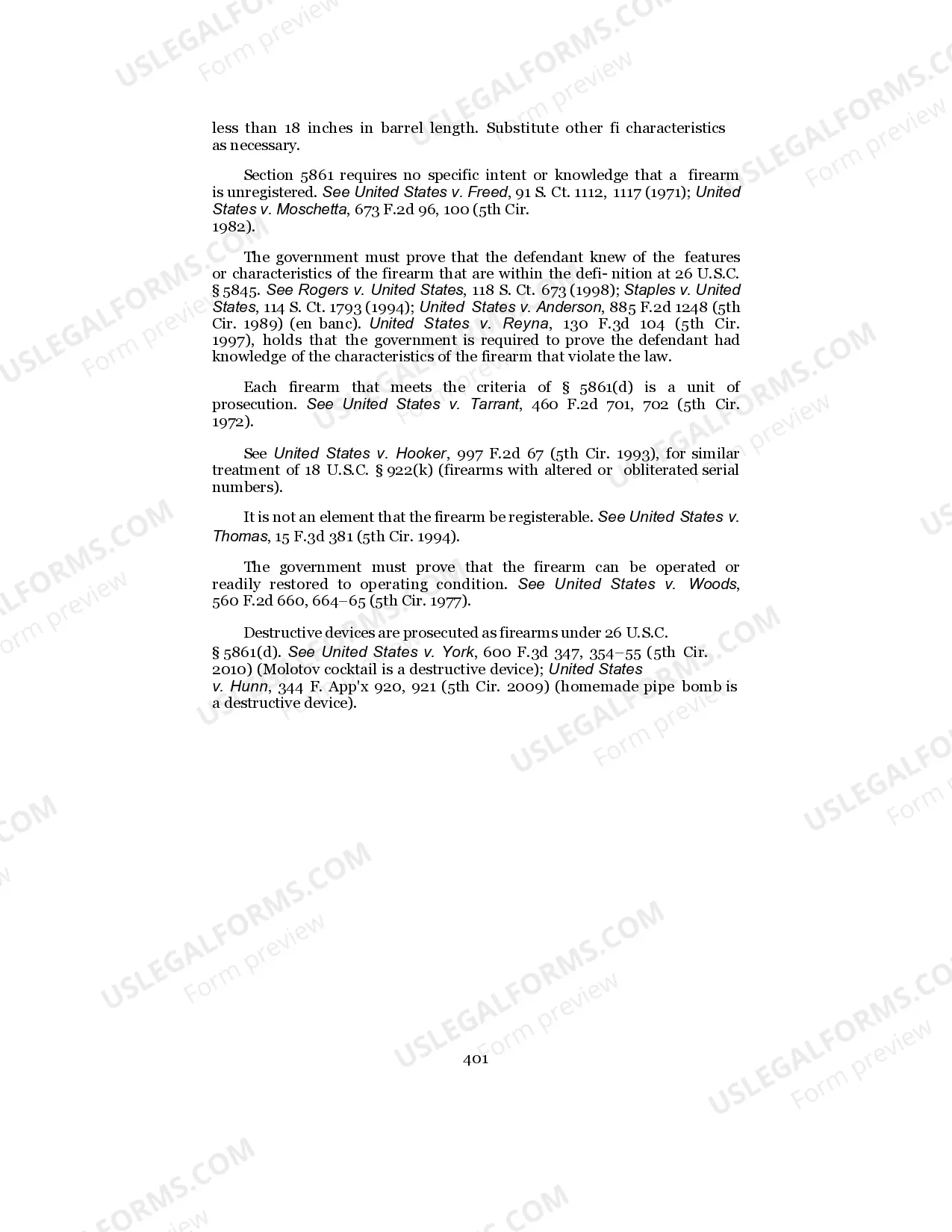
- Clarification of the defendant's knowledge required for a conviction.
- Legal precedents and case law that support the statute's enforcement.

When this form is needed
This form is necessary when an individual is facing charges related to the possession or receiving of firearms that are not registered according to federal law. It is applicable in cases where the defendant needs to understand the legal foundations of the charges, prepare a defense, or comply with court mandates regarding unregistered firearms.
Who can use this document
- Individuals charged with possession or receipt of unregistered firearms.
- Legal representatives advising defendants in firearms-related cases.
- Anyone seeking clarification on the legal implications of firearm possession laws.
Completing this form step by step
- Identify the type of firearm involved in the case.
- Review the elements required for proving possession under federal law.
- Gather evidence regarding the characteristics of the firearm.
- Assess the knowledge of the defendant concerning the firearm's registration status.
- Consult with legal counsel for guidance on legal strategies regarding defense.
Is notarization required?
Notarization is generally not required for this form. However, certain states or situations might demand it. You can complete notarization online through US Legal Forms, powered by Notarize, using a verified video call available anytime.
Get your form ready online
Our built-in tools help you complete, sign, share, and store your documents in one place.
Make edits, fill in missing information, and update formatting in US Legal Forms—just like you would in MS Word.
Download a copy, print it, send it by email, or mail it via USPS—whatever works best for your next step.
Sign and collect signatures with our SignNow integration. Send to multiple recipients, set reminders, and more. Go Premium to unlock E-Sign.
If this form requires notarization, complete it online through a secure video call—no need to meet a notary in person or wait for an appointment.
We protect your documents and personal data by following strict security and privacy standards.

Make edits, fill in missing information, and update formatting in US Legal Forms—just like you would in MS Word.

Download a copy, print it, send it by email, or mail it via USPS—whatever works best for your next step.

Sign and collect signatures with our SignNow integration. Send to multiple recipients, set reminders, and more. Go Premium to unlock E-Sign.

If this form requires notarization, complete it online through a secure video call—no need to meet a notary in person or wait for an appointment.

We protect your documents and personal data by following strict security and privacy standards.
Mistakes to watch out for
- Failing to accurately describe the firearm's characteristics in relation to federal definitions.
- Overlooking the requirement of proving knowledge of the firearm's registration status.
- Not considering relevant case law that may affect the case.
Benefits of using this form online
- Easy access to the latest legal templates drafted by licensed attorneys.
- Convenient download for quick use in legal proceedings.
- Customizable to meet specific case details and requirements.
Legal use & context
- The form outlines the federal laws surrounding unregistered firearms and the legal implications of violating these laws.
- It helps ensure that defendants understand what the prosecution must prove in a court of law.
- Filing or using the form correctly could have significant consequences for the defendant, highlighting the importance of legal accuracy.
What to keep in mind
- The form is crucial for those charged with firearm-related offenses under federal law.
- Understanding the key components and requirements can aid in legal defenses.
- The form's use is guided by federal statutes, but local regulations may apply.
Looking for another form?


Form popularity
FAQ
What is Unregistered Ammunition? D.C. Code § 7-2502.01 prohibits the possession or control of a firearm unless the holder has registered it with the Metropolitan Police Department (MPD). Violations can include jail time or fines, depending on what type of firearms are in question.
The punishment for possessing an unregistered firearm in public is up to a five-year prison time or up to a $10,000 fine. The penalties increase to up to a 15-year imprisonment and up to a $30,000 fine for an individual with a prior violent crime conviction.
What are the penalties for Unlawful Carrying a Weapon In Texas? Generally, unlawfully carrying a weapon in Texas is a class A misdemeanor. If convicted, individuals face up to 365 days in county jail and fines up to $4,000.
If a person is charged with possession of an unregistered firearm, they could face a maximum penalty of one year in jail and a maximum possible fine of $2,500 or both.
The penalty for misdemeanor unlawful possession of an unregistered firearm is up to one year in jail and a $1,000 fine for a first offense. For a second offense, it becomes a felony matter and the penalty jumps up to five years in prison and up to a $5,000 fine.
Penalties. Illegally carrying a firearm in Maryland is a misdemeanor. Penalties vary depending on the number of previous offenses: Penalties for first offenders include up to 3 years in jail and fines ranging from $250 to $2,500.
For the felony charge of carrying a pistol, the maximum penalty is five years of prison time; the maximum fine is $12,500, or both. For the felony offense of possession of a firearm by a person with a prior felony conviction, the maximum penalty is ten years of prison time, a maximum fine of $25,000, or both.
In California, carrying a loaded firearm and not being the registered owner is charged under Penal Code 25850(c)(6) pc1 making it unlawful to possess a firearm and not be its registered owner.