Montana Quitclaim Deed from Individual to LLC
What is this form?
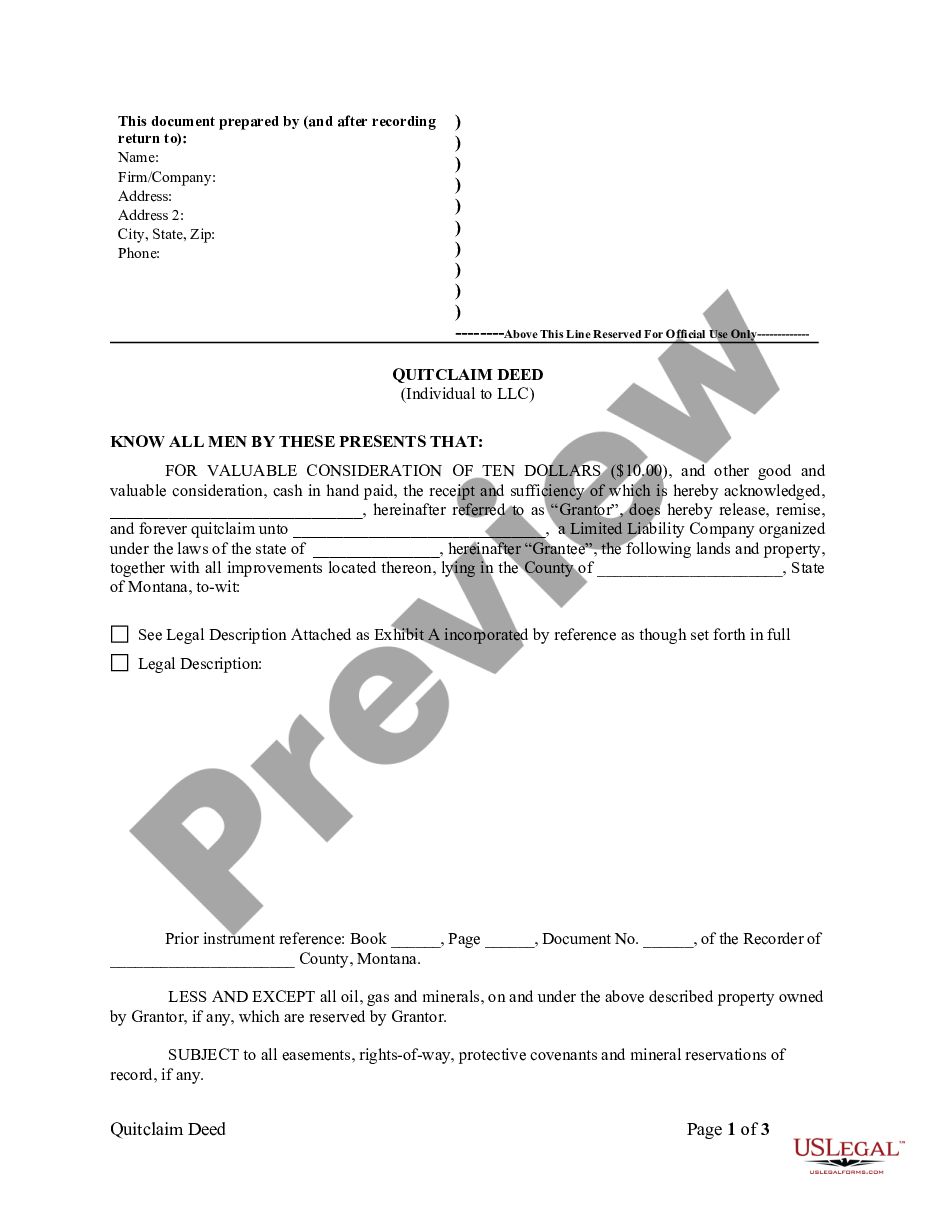
This Quitclaim Deed from Individual to LLC is a legal document used to transfer ownership of property from an individual (the grantor) to a limited liability company (the grantee). Unlike other deed types, such as warranty deeds, a quitclaim deed does not guarantee that the grantor holds clear title to the property. Instead, it simply transfers whatever interest the grantor has in the property, if any. This form is particularly useful for quick transfers and can be completed without extensive legal processes.
Form components explained
- Identification of the grantor and grantee, including full names and addresses.
- Description of the property being transferred.
- Prior instrument reference to verify previous ownership records.
- A clause stating that oil, gas, and minerals are reserved by the grantor, if applicable.
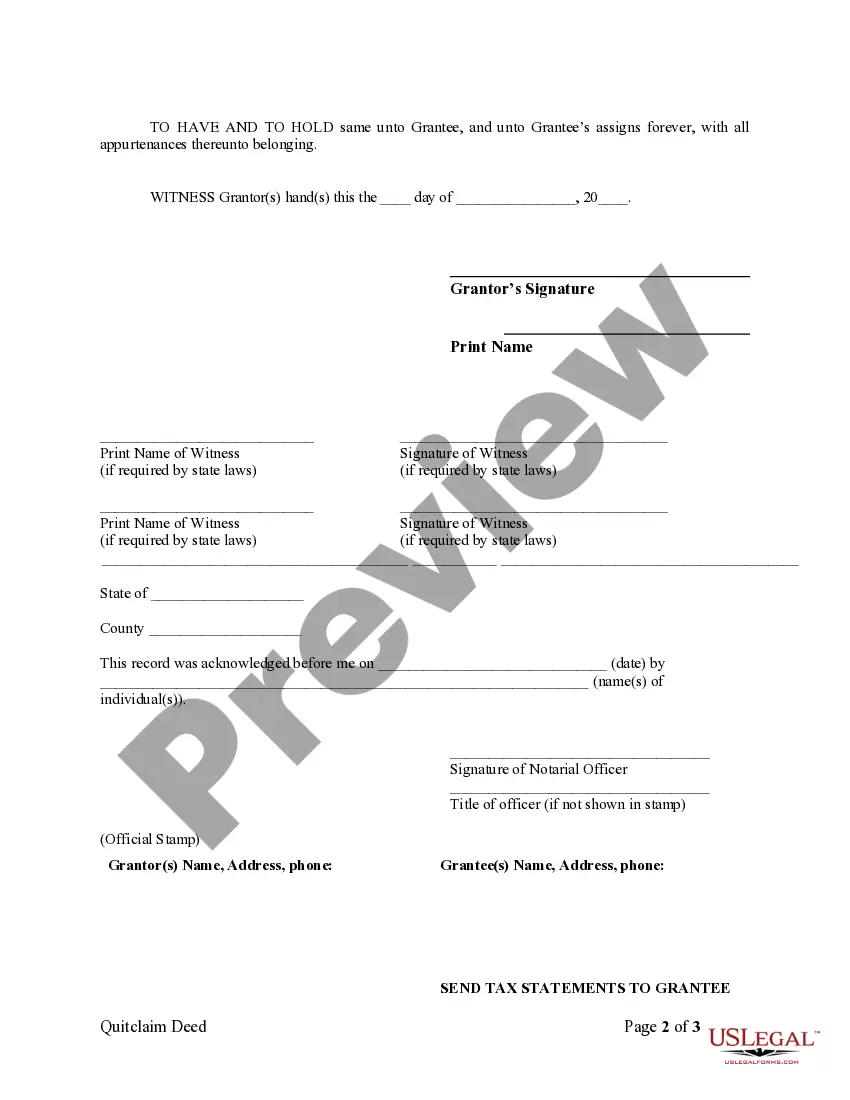
- Spaces for signatures of the grantor(s) and witness, if required by state laws.
- A notary section to authenticate the document, if necessary.






When this form is needed
Who can use this document
- Individuals looking to transfer property ownership to their own LLC.
- Business owners integrating real estate into their companies to improve asset protection.
- Estate planners managing family property interests through business entities.
- Real estate investors transferring properties into newly formed LLCs.
Completing this form step by step
- Identify the grantor by entering their full name and address.
- Enter the name and address of the LLC receiving the property.
- Provide a detailed legal description of the property being transferred.
- Fill in the prior instrument reference for clarity regarding previous ownership.
- Have all parties sign the document in the appropriate sections.
- If required, complete and sign the notary section to validate the document.
Is notarization required?
This document requires notarization to meet legal standards. US Legal Forms provides secure online notarization powered by Notarize, allowing you to complete the process through a verified video call, available 24/7.
Get your form ready online
Our built-in tools help you complete, sign, share, and store your documents in one place.
Make edits, fill in missing information, and update formatting in US Legal Forms—just like you would in MS Word.
Download a copy, print it, send it by email, or mail it via USPS—whatever works best for your next step.
Sign and collect signatures with our SignNow integration. Send to multiple recipients, set reminders, and more. Go Premium to unlock E-Sign.
If this form requires notarization, complete it online through a secure video call—no need to meet a notary in person or wait for an appointment.
We protect your documents and personal data by following strict security and privacy standards.

Make edits, fill in missing information, and update formatting in US Legal Forms—just like you would in MS Word.

Download a copy, print it, send it by email, or mail it via USPS—whatever works best for your next step.

Sign and collect signatures with our SignNow integration. Send to multiple recipients, set reminders, and more. Go Premium to unlock E-Sign.

If this form requires notarization, complete it online through a secure video call—no need to meet a notary in person or wait for an appointment.

We protect your documents and personal data by following strict security and privacy standards.
Mistakes to watch out for
- Failing to provide a detailed legal description of the property.
- Not clearly identifying all parties involved in the transaction.
- Omitting necessary signatures or notary acknowledgment.
- Not reserving mineral rights correctly, if applicable.
Advantages of online completion
- Immediate access to a professionally drafted template.
- Convenience of downloading and completing the form at your own pace.
- Editable features allow customization to meet individual needs.
- Reliable legal formatting ensures compliance with state requirements.
Looking for another form?



Form popularity
FAQ
How to Quitclaim Deed to LLC. A quitclaim deed to LLC is actually a very simple process. You will need a deed form and a copy of the existing deed to make sure you identify titles properly and get the legal description of the property.
A Quitclaim Deed must be notarized by a notary public or attorney in order to be valid.Consideration in a Quitclaim Deed is what the Grantee will pay to the Grantor for the interest in the property.
Recording This form must be filed with the County Clerk and Recorder's Office in the jurisdiction where the land is located (See County Website List). Signing (§ 70-21-203) A quit claim deed that is filed in Montana must be witnessed by a Notary Public upon the signature(s) of the Grantor(s).
Quitclaim deeds are most often used to transfer property between family members. Examples include when an owner gets married and wants to add a spouse's name to the title or deed, or when the owners get divorced and one spouse's name is removed from the title or deed.
But you might be wondering if an owner can transfer a deed to another person without a real estate lawyer. The answer is yes. Parties to a transaction are always free to prepare their own deeds.A quitclaim deed, for example, is far simpler than a warranty deed.
A quitclaim deed is a legal instrument that is used to transfer interest in real property.The owner/grantor terminates (quits) any right and claim to the property, thereby allowing the right or claim to transfer to the recipient/grantee.
However, there are substantial downsides associated with transferring your primary home into an LLC.If you are using your personal residence for estate planning purposes, a qualified personal residence trust (QPRT) may be more effective than transferring your property to a limited liability company.
The drawback, quite simply, is that quitclaim deeds offer the grantee/recipient no protection or guarantees whatsoever about the property or their ownership of it. Maybe the grantor did not own the property at all, or maybe they only had partial ownership.