Montana Landscape Contract for Contractor
What is this form?
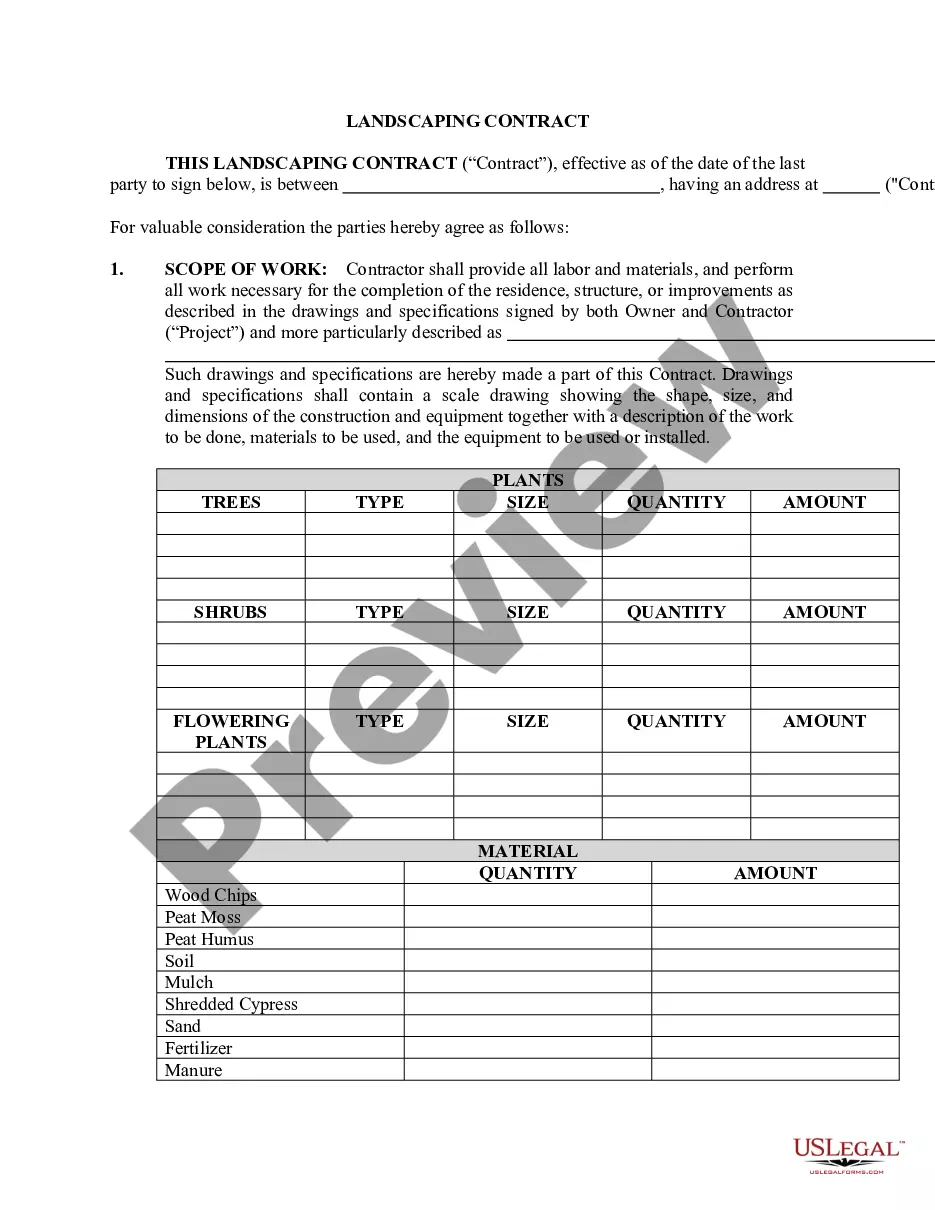
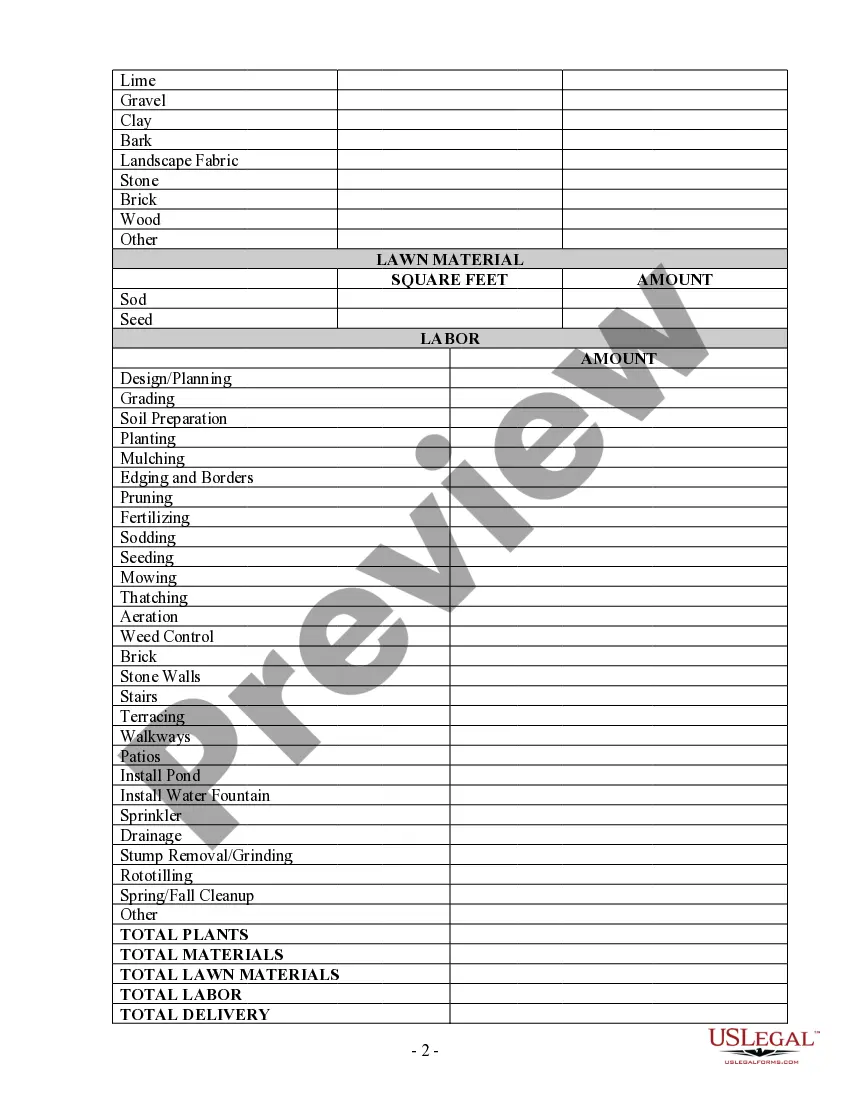
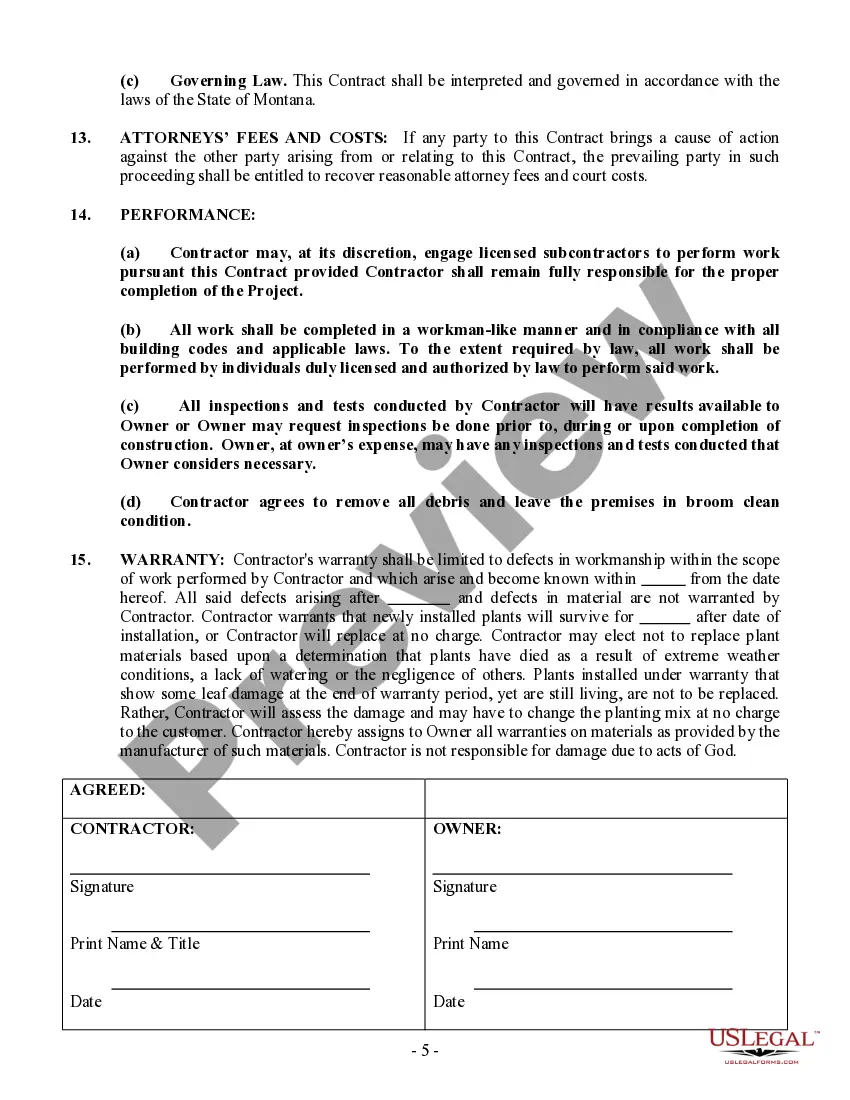
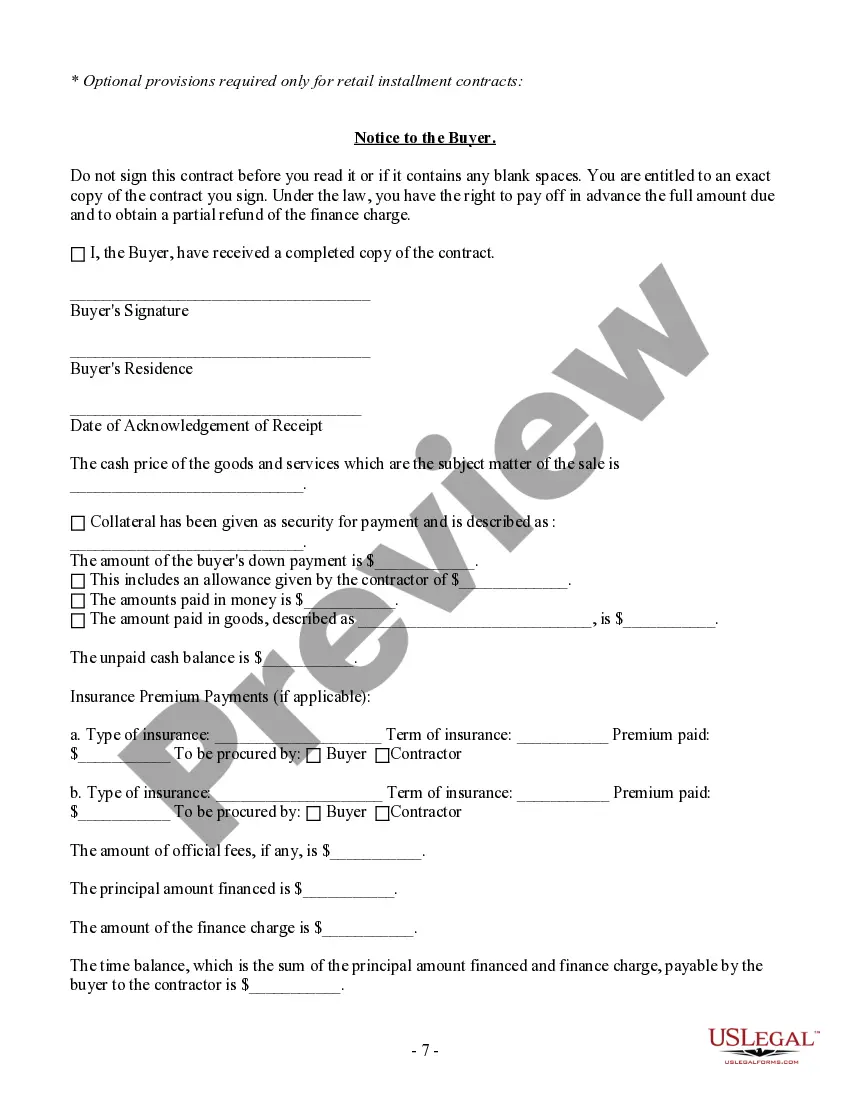
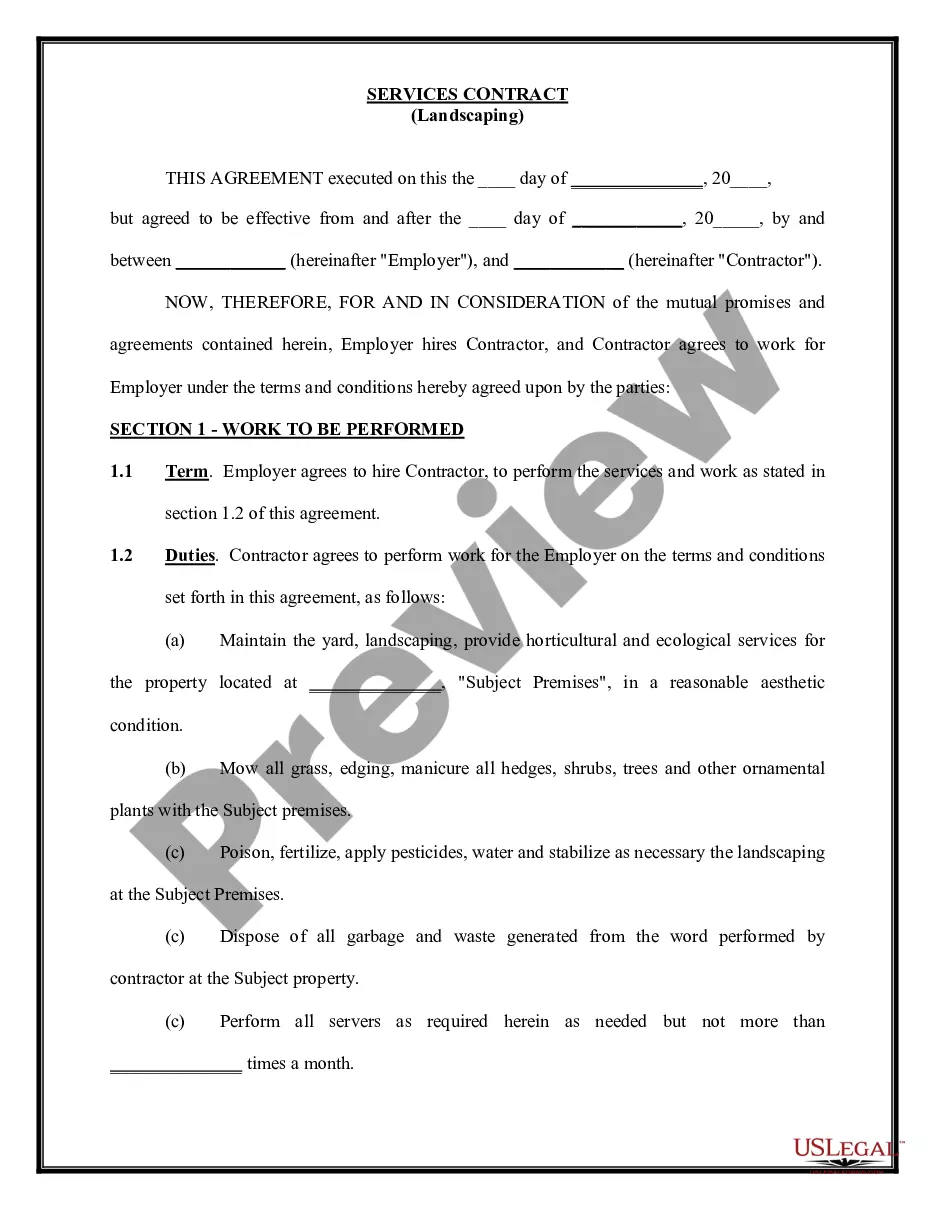
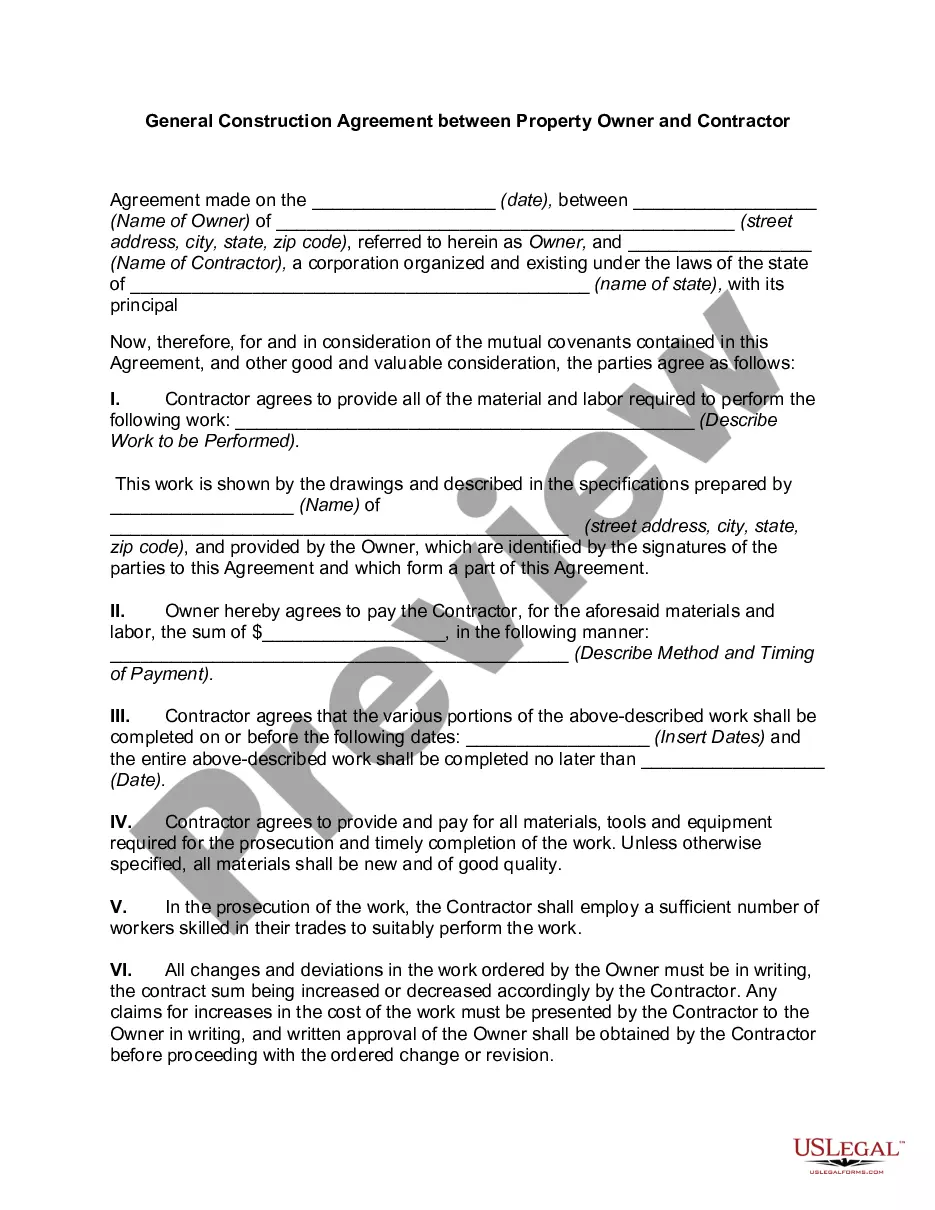
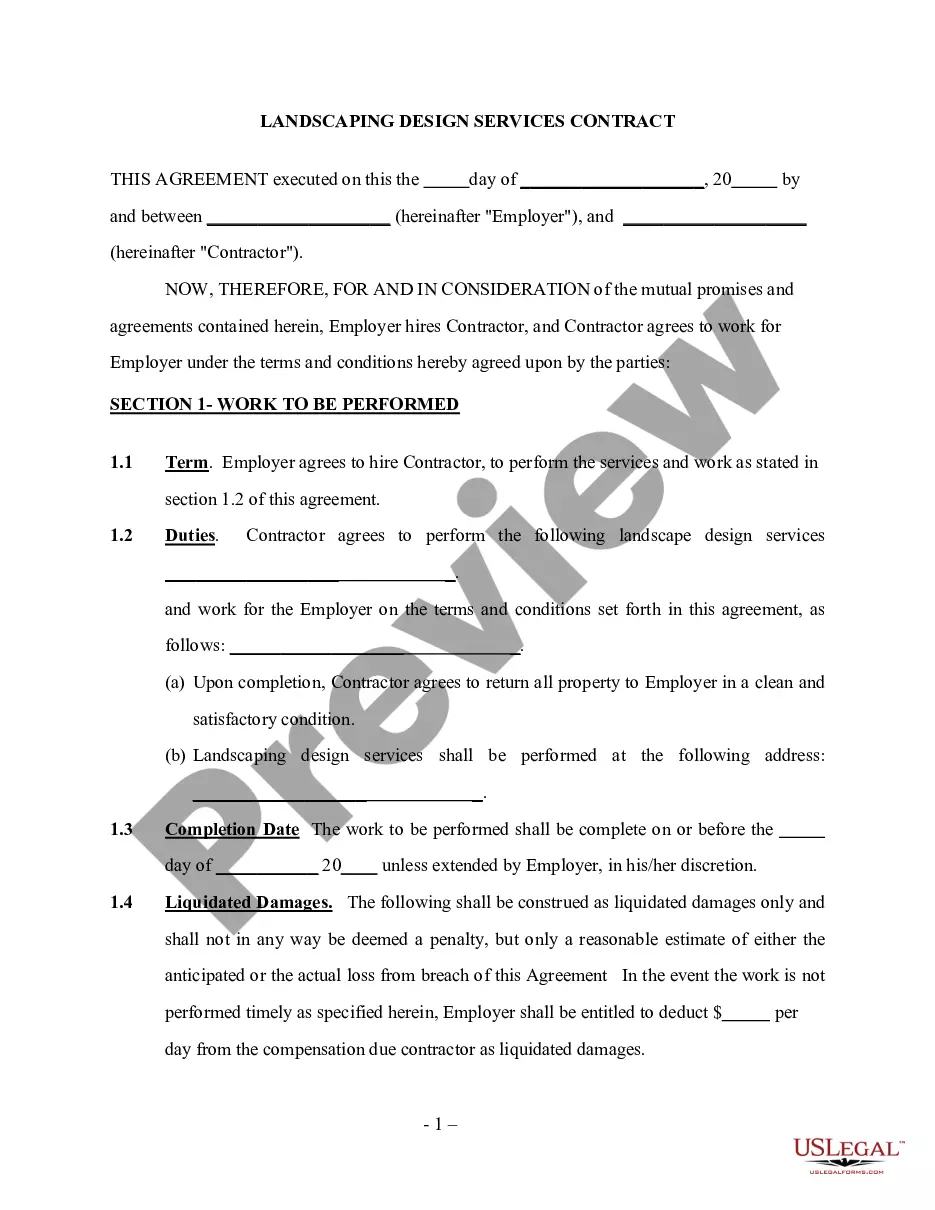
The Landscape Contract for Contractor is a legal agreement crafted for use between landscape contractors and property owners. This contract establishes clear terms regarding the scope of work, payment structure, and responsibilities of both parties. Unlike generic contracts, it explicitly addresses issues relevant to landscape projects, including change orders and insurance requirements, ensuring compliance with the laws of Montana.
Main sections of this form
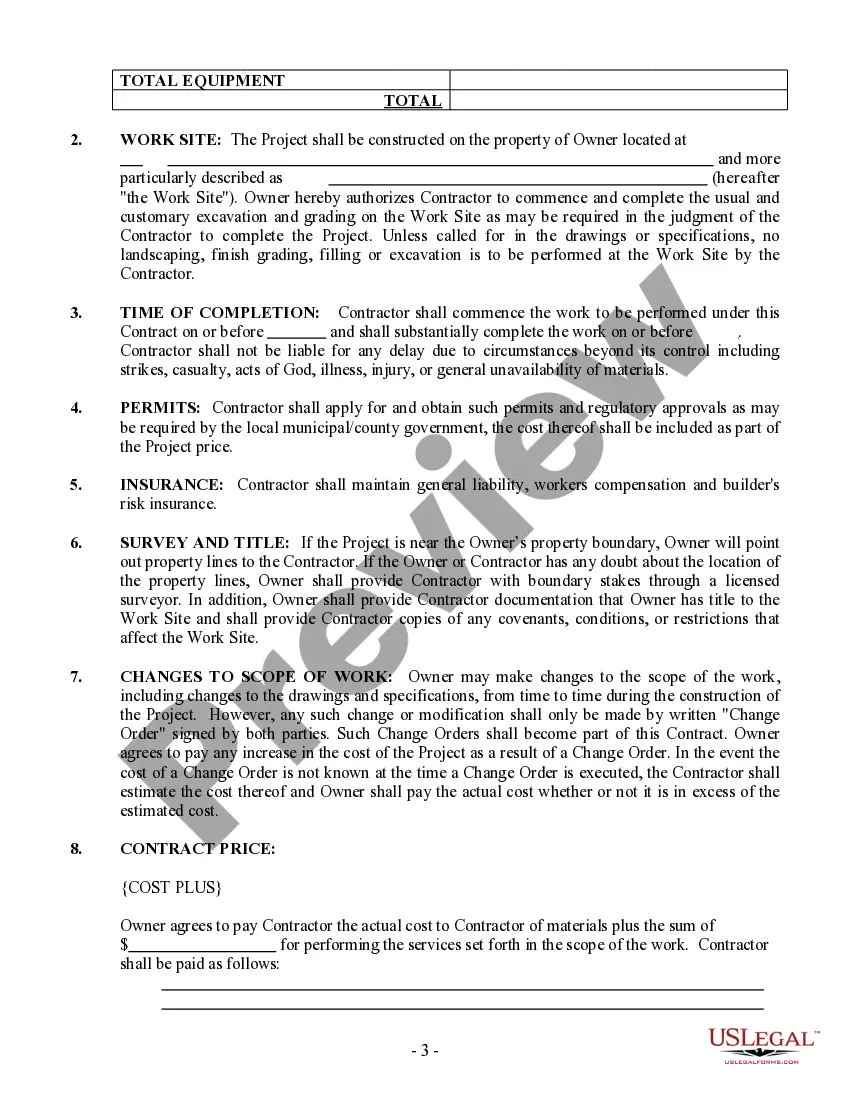
- Permits: Outlines the contractor's responsibility to obtain required permits and approvals.
- Insurance: Specifies the types of insurance the contractor must maintain.
- Survey and Title: Details the requirement for property lines and documentation of title in relation to the work site.
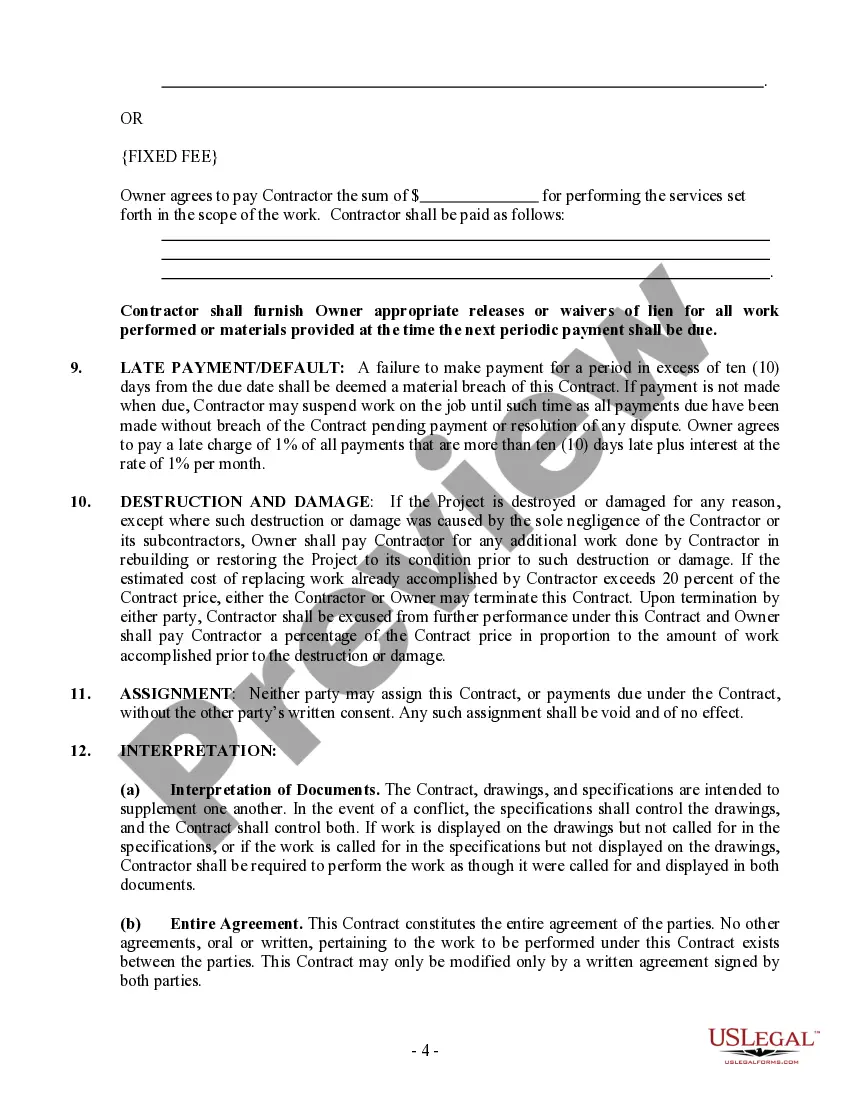
- Changes to Scope of Work: Describes how changes can be made, including the necessity for written change orders.
- Destruction and Damage: Addresses the process for compensation in the event of project damage or destruction.
- Assignment: States the conditions under which the contract may be assigned to another party.



Situations where this form applies
This form should be used when a property owner engages a landscape contractor for a specific project. It is essential when establishing a formal agreement that outlines payment terms, project requirements, and legal protections. Use this contract when you need to clarify responsibilities and manage expectations on both sides, especially for larger landscape projects that may have changing elements over time.
Who this form is for
- Property owners who wish to hire a landscape contractor for projects.
- Landscape contractors looking to establish a formal agreement with their clients.
- Both parties who want to ensure clarity on terms, responsibilities, and liabilities.
Completing this form step by step
- Identify the parties involved: Clearly state the names and addresses of the property owner and contractor.
- Specify the project details: Describe the scope of work to be performed and any specific requirements or preferences.
- Outline payment terms: Decide whether a fixed fee or cost-plus arrangement will be utilized and document the agreed amount.
- Include insurance details: Ensure that the contractor's insurance information is correctly outlined.
- Sign and date the contract: Both parties must sign and date the contract to make it legally binding.
Does this document require notarization?
This form does not typically require notarization unless specified by local law. However, it is advised to double-check local regulations to ensure compliance.
Get your form ready online
Our built-in tools help you complete, sign, share, and store your documents in one place.
Make edits, fill in missing information, and update formatting in US Legal Forms—just like you would in MS Word.
Download a copy, print it, send it by email, or mail it via USPS—whatever works best for your next step.
Sign and collect signatures with our SignNow integration. Send to multiple recipients, set reminders, and more. Go Premium to unlock E-Sign.
If this form requires notarization, complete it online through a secure video call—no need to meet a notary in person or wait for an appointment.
We protect your documents and personal data by following strict security and privacy standards.

Make edits, fill in missing information, and update formatting in US Legal Forms—just like you would in MS Word.

Download a copy, print it, send it by email, or mail it via USPS—whatever works best for your next step.

Sign and collect signatures with our SignNow integration. Send to multiple recipients, set reminders, and more. Go Premium to unlock E-Sign.

If this form requires notarization, complete it online through a secure video call—no need to meet a notary in person or wait for an appointment.

We protect your documents and personal data by following strict security and privacy standards.
Typical mistakes to avoid
- Failing to specify the scope of work can lead to misunderstandings.
- Not obtaining necessary permits before starting the project can result in legal issues.
- Neglecting to address changes to work through proper change orders may cause disputes.
- Overlooking insurance requirements can expose both parties to financial risks.
Advantages of online completion
- Convenience: Download and complete the form at your own pace, from anywhere.
- Editability: Easily customize the contract to meet specific project needs.
- Reliability: Form is drafted by licensed attorneys, ensuring it meets legal standards.
Looking for another form?
Form popularity
FAQ
ICEC are services that are used to evaluate whether a specific company or worker for a particular assignment meets the legal requirements to perform as an independent contractor.
1. Not Having a Written Contract.The taxing, labor and employment, and insurance authorities expect a written contract that states that the worker is an independent contractor and will be paid as such with no tax withholding, no benefits, etc.
1Register and obtain your business license through the Montana secretary of state website.2Show proof of workers' compensation insurance if you have employees.3Complete and submit the application.
The general rule is that an individual is an independent contractor if the payer has the right to control or direct only the result of the work and not what will be done and how it will be done. The earnings of a person who is working as an independent contractor are subject to Self-Employment Tax.
Montana law requires construction contractors with employees, corporations or manager-managed limited liability companies in the construction industry to register, which is the same as a license.
To set yourself up as a self-employed taxpayer with the IRS, you simply start paying estimated taxes (on Form 1040-ES, Estimated Tax for Individuals) and file Schedule C, Profit or Loss From Business, and Schedule SE, Self-Employment Tax, with your Form 1040 tax return each April.
Independent contractor's licenses First, prove you independently own a business. Get a Montana Tax Identification Number with the Montana Department of Revenue. Then fill out an independent contractor exemption certification. You can also choose to purchase a self-elected workers' compensation insurance plan.
First, prove you independently own a business. Get a Montana Tax Identification Number with the Montana Department of Revenue. Then fill out an independent contractor exemption certification. Fill out and mail in the application form.