Down Round Term Sheet
What is this form?
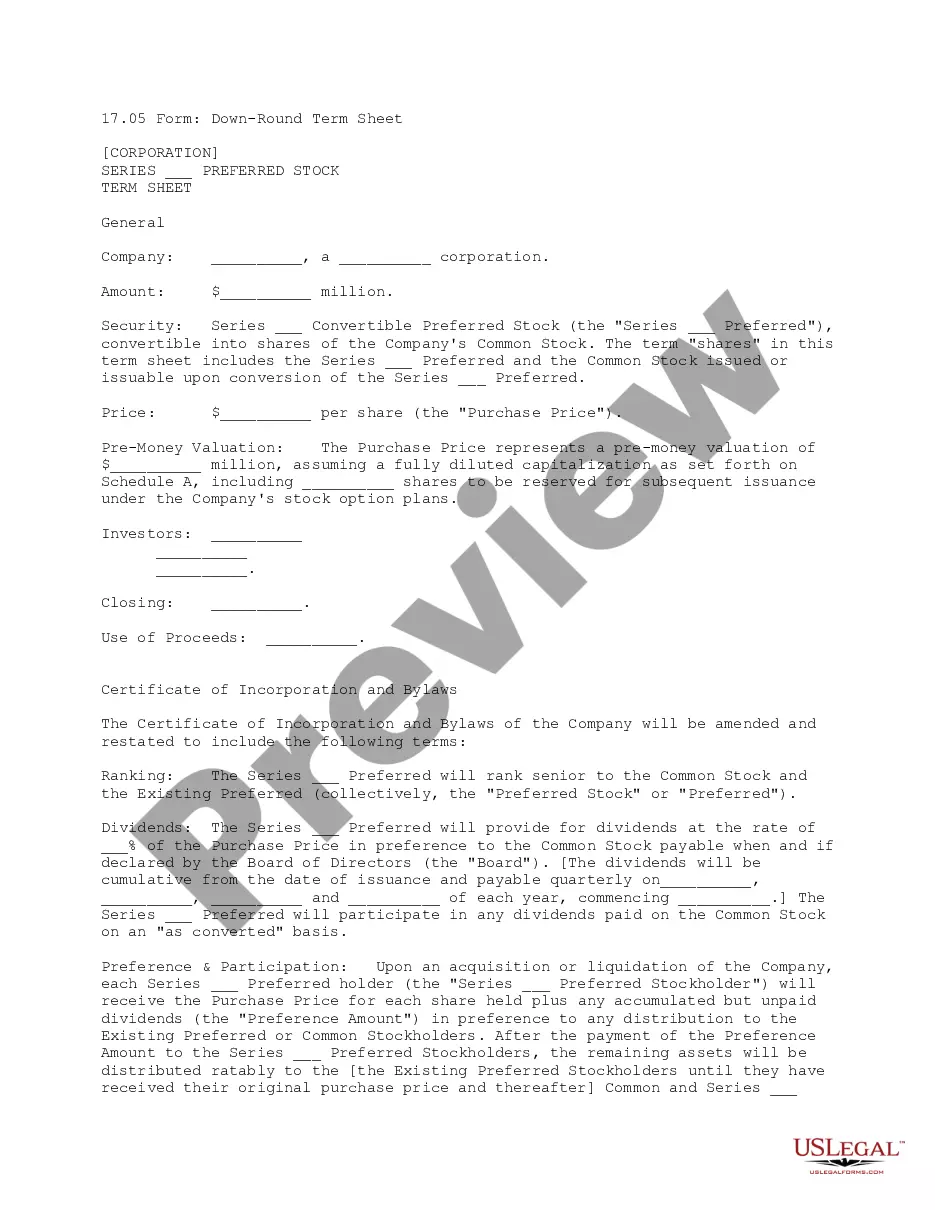
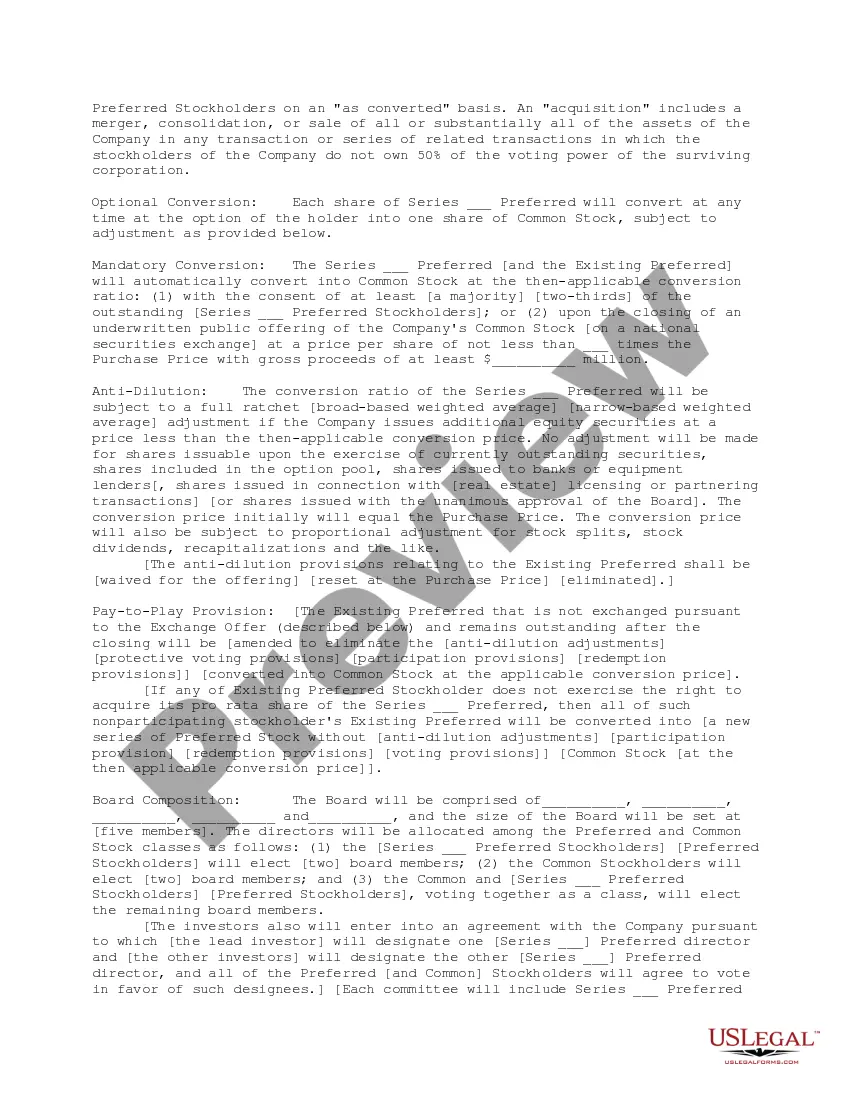
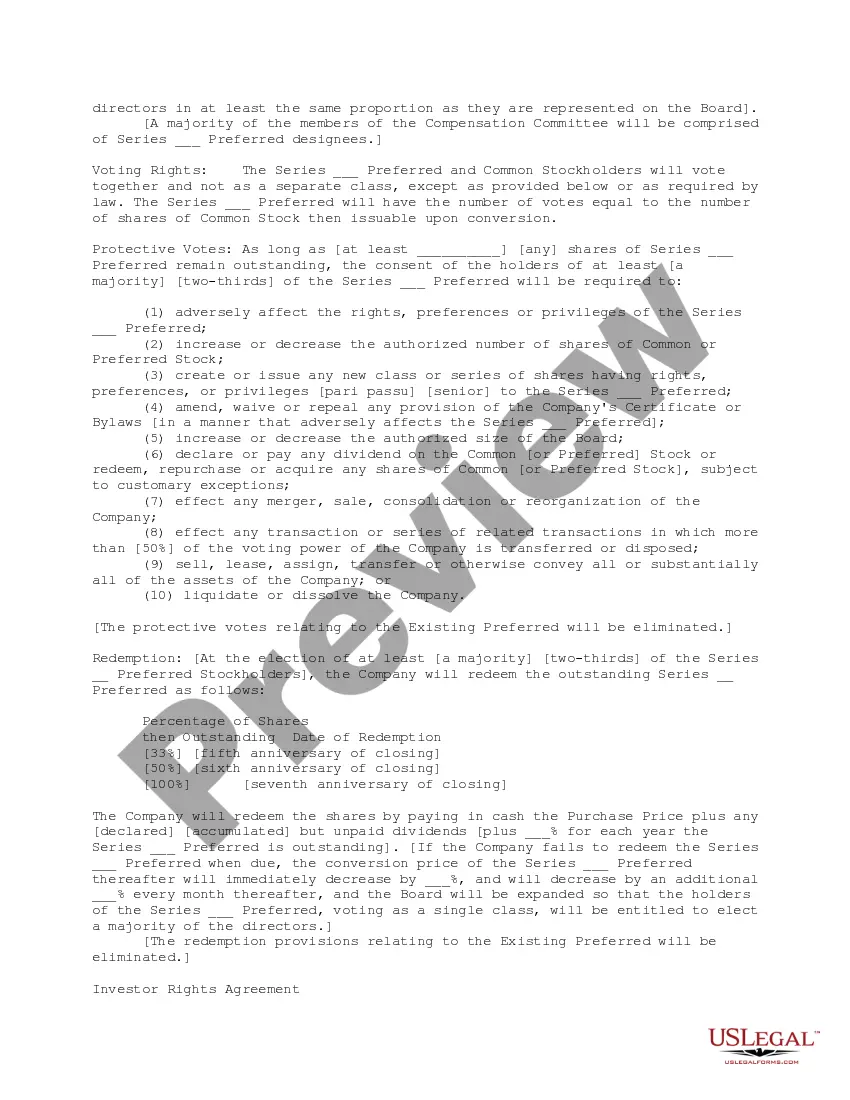
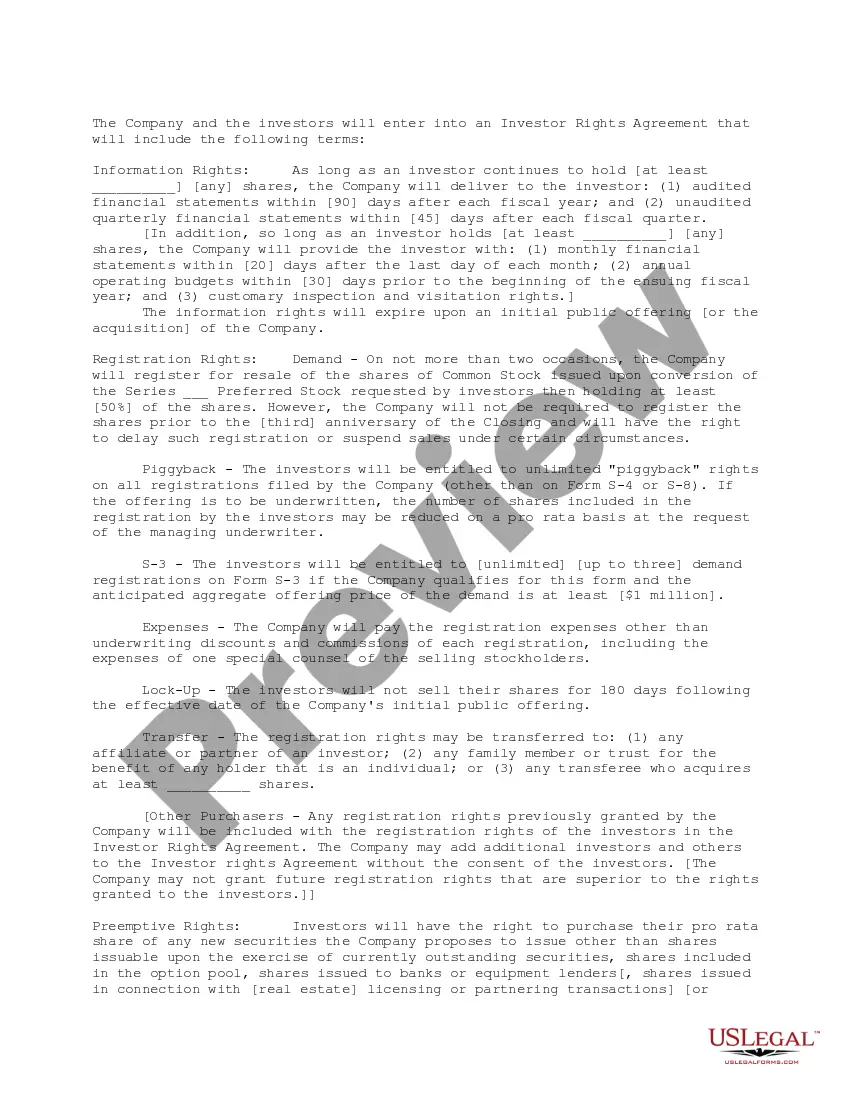
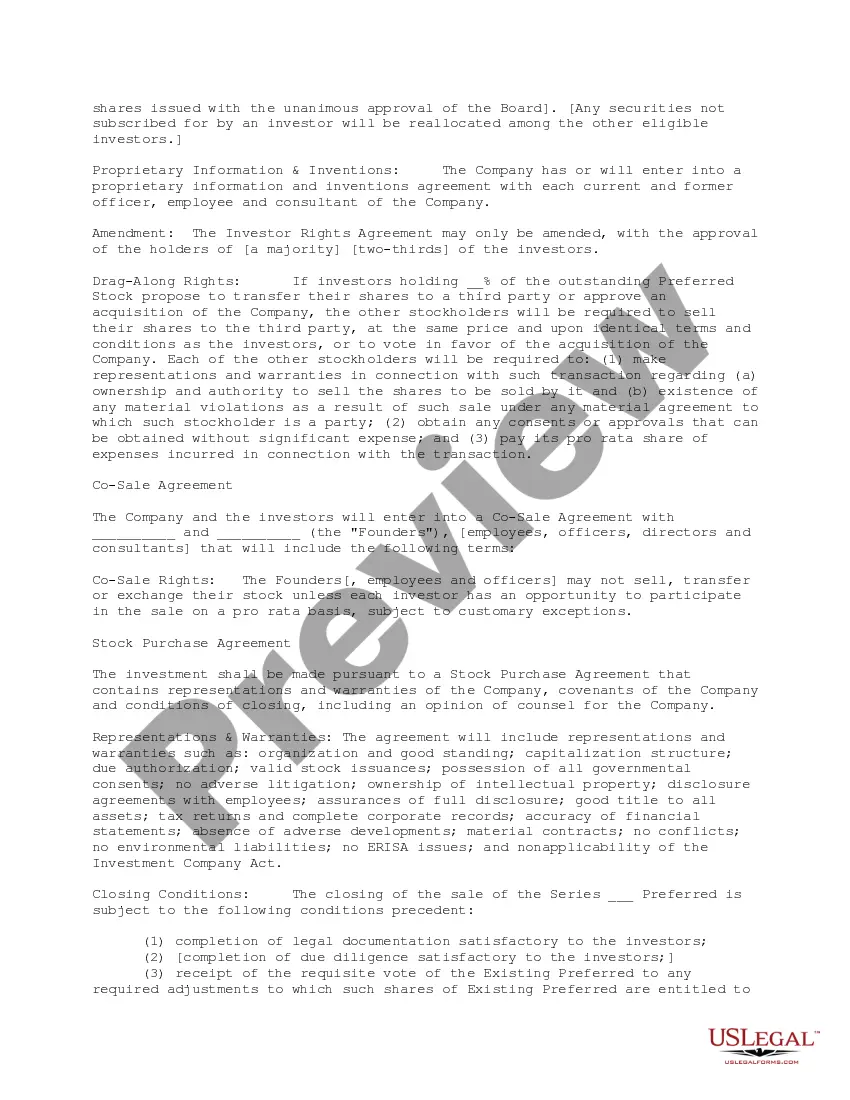
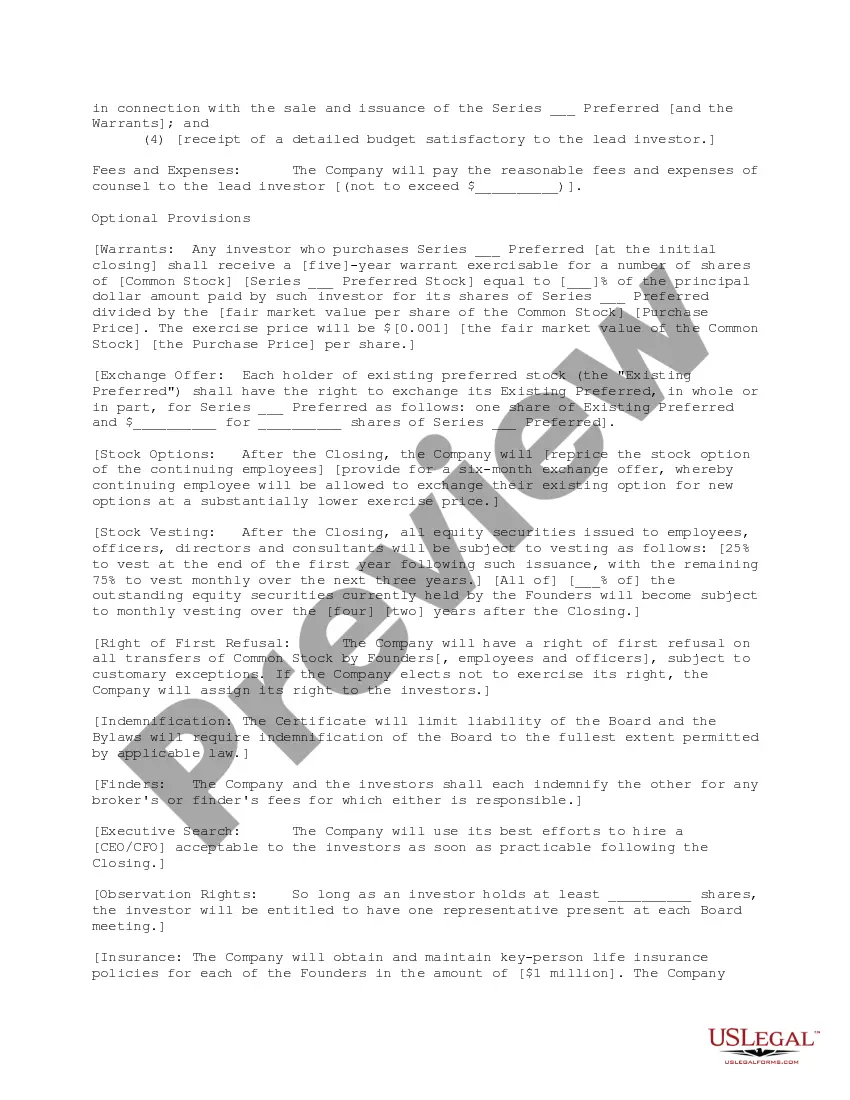
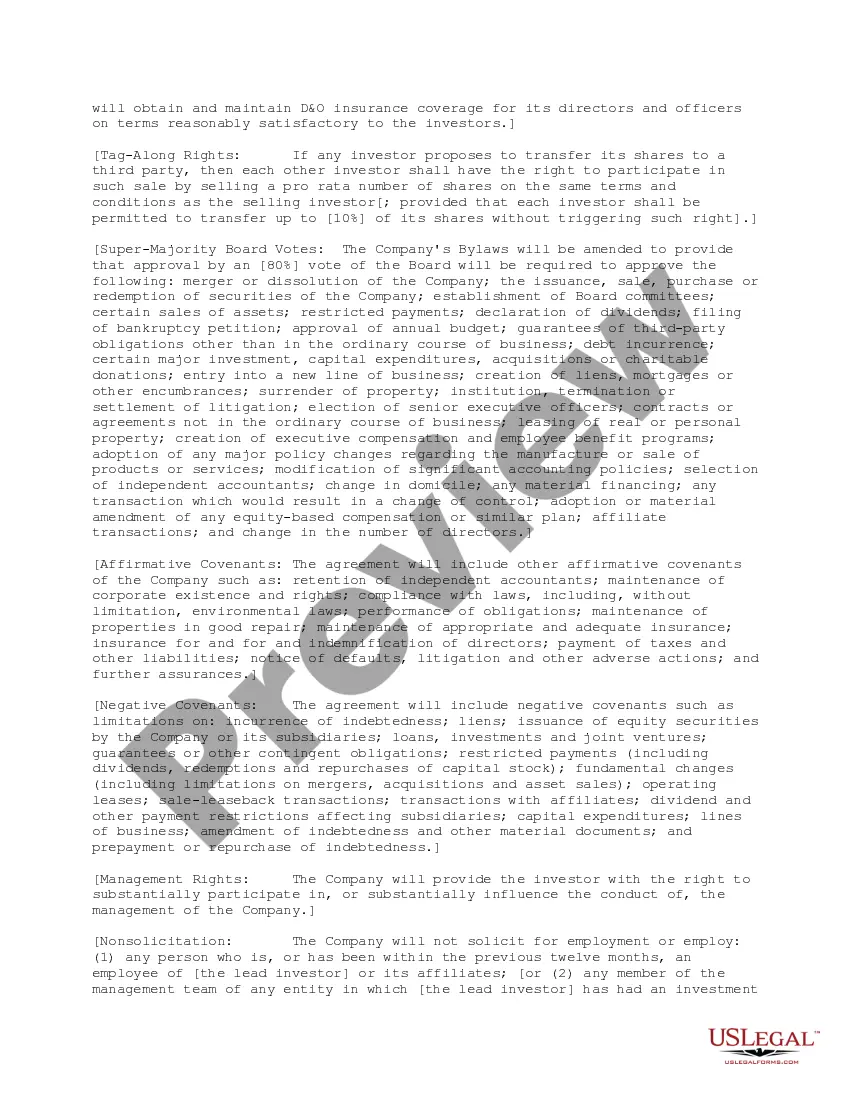
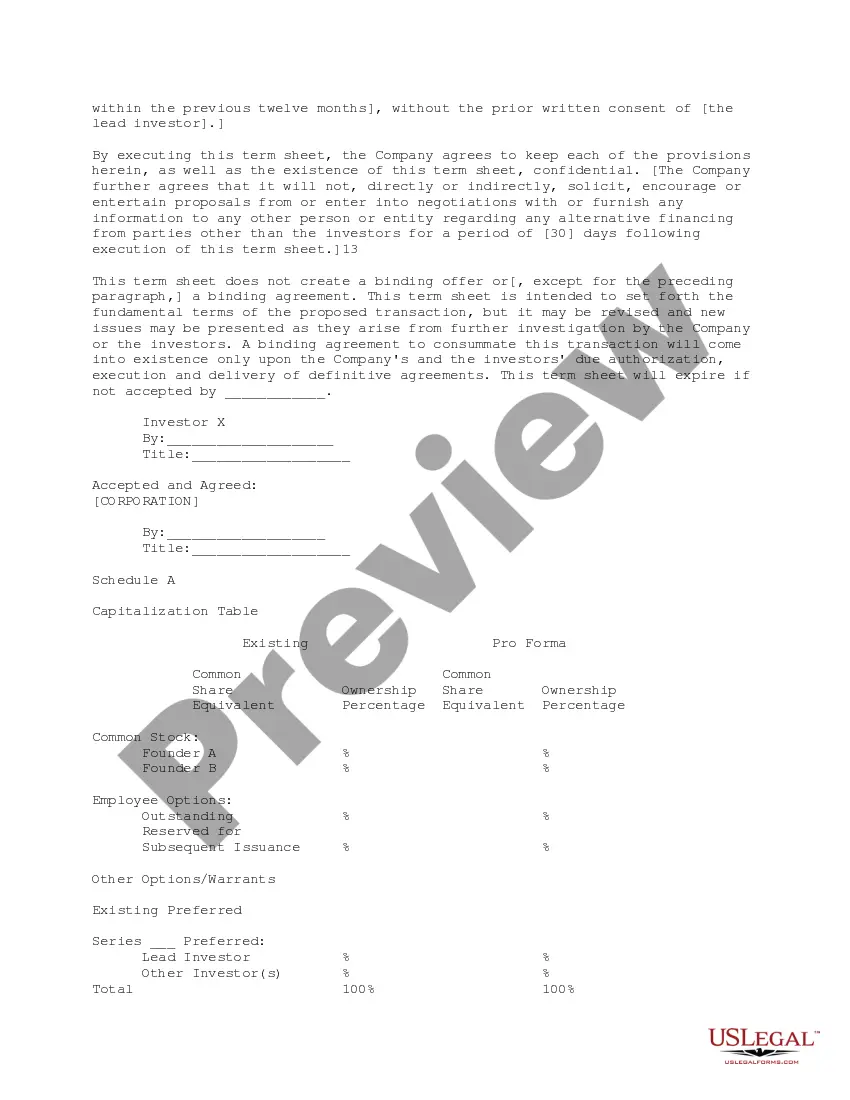
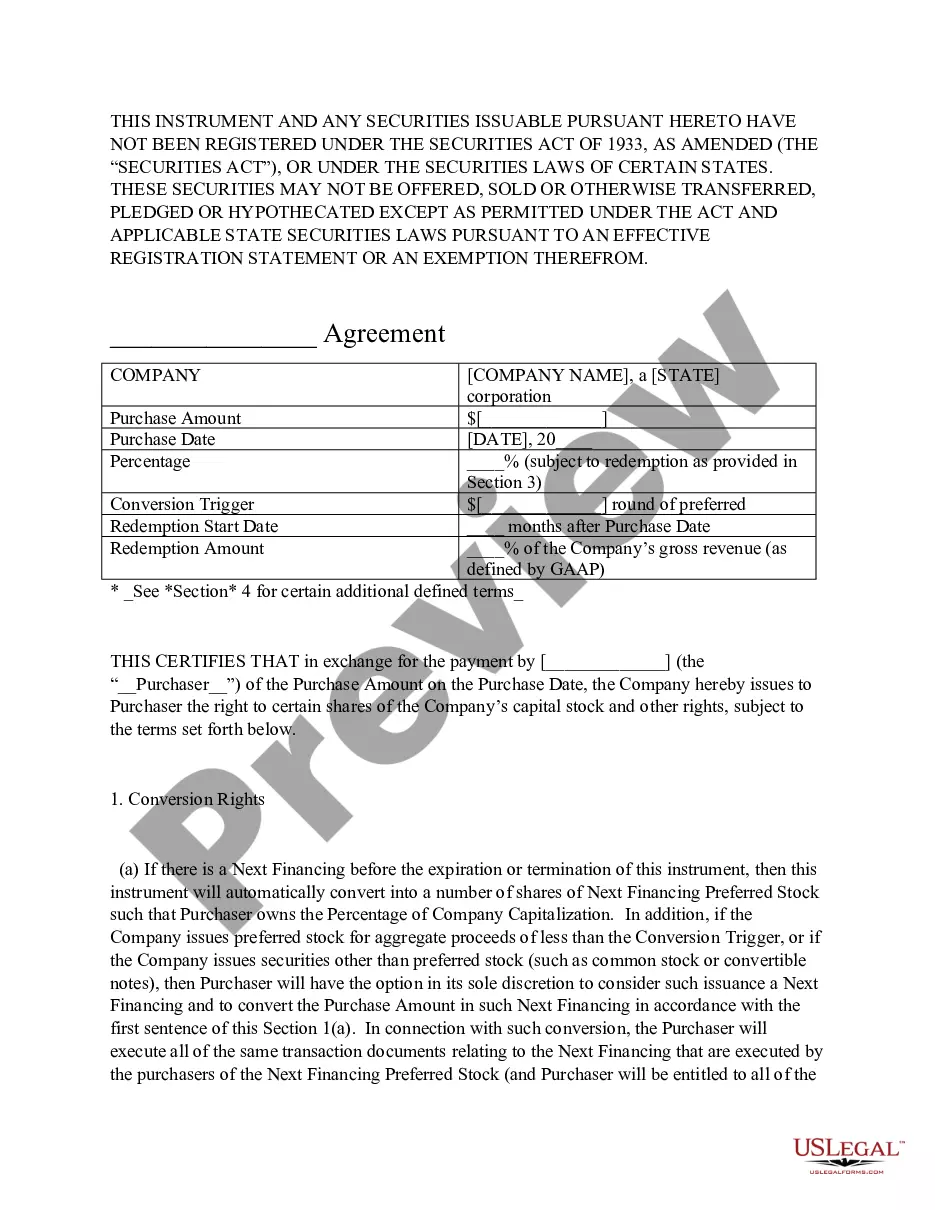
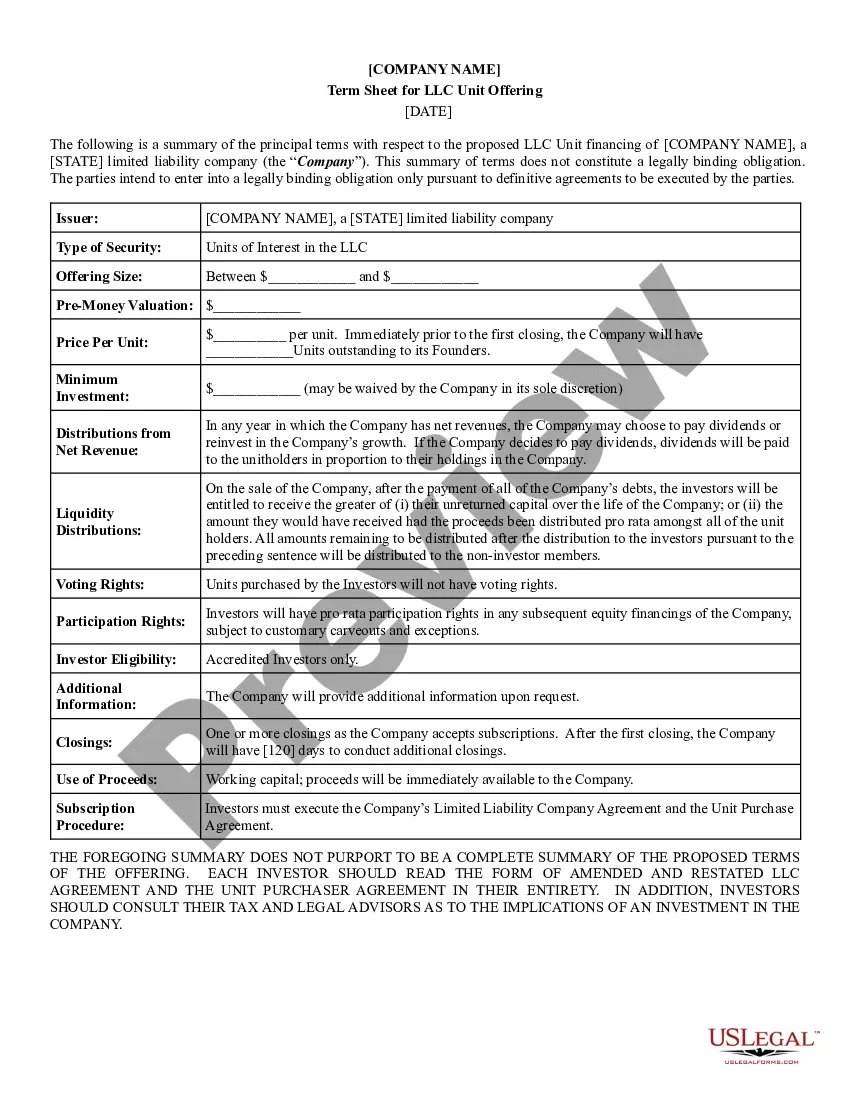
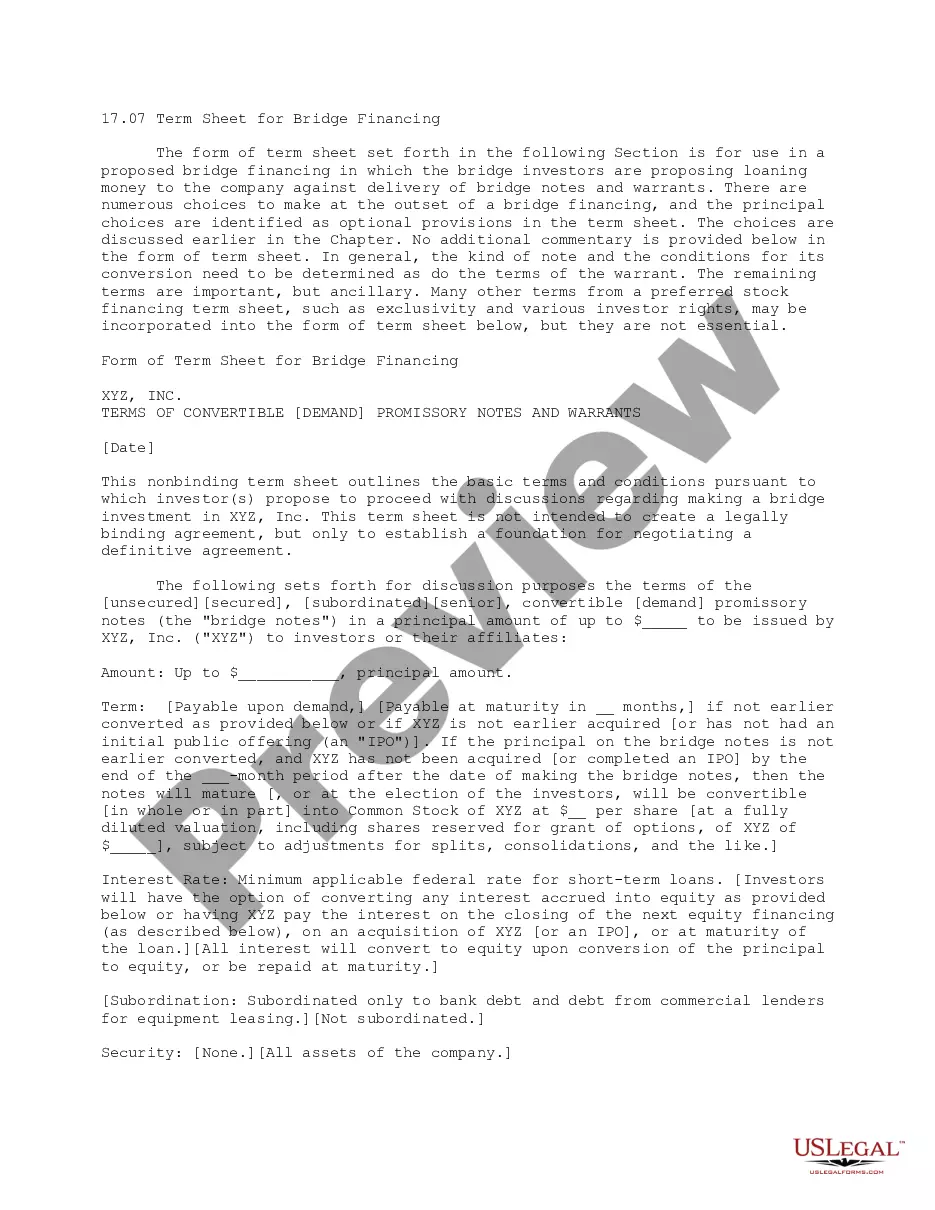
The Down Round Term Sheet is a legal document outlining the terms of a down round investment in a corporation. This term sheet differs from other investment agreements as it specifically addresses situations where a company raises capital at a lower valuation than previous financing rounds. It is essential for both investors and the company to agree on the terms of the investment, protecting their interests during this crucial phase of funding.
Key parts of this document
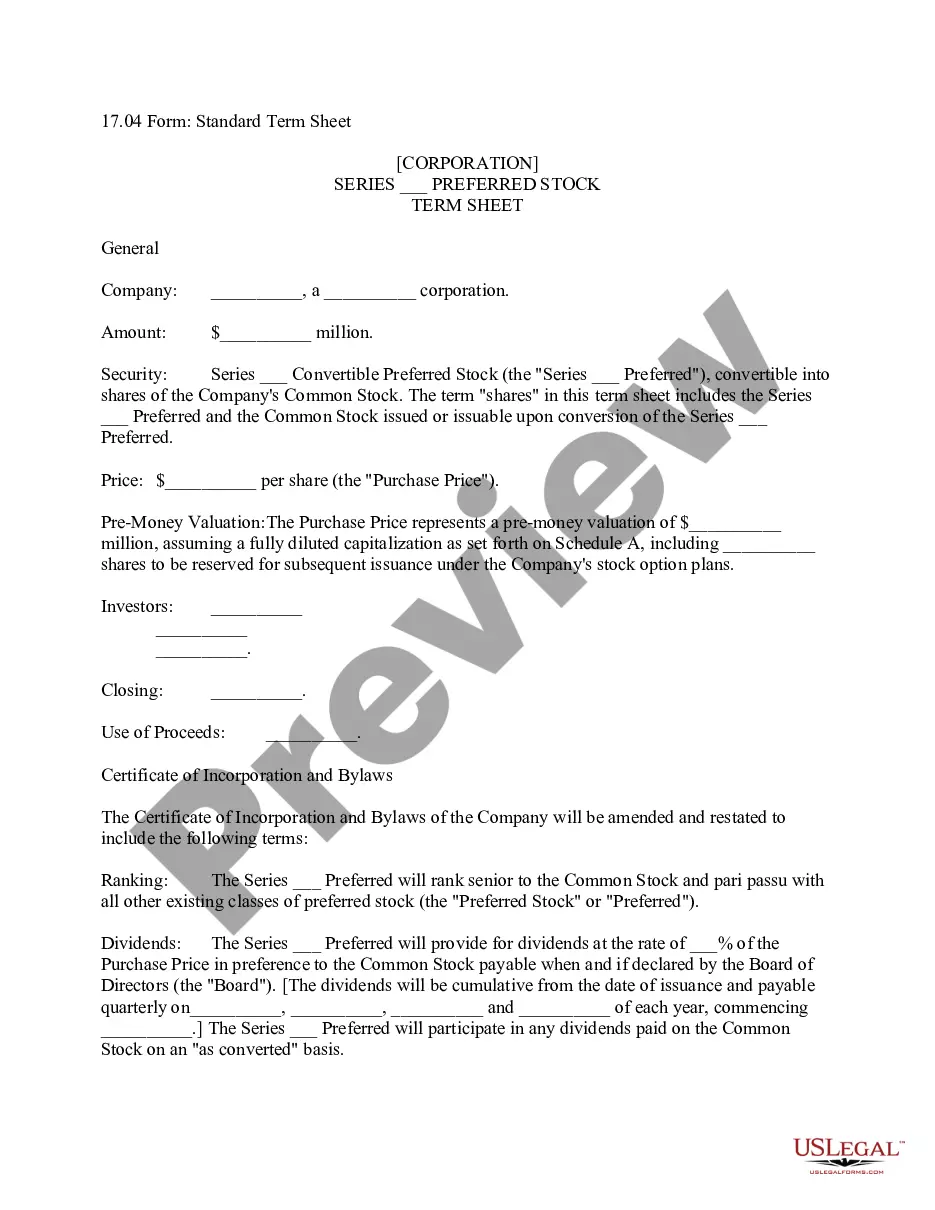
- Company Information: Details about the corporation involved in the investment.
- Investment Amount: Specifies how much capital is being raised.
- Security Type: Describes the type of preferred stock being issued.
- Valuation and Price: Indicates the pre-money valuation and the purchase price per share.
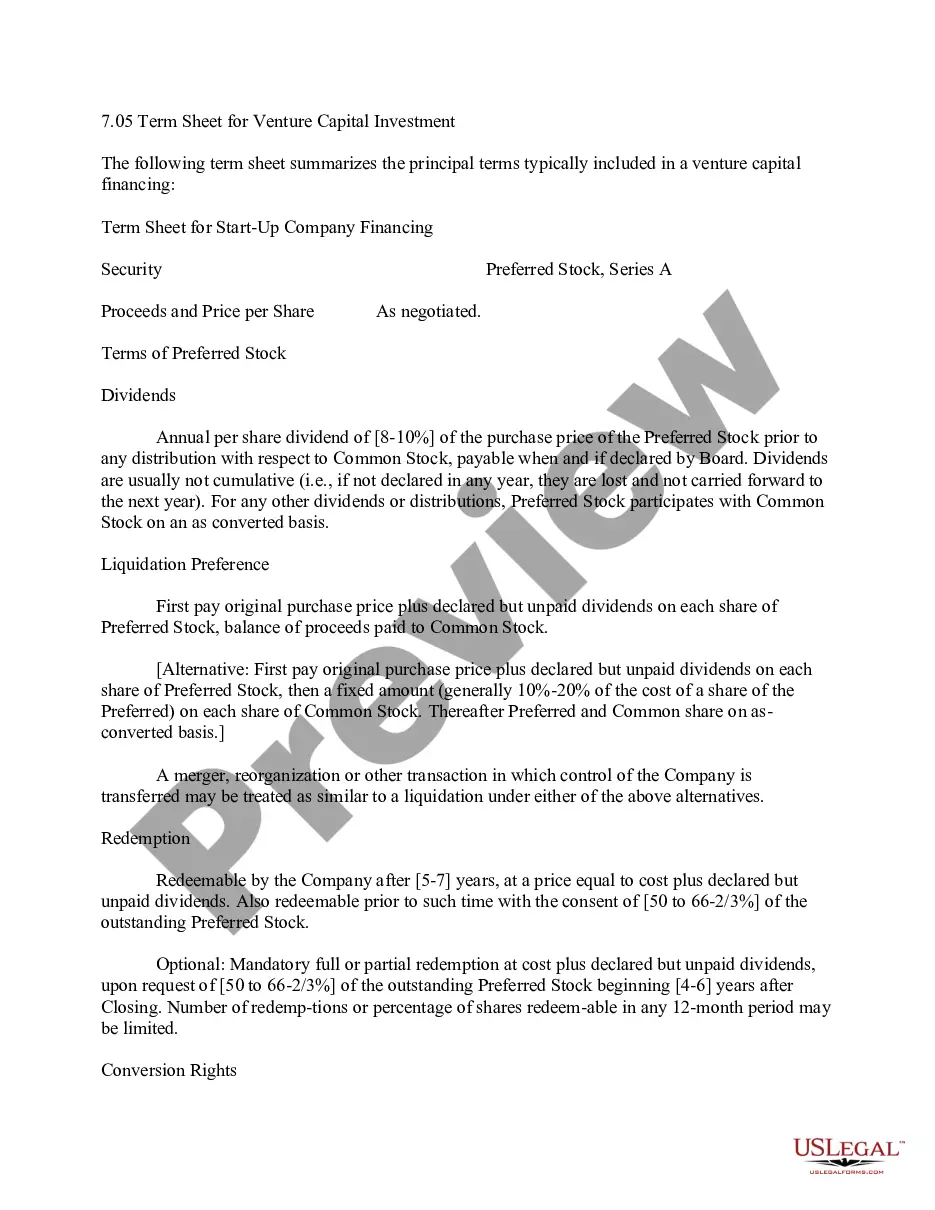
- Dividend and Liquidation Preferences: Outlines how dividends will be paid and the order of payments during liquidation.
- Conversion Rights: Details the conversion options from preferred stock to common stock.
Situations where this form applies
This form is relevant when a corporation seeks to raise funds through equity investment at a reduced valuation, commonly known as a down round. It is typically used during negotiations between the company and new or existing investors when restructuring financing expectations due to previous financial performance or market conditions.
Who needs this form
Use this form if you are:
- A corporate entity seeking to formalize investment terms for a down round.
- An investor looking to secure favorable terms in a down round investment scenario.
- Legal professionals advising companies or investors on corporate financing.
Instructions for completing this form
- Identify and fill in the name and type of the corporation.
- Specify the total investment amount and price per share.
- Outline the dividend rates and liquid preference terms.
- Detail conversion rights, including any optional and mandatory conversion circumstances.
- Review and ensure compliance with state-specific legal requirements before finalizing the document.
Notarization requirements for this form
This form usually doesn’t need to be notarized. However, local laws or specific transactions may require it. Our online notarization service, powered by Notarize, lets you complete it remotely through a secure video session, available 24/7.
Get your form ready online
Our built-in tools help you complete, sign, share, and store your documents in one place.
Make edits, fill in missing information, and update formatting in US Legal Forms—just like you would in MS Word.
Download a copy, print it, send it by email, or mail it via USPS—whatever works best for your next step.
Sign and collect signatures with our SignNow integration. Send to multiple recipients, set reminders, and more. Go Premium to unlock E-Sign.
If this form requires notarization, complete it online through a secure video call—no need to meet a notary in person or wait for an appointment.
We protect your documents and personal data by following strict security and privacy standards.

Make edits, fill in missing information, and update formatting in US Legal Forms—just like you would in MS Word.

Download a copy, print it, send it by email, or mail it via USPS—whatever works best for your next step.

Sign and collect signatures with our SignNow integration. Send to multiple recipients, set reminders, and more. Go Premium to unlock E-Sign.

If this form requires notarization, complete it online through a secure video call—no need to meet a notary in person or wait for an appointment.

We protect your documents and personal data by following strict security and privacy standards.
Common mistakes to avoid
- Failing to clearly outline the pre-money valuation.
- Not specifying all required details regarding dividends and liquidation preferences.
- Leaving out critical terms related to conversion rights or protective votes.
- Neglecting to update the agreement as conditions change or as new investors come on board.
Benefits of using this form online
- Convenient access to necessary legal documentation at any time.
- Editable format that allows customization to fit specific investment terms.
- Reliability from professionally drafted templates that comply with legal standards.
- Quick downloads for immediate use in negotiations.
Legal use & context
- This form serves as a preliminary agreement among parties and does not create binding obligations unless further agreements are executed.
- The terms set forth must comply with applicable state laws governing corporate financings.
What to keep in mind
- The Down Round Term Sheet is essential in fund-raising scenarios involving reduced valuations.
- Clear definitions of terms like conversion rights and dividend preferences are crucial.
- Careful completion and compliance with state-specific laws can safeguard the interests of all parties involved.
Looking for another form?
Form popularity
FAQ
A down round refers to a private company offering additional shares for sale at a lower price than had been sold for in the previous financing round. Simply put, more capital is needed and the company discovers that its valuation is lower than it was prior to the previous round of financing.
A down round refers to a private company offering additional shares for sale at a lower price than had been sold for in the previous financing round. Simply put, more capital is needed and the company discovers that its valuation is lower than it was prior to the previous round of financing.
The best way to avoid down rounds is to be prudent and strategic when raising funds. As Y Combinator points out, the temptation to raise as much money as you can is very strong for startups, particularly as large valuations and capital raises are celebrated as markers of success.
A term sheet is a nonbinding agreement outlining the basic terms and conditions under which an investment will be made. Term sheets are most often associated with startups. Entrepreneurs find that this document is crucial to attracting investors, such as venture capitalists (VC) with capital to fund enterprises.
Take the Time to Woo Multiple Investors. Do Your Due Diligence When Finding Investors. Negotiate A Term Sheet Better by Understanding the Terminology. Hire a Good Lawyer to Assist You. Prioritize the Non-Negotiables of Your Term Sheet. Be Prepared to Negotiate with Your Investor. Watch for Red Flags.
A term sheet is a bullet-point document outlining the material terms and conditions of a potential business agreement, establishing the basis for future negotiations between a seller and buyer. It is usually the first documented evidence of possible acquisition. It may be either binding or non-binding.
Get more than one VC interested. The key to negotiating VCs is to have more than one show interest. Understand typical market terms. Valuation is key. Confirm the VC's interest. Retain a lawyer with VC financing expertise. Take the reins. Prioritize your non-negotiables. Understand dilution.
Term sheets evidence serious intent, but generally are not legally binding.Although the term sheet itself is not typically legally binding, some term sheets contain certain legally binding provisions (for example, confidentiality or exclusivity).
How much money is expected from the VC, or venture capitalist, to the founder of the startup, A detailed overview of the financial side of the investment, and. The power and controls given to the VCs.