Mississippi Name Affidavit for Persons with Multiple Aliases
What this document covers
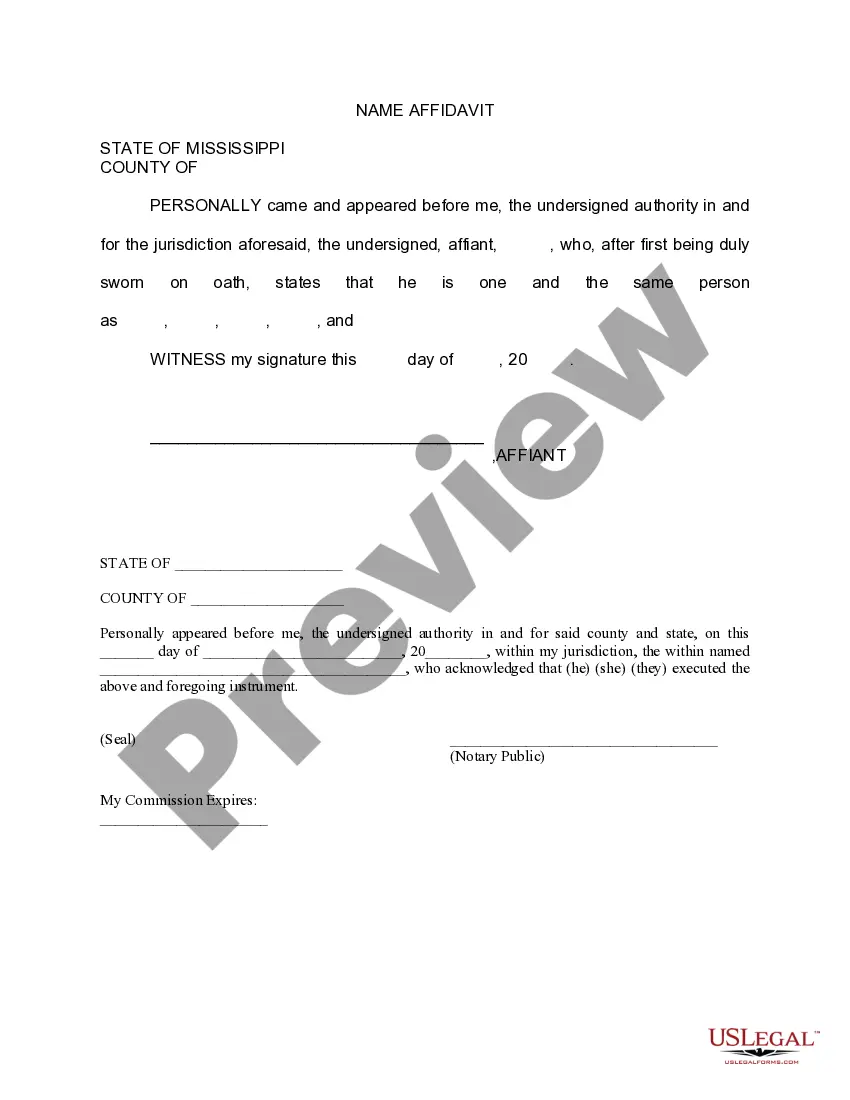
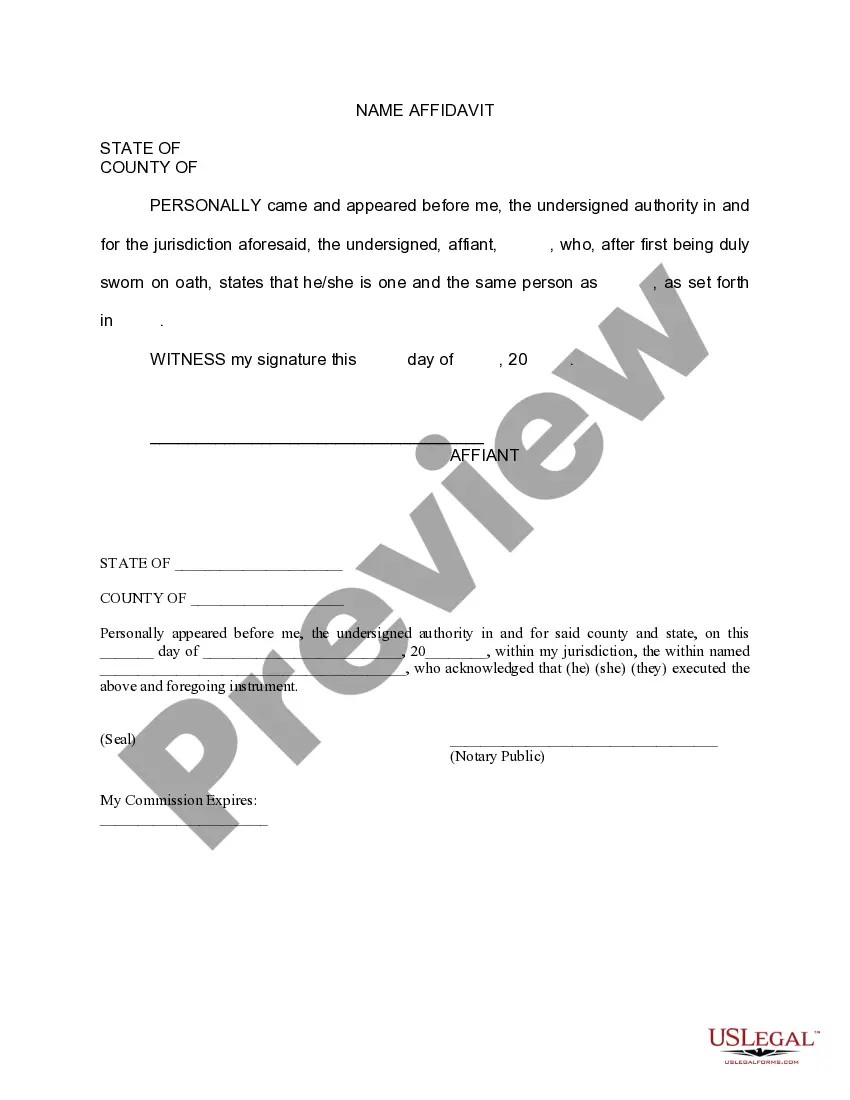
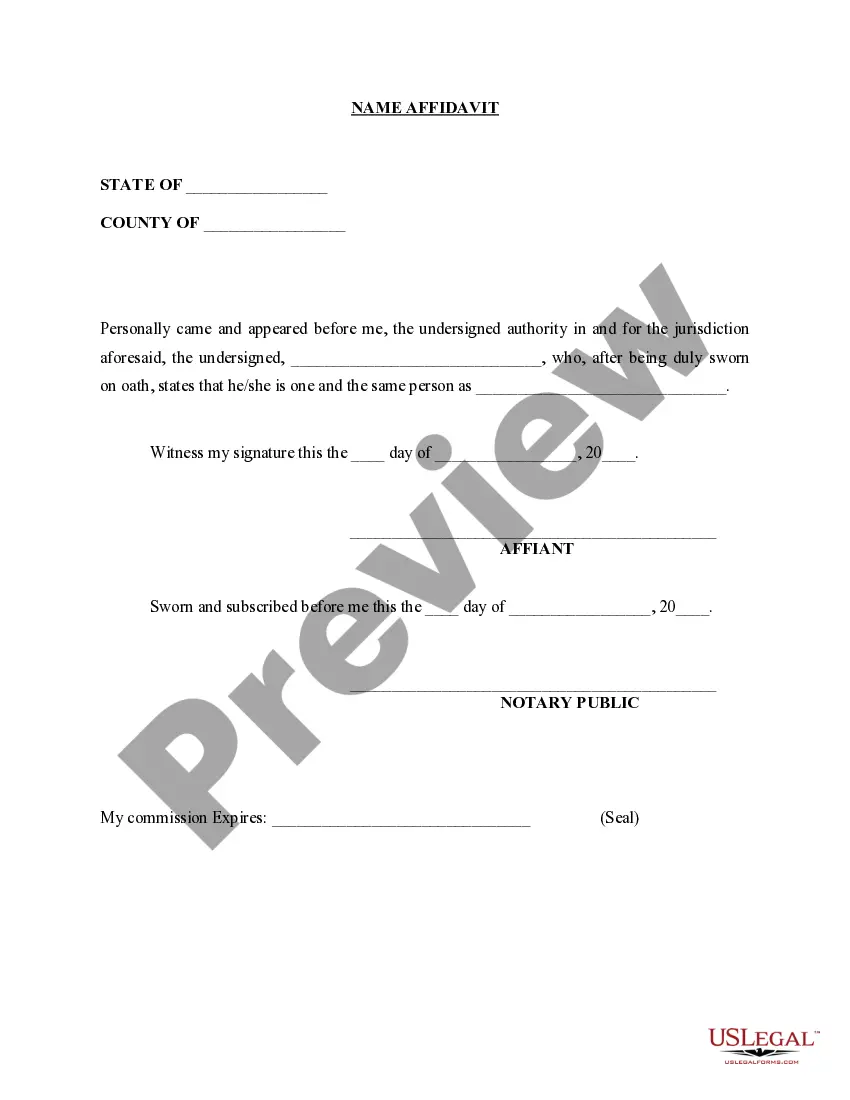
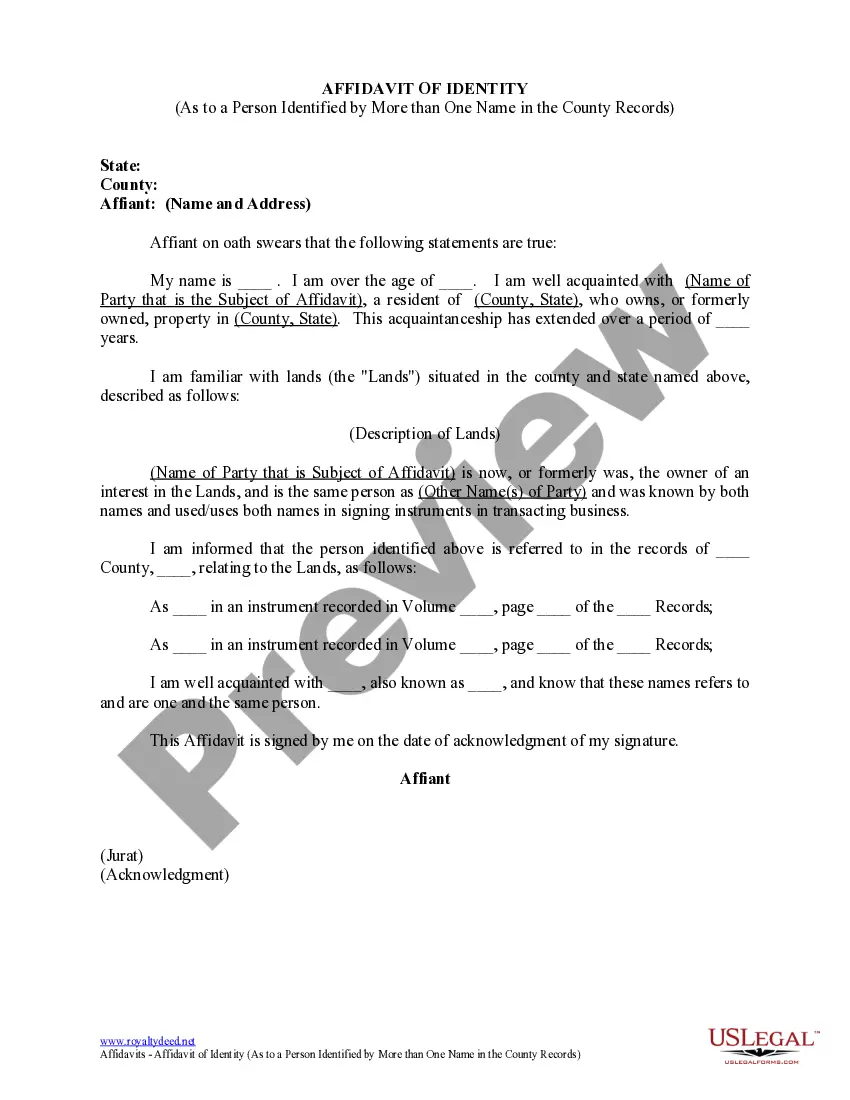
The Name Affidavit for Persons with Multiple Aliases is a legal document that allows an individual to affirm their identity and clarify the use of various names. This form serves as a sworn statement, ensuring the truthfulness of the affiant's declarations regarding their aliases. It is distinct from other identity affirmation forms by specifically addressing multiple names, which can be important for legal and personal documentation purposes.
Form components explained
- Affiant's full name and any aliases used
- A declaration affirming the truth of the statement
- Signature of the affiant
- Notary Public's signature and seal
- Date of notarization
Common use cases
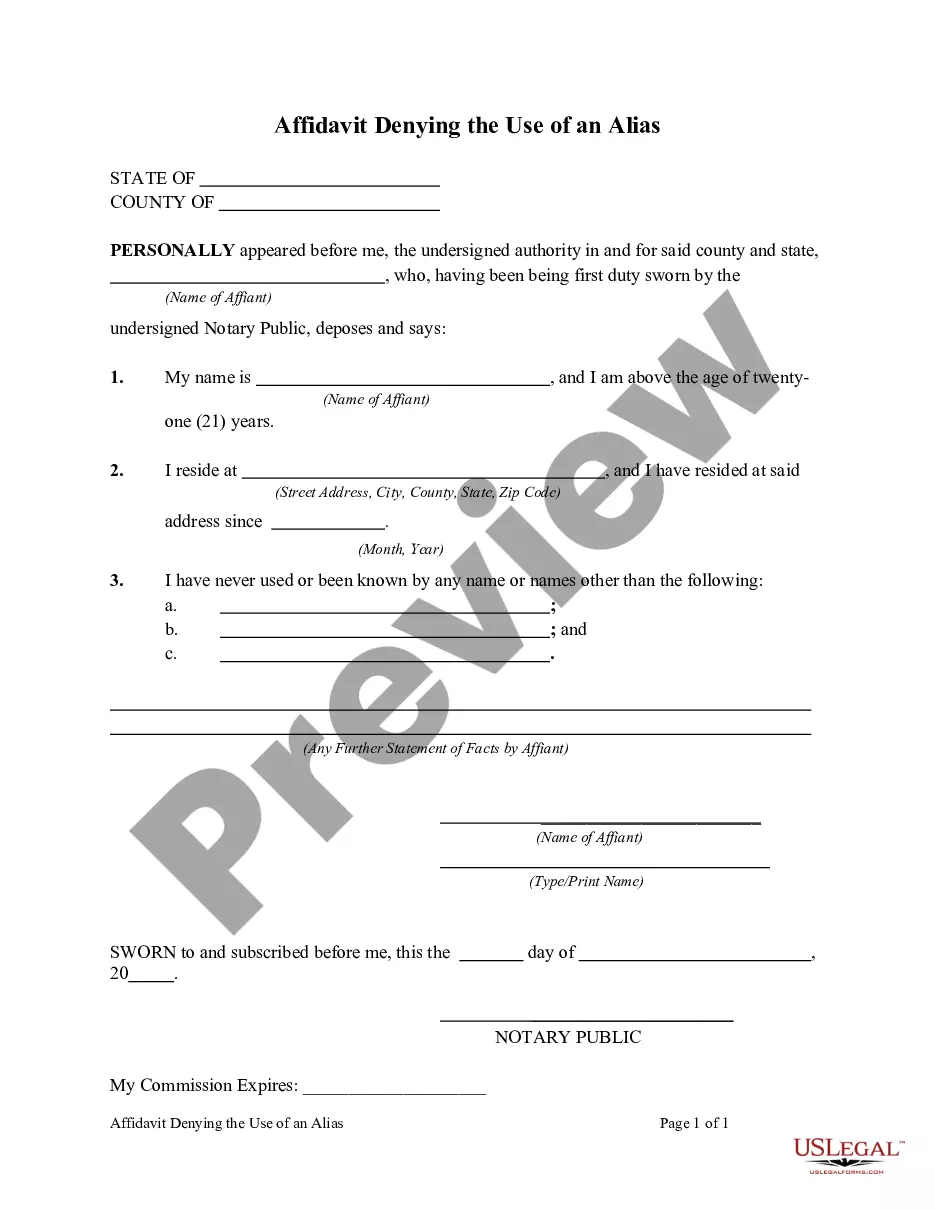
This affidavit is commonly used when individuals need to officially document their use of multiple names. Situations may include applying for identification documents, resolving issues with credit, or verifying identity for legal purposes, such as in court cases or financial transactions.
Intended users of this form
- Anyone who has legally changed their name and needs to declare their previous aliases
- Individuals dealing with legal or financial matters that require a clear identity
- People who want to clarify their identity for personal records or government agencies
Steps to complete this form
- Provide your full legal name and any aliases you have used.
- Draft a statement affirming the truthfulness of the information provided.
- Sign the affidavit in the presence of a Notary Public.
- Ensure the Notary Public completes their section, including their signature and seal.
- Keep a copy for your records after it is notarized.
Does this document require notarization?
This form needs to be notarized to ensure legal validity. US Legal Forms provides secure online notarization powered by Notarize, allowing you to complete the process through a verified video call, available anytime.
Get your form ready online
Our built-in tools help you complete, sign, share, and store your documents in one place.
Make edits, fill in missing information, and update formatting in US Legal Forms—just like you would in MS Word.
Download a copy, print it, send it by email, or mail it via USPS—whatever works best for your next step.
Sign and collect signatures with our SignNow integration. Send to multiple recipients, set reminders, and more. Go Premium to unlock E-Sign.
If this form requires notarization, complete it online through a secure video call—no need to meet a notary in person or wait for an appointment.
We protect your documents and personal data by following strict security and privacy standards.

Make edits, fill in missing information, and update formatting in US Legal Forms—just like you would in MS Word.

Download a copy, print it, send it by email, or mail it via USPS—whatever works best for your next step.

Sign and collect signatures with our SignNow integration. Send to multiple recipients, set reminders, and more. Go Premium to unlock E-Sign.

If this form requires notarization, complete it online through a secure video call—no need to meet a notary in person or wait for an appointment.

We protect your documents and personal data by following strict security and privacy standards.
Mistakes to watch out for
- Failing to include all used aliases.
- Not signing the affidavit in front of a Notary Public.
- Leaving out the date when the affidavit was signed.
Benefits of completing this form online
- Access a reliable template drafted by licensed attorneys.
- Edit and customize the form to fit your specific needs.
- Download the form instantly for immediate use.
Key takeaways
- The Name Affidavit is essential for clarifying identity when using multiple names.
- Completing the form accurately and notarizing it is crucial for legal validity.
- Double-check state-specific requirements to ensure compliance with local laws.
Looking for another form?


Form popularity
FAQ
An affiant is someone who files an affidavit, which is a written statement used as evidence in court. In order to be admissible, affidavits must be notarized by a notary public.
The person making the signed statement (affiant) takes an oath that the contents are, to the best of their knowledge, true. It is also signed by a notary or some other judicial officer that can administer oaths, affirming that the person signing the affidavit was under oath when doing so.
(1) The Registrar-General, a Deputy Registrar-General or any justice of the peace, notary public, commissioner of the court for taking affidavits, Australian legal practitioner authorised by section 27 (1) to take and receive any affidavit, a federal judicial officer, or other person by law authorised to administer an
In the sentence, the person writing the statement must state that he or she is stating that the information is accurate. (Example: I, Jane Doe, solemnly swear that the contents of this document are true and correct, and that I agree to abide by the terms in this affidavit.)
Although affidavits are considered legal documents, anyone can draft one. As long as it is signed, witnessed, and notarized correctly, it will be valid. That means that you do not have to use a lawyer to create an affidavit.
Title the affidavit. First, you'll need to title your affidavit. Craft a statement of identity. The very next section of your affidavit is what's known as a statement of identity. Write a statement of truth. State the facts. Reiterate your statement of truth. Sign and notarize.
An affidavit is a document written statement filed by an affiant as evidence in court. In order to be admissible, affidavits must be notarized by a notary public.Once the affiant acknowledges signing the document for its intended purpose and signs the affidavit, the document is notarized and becomes a sworn affidavit.
Title the affidavit. First, you'll need to title your affidavit. Craft a statement of identity. The very next section of your affidavit is what's known as a statement of identity. Write a statement of truth. State the facts. Reiterate your statement of truth. Sign and notarize.
As nouns the difference between plaintiff and affiant is that plaintiff is (legal) a party bringing a suit in civil law against a defendant; accusers while affiant is (legal) the individual witness whose statement is contained in an affidavit or sworn deposition.