Mississippi Contempt of Court Affidavit
Overview of this form
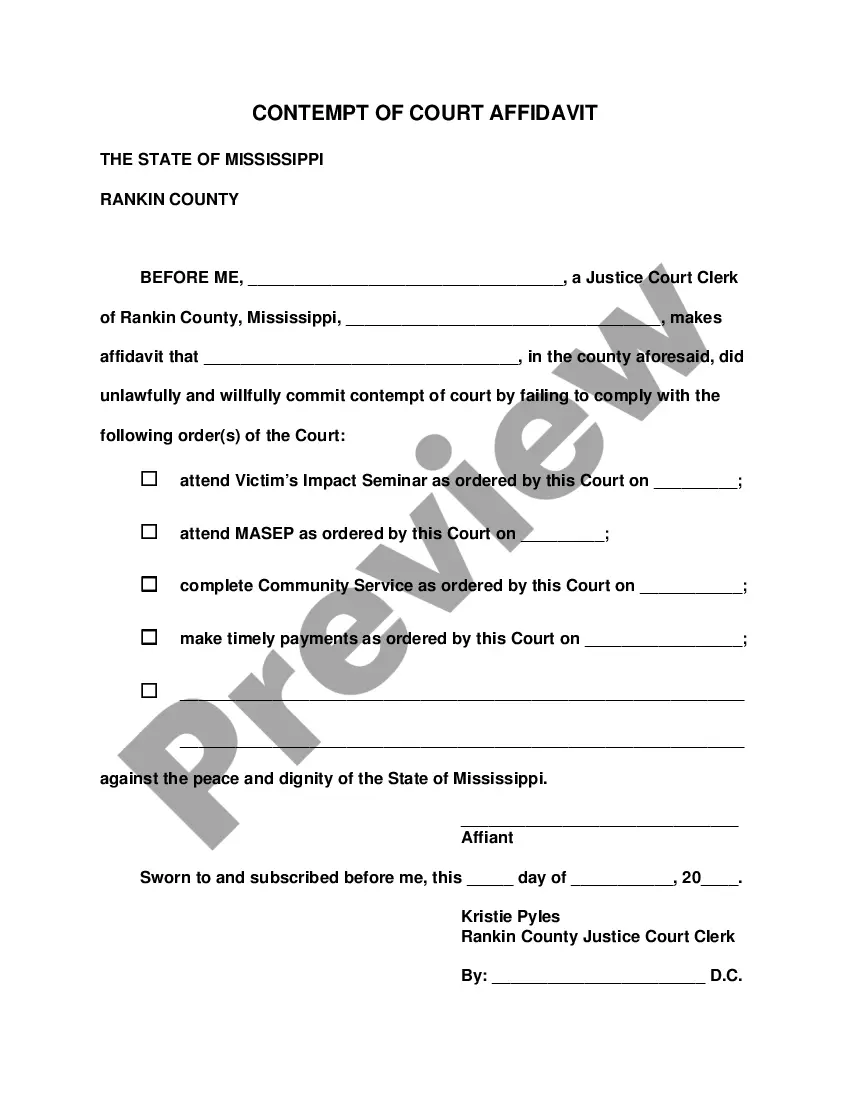
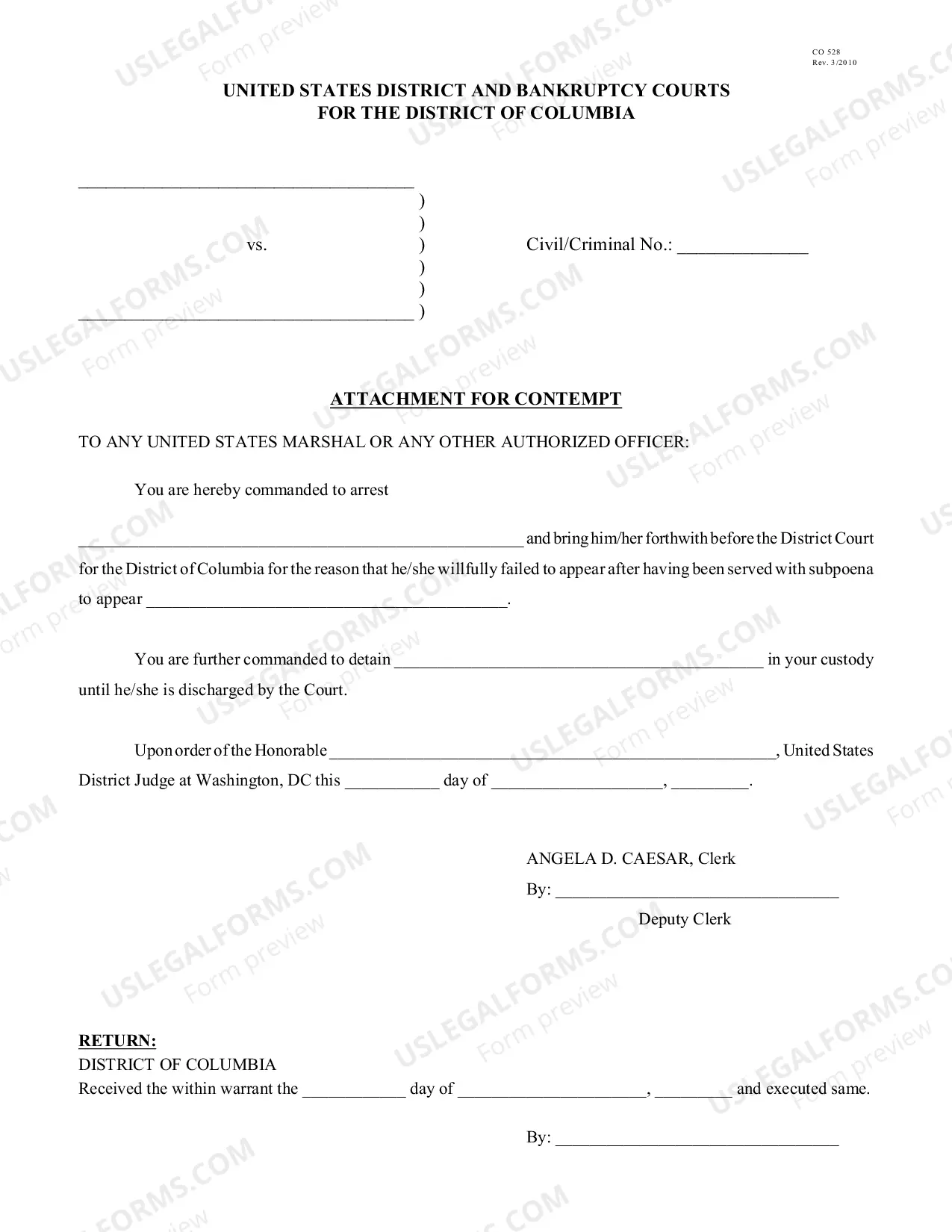
The Contempt of Court Affidavit is a legal document used in Rankin County, Mississippi, within criminal proceedings. This affidavit formally declares that an individual has willfully failed to comply with court orders, such as attending mandated seminars or making specified payments. It differs from other legal forms in that it specifically pertains to contempt actions, aimed at enforcing compliance with court directives.
Form components explained
- Affiant's name and signature, affirming the truth of the statements made.
- A statement declaring the specific court order(s) that were violated.
- Details of the contemptuous acts, describing how the individual failed to comply.
- The date on which the court ordered compliance.
- Signature of the Justice Court Clerk, validating the affidavit.

When to use this form
This form is used when an individual fails to adhere to a court's orders, such as attending mandated programs or completing community service. It is essential in legal proceedings to document the non-compliance and to seek enforcement or penal action against the individual who did not follow the court's directives.
Intended users of this form
- Individuals who have been ordered by the court to complete specific tasks and have not complied.
- Attorneys representing clients in contempt cases.
- Justice Court Clerks responsible for processing contempt affidavits.
How to prepare this document
- Enter the name of the person making the affidavit (affiant).
- Specify the court order(s) that were not complied with.
- Detail the actions that constitute contempt of court, including dates and specifics.
- Sign the affidavit in front of the Justice Court Clerk.
- Ensure that the Clerkâs signature and date are filled in to validate the affidavit.
Does this form need to be notarized?
This form must be notarized to be legally valid. After completing the affidavit, it should be signed in the presence of a notary public, ensuring that all statements are formally acknowledged and authenticated.
Get your form ready online
Our built-in tools help you complete, sign, share, and store your documents in one place.
Make edits, fill in missing information, and update formatting in US Legal Forms—just like you would in MS Word.
Download a copy, print it, send it by email, or mail it via USPS—whatever works best for your next step.
Sign and collect signatures with our SignNow integration. Send to multiple recipients, set reminders, and more. Go Premium to unlock E-Sign.
If this form requires notarization, complete it online through a secure video call—no need to meet a notary in person or wait for an appointment.
We protect your documents and personal data by following strict security and privacy standards.

Make edits, fill in missing information, and update formatting in US Legal Forms—just like you would in MS Word.

Download a copy, print it, send it by email, or mail it via USPS—whatever works best for your next step.

Sign and collect signatures with our SignNow integration. Send to multiple recipients, set reminders, and more. Go Premium to unlock E-Sign.

If this form requires notarization, complete it online through a secure video call—no need to meet a notary in person or wait for an appointment.

We protect your documents and personal data by following strict security and privacy standards.
Common mistakes
- Failing to detail all court orders that were violated.
- Not signing the affidavit in the presence of the Clerk.
- Leaving out critical dates related to the court orders.
Why use this form online
- Convenient access to downloadable templates anytime.
- Editable fields that allow for accurate and personalized entries.
- Reliability of forms drafted by licensed attorneys in accordance with Mississippi law.
Looking for another form?

Form popularity
FAQ
Depending on the infraction, contempt of court consequences can include fines, compensatory visitation, a modification to the custody arrangement, and in some instances even jail time. In most cases, if someone is held in contempt, the court will first give them the opportunity to make amends for the violation.
The Supreme, circuit, chancery and county courts and the Court of Appeals shall have power to fine and imprison any person guilty of contempt of the court while sitting, but the fine shall not exceed One Hundred Dollars ($100.00) for each offense, nor shall the imprisonment continue longer than thirty (30) days.
Contempt proceedings can be initiated either by filing an application or by the court itself suo moto. In both the cases, contempt proceedings must be initiated within one year from the date on which contempt is alleged to have been committed.
Proof of contempt Being found in contempt of a court order is extremely serious, and the sanctions imposed can be severe. The court will require clear and concrete evidence of willful disobedience of the court order.
To get a contempt finding, you must usually file a court document called a "motion for an order to show cause." That puts the burden on the parent who isn't following the custody or visitation order to explain to the court the reasons why he or she should not be held in contempt.
Depending on the jurisdiction and the case, the same judge who decided to charge a person with contempt may end up presiding over the contempt proceedings. Criminal contempt can bring punishment including jail time and/or a fine.
Depending on the infraction, contempt of court consequences can include fines, compensatory visitation, a modification to the custody arrangement, and in some instances even jail time. In most cases, if someone is held in contempt, the court will first give them the opportunity to make amends for the violation.
Contempt proceedings can be initiated either by filing an application or by the court itself suo moto. In both the cases, contempt proceedings must be initiated within one year from the date on which contempt is alleged to have been committed.
A violation of PC 166 is typically a misdemeanor. A criminal contempt action is punishable by: custody in county jail (not state prison) for up to six months, and/or. a maximum fine of $1,000.