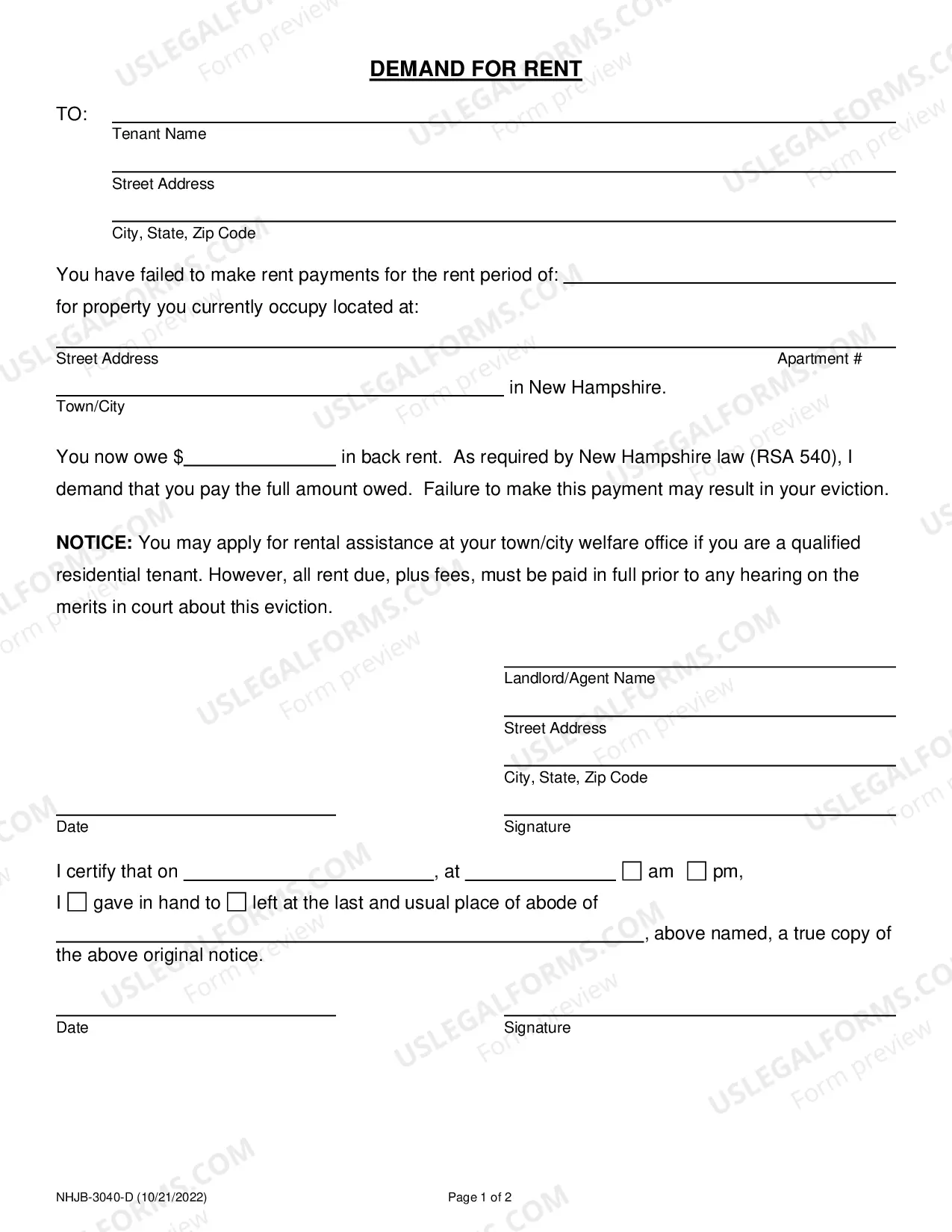
Public Relations Agreement - Self-Employed Independent Contractor
Overview of this form
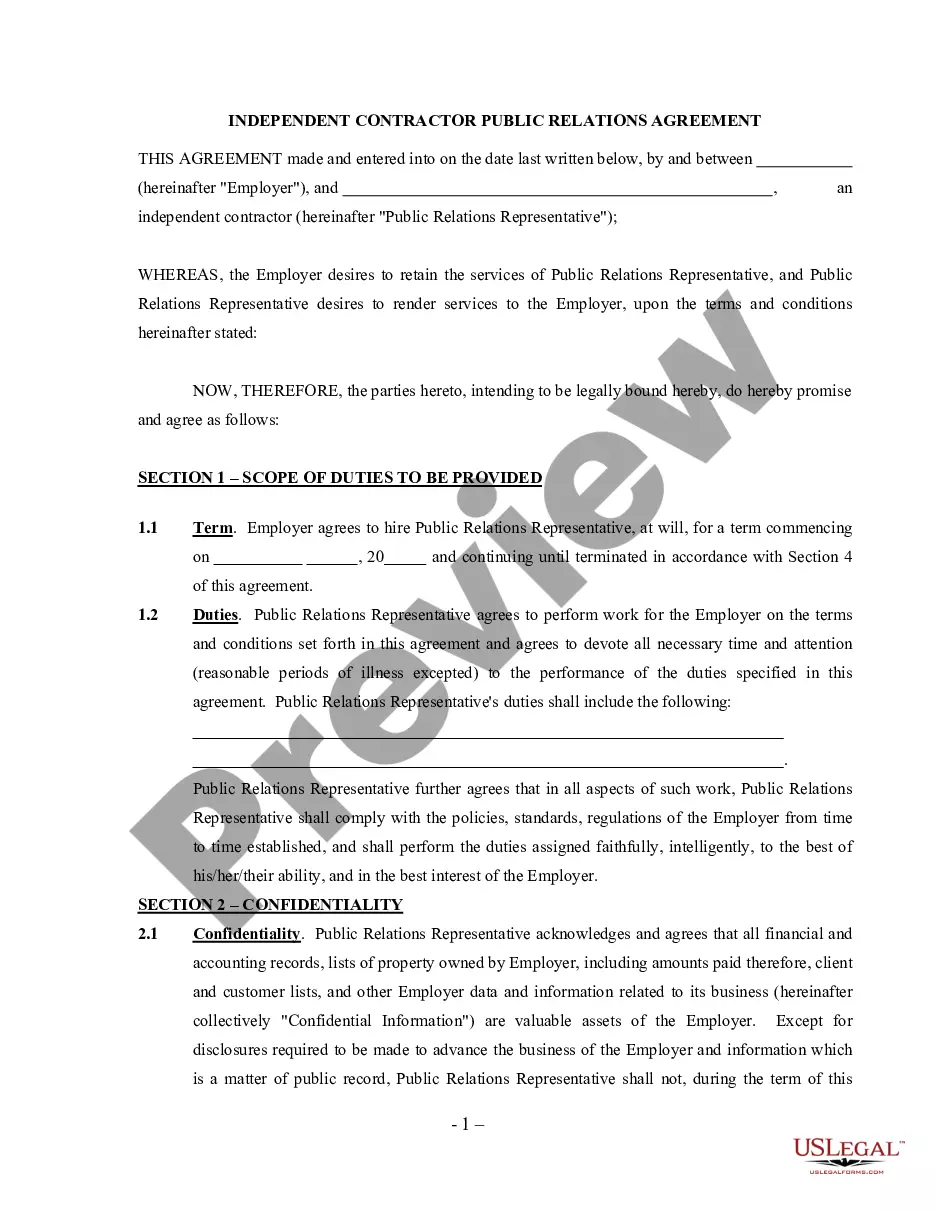
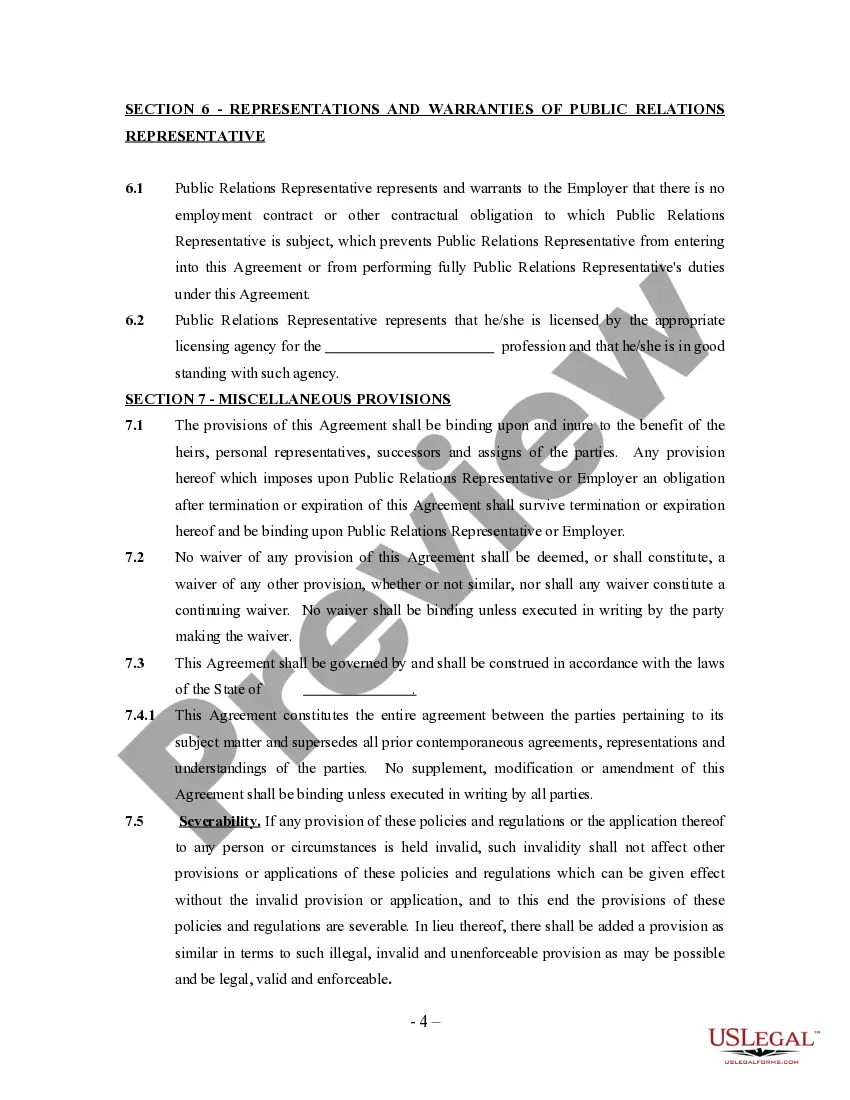
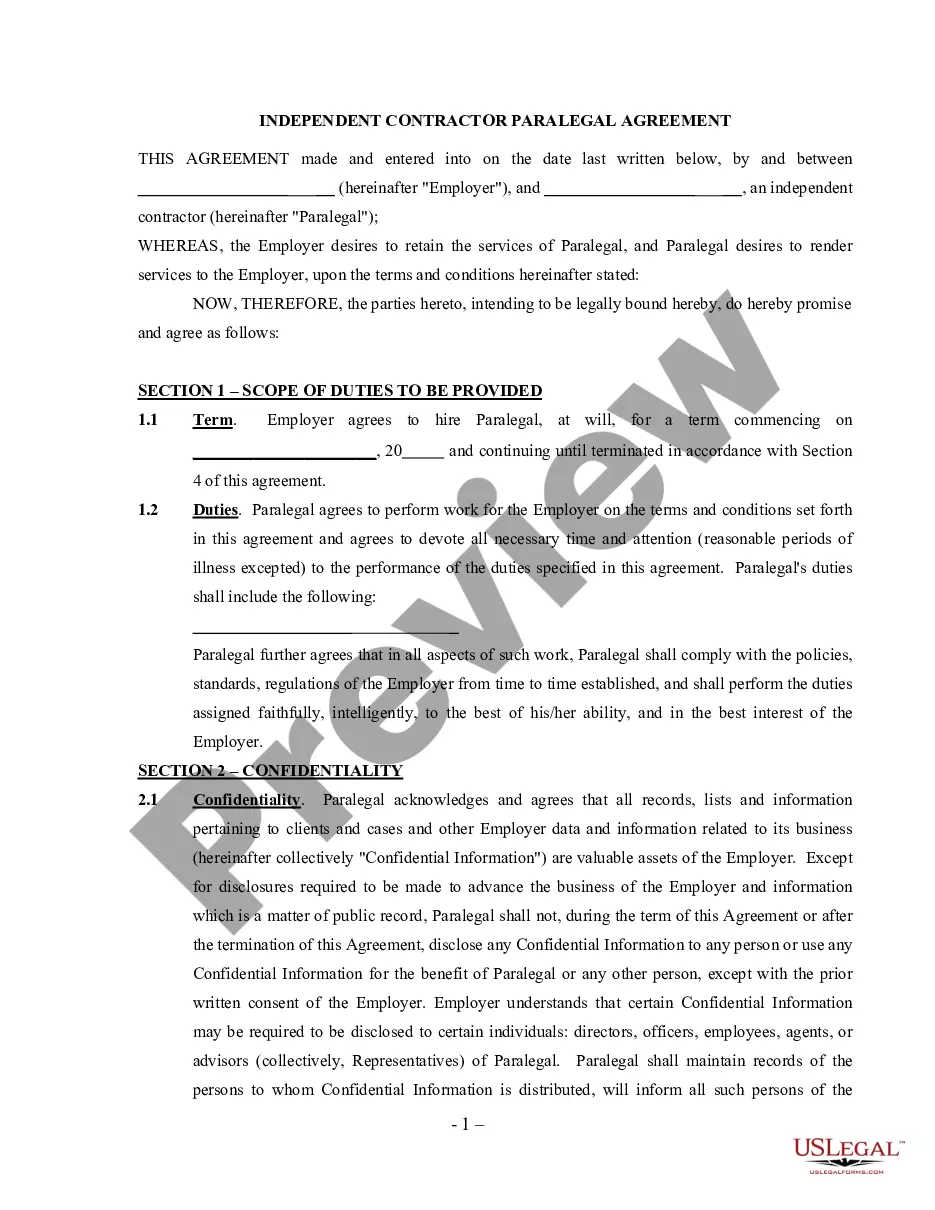
The Public Relations Agreement - Self-Employed Independent Contractor is a legal document that outlines the terms and conditions under which a public relations specialist is hired by an employer on an independent contractor basis. This form is designed to ensure clarity regarding the specialist's duties, compensation, and confidentiality obligations, thereby promoting a mutually beneficial relationship between the parties involved. Unlike employment contracts, this agreement emphasizes the independent nature of the contractorâs role in managing publicity and establishing goodwill for the employer.
Main sections of this form
- Scope of Duties: Outlines specific responsibilities of the public relations representative.
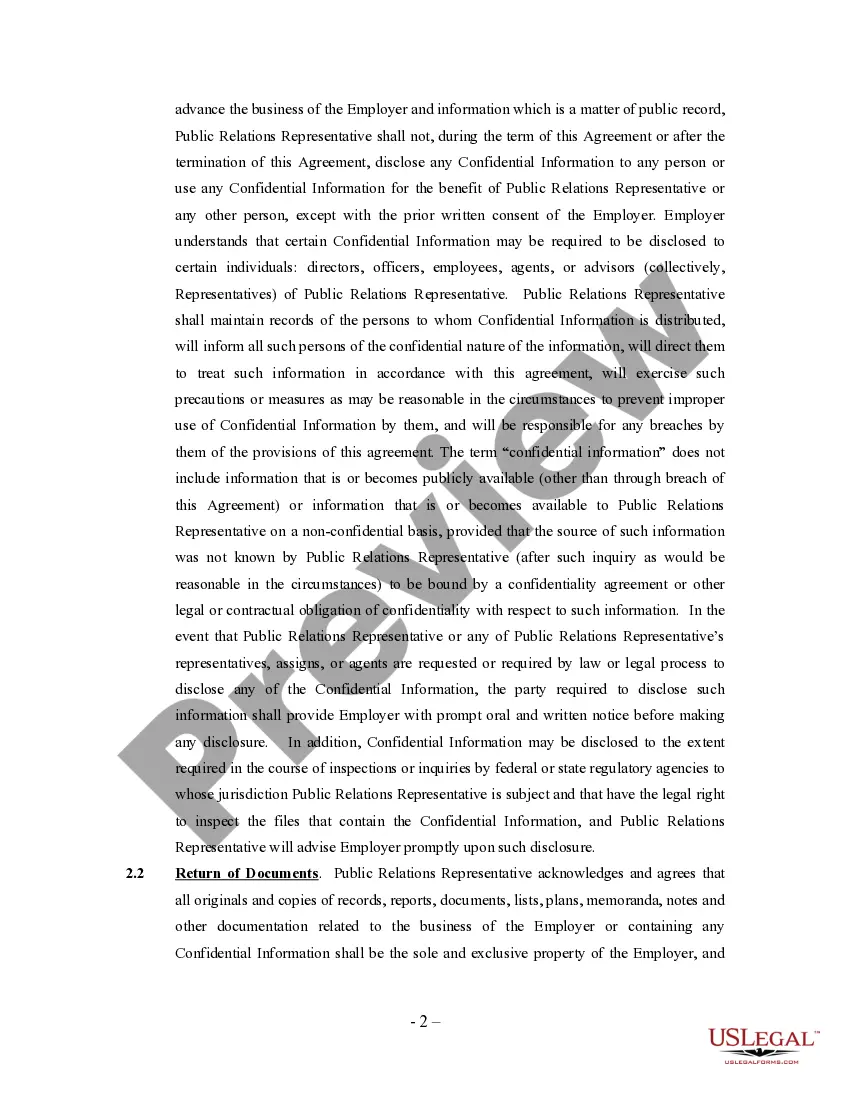
- Confidentiality: Defines what constitutes confidential information and obligations related to it.
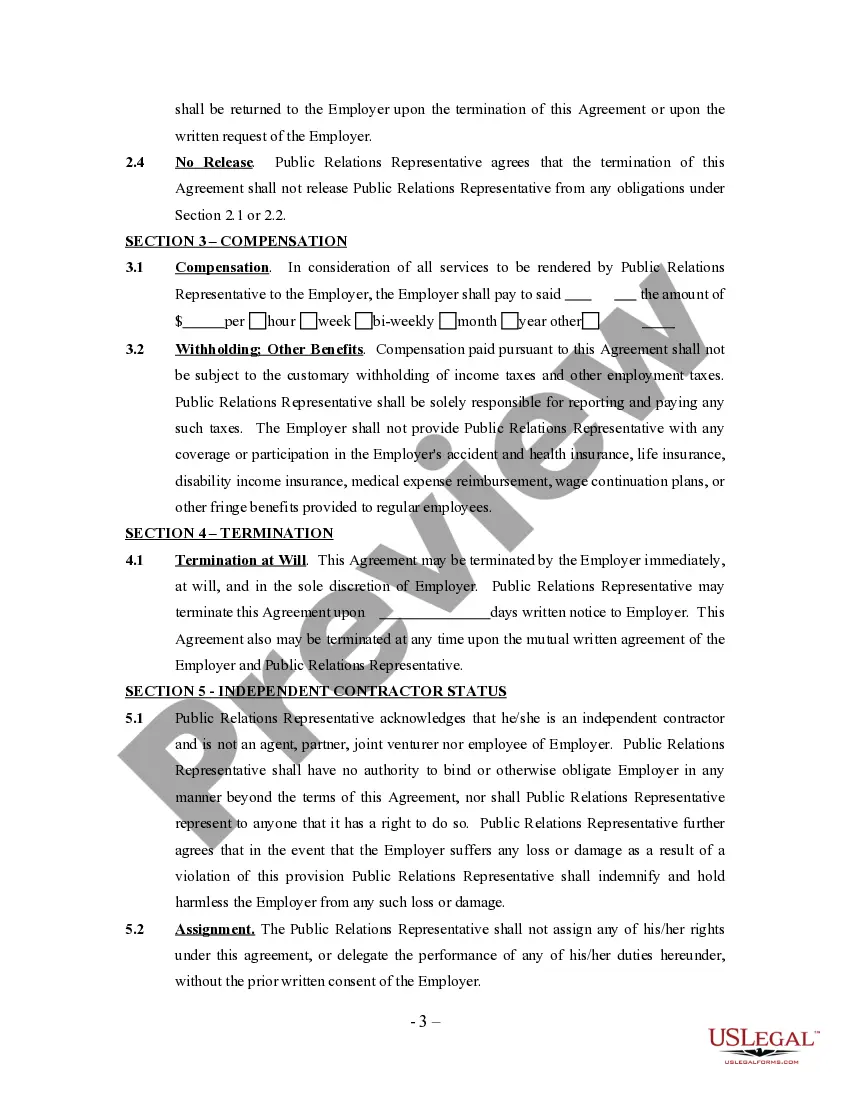
- Compensation: Details the payment terms for services rendered.
- Termination: Explains the conditions under which the agreement may be terminated.
- Assignments: Specifies restrictions on assigning rights and delegating duties under the agreement.
- Severability: Addresses how to handle invalid provisions in the agreement.
Situations where this form applies
This Public Relations Agreement should be used when an employer seeks to hire a public relations specialist as an independent contractor. It is necessary in situations where there is a need to establish clear expectations regarding publicity management, establish a professional relationship without the liabilities of an employee-employer dynamic, and protect confidential business information. This form is particularly useful when launching new marketing campaigns, managing public perceptions, or during crisis communications.
Intended users of this form
This form is ideal for:
- Employers looking to contract public relations services.
- Public relations specialists or consultants operating as independent contractors.
- Businessesâregardless of sizeâneeding structured agreements for PR services.
- Organizations seeking to clarify the scope and compensation of PR roles while maintaining confidentiality.
Completing this form step by step
- Identify the parties involved including the employer and public relations representative.
- Clearly specify the scope of duties that the public relations representative will perform.
- Detail the compensation structure, including any payment schedules.
- Include confidentiality obligations regarding any sensitive information shared during the contract period.
- Sign and date the agreement to ensure it is legally binding.
Does this document require notarization?
This form does not typically require notarization unless specified by local law. It is advisable to check with local regulations to ensure compliance, but generally, a signature from both parties is sufficient.
Get your form ready online
Our built-in tools help you complete, sign, share, and store your documents in one place.
Make edits, fill in missing information, and update formatting in US Legal Forms—just like you would in MS Word.
Download a copy, print it, send it by email, or mail it via USPS—whatever works best for your next step.
Sign and collect signatures with our SignNow integration. Send to multiple recipients, set reminders, and more. Go Premium to unlock E-Sign.
If this form requires notarization, complete it online through a secure video call—no need to meet a notary in person or wait for an appointment.
We protect your documents and personal data by following strict security and privacy standards.

Make edits, fill in missing information, and update formatting in US Legal Forms—just like you would in MS Word.

Download a copy, print it, send it by email, or mail it via USPS—whatever works best for your next step.

Sign and collect signatures with our SignNow integration. Send to multiple recipients, set reminders, and more. Go Premium to unlock E-Sign.

If this form requires notarization, complete it online through a secure video call—no need to meet a notary in person or wait for an appointment.

We protect your documents and personal data by following strict security and privacy standards.
Typical mistakes to avoid
- Failing to define the specific scope of duties, which can lead to misunderstandings.
- Neglecting to include confidentiality clauses, risking exposure of sensitive information.
- Not specifying payment terms clearly, which can cause disputes later.
- Overlooking to have both parties sign and date the agreement to ensure enforceability.
Why use this form online
- Convenience of downloading the form anytime, anywhere.
- Editability allows customization to fit specific needs.
- Access to legally vetted documents drafted by licensed attorneys.
- Streamlined completion process reduces the time required to finalize agreements.
Legal use & context
- This agreement is a legally binding contract that delineates the expectations and responsibilities of both parties.
- Ensures the protection of confidential information critical to the employer's business.
- Clarifies the independent contractor status, which can affect liability and tax implications.
Key takeaways
- The Public Relations Agreement establishes a formal relationship between an employer and an independent contractor.
- It includes critical components such as duties, confidentiality, and payment terms.
- This form is applicable across various states, providing flexibility for employers and contractors alike.
Looking for another form?

Form popularity
FAQ
The IRS requires contractors to fill out a Form W-9, request for Taxpayer Identification Number and Certification, which you should keep on file for at least four years after the hiring. This form is used to request the correct name and Taxpayer Identification Number, or TIN, of the worker or their entity.
Gather the required information. Submit Copy A to the IRS. Submit copy B to the independent contractor. Submit form 1096. Check if you need to submit 1099 forms with your state.
Terms. This is the first section of any agreement or contract and states the names and locations of the parties involved. Responsibilities & Deliverables. Payment-Related Details. Confidentiality Clause. Contract Termination. Choice of Law.
Get it in writing. Keep it simple. Deal with the right person. Identify each party correctly. Spell out all of the details. Specify payment obligations. Agree on circumstances that terminate the contract. Agree on a way to resolve disputes.
The IRS requires contractors to fill out a Form W-9, request for Taxpayer Identification Number and Certification, which you should keep on file for at least four years after the hiring. This form is used to request the correct name and Taxpayer Identification Number, or TIN, of the worker or their entity.
Do not designate someone as a 1099 Employee if: Company provides training on a certain method of job performance. Tools and materials are provided. Employees must follow set schedule. You provide benefits such as vacation, overtime pay, etc.
An independent contractor is not considered an employee for Form I-9 purposes and does not need to complete Form I-9.
Terms. This is the first section of any agreement or contract and states the names and locations of the parties involved. Responsibilities & Deliverables. Payment-Related Details. Confidentiality Clause. Contract Termination. Choice of Law.
Post the nonemployee compensation to box 1 on Form 1099-NEC, and list your company's taxpayer identification number (TIN) as Payer's TIN. List the Recipient's TIN, name, and address. Record any federal and state income tax withholdings, if applicable.