Mississippi Claimant Answers to First Set of Requests for Production of Documents
What is this form?
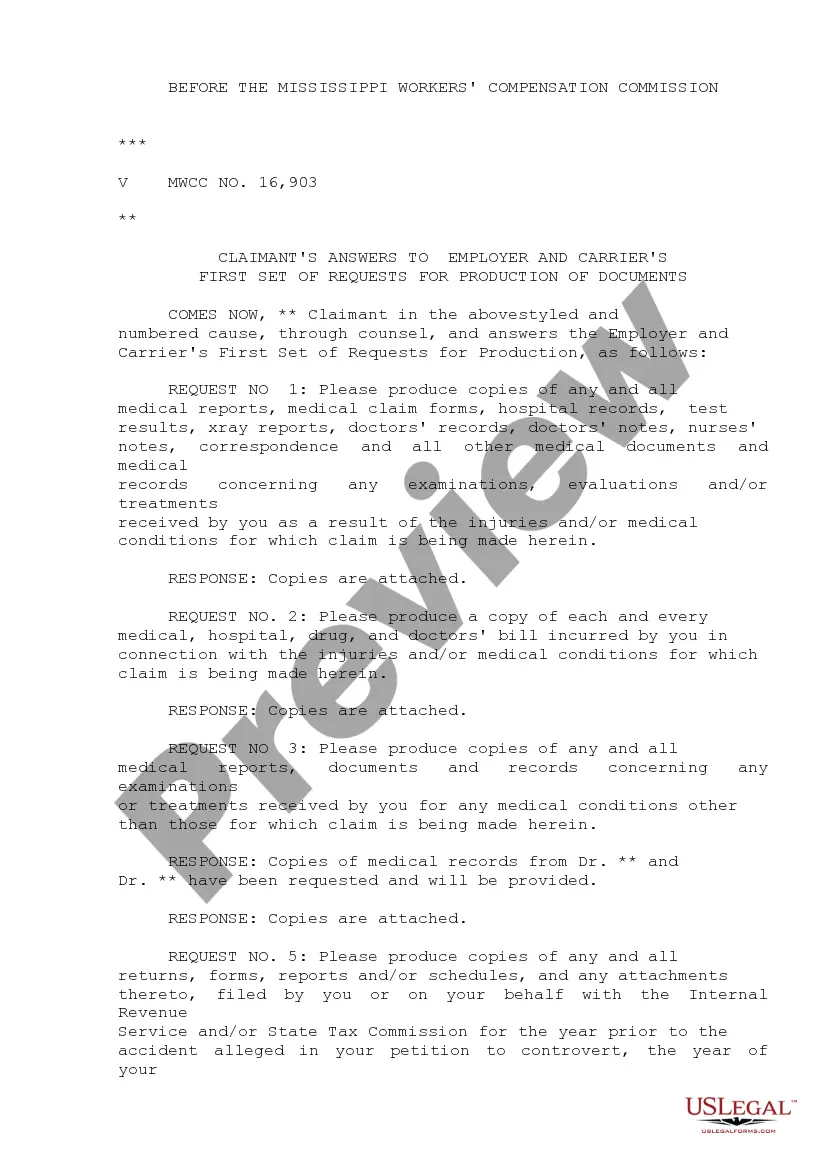
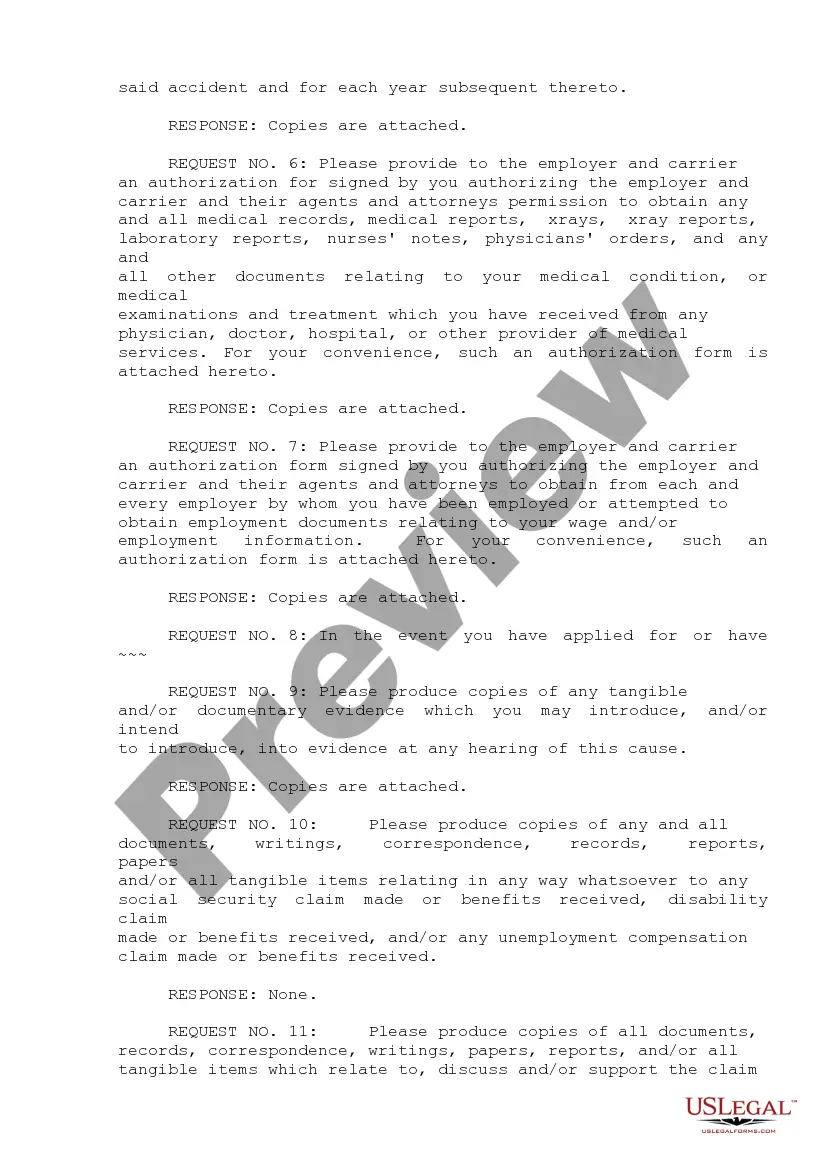
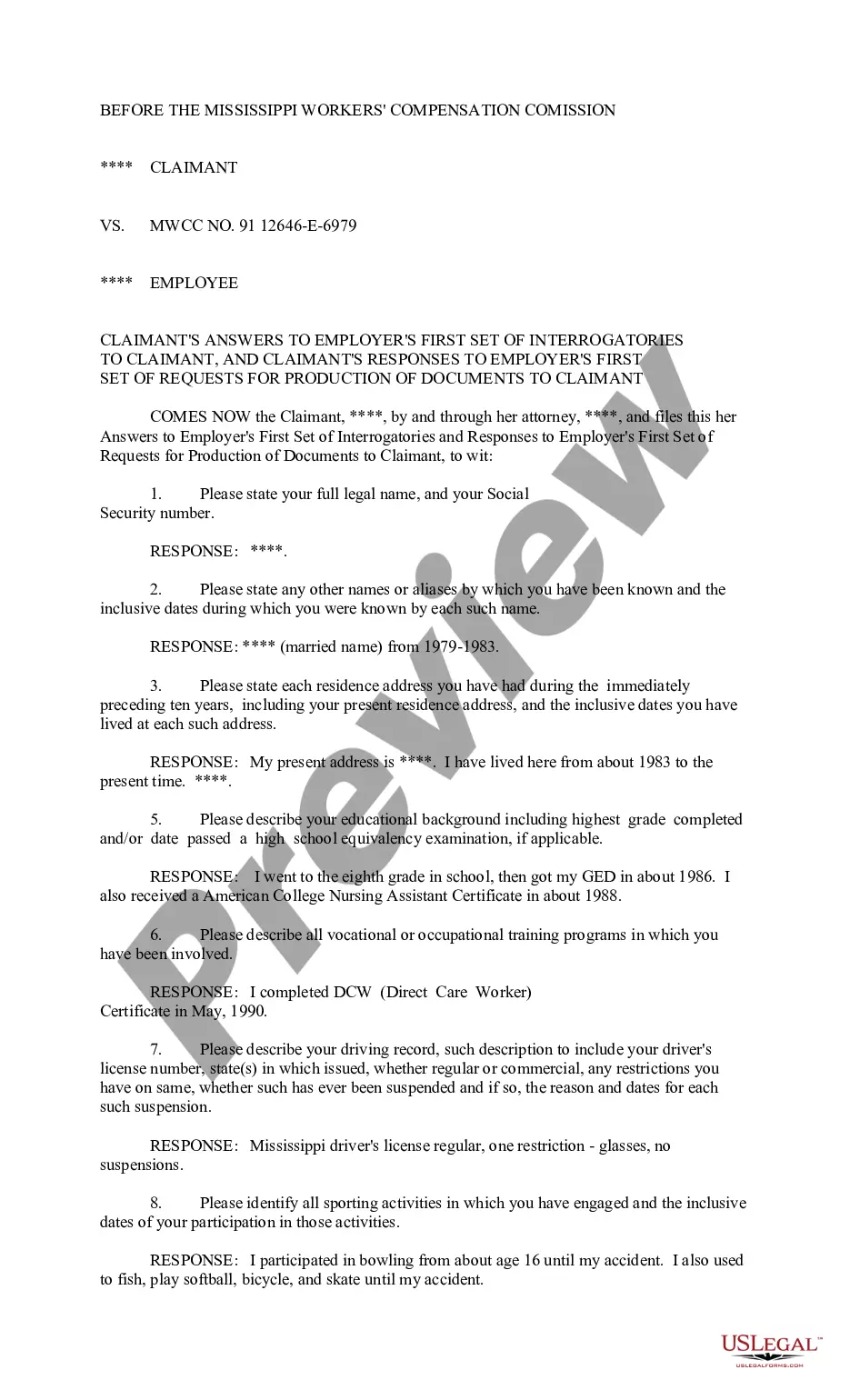
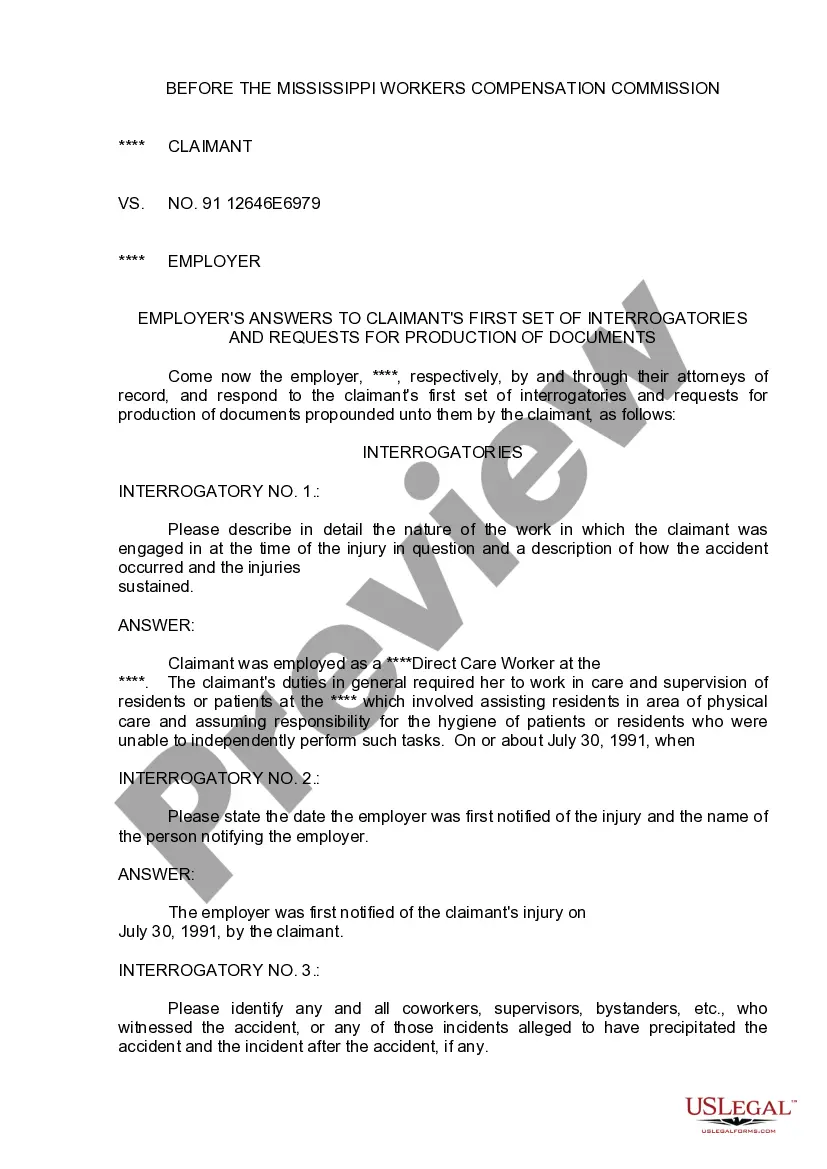
The Claimant Answers to First Set of Requests for Production of Documents is a legal form used in Mississippi. It is a formal response submitted by the claimant in a workers' compensation case to provide information and documentation requested by the employer and insurance carrier. This form differs from other legal documents because it specifically addresses requests for various types of medical and employment records relevant to the claimant's injuries or medical conditions. It ensures compliance with Mississippi codes and statutes while allowing claimants to assert whether they possess the requested documents.
Main sections of this form
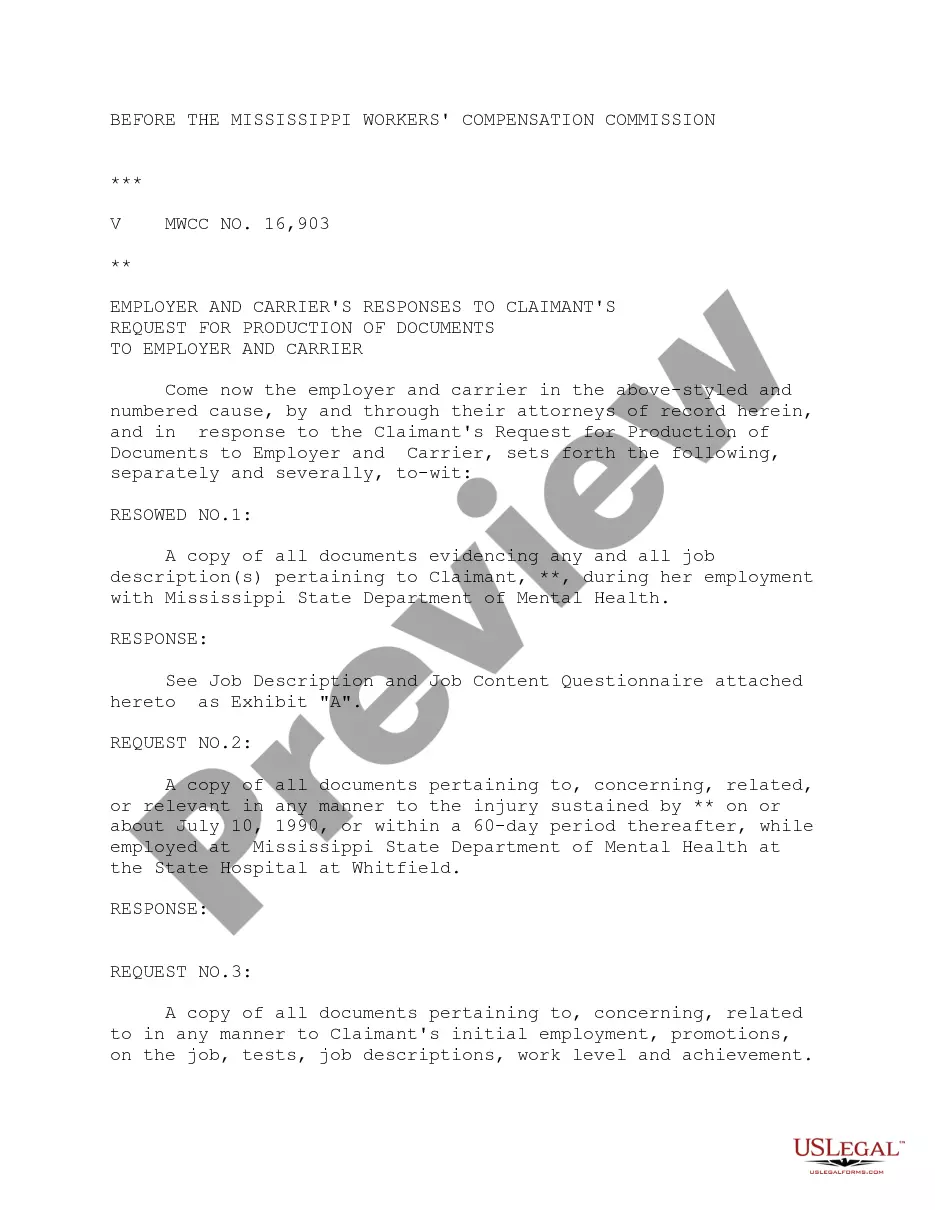
- Claim Information: Includes reference to the specific workers' compensation case number.
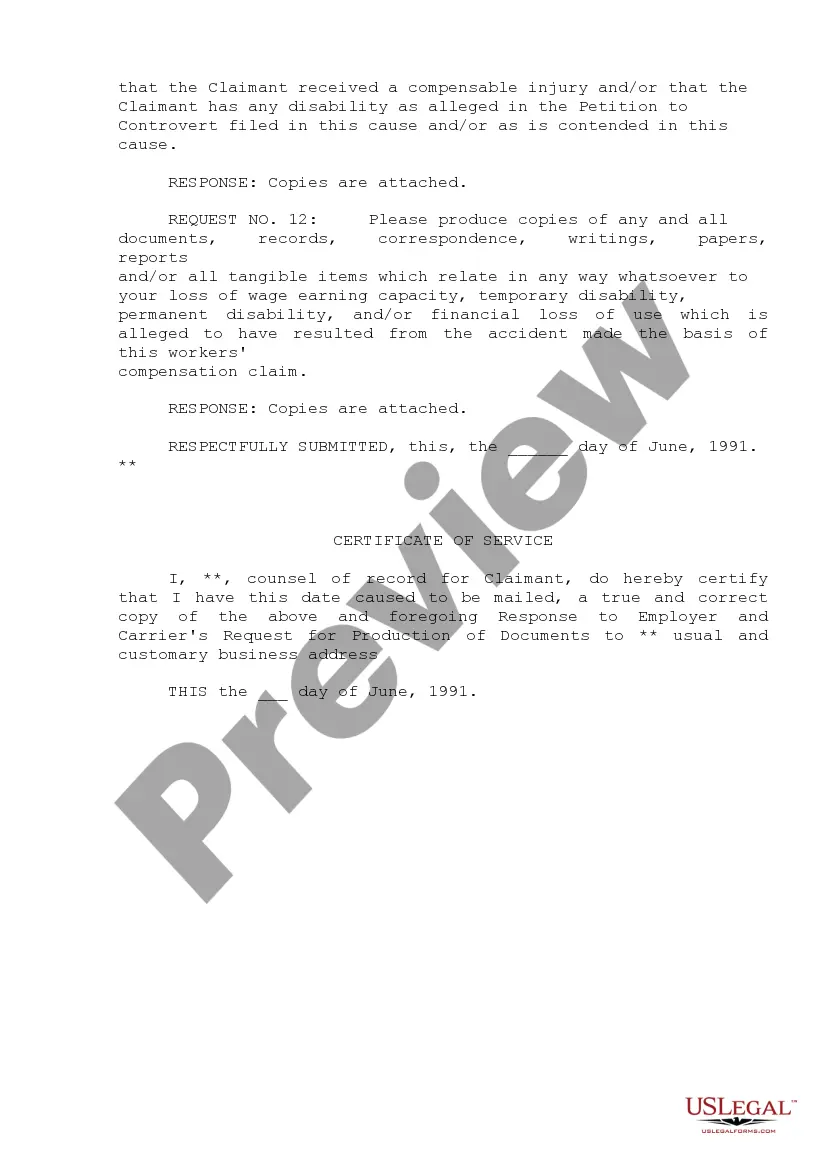
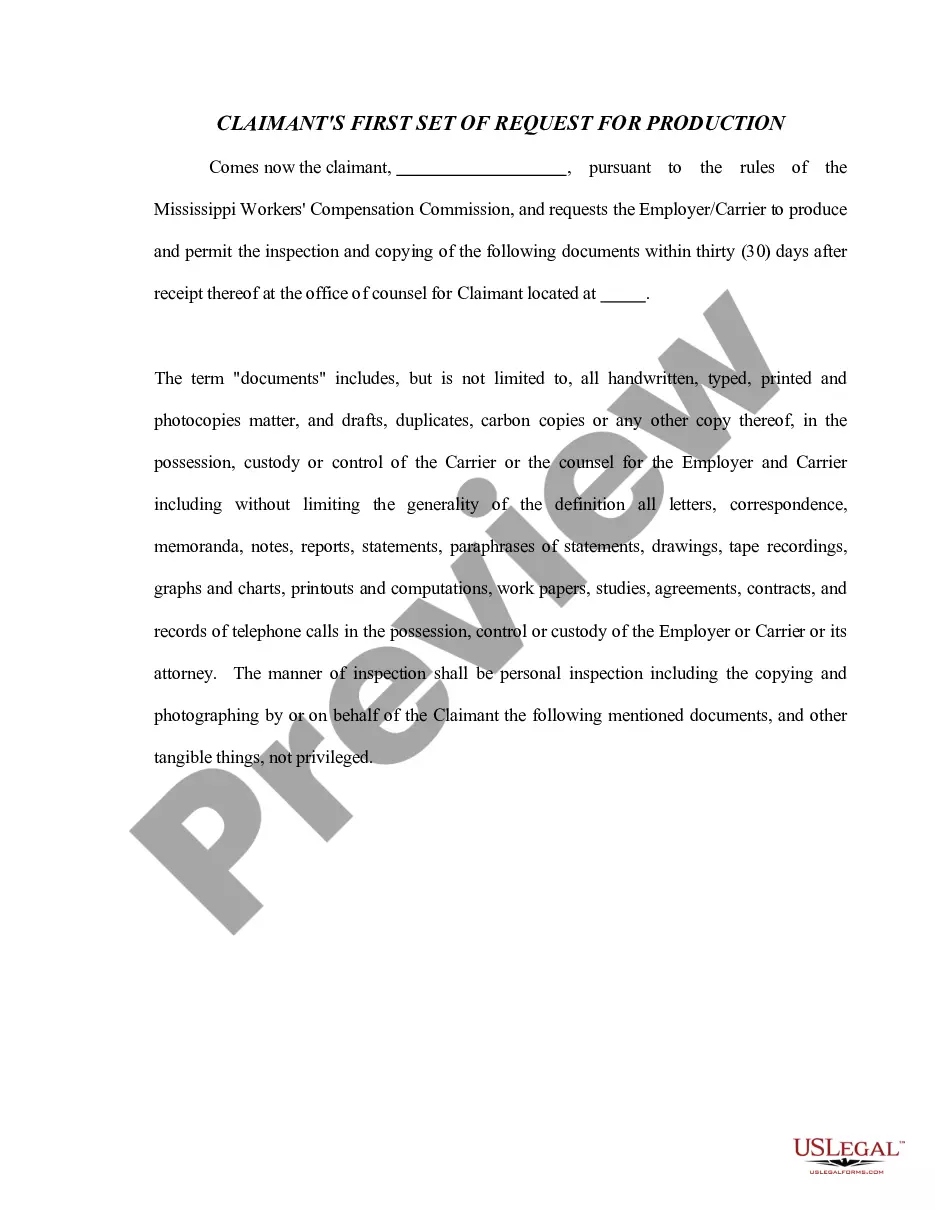
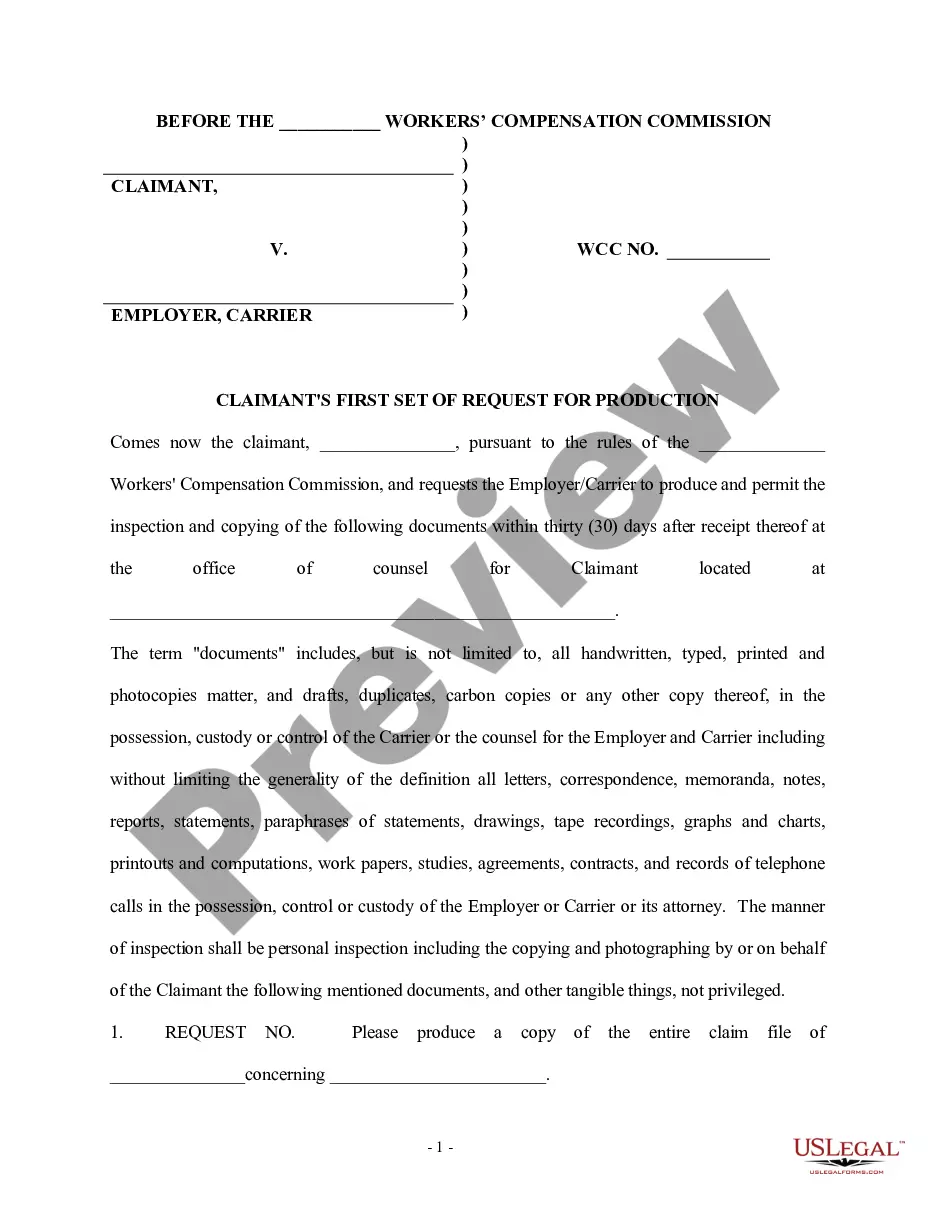
- Requests and Responses: Sequentially numbered requests for production of documents followed by corresponding responses from the claimant.
- Medical and Employment Records: Detailed requests for documentation related to medical treatments, bills, and employment information.
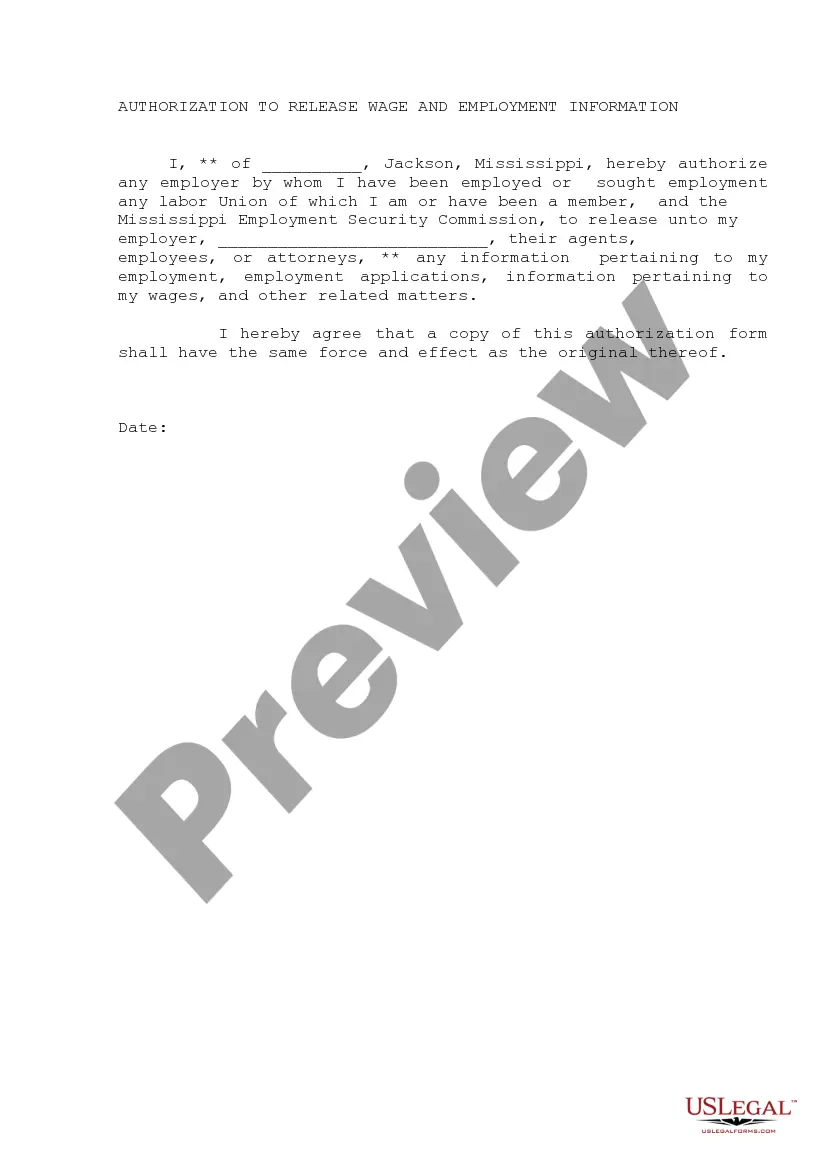
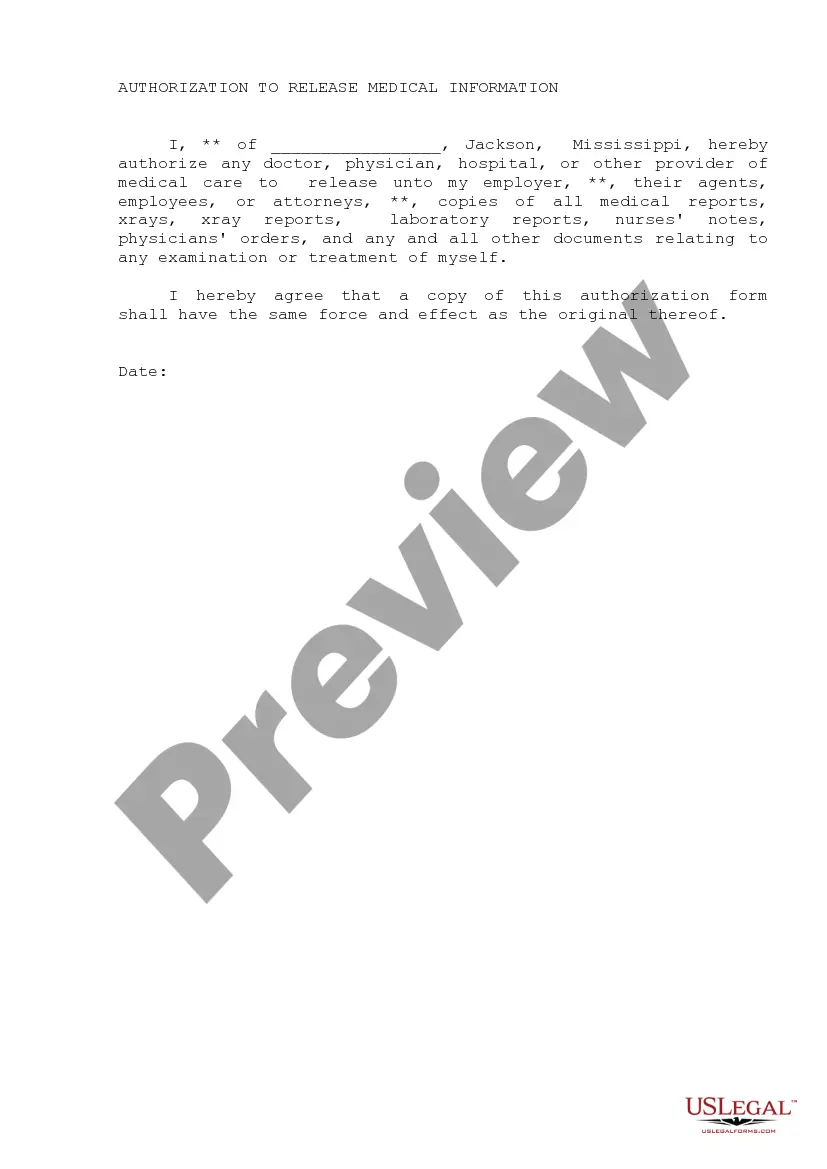
- Authorizations: Forms for authorizing the release of medical and employment information.
- Certificate of Service: A section confirming that a copy of the responses has been mailed to the opposing party.
Common use cases
This form should be used during the discovery phase of a workers' compensation case when the employer or insurance carrier requests specific documents necessary to evaluate the claimant's injuries and claims. It is typically required after a formal request for production of documents has been made and helps to clarify what evidence will be presented in court.
Who can use this document
This form is intended for:
- Claimants filing for workers' compensation benefits in Mississippi.
- Attorneys representing claimants in related legal proceedings.
- Employers and insurance carriers seeking documentation to support or contest a claim.
Completing this form step by step
- Identify the case number and complete the caption with the names of the parties involved.
- Gather all pertinent medical records, bills, and other documents that respond to each request listed.
- Clearly mark each response corresponding to the requests made and attach any necessary documents.
- Complete and sign the authorization forms for the release of medical and employment information.
- Include the certificate of service confirming that copies have been sent to all parties involved.
Does this form need to be notarized?
This form usually doesn’t need to be notarized. However, local laws or specific transactions may require it. Our online notarization service, powered by Notarize, lets you complete it remotely through a secure video session, available 24/7.
Get your form ready online
Our built-in tools help you complete, sign, share, and store your documents in one place.
Make edits, fill in missing information, and update formatting in US Legal Forms—just like you would in MS Word.
Download a copy, print it, send it by email, or mail it via USPS—whatever works best for your next step.
Sign and collect signatures with our SignNow integration. Send to multiple recipients, set reminders, and more. Go Premium to unlock E-Sign.
If this form requires notarization, complete it online through a secure video call—no need to meet a notary in person or wait for an appointment.
We protect your documents and personal data by following strict security and privacy standards.

Make edits, fill in missing information, and update formatting in US Legal Forms—just like you would in MS Word.

Download a copy, print it, send it by email, or mail it via USPS—whatever works best for your next step.

Sign and collect signatures with our SignNow integration. Send to multiple recipients, set reminders, and more. Go Premium to unlock E-Sign.

If this form requires notarization, complete it online through a secure video call—no need to meet a notary in person or wait for an appointment.

We protect your documents and personal data by following strict security and privacy standards.
Typical mistakes to avoid
- Failing to attach requested documents or providing incomplete responses.
- Not signing or dating the authorization forms, making them unenforceable.
- Using vague language in responses instead of specifying whether documents are available or not.
- Neglecting to serve a copy of the responses to the opposing party.
Why use this form online
- Convenience of immediate access and the ability to complete the form at your own pace.
- Editability to customize responses specific to your case needs.
- Direct compliance with state requirements, reducing the chance of errors.
- Secure storage and easy retrieval of completed forms when needed.
What to keep in mind
- The form is essential for responding to document requests in Mississippi workers' compensation cases.
- It includes sections for both medical and employment documentation requests.
- Accurate completion and timely submission are critical to the success of a claim.
Looking for another form?
Form popularity
FAQ
Tell the employer that you're flexible, especially if you really want the job. This may keep you in the running and could come in handy during salary negotiations later. You can write something like, I'm highly flexible with my salary and would love the opportunity to join the team.
The best way to answer desired salary or salary expectations on a job application is to leave the field blank or write 'Negotiable' rather than providing a number. If the application won't accept non-numerical text, then enter 999, or 000.
Know what the positionand your skillsare worth. Be prepared to explain why you are worth $x. Be honest.
Delay the conversation. If you can, push the conversation about salary until the end of the interview. Turn the question around on the interviewer. Show that you've done your homework.
This means that the salary they expect to pay for a certain position may be lower or higher than the going rate. Another possible reason is that they're trying to see how you value your work.
You can write something in the email like, Negotiable based on the benefits package. For instance, if the position offers health benefits that would normally cost you $2,000 per year, you'll need to calculate that into your expected salary.
You can also respond to What are your salary expectations? by simply asking what the company is looking to pay. You could say something like, 'That's a great questionit would be helpful if you could share what the range is for this role,''' Fink says.
By aiming higher, you can make sure that, even if they offer the lowest number, you'll still be making your target number. For example, if you want to make $45,000, don't say you're looking for a salary between $40,000 and $50,000. Instead, give a range of $45,000 to $50,000.
You can also respond to What are your salary expectations? by simply asking what the company is looking to pay. You could say something like, 'That's a great questionit would be helpful if you could share what the range is for this role,''' Fink says.