Allowing Licensee to use the Software of Licensor License Agreement between Licensor and Licensee
What is this form?
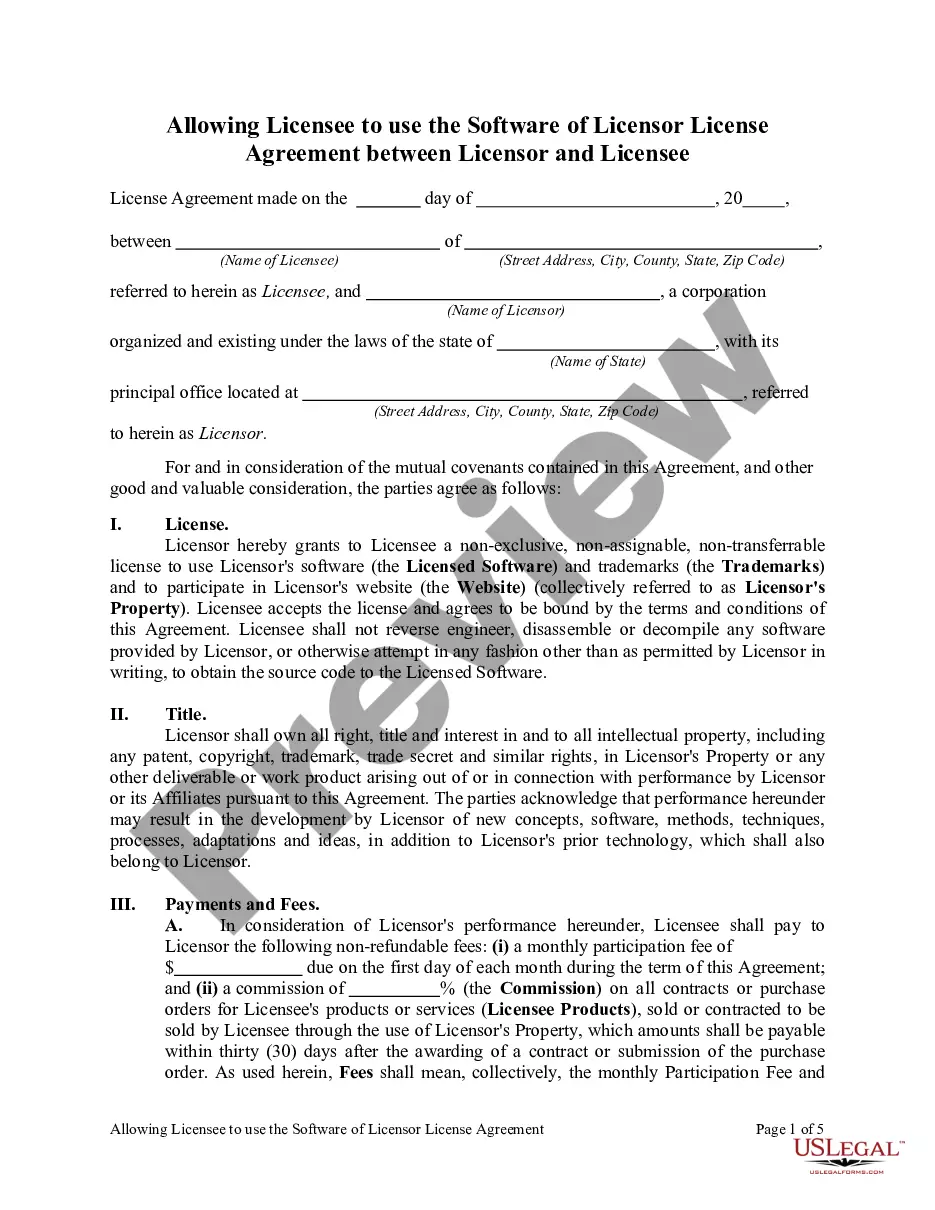
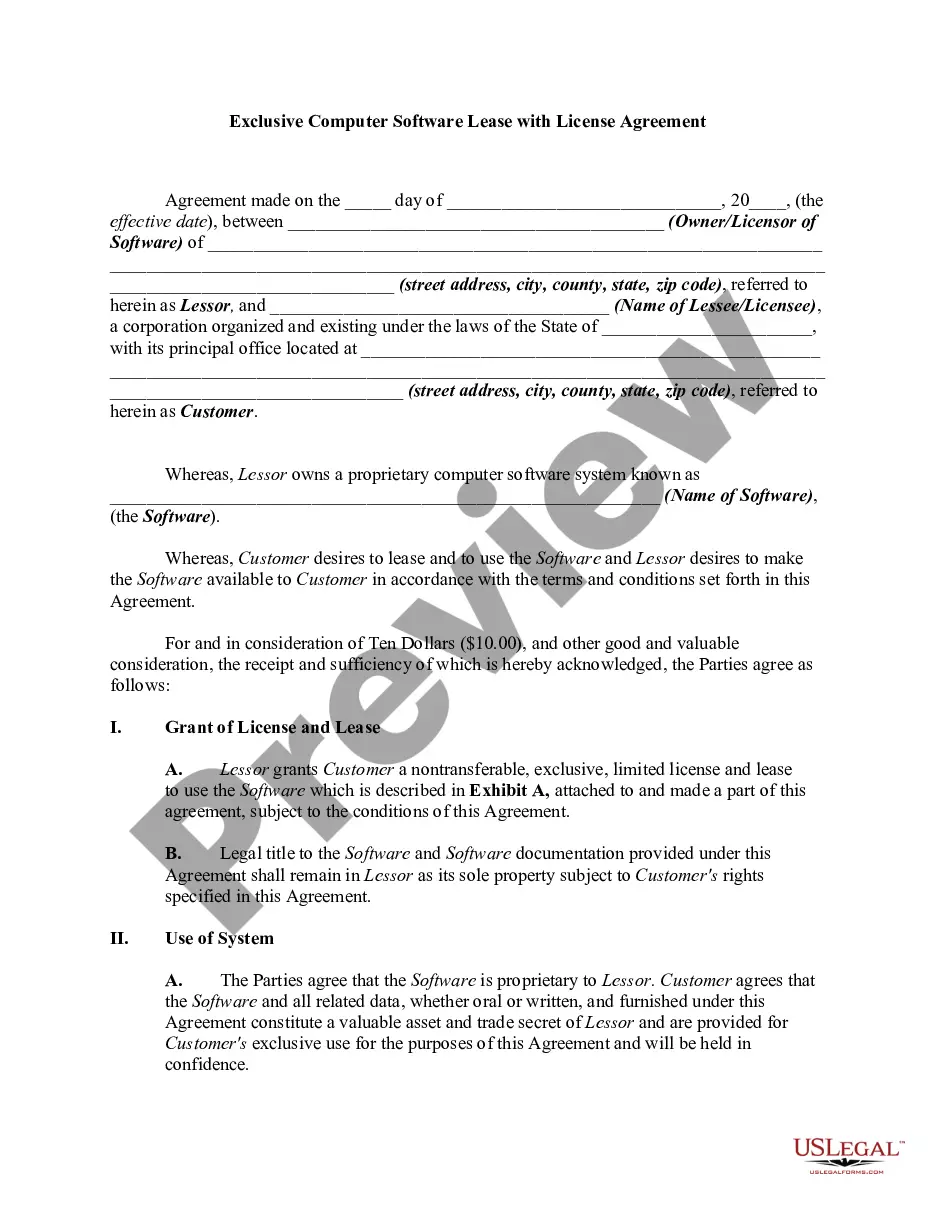
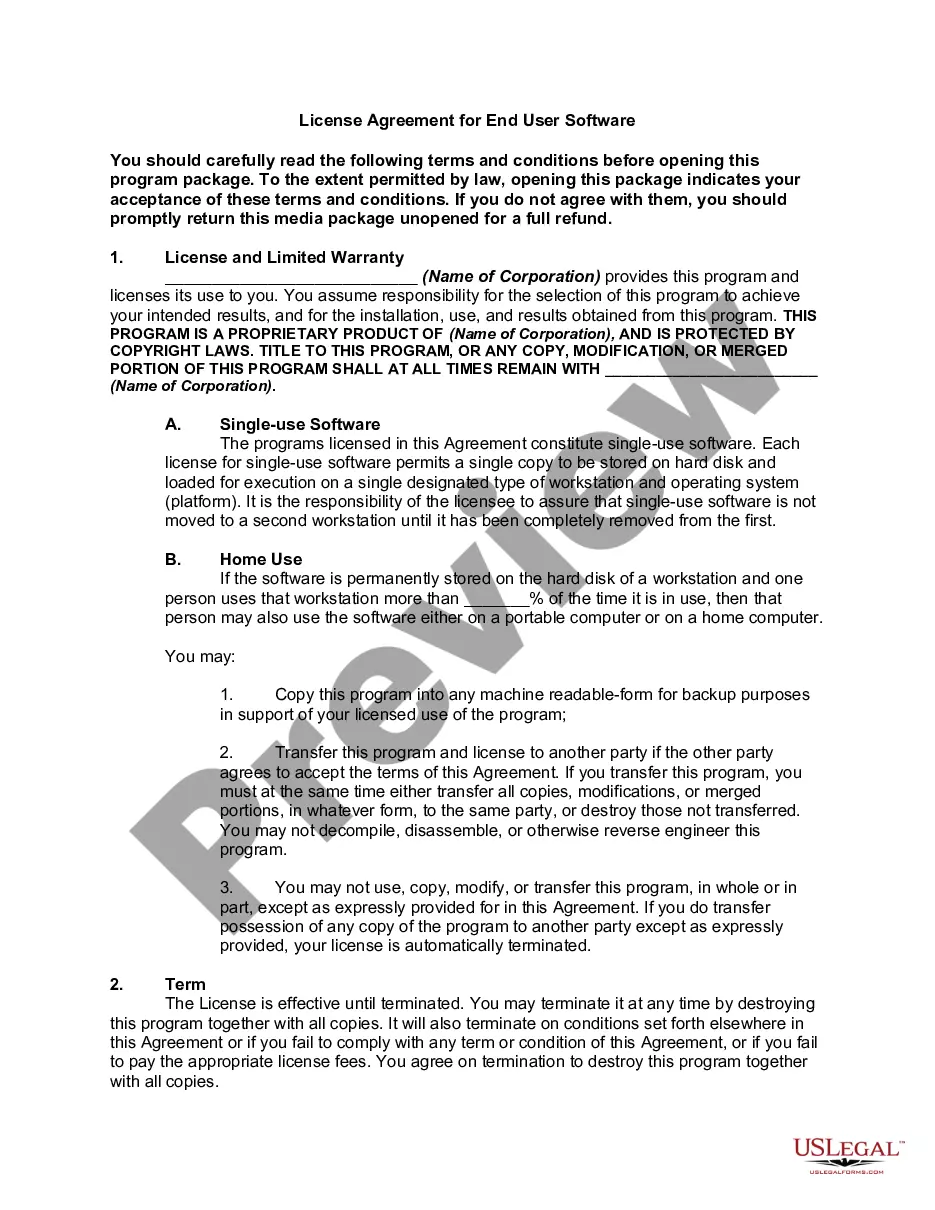
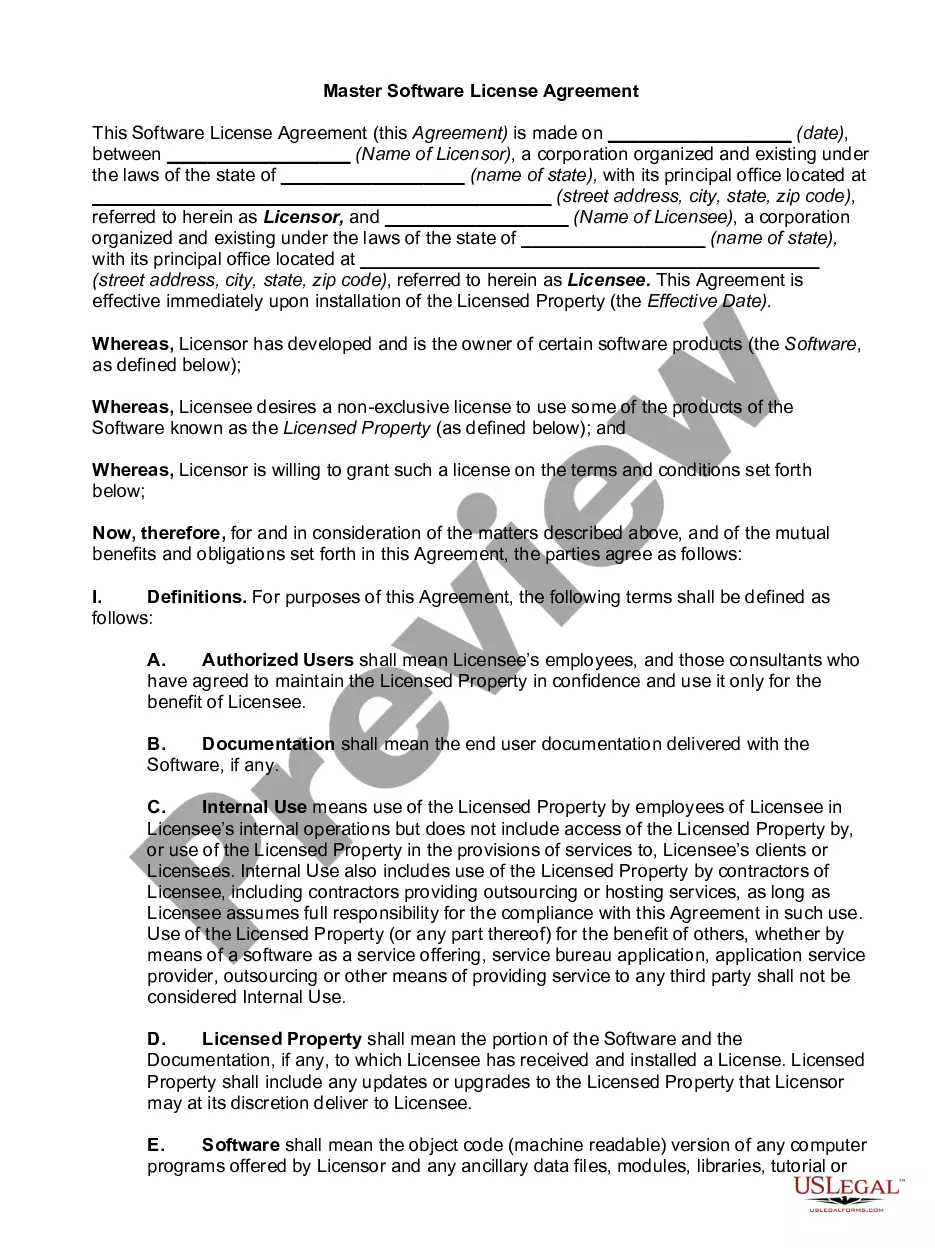
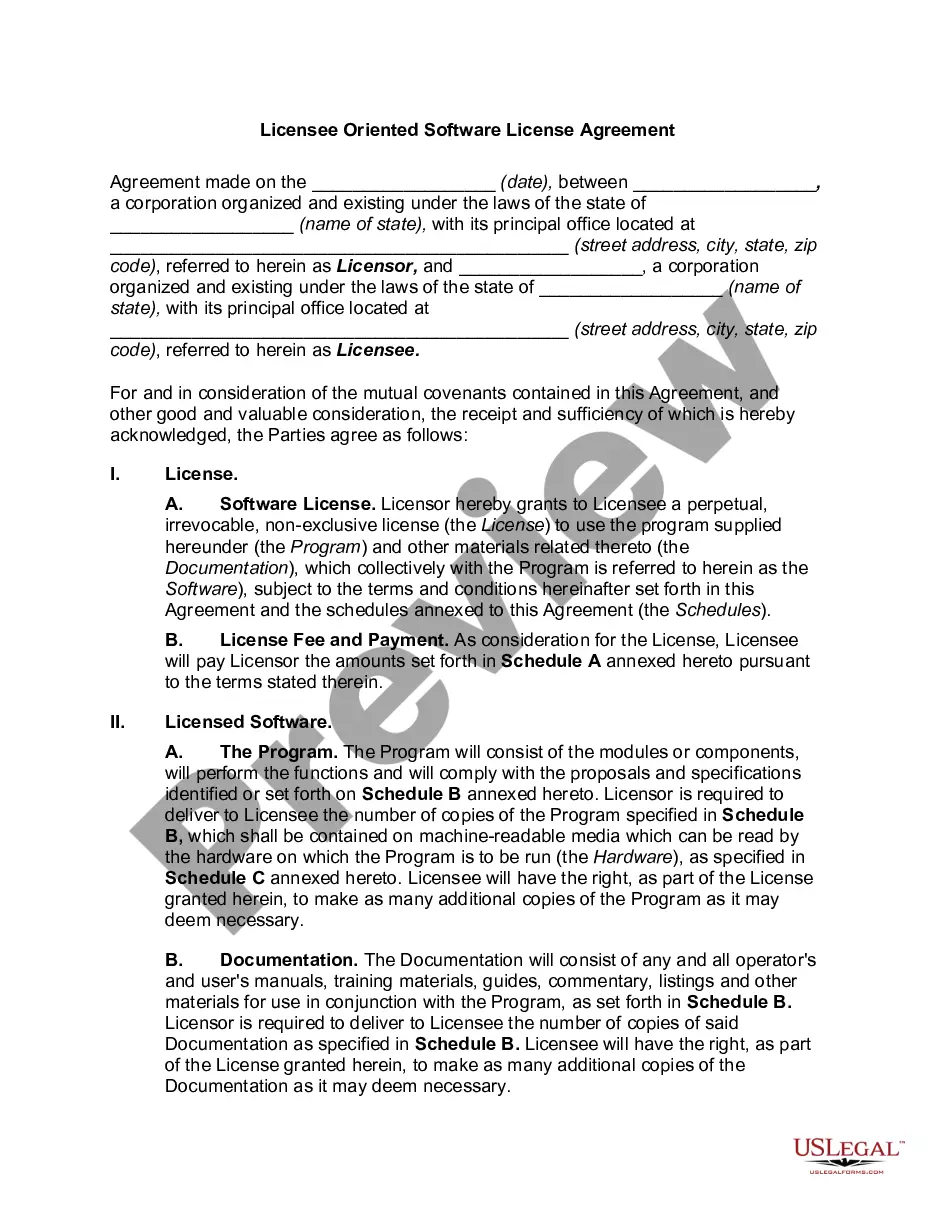
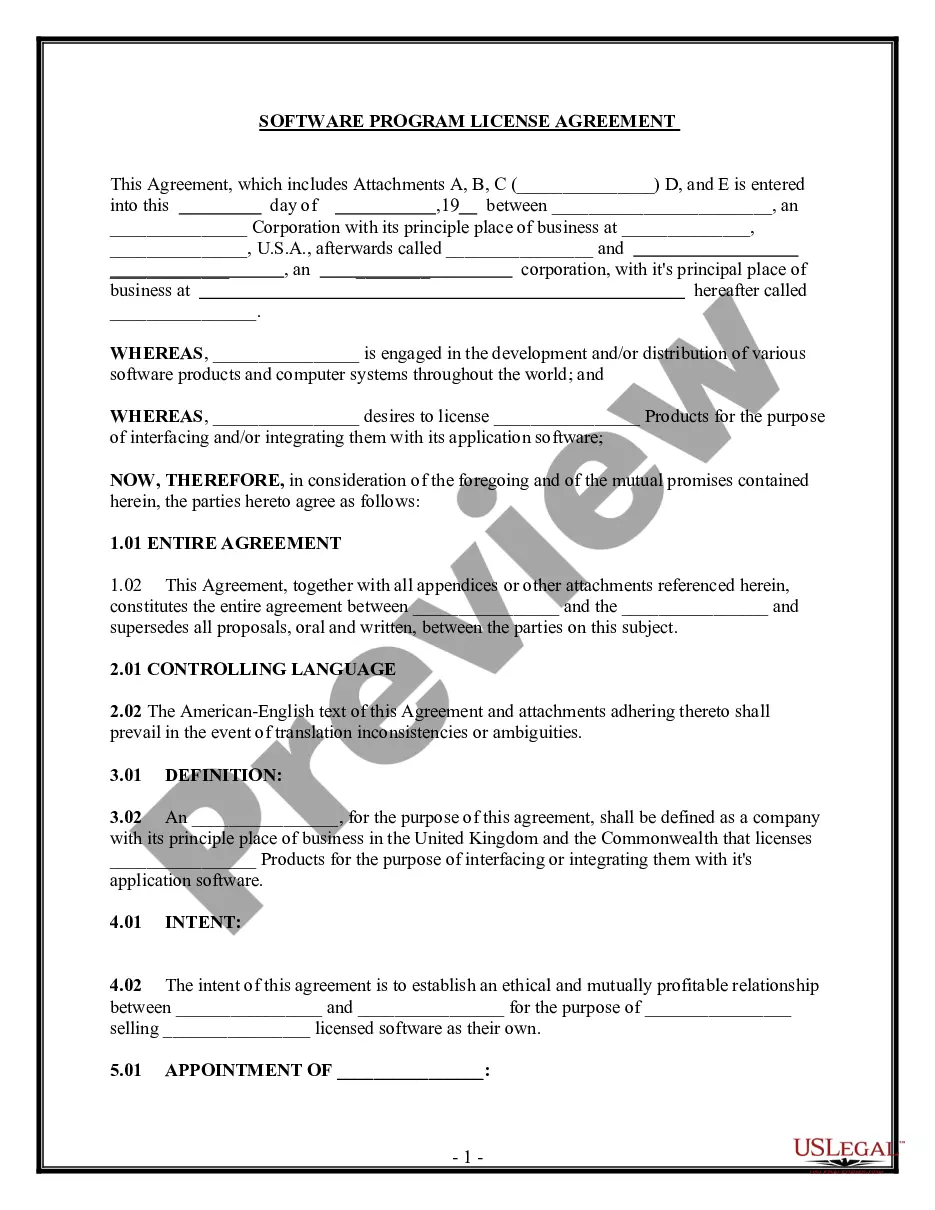
This form is a software license agreement that allows a licensee to use the software provided by the licensor under specific terms and conditions. It governs the relationship between the software owner (licensor) and the user (licensee), enabling the licensee to utilize the software legally, thereby differentiating it from other agreements like software purchase contracts or service agreements.
Key components of this form
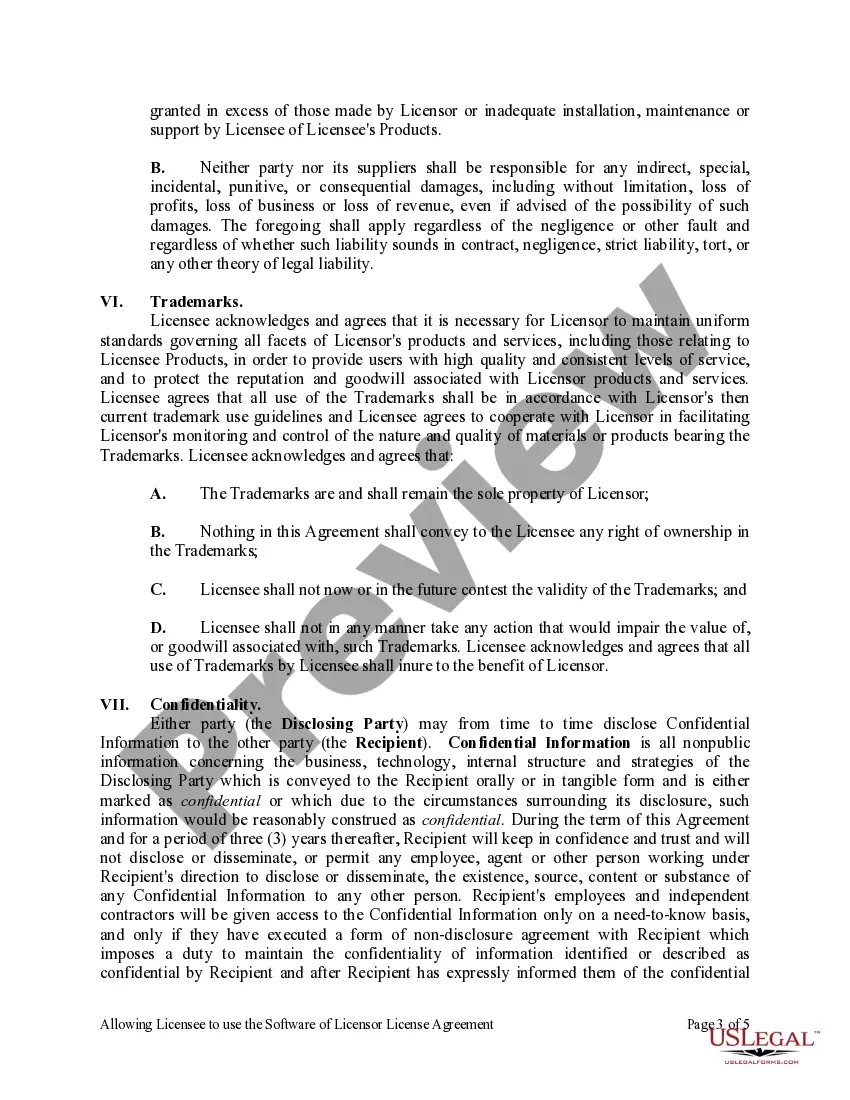
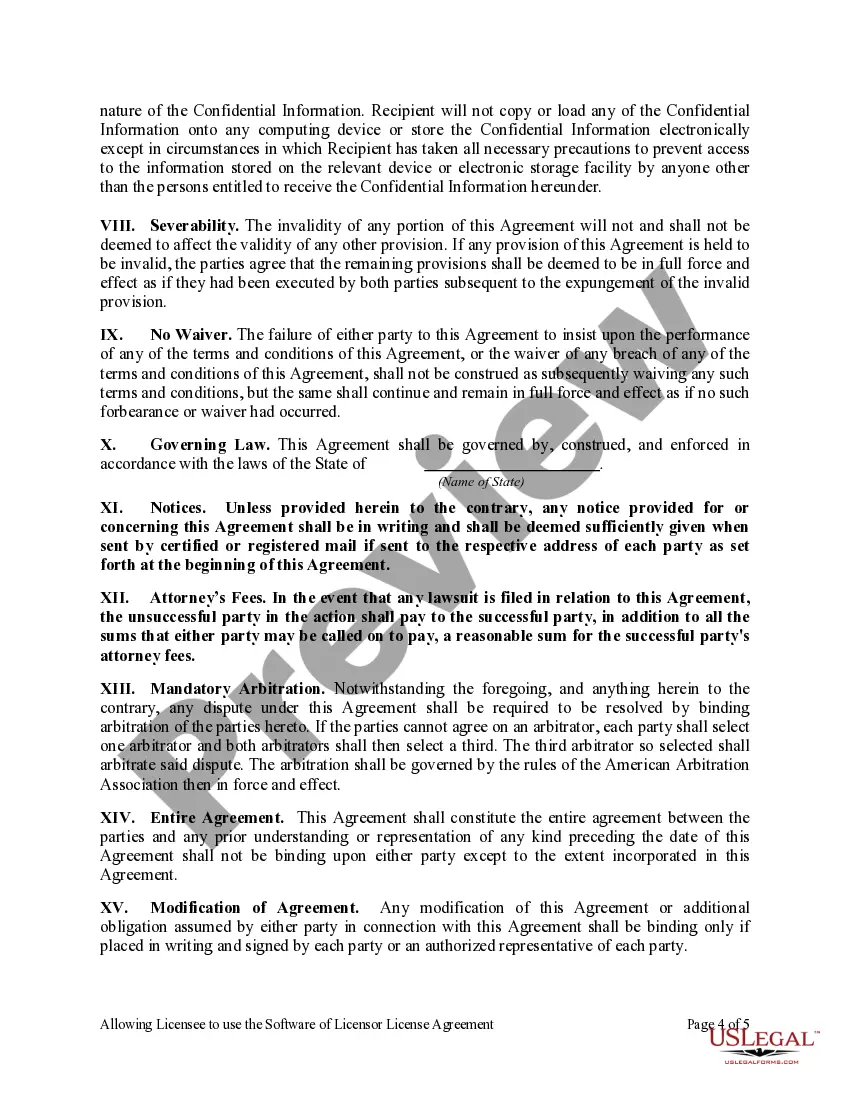
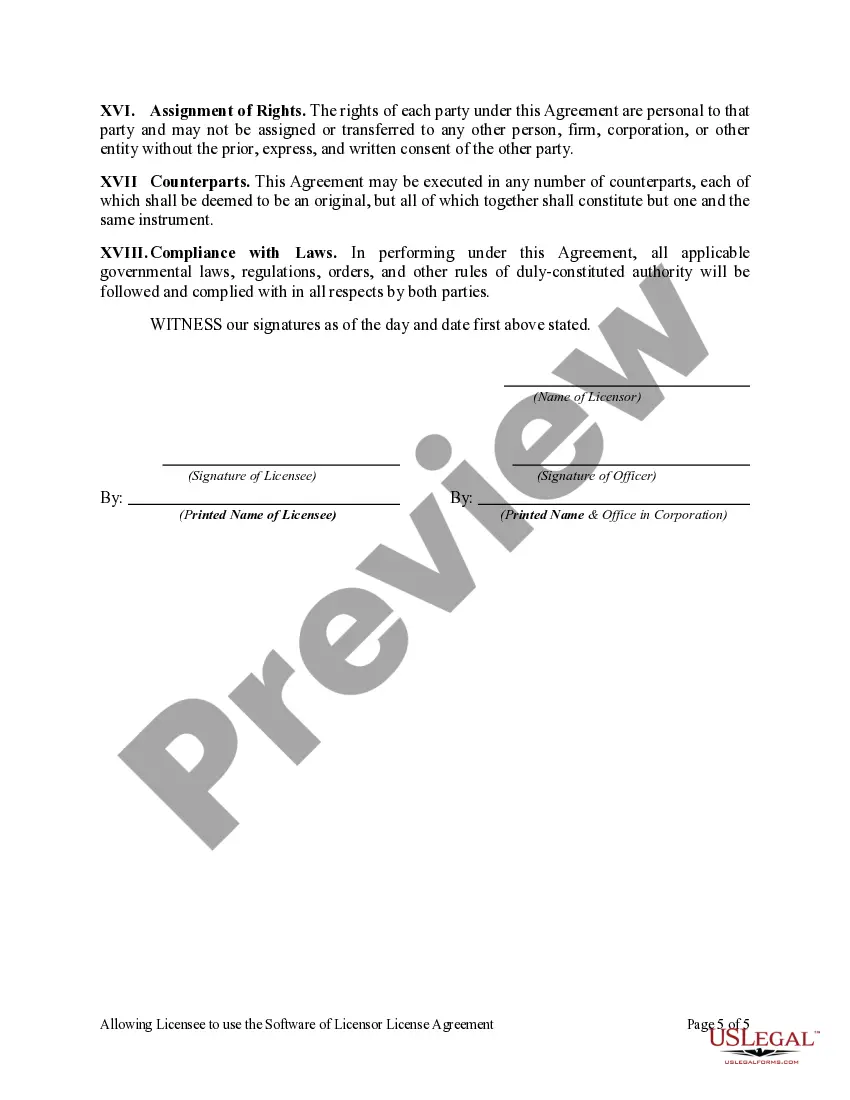
- License grant: Specifies the rights granted to the licensee to use the software.
- Intellectual property ownership: Clarifies that the licensor retains ownership of all related intellectual property.
- Payment terms: Details the financial obligations of the licensee towards the licensor.
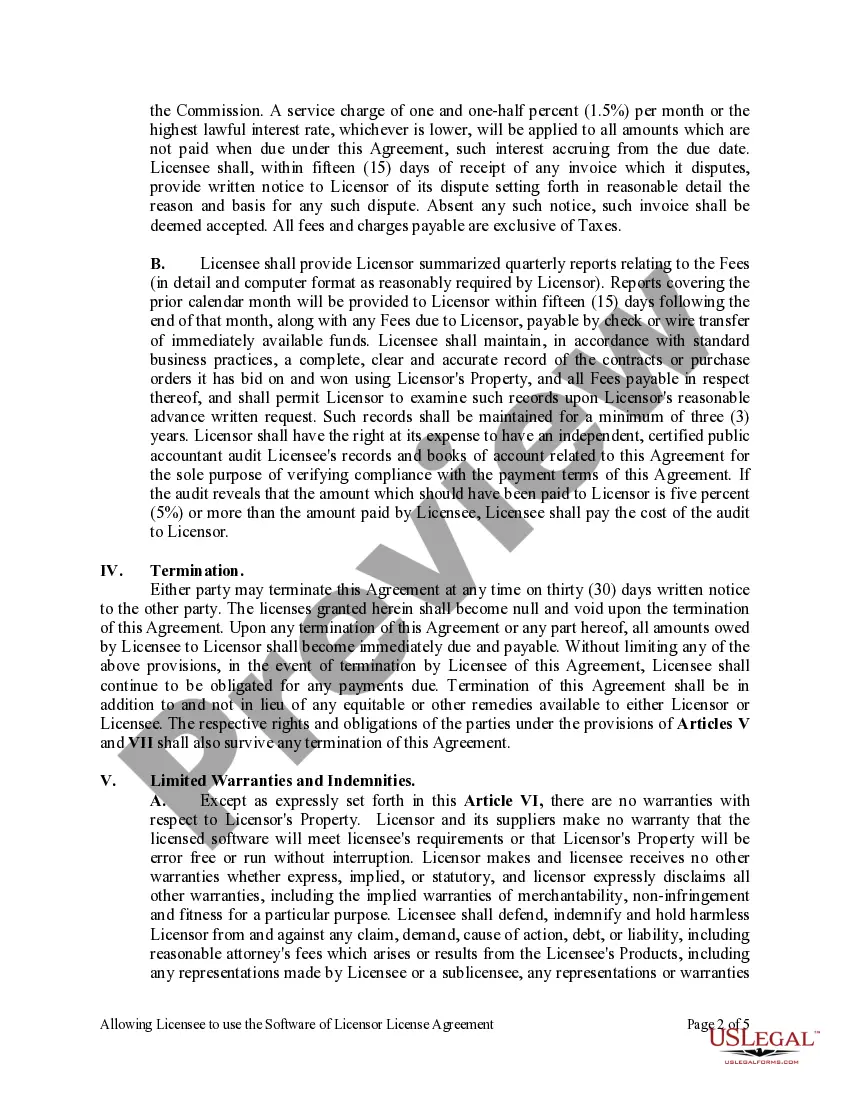
- Termination clause: Outlines the conditions under which either party can terminate the agreement.
- Warranties and indemnities: Specifies the limitations of liability and responsibilities of the parties.
- Confidentiality: Ensures that both parties protect sensitive information disclosed during the agreement.
Situations where this form applies
This form should be used when a software licensor wishes to grant permission to another party (the licensee) to use their software under defined conditions. The agreement is essential when licensing proprietary software and ensures that both parties understand their rights and limitations, particularly in environments requiring compliance, such as technology partnerships or service providers that depend on licensed software.
Who can use this document
- Software developers and companies providing software for commercial purposes.
- Businesses seeking to use third-party software as part of their operational processes.
- Independent contractors providing technology services that utilize licensed software.
- It professionals managing software solutions within organizations.
Steps to complete this form
- Identify the parties: Clearly state the names and addresses of the licensor and licensee.
- Define the software: Specify the software being licensed and any related trademarks.
- Set payment terms: Enter the agreed fees and reporting process timelines.
- Include confidentiality terms: Ensure that both parties understand their obligations regarding sensitive information.
- Provide signatures: Have both parties sign and date the agreement to make it legally binding.
Does this form need to be notarized?
In most cases, this form does not require notarization. However, some jurisdictions or signing circumstances might. US Legal Forms offers online notarization powered by Notarize, accessible 24/7 for a quick, remote process.
Get your form ready online
Our built-in tools help you complete, sign, share, and store your documents in one place.
Make edits, fill in missing information, and update formatting in US Legal Forms—just like you would in MS Word.
Download a copy, print it, send it by email, or mail it via USPS—whatever works best for your next step.
Sign and collect signatures with our SignNow integration. Send to multiple recipients, set reminders, and more. Go Premium to unlock E-Sign.
If this form requires notarization, complete it online through a secure video call—no need to meet a notary in person or wait for an appointment.
We protect your documents and personal data by following strict security and privacy standards.

Make edits, fill in missing information, and update formatting in US Legal Forms—just like you would in MS Word.

Download a copy, print it, send it by email, or mail it via USPS—whatever works best for your next step.

Sign and collect signatures with our SignNow integration. Send to multiple recipients, set reminders, and more. Go Premium to unlock E-Sign.

If this form requires notarization, complete it online through a secure video call—no need to meet a notary in person or wait for an appointment.

We protect your documents and personal data by following strict security and privacy standards.
Typical mistakes to avoid
- Failing to clearly define the scope of software use, leading to potential misuse.
- Omitting payment details, which can result in disputes later.
- Not including adequate confidentiality clauses to protect trade secrets.
- Neglecting to address termination conditions, which may leave parties unprotected.
- Assuming that verbal agreements suffice; all terms should be signed in writing.
Benefits of completing this form online
- Convenience: Easily download and complete the form anytime.
- Editability: Modify the template to suit your specific needs and circumstances.
- Reliability: Legal forms are drafted by licensed attorneys, ensuring them to be compliant with legal standards.
Legal use & context
- This form is legally binding if filled out correctly and signed by both parties.
- The agreement ensures that both parties are aware of their rights and responsibilities.
- Compliance with copyright laws is essential to avoid legal repercussions.
- Licensors can take legal action against licensees who violate the terms of this agreement.
What to keep in mind
- The software license agreement is crucial for protecting the rights of software owners.
- Understanding the terms will help prevent any misuse of the software.
- Both parties must adhere to confidentiality and non-disclosure provisions to safeguard sensitive information.
- Payment obligations and reports are key components of maintaining compliance and transparency.
Looking for another form?
Form popularity
FAQ
Exclusive or non-exclusive. In an exclusive license, the intellectual property holder is licensing the work only to one person, for that particular use/territory. Territory. Use. Attribution. Derivative works. Confidentiality. Time frame. Termination.
An example of a licensing agreement is a contract between the copyright holders of software and another company, allowing the latter to use the computer software for their daily business operations.
Download a template for a licensing agreement. Choose your role as the licensor or licensee. Define the license(s) in the agreement. Decide whether the license is exclusive or not. Settle the matter of fees and payment schedule. Add a renewal date and rules.
Setting up Your Licensing Agreement. Granting the License. Limiting Your Liability. Adding Boilerplate Clauses. Finalizing the Licensing Agreement.
In other words, a licensing agreement grants the licensee the ability to use intellectual property owned by the licensor. Licensing agreements are commonly used by the licensor to commercialize their intellectual property.
Licensing involves obtaining permission from a company (licensor) to manufacture and sell one or more of its products within a defined market area. The company that obtains these rights (the licensee) usually agrees to pay a royalty fee to the original owner.
The 3 P's of collegiate licensing are protection, promotion, and profit.
N. a person who gives another a license, particularly a private party doing so, such as a business giving someone a license to sell its product. (
The definition of a licensor is a party or entity that grants a license to someone else. The DMV is an example of a licensor.(law) A party that grants a license to another.