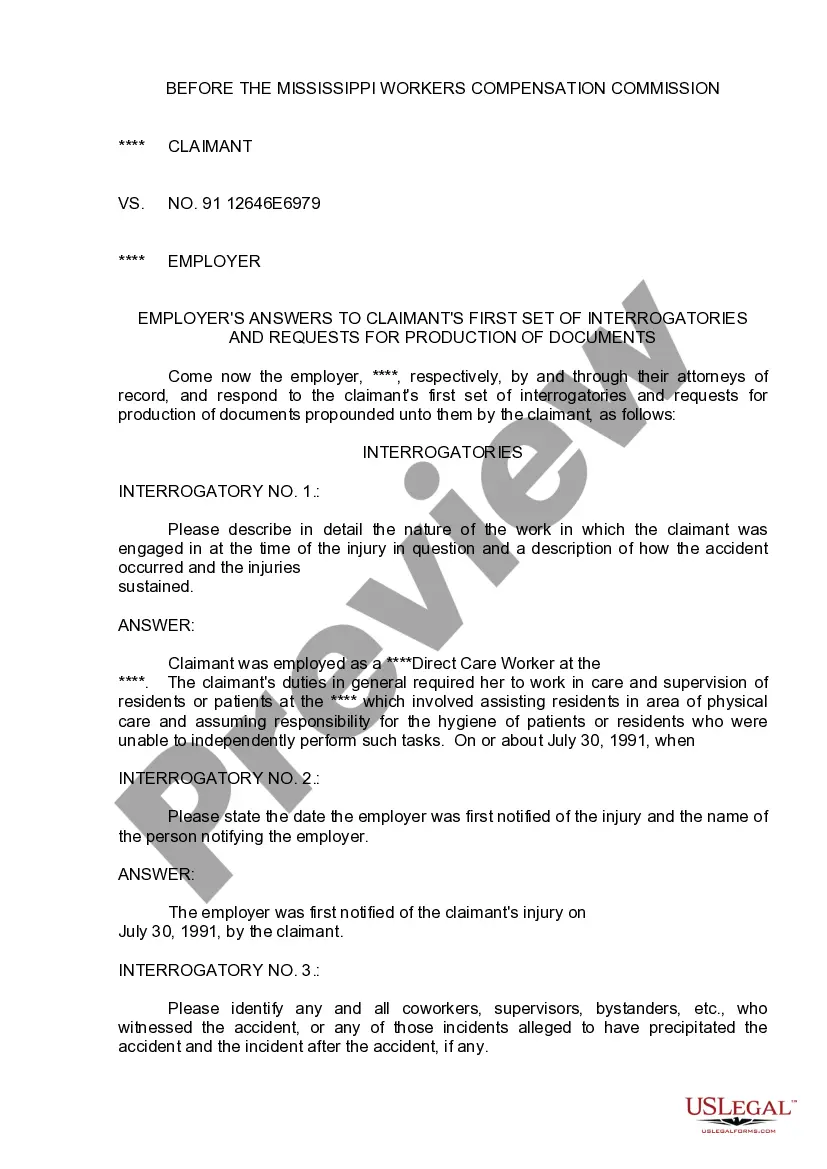
Mississippi Claimant's First Supplemental Answers to First Set of Interrogatories and Requests for Production of Documents
About this form
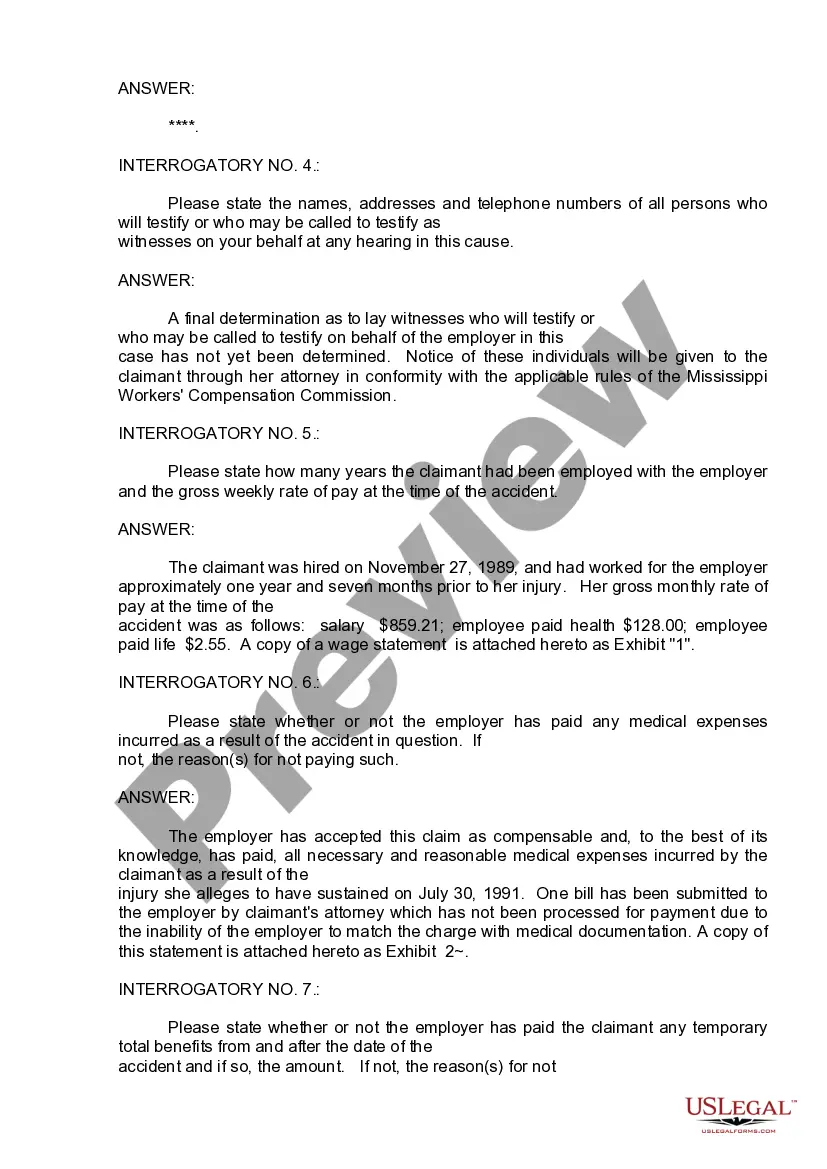
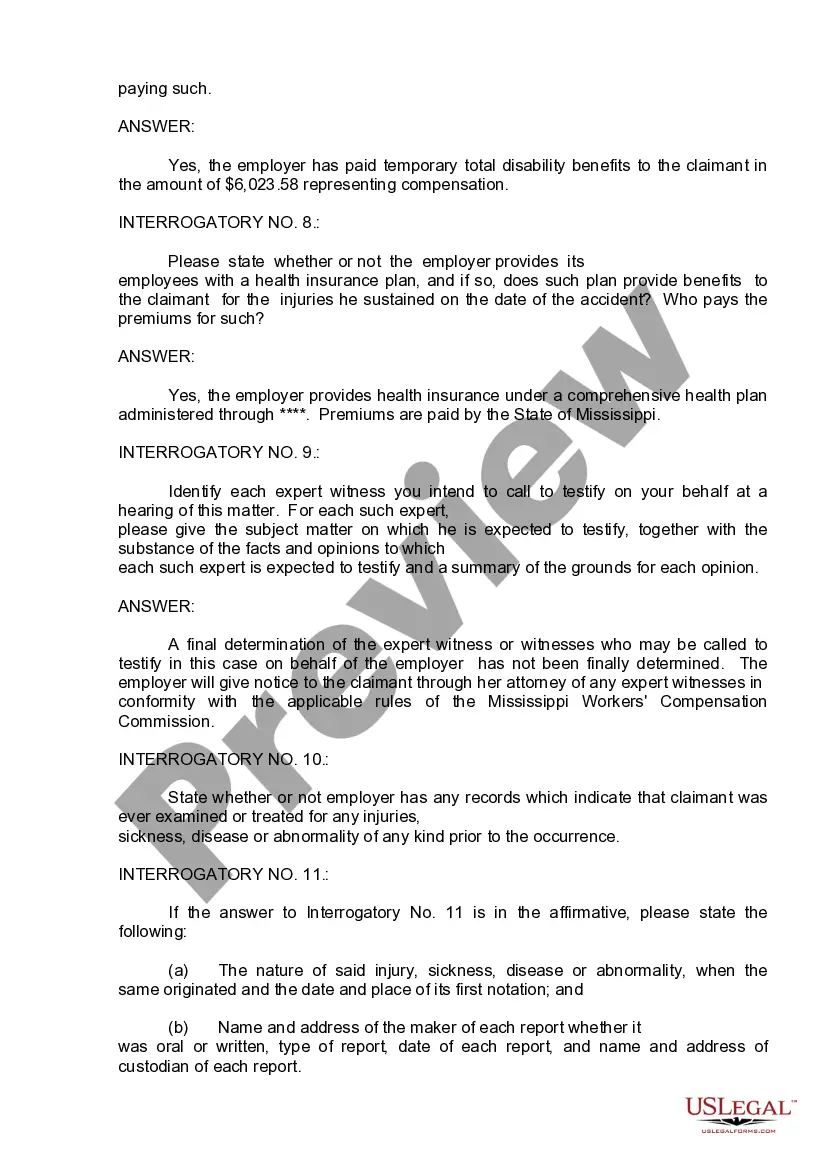
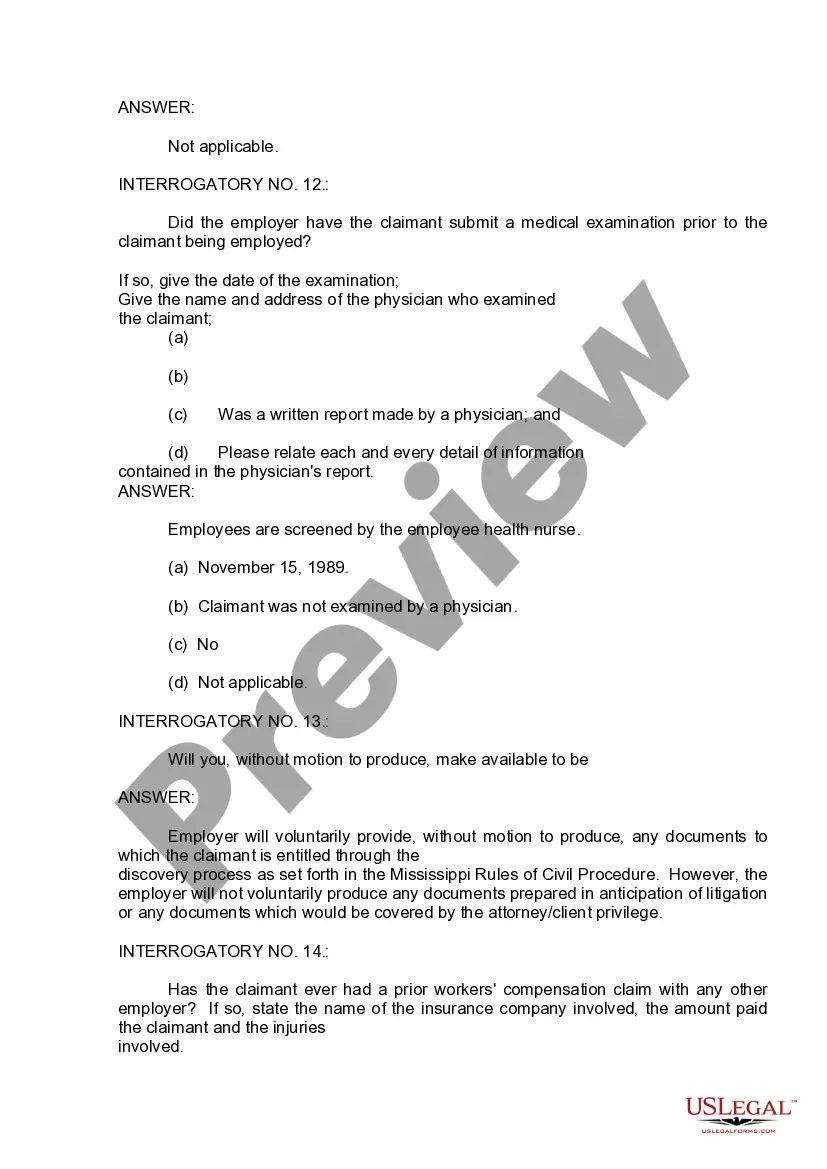
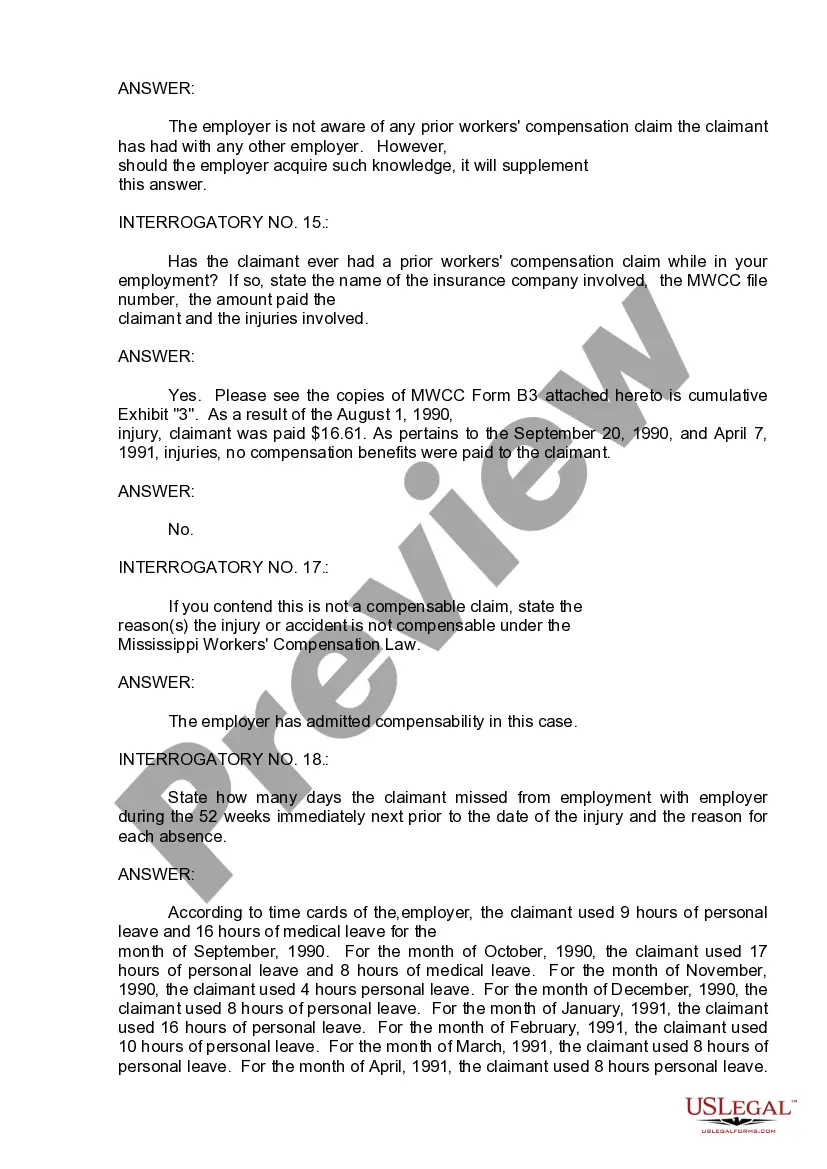
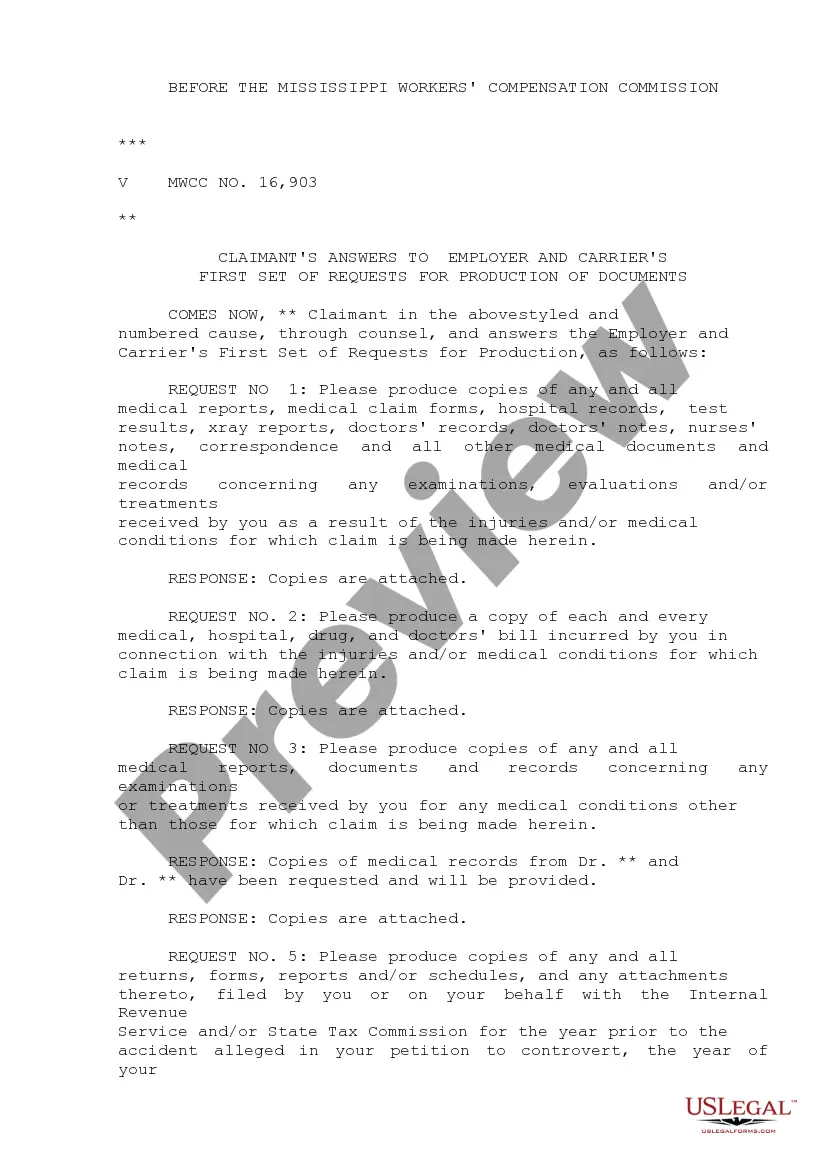
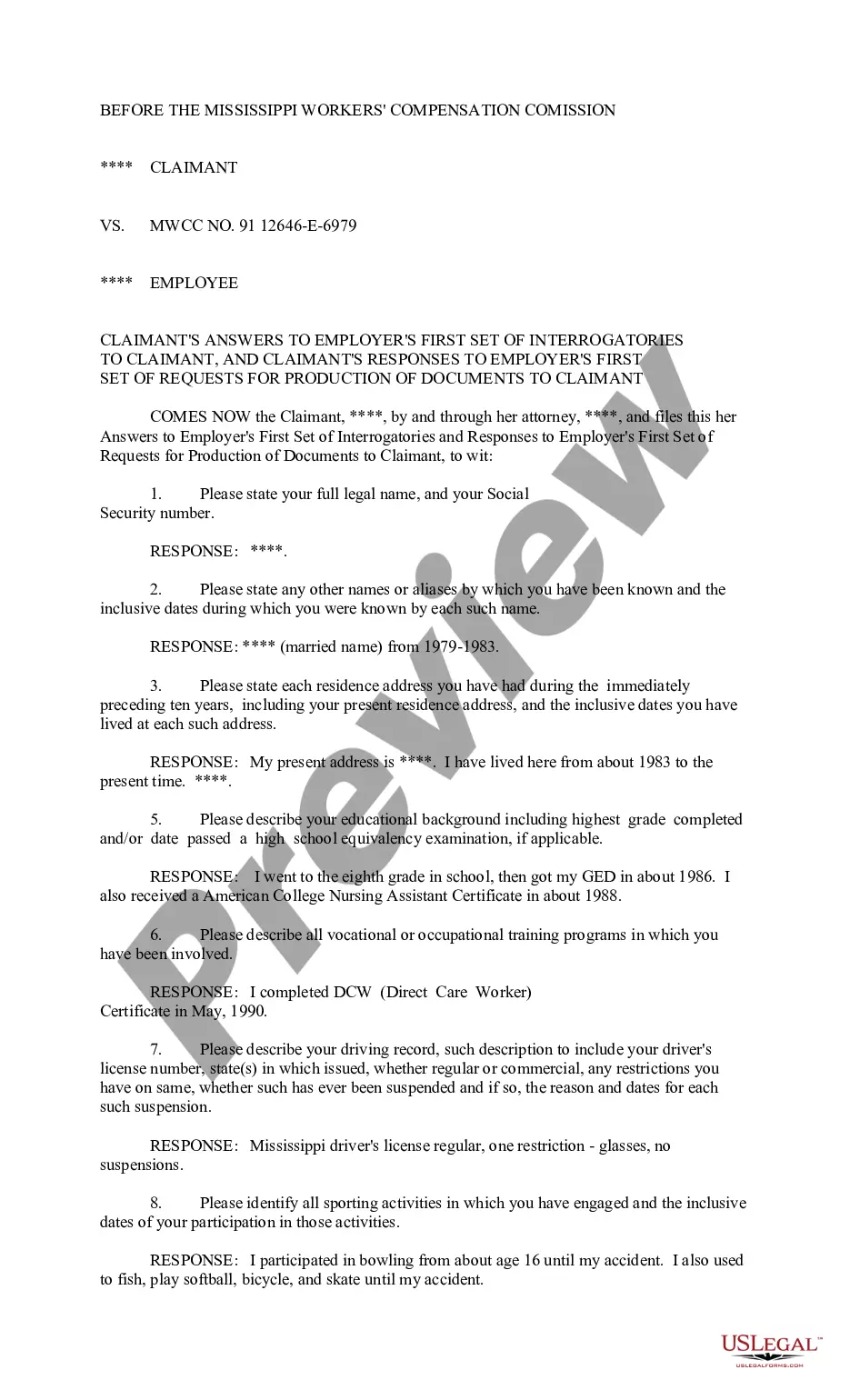
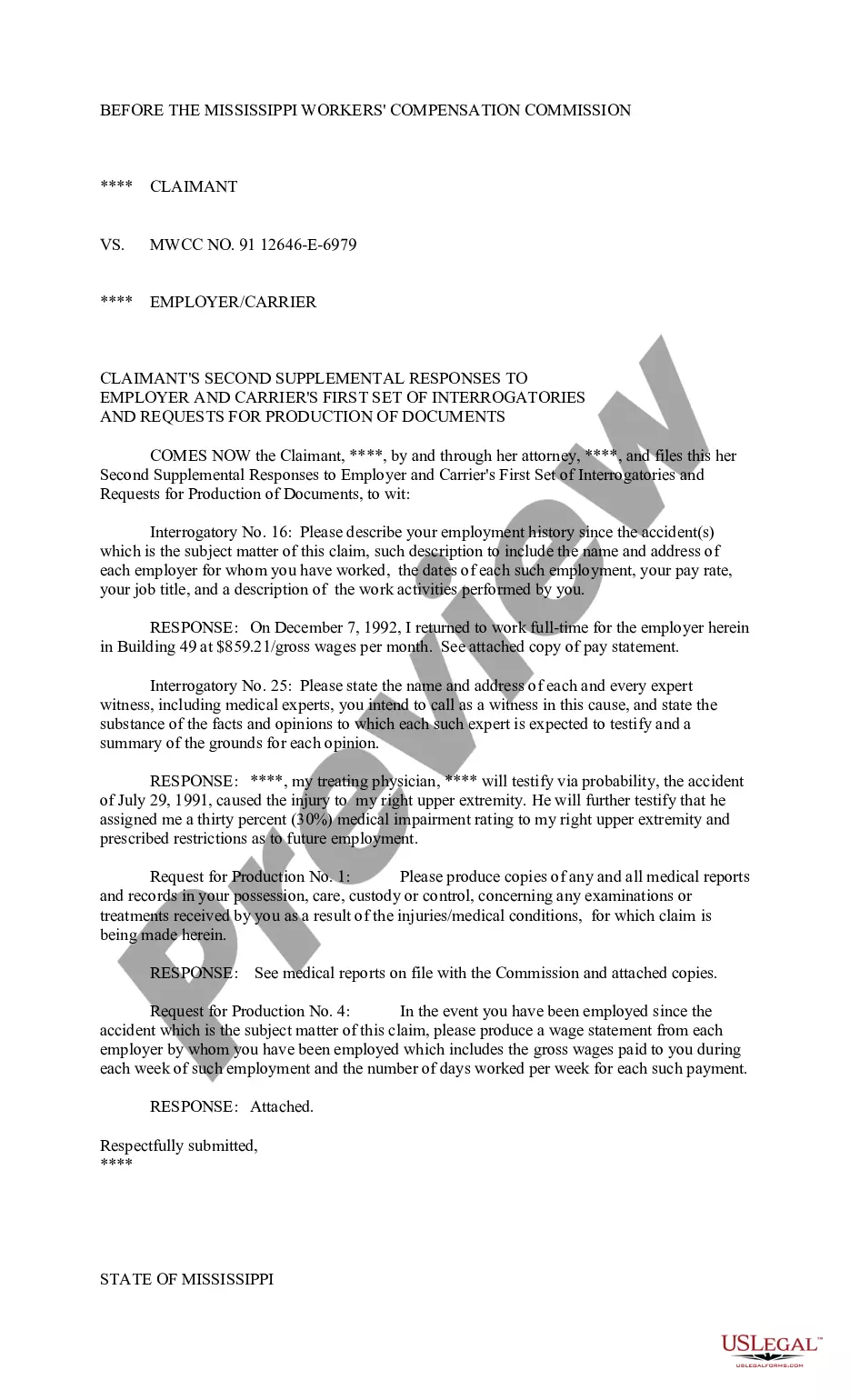
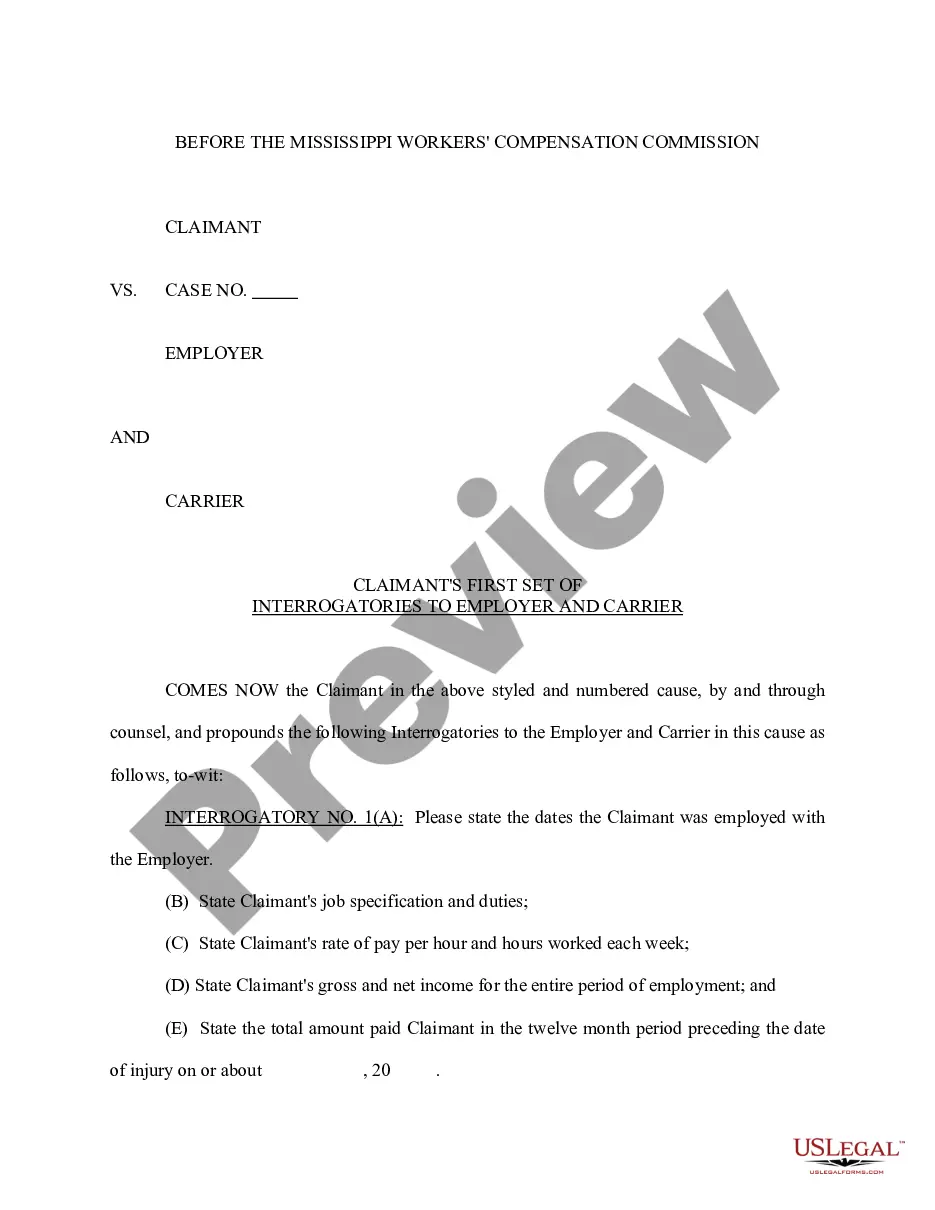
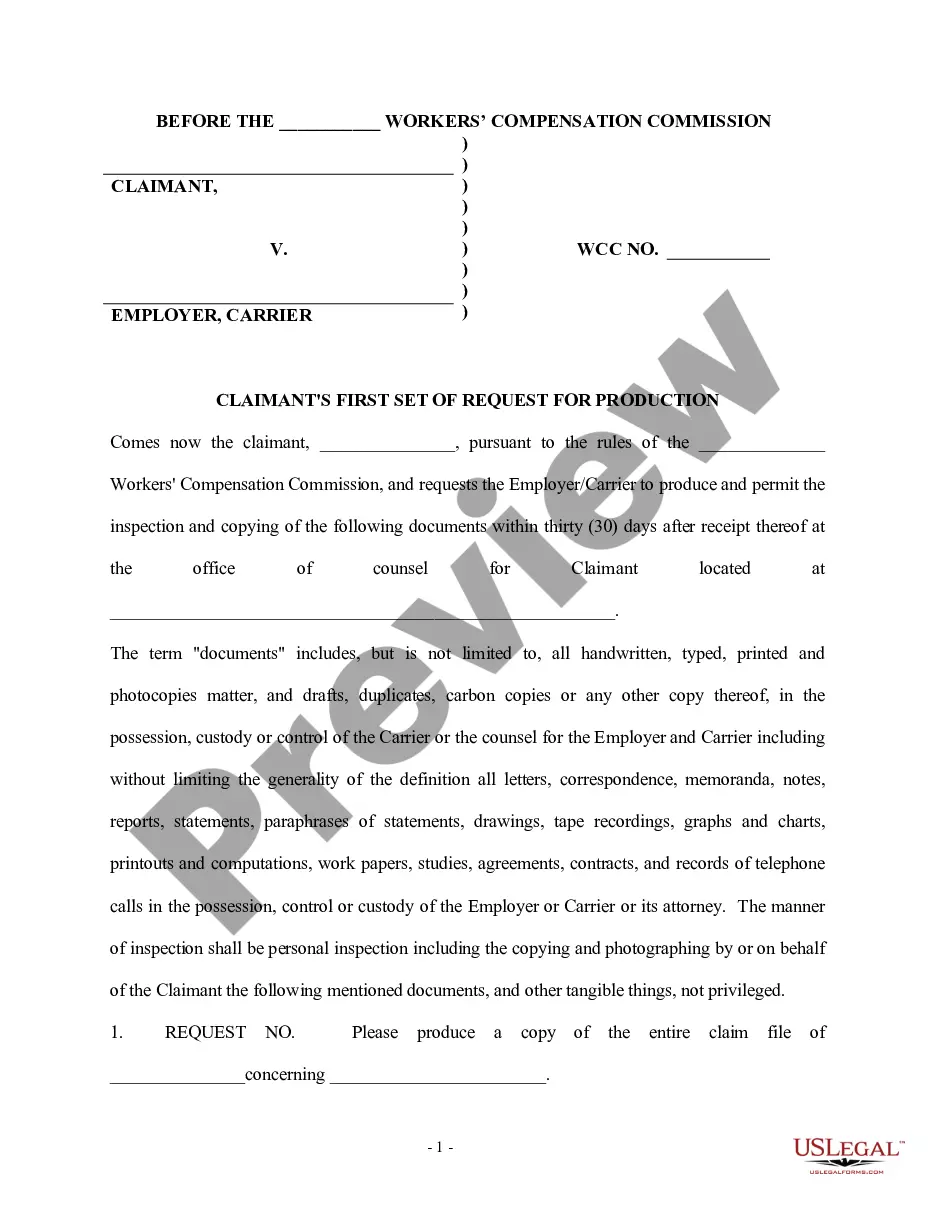
The Claimant's First Supplemental Answers to First Set of Interrogatories and Requests for Production of Documents is a crucial legal document used during the discovery phase of a lawsuit. This form allows the claimant to respond to interrogatoriesâwritten questions posed by the opposing partyâand requests for the production of documents. It is essential for gathering information pertinent to the case. Unlike other discovery forms, this one specifically addresses supplemental answers, making it unique for ongoing cases where initial responses require elaboration or additional documentation.
Form components explained
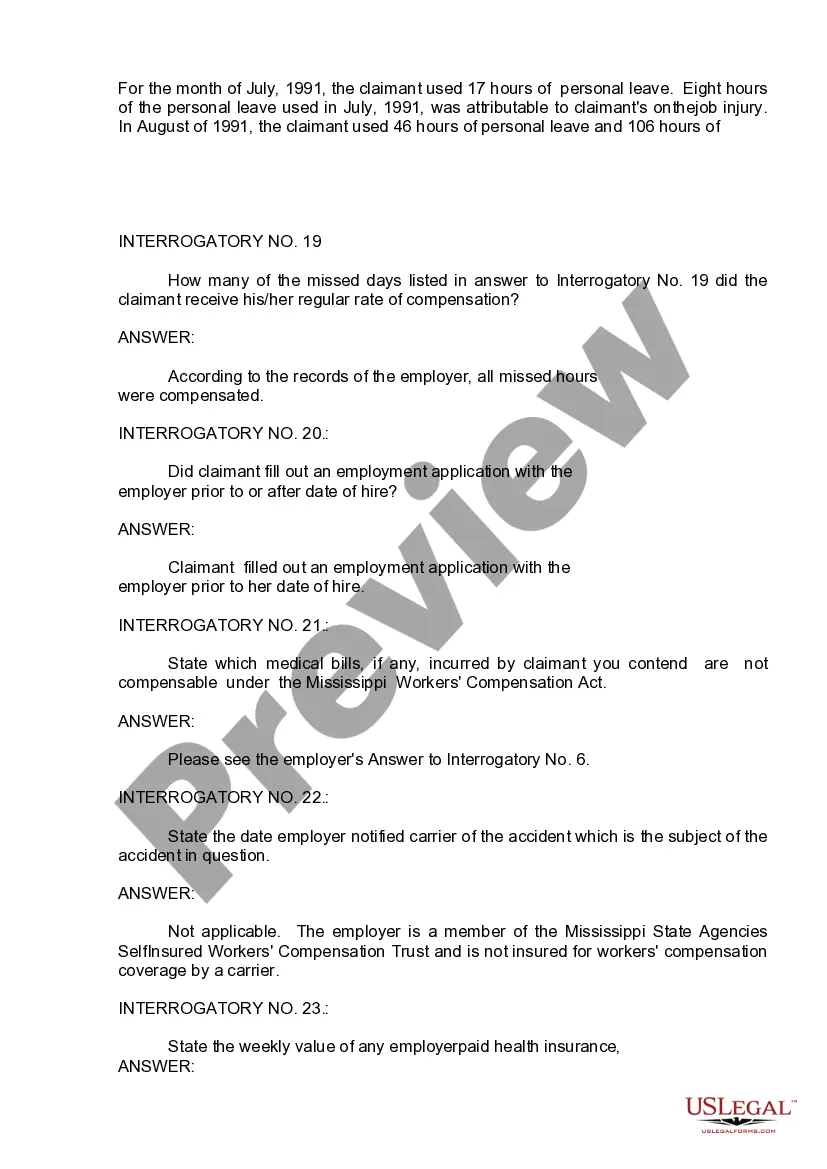
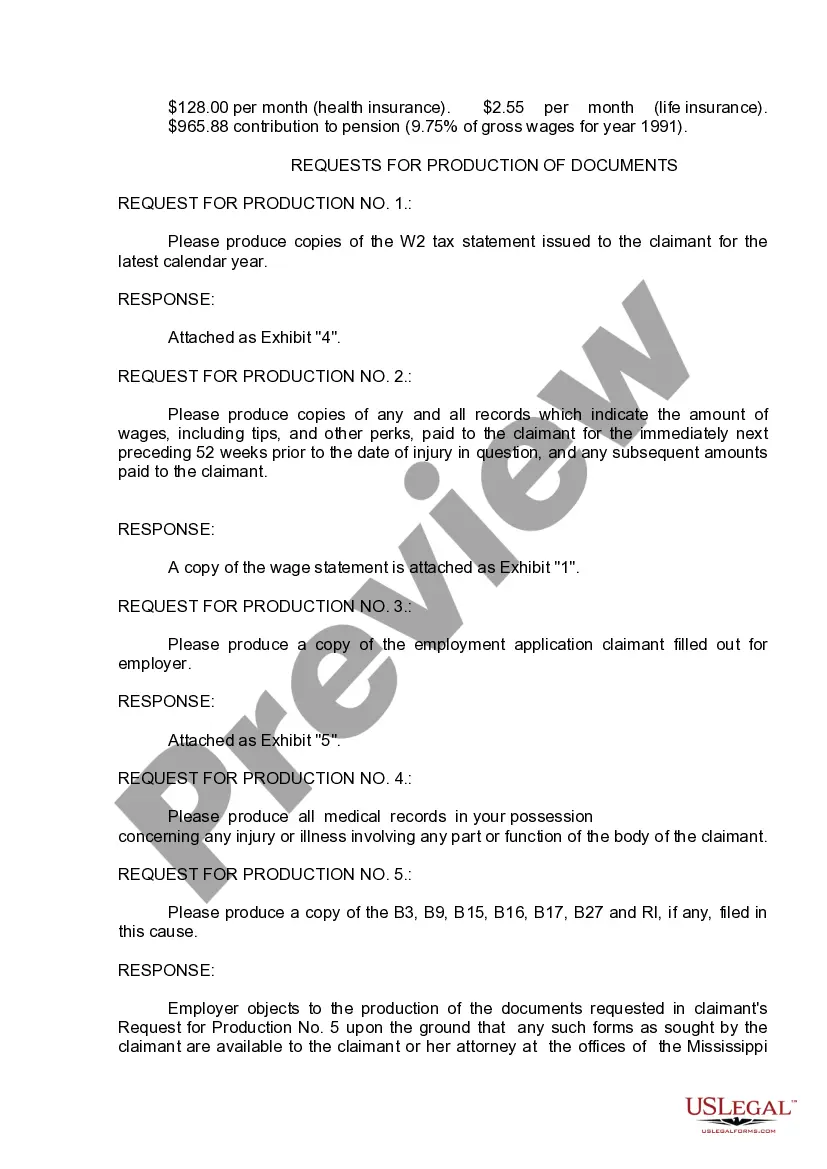
- Interrogatories: Detailed questions regarding the nature of the claimant's employment and the accident.
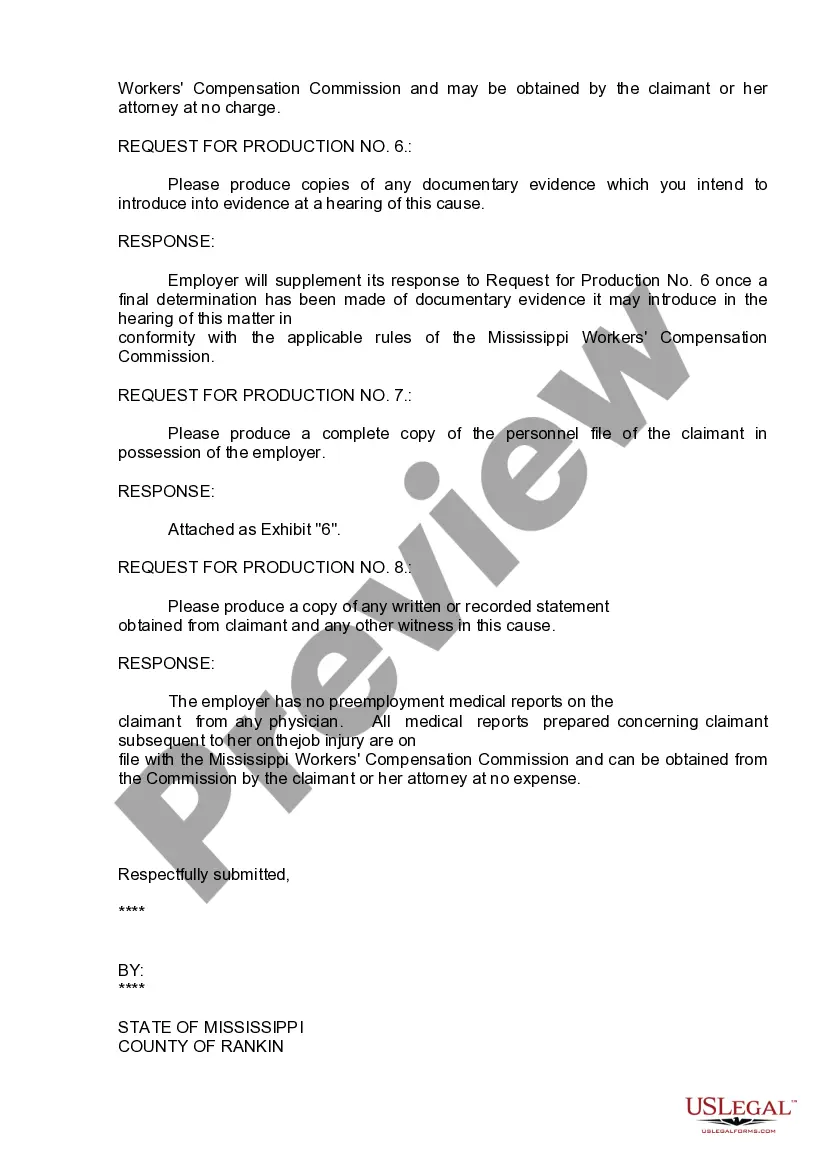
- Requests for Production: A series of requests to submit relevant documents and records related to the case.
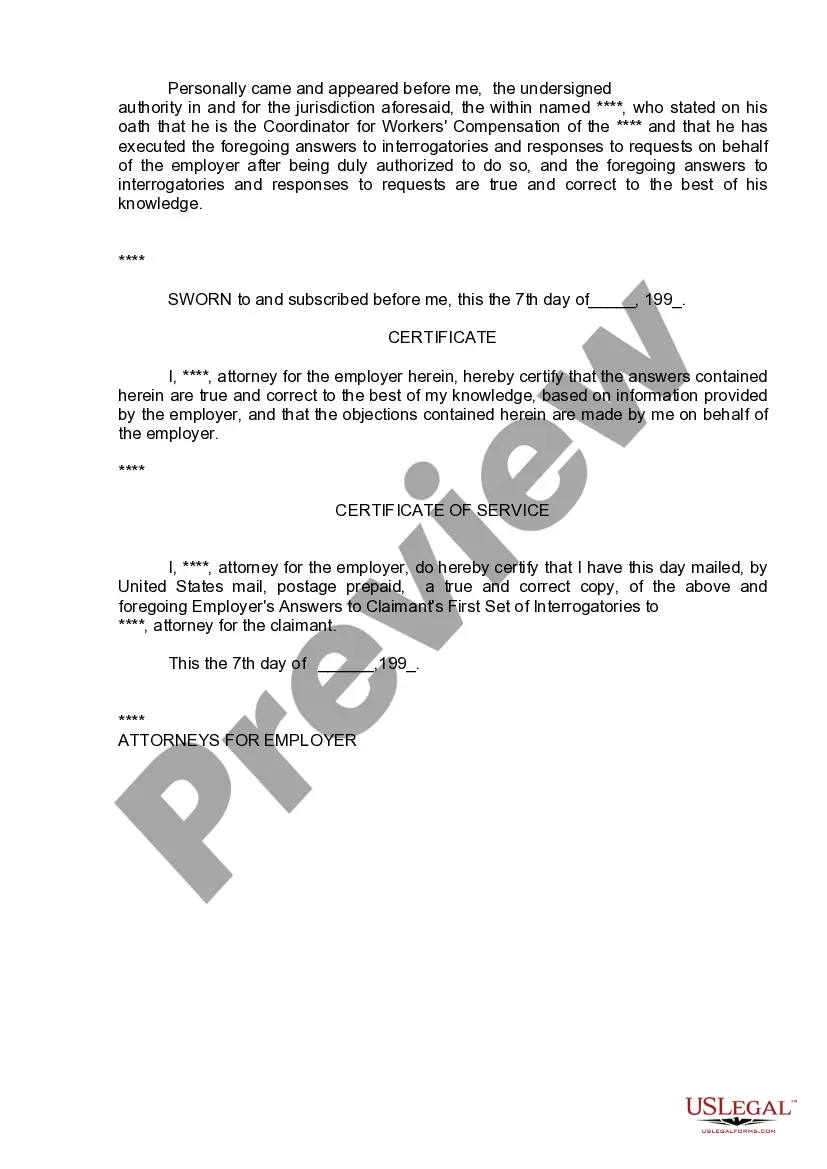
- Answers: Documentation of responses to interrogatories and requests that must be sworn under oath.
- Exhibits: Additional supporting documents referenced in response to interrogatories or requests for production.
Situations where this form applies
This form is used when a claimant needs to provide supplemental information in response to initial discovery requests in a lawsuit. It is particularly relevant in workers' compensation cases where details about the injury, employment history, and relevant medical treatments must be clarified. Use this form when additional information is required after the claimant's initial disclosure or when there is a need to amend previously provided responses due to new evidence or developments in the case.
Who can use this document
- Claimants involved in ongoing litigation, particularly in workers' compensation cases.
- Individuals or attorneys representing claimants who need to provide detailed responses to interrogatories.
- Legal professionals seeking a structured way to organize and present supplemental information in discovery.
How to prepare this document
- Identify the parties involved in the case, including the claimant and employer, and record their details.
- Respond to each interrogatory with detailed answers, ensuring truthful and comprehensive information.
- Attach relevant documents as exhibits to support your answers, such as medical records or employment history.
- Sign and date the form in the appropriate space to certify that the information provided is accurate.
- Ensure that all responses comply with the applicable rules of the Mississippi Workers Compensation Commission.
Notarization requirements for this form
This form does not typically require notarization unless specified by local law. However, it must be signed under penalty of perjury, affirming the truthfulness of the information provided.
Get your form ready online
Our built-in tools help you complete, sign, share, and store your documents in one place.
Make edits, fill in missing information, and update formatting in US Legal Forms—just like you would in MS Word.
Download a copy, print it, send it by email, or mail it via USPS—whatever works best for your next step.
Sign and collect signatures with our SignNow integration. Send to multiple recipients, set reminders, and more. Go Premium to unlock E-Sign.
If this form requires notarization, complete it online through a secure video call—no need to meet a notary in person or wait for an appointment.
We protect your documents and personal data by following strict security and privacy standards.

Make edits, fill in missing information, and update formatting in US Legal Forms—just like you would in MS Word.

Download a copy, print it, send it by email, or mail it via USPS—whatever works best for your next step.

Sign and collect signatures with our SignNow integration. Send to multiple recipients, set reminders, and more. Go Premium to unlock E-Sign.

If this form requires notarization, complete it online through a secure video call—no need to meet a notary in person or wait for an appointment.

We protect your documents and personal data by following strict security and privacy standards.
Avoid these common issues
- Providing incomplete or vague answers to interrogatories that lack sufficient detail.
- Failing to attach necessary documents that support the provided answers.
- Missing signatures or dates, which can invalidate the form.
- Ignoring deadlines for submitting supplemental answers, potentially affecting the case.
Benefits of completing this form online
- Convenience: Downloadable at any time, allowing for immediate access and completion.
- Editability: Easy to modify as new information arises or to tailor responses to suit specific circumstances.
- Reliability: Forms drafted by licensed attorneys ensure legal validity and adherence to procedural rules.
Looking for another form?
Form popularity
FAQ
In law, interrogatories (also known as requests for further information) are a formal set of written questions propounded by one litigant and required to be answered by an adversary in order to clarify matters of fact and help to determine in advance what facts will be presented at any trial in the case.
A request for production is a discovery device used to gain access to documents, electronic data, and physical items held by an opposing party in a legal matter. The aim is to gain insight into any relevant evidence that the opposing party holds.
Discovery is evidence that is required to be disclosed to an opposing party. Supplemental discovery is when there is additional evidence that has been provided to the other side, after the initial discovery.
Interrogatories Interrogatories are written questions that are sent by one party to another.Requests for production are the means by which you can ask the other party to make copies of documents, photographs, records, etc. and to request the inspection of property.
If a request asks for a document, make a copy of the document; in your response, describe the document and say that a copy is attached; and attach a copy of the document to the responses you send back to the other side.
Thank you for your inquiry regarding our product or service. Thank you for your interest in our product or service. We would like to thank you for your letter inquiring about our product. We truly appreciate your letter asking for information about our service.
Supplemental discovery, seeks to find out what has changed since the initial disclosure to uncover any new information that is crucial to the case. After answering a discovery request, the answering party has a duty to provide further information if the answer later turns out to be inaccurate.
When responding to Requests for Admissions, remember to answer as follows: Admit: If any portion of the Request for Admission is true then you must admit to that portion of the request. You are also allowed to have a hybrid response admit the part of the request that is true while denying another part.
The making available by a party of documents in his possession, custody or power for inspection by the other party or for use as evidence at trial.