Mississippi Complaint vs Defendant Corporation - Motor Vehicle Accident
What this document covers
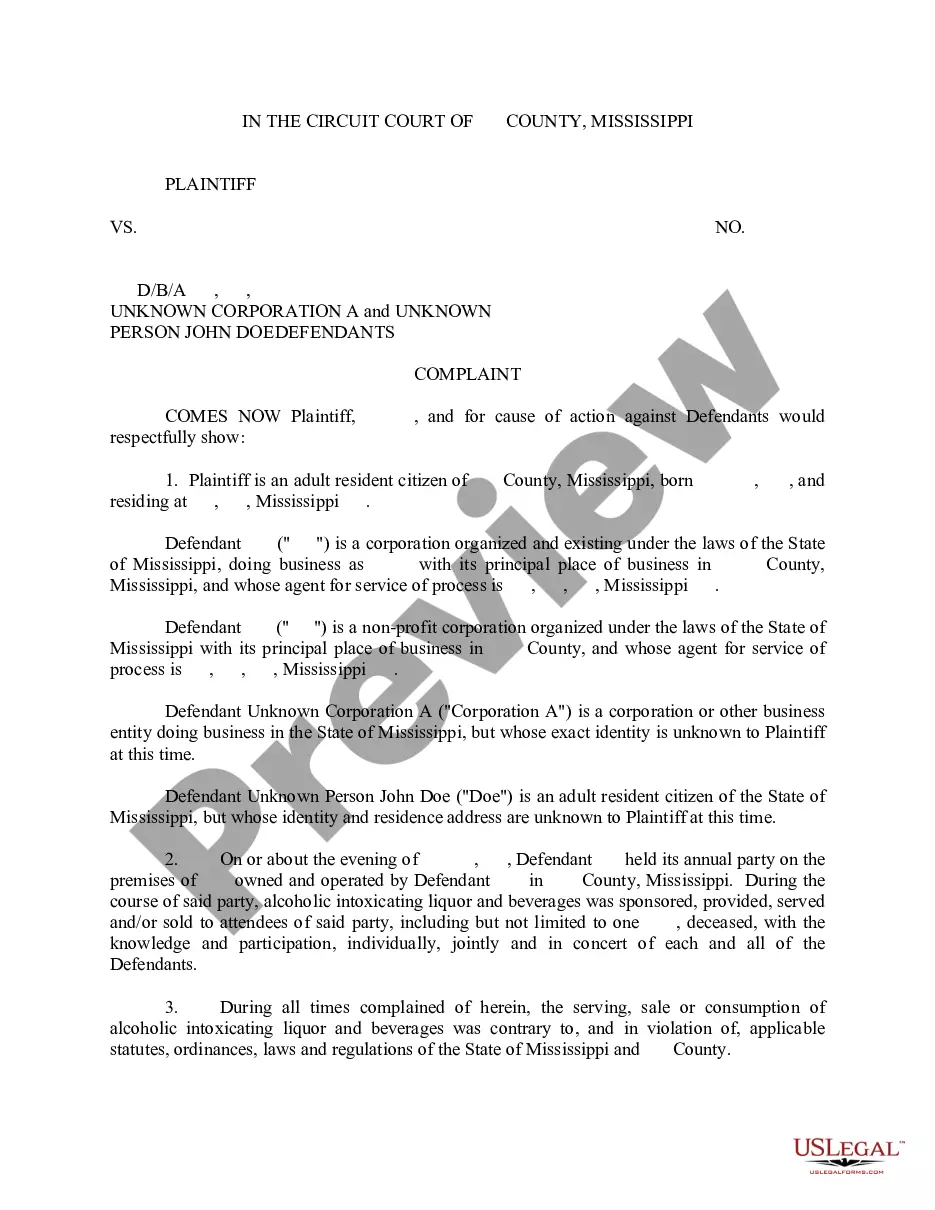
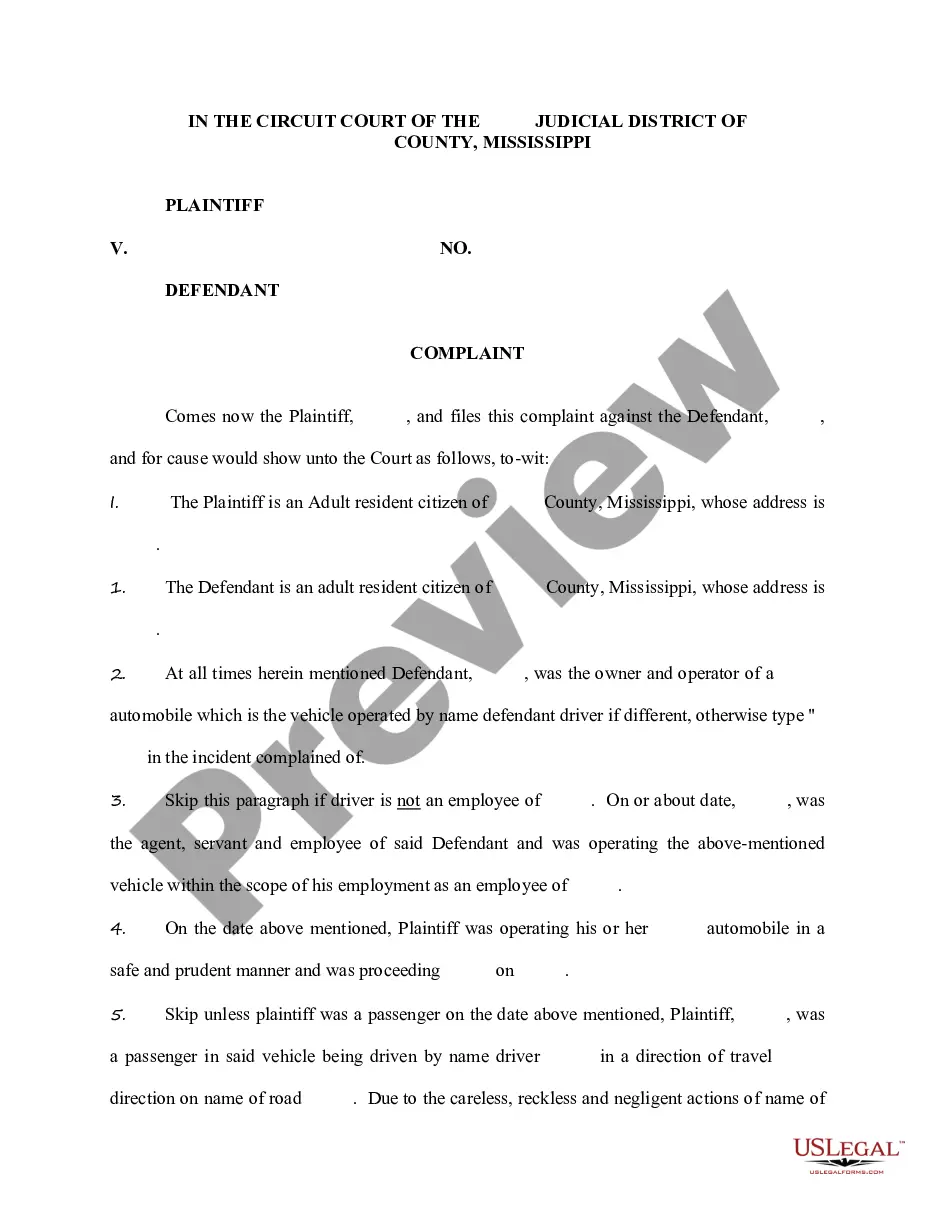
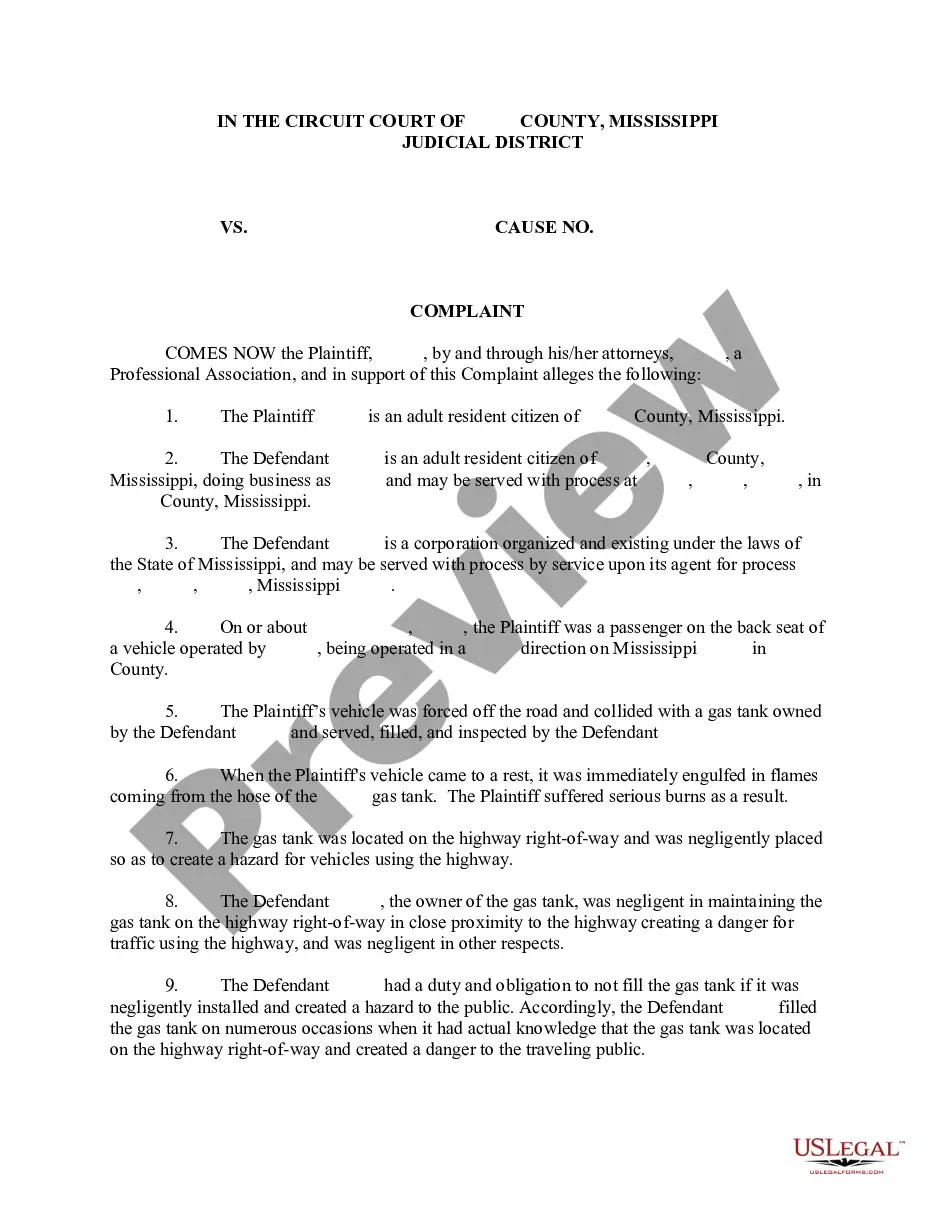
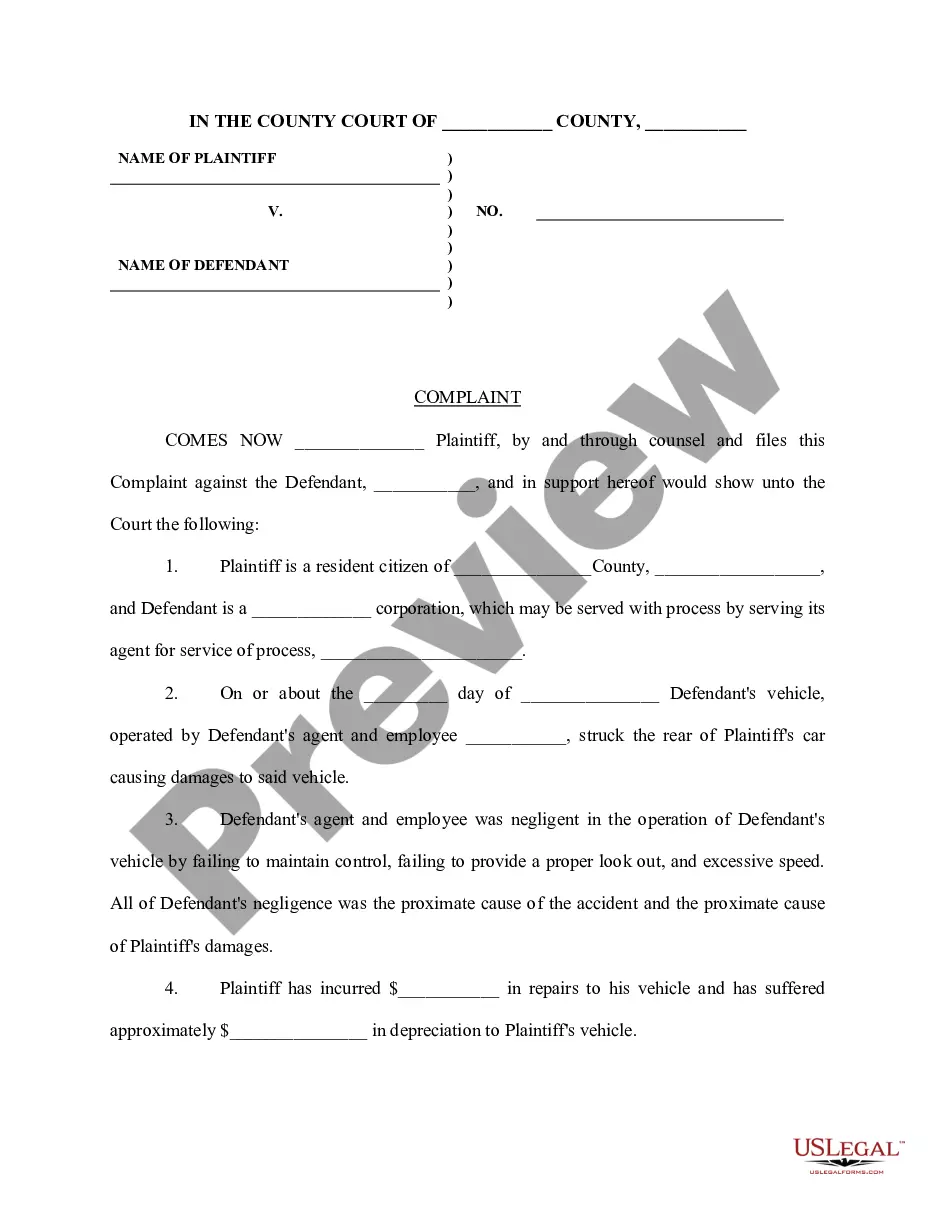
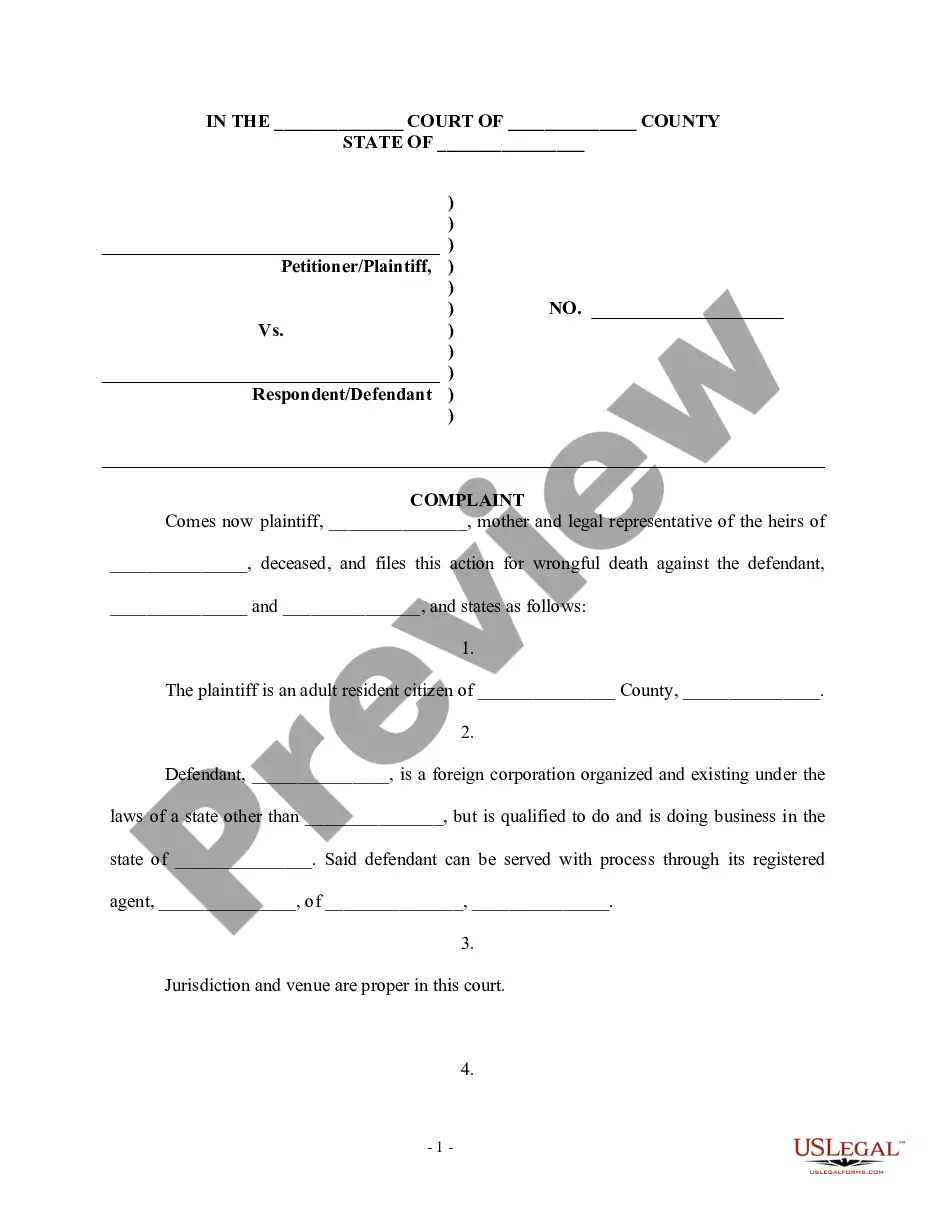
The Complaint vs Defendant Corporation - Motor Vehicle Accident form is a legal document that initiates a lawsuit against corporations and individuals involved in a motor vehicle accident, particularly where intoxication and illegal alcohol sales are factors. This form serves to outline the allegations of the Plaintiff against the Defendants, distinguishing it from other legal pleadings by its specific emphasis on the relationship between alcohol consumption and vehicular accidents. It is essential for those seeking to hold parties accountable for damages resulting from such incidents.
What’s included in this form
- Identification of the Plaintiff and Defendants, including unknown entities.
- Factual background relevant to the motor vehicle accident.
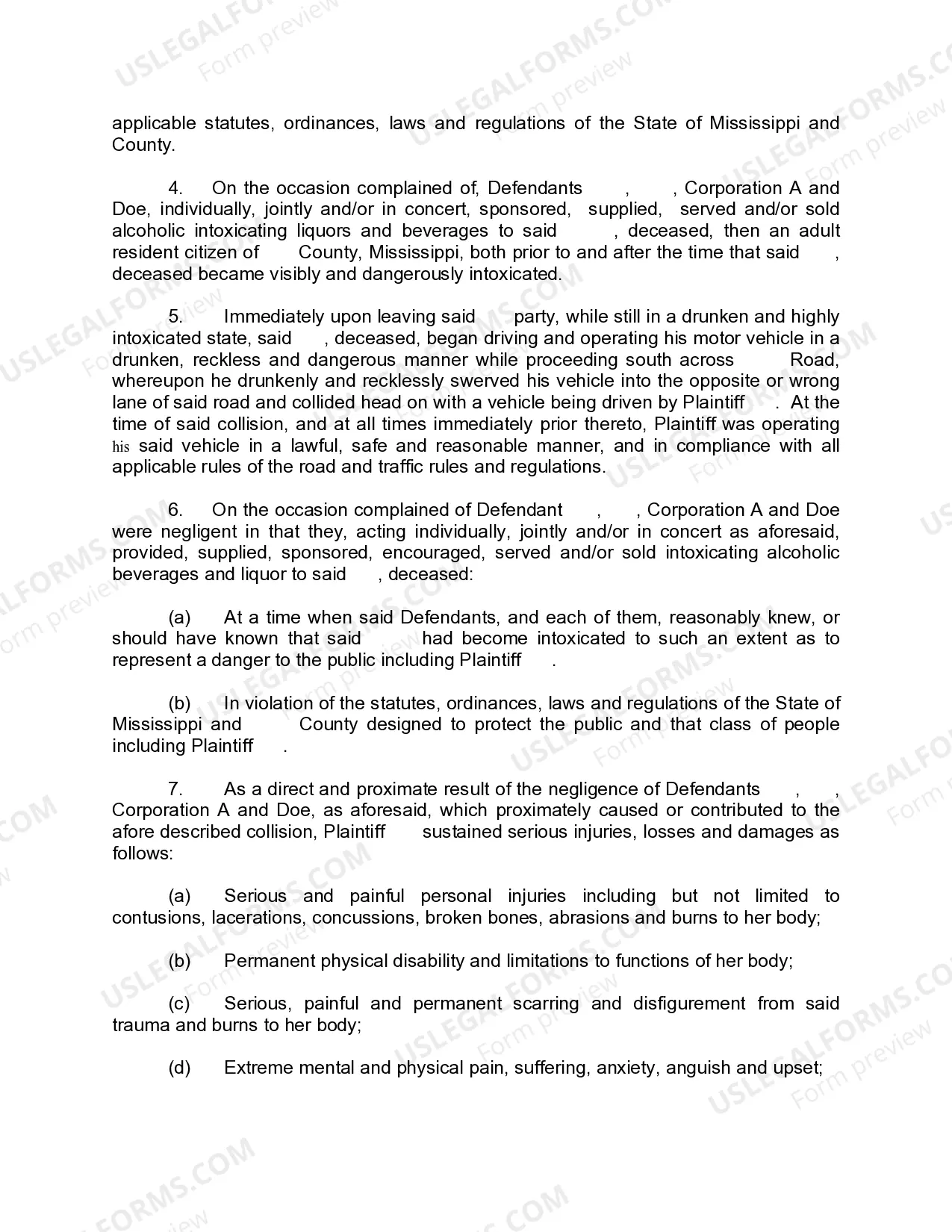
- Allegations concerning negligence and violation of laws related to alcohol sales.
- Details of the Plaintiff's injuries and damages caused by the accident.
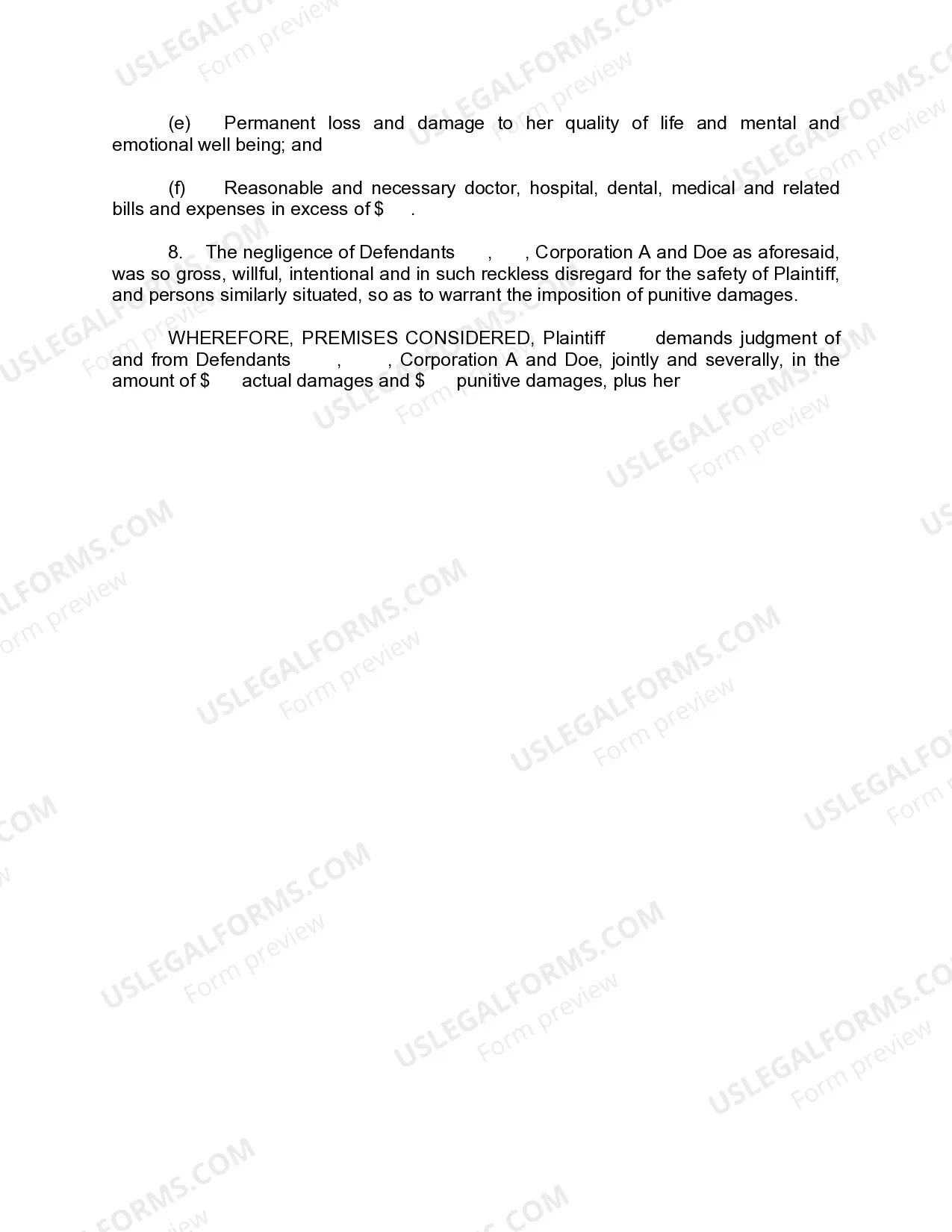
- Demand for actual and punitive damages from the Defendants.

When to use this form
This form is necessary when a Plaintiff wishes to file a lawsuit against individuals or corporations liable for injuries sustained in a motor vehicle accident caused by a driver under the influence of alcohol. It is appropriate to use this Complaint when there is evidence linking negligent alcohol service to the accident, particularly when the other party failed to comply with state laws regarding alcohol sales.
Who should use this form
- Individuals who have been injured in an automobile accident involving a driver who was intoxicated.
- Individuals seeking to hold businesses accountable for serving alcohol irresponsibly.
- Attorneys representing clients in cases related to motor vehicle accidents and intoxication.
Steps to complete this form
- Identify and enter the names of the Plaintiff and all Defendants, including any unknown entities.
- Provide the specific details surrounding the accident, including the date and location.
- Outline the allegations against the Defendants regarding alcohol service and negligence.
- Detail the injuries and damages suffered by the Plaintiff as a result of the accident.
- Indicate the amount of actual and punitive damages being sought.
Does this form need to be notarized?
Notarization is generally not required for this form. However, certain states or situations might demand it. You can complete notarization online through US Legal Forms, powered by Notarize, using a verified video call available anytime.
Get your form ready online
Our built-in tools help you complete, sign, share, and store your documents in one place.
Make edits, fill in missing information, and update formatting in US Legal Forms—just like you would in MS Word.
Download a copy, print it, send it by email, or mail it via USPS—whatever works best for your next step.
Sign and collect signatures with our SignNow integration. Send to multiple recipients, set reminders, and more. Go Premium to unlock E-Sign.
If this form requires notarization, complete it online through a secure video call—no need to meet a notary in person or wait for an appointment.
We protect your documents and personal data by following strict security and privacy standards.

Make edits, fill in missing information, and update formatting in US Legal Forms—just like you would in MS Word.

Download a copy, print it, send it by email, or mail it via USPS—whatever works best for your next step.

Sign and collect signatures with our SignNow integration. Send to multiple recipients, set reminders, and more. Go Premium to unlock E-Sign.

If this form requires notarization, complete it online through a secure video call—no need to meet a notary in person or wait for an appointment.

We protect your documents and personal data by following strict security and privacy standards.
Mistakes to watch out for
- Failing to accurately identify all parties involved can delay the proceedings.
- Not providing sufficient factual detail about the incident can weaken the complaint.
- Overlooking relevant state laws regarding alcohol sales and liability.
Why complete this form online
- Convenient access to legal documents that can be downloaded and completed at your own pace.
- Editability allows for customization to your specific case details before submission.
- Reliable formats (Word and Rich Text) ensure compatibility with most systems.
Legal use & context
This form is intended for use in civil court to pursue damages for injuries sustained in motor vehicle accidents. It must be completed with accuracy to ensure enforceability and compliance with jurisdictional guidelines.
Quick recap
- The document initiates legal action for damages from a motor vehicle accident involving intoxication.
- It is crucial to provide detailed factual information and adhere to state-specific requirements.
- Utilizing this form online simplifies the process of preparing and filing a complaint.
Looking for another form?
Form popularity
FAQ
Provide the name of the court at the top of the Answer. You can find the information on the summons. List the name of the plaintiff on the left side. Write the case number on the right side of the Answer. Address the Judge and discuss your side of the case. Ask the judge to dismiss the case.
Small Claims Court, Limited Jurisdiction Superior Court, or. Unlimited Jurisdiction Superior Court.
File a Defence and Cross-Claim. Attend the Directions Hearing. Attend the Post-Directions Hearing. Attend Further Directions, Call Over or Pre-Trial Review. Attend the Final hearing.
Contact the clerk's office of the court where the lawsuit was filed. You'll find a phone number and address for the clerk's office on your summons. The clerk will be able to tell you exactly what documents you should file with your answer and whether any filing fee is required.
The plaintiff must give you responses to your request for admissions within 30 days. You do not need to do anything if you do not get a response. The plaintiff has 30 days to deny or object to the statements.
Read the summons and make sure you know the date you must answer by. Read the complaint carefully. Write your answer. Sign and date the answer. Make copies for the plaintiff and yourself. Mail a copy to the plaintiff. File your answer with the court by the date on the summons.
When drafting an answer, one must: (1) follow the local, state, and federal court rules; (2) research the legal claims in the adversary's complaint; (3) respond to the adversary's factual allegations; and (4) assert affirmative defenses, counterclaims, cross-claims, or third-party claims, if applicable.
File an answer. The most common way to respond to a complaint is by filing an answer. Negotiate. Being served with a lawsuit does not automatically mean you need to appear in court. Request more information from the plaintiff. Cross-complain. File a motion to dismiss.
If you decide to file a response, you must file it in the same courthouse where the lawsuit was filed. The address should be on the papers you were served by the plaintiff. Make sure you take your original plus at least 2 copies to the clerk's office to file. You will have to pay a filing fee to file your papers.