Mississippi Complaint with Corporate Defendant
Understanding this form
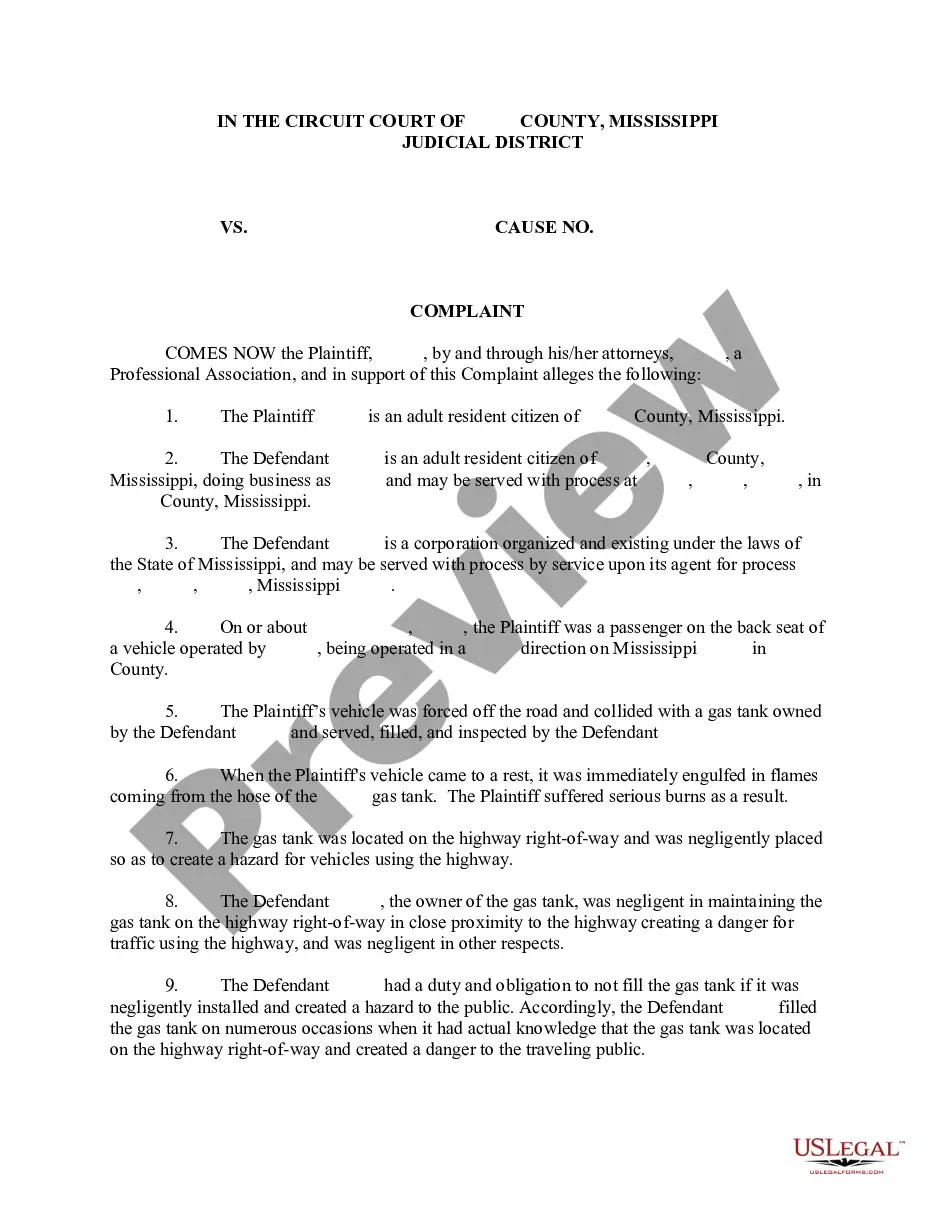
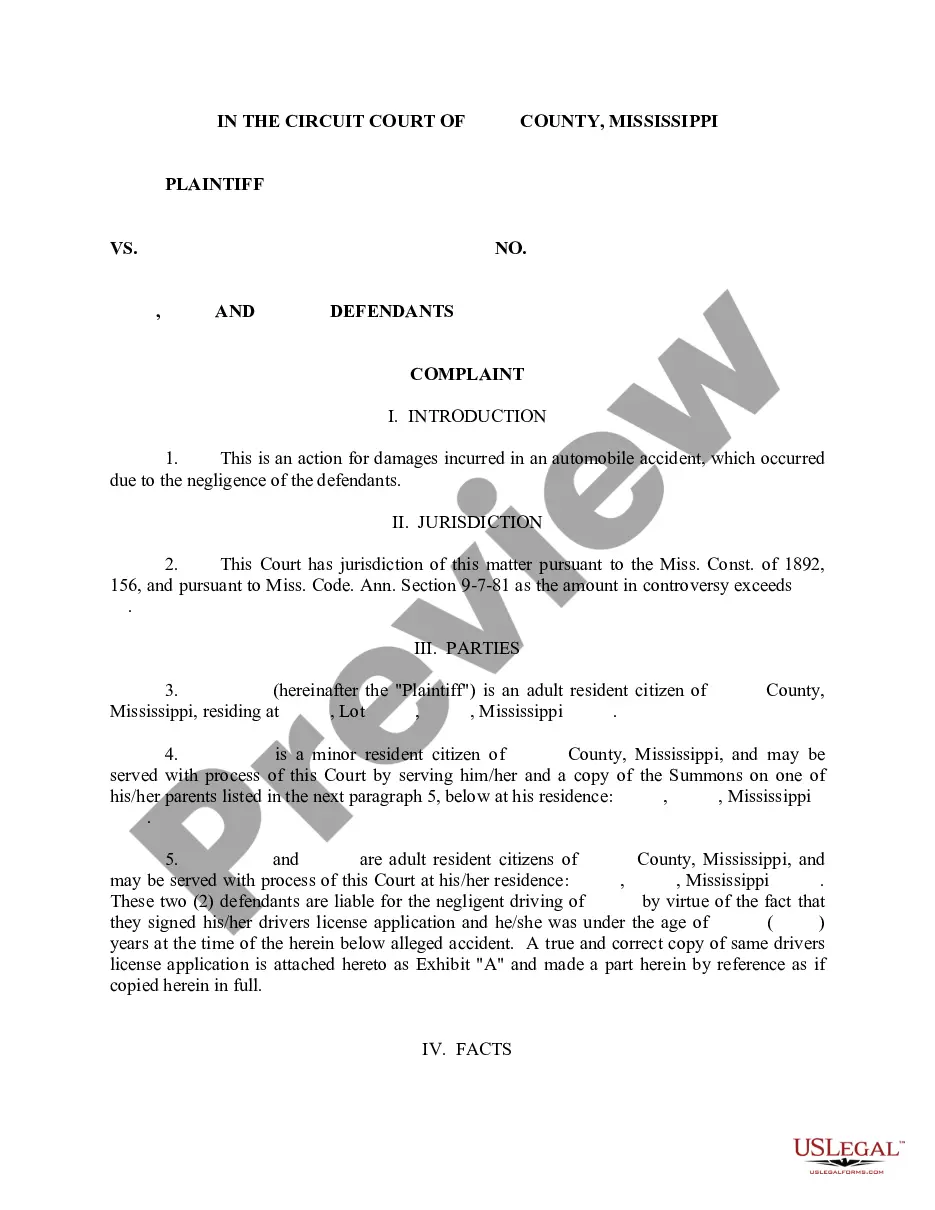
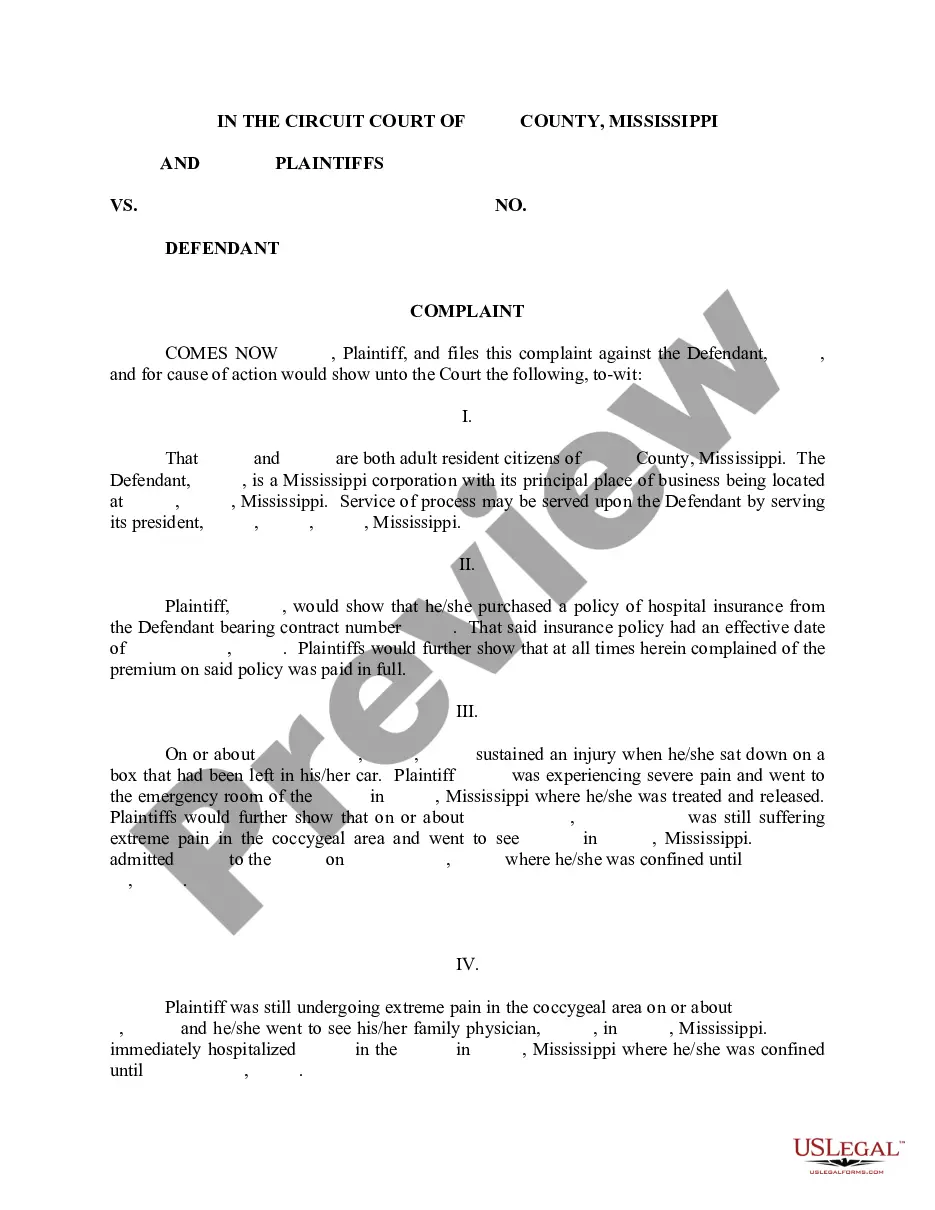
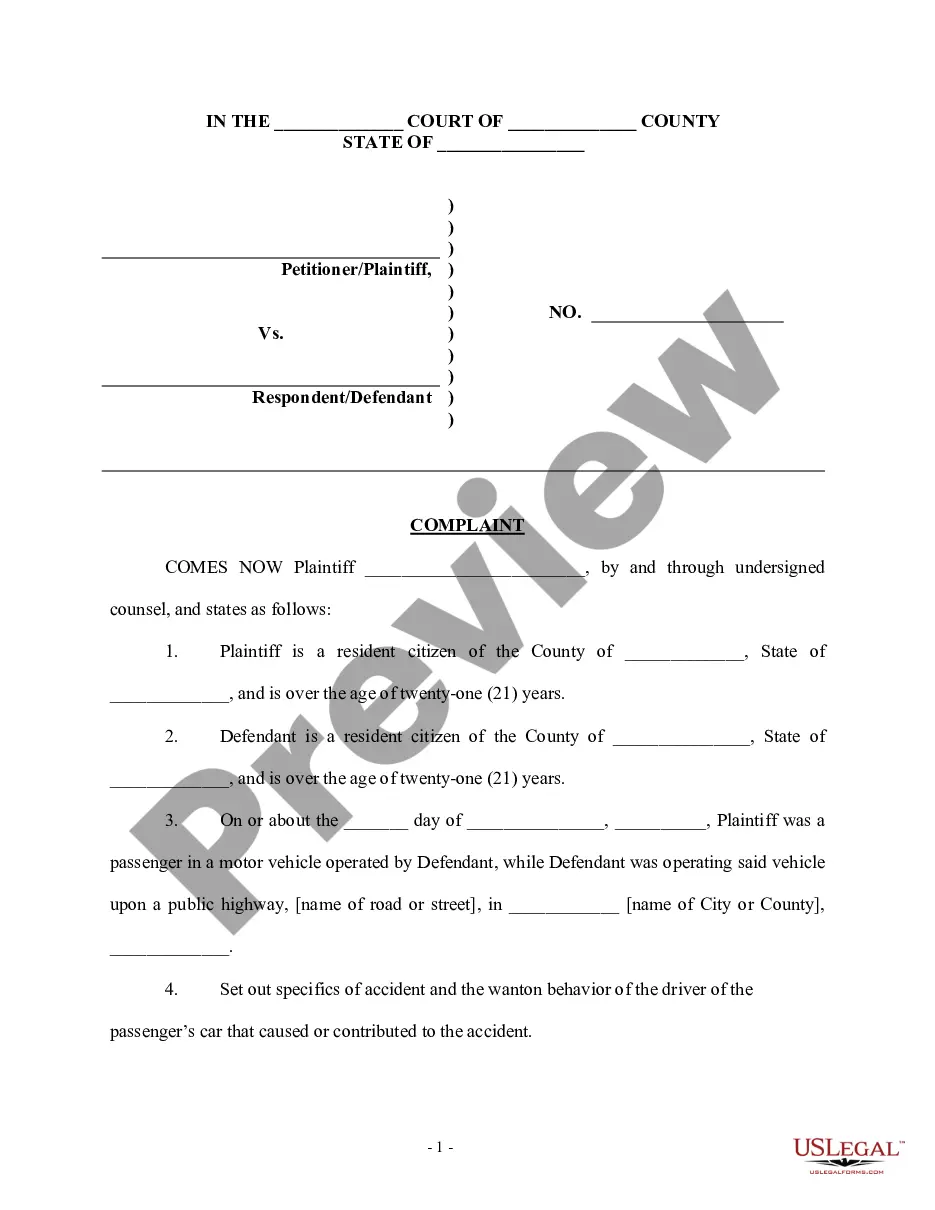
A Complaint with Corporate Defendant is a legal document that initiates a lawsuit involving allegations against a corporation, specifically in cases of negligence. This form is tailored for situations where a corporation's poor maintenance of a gas tank has led to injuries or damages. Unlike other complaint forms, this document addresses the unique aspects of corporate liability and negligence, making it essential for claimants seeking compensation for injuries related to corporate actions.
Form components explained
- Identification of the plaintiff and defendant, including relevant corporate details.
- Statement of jurisdiction to establish the court's authority over the case.
- Description of the incident leading to the plaintiff's injury, focusing on negligence related to the gas tank.
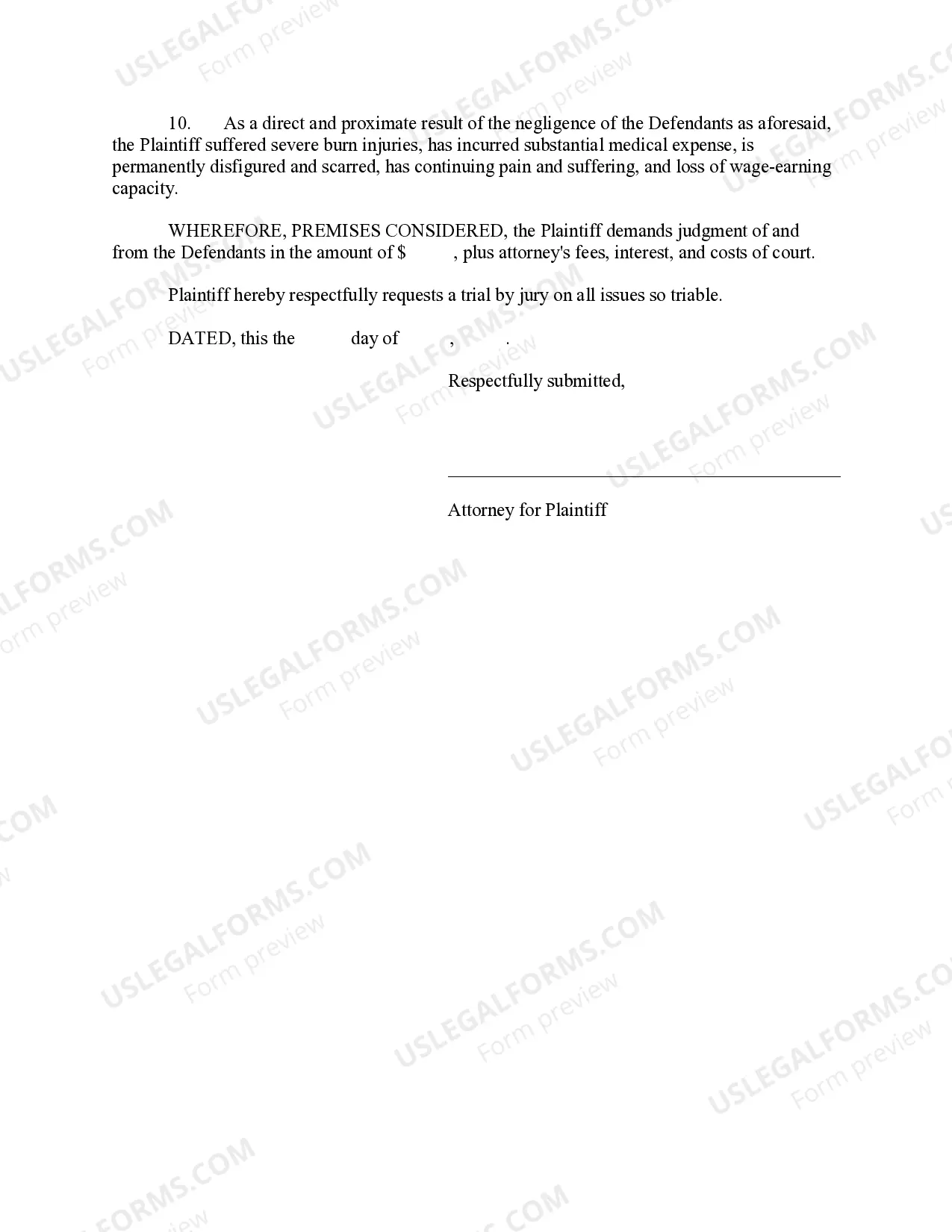
- Details of injuries sustained, including medical expenses and any long-term effects.
- Claims for damages, including compensation for pain and suffering and loss of wages.
Common use cases
This form should be used when an individual has suffered injuries due to a corporation's negligence, particularly relating to the maintenance or operation of hazardous materials, such as gas tanks. It is ideal for legal actions involving personal injury where the corporation's actions are directly tied to the injuries or damages experienced by the plaintiff.
Intended users of this form
- Individuals who have been injured as a result of corporate negligence.
- Legal representatives acting on behalf of plaintiffs in negligence cases.
- Anyone needing to initiate a lawsuit against a corporation for personal injuries or damages.
Completing this form step by step
- Identify and provide the names and addresses of the plaintiff and the corporate defendant.
- Clearly state the jurisdiction where the court has authority over the case.
- Describe the negligence incident in detail. Include how the corporation's actions or inactions contributed to the incident.
- Document the injuries sustained, specifying medical treatment and ongoing impacts to your life.
- Outline the damages being claimed, including quantifiable economic losses and non-economic damages such as pain and suffering.
Does this form need to be notarized?
This form usually doesn’t need to be notarized. However, local laws or specific transactions may require it. Our online notarization service, powered by Notarize, lets you complete it remotely through a secure video session, available 24/7.
Get your form ready online
Our built-in tools help you complete, sign, share, and store your documents in one place.
Make edits, fill in missing information, and update formatting in US Legal Forms—just like you would in MS Word.
Download a copy, print it, send it by email, or mail it via USPS—whatever works best for your next step.
Sign and collect signatures with our SignNow integration. Send to multiple recipients, set reminders, and more. Go Premium to unlock E-Sign.
If this form requires notarization, complete it online through a secure video call—no need to meet a notary in person or wait for an appointment.
We protect your documents and personal data by following strict security and privacy standards.

Make edits, fill in missing information, and update formatting in US Legal Forms—just like you would in MS Word.

Download a copy, print it, send it by email, or mail it via USPS—whatever works best for your next step.

Sign and collect signatures with our SignNow integration. Send to multiple recipients, set reminders, and more. Go Premium to unlock E-Sign.

If this form requires notarization, complete it online through a secure video call—no need to meet a notary in person or wait for an appointment.

We protect your documents and personal data by following strict security and privacy standards.
Common mistakes to avoid
- Failing to clearly identify the corporate defendant, leading to jurisdiction issues.
- Not providing sufficient detail about the negligence that caused the injury.
- Overlooking the documentation of damages, which can weaken the case.
Benefits of using this form online
- Convenient access to legal documents without needing to visit a legal office.
- Editable formats allow users to customize the form for their specific case.
- Reliability from documents drafted by licensed attorneys, ensuring legal compliance.
Looking for another form?
Form popularity
FAQ
Negligence claims must prove four things in court: duty, breach, causation, and damages/harm.
A summons is a written notice, which usually is accompanied by the complaint, notifying the defendant and the court that the complaint has been served on all relevant parties and listing the date of the first court appearance for the lawsuit.
Be brief. Answer the allegations in the complaint with one or two sentences. Again remember that the statements you make in your answer can be used as admissions against you. Your response to the allegations in the complaint may admit part of the statement in the specific paragraph and deny part.
When the plaintiff files the complaint with the court, the court issues a summons, which instructs the defendant to answer the complaint within a specific time dictated by the rules in the court where the complaint was filed.The defendant generally must either answer the complaint, or move to dismiss the complaint.
Read the summons and make sure you know the date you must answer by. Read the complaint carefully. Write your answer. Sign and date the answer. Make copies for the plaintiff and yourself. Mail a copy to the plaintiff. File your answer with the court by the date on the summons.
The Answer. The defendant's response to a complaint is called the answer. The answer contains the defendant's version of the events leading to the lawsuit and may be based on the contents of the complaint. The filing of the answer is one option that the defendant has in deciding how to respond to the complaint.
In Civil Law, a complaint is the very first formal action taken to officially begin a lawsuit. This written document contains the allegations against the defense, the specific laws violated, the facts that led to the dispute, and any demands made by the plaintiff to restore justice.
Failure to Respond: If a defendant fails to answer the complaint or file a motion to dismiss within the time limit set forth in the summons, the defendant is in default. The plaintiff can ask the court clerk to make a note of that fact in the file, a procedure called entry of default.
You can file an answer to respond to the plaintiff's Complaint. An answer is a formal statement, in writing, of your defense to the lawsuit. You can say that what the plaintiff claims is not true. Or you can say it is true but give more information and reasons to defend your actions or explain the situation.