Mississippi Absolute Release With Covenants
What is this form?
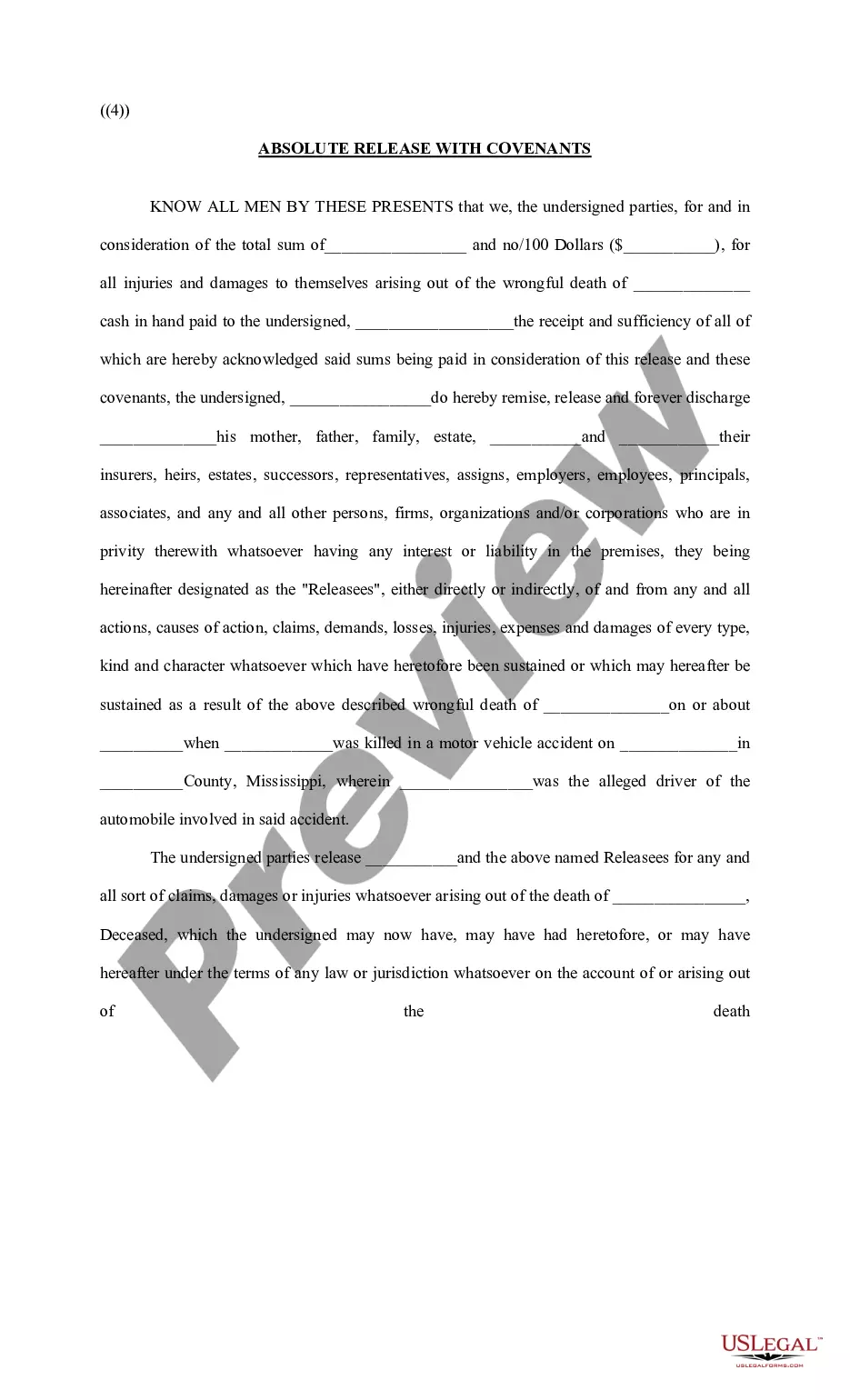
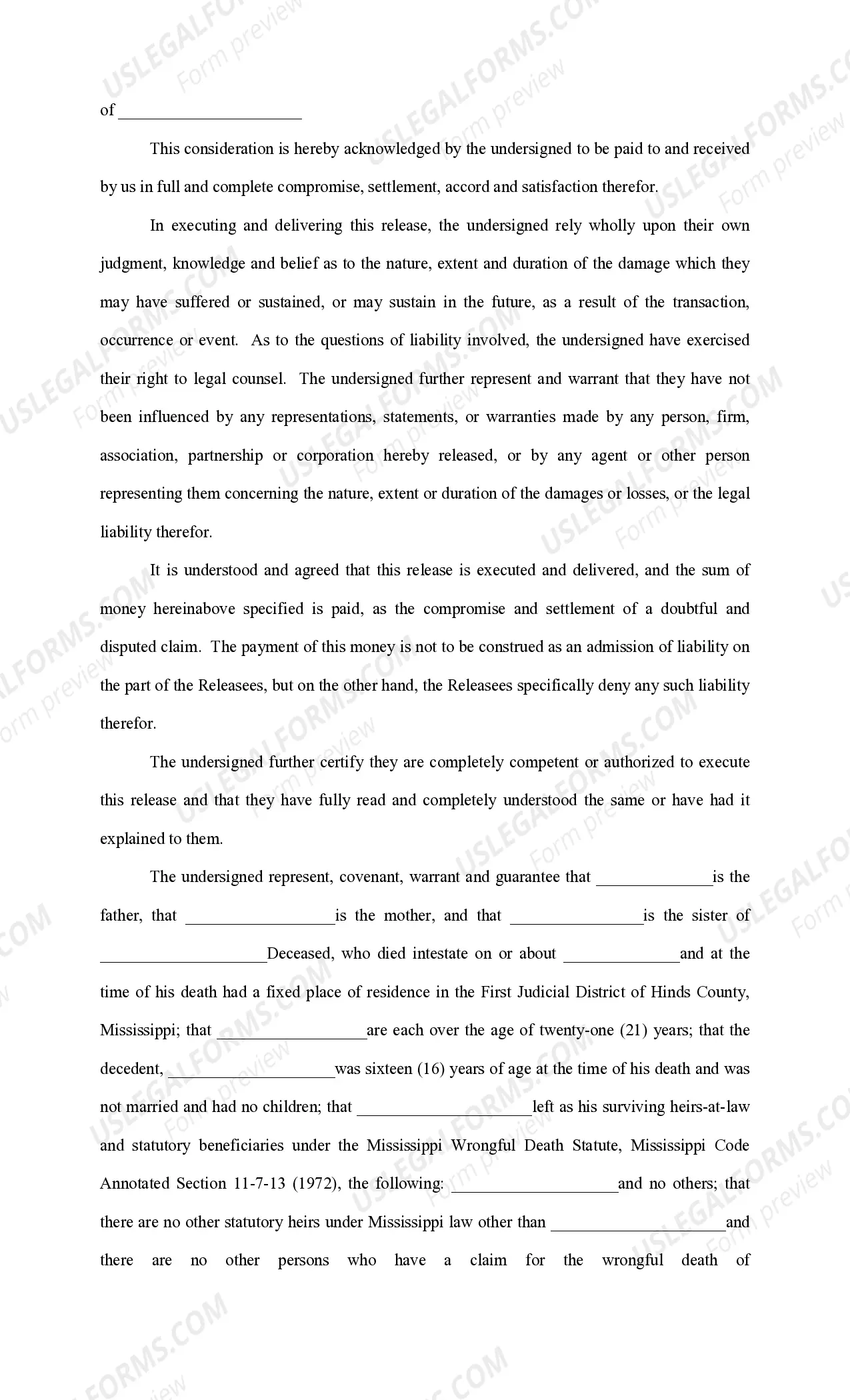
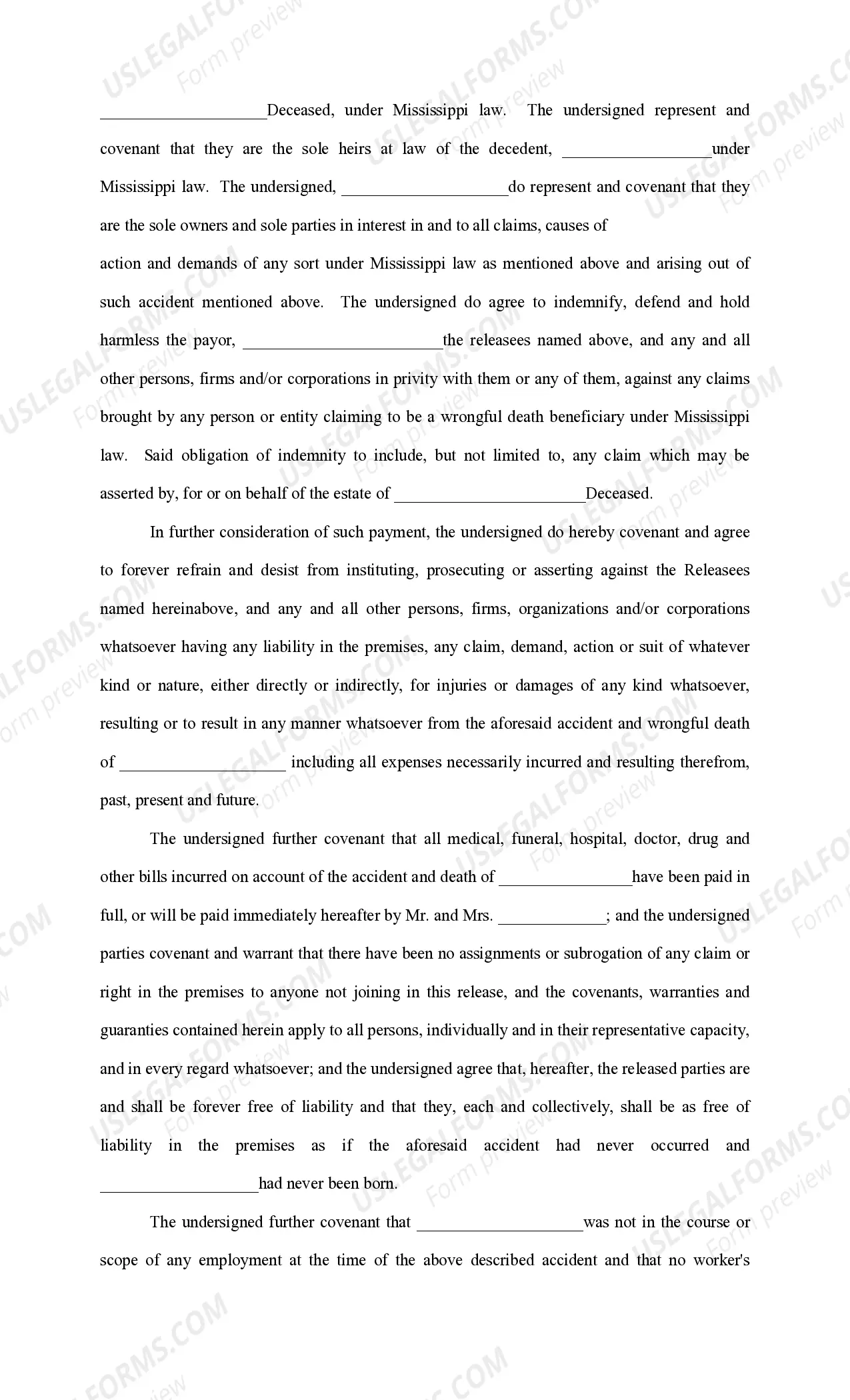
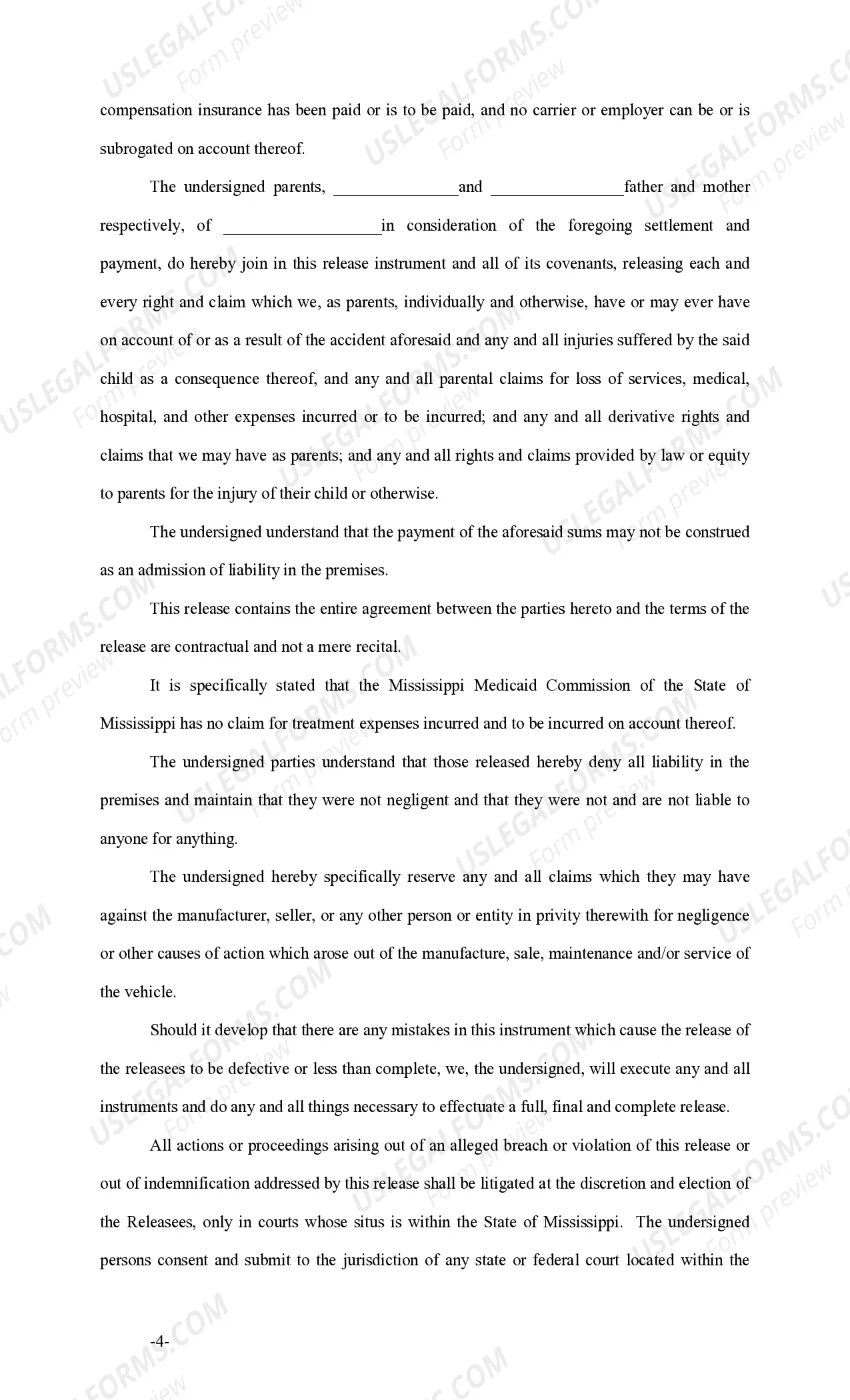
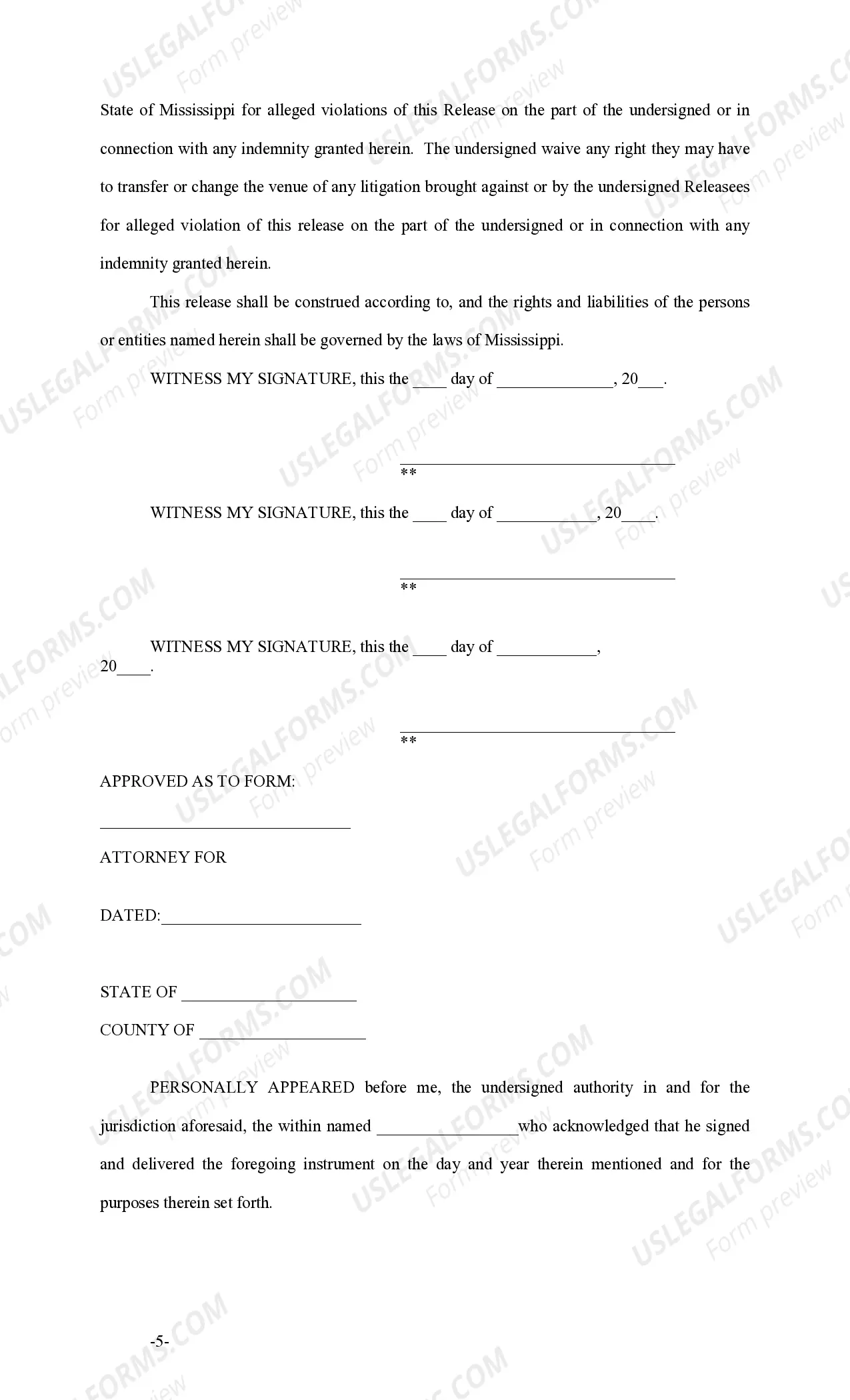
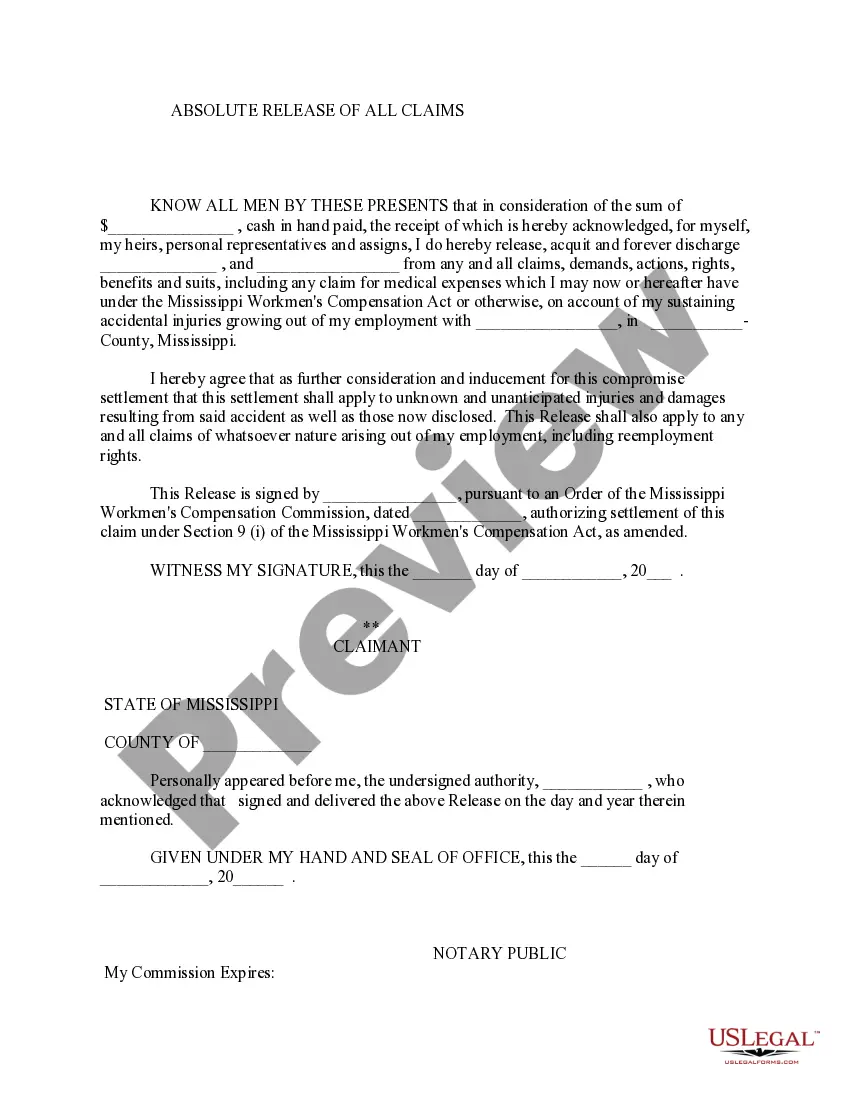
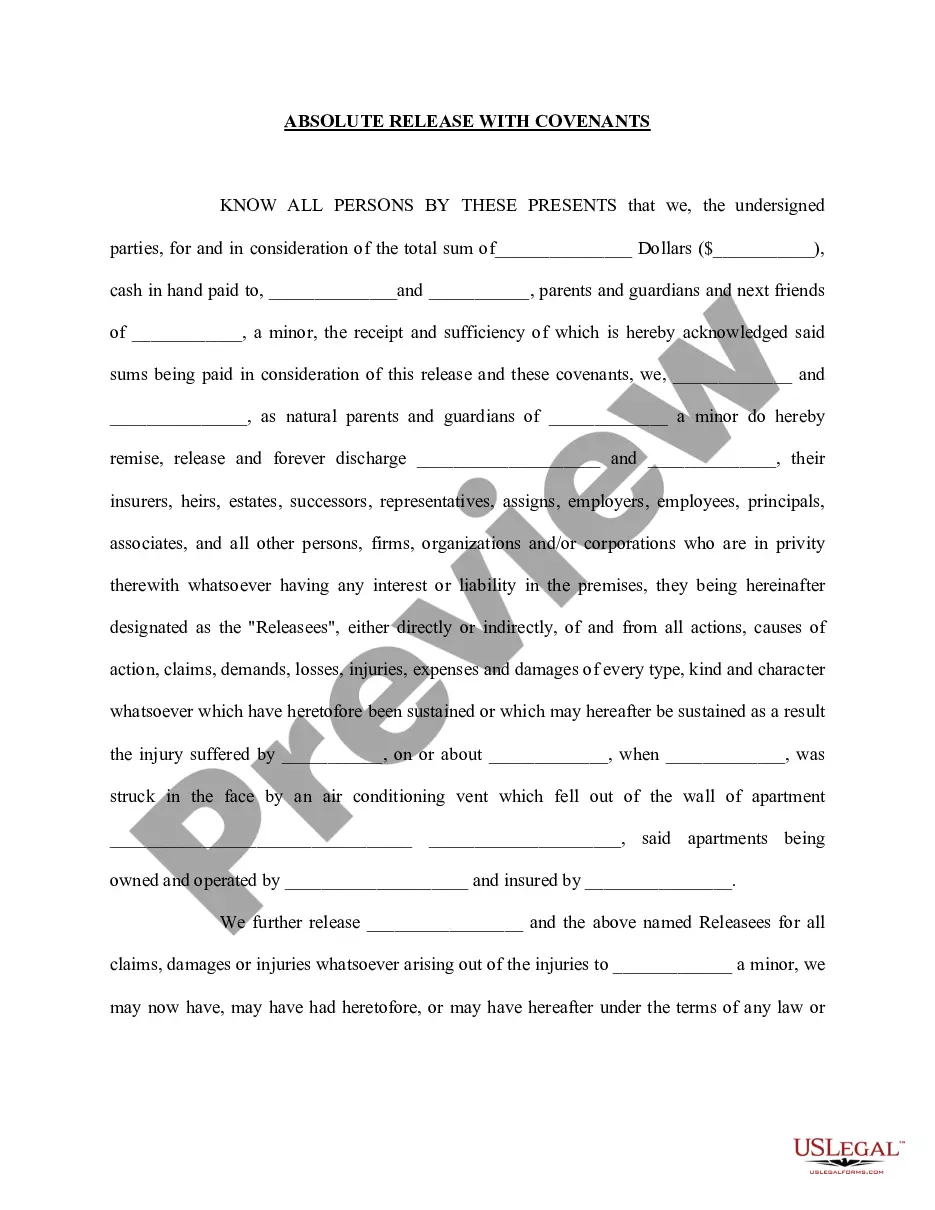
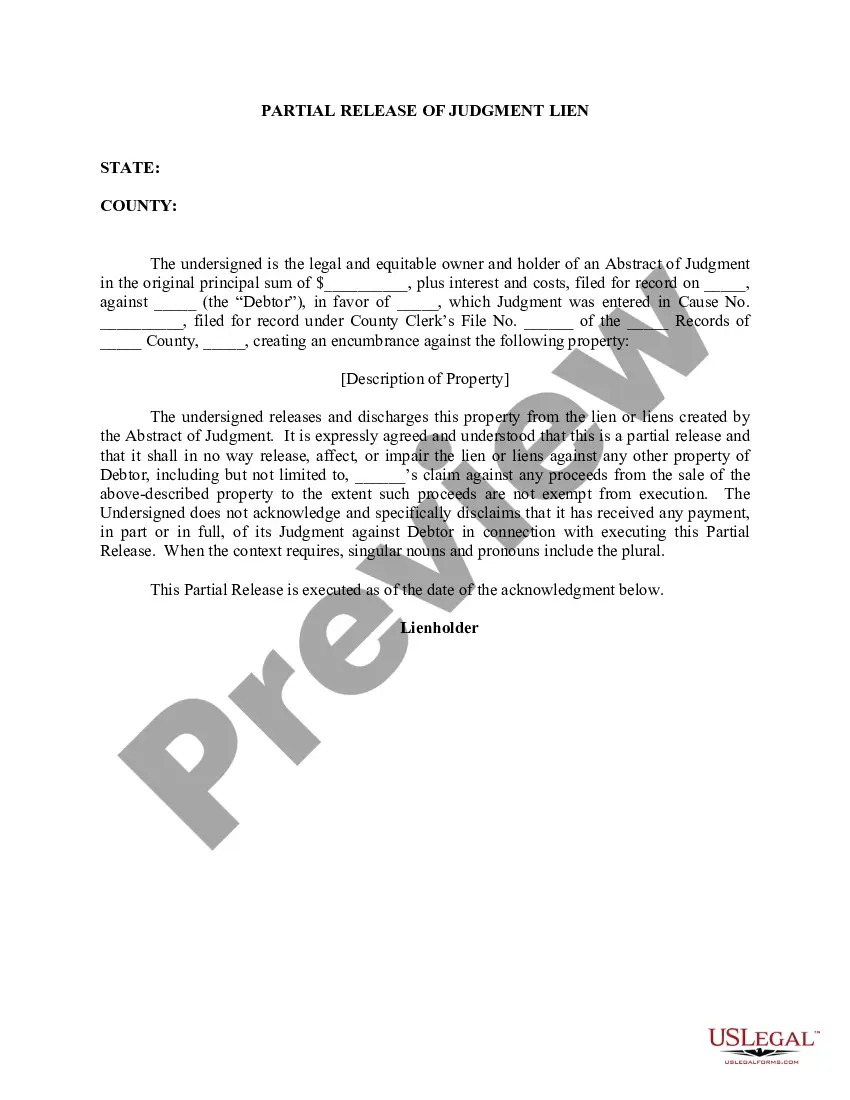
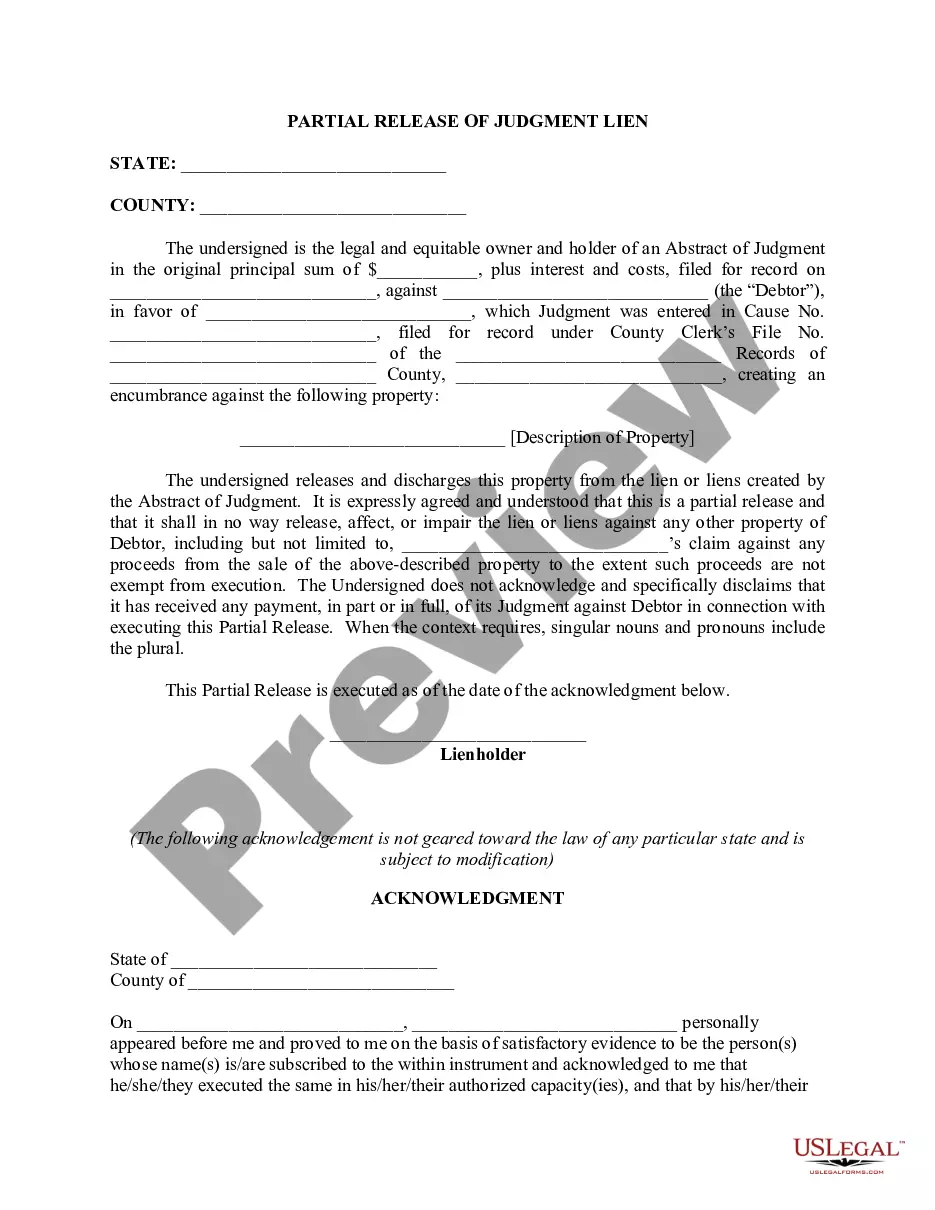
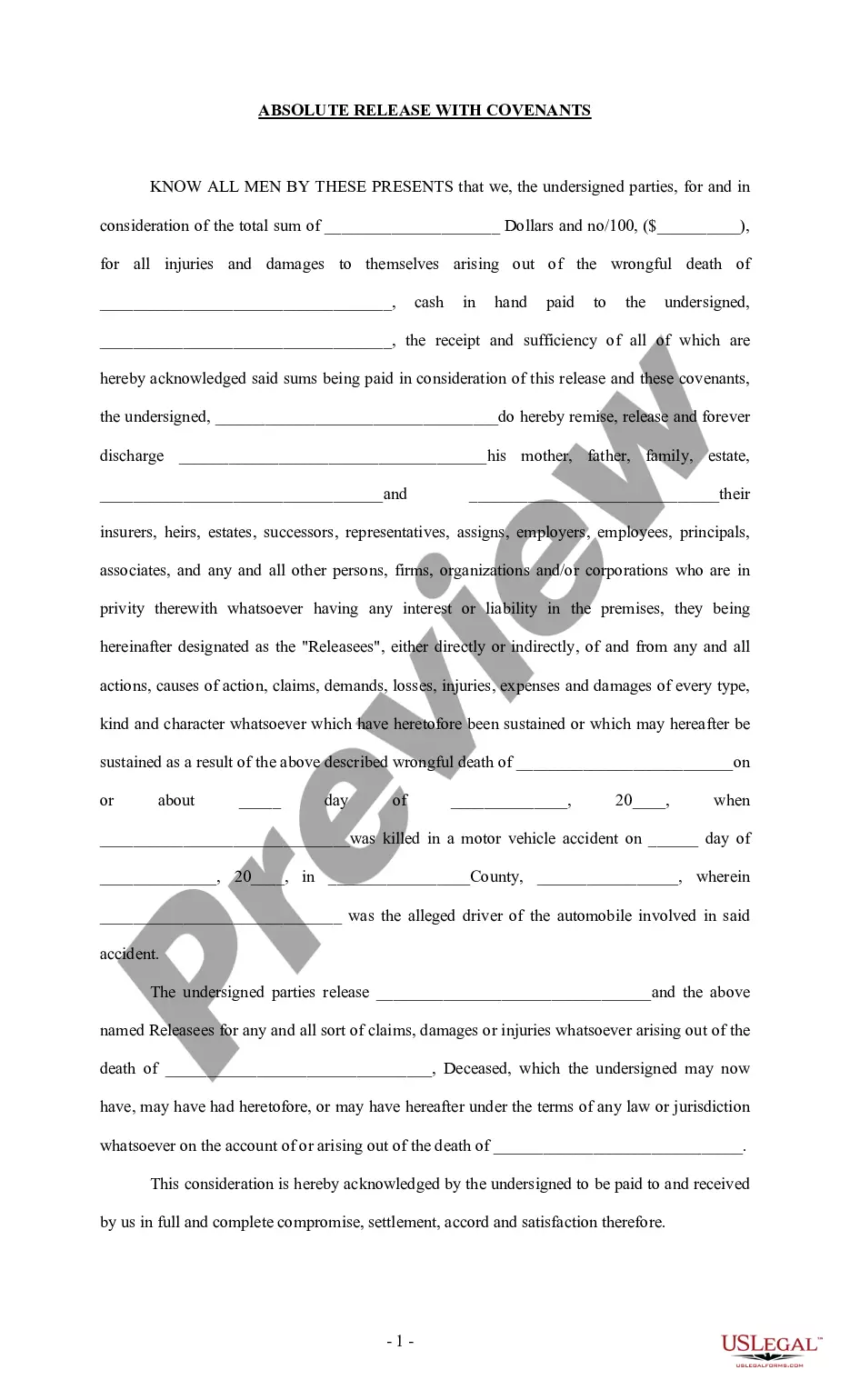
The Absolute Release With Covenants is a legal document that releases a Defendant from all liability related to a specific cause of action, particularly in cases of wrongful death. This form provides peace of mind to both the parties involved by ensuring that all claims arising from the incident are settled and that the parties are free from future liability regarding the matter. This form is distinct because it includes covenants ensuring that the undersigned parties will not pursue further claims related to the wrongful death specified in the document.
Main sections of this form
- Identification of parties involved in the release
- Details about the injury or wrongful death, including the date and circumstances
- Statement of consideration received for the release
- Confirmation of understanding and acknowledgment of claims released
- Assurances regarding the legal authority of parties to enter into the agreement
- Indemnification clauses protecting the released parties from future claims
When to use this form
This form should be used in situations where a party seeks to release another from liability following a wrongful death incident, commonly seen in personal injury cases. It is particularly relevant when the parties have reached a financial settlement and want to formalize the cessation of any future claims regarding the incident. This is essential in wrongful death cases that may arise from accidents, such as motor vehicle accidents, where the parties involved agree to resolve the matter amicably.
Who should use this form
- Individuals or families of a deceased person involved in a wrongful death case
- Defendants seeking to confirm the release of liability
- Attorneys representing either party who need a formal document to settle claims
- Any stakeholders involved in the wrongful death incident that wish to avoid further legal action
Steps to complete this form
- Identify the parties involved by entering their full names and relations to the deceased.
- Specify the total monetary amount being paid in consideration for this release.
- Provide detailed information about the wrongful death incident, including the date and circumstances.
- Ensure all stakeholders sign and date the document in the required sections.
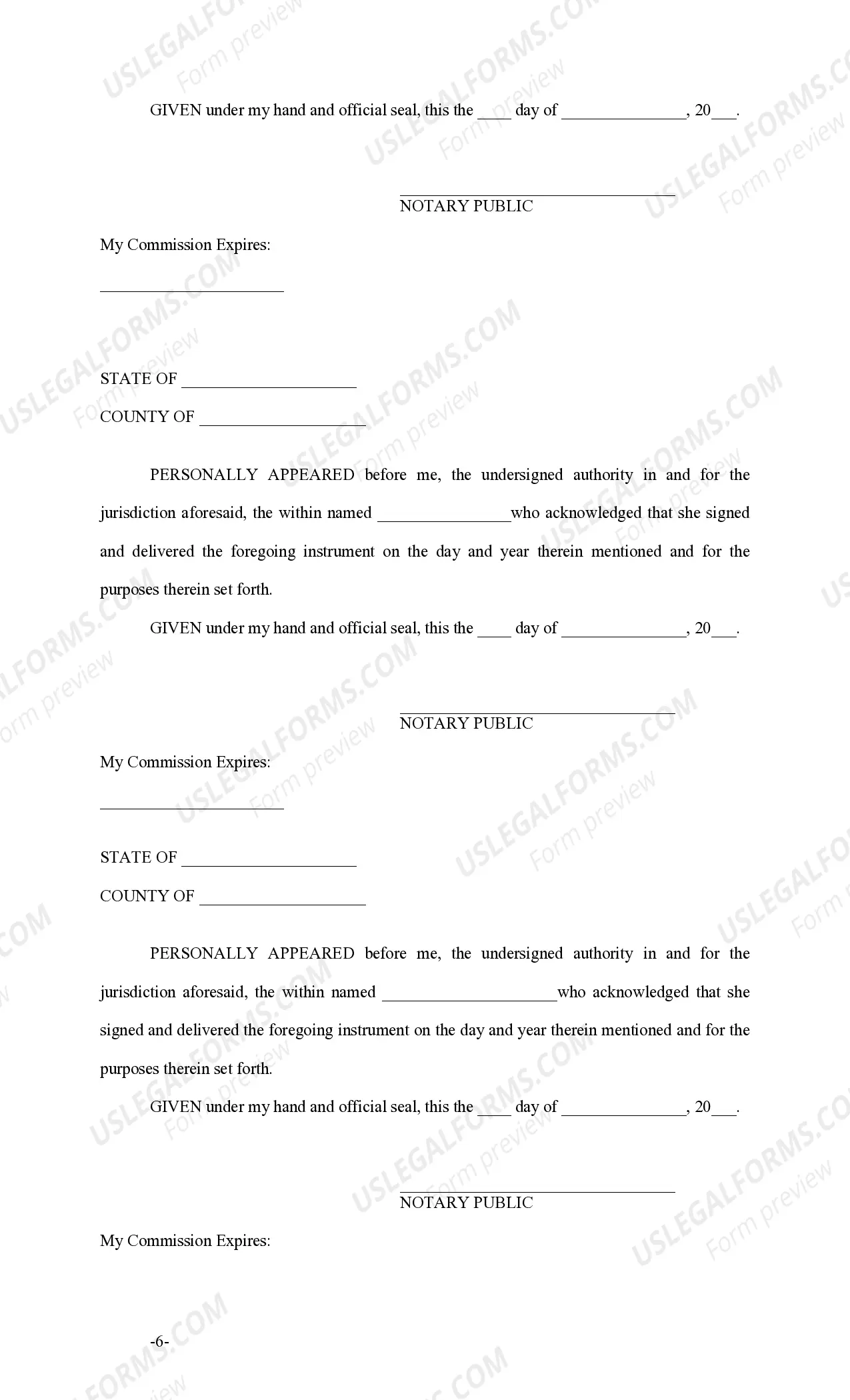
- Seek notarization of the document to validate the signatures and agreements made.
Is notarization required?
This document requires notarization to meet legal standards. US Legal Forms provides secure online notarization powered by Notarize, allowing you to complete the process through a verified video call, available 24/7.
Get your form ready online
Our built-in tools help you complete, sign, share, and store your documents in one place.
Make edits, fill in missing information, and update formatting in US Legal Forms—just like you would in MS Word.
Download a copy, print it, send it by email, or mail it via USPS—whatever works best for your next step.
Sign and collect signatures with our SignNow integration. Send to multiple recipients, set reminders, and more. Go Premium to unlock E-Sign.
If this form requires notarization, complete it online through a secure video call—no need to meet a notary in person or wait for an appointment.
We protect your documents and personal data by following strict security and privacy standards.

Make edits, fill in missing information, and update formatting in US Legal Forms—just like you would in MS Word.

Download a copy, print it, send it by email, or mail it via USPS—whatever works best for your next step.

Sign and collect signatures with our SignNow integration. Send to multiple recipients, set reminders, and more. Go Premium to unlock E-Sign.

If this form requires notarization, complete it online through a secure video call—no need to meet a notary in person or wait for an appointment.

We protect your documents and personal data by following strict security and privacy standards.
Common mistakes to avoid
- Failing to include all necessary parties in the release, which can lead to future claims.
- Not accurately detailing the circumstances of the wrongful death, which may render the release incomplete.
- Omitting necessary signatures or dates, making the document legally invalid.
- Neglecting to seek legal counsel for understanding implications before signing.
Benefits of completing this form online
- Convenience of accessing and downloading the form instantly.
- Editability allows you to fill in the needed information without hassle.
- Reliable templates drafted by licensed attorneys ensure legal compliance.
- Available for use at any time, providing flexibility in completing legal documentation.
Looking for another form?

Form popularity
FAQ
In general a promise unsupported by consideration is not a binding contract.If they wish to sue on contract. Consideration may be in 2 types where is executory and executed. Executory where is a promise is given for a promise or it may be executed where an act or a forbearance is given to a promise.
Patents are, by definition, the right to exclude others from using an invention. When the patent owner has given up the right to exclude another entity through the grant of a license or covenant not to sue, it cannot then transfer that right to exclude to another party.
A covenant not to sue is quite different from a release of liability. A release is a waiver or relinquishment of a known right.A covenant not to sue preserves the existence of the cause of action but places contractual restrictions on the injured party's right to file suit.
A covenant not to sue is a legal agreement in which the party seeking damages agrees not to sue the party that it has cause against.
Lawyers call an agreement to settle a dispute a "release," because in exchange for some act (often the payment of money), one person gives up (or releases) his or her claim against another.
California law doesn't permit covenants not so sue if it is to exempt someone from fraud, willful injury or violation of the law. The court determined that that wasn't the case here. consultation over a two-year period, militates against a conclusion that the covenant not to sue is procedurally unconscionable.
Although a covenant not to sue may appear to be the same as a license, and a practitioner may be tempted to substitute one for the other, they are not the same and they should be used only with an understanding of what each carries with it.
While signing a waiver does not mean an injured person cannot sue, it also weakens an injured person's claim and in some cases can lead to the case being dismissed.Waivers most often attempt to limit a business owner's liability in the event of injury to business customers.