Mississippi Answers and Defenses
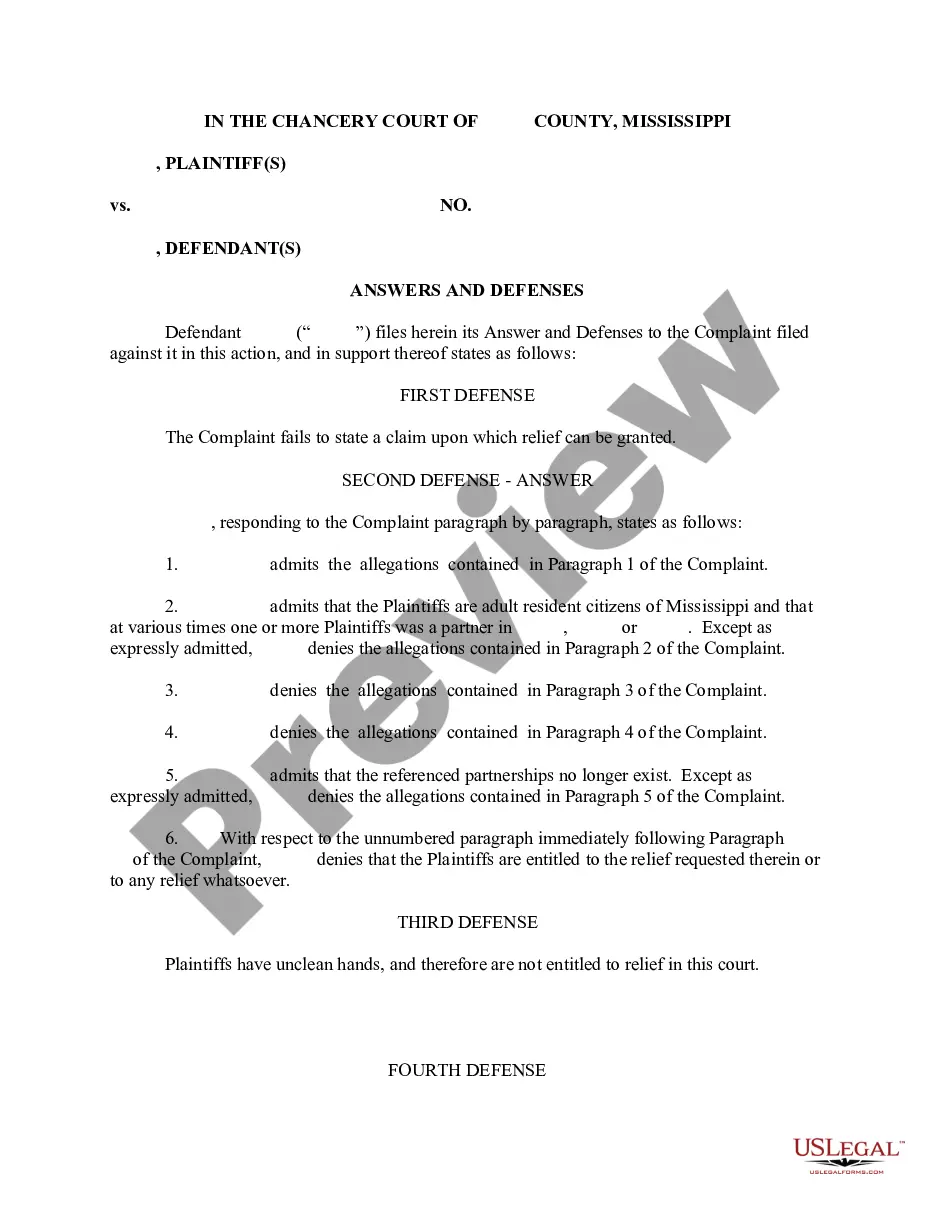
What is this form?
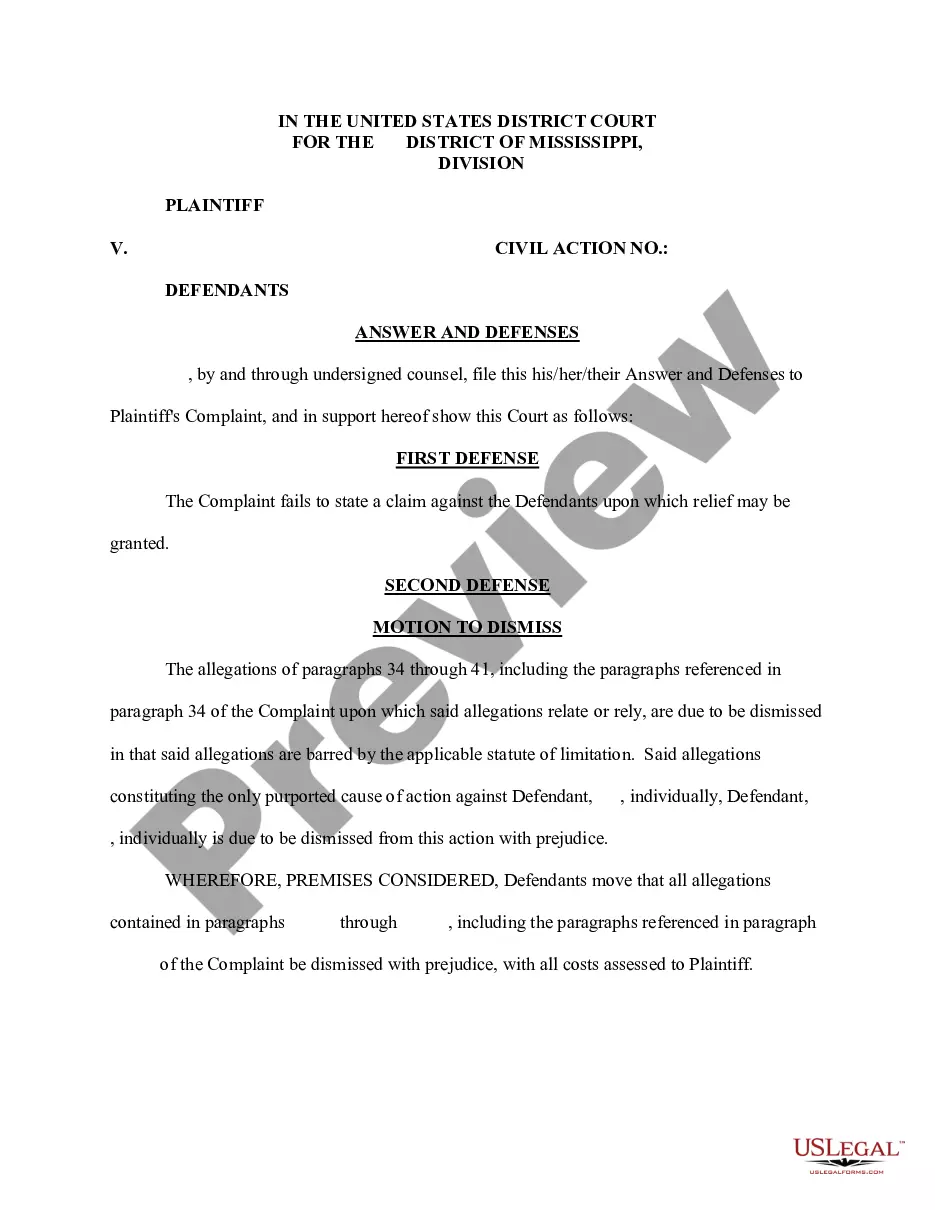
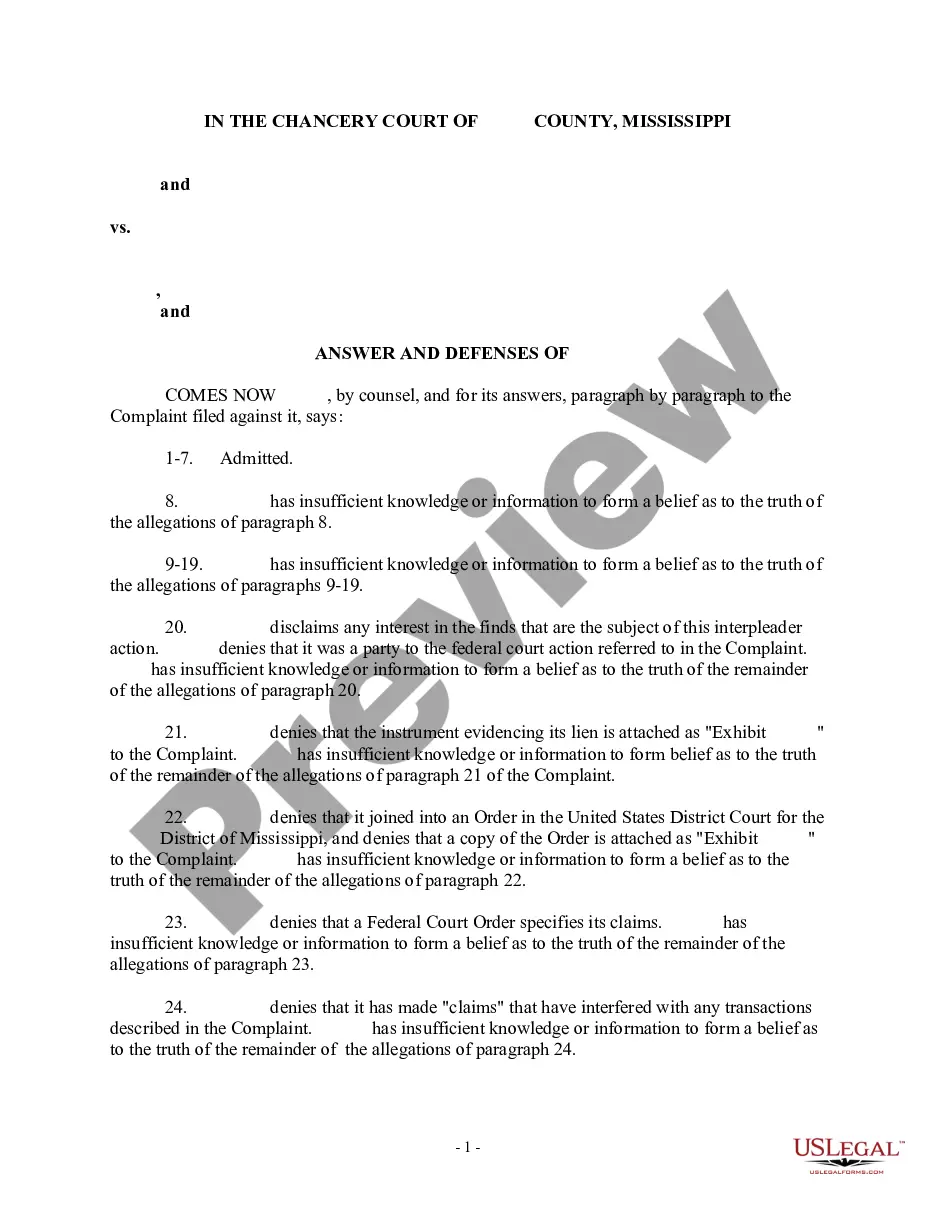
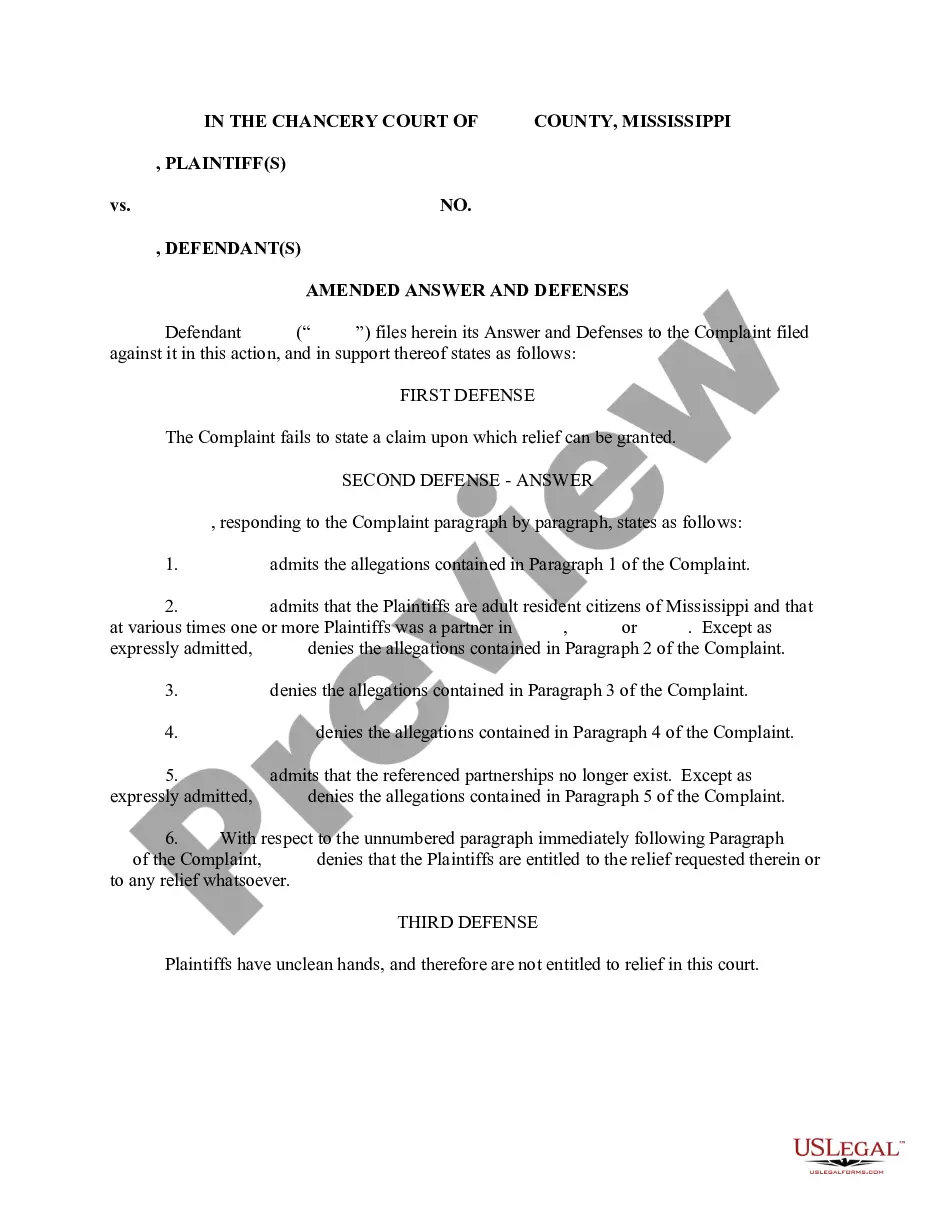
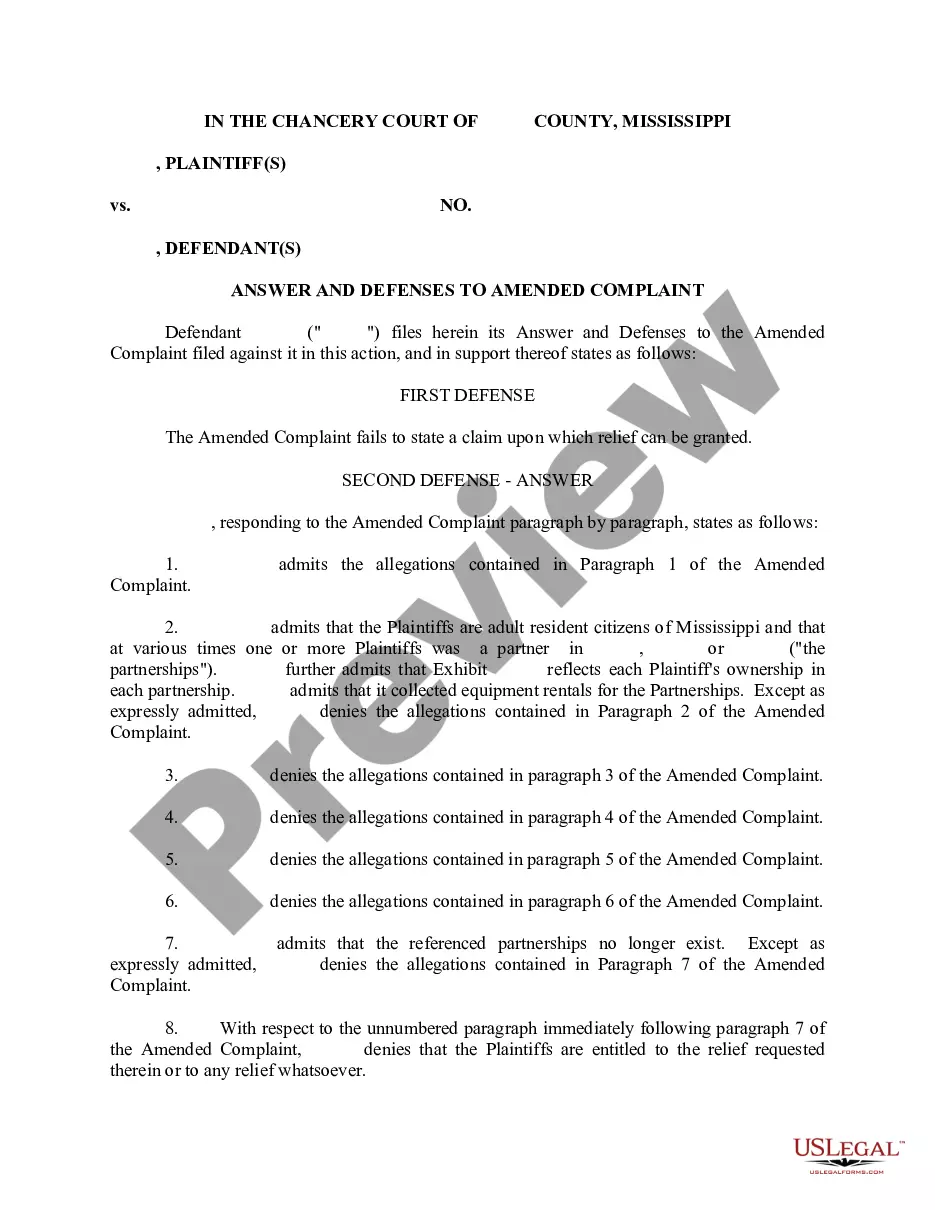
The Answers and Defenses form is a legal document used to respond to a Complaint that initiates a lawsuit. This form allows a defendant to present their answers to the allegations filed against them, along with any affirmative defenses that may apply. This form is versatile and can be adapted for various types of lawsuits, setting it apart from standard answer forms that may not include defenses or counterclaims.
Main sections of this form
- Defendant's answers to each allegation in the Complaint
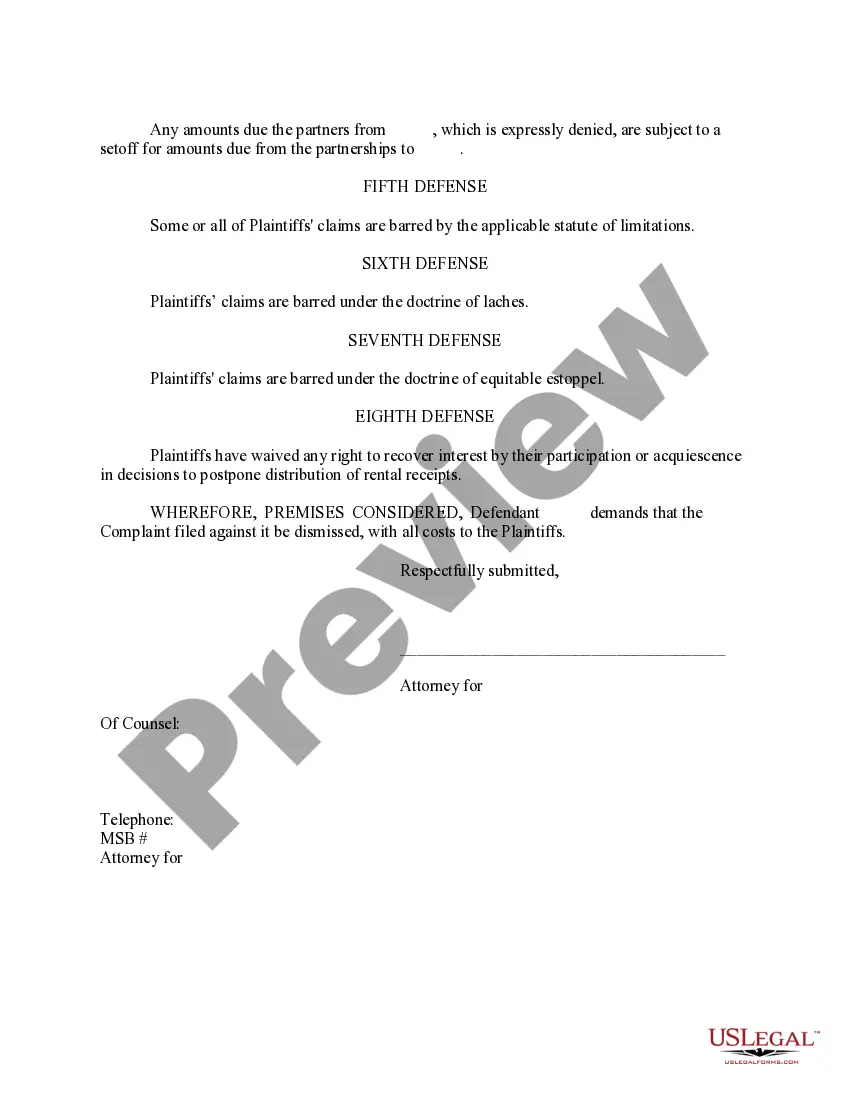
- Affirmative defenses including laches and equitable estoppel
- Fields for plaintiff's claims to be contested
- Space for additional defenses or claims as needed
- Signature section for the defendant
When this form is needed
This form is essential when you have received a Complaint and need to formally respond. It's used in various scenarios such as when a defendant wishes to dispute the claims made against them, assert affirmative defenses, or clarify their position in the ongoing litigation. Utilizing this form is crucial for preserving legal rights and making an effective legal argument.
Who can use this document
This form is intended for:
- Defendants in any civil litigation who have been served with a Complaint
- Individuals seeking to assert legal defenses against claims made in court
- Lawyers representing clients in litigation who require a clear and formal response to a lawsuit
How to complete this form
- Begin by reading the Complaint thoroughly to understand the allegations against you.
- Fill in your responses to each allegation provided in the form.
- List any affirmative defenses that apply to your case, such as laches or equitable estoppel.
- Add any additional defenses or counterclaims you wish to assert.
- Sign and date the form to validate your answers before submitting it to the court.
Is notarization required?
In most cases, this form does not require notarization. However, some jurisdictions or signing circumstances might. US Legal Forms offers online notarization powered by Notarize, accessible 24/7 for a quick, remote process.
Get your form ready online
Our built-in tools help you complete, sign, share, and store your documents in one place.
Make edits, fill in missing information, and update formatting in US Legal Forms—just like you would in MS Word.
Download a copy, print it, send it by email, or mail it via USPS—whatever works best for your next step.
Sign and collect signatures with our SignNow integration. Send to multiple recipients, set reminders, and more. Go Premium to unlock E-Sign.
If this form requires notarization, complete it online through a secure video call—no need to meet a notary in person or wait for an appointment.
We protect your documents and personal data by following strict security and privacy standards.

Make edits, fill in missing information, and update formatting in US Legal Forms—just like you would in MS Word.

Download a copy, print it, send it by email, or mail it via USPS—whatever works best for your next step.

Sign and collect signatures with our SignNow integration. Send to multiple recipients, set reminders, and more. Go Premium to unlock E-Sign.

If this form requires notarization, complete it online through a secure video call—no need to meet a notary in person or wait for an appointment.

We protect your documents and personal data by following strict security and privacy standards.
Common mistakes to avoid
- Failing to respond to every allegation in the Complaint.
- Omitting essential affirmative defenses.
- Not signing or dating the form before submission.
- Missing deadlines for filing the answer in court.
- Using vague language in responses rather than being specific.
Benefits of completing this form online
- Immediate access to downloadable templates for quick responses.
- Editable formats allow for easy customization according to your case specifics.
- Reliability of forms reviewed by licensed attorneys to ensure legal compliance.
- Convenience of completing the form from home at your own pace.
Legal use & context
- This form serves as an official response to a lawsuit, preserving the defendant's right to contest claims.
- Failure to file this form may result in a loss of legal rights or default judgment against the defendant.
Key takeaways
- The Answers and Defenses form is essential for responding to a lawsuit.
- It allows defendants to assert their responses and defenses clearly.
- Proper completion and timely filing are critical to avoid negative legal consequences.
Looking for another form?
Form popularity
FAQ
13 (When pleadings deemed denied and put in issue). Under the codes the pleadings are generally limited. A reply is sometimes required to an affirmative defense in the answer.In other jurisdictions no reply is necessary to an affirmative defense in the answer, but a reply may be ordered by the court.
Four fundamental rules of pleading are; (1) Pleadings should state facts and not law; (2) The facts stated in pleadings should be material facts; (3) Pleadings should not state the evidence; and (4) The facts in pleadings should be stated in a concise form.
The defendant may also raise counterclaims or affirmative defenses. If a defendant does raise counterclaims in her answer, the plaintiff must respond to those counterclaims with a pleading called an "answer to a counterclaim." The form and content of an "answer to a counterclaim" is similar to that of an answer.
Courts have developed a three part test in examining the affirmative defenses subject to a motion to strike: (1) the matter must be properly pleaded as an affirmative defense; (2) the matter must be adequately pleaded under the requirements of Federal Rules of Civil Procedure 8 and 9; and (3) the matter must withstand
Accord and Satisfaction, Arbitration and Award, Assumption of the Risk, Contributory Negligence, Discharge in Bankruptcy, Duress, Estoppel, Failure of Consideration,