Mississippi Answer and Defenses
What this document covers
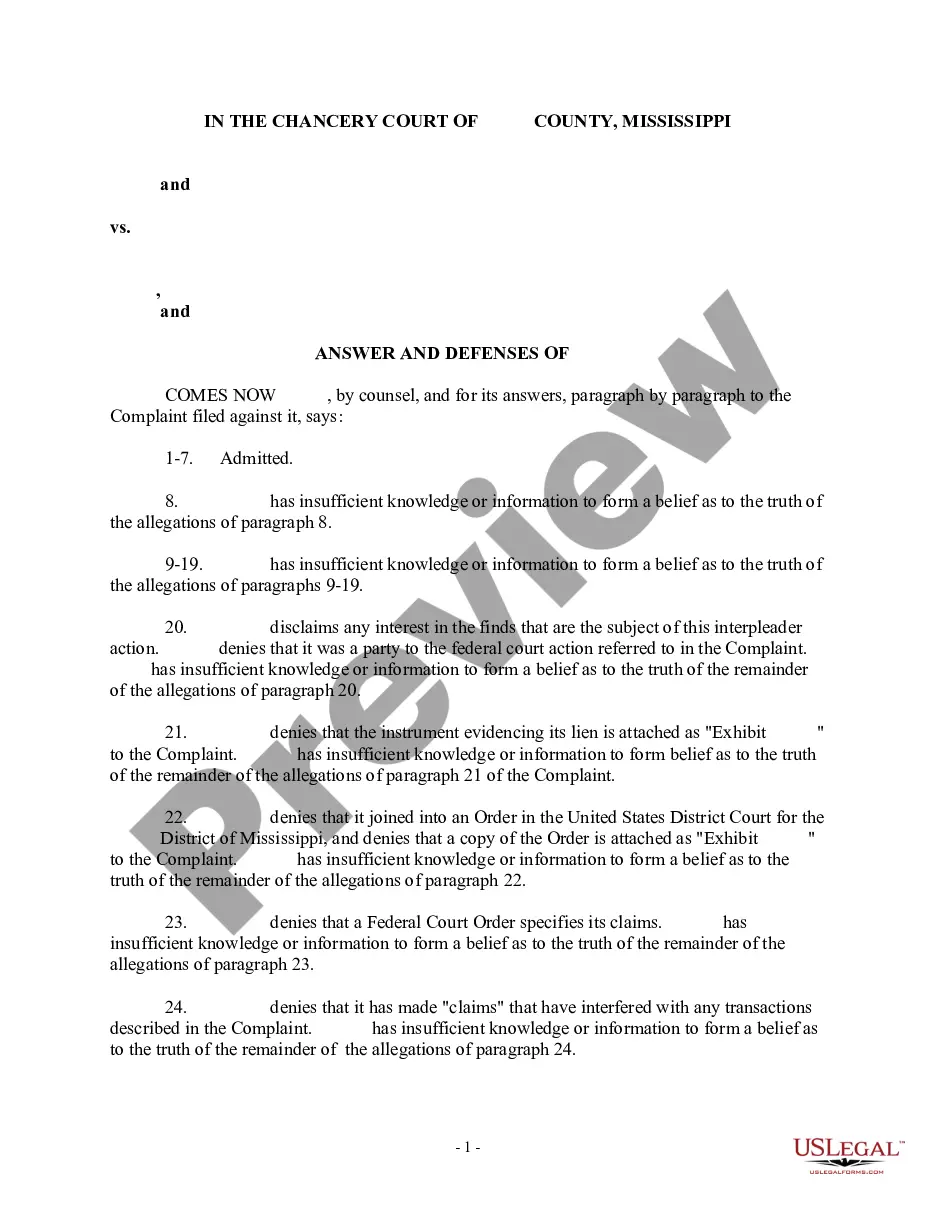
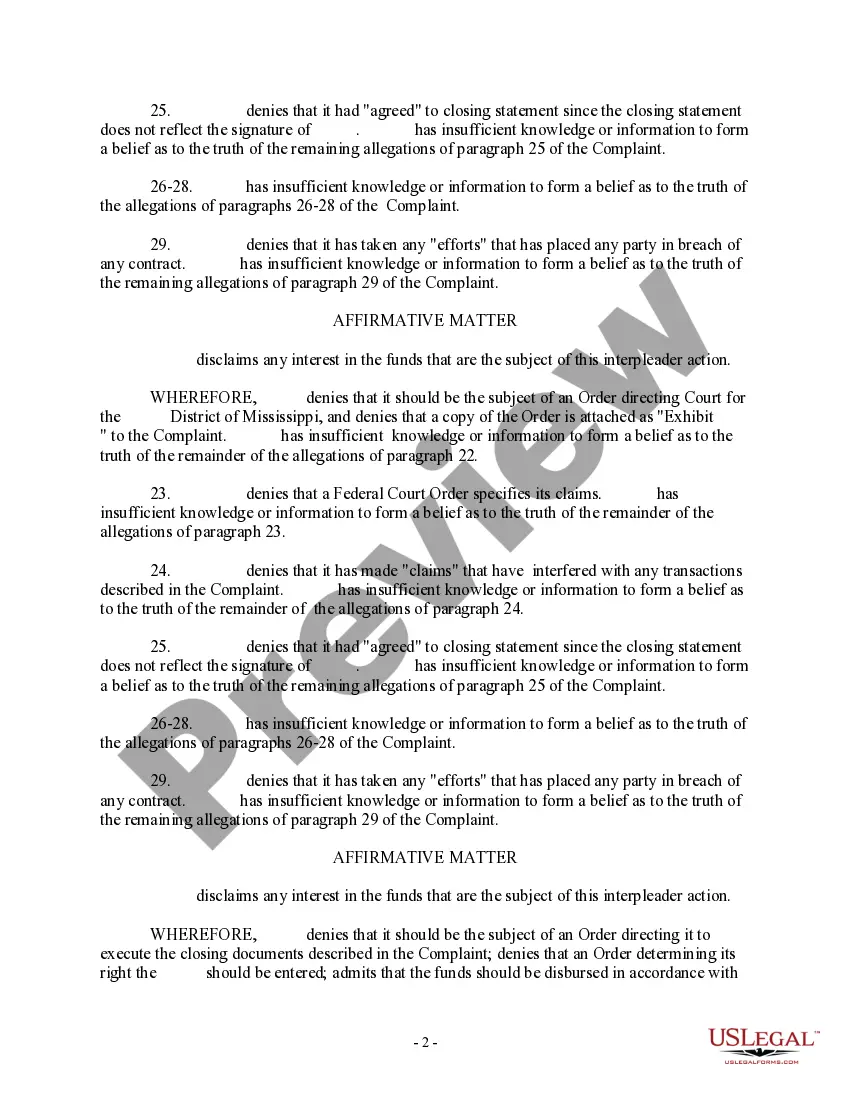
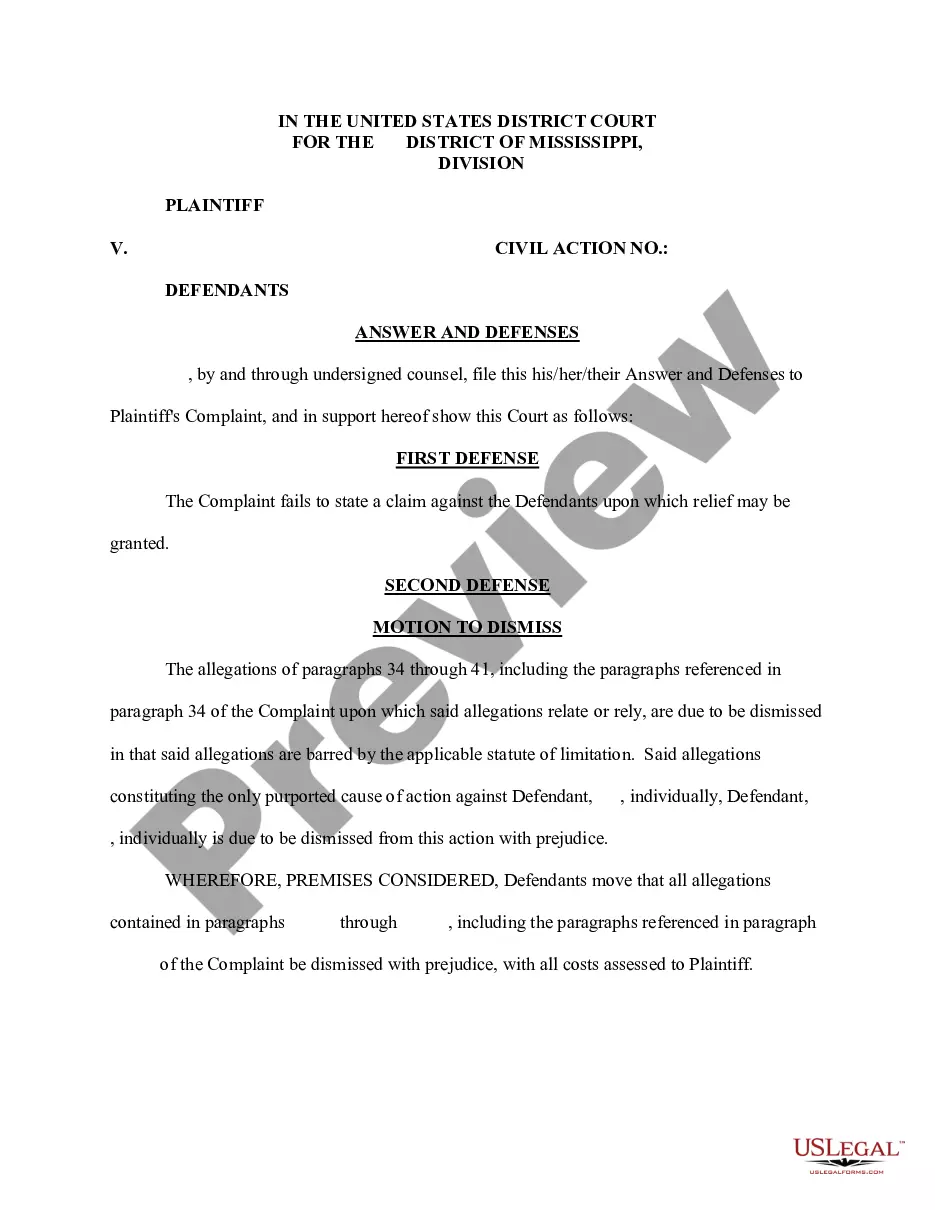
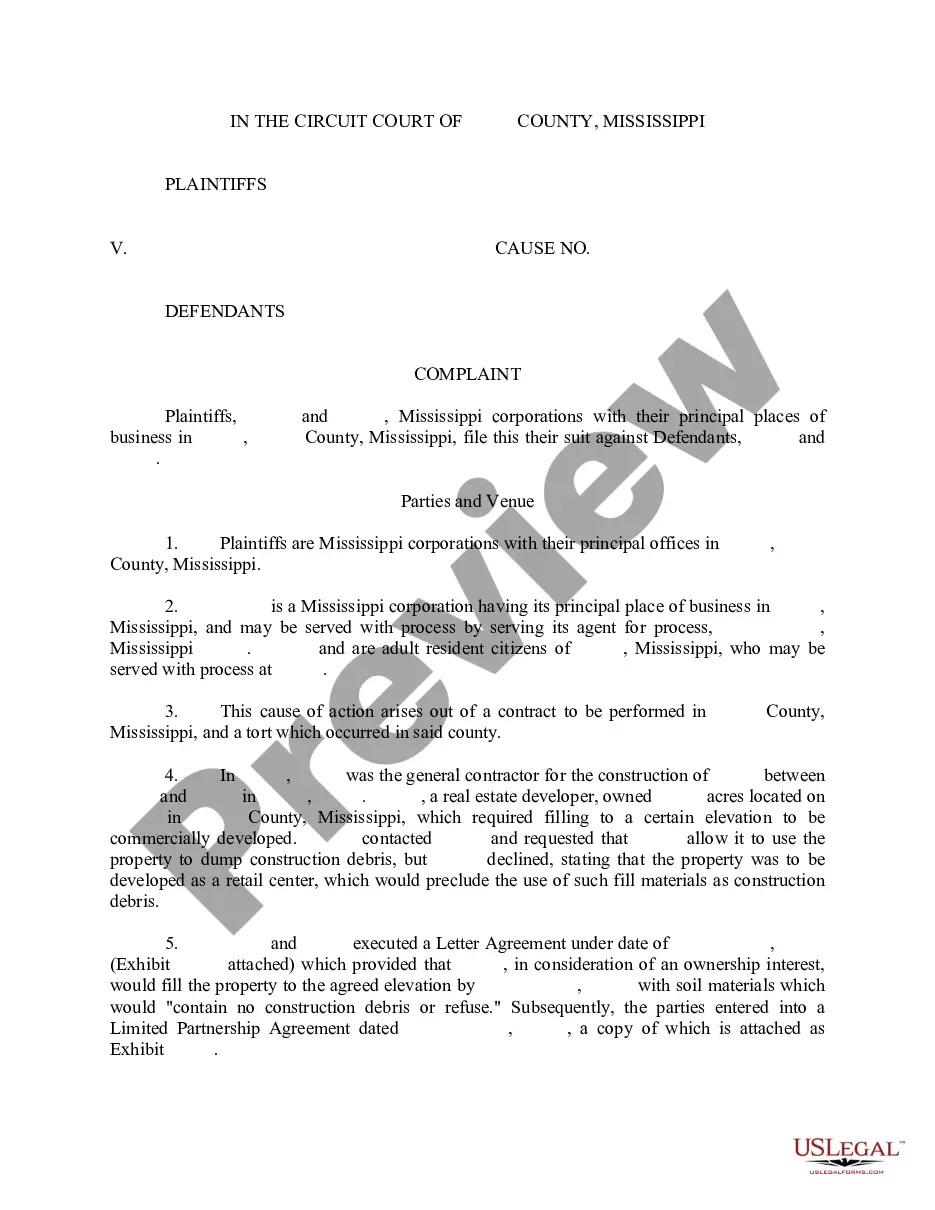
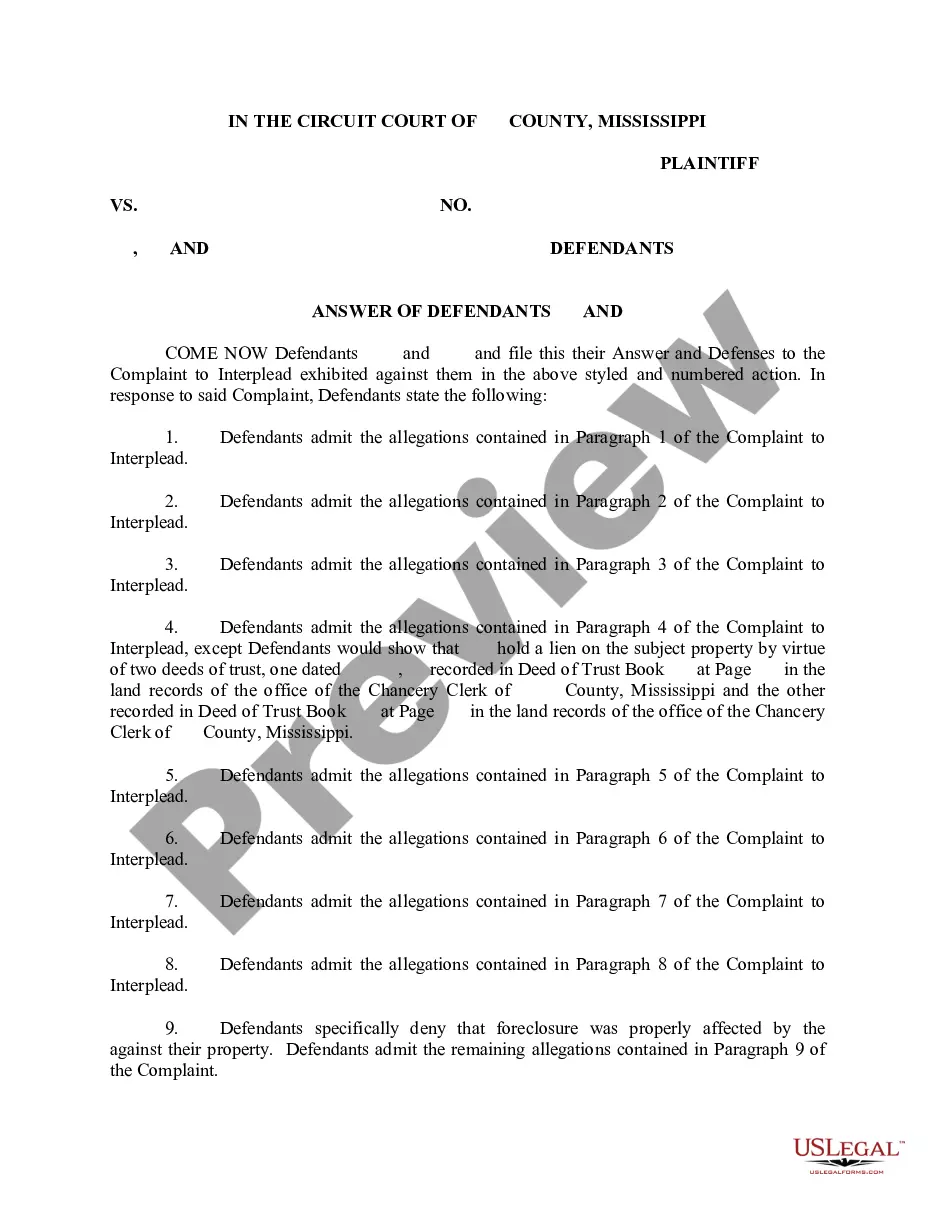
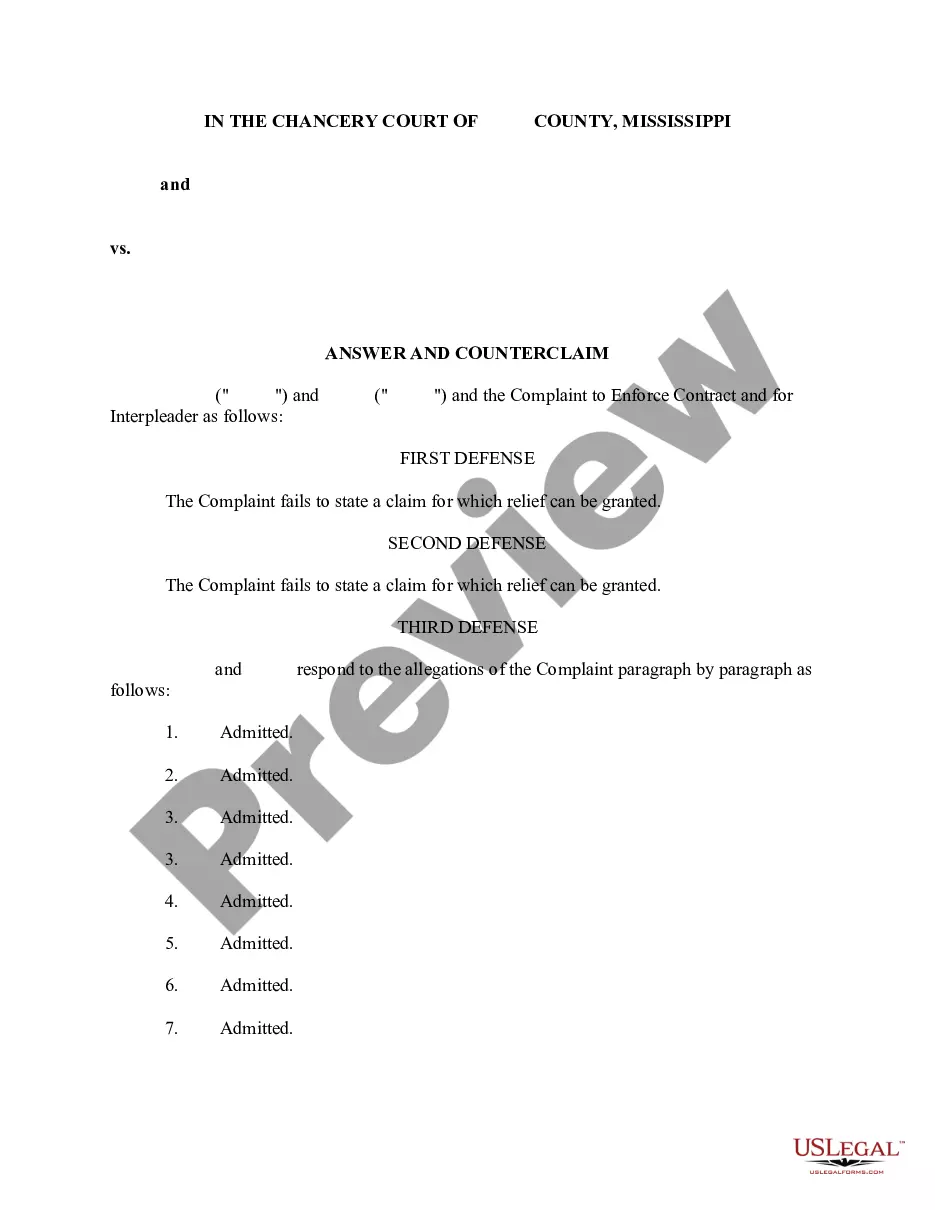
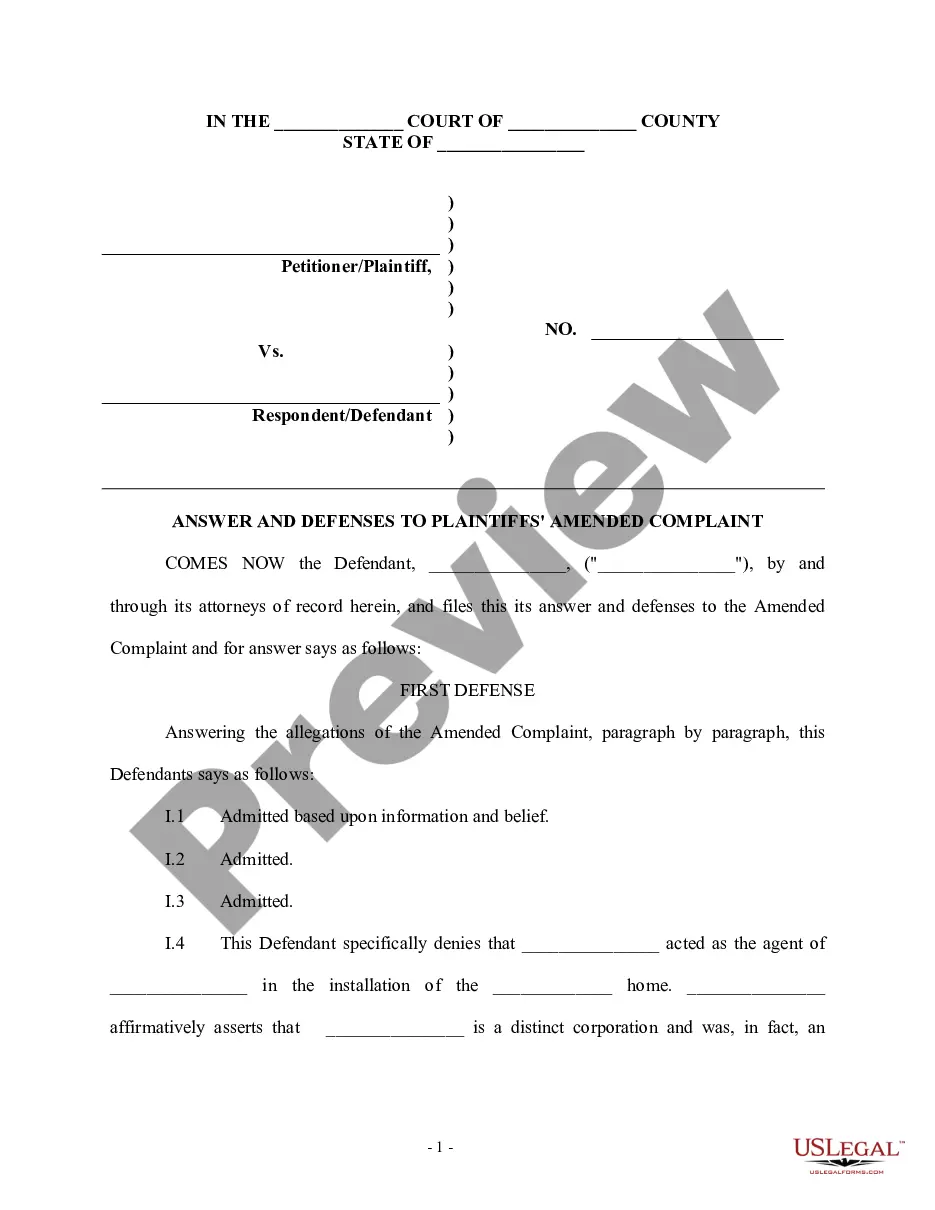
The Answer and Defenses form is a legal document filed in response to a Complaint at the beginning of a lawsuit. Specifically designed for disputes arising during the closing of a property transaction, this form allows the defendant to present their response and any affirmative defenses against the claims made in the complaint. It is an essential tool for property disputes, providing a structured way to address the allegations. Unlike other legal forms, this document focuses on property-related disagreements, making it suitable for specific real estate issues.
Key parts of this document
- Defendant's information: Includes the name and address of the party responding.
- Plaintiff's information: Captures the name and address of the individual or entity filing the complaint.
- Statement of defenses: A section where the defendant outlines their defenses against the claims.
- Affirmative defenses: A list of legal defenses that may excuse or justify the actions taken.
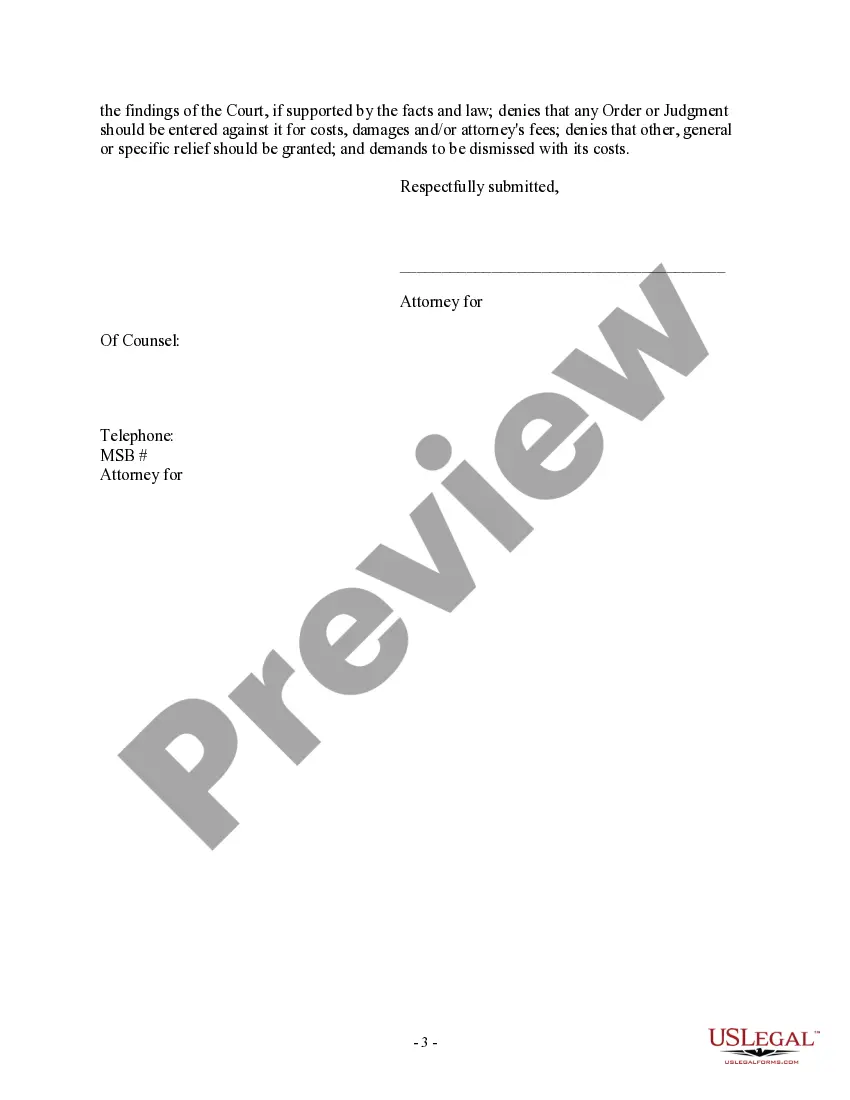
- Signature line: Space for the defendant or their legal representative to sign the document.
When to use this document
This form should be used when you receive a complaint related to a property dispute, particularly during the closing process of a real estate transaction. If you disagree with the claims made in the complaint or have valid defenses to raise, this form is applicable. It helps formally document your responses and any legal arguments supporting your case in court.
Who can use this document
Intended audience for this form includes:
- Individuals involved in a property transaction facing legal challenges.
- Real estate professionals representing clients in disputes.
- Homebuyers or sellers who need to contest allegations made during closing.
How to prepare this document
To complete the Answer and Defenses form, follow these steps:
- Identify the parties involved: Clearly list the names of the plaintiff and defendant.
- Review the complaint: Understand the allegations made against you to address them appropriately.
- State your defenses: Articulate any defenses you wish to raise against the complaintâs claims.
- Add affirmative defenses: Include any additional legal arguments that support your case.
- Sign the document: Ensure that the defendant or their representative signs the form before submitting it.
Is notarization required?
This form does not typically require notarization unless specified by local law. It is advisable to check your stateâs requirements to ensure compliance with any additional legal formalities.
Get your form ready online
Our built-in tools help you complete, sign, share, and store your documents in one place.
Make edits, fill in missing information, and update formatting in US Legal Forms—just like you would in MS Word.
Download a copy, print it, send it by email, or mail it via USPS—whatever works best for your next step.
Sign and collect signatures with our SignNow integration. Send to multiple recipients, set reminders, and more. Go Premium to unlock E-Sign.
If this form requires notarization, complete it online through a secure video call—no need to meet a notary in person or wait for an appointment.
We protect your documents and personal data by following strict security and privacy standards.

Make edits, fill in missing information, and update formatting in US Legal Forms—just like you would in MS Word.

Download a copy, print it, send it by email, or mail it via USPS—whatever works best for your next step.

Sign and collect signatures with our SignNow integration. Send to multiple recipients, set reminders, and more. Go Premium to unlock E-Sign.

If this form requires notarization, complete it online through a secure video call—no need to meet a notary in person or wait for an appointment.

We protect your documents and personal data by following strict security and privacy standards.
Mistakes to watch out for
- Failing to properly respond to each claim made in the complaint.
- Not signing the form, which may render it invalid.
- Omitting critical defenses or arguments that could support your case.
Benefits of completing this form online
- Convenience: Downloadable and easily editable formats available.
- Time-saving: Prepared by licensed attorneys, ensuring compliance with legal standards.
- Accessibility: Available online for immediate use, reducing the need for in-person consultations.
- The Answer and Defenses form is enforceable as part of the litigation process in property-related disputes.
- Filing this form timely is crucial to protect your legal rights and interests in the case.
- Understanding local laws can impact the effectiveness of the defenses articulated in this form.
Summary of main points
- This form is essential for responding to property dispute complaints.
- Proper completion and timely filing are critical for legal protection.
- Consult local laws and regulations to ensure adherence to jurisdiction-specific requirements.
Looking for another form?

Form popularity
FAQ
The plaintiff must give you responses to your request for admissions within 30 days. You do not need to do anything if you do not get a response. The plaintiff has 30 days to deny or object to the statements.
Read the summons and make sure you know the date you must answer by. Read the complaint carefully. Write your answer. Sign and date the answer. Make copies for the plaintiff and yourself. Mail a copy to the plaintiff. File your answer with the court by the date on the summons.
The defendant may also raise counterclaims or affirmative defenses. If a defendant does raise counterclaims in her answer, the plaintiff must respond to those counterclaims with a pleading called an "answer to a counterclaim." The form and content of an "answer to a counterclaim" is similar to that of an answer.
Each court has different rules about how long you have to respond to this motion, but usually you will have at least two or three weeks to file an opposition to the defendant's motion to dismiss.
1 attorney answer It does not need to be notarized, but a copy must be mailed to every other party, in addition to being filed with the court. Be sure to put your name, address, and phone number on it.
Provide the name of the court at the top of the Answer. You can find the information on the summons. List the name of the plaintiff on the left side. Write the case number on the right side of the Answer. Address the Judge and discuss your side of the case. Ask the judge to dismiss the case.
Contact the clerk's office of the court where the lawsuit was filed. You'll find a phone number and address for the clerk's office on your summons. The clerk will be able to tell you exactly what documents you should file with your answer and whether any filing fee is required.
When drafting an answer, one must: (1) follow the local, state, and federal court rules; (2) research the legal claims in the adversary's complaint; (3) respond to the adversary's factual allegations; and (4) assert affirmative defenses, counterclaims, cross-claims, or third-party claims, if applicable.
You can file an answer or a general denial. Filing an answer. You can file a motion In certain situations, you can respond to the lawsuit by filing a motion (a request) that usually tells the court that the plaintiff made a mistake in the lawsuit. Talk to a lawyer!