Mississippi Right of Way and Easement Agreement
About this form
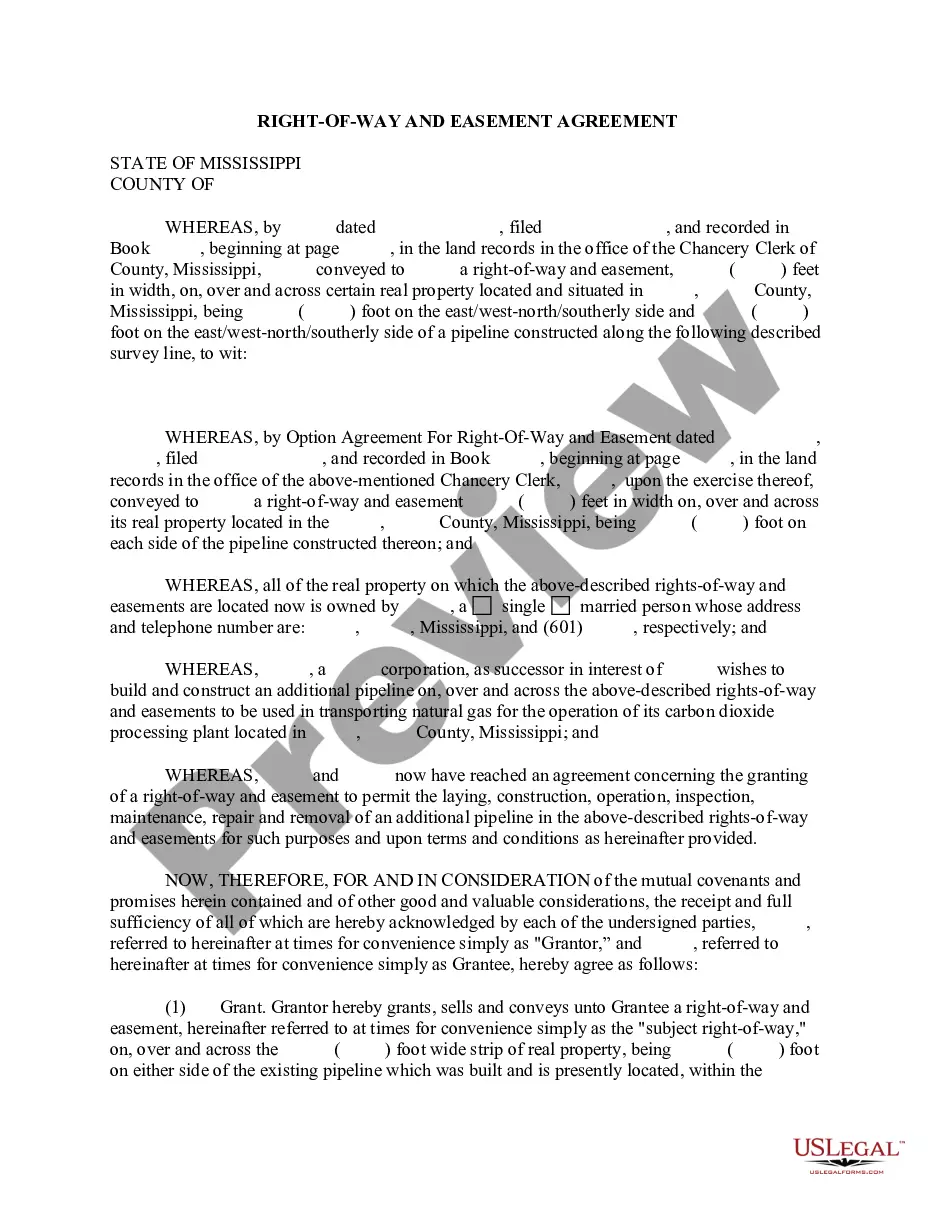
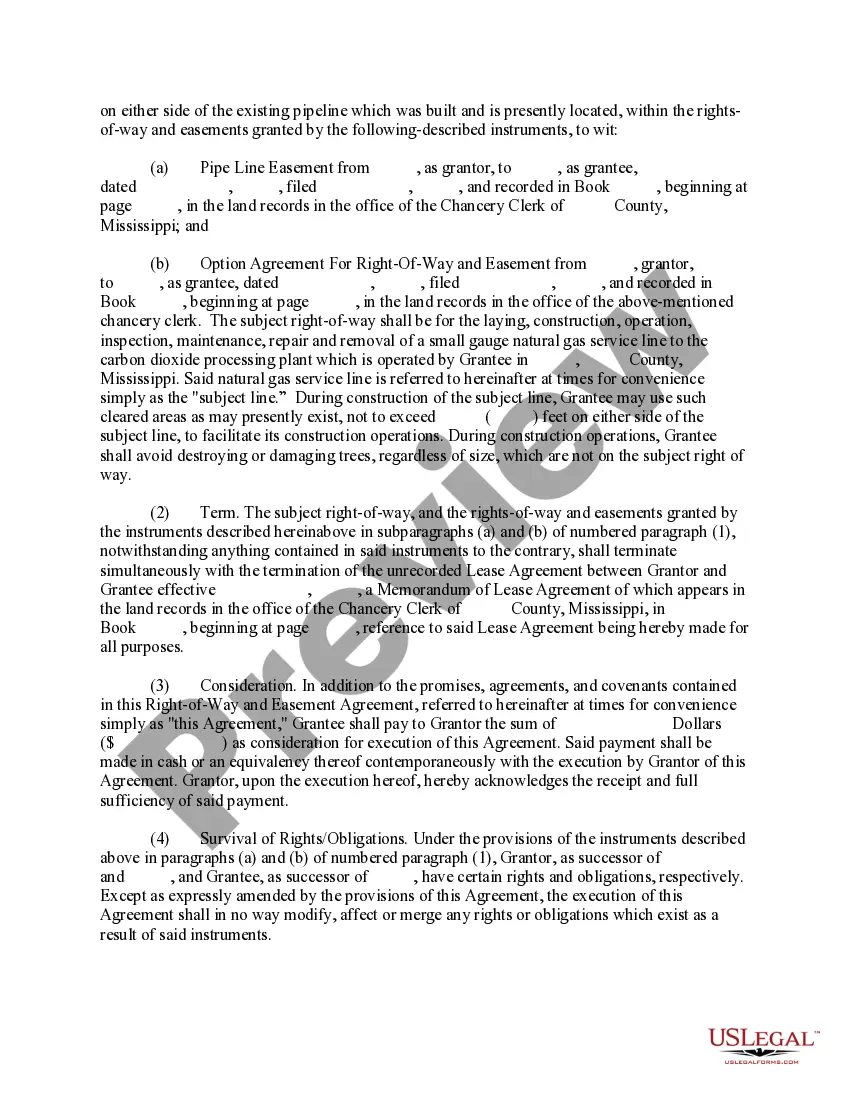
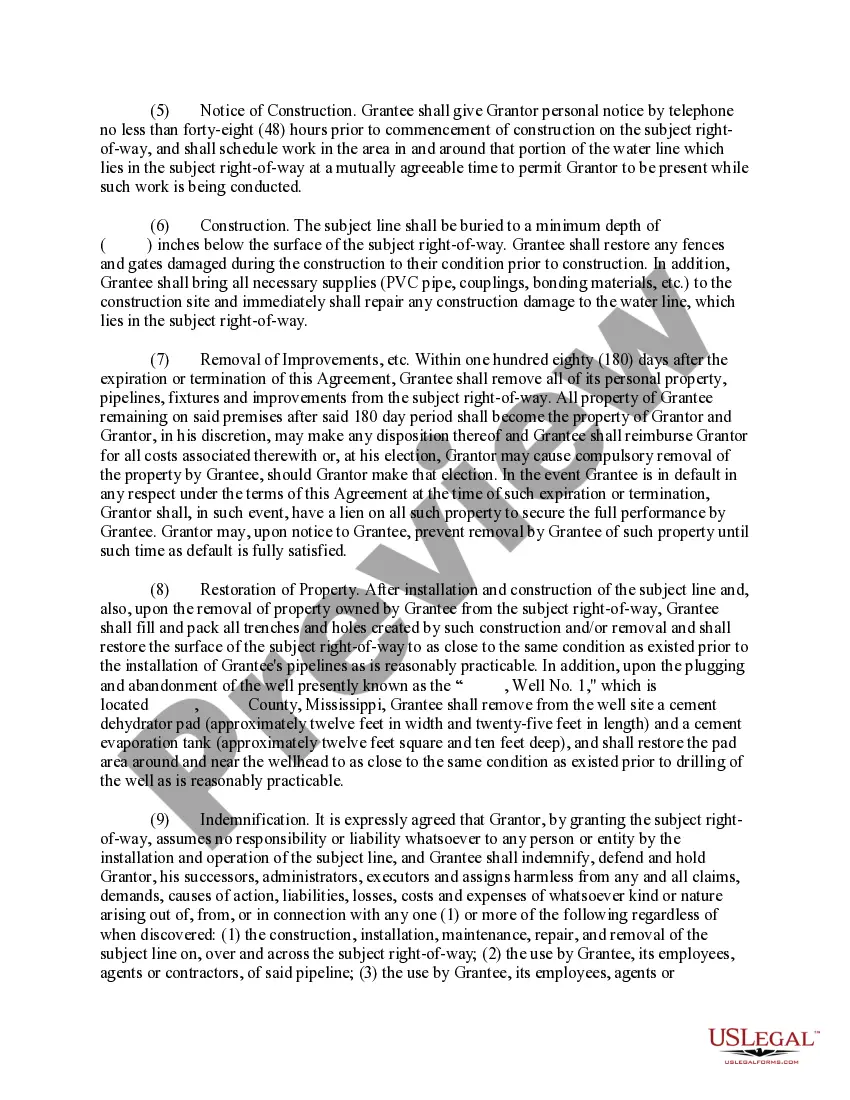
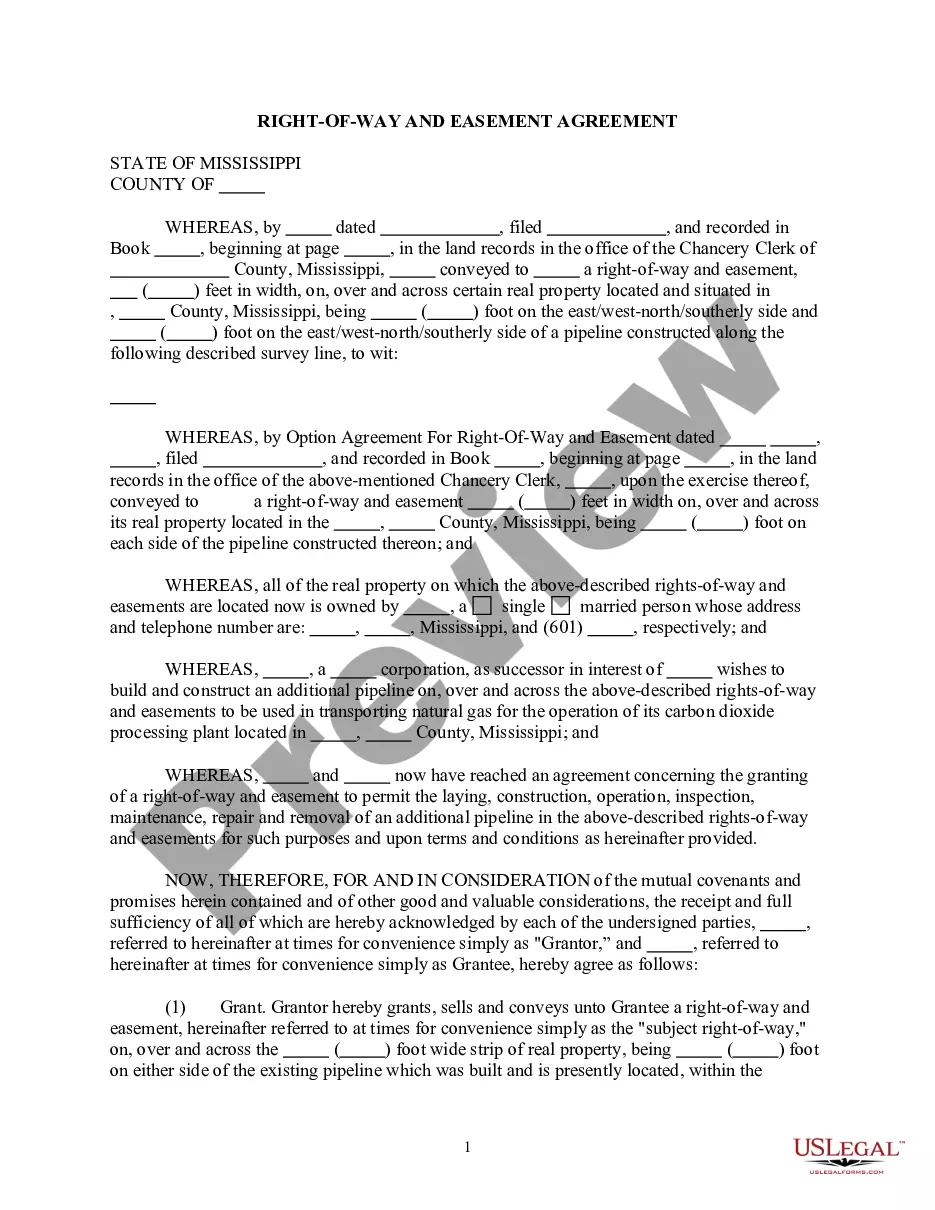
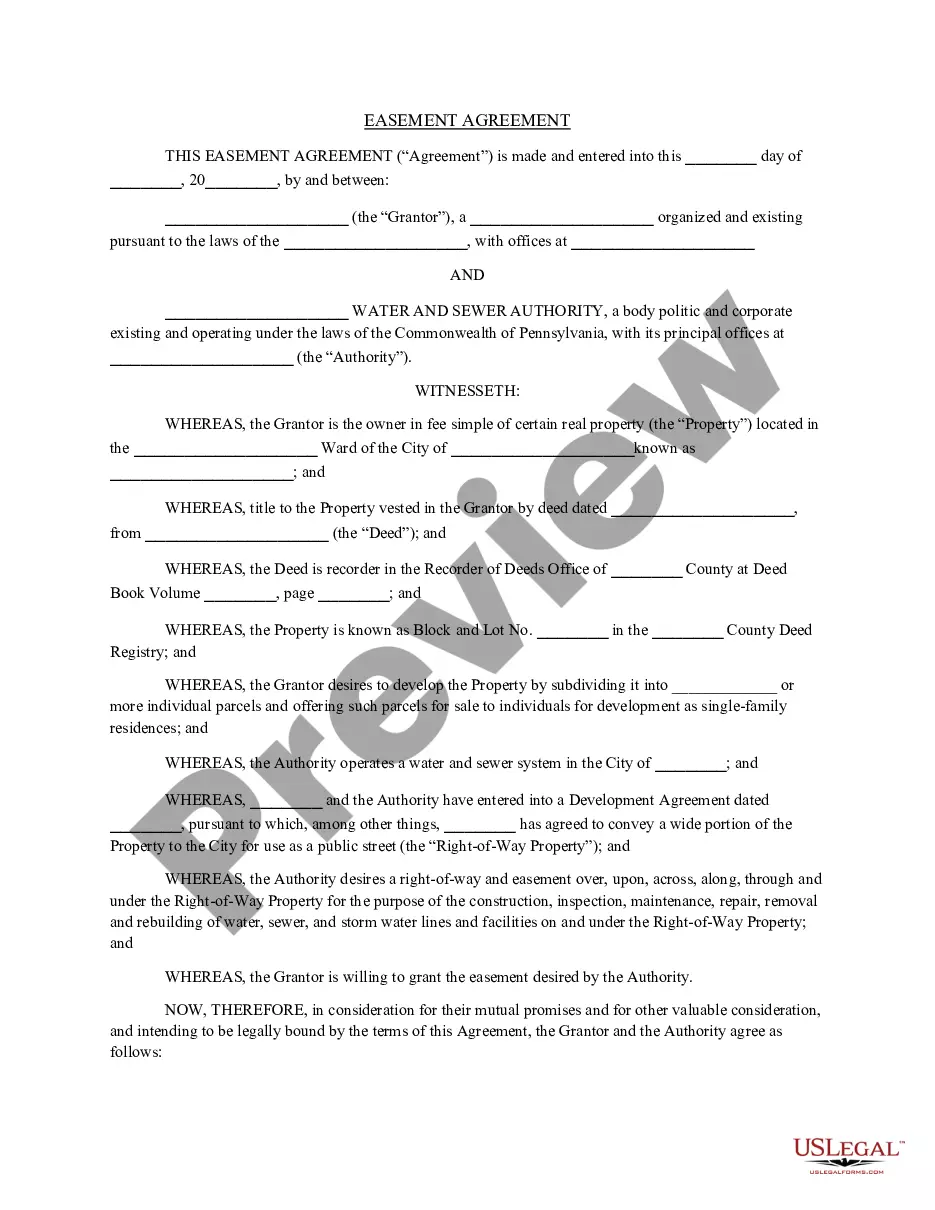
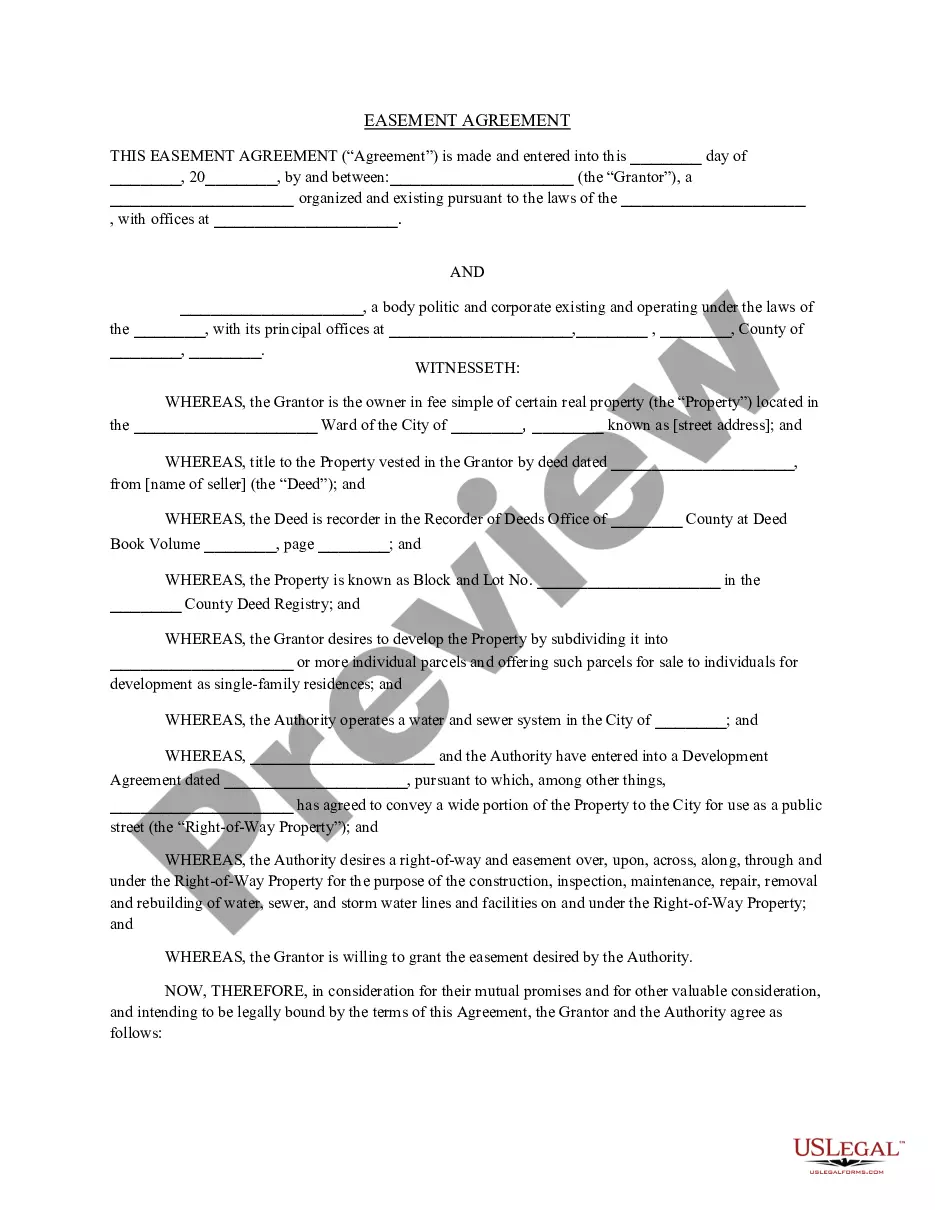
The Right of Way and Easement Agreement is a legal document that grants one party permission to use another party's property for specific purposes, such as allowing access to a pipeline. This agreement is critical for utility companies and other entities requiring ongoing access to install and maintain infrastructure while ensuring property rights are respected. Unlike temporary agreements, this easement remains in effect perpetually, making it essential for long-term land use planning and property management.
Key components of this form
- Definition of the easement and specific rights granted to the Grantee.
- Conditions for removal of personal property after termination of the agreement.
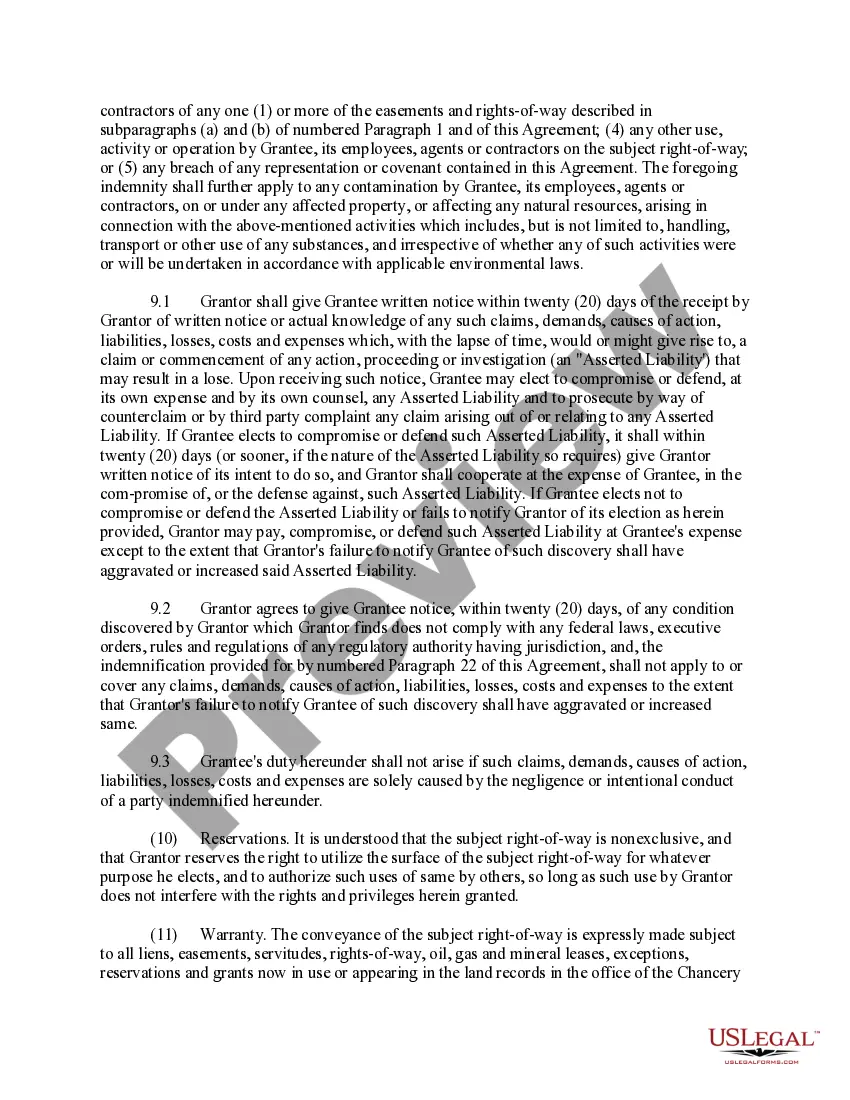
- Indemnification clauses protecting the Grantor from claims related to the easement.
- Non-exclusive rights allowing the Grantor to use the property.
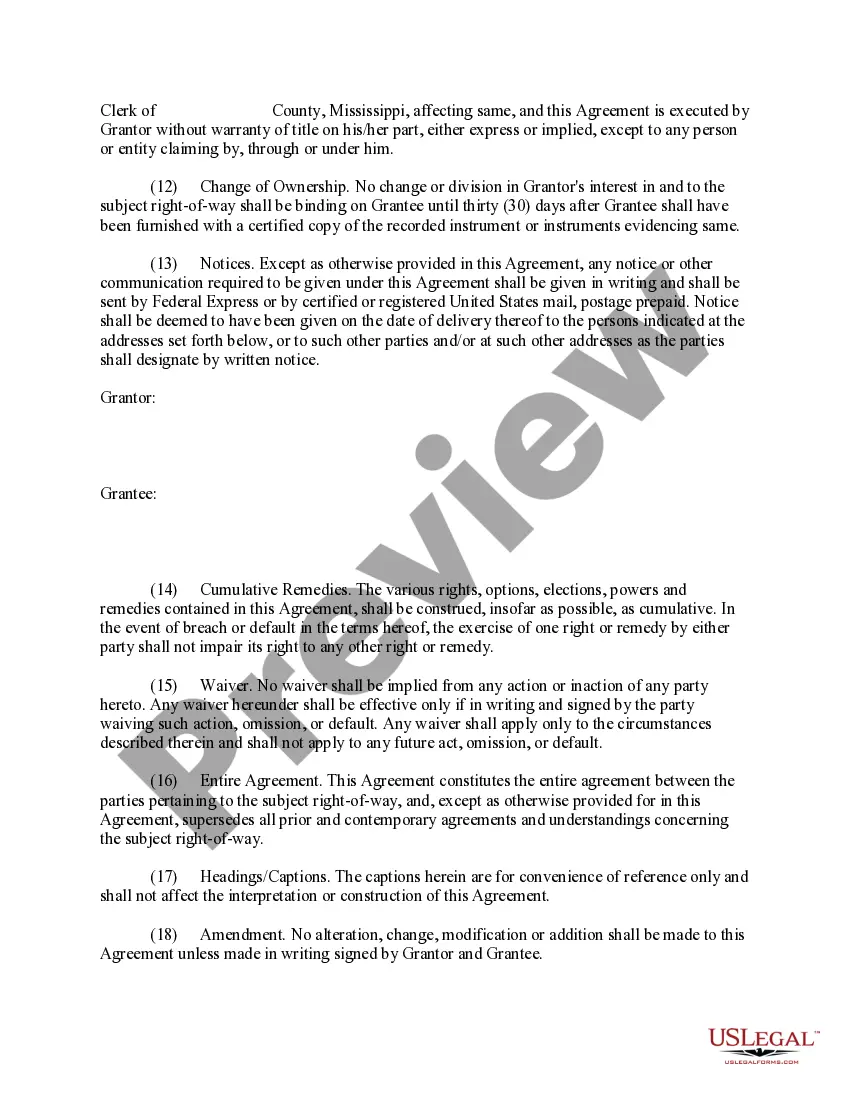
- Provisions for notifying stakeholders about any changes in ownership.
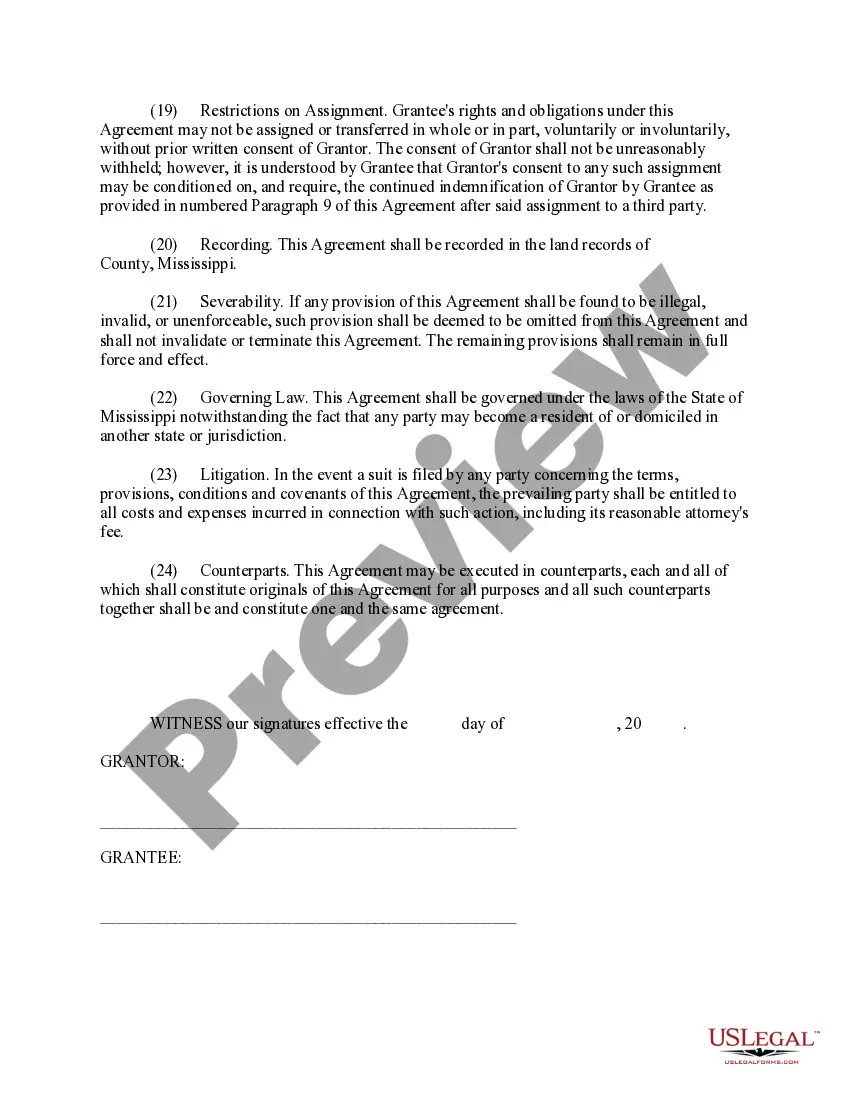
- Legal governance specifying the applicable state laws.

Situations where this form applies
This form is used when a property owner (Grantor) needs to grant an easement to another party (Grantee), such as a utility company, allowing them to access their property for the installation or maintenance of infrastructure like pipelines or cable lines. It is especially important in situations where the Grantee needs ongoing access without interference, thus ensuring the easement remains in effect over time.
Who needs this form
- Property owners looking to grant easement rights to utility companies.
- Utility companies needing to access private property for installation and maintenance.
- Businesses or organizations requiring permanent access to another's land for operational purposes.
- Real estate professionals facilitating easement agreements on behalf of clients.
How to complete this form
- Identify the parties involved: Clearly state the names of the Grantor and Grantee.
- Specify the property: Provide a detailed description of the property affected by the right of way.
- Outline the easement purpose: Describe the specific rights being granted and the intended use of the easement.
- Set terms for property removal: Include any timelines for the removal of personal property post-agreement termination.
- Sign and date: Both parties must sign and date the agreement to make it legally binding.
Does this form need to be notarized?
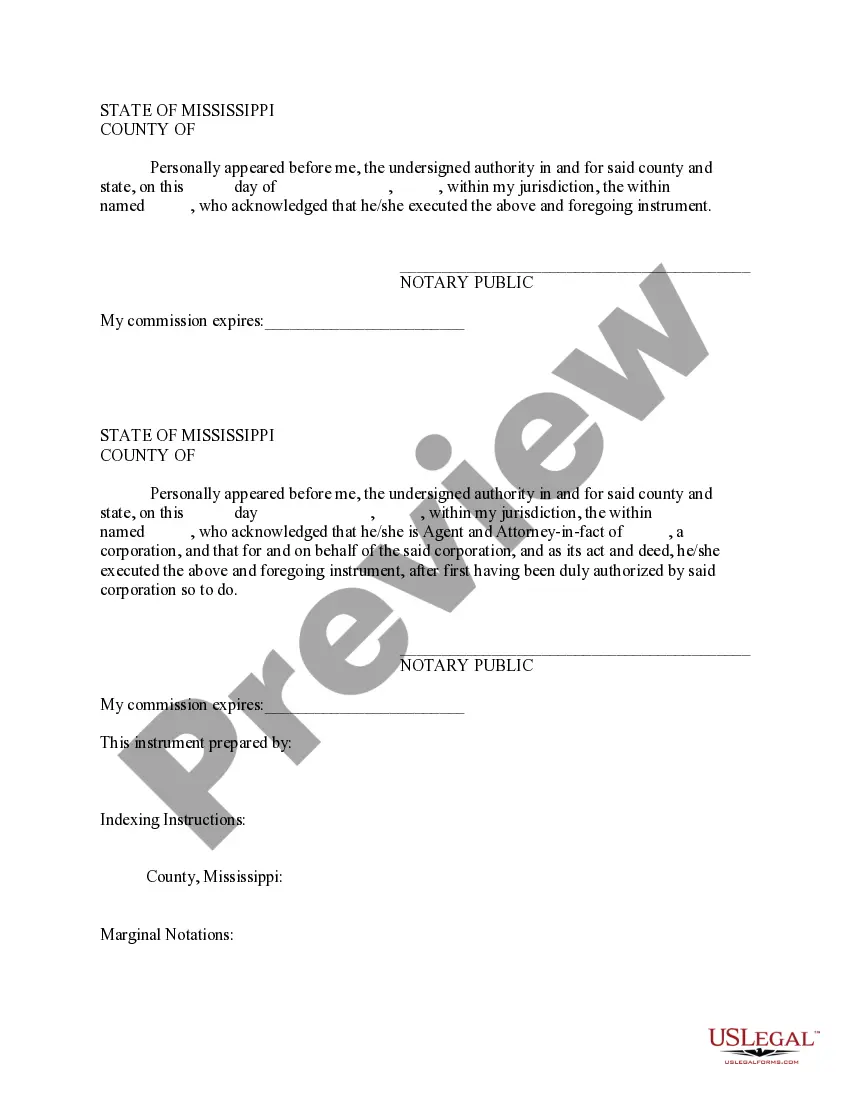
This form needs to be notarized to ensure legal validity. US Legal Forms provides secure online notarization powered by Notarize, allowing you to complete the process through a verified video call, available anytime.
Get your form ready online
Our built-in tools help you complete, sign, share, and store your documents in one place.
Make edits, fill in missing information, and update formatting in US Legal Forms—just like you would in MS Word.
Download a copy, print it, send it by email, or mail it via USPS—whatever works best for your next step.
Sign and collect signatures with our SignNow integration. Send to multiple recipients, set reminders, and more. Go Premium to unlock E-Sign.
If this form requires notarization, complete it online through a secure video call—no need to meet a notary in person or wait for an appointment.
We protect your documents and personal data by following strict security and privacy standards.

Make edits, fill in missing information, and update formatting in US Legal Forms—just like you would in MS Word.

Download a copy, print it, send it by email, or mail it via USPS—whatever works best for your next step.

Sign and collect signatures with our SignNow integration. Send to multiple recipients, set reminders, and more. Go Premium to unlock E-Sign.

If this form requires notarization, complete it online through a secure video call—no need to meet a notary in person or wait for an appointment.

We protect your documents and personal data by following strict security and privacy standards.
Typical mistakes to avoid
- Failing to include a clear description of the property and easement rights.
- Not specifying the duration of the easement or conditions of use.
- Neglecting to sign and date the form for legal validation.
- Omitting important indemnification protections for the Grantor.
Advantages of online completion
- Convenience: Easily download and access the form anytime from any device.
- Editable formats: Available in Word and Rich Text formats, allowing for easy customization.
- Reliability: Templates are drafted by licensed attorneys to ensure legal soundness.
Legal use & context
- The Right of Way and Easement Agreement is a legally binding document that facilitates the use of private property by another party.
- Failure to comply with the terms stated can lead to legal disputes or loss of rights by either party.
- Understanding local property laws is crucial to ensure validity and enforceability.
Main things to remember
- A right of way and easement agreement allows specified use of a property without transferring ownership.
- Clear definitions and clauses in the agreement protect both party's rights and responsibilities.
- Consulting local regulations is essential for compliance and legal enforceability.
Looking for another form?
Form popularity
FAQ
What are Easements and Rights-of-Way? Easements are nonpossessory interests in real property. More simply, an easement is the right to use another's property for a specific purpose. Rights-of-way are easements that specifically grant the holder the right to travel over another's property.
Quiet the Title. Allow the Purpose for the Easement to Expire. Abandon the Easement. Stop Using a Prescriptive Easement. Destroy the Reason for the Easement. Merge the Dominant and Servient Properties. Execute a Release Agreement.
If an authority has an easement registered over your land, they have the right to access the easement to maintain or repair the easement land or their equipment on the land.
An easement appurtenant is an easement that benefits one parcel of land, known as the dominant tenement, to the detriment of another parcel of land, known as the servient tenement.Similarly, if Landowner B sells his property to another landowner, that landowner will be able to use the easement. Easement in Gross.
Easement holders have the right to use the land to their enjoyment as long as it does not place an unreasonable burden on the servient estate. Landowners have the right to make whatever use of the land as long as it doesn't unduly affect the easement.