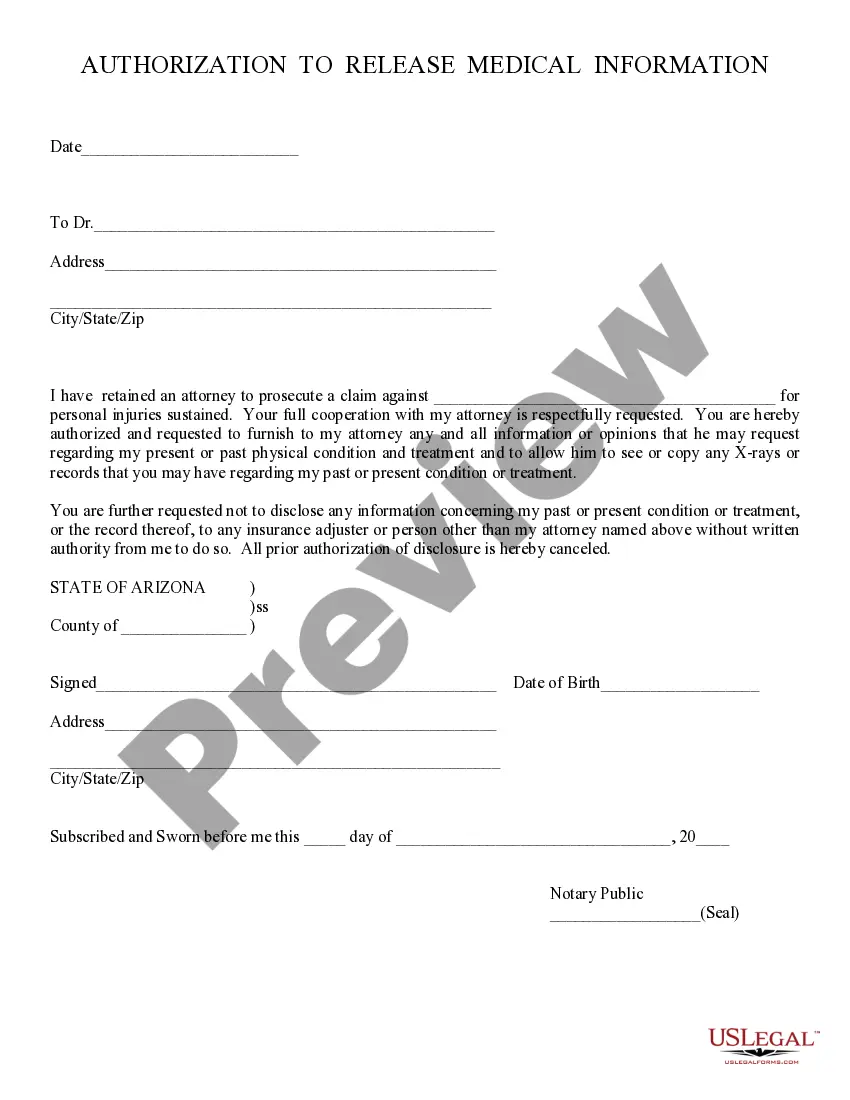
Arizona Release of Medical Information
What is this form?
The Release of Medical Information is a legal document that authorizes the disclosure of your medical records to a designated attorney. This form is specifically used when a claimant has retained legal representation to pursue a personal injury claim. It ensures that medical providers can share relevant health information with the attorney while maintaining the confidentiality of your records against unauthorized disclosure. This form is essential for facilitating your attorney's access to your medical history and treatment records during the claims process.
Key components of this form
- Date of authorization
- Name and address of the medical provider
- Name of the attorney representing the claimant
- Specific authorization for the release of medical information and records
- Cancellation of previous authorizations
- Signature of the claimant and witness (notary public)

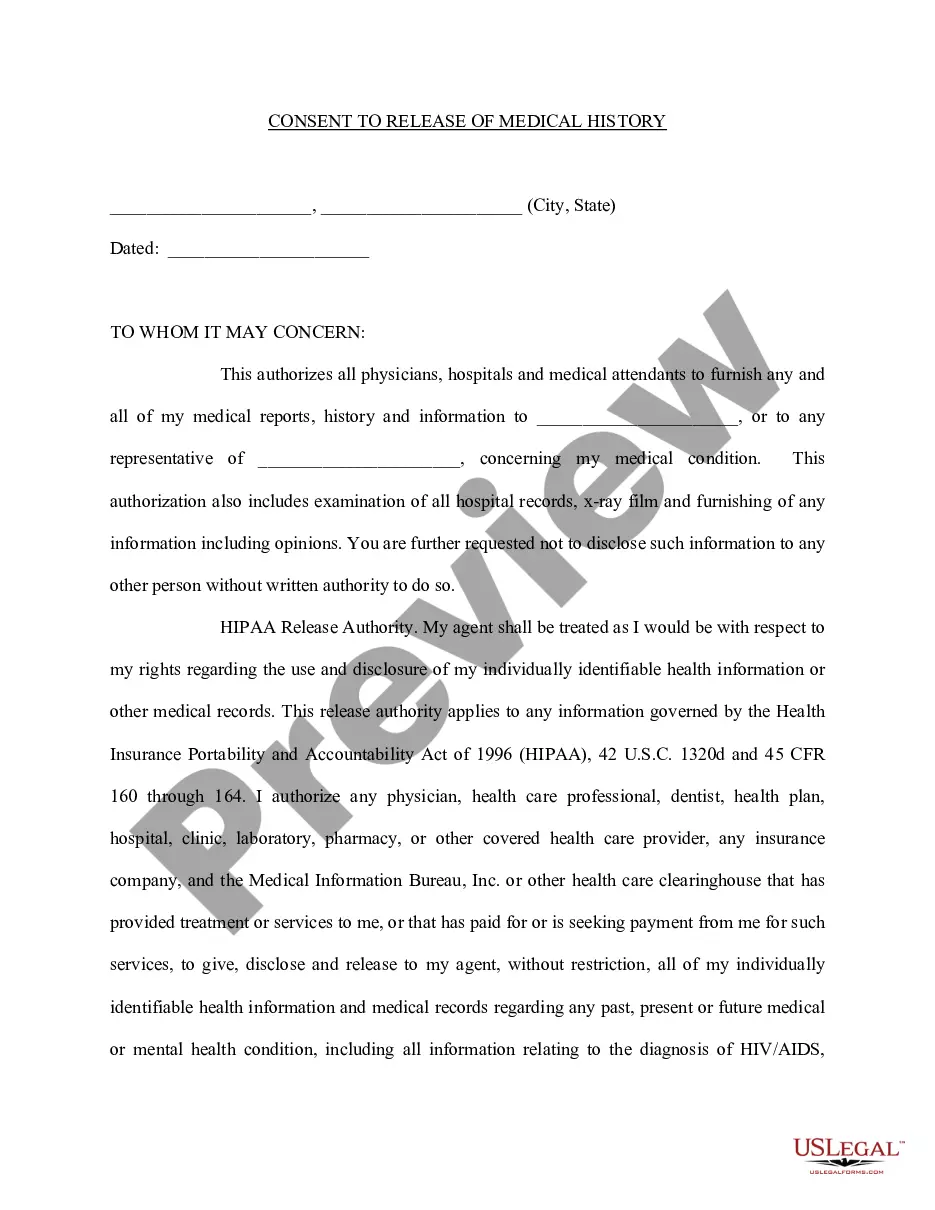
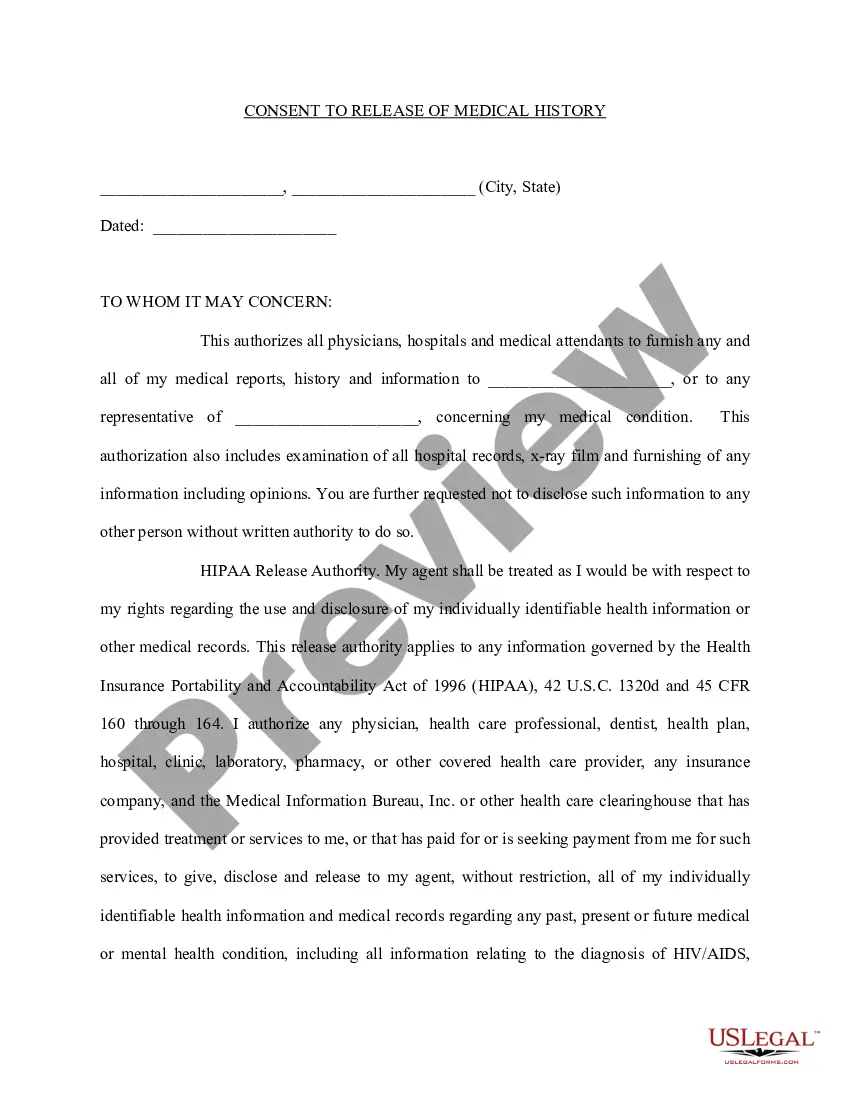
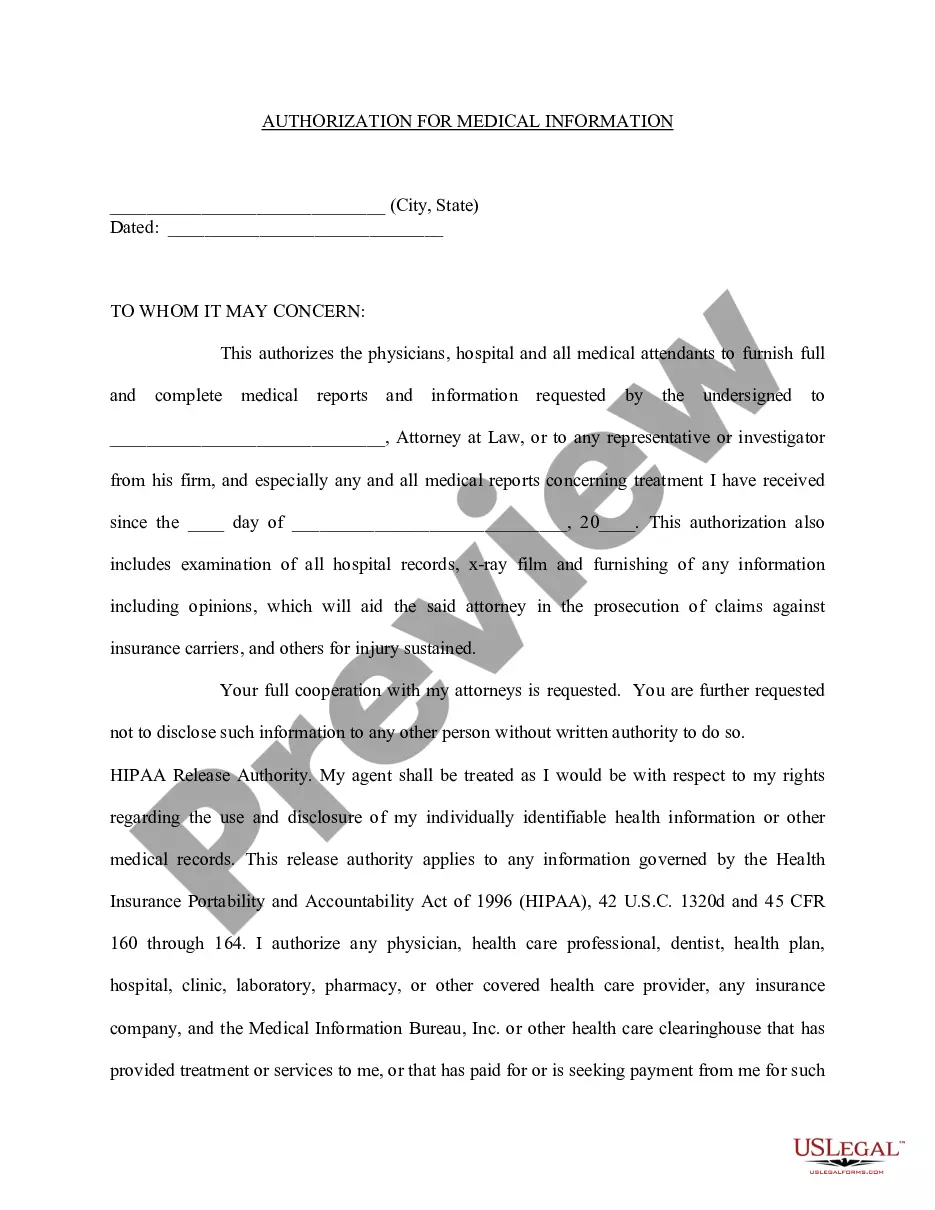
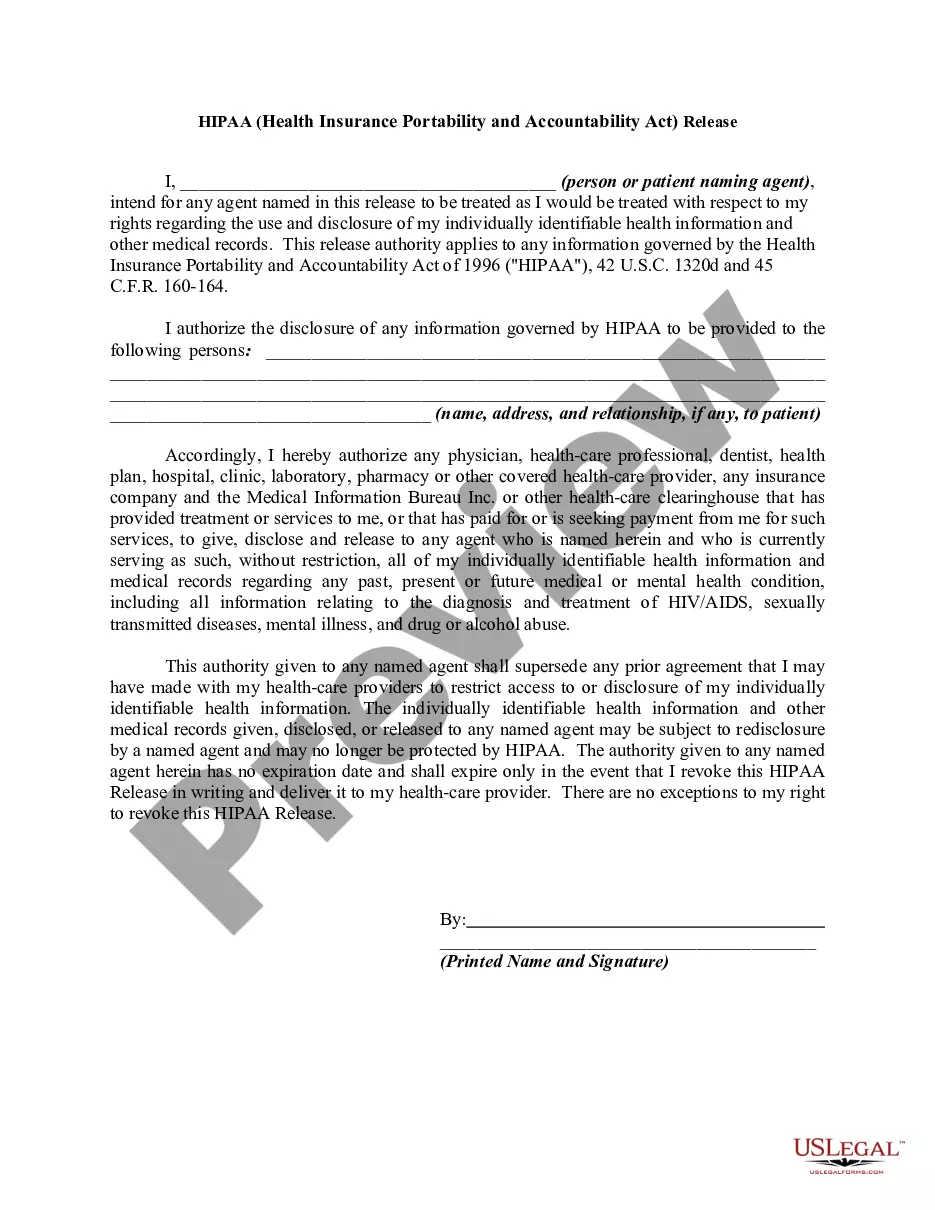
Situations where this form applies
This form should be used when you, as a claimant, have retained an attorney for a personal injury case and need to authorize the release of your medical records. You will need this form to provide your attorney with the required medical information to support your claim, whether for ongoing treatment or historical medical conditions. It is crucial for ensuring your attorney can effectively advocate on your behalf.
Who needs this form
- Individuals who have retained an attorney for personal injury claims
- Edit Name of medical provider(s) who hold relevant medical records
- Claimants who wish to ensure their medical information is shared confidentially with their attorney
- People needing to cancel previous authorizations for medical information release
Instructions for completing this form
- Enter the date at the top of the form.
- Provide the name and address of the medical provider from whom information is being requested.
- Clearly identify the name of the attorney representing you.
- Include details about the party against whom you are filing the claim.
- Sign and date the form and provide your date of birth.
- Have the form notarized to validate the authorization if required.
Does this document require notarization?
Notarization is required for this form to take effect. Our online notarization service, powered by Notarize, lets you verify and sign documents remotely through an encrypted video session, available 24/7.
Get your form ready online
Our built-in tools help you complete, sign, share, and store your documents in one place.
Make edits, fill in missing information, and update formatting in US Legal Forms—just like you would in MS Word.
Download a copy, print it, send it by email, or mail it via USPS—whatever works best for your next step.
Sign and collect signatures with our SignNow integration. Send to multiple recipients, set reminders, and more. Go Premium to unlock E-Sign.
If this form requires notarization, complete it online through a secure video call—no need to meet a notary in person or wait for an appointment.
We protect your documents and personal data by following strict security and privacy standards.

Make edits, fill in missing information, and update formatting in US Legal Forms—just like you would in MS Word.

Download a copy, print it, send it by email, or mail it via USPS—whatever works best for your next step.

Sign and collect signatures with our SignNow integration. Send to multiple recipients, set reminders, and more. Go Premium to unlock E-Sign.

If this form requires notarization, complete it online through a secure video call—no need to meet a notary in person or wait for an appointment.

We protect your documents and personal data by following strict security and privacy standards.
Common mistakes
- Failing to enter accurate details about the medical provider or attorney.
- Not signing or dating the form.
- Neglecting to have the form notarized if your state mandates it.
- Using a previous version of the authorization that has not been canceled.
Benefits of completing this form online
- Immediate access to a professionally drafted template.
- Easy customization to fit your specific needs.
- Convenience of downloading and printing the form from home.
- Time-saving as it eliminates the need for in-person legal consultations for straightforward authorizations.
Looking for another form?

Form popularity
FAQ
Filing a medical complaint in Arizona begins with gathering all pertinent details about your case, including witness information and any documentation. You should submit your complaint to the Arizona Medical Board or the relevant licensing authority. Understanding the Arizona Release of Medical Information will further assist you, as it allows you to access relevant records needed to support your claim. Remember, platforms like US Legal Forms provide resources to guide you in this process.
To request medical records in Arizona, you must complete a request form provided by your healthcare provider. Ensure that you include necessary details like your identification information, the specifics of the records you seek, and any relevant dates. The Arizona Release of Medical Information form will help streamline this process. You can also utilize platforms like US Legal Forms to find templates that simplify your request.
In the United States, laws governing medical records include both federal and state regulations. These laws ensure patients have the right to access their medical information while mandating that healthcare providers safeguard these records. Familiarizing yourself with these laws, including the Arizona Release of Medical Information, enhances your ability to manage your health information confidently and responsibly.
HIPAA, or the Health Insurance Portability and Accountability Act, is a federal law that sets standards for protecting sensitive patient information. In Arizona, HIPAA also plays a vital role in the release of medical information, ensuring that your records are handled securely. When you are navigating the Arizona Release of Medical Information process, understanding HIPAA helps you see the protections in place for your personal data.
The medical record law in Arizona governs how patient records are stored, accessed, and disclosed. It ensures that health care providers maintain confidentiality while also fostering patient access to their information. When you need to obtain your Arizona Release of Medical Information, being aware of these laws will help you understand your rights and the proper procedures.
Statute 12 2294 in Arizona pertains to the release of medical information. This law outlines the requirements and procedures for healthcare providers to follow when releasing patient records. Understanding this statute is essential as it ensures your rights are protected when seeking your Arizona Release of Medical Information.
To request your medical records from Dignity Health Arizona General Hospital, you need to complete a medical records request form. This form can typically be found on their website or by contacting their medical records department directly. Make sure to provide proper identification and specify the records you need, as this will help facilitate the process of obtaining your Arizona Release of Medical Information.
Yes, Arizona has laws that align with the federal HIPAA regulations. These laws govern the Arizona Release of Medical Information, ensuring that your health information remains private and secure. Under these regulations, healthcare providers must obtain your consent before sharing your medical records with third parties. If you need to understand these laws better or if you seek assistance in handling your medical information, US Legal Forms can help guide you through the process.
In Arizona, healthcare providers are required to keep medical records for a minimum of six years. However, certain records may need to be retained longer based on specific regulations. If you have questions about the duration of record retention, refer to the Arizona Release of Medical Information guidelines for further clarity.
To effectively word your request for medical records, start with a formal greeting, then explain the purpose of your request. Clearly state which records you want and include your identification information. Use a courteous tone and refer to the Arizona Release of Medical Information for context. This approach will help streamline the process.