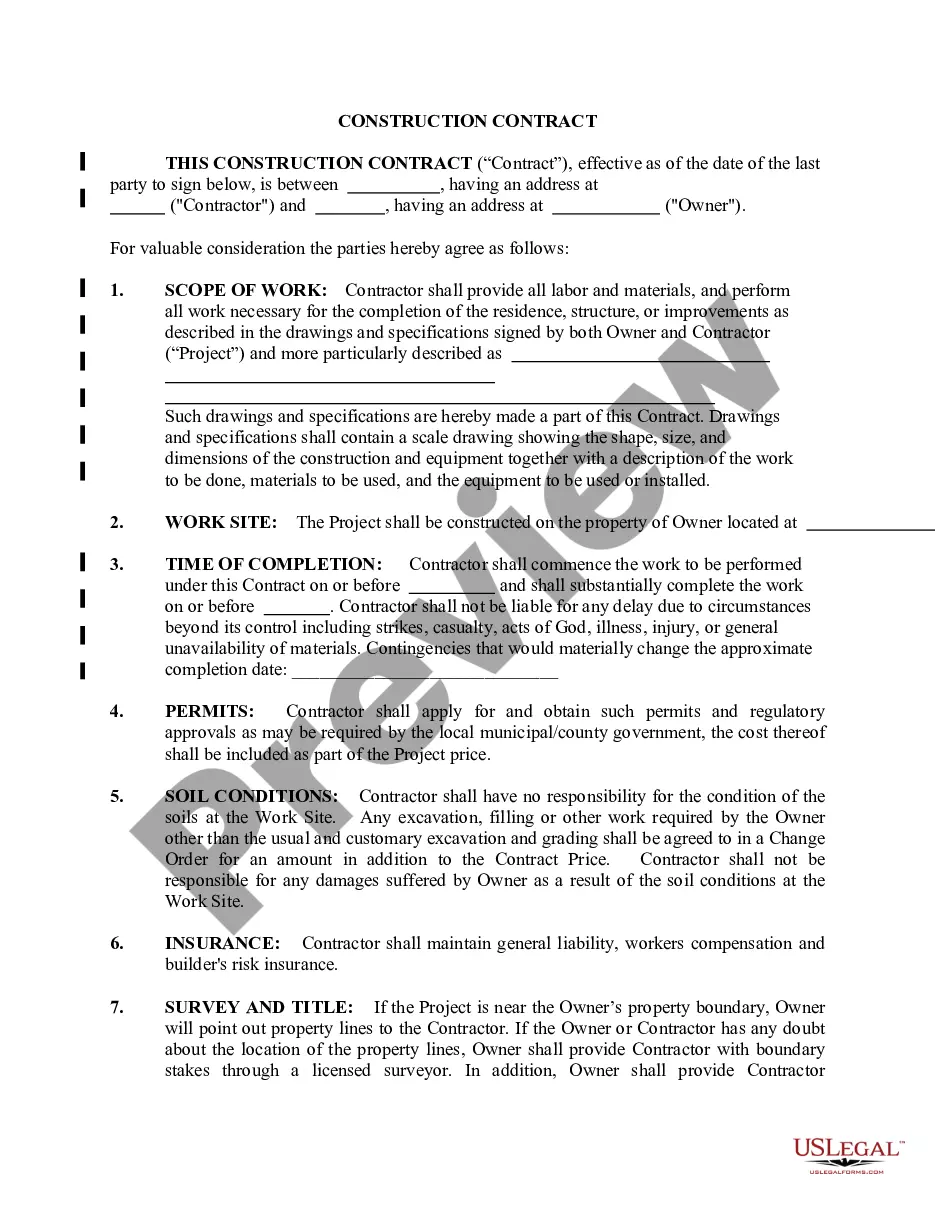
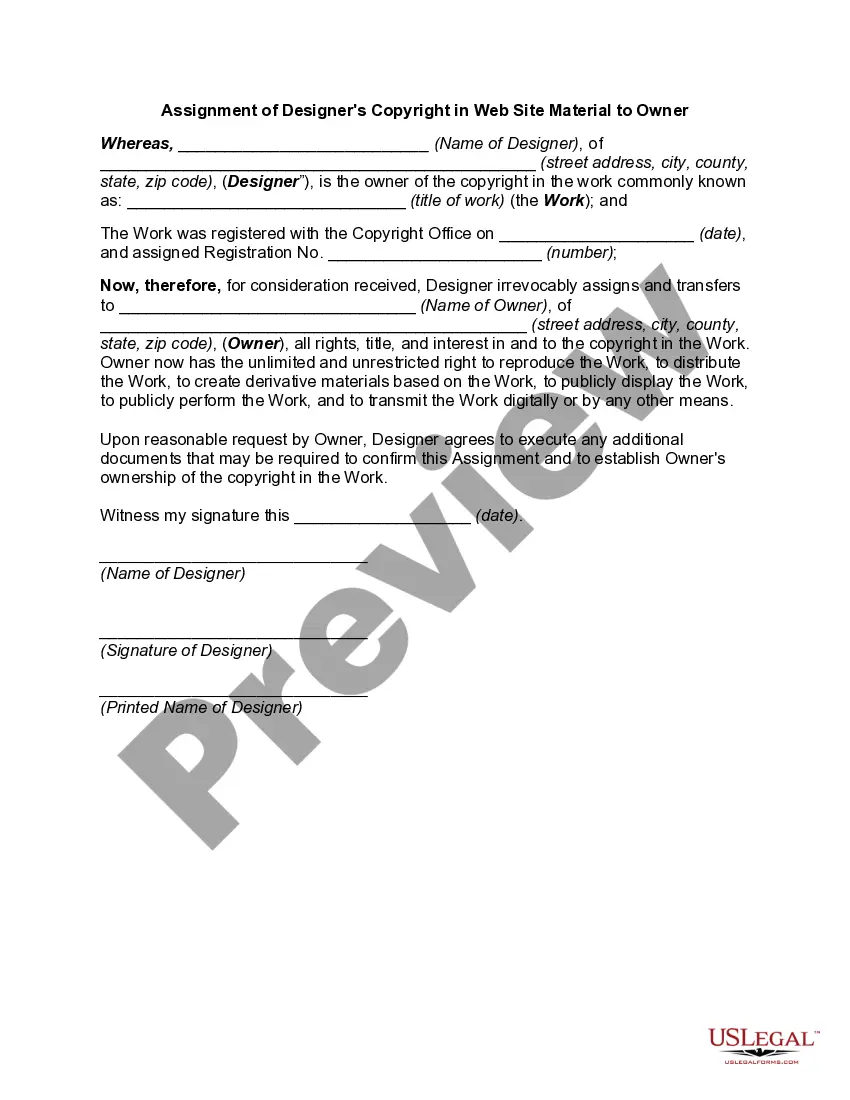
Assignment of Designer's Copyright in Web Site Material to Owner
About this form
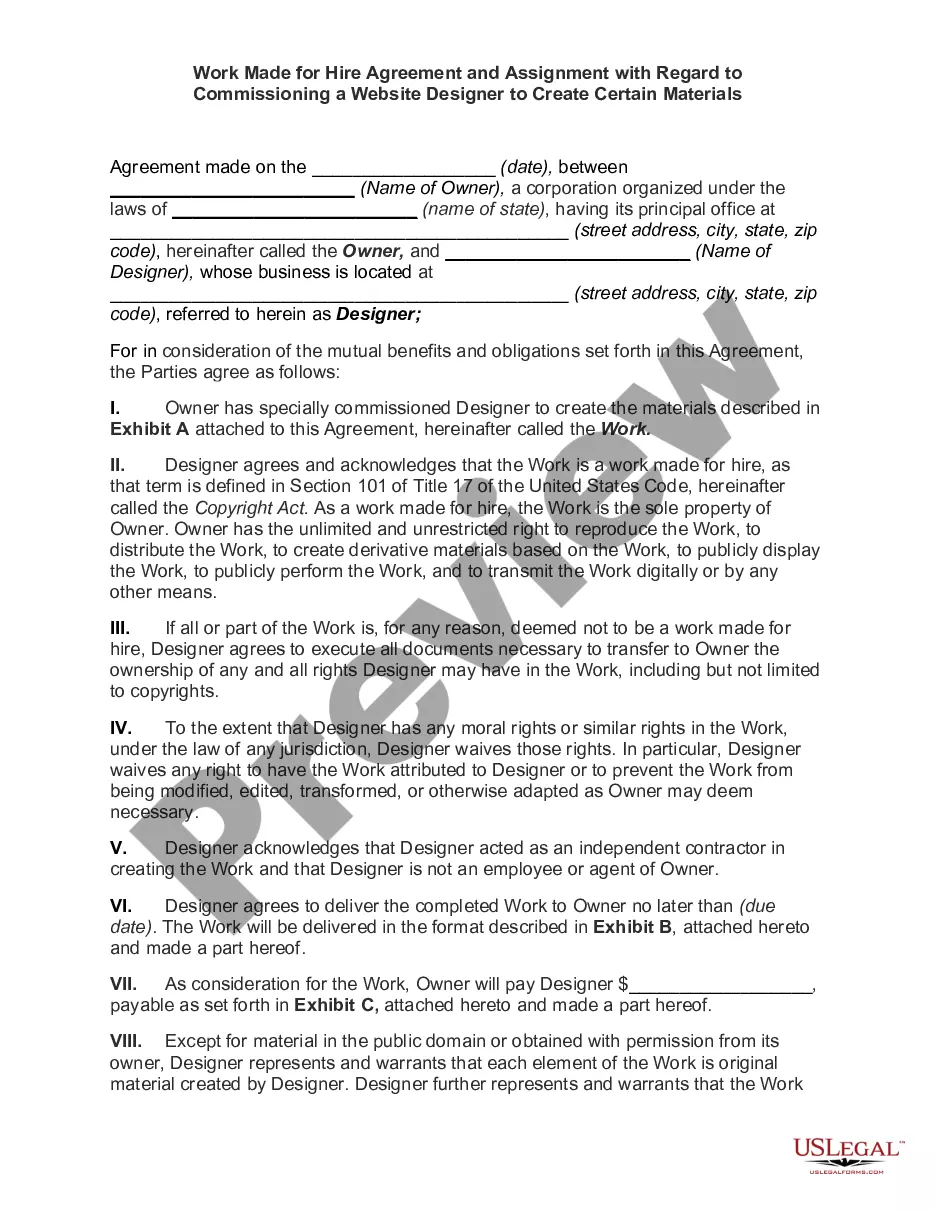
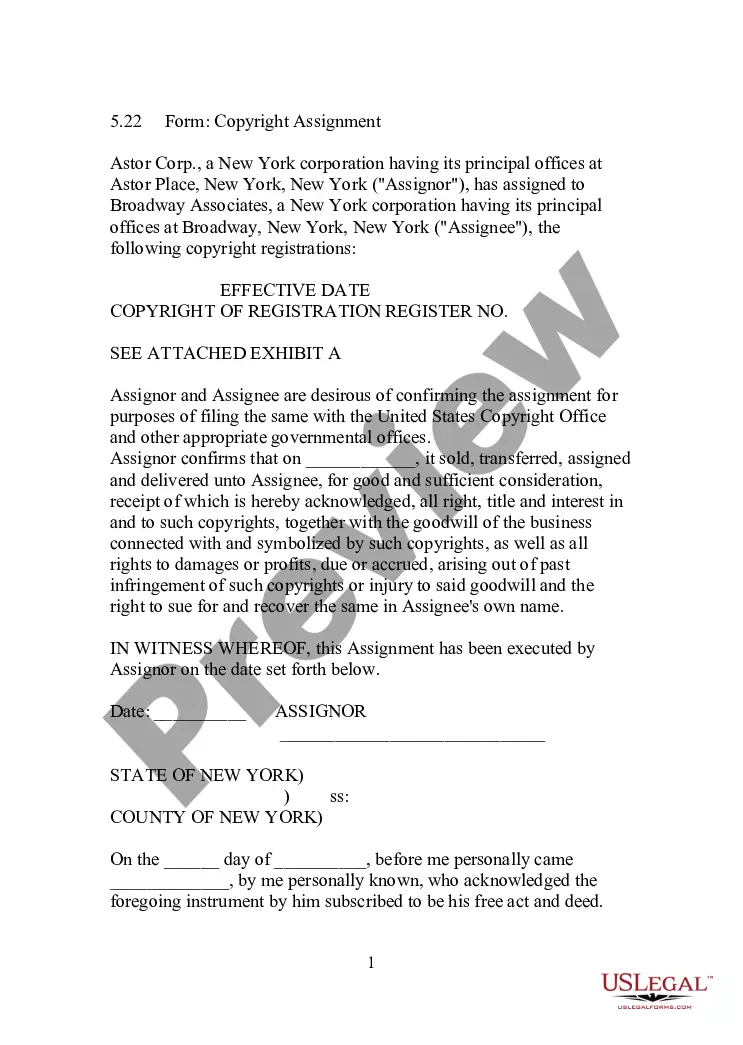
The Assignment of Designer's Copyright in Web Site Material to Owner form is a legal document used when a website owner seeks to incorporate content created by a third party into their site. This form is essential when the material may not fall under the category of a work made for hire as defined by the Copyright Act. It allows the designer to assign all copyright ownership of their work directly to the owner, ensuring that the owner has the rights to use, distribute, and modify the material without limitations.
Form components explained
- Designer Information: Includes the designer's name and address, identifying who is transferring the copyright.
- Work Description: Provides the title and other details of the work being assigned.
- Copyright Registration: Specifies the registration date and number, affirming the work's copyright status.
- Assignment Clause: Confirms the transfer of rights from the designer to the owner.
- Signature Section: Requires the designer's signature and printed name as verification of the assignment.

When to use this form
This form should be used when a website owner wants to legally obtain the copyright of web material created by a designer or other third party. It is particularly important in situations where the designer's work was not produced as a work made for hire. This ensures that the website owner has the necessary rights to use the material freely without infringing on the designer's copyright.
Who can use this document
- Website owners looking to incorporate third-party materials into their sites.
- Designers who have created original works that they wish to transfer rights to.
- Businesses needing clear ownership rights for content used online.
Steps to complete this form
- Identify the parties involved by entering the full name and address of the designer and the owner.
- Specify the title of the work and include any relevant registration details.
- Clearly state the rights being assigned in the assignment clause, ensuring the language reflects a complete transfer.
- Have the designer sign and date the form, confirming the assignment of rights.
- Keep a signed copy for your records after the form is completed.
Is notarization required?
This form does not typically require notarization unless specified by local law. However, having it notarized can provide an extra layer of authenticity and security for both parties involved in the assignment.
Get your form ready online
Our built-in tools help you complete, sign, share, and store your documents in one place.
Make edits, fill in missing information, and update formatting in US Legal Forms—just like you would in MS Word.
Download a copy, print it, send it by email, or mail it via USPS—whatever works best for your next step.
Sign and collect signatures with our SignNow integration. Send to multiple recipients, set reminders, and more. Go Premium to unlock E-Sign.
If this form requires notarization, complete it online through a secure video call—no need to meet a notary in person or wait for an appointment.
We protect your documents and personal data by following strict security and privacy standards.

Make edits, fill in missing information, and update formatting in US Legal Forms—just like you would in MS Word.

Download a copy, print it, send it by email, or mail it via USPS—whatever works best for your next step.

Sign and collect signatures with our SignNow integration. Send to multiple recipients, set reminders, and more. Go Premium to unlock E-Sign.

If this form requires notarization, complete it online through a secure video call—no need to meet a notary in person or wait for an appointment.

We protect your documents and personal data by following strict security and privacy standards.
Common mistakes to avoid
- Failing to provide complete and accurate details about the work being assigned.
- Not including the copyright registration information if applicable.
- Overlooking the need for a signature from the designer to validate the form.
- Not keeping a copy of the signed form for future reference.
Why complete this form online
- Convenience of downloading and filling out the form from anywhere.
- Editable format allows you to customize information easily.
- Access to attorney-drafted templates ensures legal validity.
What to keep in mind
- This form is essential for transferring copyright of web materials from designers to owners.
- It provides the owner with full rights to use and manage the work without limitations.
- Ensure all details are accurately filled out and signed to maintain legal validity.
Looking for another form?
Form popularity
FAQ
Are copyrights transferable? Yes. Like any other property, all or part of the rights in a work may be transferred by the owner to another.
Under United States copyright law, creators are presumed to own the copyright in the works they create. This means that whoever creates the various aspects of your website will be presumed to have ownership of the copyright in those specific elements (the concept of separate website elements is discussed more below).
Assignment of Copyright The rights of a copyright owner can be assigned by him to any other person by way of an assignment.According to the Indian Copyright Act, 1957 a prospective owner of the copyright of the future work may also assign his rights partially or wholly.
Subject to the provisions of this Act, the author of a work shall be the owner of copyright therein. Section 17 statutorily recognizes the author of the work to be the first owner of the copyright. The author is defined under the Act for various works, which come under the law of copyright.
All original content created on your website is secured by copyright law. This includes creative works such as photographs, designs, written articles, and more.While your original work is copyrighted by default, it's easier to get compensation and protect your content with a registered copyright.
To register for a copyright for your website, go to the U.S. Copyright Office's online Registration Portal to complete an application under the category of Other Digital Content. Expect a processing period of six to eight months if you file online or eight to 10 months if you file using a paper form.
(1) The ownership of a copyright may be transferred in whole or in part by any means of conveyance or by operation of law, and may be bequeathed by will or pass as personal property by the applicable laws of intestate succession.
A copyright owner's exclusive rights (either in whole or in part) can be transferred to another party, but it must be in writing and signed by the copyright owner to be considered valid. An authorized agent of the copyright owner (such as an attorney or business associate) can also sign the writing.
Copyright applies to original works including literary, dramatic, musical, artistic, and certain other intellectual works. If you want to protect an entire blog post or a photo that you took (AKA a creative work), you use copyright: All original content created on your website is secured by copyright law.