Mississippi Right of Way and Easement Agreement
What is this form?
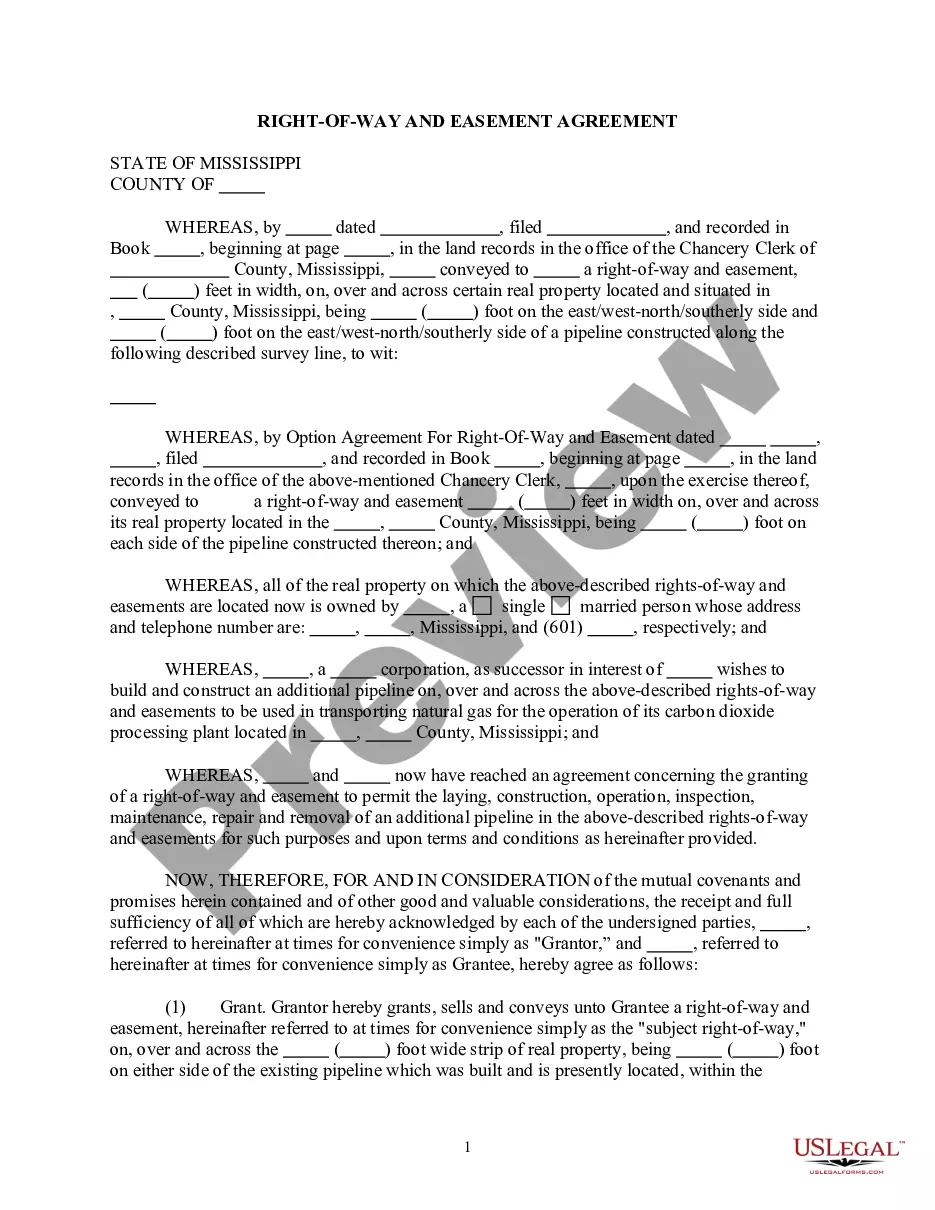
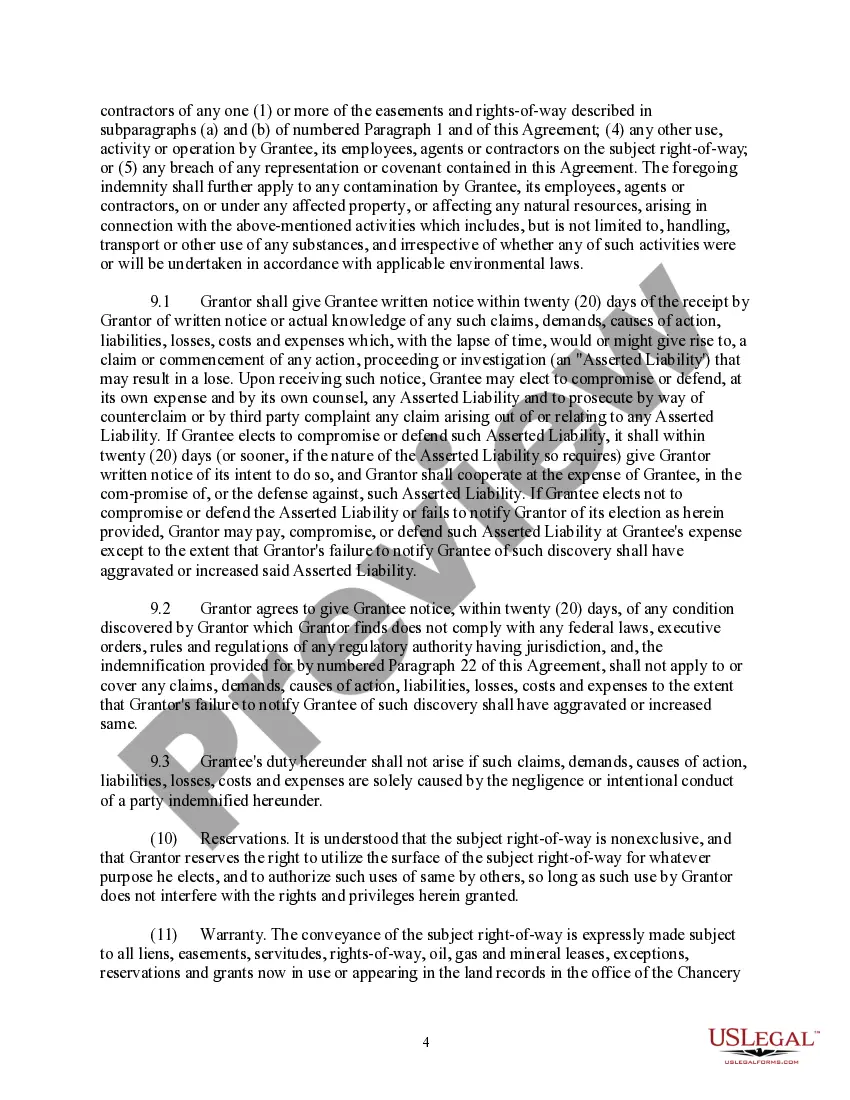
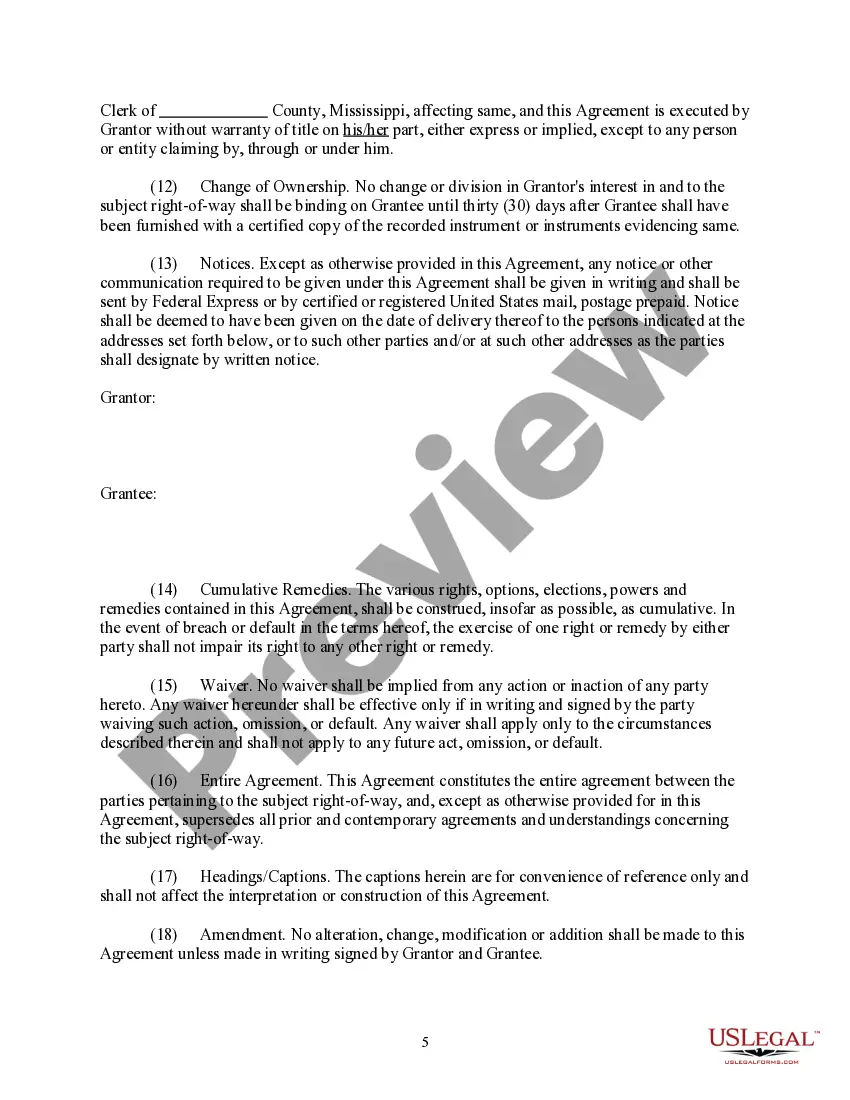
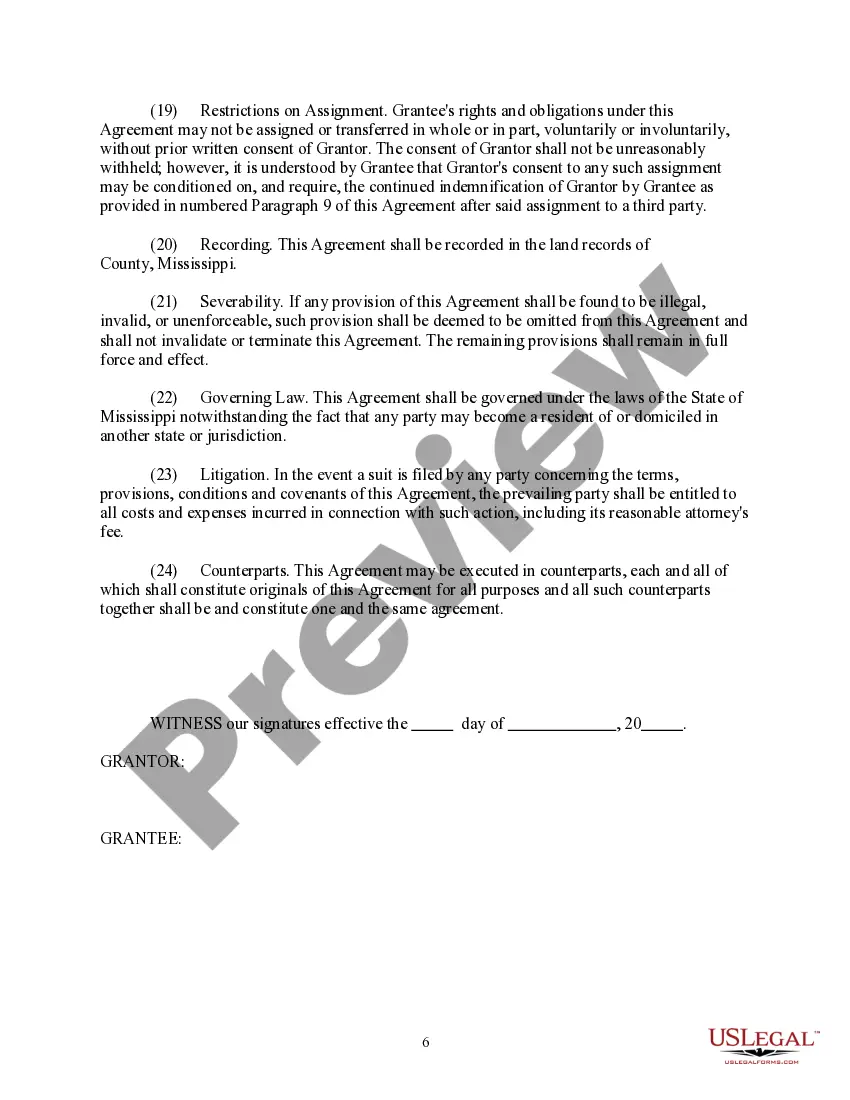
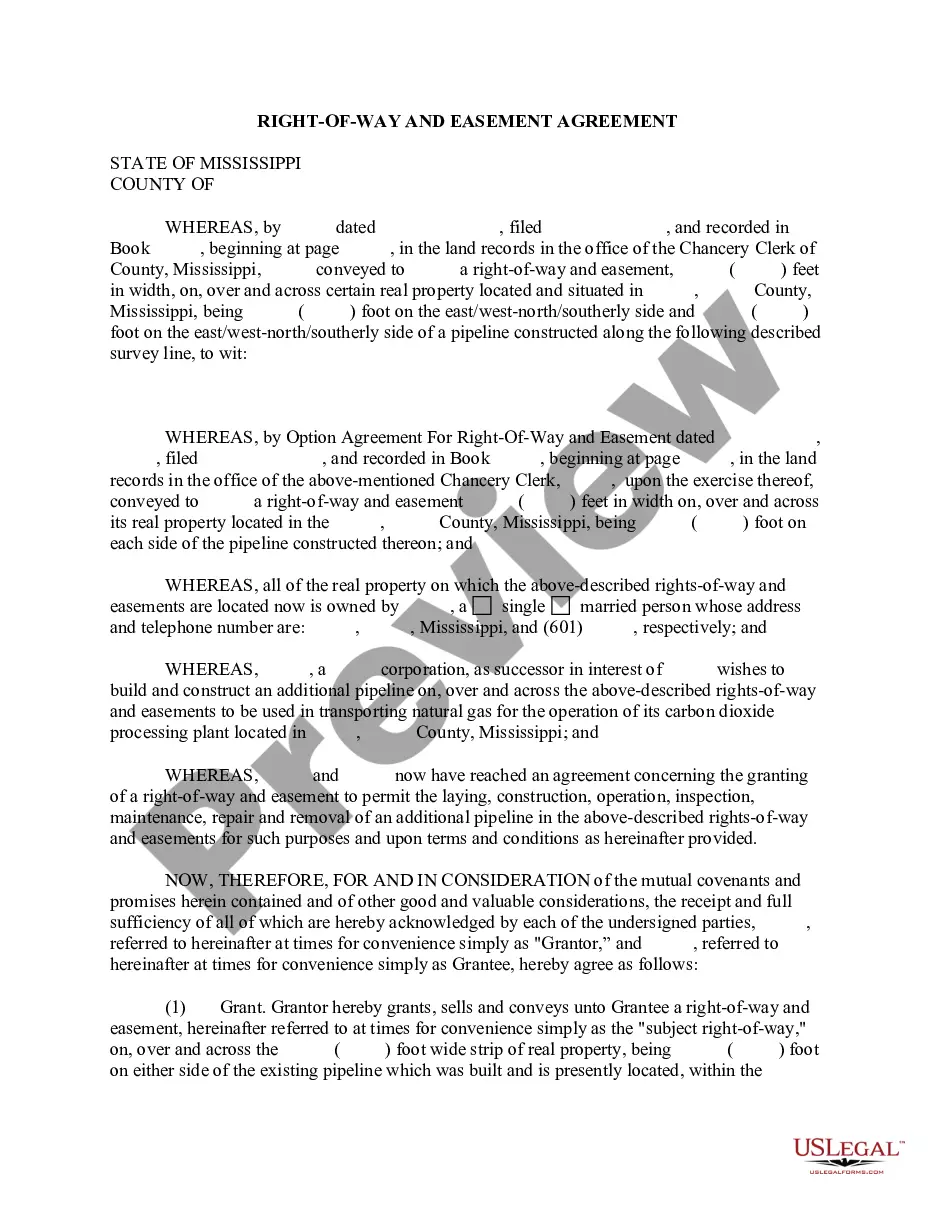
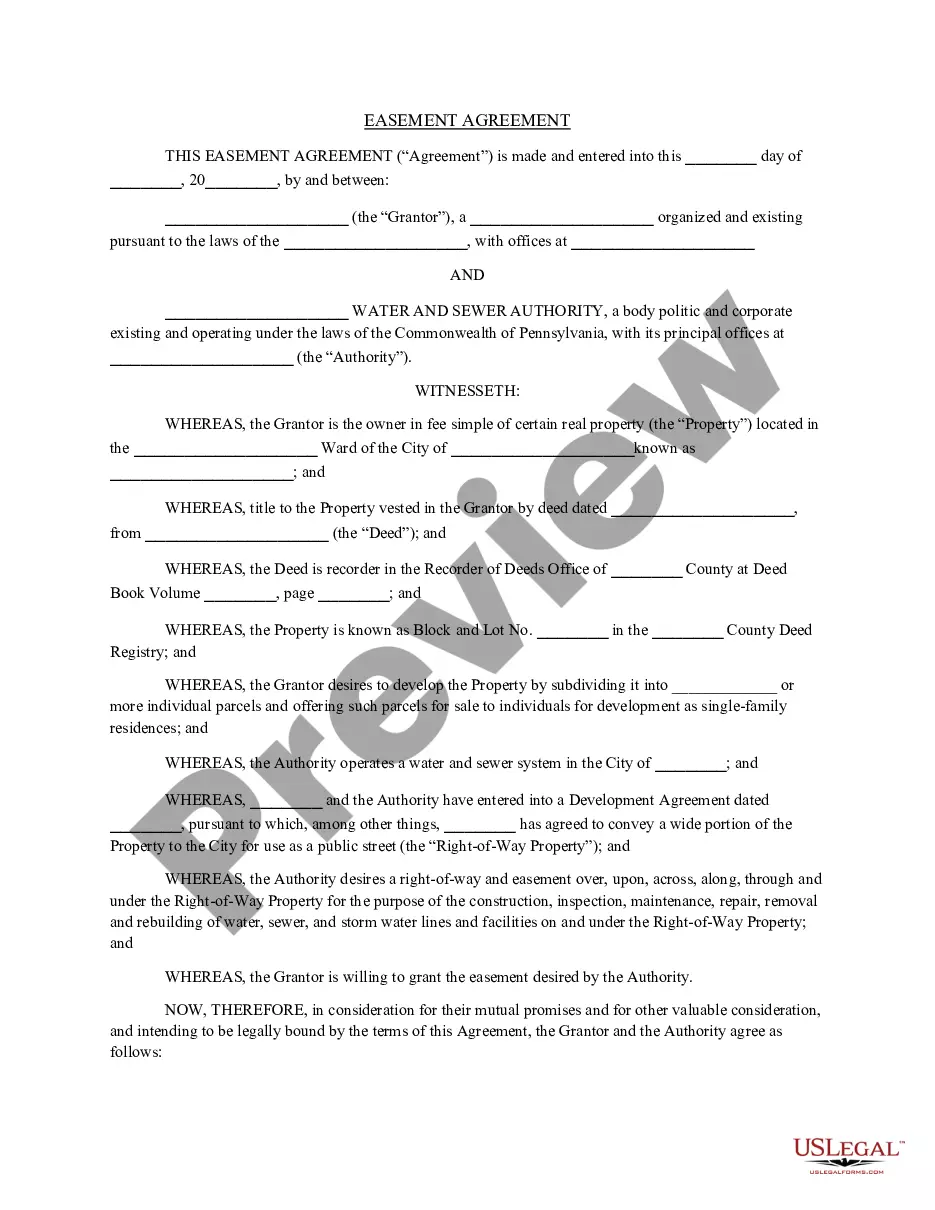
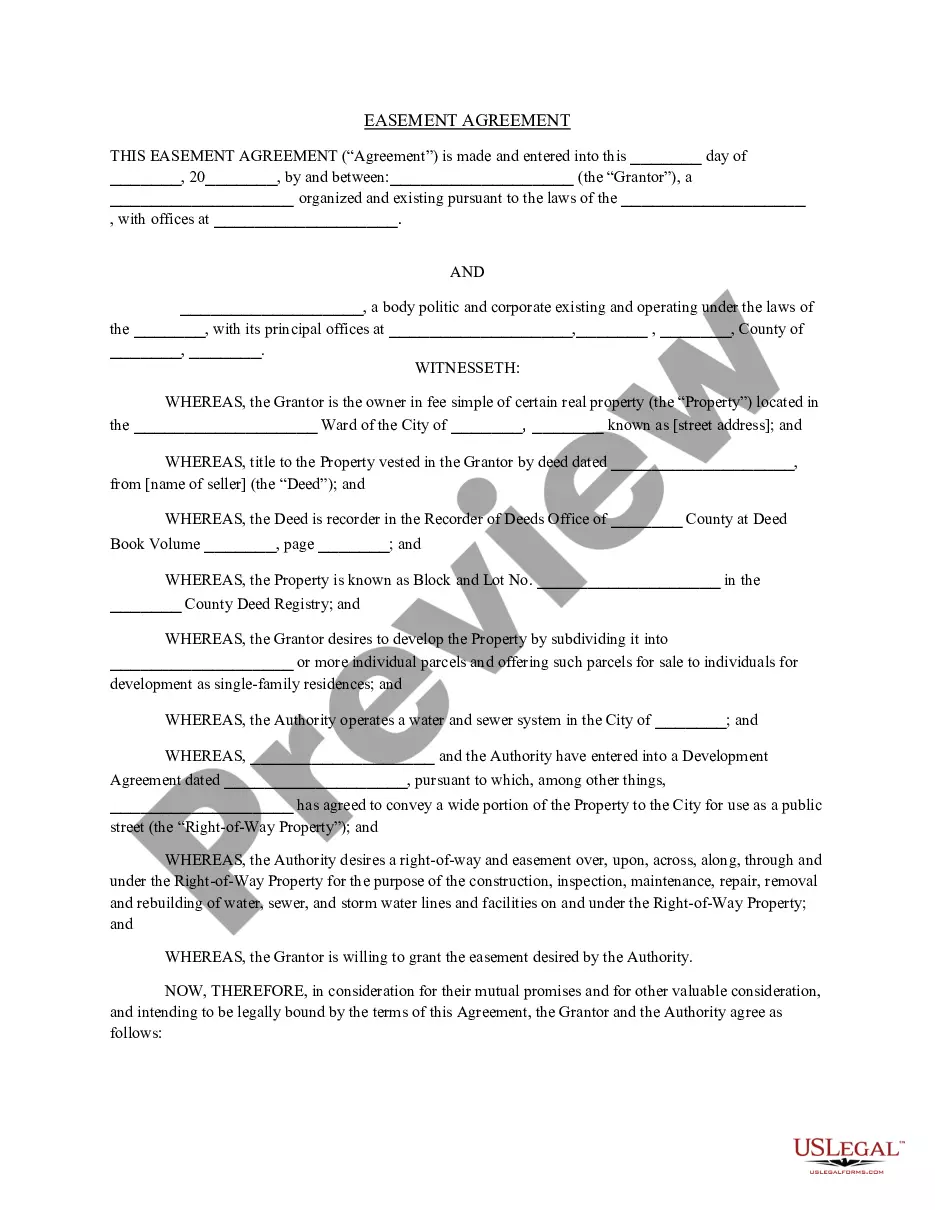
The Right of Way and Easement Agreement is a legal document that allows one party to access another party's property for specific uses, such as installing and maintaining a pipeline. This form outlines the rights, obligations, and liabilities of each party involved. Unlike property deeds, an easement does not transfer ownership but grants permission for specific utility-related activities across the property in question.
Key components of this form
- Identification of the Grantor and Grantee parties.
- Detailed description of the easement area and its intended use.
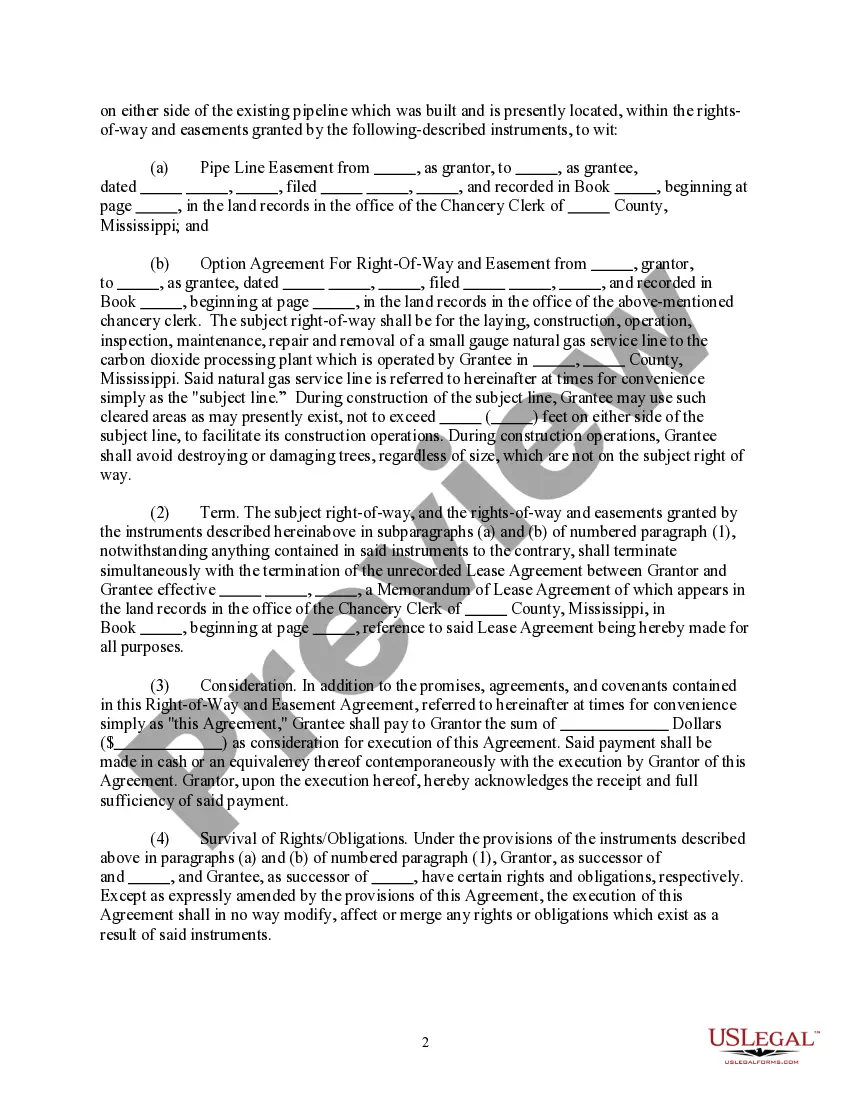
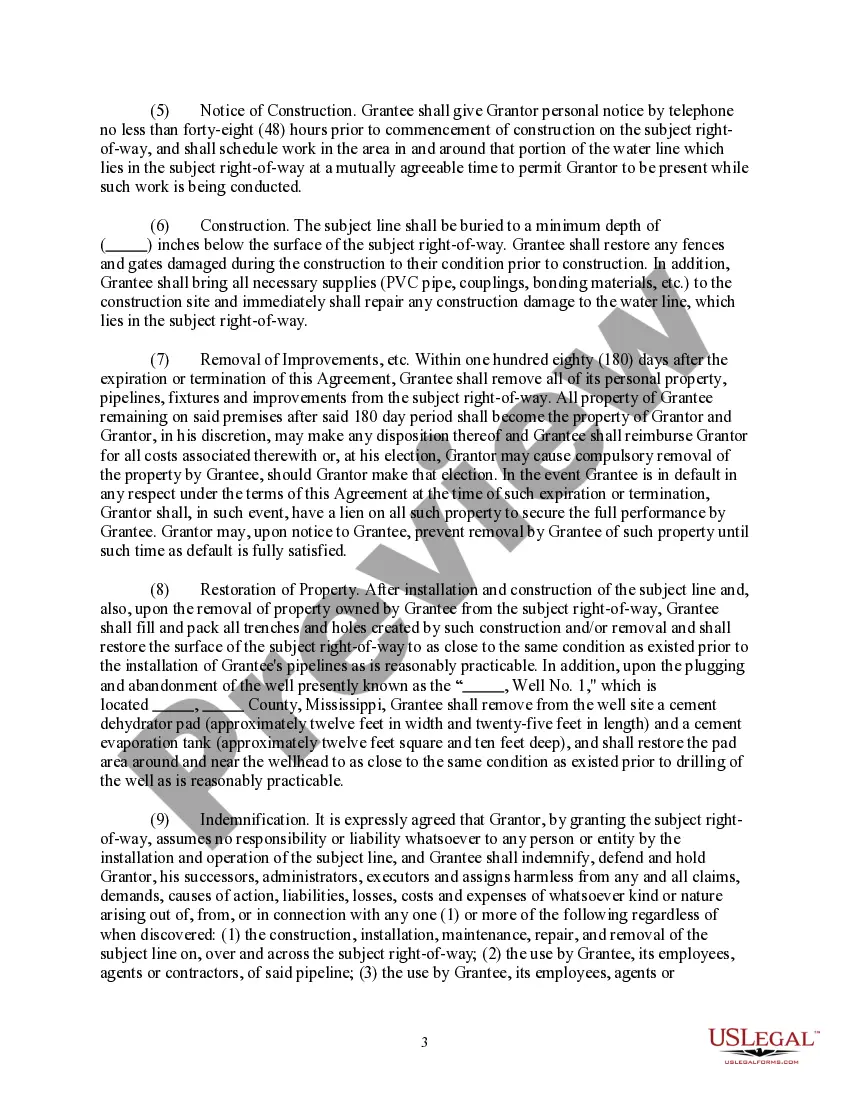
- Clauses regarding the maintenance and removal of any installations.
- Indemnification provisions to protect the Grantor from liabilities.
- Agreement duration and conditions for termination.
- Conditions for transfer and assignment of rights under the agreement.

Common use cases
This form is commonly used when a utility company needs to access private land to install and maintain pipelines or other infrastructure. It is also applicable when individuals require access through another's property, such as for agricultural purposes, water access, or repairs. Essentially, use this agreement whenever there is a need to formalize the right to use someone else's property for specific non-invasive activities.
Who should use this form
- Utility companies that need to install or maintain infrastructure on private property.
- Landowners granting easement rights to others.
- Agricultural producers requiring access for farming equipment.
- Homeowners needing to ensure legal access for installations or repairs.
- Business entities looking to formalize access rights for operations.
How to complete this form
- Identify the parties involved by providing their names and addresses.
- Describe the specific property and the nature of the easement being granted.
- Enter details about the intended use of the easement, including any maintenance requirements.
- Specify the duration of the easement and conditions under which it may be terminated.
- Obtain signatures from both parties and date the agreement.
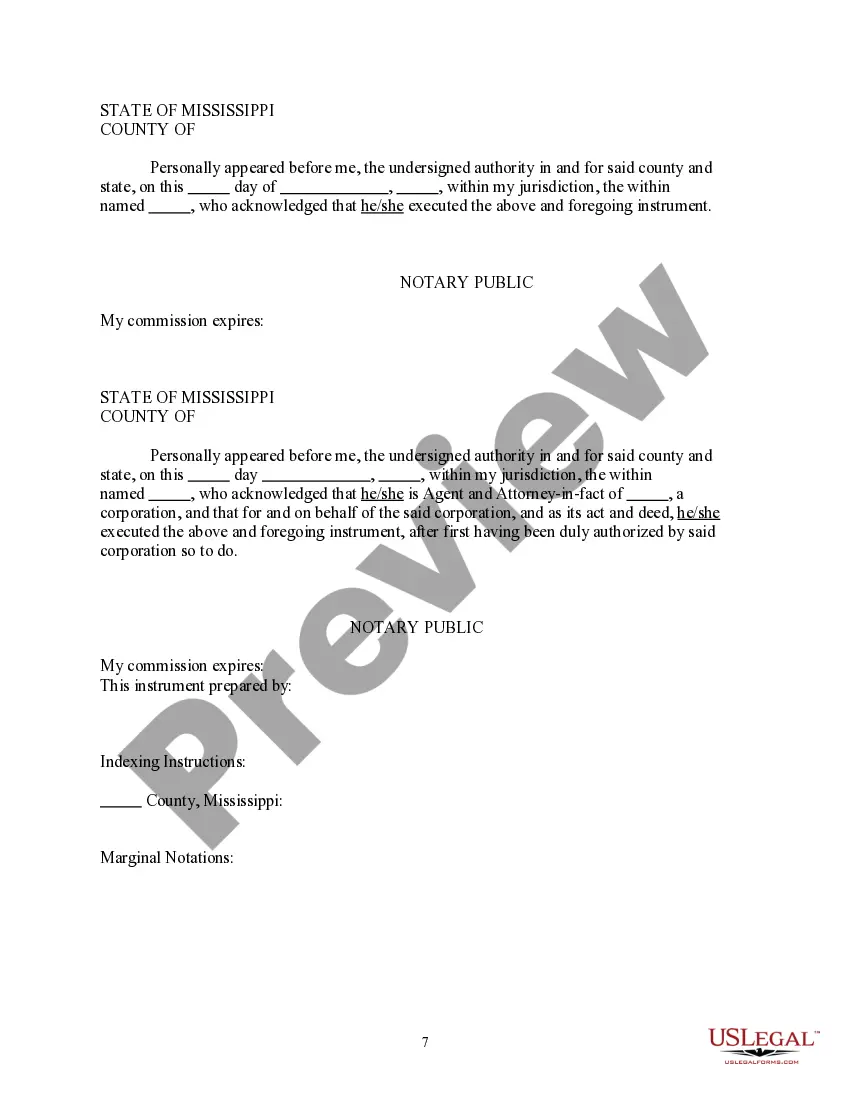
Notarization requirements for this form
This document requires notarization to meet legal standards. US Legal Forms provides secure online notarization powered by Notarize, allowing you to complete the process through a verified video call, available 24/7.
Get your form ready online
Our built-in tools help you complete, sign, share, and store your documents in one place.
Make edits, fill in missing information, and update formatting in US Legal Forms—just like you would in MS Word.
Download a copy, print it, send it by email, or mail it via USPS—whatever works best for your next step.
Sign and collect signatures with our SignNow integration. Send to multiple recipients, set reminders, and more. Go Premium to unlock E-Sign.
If this form requires notarization, complete it online through a secure video call—no need to meet a notary in person or wait for an appointment.
We protect your documents and personal data by following strict security and privacy standards.

Make edits, fill in missing information, and update formatting in US Legal Forms—just like you would in MS Word.

Download a copy, print it, send it by email, or mail it via USPS—whatever works best for your next step.

Sign and collect signatures with our SignNow integration. Send to multiple recipients, set reminders, and more. Go Premium to unlock E-Sign.

If this form requires notarization, complete it online through a secure video call—no need to meet a notary in person or wait for an appointment.

We protect your documents and personal data by following strict security and privacy standards.
Common mistakes
- Failing to clearly define the easement area and its purpose.
- Not including all necessary signatures or dates.
- Overlooking state-specific regulations regarding easements.
- Neglecting to discuss maintenance responsibilities.
- Using vague language that can lead to misunderstandings about rights and obligations.
Benefits of using this form online
- Convenience of completing the form at any time and from anywhere.
- Easy editing options to customize the document as per your requirements.
- Access to reliable legal templates drafted by licensed attorneys.
- Quick retrieval of documents once they are filled out and saved.
Quick recap
- The Right of Way and Easement Agreement outlines the responsibilities and rights related to using another party's property for infrastructure.
- It is important for both Grantor and Grantee to clearly understand their obligations to avoid future disputes.
- This form is tailored for use in Mississippi and should be completed carefully to ensure all legal requirements are met.
Looking for another form?
Form popularity
FAQ
The Mississippi Right of Way and Easement Agreement is a legal document that grants a party permission to access another's property for specific uses, such as installing and maintaining pipelines or other infrastructure, without transferring ownership. It sets out each party’s rights, obligations, and liabilities, and is commonly used to formalize utility access or other non-invasive activities across private land.
Not exactly. A road easement is a type of easement granting passage, while a right-of-way often covers broader access. The Mississippi Right of Way and Easement Agreement combines both concepts to formalize a defined access across private property for utility-related activities, and it outlines duties, liabilities, and how long the access lasts.
Costs to obtain an easement vary and this form does not set a price. The document focuses on the rights, obligations, liabilities, and terms of use, not payment amounts. Compensation is usually negotiated between the parties and, if needed, guided by local practice in Mississippi. Consider consulting a licensed attorney or appraiser for an estimate.
One key drawback for a grantor is loss of exclusive use of the easement area and ongoing access by others for the permitted purpose. The agreement also may impose maintenance responsibilities, potential liability under indemnification provisions, and limits on transfer or termination, all of which can complicate future property uses.
Whether landscaping is allowed depends on the defined easement area and use in the agreement. The form requires a description of the easement and its intended use and typically restricts alterations that interfere with installations or access. Any landscaping would need agreement from both parties and must not obstruct maintenance or use rights.
This document explicitly combines a right of way with an easement and states core terms such as parties’ identification, a detailed description of the easement area and its intended use, maintenance and removal of installations, indemnification, duration and termination, and transfer/assignment rights. It targets utility access scenarios across private property.