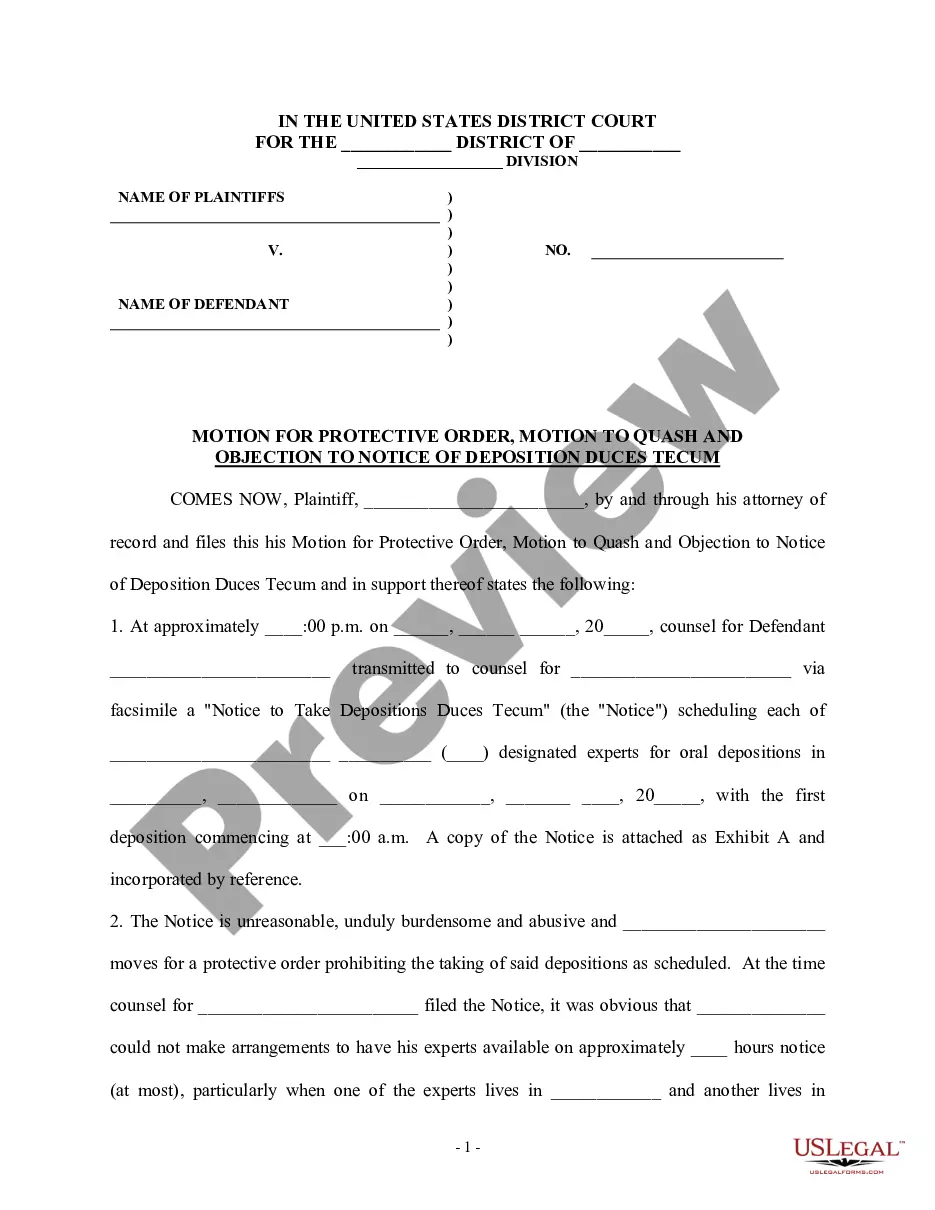
Mississippi Motion for Protective Order, Motion to Quash and Objection to Notice of Deposition Duces Tecum
About this form
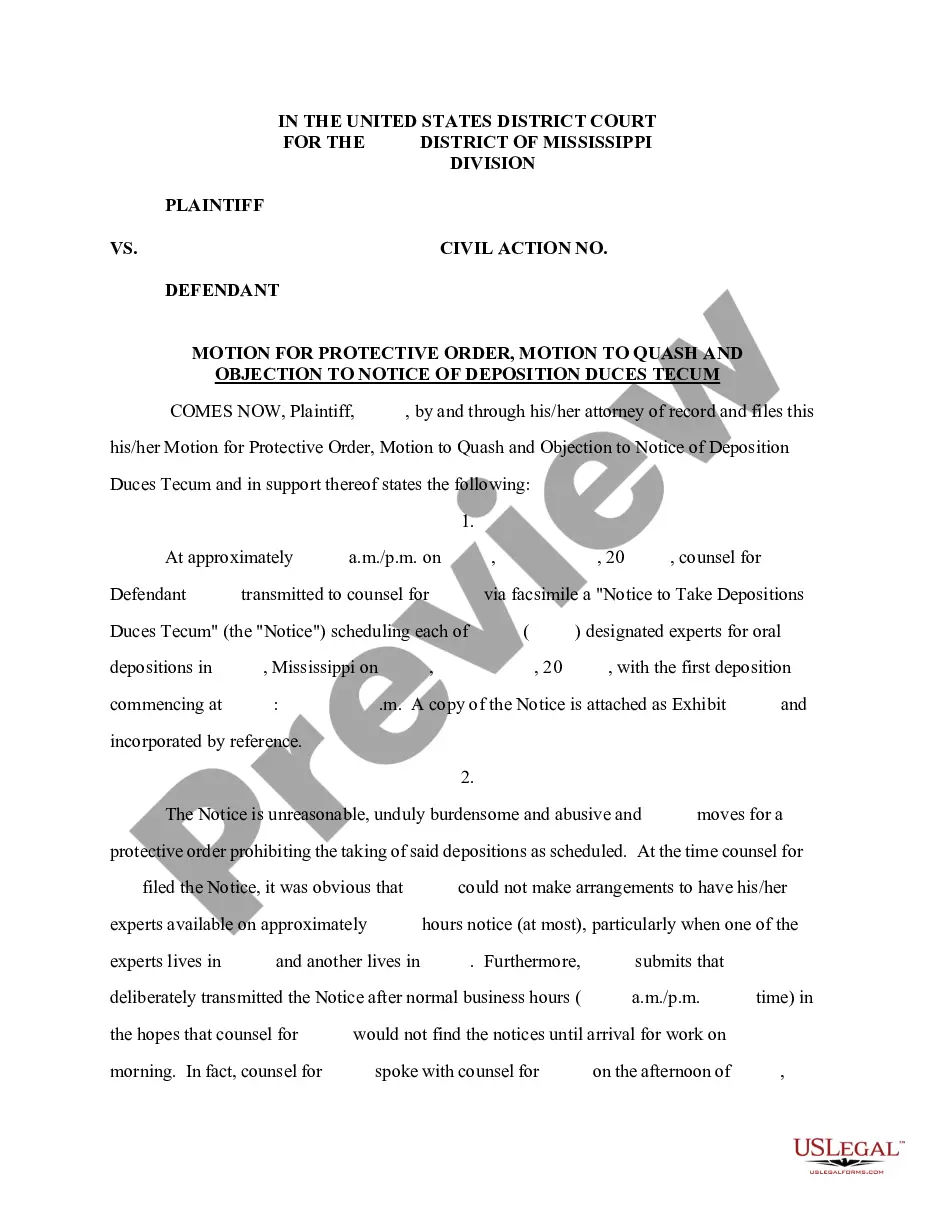
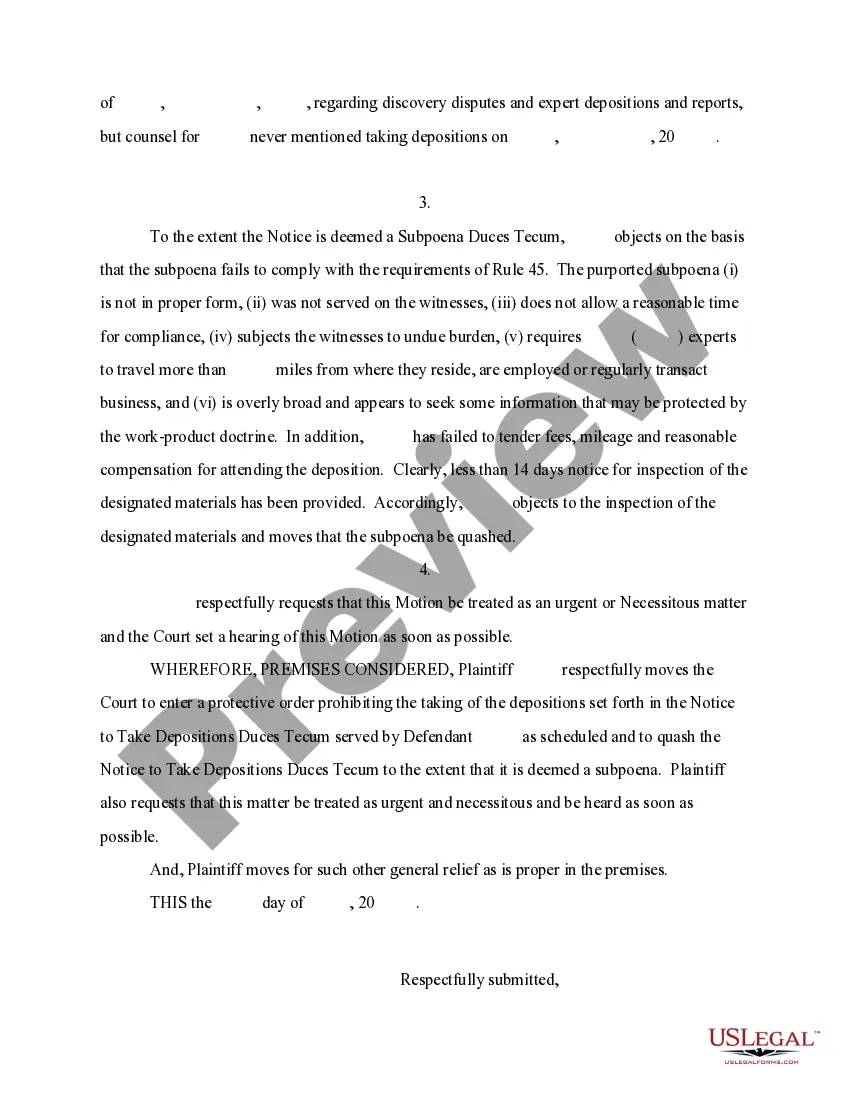
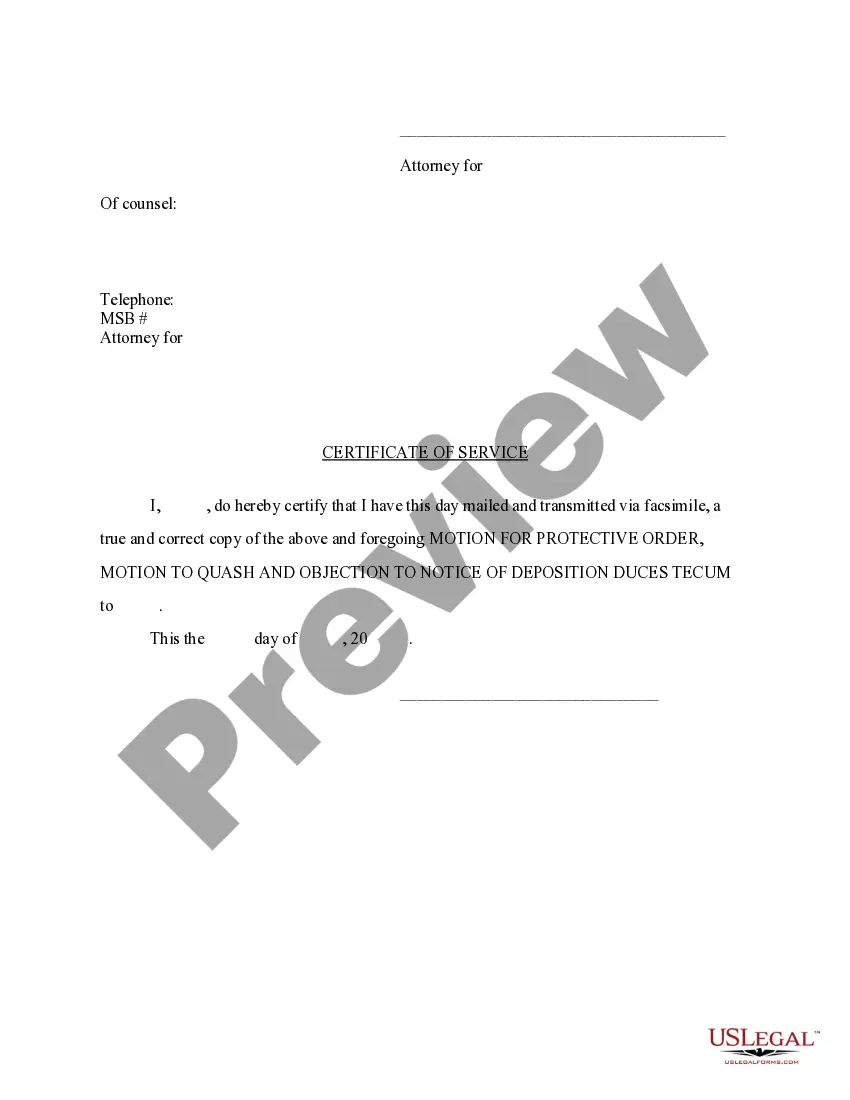
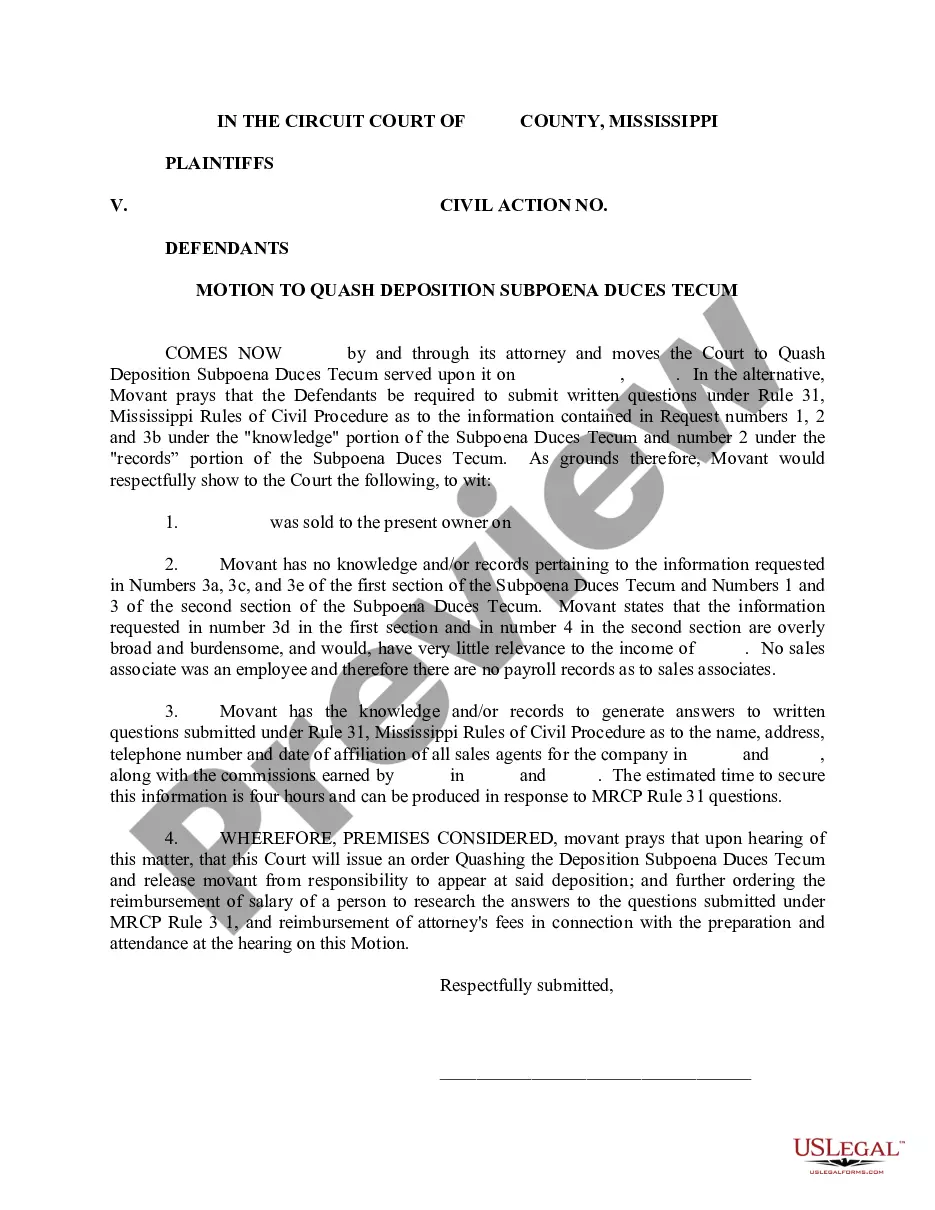
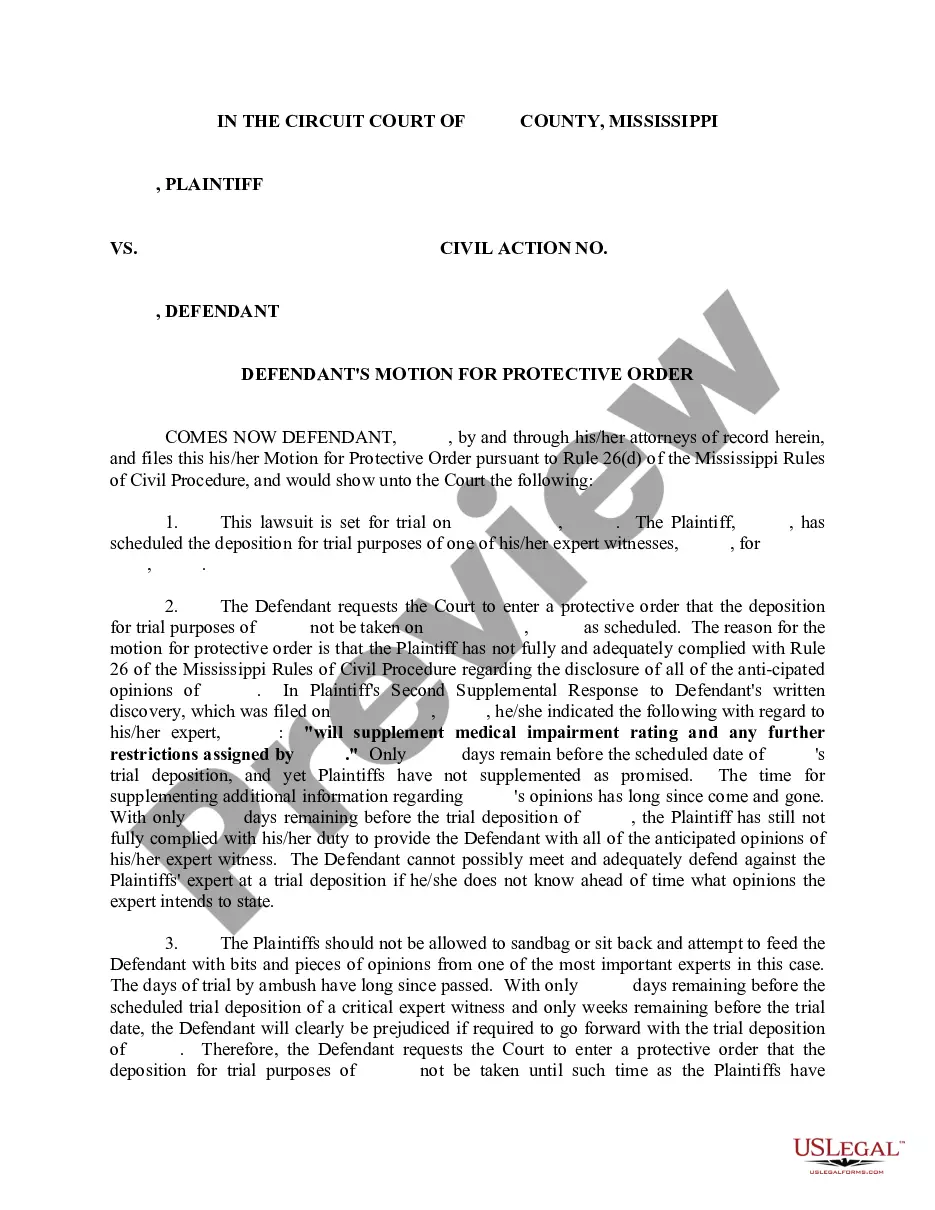
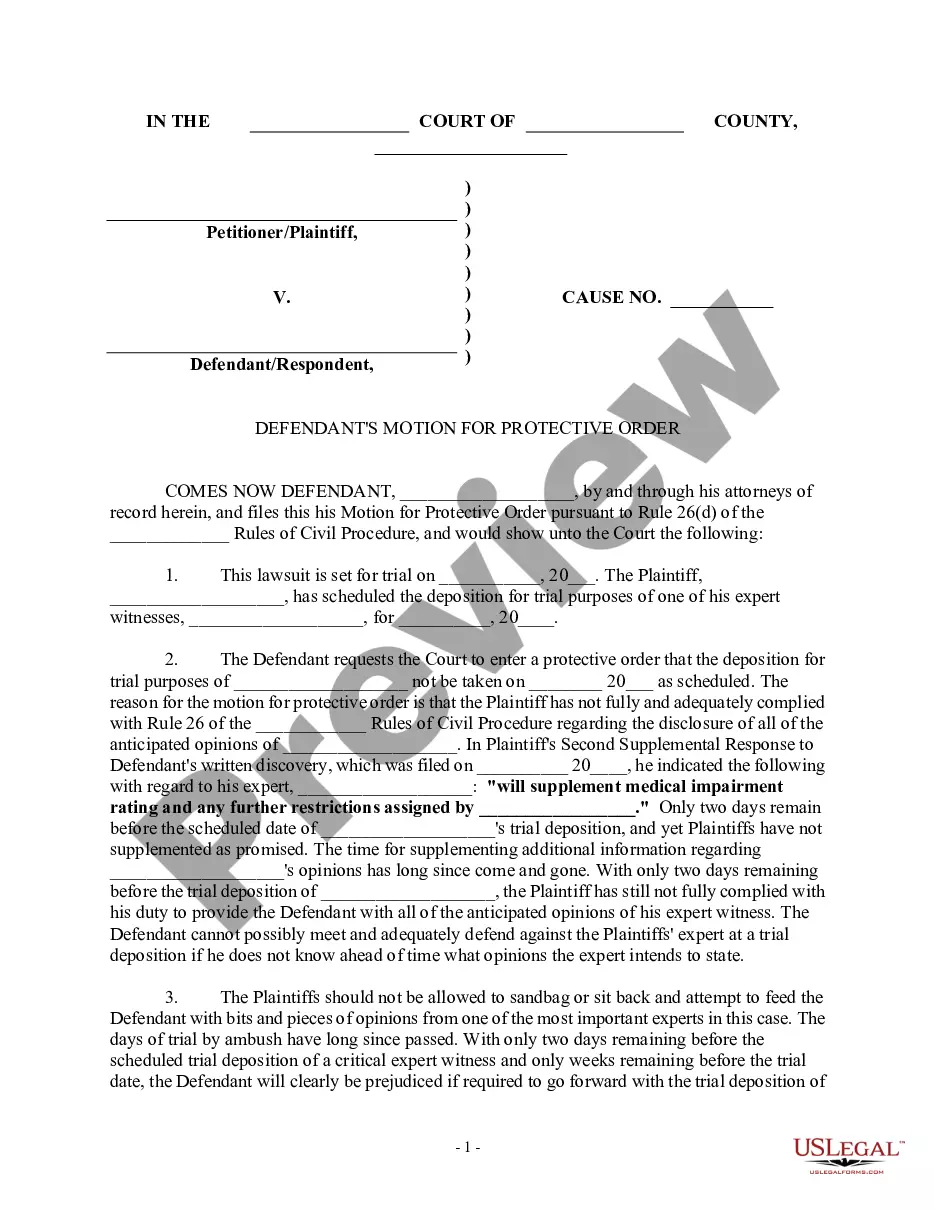
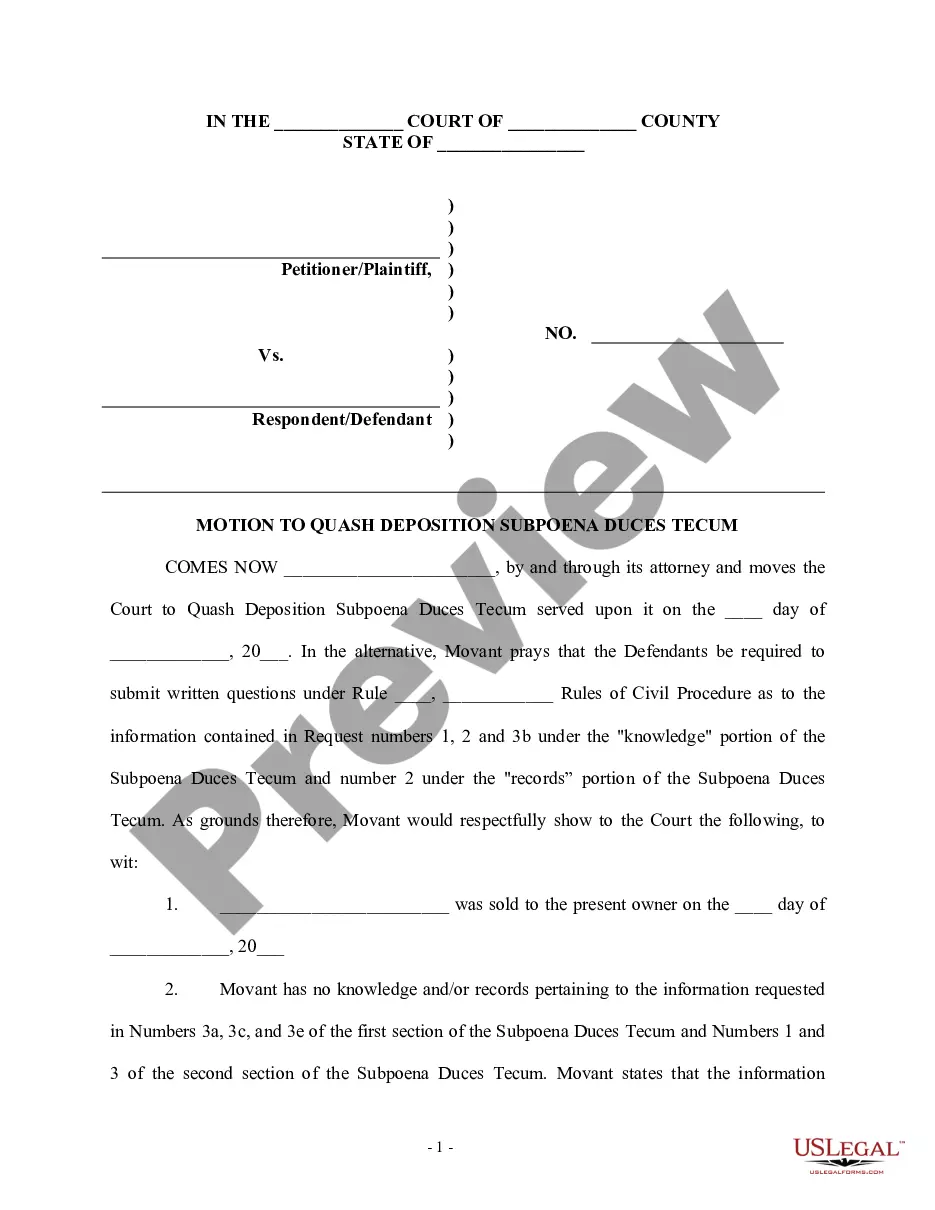
The Motion for Protective Order, Motion to Quash and Objection to Notice of Deposition Duces Tecum is a legal document used to request the court to limit or prevent a deposition that requires the production of documents. This form allows a party to object to the scope or relevance of the requested documents or the deposition itself, helping ensure that parties do not face undue burden or hardship during legal proceedings. Unlike other motions, this document combines requests for both a protective order and the quashing of a deposition notice, making it versatile for various legal situations.
What’s included in this form
- Introduction: Identifies the parties involved in the motion and the case number.
- Relief Requested: Clearly states the specific actions requested from the court.
- Legal Grounds: Outlines the legal basis for the motion, citing relevant laws or rules.
- Supporting Facts: Provides the factual context and reasons for the request.
- Conclusion: Summarizes the relief sought and may include a request for further relief deemed appropriate by the court.
Common use cases
This form is useful when a party seeks to protect confidential information, limit the scope of discovery, or challenge the validity of a deposition notice. It can be used in various scenarios, such as when the requested documents are irrelevant, overly burdensome, or protected by privilege. Additionally, this form may be necessary if the opposing party's notice is procedurally improper or violates court rules.
Intended users of this form
- Parties in a legal dispute who have received a notice of deposition duces tecum.
- Individuals or organizations seeking to protect sensitive or confidential information during litigation.
- Attorneys representing clients who wish to challenge the scope or relevance of requested discovery.
Steps to complete this form
- Identify the parties involved and the relevant case information at the beginning of the form.
- Clearly specify the relief requested, including details about what actions you want the court to take.
- Outline the legal grounds for your request, citing applicable laws and rules.
- Detail the facts that support your motion, offering concrete examples as necessary.
- Conclude with a summary and any additional requests for relief the court might deem appropriate.
Does this form need to be notarized?
This form usually doesn’t need to be notarized. However, local laws or specific transactions may require it. Our online notarization service, powered by Notarize, lets you complete it remotely through a secure video session, available 24/7.
Get your form ready online
Our built-in tools help you complete, sign, share, and store your documents in one place.
Make edits, fill in missing information, and update formatting in US Legal Forms—just like you would in MS Word.
Download a copy, print it, send it by email, or mail it via USPS—whatever works best for your next step.
Sign and collect signatures with our SignNow integration. Send to multiple recipients, set reminders, and more. Go Premium to unlock E-Sign.
If this form requires notarization, complete it online through a secure video call—no need to meet a notary in person or wait for an appointment.
We protect your documents and personal data by following strict security and privacy standards.

Make edits, fill in missing information, and update formatting in US Legal Forms—just like you would in MS Word.

Download a copy, print it, send it by email, or mail it via USPS—whatever works best for your next step.

Sign and collect signatures with our SignNow integration. Send to multiple recipients, set reminders, and more. Go Premium to unlock E-Sign.

If this form requires notarization, complete it online through a secure video call—no need to meet a notary in person or wait for an appointment.

We protect your documents and personal data by following strict security and privacy standards.
Mistakes to watch out for
- Failing to provide sufficient factual support for the motion.
- Not including the correct case number or party information.
- Overlooking jurisdiction-specific requirements or formatting rules.
- Not articulating a clear and precise request for relief.
Benefits of completing this form online
- Convenient access to legal templates that can be tailored to your specific circumstances.
- Editability allows for quick adjustments to align with particular case facts and jurisdictional requirements.
- Time-efficient, enabling users to complete forms promptly.
- Reliable legal language drafted by licensed attorneys, ensuring compliance with relevant laws.
Quick recap
- The Motion for Protective Order, Motion to Quash and Objection to Notice of Deposition Duces Tecum combines several legal requests into one form.
- This form is essential for parties needing protection from excessive discovery demands in litigation.
- Understanding how to complete and submit this form correctly is critical for effective legal representation.
Looking for another form?

Form popularity
FAQ
Providing objections suspends your obligation to comply with the subpoena until or unless a court orders compliance, or you reach an agreement with the party that served you with the subpoena. If you do not wish to comply with the subpoena, you may file a motion to quash it before the date set forth on the subpoena.
Any employee whose employment records are sought by a subpoena duces tecum may bring a motion to quash. Note that non-party employees may object to a subpoena by serving written objections. 3. Any non-party who has been served with a business records subpoena may bring a motion to quash.
A lawyer may file a motion to quash if a mistake has been made on the part of a court, or if an attorney believes that the issuance of some court document like a subpoena was not done in a legal manner. For example, a party that receives improper service of process may file a motion to quash.
3. Any non-party who has been served with a business records subpoena may bring a motion to quash. Note, however, that some case law holds that a non-party may simply serve written objections and is not required to bring a motion to quash. The discovery rules do not discriminate against nonparty deponents.
After the motion to quash is filed, the court will review the case and make its determination. For example, if the judge grants a motion to quash service, then the service on the defendant would be considered void. A motion to quash that is approved would also invalidate any applicable decisions from a lower court.
A motion to quash, by itself, does not stop the deposition. You will have to get the hearing advanced to a date before the deposition date.
A motion to quash must be based on valid grounds.If the court grants the motion, it may quash the subpoena entirely, modify it, or order that you comply with it on specified conditions. If the court denies the motion, you will usually have to comply with it as written.
A motion to quash a subpoena duces tecum should be filed within ten (10) days after receiving the subpoena or before the time stated for compliance if that time is fewer than ten days.