Mississippi Order Approving Caveat to Alleged Last Will and Testament
Understanding this form
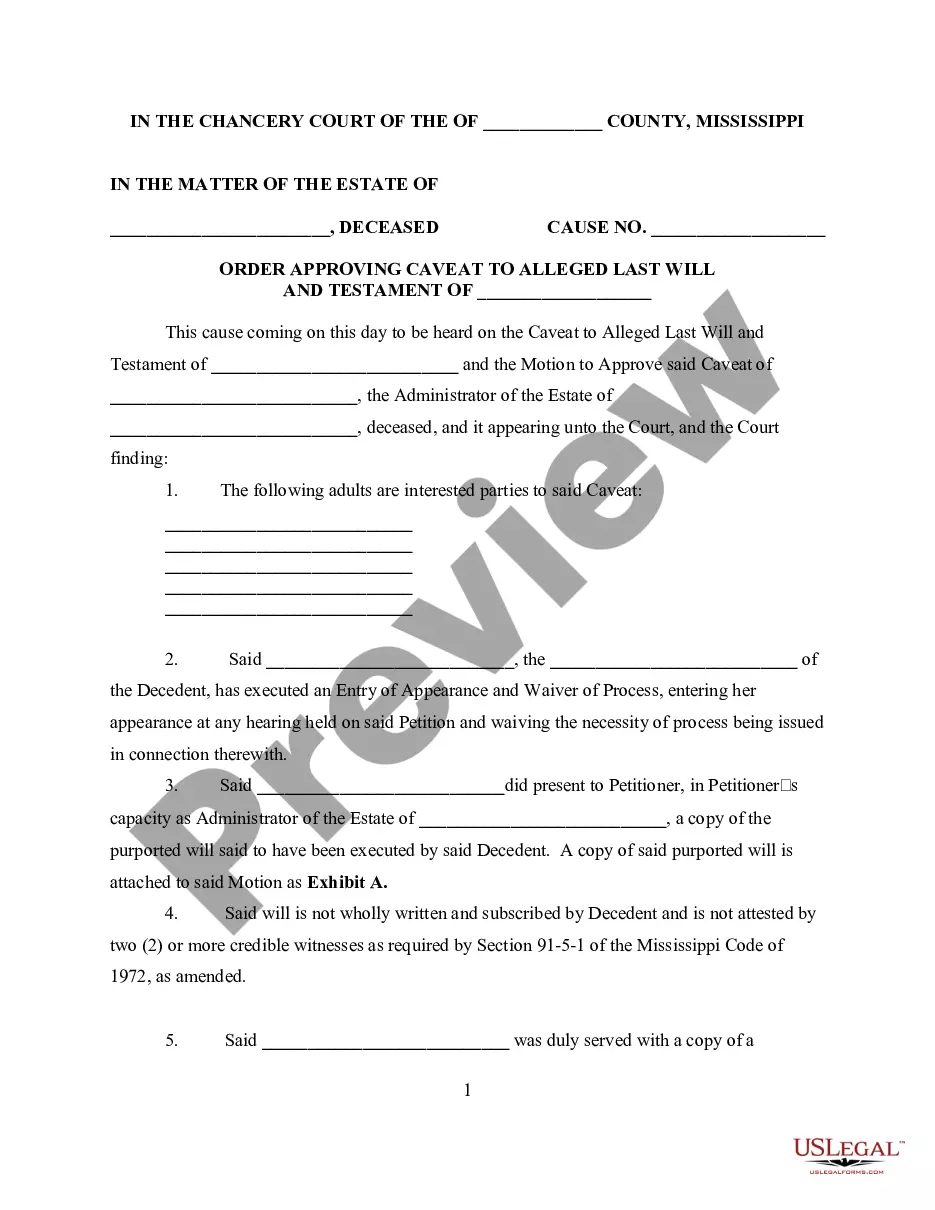
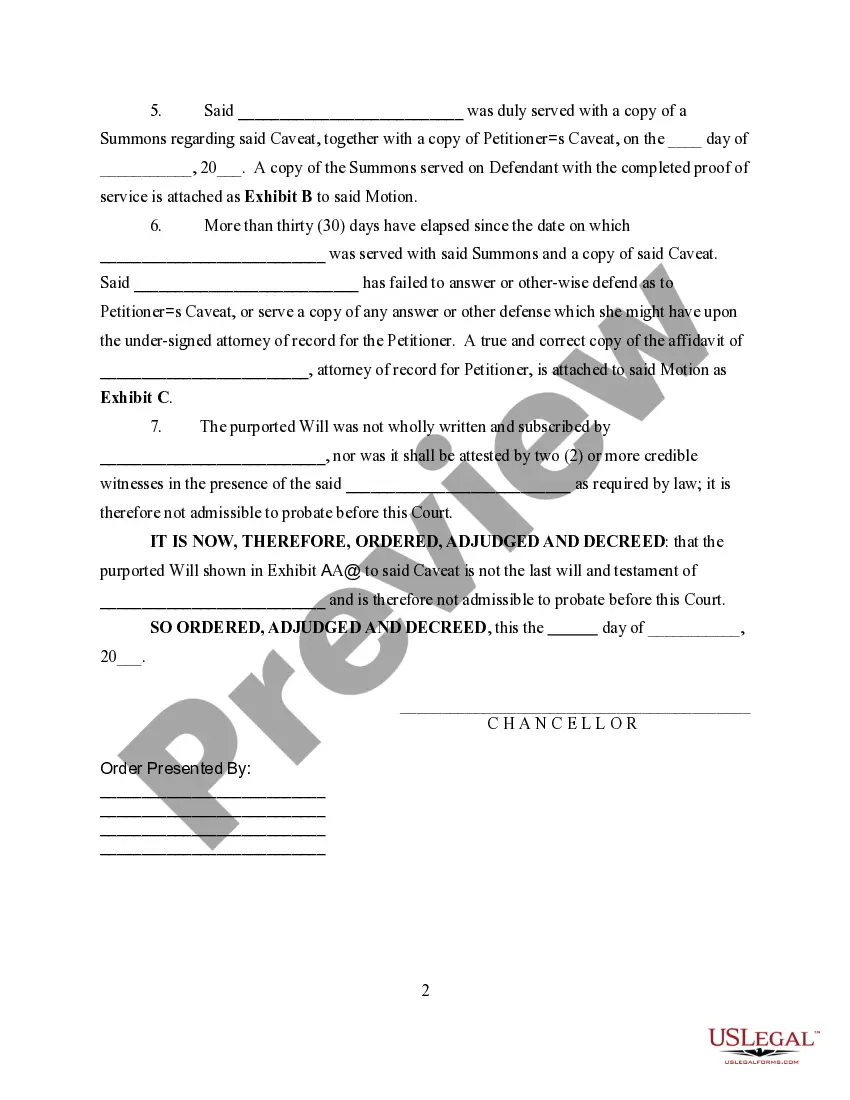
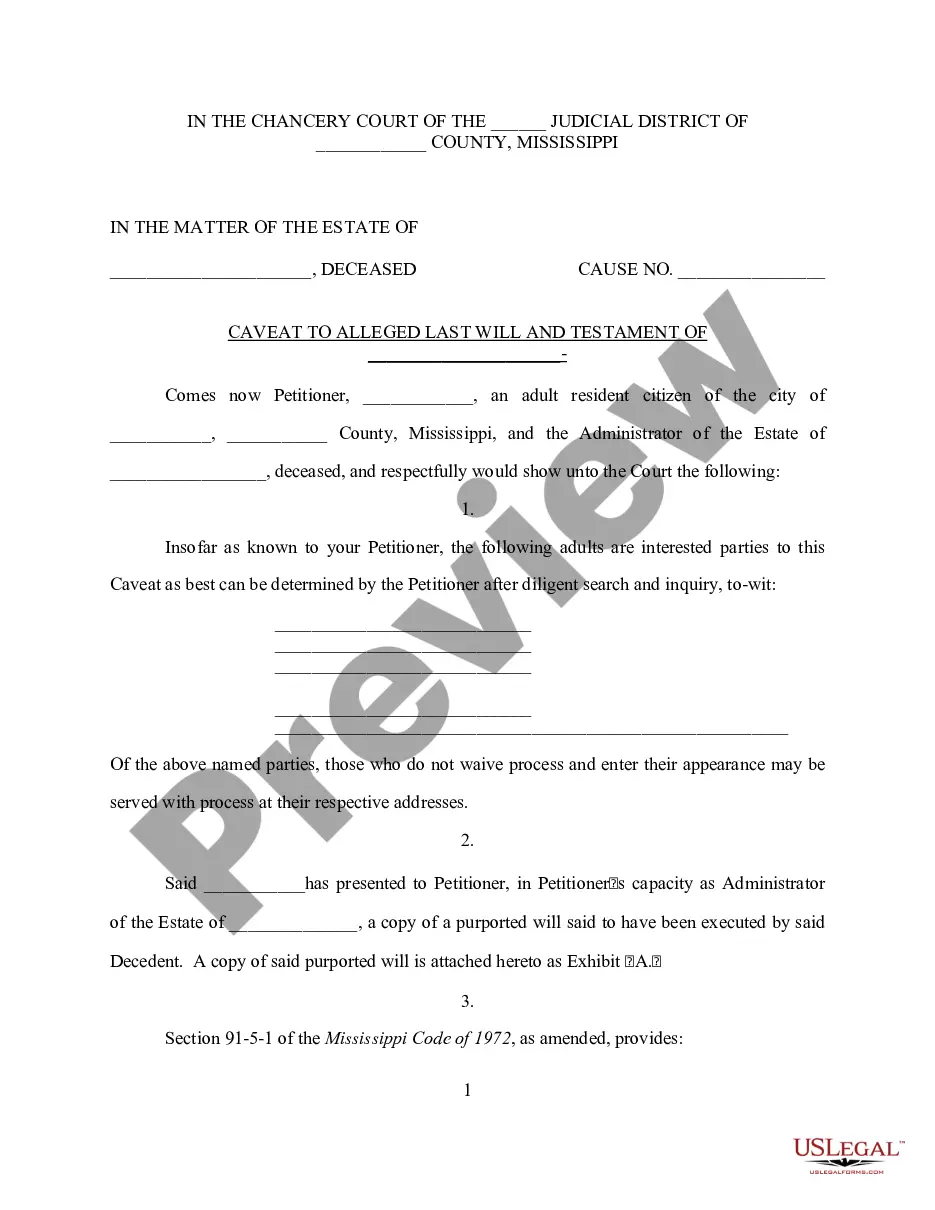
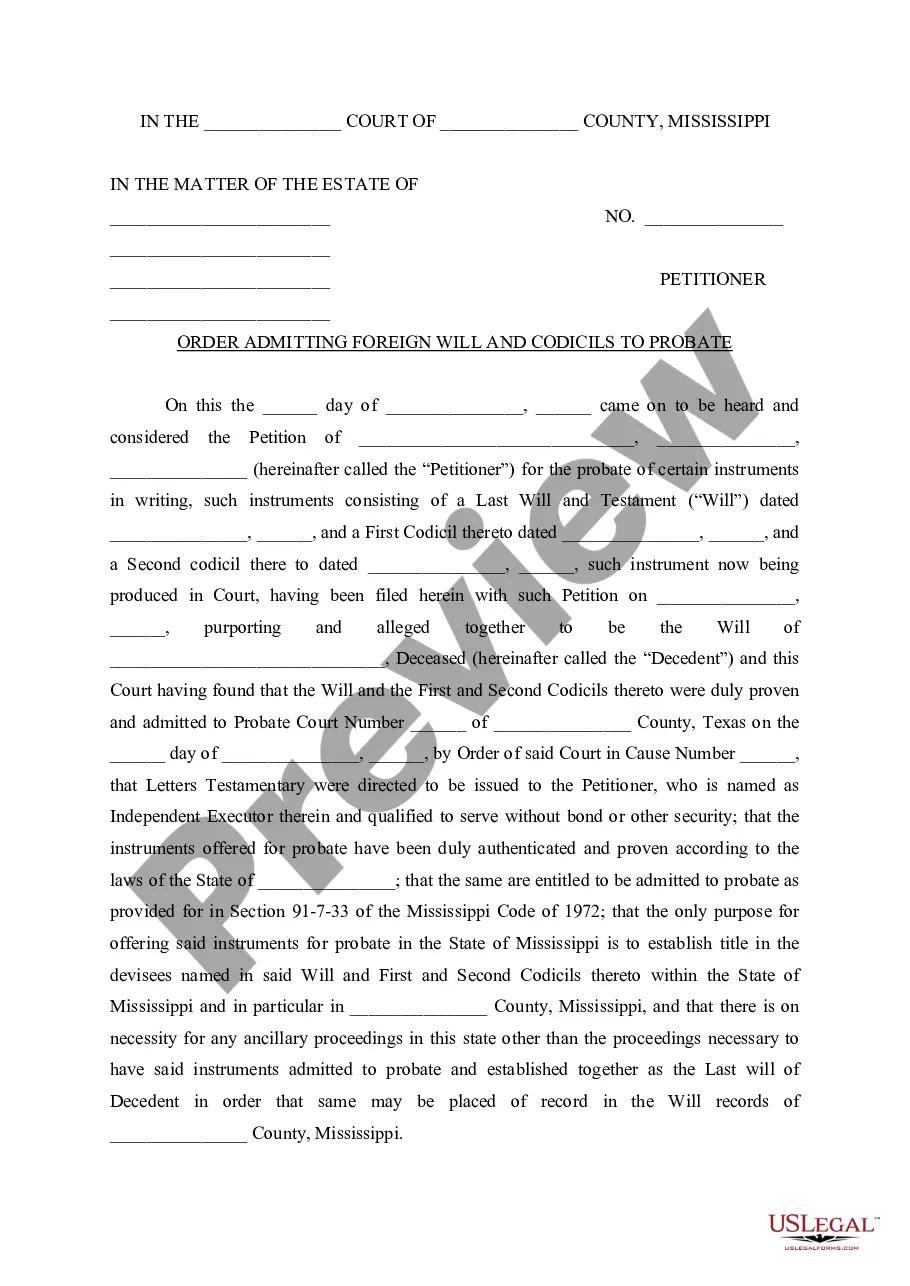
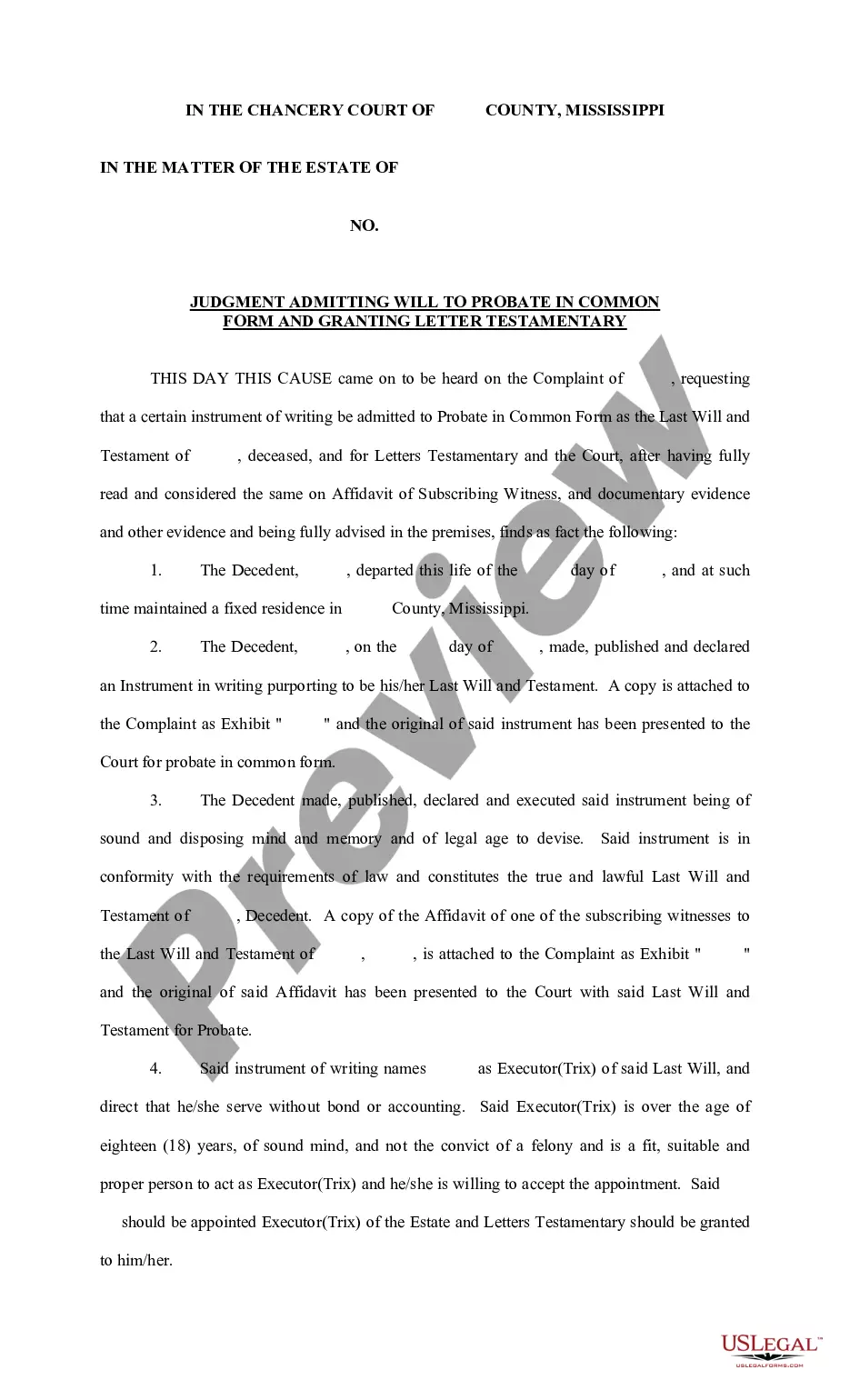
The Order Approving Caveat to Alleged Last Will and Testament is a legal document used in probate cases. This form is typically filed to contest a will when the proponent fails to appear in court or respond to claims regarding the validity of the will. Unlike other probate filings, this order specifically addresses issues surrounding the enforceability of an "alleged" last will, providing clarity to the court on the intentions of the deceased.
Key parts of this document
- Case identification details, including the name of the deceased and cause number.
- Introduction of the parties involved, identifying those with a vested interest in the caveat.
- Details about the alleged will and its compliance with state legal requirements.
- Proof of service to interested parties regarding the caveat.
- Findings of the court regarding the validity of the alleged will.
- Concluding order affirming the caveat and ruling on the admissibility of the will.
Common use cases
This form is used when there is a dispute over the validity of a purported last will and testament, particularly when the individual advocating for the will does not participate in court proceedings. It is crucial in cases where families or interested parties are contesting the distribution of an estate based on the alleged will's authenticity.
Who this form is for
This form is intended for:
- Executors or administrators of an estate who need to address challenges to an alleged will.
- Beneficiaries or heirs who wish to contest the validity of a will in probate court.
- Attorneys representing clients involved in will disputes.
How to complete this form
To complete this form, follow these steps:
- Fill in the names and details of the deceased and the cause number at the top of the form.
- List the interested parties under the appropriate section, identifying who holds a claim to the estate.
- Provide details about the alleged will, including how it fails to meet legal criteria for validity.
- Include proof of service documentation indicating that all parties have been notified.
- Obtain the signature of the Chancellor or presiding judge to finalize the order.
Does this form need to be notarized?
This form does not typically require notarization unless specified by local law. Be sure to check any additional requirements that may apply in your jurisdiction.
Get your form ready online
Our built-in tools help you complete, sign, share, and store your documents in one place.
Make edits, fill in missing information, and update formatting in US Legal Forms—just like you would in MS Word.
Download a copy, print it, send it by email, or mail it via USPS—whatever works best for your next step.
Sign and collect signatures with our SignNow integration. Send to multiple recipients, set reminders, and more. Go Premium to unlock E-Sign.
If this form requires notarization, complete it online through a secure video call—no need to meet a notary in person or wait for an appointment.
We protect your documents and personal data by following strict security and privacy standards.

Make edits, fill in missing information, and update formatting in US Legal Forms—just like you would in MS Word.

Download a copy, print it, send it by email, or mail it via USPS—whatever works best for your next step.

Sign and collect signatures with our SignNow integration. Send to multiple recipients, set reminders, and more. Go Premium to unlock E-Sign.

If this form requires notarization, complete it online through a secure video call—no need to meet a notary in person or wait for an appointment.

We protect your documents and personal data by following strict security and privacy standards.
Avoid these common issues
Here are some common mistakes to avoid when using this form:
- Failing to properly identify all interested parties.
- Not serving the required summons to the opposing party.
- Ignoring the required legal standards for will validity.
- Leaving sections of the form blank or incomplete.
Why use this form online
Benefits of using this form online include:
- Immediate access to legal forms drafted by licensed attorneys.
- The ability to fill out and edit the form conveniently on your device.
- Assurance of compliance with current legal standards and requirements.
- Reduction of errors commonly made in manual processes.
Key takeaways
- The Order Approving Caveat to Alleged Last Will and Testament is crucial for contesting the validity of a will.
- Clear identification of parties and compliance with legal standards is essential.
- Using this form helps clarify the intentions of the deceased and streamlines the probate process.
Looking for another form?
Form popularity
FAQ
A will can also be declared invalid if someone proves in court that it was procured by undue influence. This usually involves some evil-doer who occupies a position of trust -- for example, a caregiver or adult child -- manipulating a vulnerable person to leave all, or most, of his property to the manipulator instead
Yes and each State is different. In NSW you have 12 months from the date of death to lodge a claim in court. In Queensland you have 9 months from the date of death however that is 6 months from the date of death to notify the executor of a claim and another 3 months in which to lodge the claim in court.
It is perfectly possible to contest a Will after a grant of probate has been issued however, for practical and costs reasons, it is always better to challenge a Will before the grant of probate has issued.
In California, the time limit for filing a motion to contest a will approved by probate is 120 days.
Under probate law, wills can only be contested by spouses, children or people who are mentioned in the will or a previous will. When one of these people notifies the court that they believe there is a problem with the will, a will contest begins.
Inheritance act Six months from the issue of the grant of probate. Claim for maintenance Six months from the issue of the grant of probate. Beneficiary making claim against the will 12 years from date of death. Fraud No time limit.
If you resign as executor after having started probate court proceedings, you can submit your resignation to the probate court and provide a written record of what (if anything) you have done. The court will then appoint someone to take your place.
All taxes and liabilities paid from the estate, including medical expenses, attorney fees, burial or cremation expenses, estate sale costs, appraisal expenses, and more. The executor should keep all receipts for any services or transactions needed to liquidate the assets of the deceased.
When it comes to challenging wills, the statute of limitations ensures that someone does not try to claim property years after it has been distributed among the beneficiaries.After this period, you usually cannot challenge the will or try to claim any portion of the deceased's assets.