Michigan Warranty Deed
What is this form?
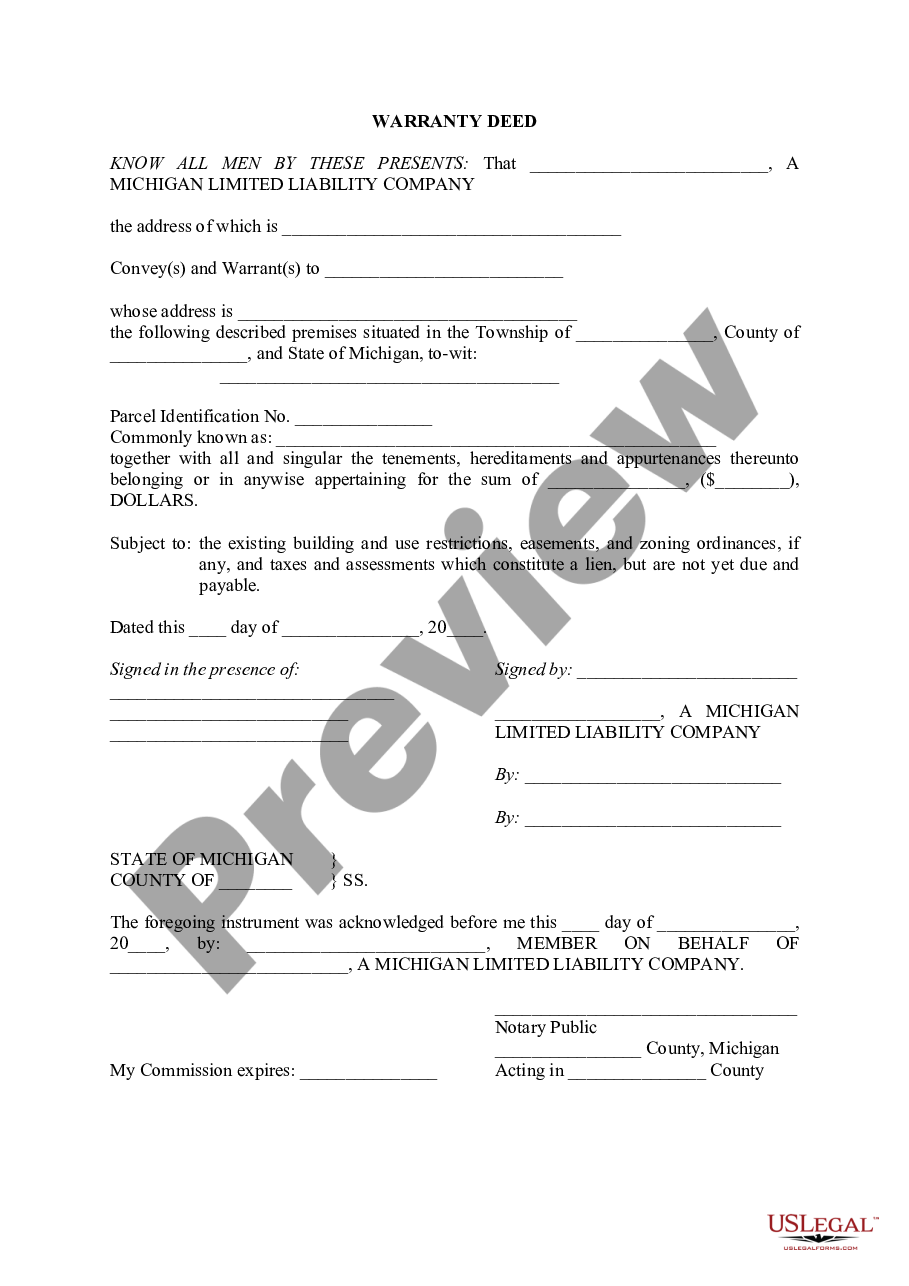
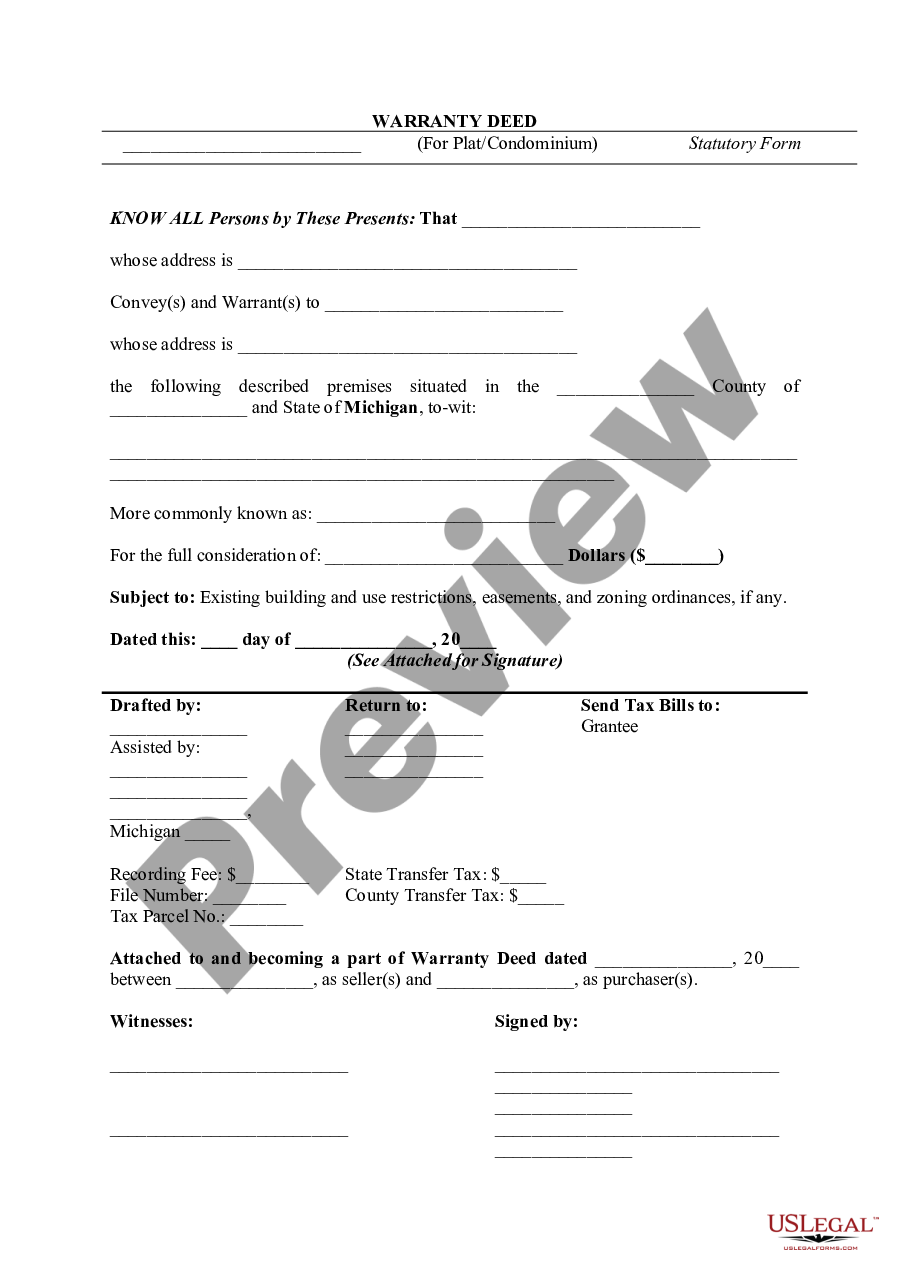
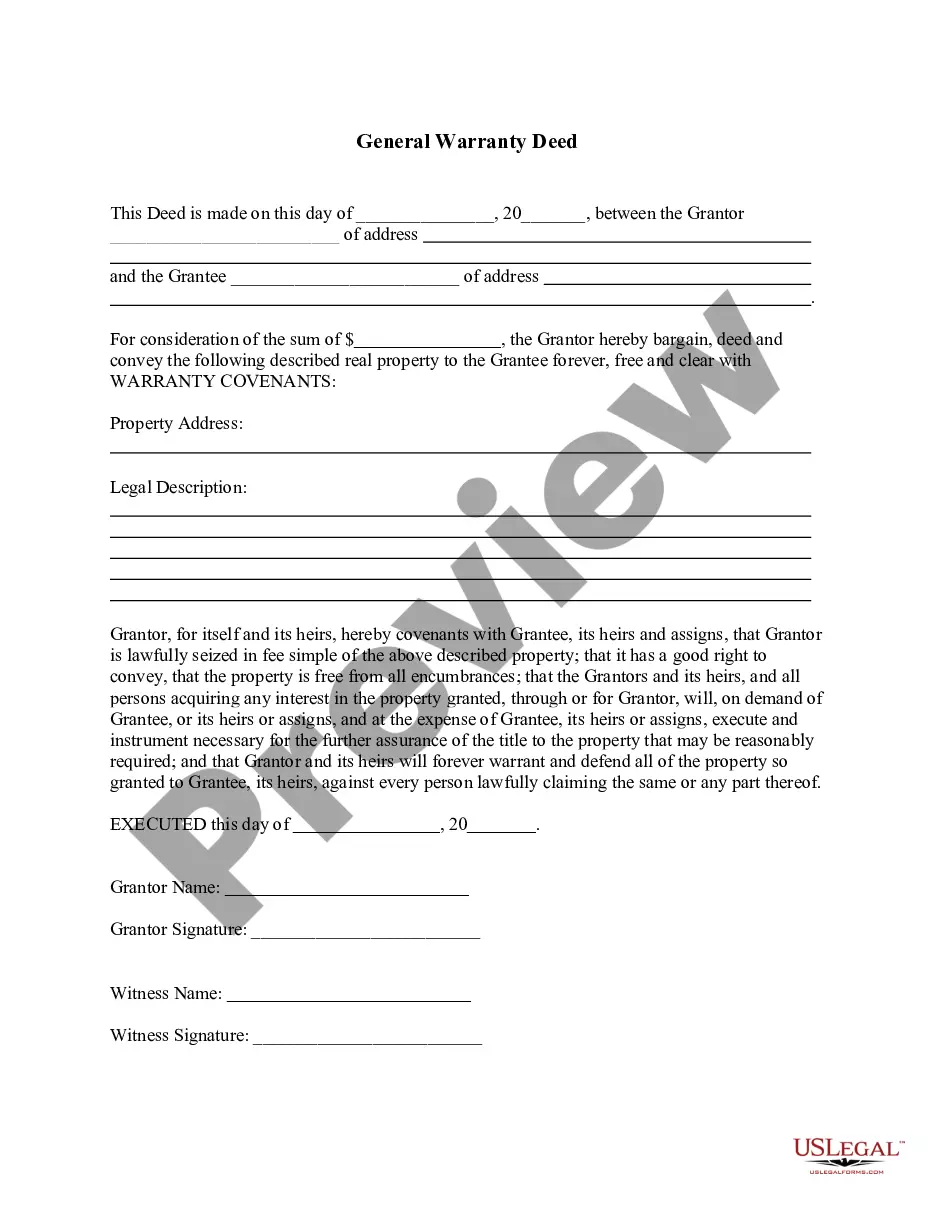
A warranty deed is a legal instrument used to transfer ownership of real property, assuring the grantees that the property is free from any encumbrances other than those explicitly stated. This specific warranty deed features a corporation as the grantor and two individuals as grantees, ensuring that the terms protect the interests of the parties involved in the transaction.
Form components explained
- Identification of the grantor, which is a Michigan limited liability company.
- Names and addresses of the grantees, the individuals receiving the property.
- Description of the property being conveyed, including its location and parcel identification number.
- Purchase price for the property, ensuring financial terms are clear.
- Clauses regarding existing restrictions and liens on the property.
- Acknowledgment and notarization section for verifying the signing of the deed.


When to use this form
This warranty deed should be used when a corporation is transferring property ownership to individuals. It is particularly relevant in real estate transactions involving corporate entities, ensuring that the buyers receive full title and protection against third-party claims.
Who needs this form
- Corporations looking to convey property to individuals.
- Individuals who are purchasing property from a corporate entity.
- Attorneys assisting clients with real estate transactions.
- Anyone needing a legally binding document for real estate transfers in Michigan.
How to complete this form
- Identify the grantor as the Michigan limited liability company and provide its address.
- Insert the names and addresses of the grantees.
- Clearly describe the property being transferred, including the location and parcel identification number.
- Specify the sale amount for the property.
- Have the document signed by the authorized members of the corporation in the presence of a notary public.
- Include the date and complete any necessary acknowledgment sections required by Michigan law.
Is notarization required?
Yes, this form must be notarized to be legally valid. Notarization ensures the authenticity of the signatures and the identities of the parties involved. US Legal Forms offers integrated online notarization services, available 24/7 through secure video calls, making it easy to complete the process without the need to travel.
Get your form ready online
Our built-in tools help you complete, sign, share, and store your documents in one place.
Make edits, fill in missing information, and update formatting in US Legal Forms—just like you would in MS Word.
Download a copy, print it, send it by email, or mail it via USPS—whatever works best for your next step.
Sign and collect signatures with our SignNow integration. Send to multiple recipients, set reminders, and more. Go Premium to unlock E-Sign.
If this form requires notarization, complete it online through a secure video call—no need to meet a notary in person or wait for an appointment.
We protect your documents and personal data by following strict security and privacy standards.

Make edits, fill in missing information, and update formatting in US Legal Forms—just like you would in MS Word.

Download a copy, print it, send it by email, or mail it via USPS—whatever works best for your next step.

Sign and collect signatures with our SignNow integration. Send to multiple recipients, set reminders, and more. Go Premium to unlock E-Sign.

If this form requires notarization, complete it online through a secure video call—no need to meet a notary in person or wait for an appointment.

We protect your documents and personal data by following strict security and privacy standards.
Mistakes to watch out for
- Failing to include complete and accurate property descriptions.
- Not properly identifying the parties involved in the transaction.
- Leaving out required signatures or notary acknowledgments.
- Omitting disclosures about existing liens or restrictions on the property.
Benefits of using this form online
- Convenient access to legally vetted forms tailored for specific needs.
- Editability allows you to easily input your information and terms.
- Reliable legal language ensures compliance with state laws.
- Quick download and printing for immediate use in real estate transactions.
Looking for another form?
Form popularity
FAQ
One potential disadvantage of a warranty deed in Michigan is the liability it places on the seller. If any title issues arise after the sale, the seller may be responsible for resolving them. Additionally, obtaining a Michigan Warranty Deed may sometimes incur higher costs due to the thorough title checks involved. While the benefits often outweigh these risks, it’s essential to consider them when making your decision.
No, a covenant deed is not the same as a warranty deed in Michigan. While both types of deeds transfer property ownership, a warranty deed carries greater assurances regarding title clarity. When you opt for a Michigan Warranty Deed, you secure stronger protection against potential title issues. This can lead to more peace of mind for homeowners and investors.
No, a covenant and a warranty are not the same in Michigan property law. A covenant typically involves promises made regarding the property, while a warranty specifically assures the title's validity. When you consider a Michigan Warranty Deed, you benefit from a promise that guarantees no unseen claims will affect your ownership. This difference can impact your security as a property owner.
Yes, you can prepare your own Michigan Warranty Deed as long as you understand the required elements. Using templates from reputable sources like US Legal Forms can simplify this task by providing you with a structured format and instructions. Always double-check your work to ensure accuracy and compliance with state laws.
While hiring an attorney is not mandatory to file a Michigan Warranty Deed, it can be beneficial, especially for complex transactions. An attorney can help you navigate the legal nuances and ensure that everything is in order. If you prefer a DIY approach, platforms like US Legal Forms can guide you through the process.
To file a Michigan Warranty Deed, you need to submit it to the local county register of deeds office where the property is located. This office maintains official records of property transactions. Make sure to check their specific filing requirements to avoid any issues.
A general warranty deed can be prepared by various professionals, including attorneys and title companies. These experts ensure that the document complies with Michigan laws and accurately reflects the agreement between parties. Alternatively, you can use service platforms like US Legal Forms, which provide templates designed for your needs.
Yes, you can file a Michigan Warranty Deed yourself. However, it is crucial to ensure that all legal requirements are met, as errors may lead to complications later. If you choose to go this route, consider using a reliable platform like US Legal Forms to access templates and guidance.
You can get a copy of your Michigan Warranty Deed from the county register of deeds office where the property is located. Most counties also offer online services where you can search for and request copies of deeds. If you're unsure about the process, you might find it helpful to use US Legal Forms, which provides easy access to necessary documents and instructions for obtaining copies of warranty deeds quickly and efficiently.
To obtain a Michigan Warranty Deed for your property, you will need to prepare the deed document, which includes details about the property and the parties involved. You can either draft this document yourself or use a service like US Legal Forms to ensure compliance with Michigan's requirements. Once the deed is prepared, you must sign it in the presence of a notary public and file it with your county's register of deeds office. This process will secure your ownership and protect your interests.