Mississippi Objection To Probate of Will Due to Caveat
What this document covers
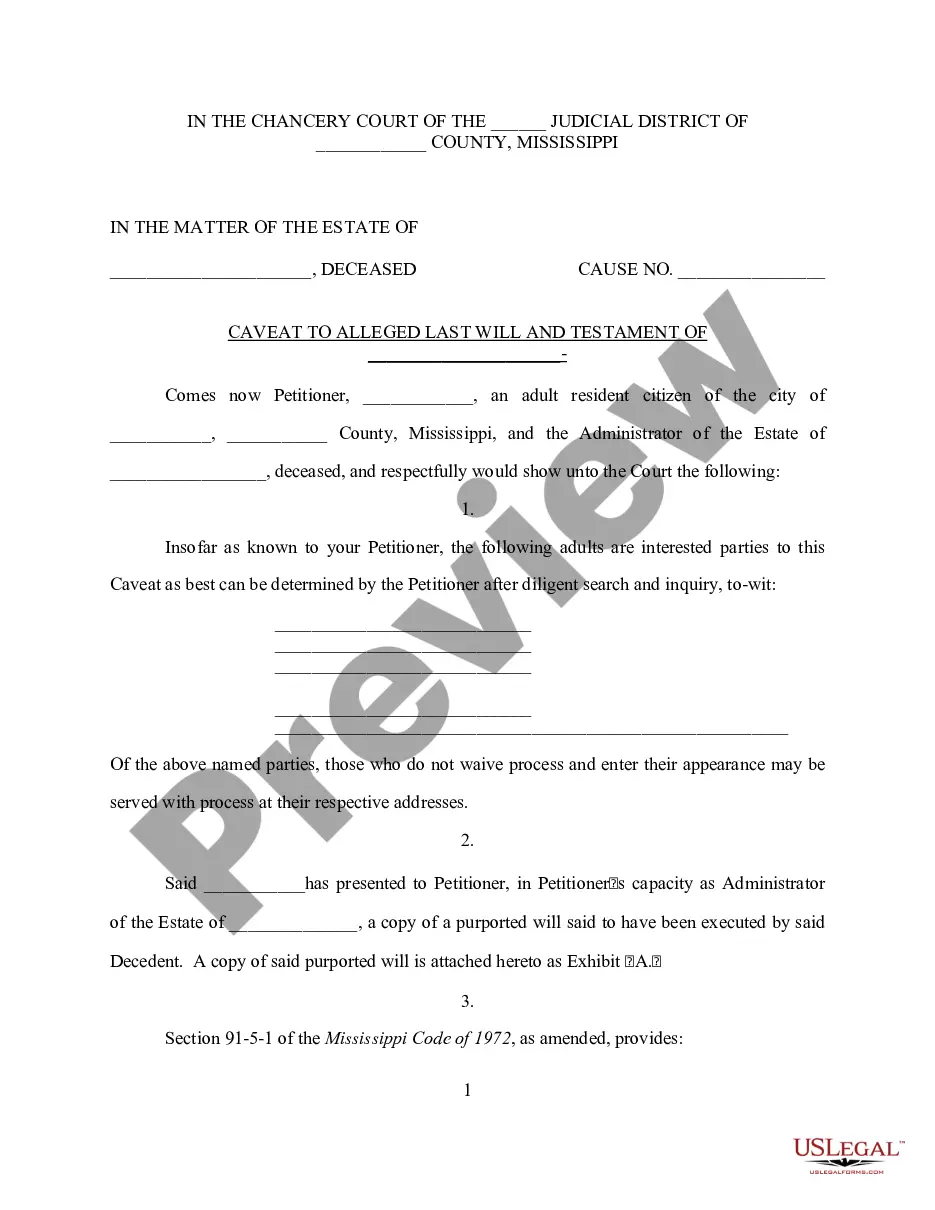
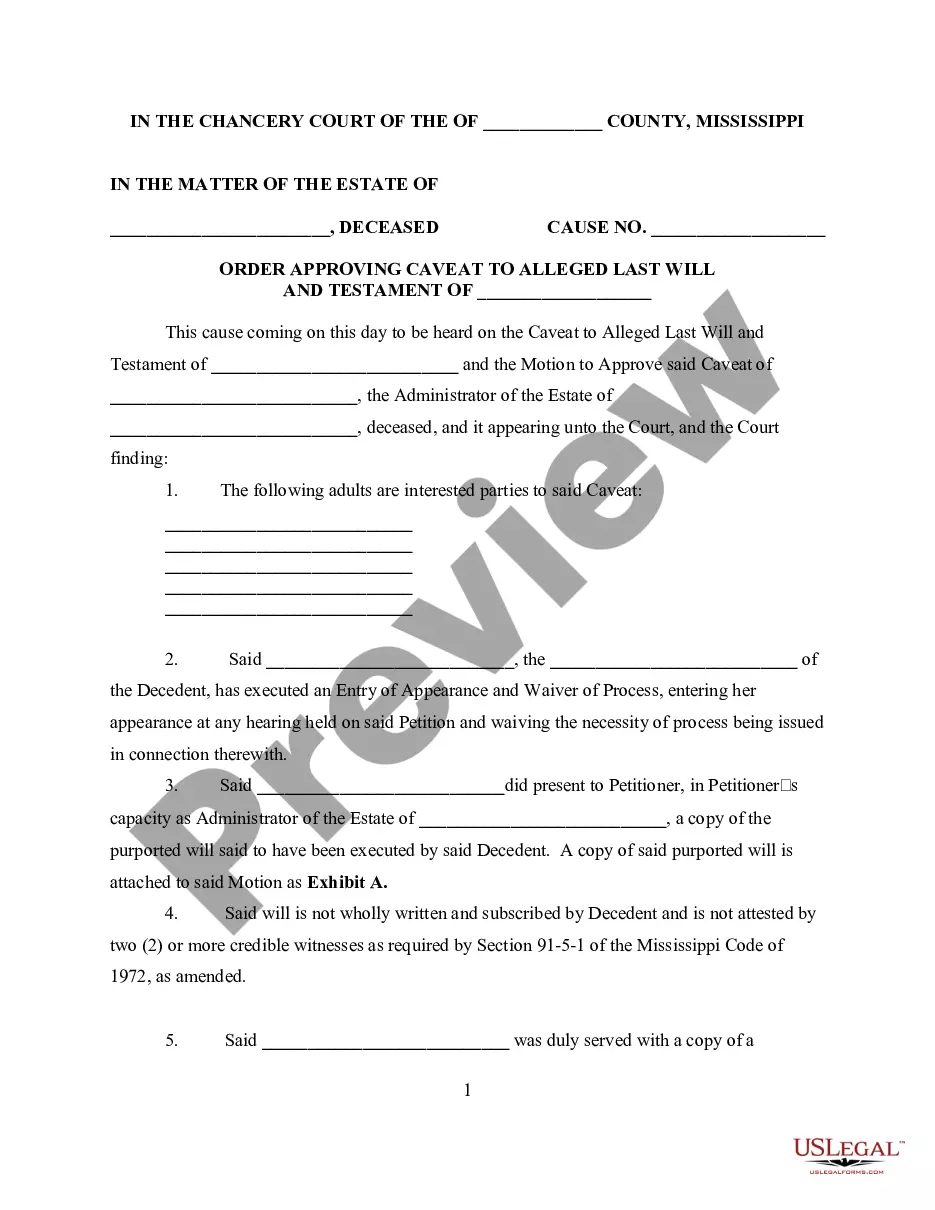
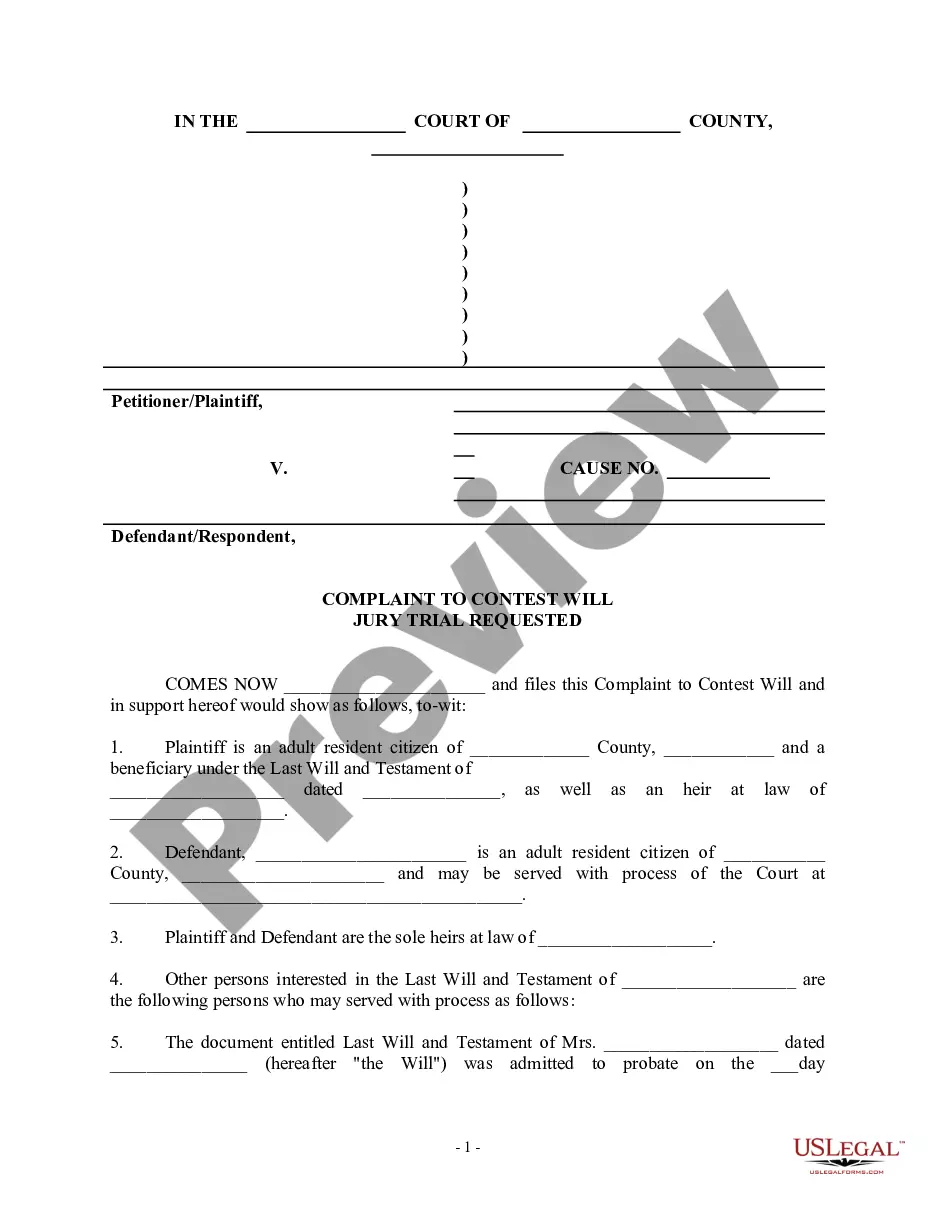
This form is an Objection to Probate of Will Due to Caveat filed by an objector with the Probate Court for a testate estate in Mississippi. This legal document challenges the validity of a purported will, asserting it does not conform to legal requirements, such as improper execution or lack of witness signatures. This form is crucial for individuals contesting a will, allowing them to formally present their objections to the court.
Key parts of this document
- Identification of the Petitioner and the deceased estate
- List of interested parties related to the Caveat
- Presentation of the purported will as an exhibit
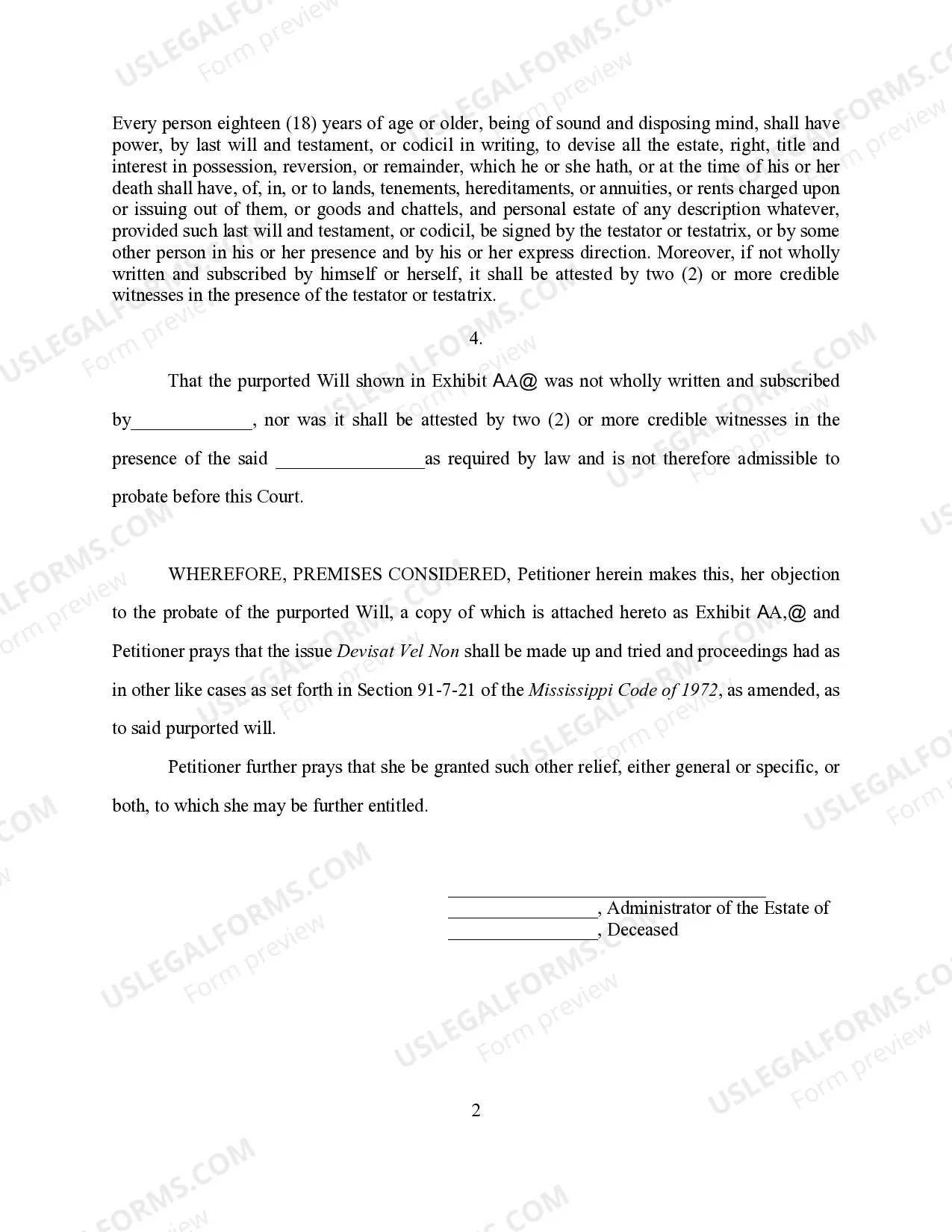
- Citation of relevant Mississippi legal statutes regarding wills
- Grounds for objections to the will as presented
- Prayer for relief, including requests for further court actions
When to use this document
This form is necessary when an individual wishes to contest the probate of a will in Mississippi. It is particularly relevant if the individual believes the will was not executed legally, such as in cases where the necessary witnesses were not present, or the document was not signed correctly. It is ideal to use this form when you want to formally dispute any purported will presented to the probate court.
Who needs this form
This form is designed for:
- Individuals who believe they have valid grounds to contest a will
- Administrators of an estate seeking to ensure proper legal proceedings
- Beneficiaries or heirs of an estate who wish to challenge the legitimacy of a will
Completing this form step by step
To complete this form, follow these steps:
- Identify and enter your name as the Petitioner and your relationship to the deceased.
- List all interested parties who may be involved in the probate proceedings.
- Attach a copy of the purported will as Exhibit A.
- Clearly state the reasons for your objection to the will in accordance with Mississippi law.
- Sign the document in the presence of a notary, if required.
Notarization guidance
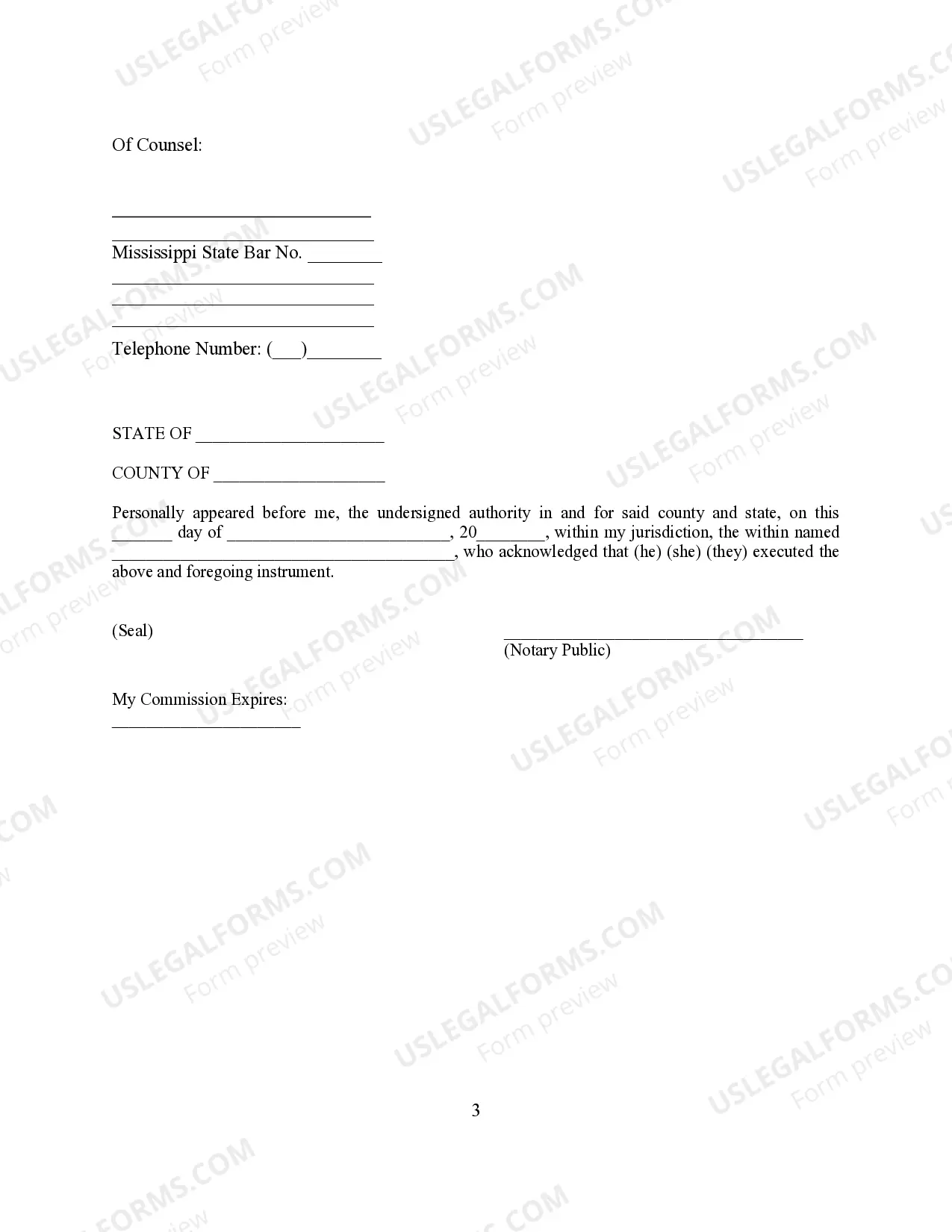
Yes, this form must be notarized to be legally valid. It requires a notary public signature to verify the identity of the Petitioner and attest to the truthfulness of the statements made in the document. US Legal Forms offers integrated online notarization, making it easy to complete the notarization process securely via video call.
Get your form ready online
Our built-in tools help you complete, sign, share, and store your documents in one place.
Make edits, fill in missing information, and update formatting in US Legal Forms—just like you would in MS Word.
Download a copy, print it, send it by email, or mail it via USPS—whatever works best for your next step.
Sign and collect signatures with our SignNow integration. Send to multiple recipients, set reminders, and more. Go Premium to unlock E-Sign.
If this form requires notarization, complete it online through a secure video call—no need to meet a notary in person or wait for an appointment.
We protect your documents and personal data by following strict security and privacy standards.

Make edits, fill in missing information, and update formatting in US Legal Forms—just like you would in MS Word.

Download a copy, print it, send it by email, or mail it via USPS—whatever works best for your next step.

Sign and collect signatures with our SignNow integration. Send to multiple recipients, set reminders, and more. Go Premium to unlock E-Sign.

If this form requires notarization, complete it online through a secure video call—no need to meet a notary in person or wait for an appointment.

We protect your documents and personal data by following strict security and privacy standards.
Common mistakes to avoid
- Failing to properly identify all interested parties involved in the estate.
- Neglecting to attach a copy of the purported will as required.
- Forgetting to include specific objections based on legal grounds.
- Not securing necessary signatures or notarization (if applicable).
Benefits of using this form online
- Convenience of downloading and filling out the form at your own pace.
- Editability allows for easy customization based on individual circumstances.
- Reliability of using a form drafted by licensed attorneys to ensure legal compliance.
Looking for another form?
Form popularity
FAQ
If you managed to get a copy of the will without a lawyer, you should now find one. Show the lawyer the will and state your reasons for wanting to file a legal challenge.To contest the will, you need a valid reason.
The will was not signed and witnessed. State law requires that the testator sign the will, and have it attested to by two or more credible witnesses in the presence of the testator: MS Code § 91-5-1; MS Code A§ 91-5-1. Lack of mental capacity. Undue influence. Fraud.
A will does not have a statute of limitations; however, once a will is admitted into probate, a statute of limitations for contesting the will begins to run.Prior to probate, you can file a caveat with the probate court to block a will at any time up until it is delivered to the court for filing.
Lack of testamentary capacity. Undue influence. Insane delusion. Duress. Fraud. Technical flaws. Forgery. Legal inheritance rights.
The Deceased did not have the necessary mental capacity to make a Will. The Will was not executed in accordance with the legal requirements for a valid Will. The Deceased did not have full knowledge and approval of the contents of the Will. Some fraud/forgery has occured in relation to the Will.
Mississippi probate is usually required if a deceased person died with Mississippi assets in his or her name and those assets do not pass automatically at the person's death.There are some alternatives to probate that may apply in limited circumstances.
In Mississippi, you can make a living trust to avoid probate for virtually any asset you ownreal estate, bank accounts, vehicles, and so on. You need to create a trust document (it's similar to a will), naming someone to take over as trustee after your death (called a successor trustee).
One in four people would mount a legal challenge against a loved one's will if they were unhappy with it, a survey reveals.