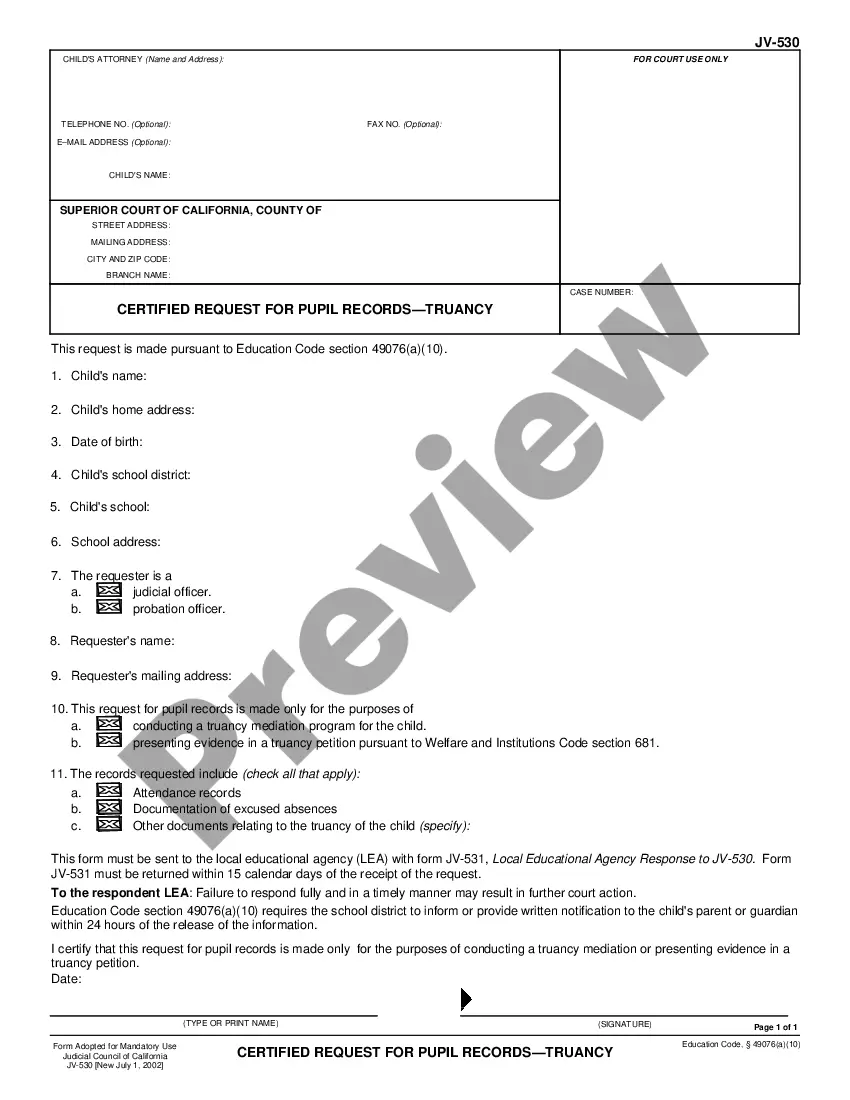
Mississippi Judgment Admitting Will to Probate in Common Form
What is this form?
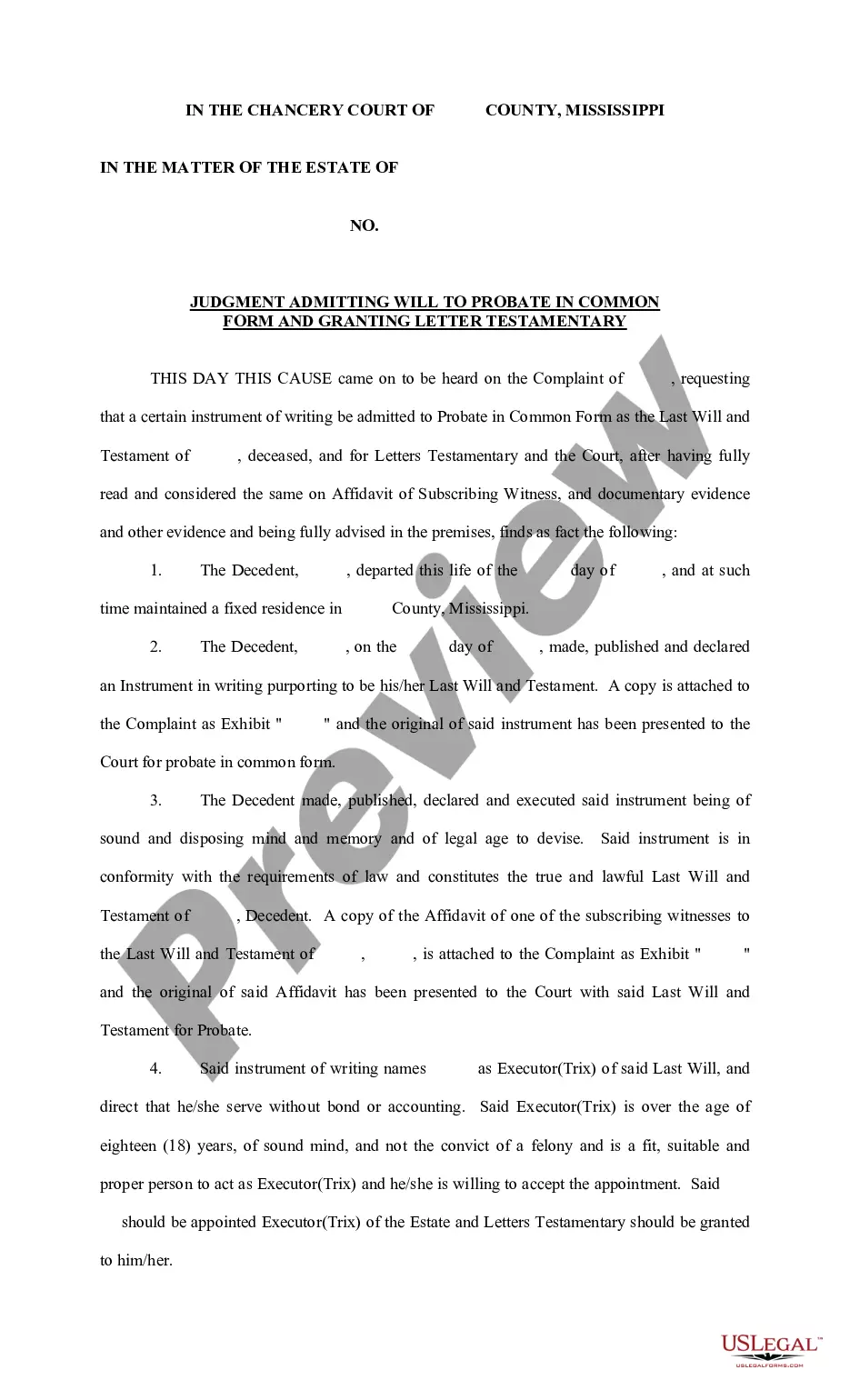
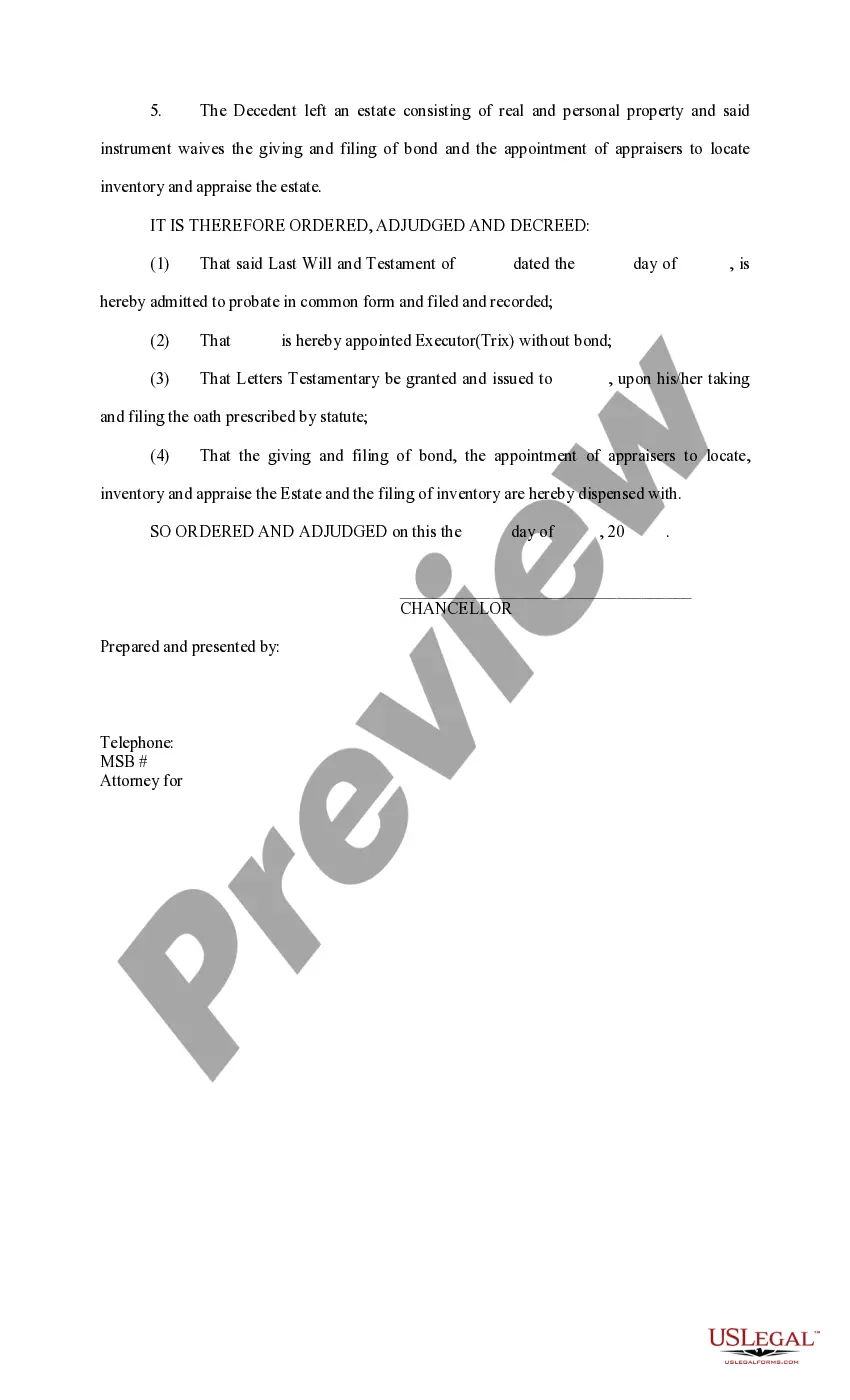
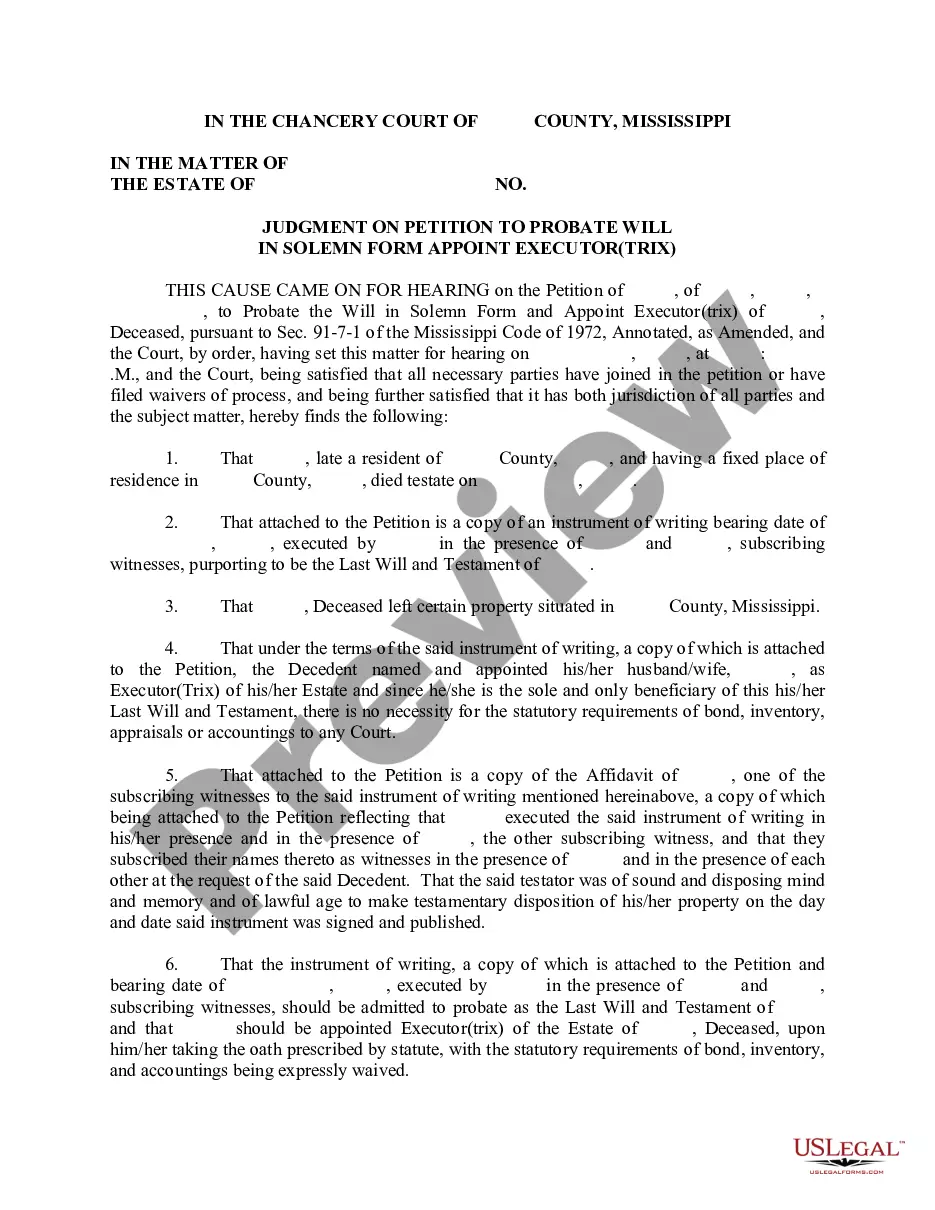
The Judgment Admitting Will to Probate in Common Form is a legal document used to confirm the validity of a will and allow it to be executed through the probate process. This form is specific to admitting a will in common form, which means it does not require a formal trial to establish its validity. Once signed by a judge, this judgment is binding and enables the appointed executor to manage the estate according to the deceased's wishes outlined in the will.
Key parts of this document
- Identification of the deceased individuals and their estate
- Statement of the court's determination regarding the will
- Dispensation of bond requirements
- Authority granted to the executor to proceed with probate

Common use cases
This form should be used when an individual has passed away, leaving a valid will, and the executor or interested parties need to initiate the probate process. It is essential when those involved wish to ensure that the will is accepted and that the estate can be administered as outlined in the document. It also applies in situations where there is no contest to the authenticity of the will.
Who should use this form
This form is intended for:
- Executors or personal representatives of the deceased's estate
- Heirs and beneficiaries named in the will
- Legal professionals assisting with probate matters
Instructions for completing this form
- Identify the deceased by name and date of death.
- Attach the decedent's original will to the form.
- Specify the court's acknowledgement of the will's validity.
- Indicate that bond and appraisers are not required.
- Include the judge's signature and the date signed.
Notarization guidance
Notarization is generally not required for this form. However, certain states or situations might demand it. You can complete notarization online through US Legal Forms, powered by Notarize, using a verified video call available anytime.
Get your form ready online
Our built-in tools help you complete, sign, share, and store your documents in one place.
Make edits, fill in missing information, and update formatting in US Legal Forms—just like you would in MS Word.
Download a copy, print it, send it by email, or mail it via USPS—whatever works best for your next step.
Sign and collect signatures with our SignNow integration. Send to multiple recipients, set reminders, and more. Go Premium to unlock E-Sign.
If this form requires notarization, complete it online through a secure video call—no need to meet a notary in person or wait for an appointment.
We protect your documents and personal data by following strict security and privacy standards.

Make edits, fill in missing information, and update formatting in US Legal Forms—just like you would in MS Word.

Download a copy, print it, send it by email, or mail it via USPS—whatever works best for your next step.

Sign and collect signatures with our SignNow integration. Send to multiple recipients, set reminders, and more. Go Premium to unlock E-Sign.

If this form requires notarization, complete it online through a secure video call—no need to meet a notary in person or wait for an appointment.

We protect your documents and personal data by following strict security and privacy standards.
Common mistakes to avoid
- Failing to attach the original will to the form.
- Not providing all required details, such as the decedent's full name.
- Incorrectly indicating if bond and appraisal requirements are dispensed with.
Why complete this form online
- Convenience of accessing and completing the form from home.
- Editability allows you to easily provide accurate information.
- Access to reliable templates drafted by licensed attorneys.
Legal use & context
- This judgment is enforceable in the jurisdiction where it is issued.
- It allows executors to legally manage and distribute the estate.
- Documentation of the will's validity helps prevent later disputes among heirs.
Quick recap
- The Judgment Admitting Will to Probate is crucial for starting the probate process.
- It confirms the will's validity and allows the executor to manage the estate.
- Complete the form accurately and ensure all details are provided.
Looking for another form?
Form popularity
FAQ
Probate is the term for a legal process in which a will is reviewed to determine whether it is valid and authentic. Probate also refers to the general administering of a deceased person's will or the estate of a deceased person without a will.
There is no requirement that a will or property go through probate, but if the decedent owned property that is not arranged specifically to avoid probate, there is no way for the beneficiaries to obtain legal ownership without it.
Probate is the court-supervised process of authenticating a last will and testament if the deceased made one. It includes locating and determining the value of the person's assets, paying their final bills and taxes, and distributing the remainder of the estate to their rightful beneficiaries.
Mississippi probate is usually required if a deceased person died with Mississippi assets in his or her name and those assets do not pass automatically at the person's death.There are some alternatives to probate that may apply in limited circumstances.
You should include: Probate application form PA1P. Inheritance tax form IHT205 or IHT400. An official copy of the death certificate.
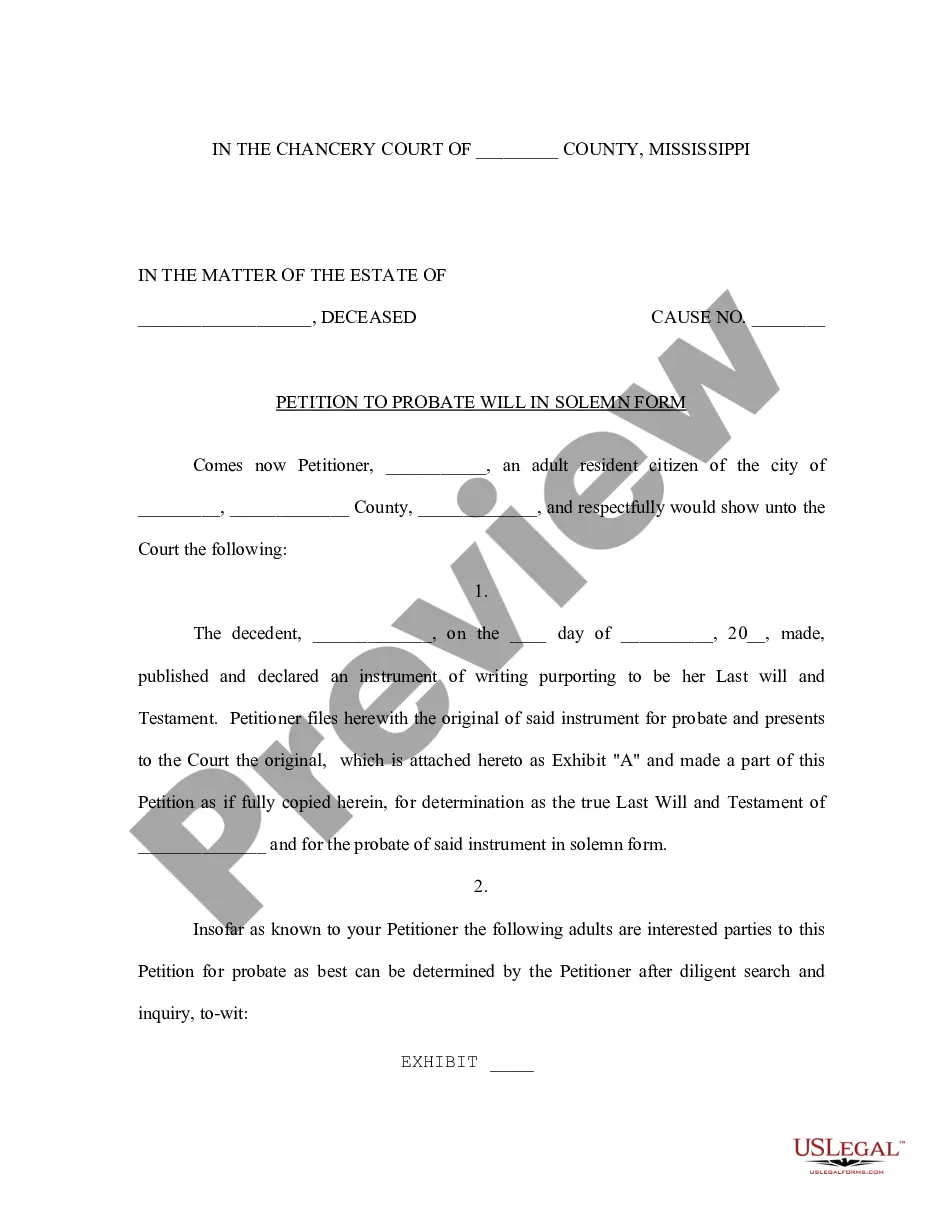
The easiest type of probate is the common form probate. This is the form of probate that one will choose when they do not believe that someone will contest the will. Common form probate does not require notice to either beneficiaries or other persons. It is designed to quickly appoint an executor and pass the property.
: the form of probate of a will where the will is decreed in open court to be the last will and testament after notice to all interested persons and after hearing the testimony of the attesting witnesses.
A will should be offered for probate within five years of a person being appointed the estate's personal representative, or a court order is filed stating that the estate does not require a personal representative or administrator. (Georgia Code § 53-5-3).
In general, there are two types of probate formal and informal. Formal probate is what most people think about when they hear the word probate.