Missouri Letter from Tenant to Landlord about Landlord using Unlawful Self-Help to Gain Possession
Understanding this form
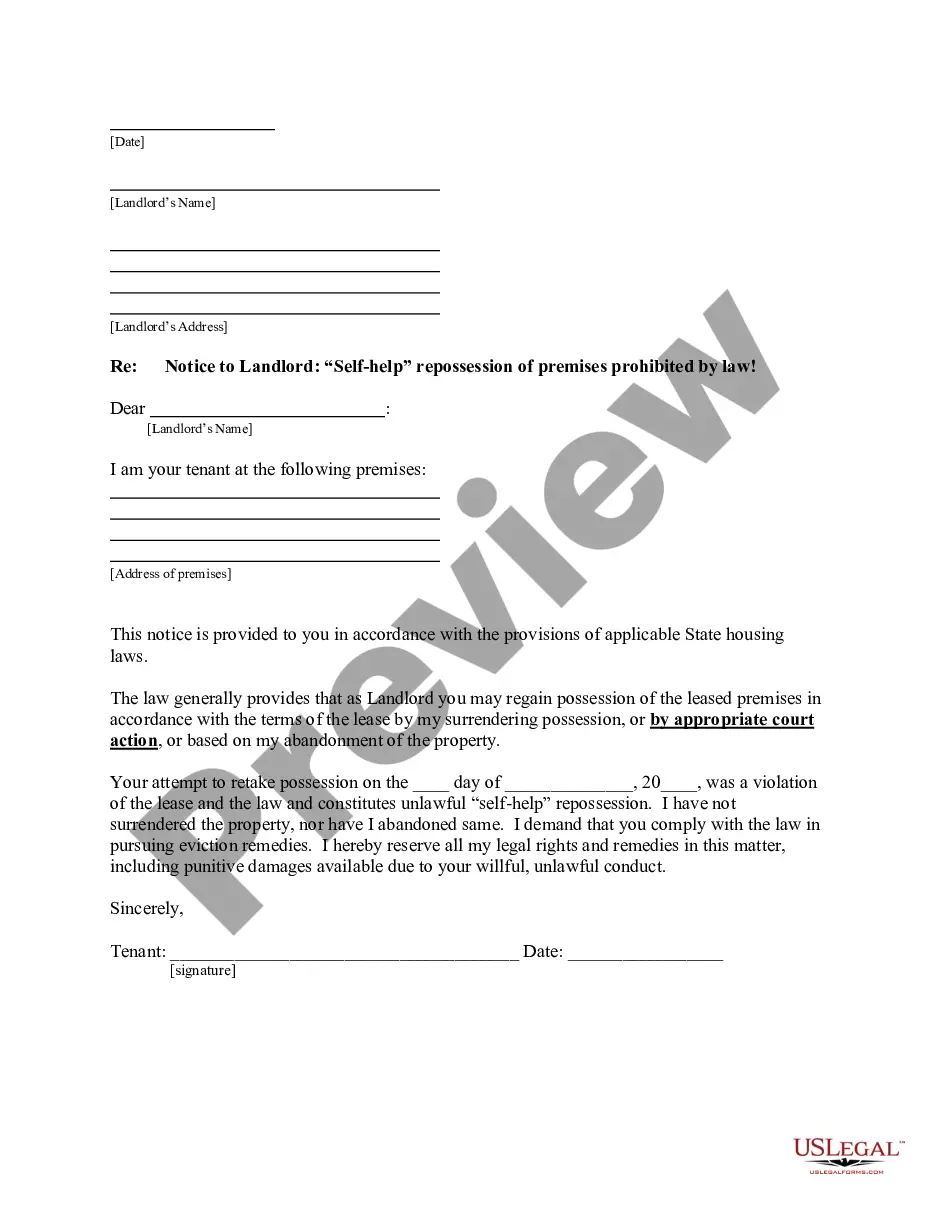
This letter from tenant to landlord about unlawful self-help to gain possession is a formal document used by tenants to address illegal actions taken by landlords. The purpose of this form is to notify the landlord that they are not legally permitted to reclaim possession of the rental property through unauthorized means. Instead, they must follow the proper legal processes as outlined in the lease agreement and state law.
Form components explained
- Identification of the tenant and landlord
- Details of the attempted unlawful possession
- Assertation of tenant's rights and legal protections
- Demand for compliance with legal eviction procedures
- Space for tenant's signature and date
When to use this document
This form should be used when a landlord attempts to regain possession of a rental property without following the legal eviction process. Situations may include a landlord changing locks or removing a tenantâs belongings without a court order. By using this letter, the tenant formally documents the landlordâs illegal actions and asserts their rights.
Who should use this form
- Tenants who feel their landlord is unlawfully trying to regain possession of their rented property
- Individuals who are familiar with their rental lease terms but need to assert their legal rights
- Anyone facing illegal eviction tactics by their landlord
Completing this form step by step
- Identify the tenant and landlord by entering their names and addresses.
- Specify the date when the landlord attempted to regain possession illegally.
- Clearly state that possession has not been surrendered by the tenant.
- Sign and date the letter to formalize the notice.
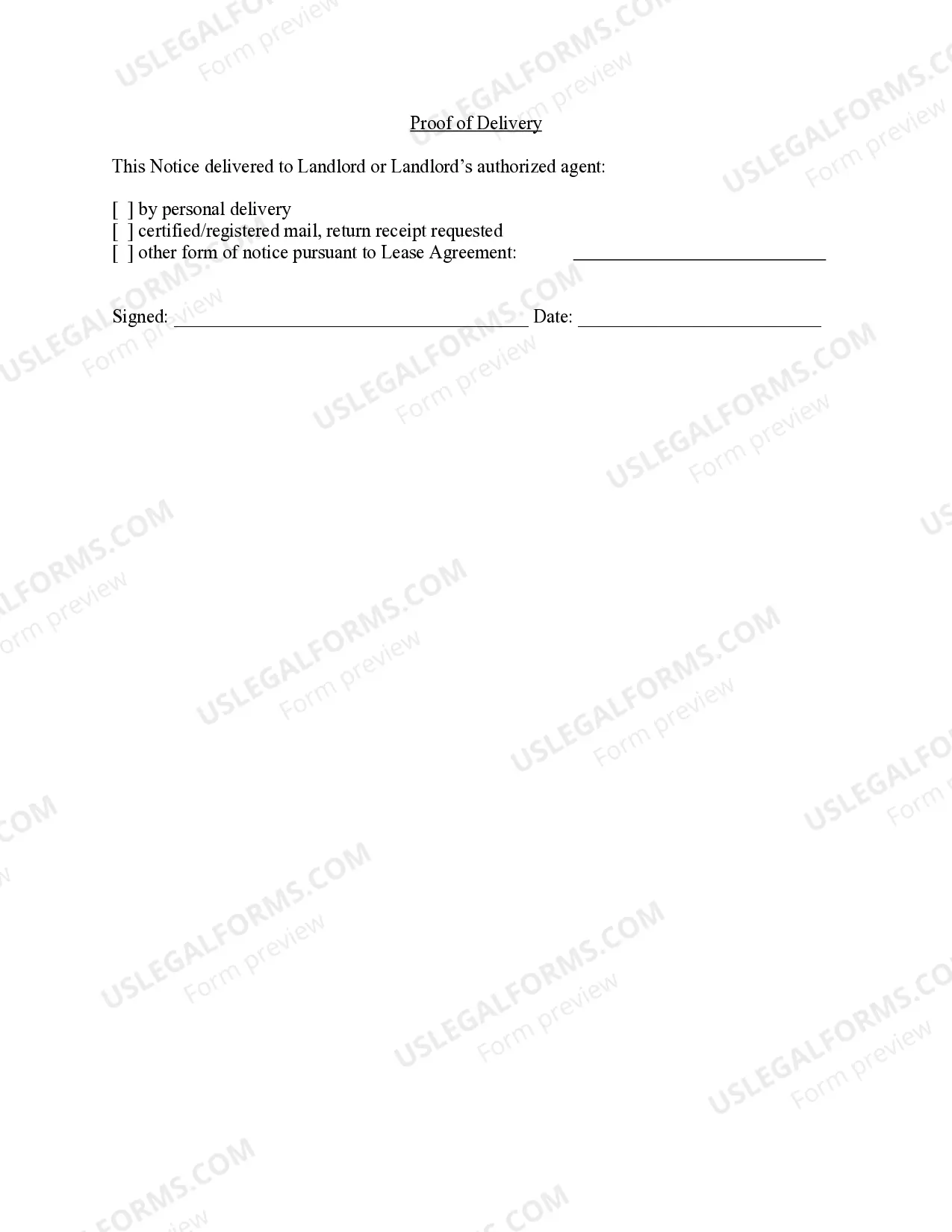
- Deliver the letter to the landlord or their authorized agent.
Is notarization required?
This form does not typically require notarization unless specified by local law. It is advisable to check specific state requirements to ensure compliance.
Get your form ready online
Our built-in tools help you complete, sign, share, and store your documents in one place.
Make edits, fill in missing information, and update formatting in US Legal Forms—just like you would in MS Word.
Download a copy, print it, send it by email, or mail it via USPS—whatever works best for your next step.
Sign and collect signatures with our SignNow integration. Send to multiple recipients, set reminders, and more. Go Premium to unlock E-Sign.
If this form requires notarization, complete it online through a secure video call—no need to meet a notary in person or wait for an appointment.
We protect your documents and personal data by following strict security and privacy standards.

Make edits, fill in missing information, and update formatting in US Legal Forms—just like you would in MS Word.

Download a copy, print it, send it by email, or mail it via USPS—whatever works best for your next step.

Sign and collect signatures with our SignNow integration. Send to multiple recipients, set reminders, and more. Go Premium to unlock E-Sign.

If this form requires notarization, complete it online through a secure video call—no need to meet a notary in person or wait for an appointment.

We protect your documents and personal data by following strict security and privacy standards.
Mistakes to watch out for
- Failing to accurately date the letter.
- Not providing complete and correct names and addresses.
- Omitting the demand for legal compliance.
- Not delivering the letter according to legal requirements.
Benefits of completing this form online
- Convenient access to legally drafted templates anytime.
- Easy to edit with specific details relevant to each situation.
- Reliable format based on legal standards to support your case.
Looking for another form?



Form popularity
FAQ
In Missouri, to claim adverse possession, a party must meet five requirements: continuous possession for at least 10 years, actual possession of the property, open and notorious use, exclusive possession, and adverse use that is not permitted by the true owner. These criteria establish a legal basis for someone to claim ownership of a property under certain conditions. If you are facing issues related to this or suspect unlawful actions by your landlord, consider drafting a Missouri Letter from Tenant to Landlord about Landlord using Unlawful Self-Help to Gain Possession.
A 14/30 notice in Missouri is a formal notification that serves different purposes depending on the context. The 14-day notice typically informs tenants of lease violations, while the 30-day notice is often used for terminating month-to-month leases. Understanding these notices is crucial for both tenants and landlords, especially when considering a Missouri Letter from Tenant to Landlord about Landlord using Unlawful Self-Help to Gain Possession.
help eviction in Missouri occurs when a landlord tries to remove a tenant from a rental property without going through the legal eviction process. This can include actions like changing locks or removing personal belongings. Such practices are illegal under Missouri law, and tenants can protect themselves by documenting these actions and potentially using a Missouri Letter from Tenant to Landlord about Landlord using Unlawful SelfHelp to Gain Possession.
Statute 442.450 in Missouri outlines the rights and responsibilities of landlords and tenants regarding rental agreements. It specifically addresses the prohibition of landlords using unlawful self-help measures to regain possession of rental properties. If a tenant feels their landlord is violating this statute, they may consider using a Missouri Letter from Tenant to Landlord about Landlord using Unlawful Self-Help to Gain Possession to assert their rights.
If you're seeking damages for emotional distress caused by a landlord's discrimination, or punitive damages for especially blatant and intentional discrimination, a lawsuit may well be your best bet. Understand what's involved in suing your landlord. You may file a lawsuit in either federal or state court.
Your landlord discriminates against you. Your landlord takes your security deposit illegally. Your rental unit is inhabitable. The property owner interferes with your right to quiet enjoyment. Your landlord fails to make the necessary repairs.
Order for possession (or 'outright possession order') This means your tenants must leave your property before the date given in the order.You can ask the court to evict them with a 'warrant for possession' if your tenants do not leave your property by the date given.
It is in fact illegal for a landlord or agent to enter the premises without permission from the tenant. Ultimately, a landlord has no right of entry unless the tenant grants access or the landlord is given permission by the courts.
If you have rent arrears, your landlord may try and evict you. This is called seeking possession. To do this, in most cases they will need to follow a procedure which involves getting a court order.your landlord must give you notice to leave your home, this is called a notice of seeking possession or a notice to quit.
Know Your Landlord-Tenant Act. Be Aware of Scams. Get Tenant Insurance. Ask For a Walk-Through Inspection. Read the Lease Agreement. Understand Notices and Eviction Terms. Look Out For Your Safety.