Minnesota Affidavit for Collection of Personal Property for Small Estates
What this document covers
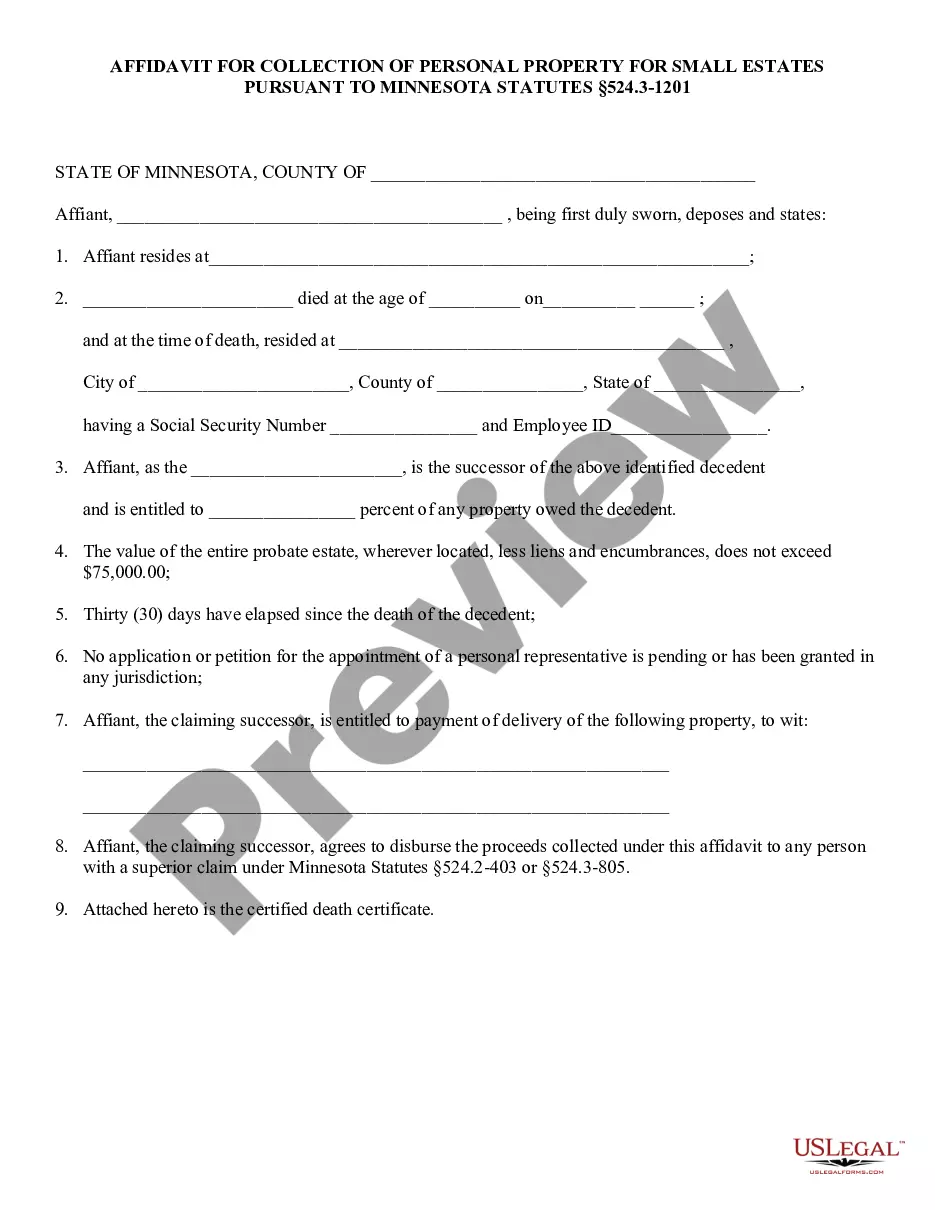
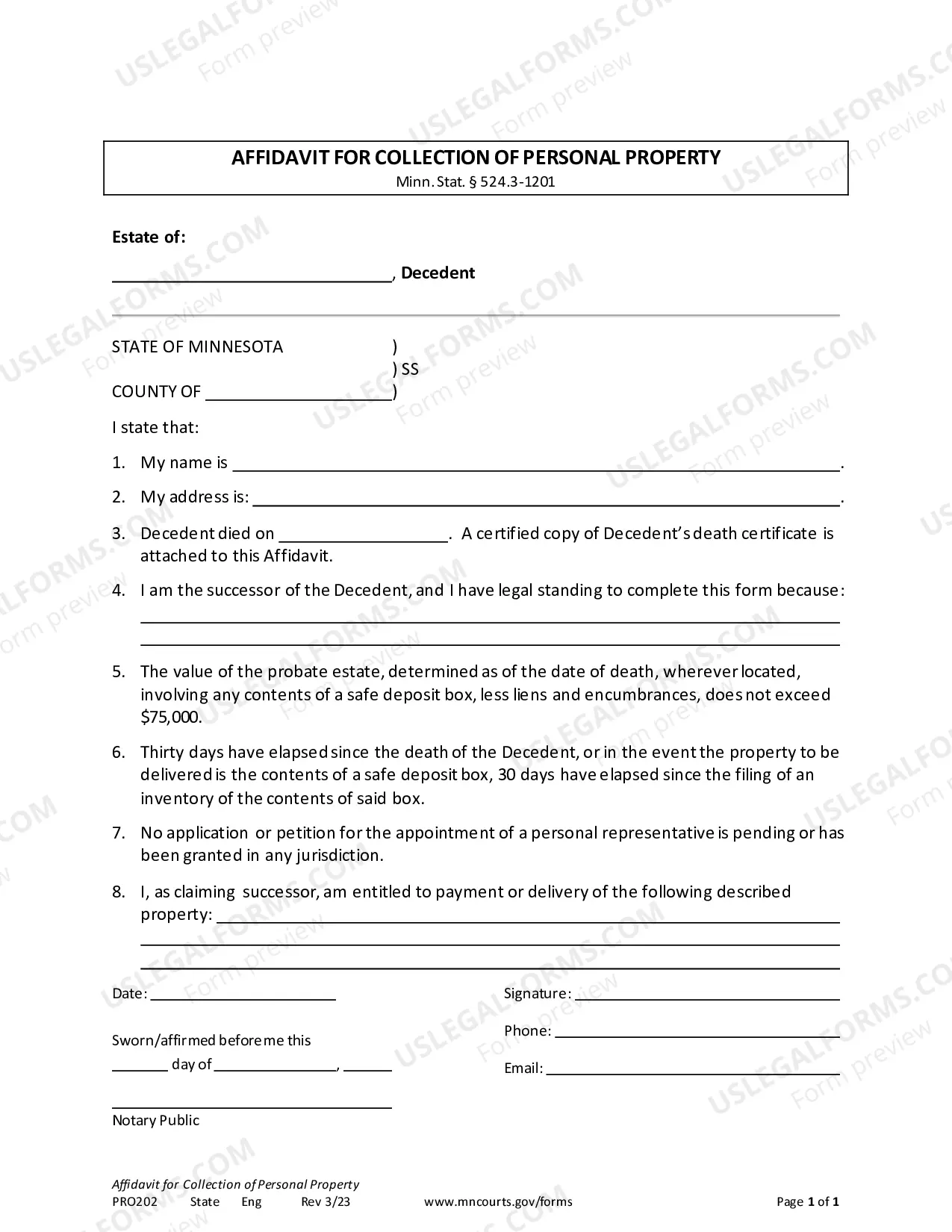
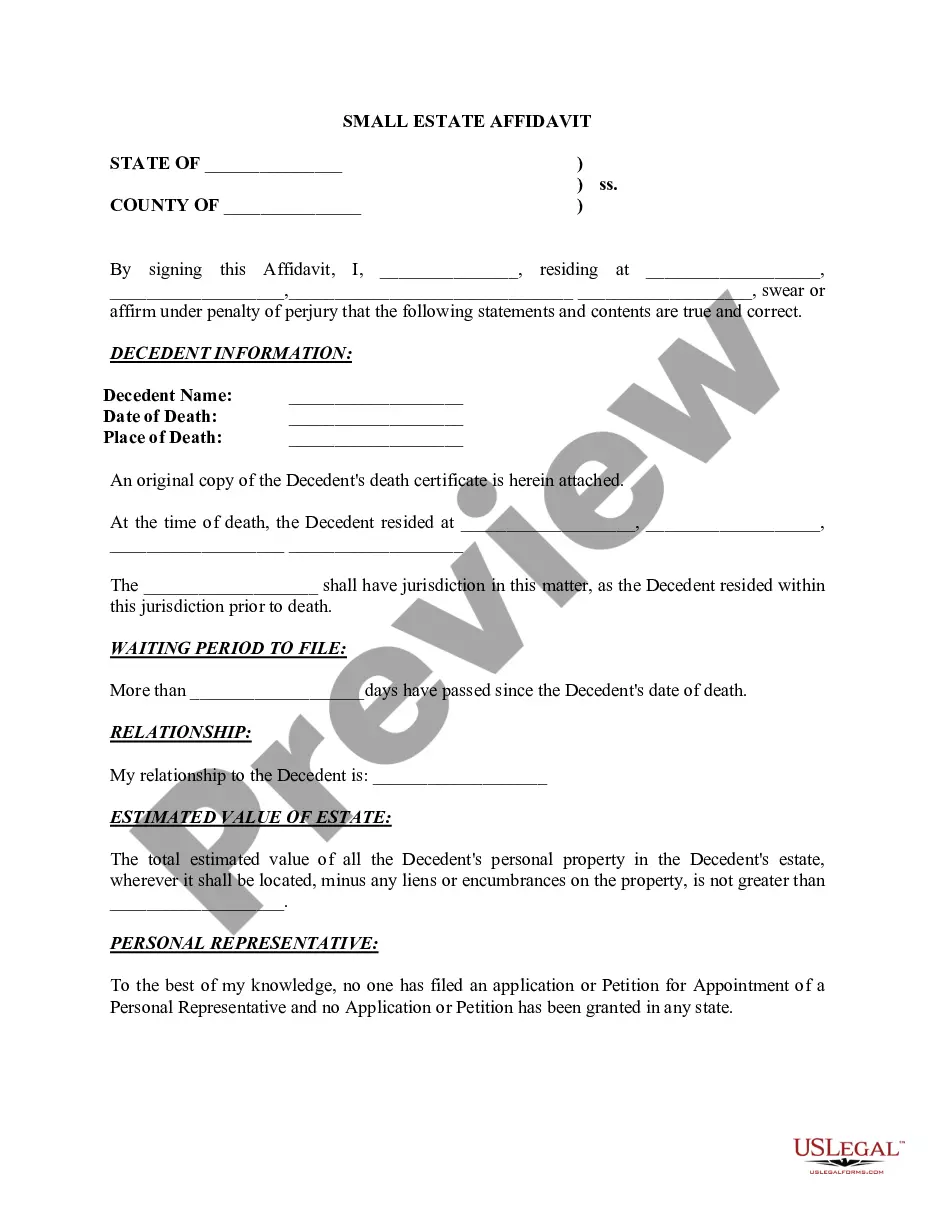
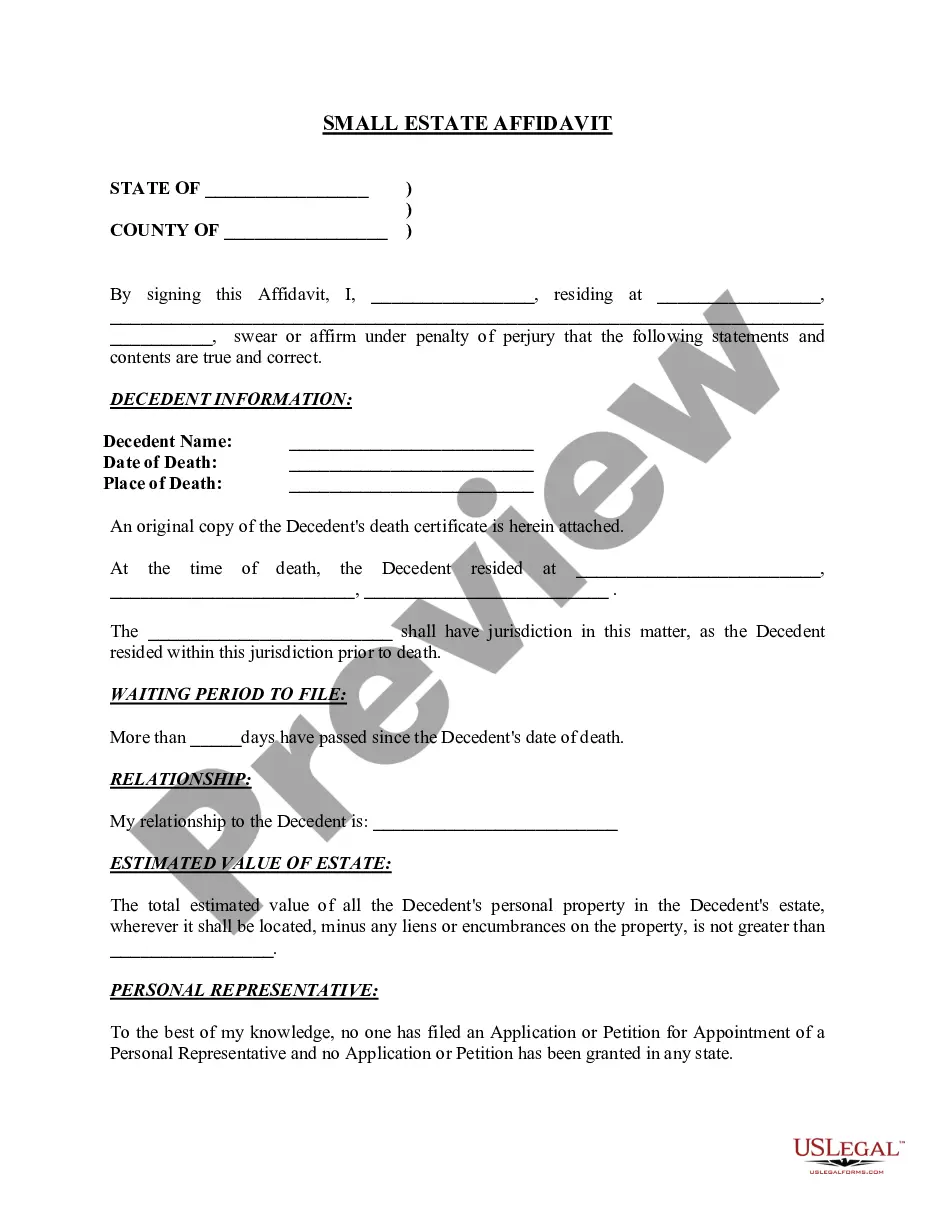
The Affidavit for Collection of Personal Property for Small Estates is a legal document used in Minnesota when the total value of a deceased person's estate does not exceed $75,000. This affidavit allows an interested party to claim property owed to the decedent after thirty days have elapsed since their death. Unlike a full probate process, this form streamlines the collection of personal property by providing a simple way to authenticate and claim assets without the need for lengthy court proceedings.
Key components of this form
- Affiant's name and residence details
- Decedent's identity, age at death, and last known address
- Confirmation of relationship to the decedent and claim to property
- Statement of estate value not exceeding $75,000
- Declaration that no personal representative has been appointed
- Details of property being claimed
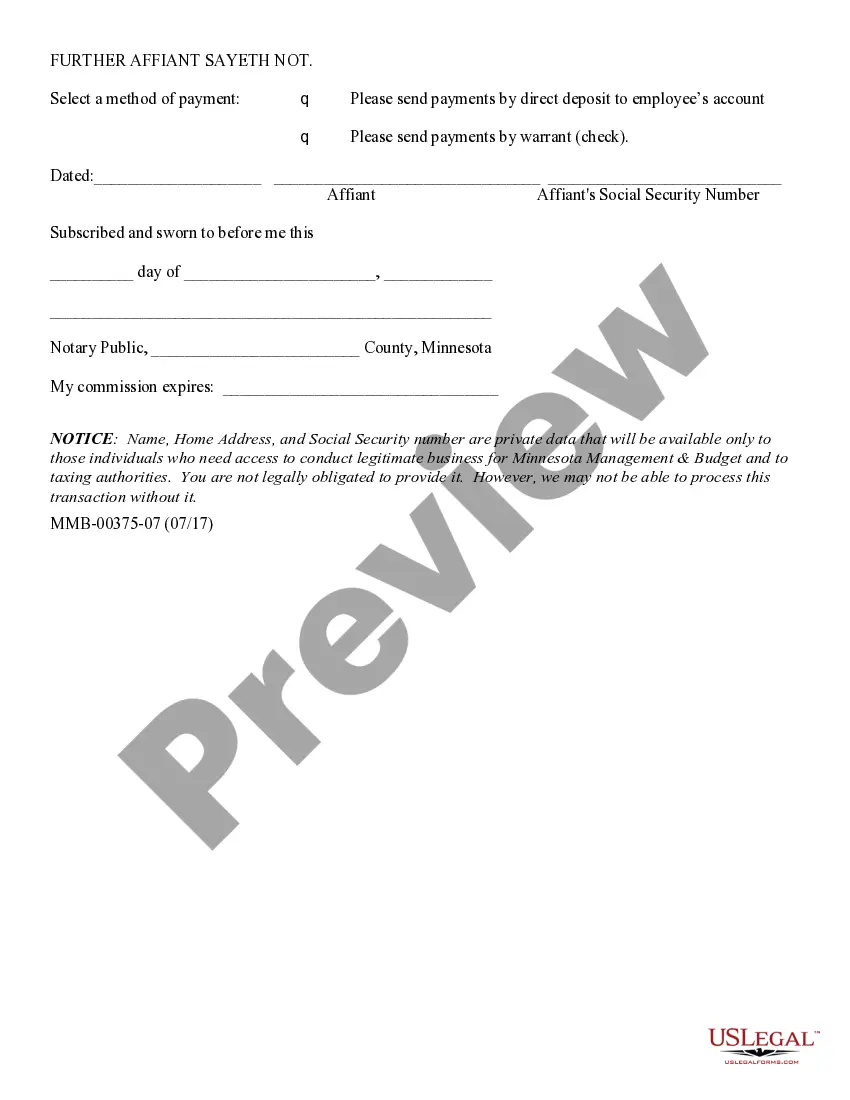
- Affiant's payment method preference
- Signature and notary acknowledgment
Situations where this form applies
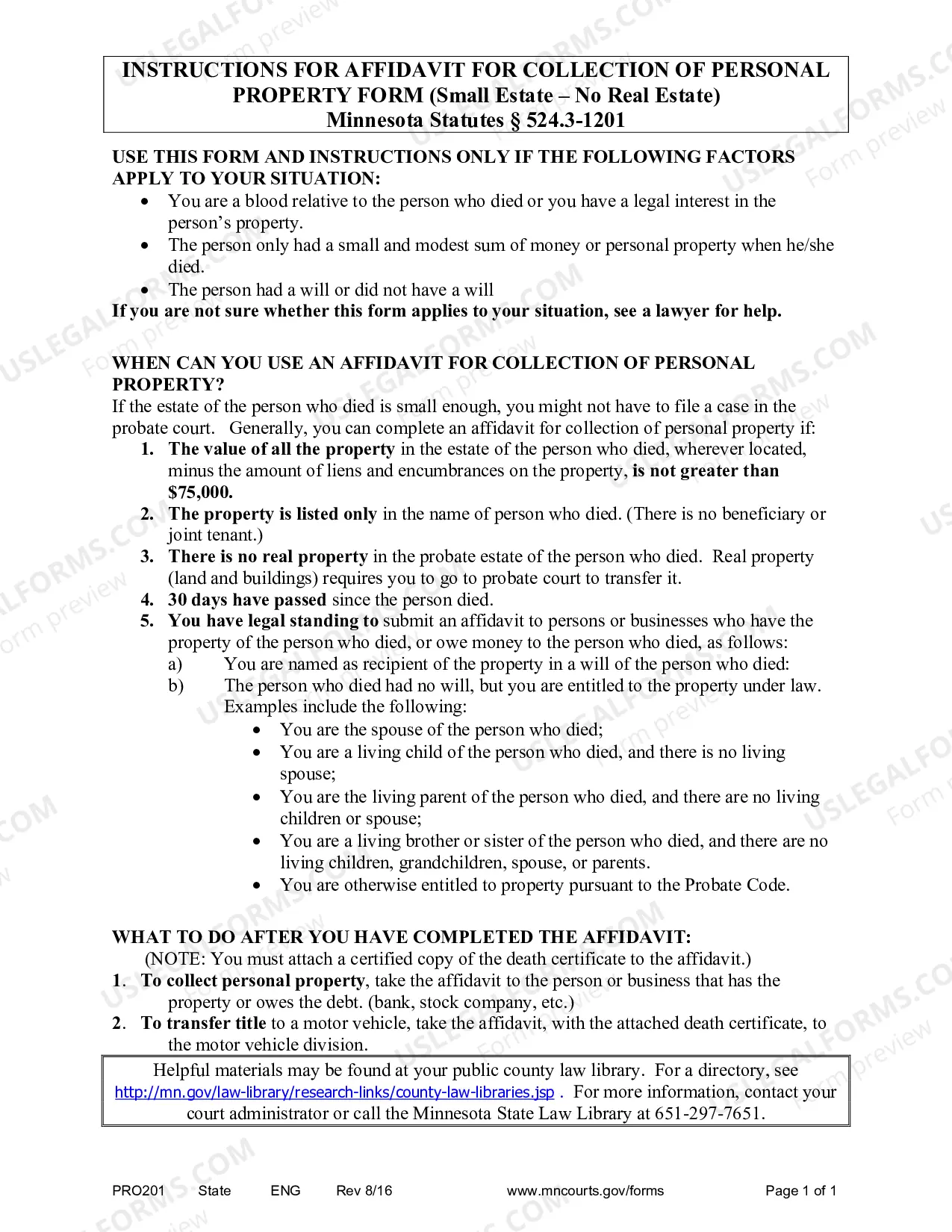
This form should be used when an individual wishes to collect personal property from a small estate. It is appropriate in cases where the total value of the estate is less than $75,000 and at least thirty days have passed since the decedent's death. Common situations include settling debts owed to the deceased or accessing property that needs to be divided among heirs or beneficiaries without going through the full probate process.
Who this form is for
This affidavit is primarily intended for:
- Surviving spouses of the decedent
- Heirs and beneficiaries named in a will
- Any individual with a legal right to claim property from the estate
Instructions for completing this form
- Identify yourself as the affiant by entering your name and address.
- Provide the decedent's details including name, age, and last address.
- Confirm your relationship to the decedent and the percentage of the estate you are entitled to.
- Ensure the total estate value is stated and does not exceed $75,000.
- List the property you are claiming on behalf of the decedent.
- Sign the affidavit in the presence of a notary public and ensure it is notarized.
Is notarization required?
Yes, this form must be notarized to be legally valid. It is important that your signature is witnessed by a notary public to ensure compliance with Minnesota state laws. US Legal Forms provides an easy-to-use online notarization service that is available 24/7, allowing you to complete this step quickly and securely.
Get your form ready online
Our built-in tools help you complete, sign, share, and store your documents in one place.
Make edits, fill in missing information, and update formatting in US Legal Forms—just like you would in MS Word.
Download a copy, print it, send it by email, or mail it via USPS—whatever works best for your next step.
Sign and collect signatures with our SignNow integration. Send to multiple recipients, set reminders, and more. Go Premium to unlock E-Sign.
If this form requires notarization, complete it online through a secure video call—no need to meet a notary in person or wait for an appointment.
We protect your documents and personal data by following strict security and privacy standards.

Make edits, fill in missing information, and update formatting in US Legal Forms—just like you would in MS Word.

Download a copy, print it, send it by email, or mail it via USPS—whatever works best for your next step.

Sign and collect signatures with our SignNow integration. Send to multiple recipients, set reminders, and more. Go Premium to unlock E-Sign.

If this form requires notarization, complete it online through a secure video call—no need to meet a notary in person or wait for an appointment.

We protect your documents and personal data by following strict security and privacy standards.
Typical mistakes to avoid
- Failing to provide complete and accurate information about the decedent.
- Neglecting to include the required notary signature.
- Overstating the total value of the estate.
- Not waiting the required thirty days after the decedent's death.
Why complete this form online
- Convenient downloads that save time and effort.
- Editability allows for easy adjustments before finalizing.
- Reliability in having forms drafted by licensed attorneys.
Key takeaways
- The affidavit simplifies the process of claiming property from small estates in Minnesota.
- Ensure the estate value does not exceed $75,000 and that thirty days have passed since the death.
- Gather all necessary information about both yourself and the decedent to avoid common errors.
Looking for another form?
Form popularity
FAQ
Minnesota Small Estate Affidavit - EXPLAINED - YouTube YouTube Start of suggested clip End of suggested clip Before we go where can you find legal documents. Online click the button to the right for aMoreBefore we go where can you find legal documents. Online click the button to the right for a minnesota small state affidavit.
A. See Minnesota Statutes, section 524.3-1201. The affidavit can collect the decedent's personal property in safe deposit boxes, interests in multiple-party accounts, and debts owed to the decedent. See Minnesota Statutes, sections 524.3-1201, 55.10, and 524.6-207.
Minnesota small estate affidavit is a legal form used in estates valued and under $75,000. Minnesota statute 524.3-1201 tells us that this dollar amount is the threshold level by which an estate in Minnesota does or does not need to be probated.
Under Minnesota statute, where as estate is valued at not more than $75,000, an interested party may, thirty (30) days after the death of the decedent, issue a small estate affidavit to collect any debts owed to the decedent.
How to Write (1) Name Of Minnesota Deceased.(2) County Of Minnesota Deceased.(3) Name of Minnesota Petitioner.(4) Address Of Minnesota Petition. (5) Date Of Minnesota Decedent Death.(6) Basis For Minnesota Petitioner Claim.(7) Minnesota Decedent Estate Assets.(8) Signature Date Of Minnesota Petitioner.
An heir can use a small-estate affidavit if the estate's worth is below the $75,000 limit set by Minnesota law.
Affidavit of No-Probate (PS2071) is used by one or more heirs at law (adult children, parents, siblings), who affirm they have the authority to represent all heirs and that the estate is not subject to probate. The applicant's signature must be notarized or witnessed.
An affidavit for collection is a procedure that transfers assets of estates that would otherwise be probated and that have a net value of under $75,000. With the affidavit, there is no court appearance, no personal representative appointed, and no mailed notification to interested parties.