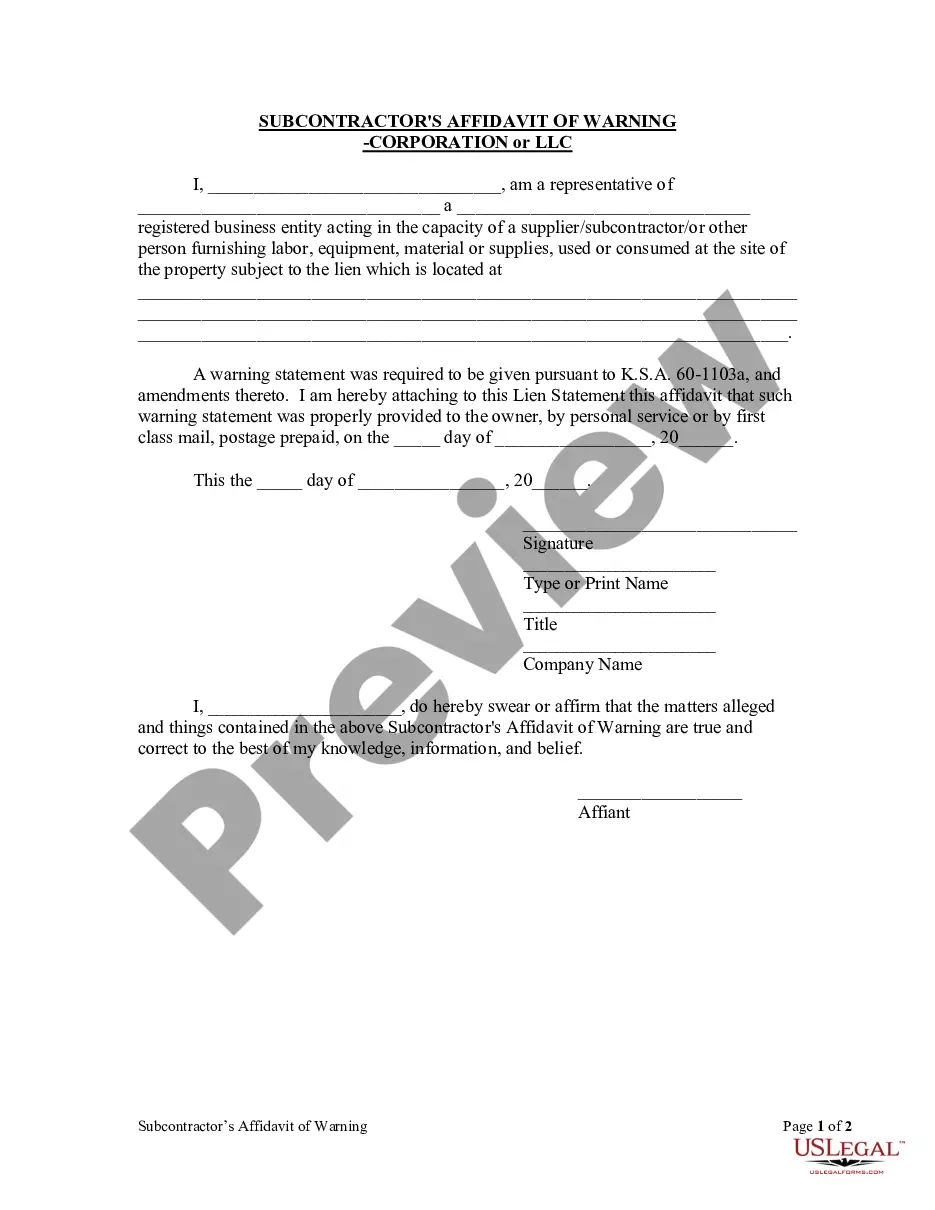
Checklist of Matters to be Considered in Drafting Contract Between Advertiser and Advertising Agency
What is this form?
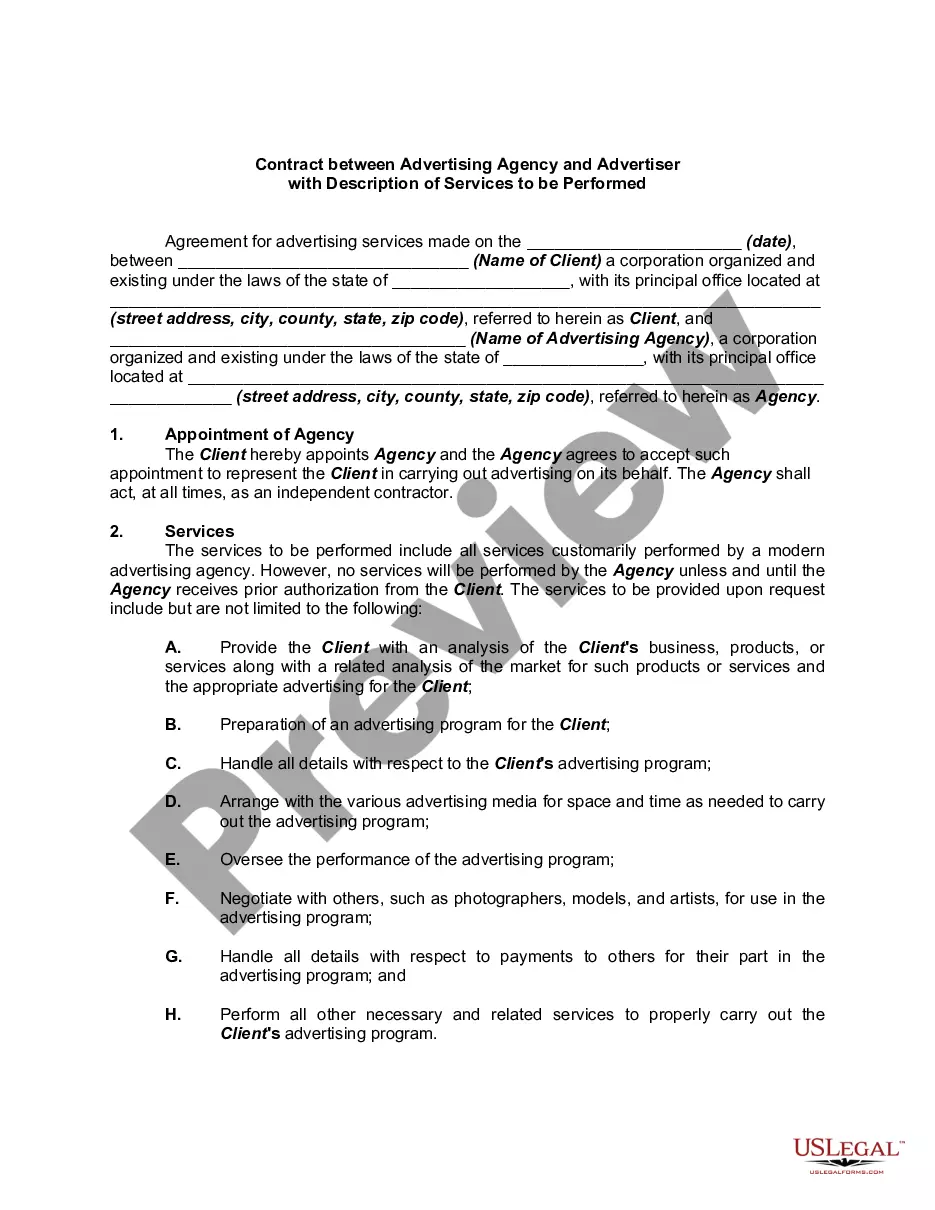
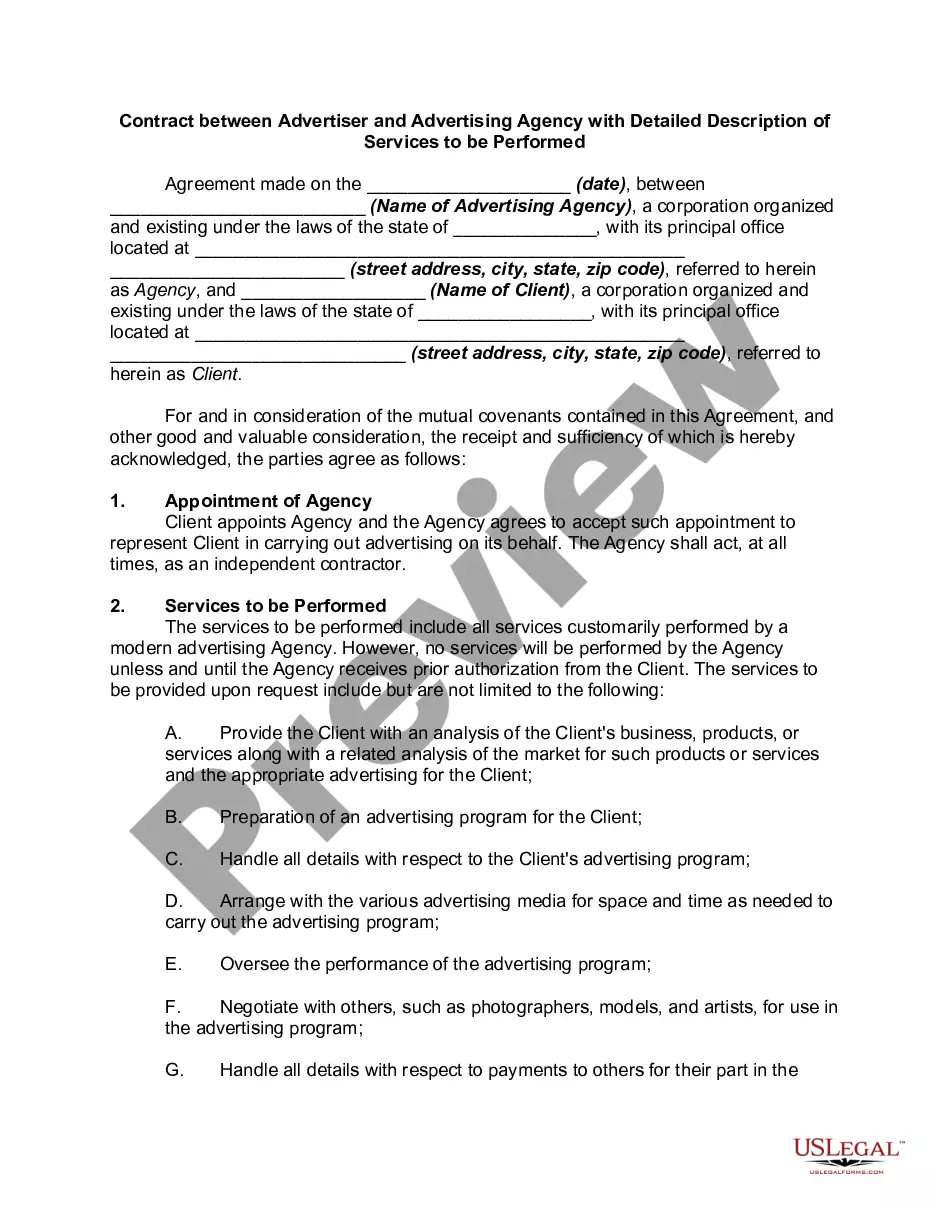
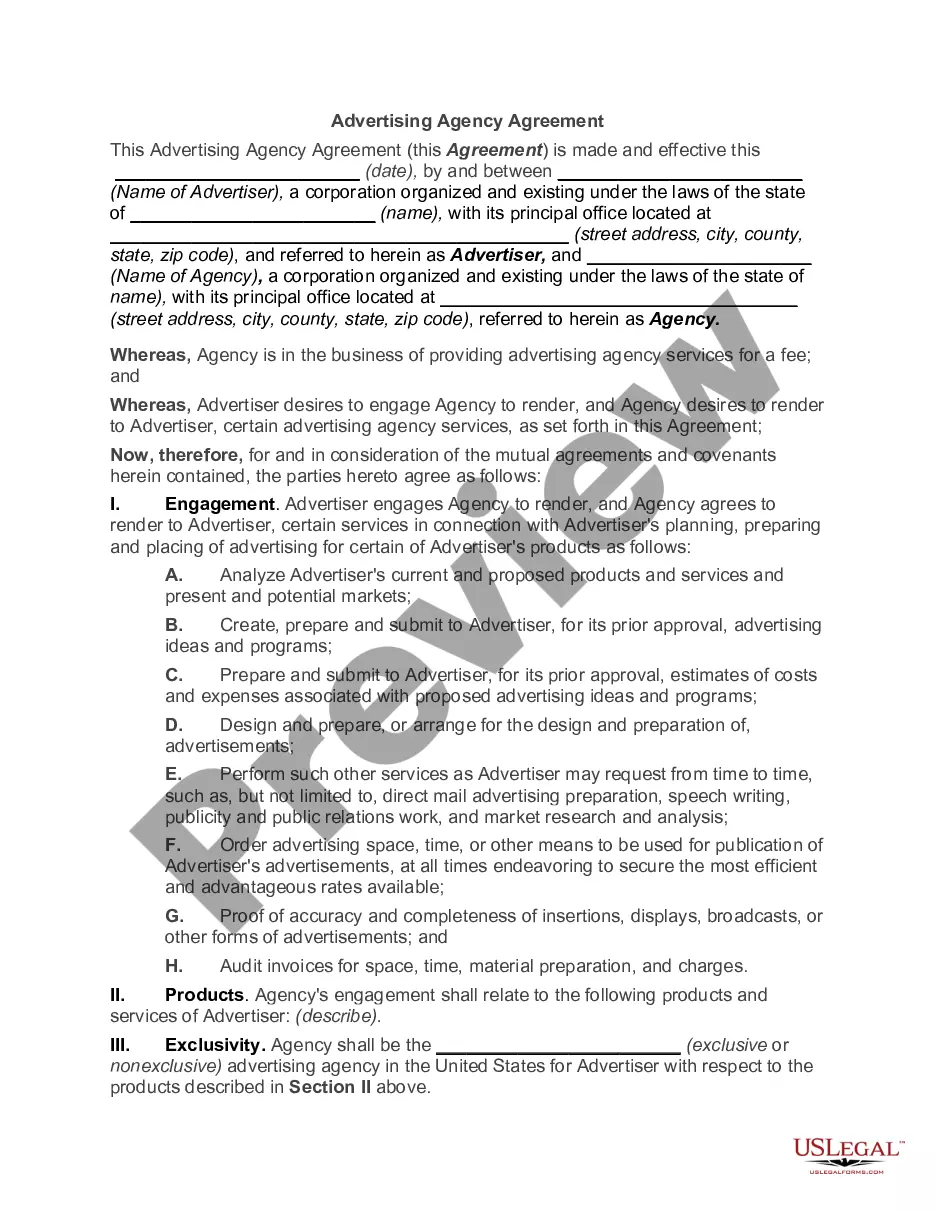
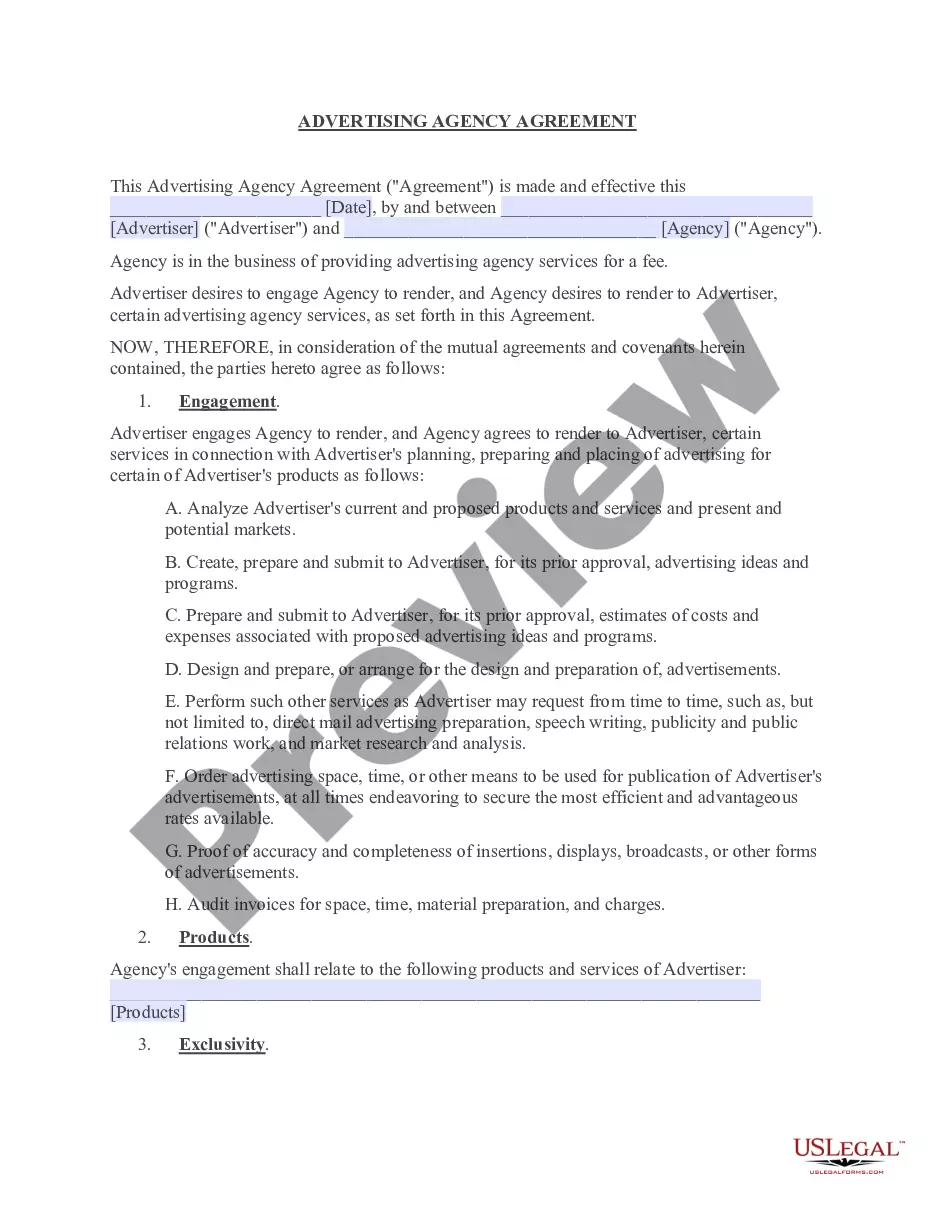
The checklist of matters to be considered in drafting a contract between an advertiser and an advertising agency is a comprehensive guide that helps ensure all essential elements are included in the contract. This form is distinct from other legal forms as it specifically focuses on the advertising agency-client relationship, outlining responsibilities, compensation, and termination clauses. By using this checklist, both parties can prepare a well-structured and legally sound agreement that protects their interests.
Main sections of this form
- Identification of the parties involved.
- Appointment of the agency as the advertiser's advertising agency.
- Prohibition against the agency serving competing clients.
- Compensation structure for the agency's services.
- Approval requirements for advertising work and expenditures.
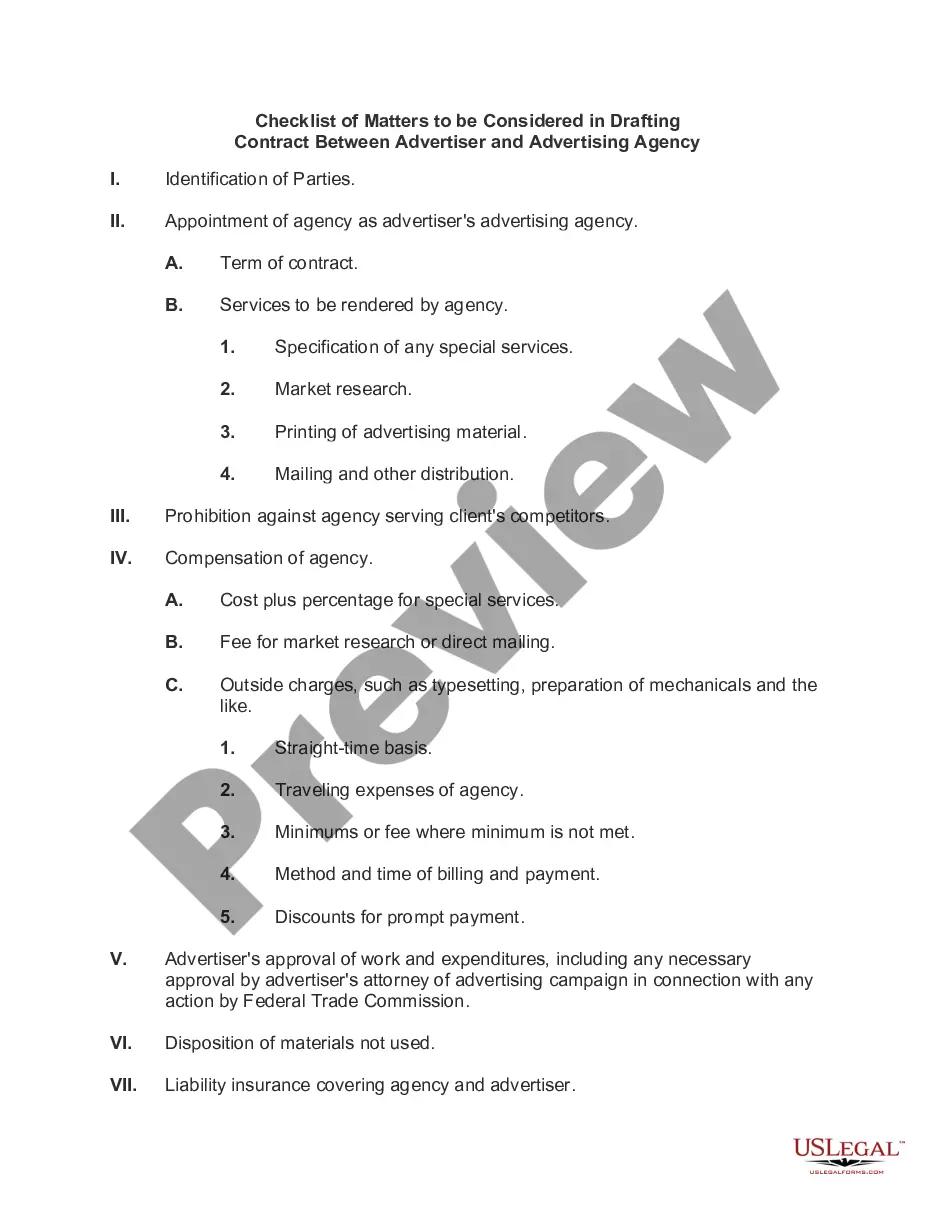
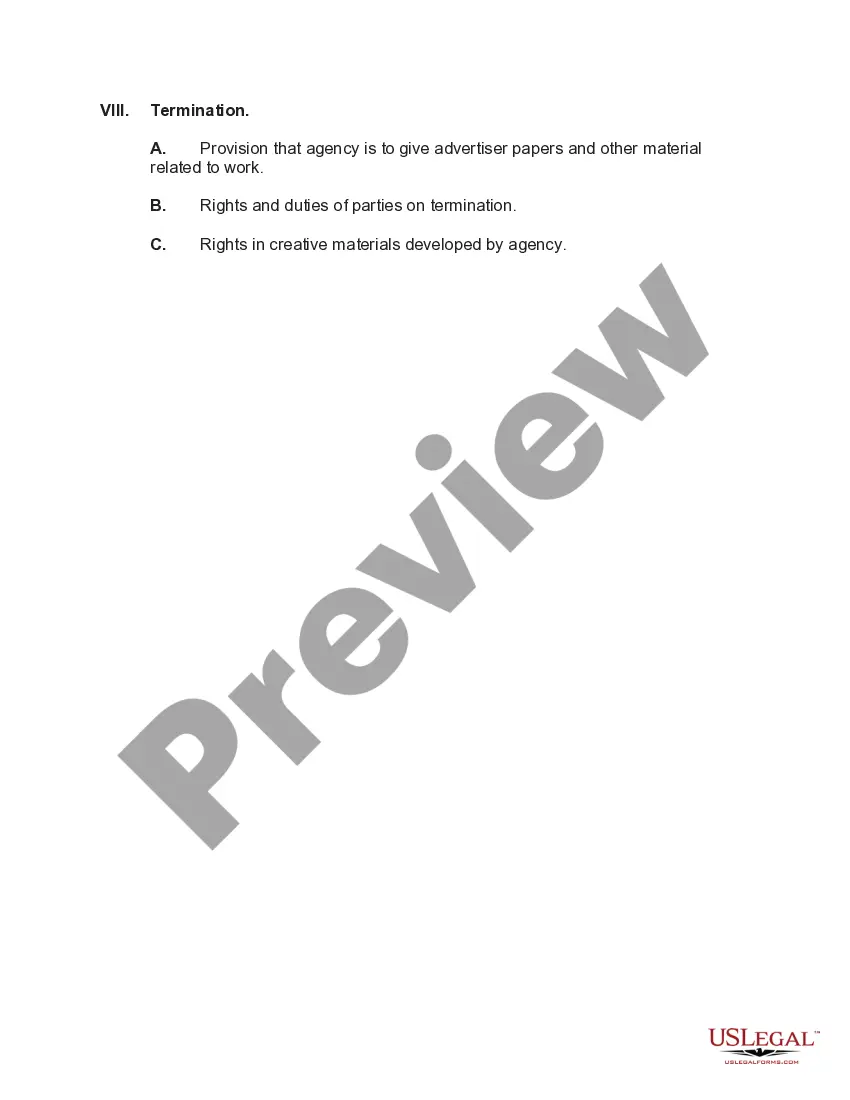
- Termination clauses, including rights and duties of both parties upon termination.
When to use this document
This form should be used when an advertiser engages an advertising agency to promote their products or services. It provides a clear framework for discussing key contractual elements and helps both parties ensure that all necessary details are considered and agreed upon before finalizing their contract.
Who can use this document
- Advertisers looking to hire an advertising agency for their marketing needs.
- Advertising agencies entering into contracts with advertisers.
- Legal professionals drafting or reviewing contracts between advertisers and agencies.
- Business owners needing guidance on essential contract components in advertising agreements.
How to complete this form
- Identify the parties involved in the contract.
- Clearly state the appointment of the agency as the advertiser's representative.
- Outline the compensation structure, including fees for special services and other related expenses.
- Establish guidelines for the advertiser's approval of work and expenditures.
- Include termination clauses that outline the rights and responsibilities of both parties.
Does this form need to be notarized?
This form does not typically require notarization to be legally valid. However, some jurisdictions or document types may still require it. US Legal Forms provides secure online notarization powered by Notarize, available 24/7 for added convenience.
Get your form ready online
Our built-in tools help you complete, sign, share, and store your documents in one place.
Make edits, fill in missing information, and update formatting in US Legal Forms—just like you would in MS Word.
Download a copy, print it, send it by email, or mail it via USPS—whatever works best for your next step.
Sign and collect signatures with our SignNow integration. Send to multiple recipients, set reminders, and more. Go Premium to unlock E-Sign.
If this form requires notarization, complete it online through a secure video call—no need to meet a notary in person or wait for an appointment.
We protect your documents and personal data by following strict security and privacy standards.

Make edits, fill in missing information, and update formatting in US Legal Forms—just like you would in MS Word.

Download a copy, print it, send it by email, or mail it via USPS—whatever works best for your next step.

Sign and collect signatures with our SignNow integration. Send to multiple recipients, set reminders, and more. Go Premium to unlock E-Sign.

If this form requires notarization, complete it online through a secure video call—no need to meet a notary in person or wait for an appointment.

We protect your documents and personal data by following strict security and privacy standards.
Common mistakes to avoid
- Failing to clearly define the services to be provided by the agency.
- Omitting details about compensation and payment terms.
- Not including a prohibition against the agency working with competing clients.
- Neglecting to involve legal counsel in reviewing the contract for compliance.
Why use this form online
- Convenience: Access and complete the checklist from anywhere at any time.
- Editability: Easily modify the form to fit specific requirements and preferences.
- Reliability: Form templates are created by licensed attorneys, ensuring legal acceptance.
Legal use & context
- This checklist helps ensure that all critical contractual elements are addressed, reducing the risk of disputes.
- Using this form can demonstrate due diligence in the advertising agency-client relationship.
- Properly completed forms provide a solid foundation for legal enforcement if necessary.
Looking for another form?
Form popularity
FAQ
A contract is an agreement that two or more parties enter into that is legally binding and enforceable by a court.A contract must include all relevant information about the exchange. Essentially, anyone can draft a contract on their own; an attorney is not required to form a valid contract.
Get it in Writing. Use Language You Can Understand. Be Detailed. Include Payment Details. Consider Confidentiality. Include Language on How to Terminate the Contract. Consider State Laws Governing the Contract. Include Remedies and Attorneys' Fees.
Get it in writing. Keep it simple. Deal with the right person. Identify each party correctly. Spell out all of the details. Specify payment obligations. Agree on circumstances that terminate the contract. Agree on a way to resolve disputes.
The date of the contract. The names of all parties or entities involved. Payment amounts and due dates. Contract expiration dates. Potential damages for breach of contract, missed deadlines or incomplete services.
Intent to make a contract; A lawful subject matter; An offer made by one party; Acceptance of the offer by the other party; An exchange of something of value; A written agreement, in some circumstances.
There is no requirement that lawyers draft every contract and, like other areas in the law, you may be fine editing a form contract to suit your needs. However, if there is any money at stake, not having a lawyer properly draft a contract is tantamount to rolling the dice.
Drafting a contract. Provide details of the parties. Describe services or results. Set out payment details. Assign intellectual property rights. Explain how to treat confidential information. Identify who is liable indemnity. Provide insurance obligations.
Include Contact Information of Both Parties. Specify Project Terms and Scope. Establish Payment Terms. Set the Schedule. Decide What Happens If a Contract Is Terminated. Determine Who Owns Final Copyrights.
Assignment. Choice of Law. Amendment and Waiver. Arbitration. Integration and Severability. Notice. Authority to Sign.